Current Events :







Indonesian President Prabowo Subianto arrives in New Delhi for a State Visit as Chief Guest for India’s 76th Republic Day celebrations. He meets President Droupadi Murmu and PM Modi to strengthen bilateral ties.
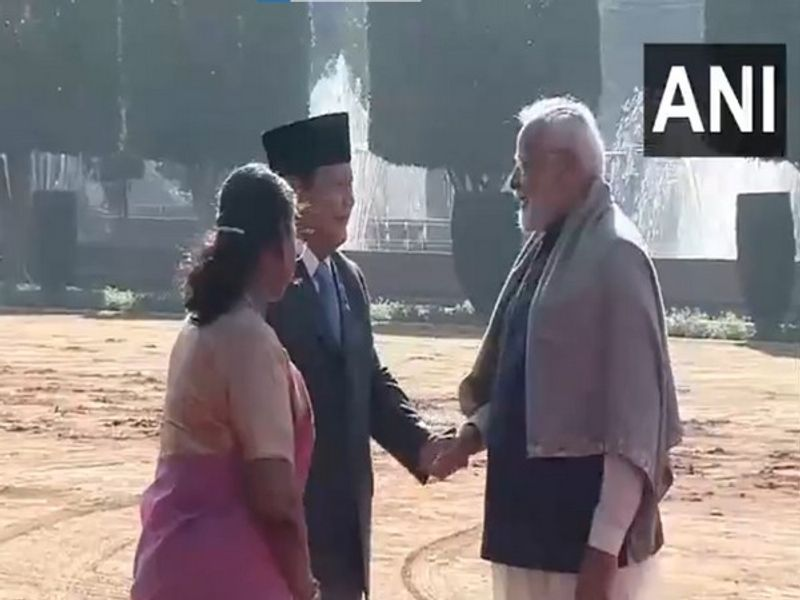
New Delhi [India], January 25 (ANI): Prabowo Subianto, the President of Indonesia, was formally welcomed at Rashtrapati Bhavan in New Delhi on January 25, 2025.
His visit marks his first State Visit to India since assuming office in October 2024, and he is the Chief Guest for India’s 76th Republic Day celebrations. The ceremonial welcome highlights the significance of the visit and sets the stage for enhanced diplomatic discussions between India and Indonesia.
Prabowo met with Indian President Droupadi Murmu and Prime Minister Narendra Modi at Rashtrapati Bhavan. Their meeting focused on strengthening the bilateral relationship between the two nations, with discussions on political, security, defence, and trade cooperation.
During his visit, President Prabowo expressed his gratitude and highlighted the longstanding friendship between the two countries. He said, “…Indonesia considers India a very great friend. India was one of the first countries, maybe the first country to recognise our independence, to support us in our struggle for independence, we will never forget what India did to help us. I am very honoured today and I am doubly honoured that tomorrow I will be the chief guest at your Republic Day parade…I’m committed to promoting closer cooperation, closer partnership with India. That is my determination.”
This State Visit, from January 25 to 26, 2025, is an opportunity for both countries to review their bilateral relations and discuss regional and global issues of mutual concern. Indonesia, a Comprehensive Strategic Partner of India, plays a vital role in India’s “Act East” policy, aimed at strengthening relations with East Asia and enhancing India’s influence in the Indo-Pacific region.
India and Indonesia share a rich history of cultural and commercial ties dating back over two millennia. The exchange of Hindu, Buddhist, and Muslim traditions from India to Indonesia has shaped the cultural landscape of both nations, fostering strong and enduring ties.
The political relationship between the two countries was solidified during their shared struggles for independence. Indonesia’s first Republic Day guest, President Sukarno, was honored in 1950, and both countries have supported the independence movements of Asian and African nations, exemplified by their roles in the Bandung Conference and the formation of the Non-Aligned Movement.
In defence, India and Indonesia have grown closer in recent years, with a Defence Cooperation Agreement signed in May 2018, reflecting their growing strategic partnership. This visit marks a further step toward strengthening these ties. (ANI)
(The story has come from a syndicated feed and has not been edited by the Tribune Staff.)
Compared to the other 136 Vande Bharat trains running in different parts of the country, this train has several additional features to meet operational challenges and passengers’ needs in J-K’s extreme weather conditions

Years of hard work and dedication, and some engineering marvels later, the dream of Kashmir to be connected by rail finally came to fruition after a specially-designed Vande Bharat Express train arrived in the city on Saturday, completing its trial run.
The train, on its maiden trial run, arrived at Srinagar station in the Nowgam area on the city’s outskirts from Katra in Jammu.
It reached Jammu on Friday.
Slogans and praises for the Indian Railways greeted the orange-and-grey-coloured Vande Bharat train as it reached the station at 11.30 am.
A large number of people and rail officials waited since morning, many of them carrying garlands, to welcome those aboard the train.
After a brief half at the station, the train moved to Budgam station to complete its trial run.
Northern Railway’s Chief Area Manager (Srinagar) Saqib Yousuf said the trial run’s completion marked a historic moment.
“This is a historic step. It reflects the vision of our prime minister to connect Kashmir with the rest of the country,” he said.
Yousuf said the trial was also to ascertain the time the train would take on various sections.
The successful completion of the trial run is a result of the fast-paced hard work over the past 10 years that was put in to complete the line, he added.
Prime Minister Narendra Modi is expected to flag off the train from Katra, as the commissioner of railway safety has given the green signal for running the service on the Katra-Baramulla section.
The date for the flag-off ceremony is yet to be announced.
The Railways completed 272 km of the Udhampur-Srinagar-Baramulla Rail Link (USBRL) project last month.
According to rail officials, the Railway Board, on June 8 last year, unveiled a Vande Bharat Express train specially designed to operate in Jammu and Kashmir’s challenging winter conditions for the Katra-Srinagar route. The train incorporates special climate-related features.
Compared to the other 136 Vande Bharat trains running in different parts of the country, this train has several additional features to meet operational challenges and passengers’ needs in Jammu and Kashmir’s extreme weather conditions.
It includes advanced heating systems that prevent the freezing of water in pipes and bio-toilet tanks, provide warm air for the vacuum system and ensure optimal functioning of the air-brake system for smooth operations, even in sub-zero temperatures.
The train also features embedded heating elements in the windshield to automatically defrost the driver’s front lookout glass, ensuring clear visibility in harsh winter conditions.
Additionally, it features all other amenities of the existing Vande Bharat trains — fully air-conditioned coaches, automatic plug doors and mobile charging sockets, among others.
“The train has been provided to run especially through the mountainous terrain of Jammu and Kashmir and made to withstand sub-zero temperatures and snowy conditions,” Yousuf said.
“It has heating units to withstand sub-zero temperatures, heating pads to avoid the freezing of water in pipes and tanks, and an ambient temperature control system in the driver’s cab. All these facilities have been designed to deal with the snowy and cold conditions,” he added.
The commissioner of railway safety’s approval marked a significant step towards completing the USBRL project, which aims at connecting the Kashmir valley to the broader Indian Railways network.
Over the past month, the Indian Railways conducted six trial runs on various sections of the track, including crucial milestones such as the country’s first cable-stayed rail bridge — the Anji Khad bridge — and the arch bridge over the Chenab river in Kauri.
The Anji Khad bridge — a critical part of the USBRL project — is an engineering marvel, featuring a single pylon rising 33m above the river bed. The pylon, which took several years to complete, now rises 19m above its foundation level.
With a total length of 473.25m, the Anji Khad bridge is one of the two highest railway bridges in the world, alongside the Chenab bridge — which holds the title of the world’s highest railway bridge at 359m above the river bed, 35m taller than the Eiffel Tower in Paris.
Jammu and Kashmir Lieutenant Governor Manoj Sinha described it as a historic moment and a dream come true.
“A historic moment and a dream come true! Trial run of Vande Bharat Express train from Shri Mata Vaishno Devi Railway Station, Katra, to Budgam has been successfully completed. Congratulations to Indian Railways officials and the team working on the ground,” he said in a post on X.

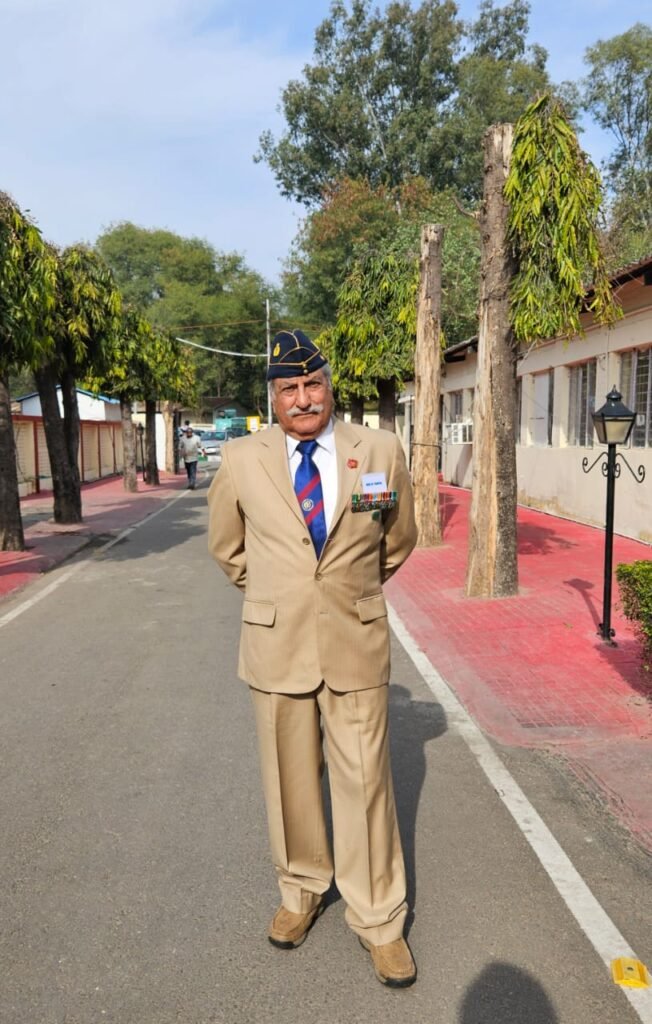
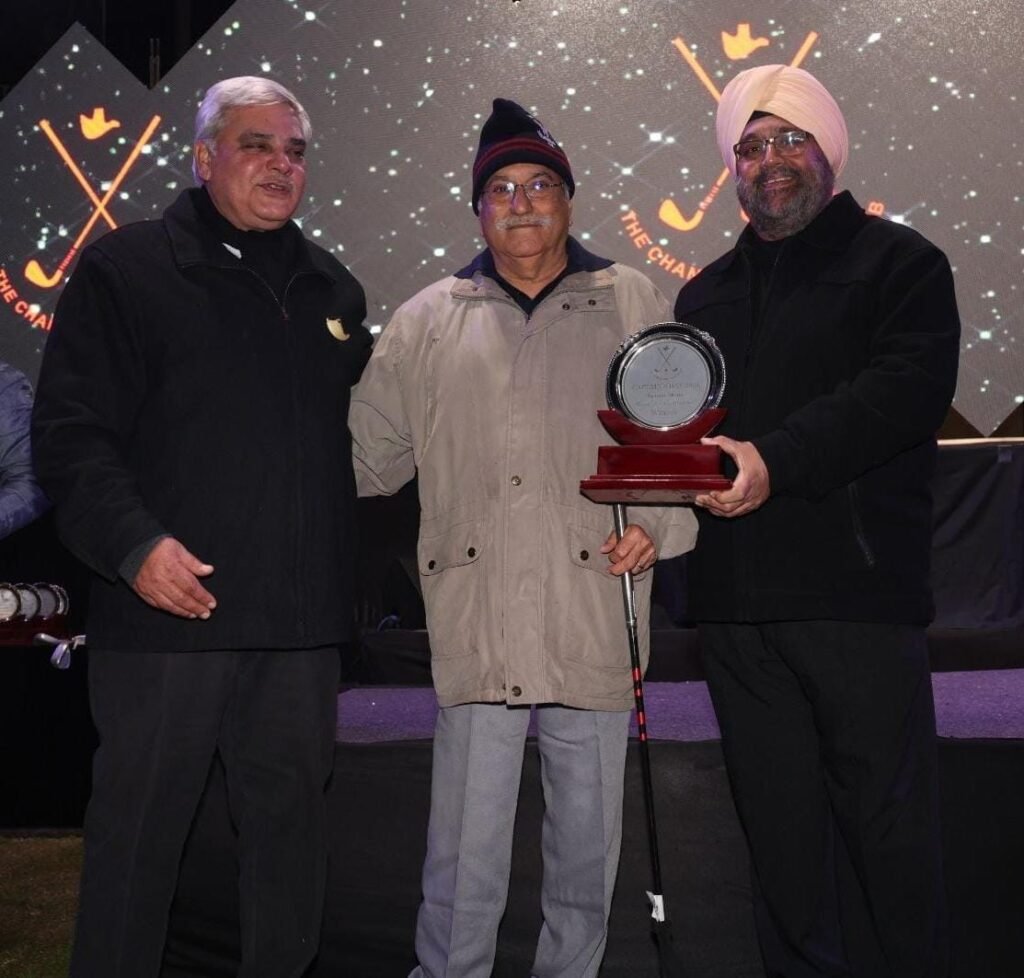
Entire SS-15 Course( PO on 29Apr 1973) convey heartfelt condolences to the family members .
May Waheguru give him charan niwas and bless the depareted soul
Very painful moment for friends and family may God the almighty give strength to cope with the heavy loss
He is PRESIDENT PANCHKULA HARYANA UNIT,OF SANJHA MORCHA
The 32-year-old soldier was part of a patrolling party when he accidentally stepped over the landmine in Krishna Ghati sector

An army soldier was injured in a landmine explosion near the Line of Control (LoC) in Poonch district of Jammu and Kashmir on Tuesday, officials said.
The 32-year-old soldier was part of a patrolling party when he accidentally stepped over the landmine in Krishna Ghati sector, the officials said.een
They said the mine went off, causing critical injuries to the sepoy who was immediately evacuated to hospital.
As part of an anti-infiltration obstacle system, the forward areas are dotted with landmines which sometimes get washed away by rains resulting in such accidents, the officials said.
A Moga sarpanch has been invited by the Centre to attend the Republic Day celebrations as a special guest at the Red Fort in New Delhi for improving the lives of around 2,700 villagers by ensuring clean water supply and…
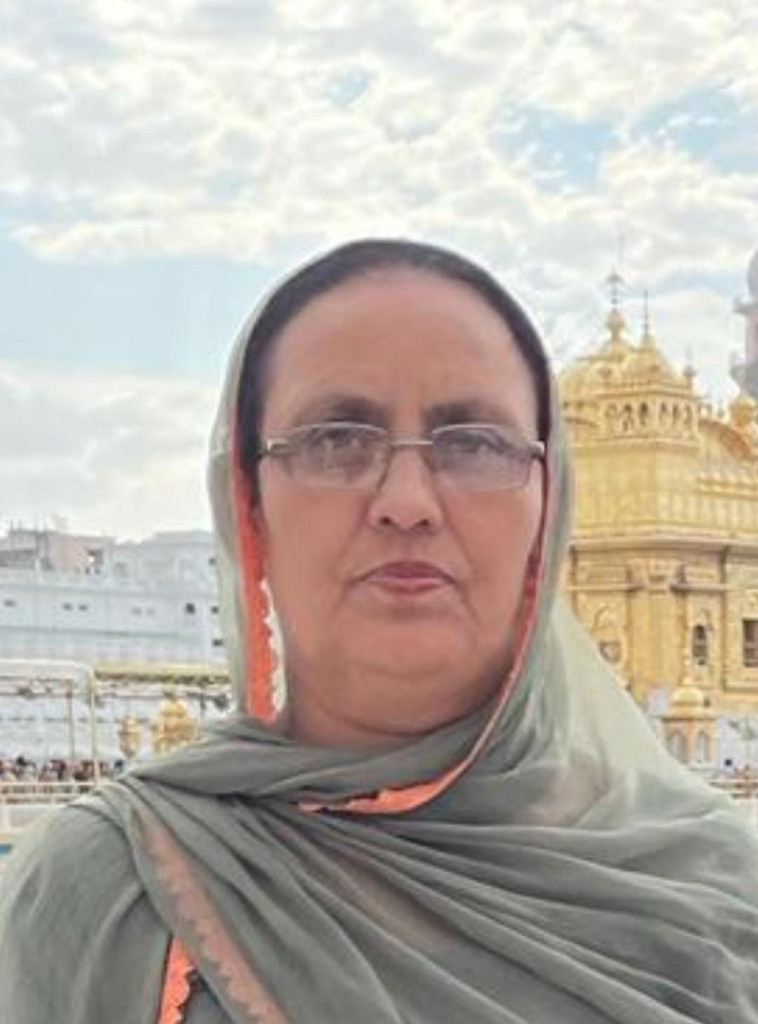
A Moga sarpanch has been invited by the Centre to attend the Republic Day celebrations as a special guest at the Red Fort in New Delhi for improving the lives of around 2,700 villagers by ensuring clean water supply and reducing the exploitation of groundwater by households through personal pump sets.
Chuggawan village sarpanch Narinder Kaur’s name was recommended by the state government to the Centre for the honour.
Naridner Kaur managed clean water supply at her village in collaboration with the Water Supply and Sanitation Department.
According to officials, she convinced the villagers to install government water connections and strengthened the village’s supply network, the reliance on which had reduced over the years due to poor quality of water and defunct infrastructure.
Deputy Commissioner Vishesh Sarangal said she also led efforts to improve the village’s infrastructure, including beautifying the waterworks area by constructing a park, which now serves as a recreational spot for residents.
In addition, she initiated the installation of nameplates outside homes, displaying water connection details and bearing the name of the family head.
Monthly meetings with officials and residents helped monitor the water-supply scheme’s smooth functioning, the officer said.
“Her leadership has brought significant improvements to the lives of people in Chuggawan. She has set an example for others by priortising essential services and community welfare,” said Sarnagal.
“It is a great honor to represent Chuggawan and Moga at the Republic Day celebrations. This recognition will motivate me to continue working for the betterment of my village,” said the sarpanch.
Israel’s top general resigned on Tuesday, taking responsibility for security failures tied to Hamas’ surprise attack that triggered the war in Gaza and adding to pressure on Prime Minister Benjamin Netanyahu, who has delayed any public inquiry that could potentially…

Israel’s top general resigned on Tuesday, taking responsibility for security failures tied to Hamas’ surprise attack that triggered the war in Gaza and adding to pressure on Prime Minister Benjamin Netanyahu, who has delayed any public inquiry that could potentially implicate his leadership.
While a fragile new ceasefire in the Gaza Strip held, Israel launched a large operation in the occupied West Bank, killing at least eight people, Palestinian officials said.
Lt. Gen. Herzi Halevi is the most senior Israeli figure to resign over the security and intelligence breakdown on October 7, 2023, when thousands of Hamas-led militants carried out a land, sea and air assault into southern Israel, rampaging through army bases and nearby communities.
The attack — the single deadliest on Israel in its history — killed some 1,200 people, mostly civilians, and the militants abducted another 250. More than 90 captives are still in Gaza, around a third believed to be dead.
Halevi’s resignation came days into the ceasefire with Hamas that could lead to an end to the 15-month war and the return of remaining captives. Maj. Gen. Yaron Finkelman, head of Israel’s Southern Command, which oversees operations in Gaza, also resigned.
Their resignations will likely add to calls for a public inquiry into the October 7 failures, something Netanyahu has said must wait until the war is over.
Halevi had appeared to be at odds with Israel’s new defence minister, Israel Katz, over the direction of the war. He said Israel had accomplished most of its goals, while Katz echoed Netanyahu’s vow to keep fighting until “total victory” over Hamas. Katz replaced the popular Yoav Gallant, who Netanyahu dismissed in a surprise announcement in November after growing disagreements over the war.
Halevi’s resignation letter said the military, under his command, had “failed in its mission to defend the State of Israel” and noted that the military’s investigations into those failures were “currently in their final stages.” He said his resignation would go into effect March 6.
Another major operation in the West Bank The ceasefire that started Sunday does not apply to the West Bank, where Israel announced a “significant and broad military operation” against Palestinian militants in Jenin, without details.
The city has seen repeated Israeli incursions and gunbattles with militants in recent years, even before the outbreak of the Gaza war.
The Palestinian Health Ministry said 35 were wounded in the operation. It does not distinguish between militants and civilians in its tally.
Israel captured the West Bank, Gaza and east Jerusalem in the 1967 Mideast war. The Palestinians seek an independent state encompassing all three territories.
The West Bank has seen a surge of violence since the start of the war in Gaza. Israeli troops have carried out near-daily raids that often ignite gunbattles. There has also been a rise in attacks on Palestinians by Jewish extremists — including a rampage in two Palestinian villages overnight Monday — as well as Palestinian attacks on Israelis.
Hamas condemned the Israeli operation in Jenin, calling on Palestinians in the occupied West Bank to step up their attacks.
The smaller and more radical Islamic Jihad militant group also condemned the operation, saying it reflected Israel’s “failure to achieve its goals in Gaza.” It said it was also a “desperate attempt” by Netanyahu to save his governing coalition.
Netanyahu faces domestic criticism over ceasefire In addition to the pressures over the military resignations, Netanyahu faces criticism from far-right allies over the ceasefire. It requires Israeli troops to pull back from populated areas in Gaza and envisions the release of hundreds of Palestinian prisoners, including militants convicted of involvement in deadly attacks on Israelis.
The ceasefire is to last for six weeks and see 33 hostages gradually released. Three hostages and 90 prisoners were released on Sunday, when it took effect. The next release is Saturday.
The truce has already seen Hamas return to the streets, showing that it remains in control of the territory despite the war killing tens of thousands of Palestinians — including some Hamas leaders — and causing widespread devastation.
One of Netanyahu’s erstwhile partners, Itamar Ben-Gvir, quit the government the day the ceasefire went into effect, weakening the coalition but still leaving Netanyahu with a parliamentary majority. Another, far-right leader, Finance Minister Bezalel Smotrich, has threatened to leave if Israel does not resume the war after the ceasefire’s first phase.
Inside Gaza
Israel’s military campaign has killed over 47,000 Palestinians in Gaza, according to local health authorities, who say women and children make up more than half of the fatalities but do not say how many of the dead were fighters. Israel says it killed over 17,000 militants, without providing evidence.
Gaza’s Health Ministry said 72 bodies had been taken to hospitals in the past 24 hours, almost all of them recovered from attacks before the ceasefire. An unknown number of bodies remain unreachable because they are in northern Gaza, where access remains restricted, or in buffer zones where Israeli forces are.
Over 900 trucks of aid entered Gaza on the second day of the ceasefire Monday, the United Nations said — significantly higher than the 600 trucks called for in the deal — in a rush to supply food, medicines and other needs it has described as “staggering” for the population of over 2 million people.
“Most importantly, we want things that will warm us in winter,” one of the many displaced Palestinians, Mounir Abu Seiam, said Tuesday as people gathered in the southern city of Khan Younis to receive food.
At least 14 Naxalites, including Jayram, alias Chalapati, a member of the Naxalite central committee carrying a bounty of Rs 1 crore, were killed in an encounter with the police on the Chhattisgarh-Odisha border this morning. Weapons, including AK-47, SLR…

At least 14 Naxalites, including Jayram, alias Chalapati, a member of the Naxalite central committee carrying a bounty of Rs 1 crore, were killed in an encounter with the police on the Chhattisgarh-Odisha border this morning.
Weapons, including AK-47, SLR and INSAS rifles, were recovered from the Naxals.
Union Home Minister Amit Shah hailed the operation. “Another mighty blow to Naxalism. Our security forces have achieved a major success towards building a Naxal-free Bharat. The CRPF, SOG, Odisha and the Chhattisgarh Police neutralised 14 Naxalites in a joint operation along the Odisha-Chhattisgarh border. With our resolve for a Naxal-free India and the joint efforts of our security forces, Naxalism is breathing its last today,” he said in a post on X. Chalapati, who was around 60 years old, belonged to Madanapalle in Chittoor district of Andhra Pradesh and had studied till Class X.
Despite his modest educational background, he had risen to prominence in the Maoist ranks, becoming a member of the central committee, a top decision-making body of the organisation.
Owing to his significant role in the Naxal hierarchy, Chalapati had attracted a bounty of Rs 1 crore on his head.Chalapati was familiar with the dense forests of Bastar and his security detail comprised eight to10 personal guards.
His tactical expertise, leadership skills and ability to mobilise resources in challenging terrains earned him notoriety as one of the most-wanted Maoist leaders in the region.Chalapati’s swift rise through the Maoist ranks came after he executed several high-profile attacks, including one of killing an MLA.
He was accused of being the mastermind of the September 23, 2018, attack in Dumbriguda Mandal of Araku in which Kidari Sarveswara Rao, TDP MLA from Araku Valley, and former TDP MLA Siveri Soma were shot dead.
Tuesday’s incident comes four days after an IED attack by Naxals left two BSF personnel injured in Narayanpur district, Chhattisgarh.
This followed a similar incident on January 16, when two CRPF jawans were injured in a pressure IED blast planted by Naxalites near Putkel village under the Basaguda police station in Bijapur district. Earlier, on January 12, five Naxalites, including two women, were killed in an encounter with the security forces in National Park area.