Sanjha Morcha

What’s New

Click the heading to open detailed news

Current Events :

web counter

Print Media Reproduced Defence Related News

UK Sikh charity organisation comes to Kerala’s rescue

UK Sikh charity organisation comes to Kerala’s rescue

Khalsa Aid supporters cook food at Gurdwara Shri Guru Singh Sabha in Kochi, Kerala. Photo: Twitter

Tribune Web Desk
Chandigarh, August 18

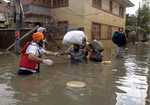
Help continues to pour into Kerala as the state battles unprecedented flood. Among those volunteering is a UK-based Sikh philanthropist organisation.

Photos and videos posted on Facebook show the Khalsa Aid International serving flood victims at the Gurdwara Shri Guru Singh Sabha in Kochi, Kerala. Photos and videos posted by the organisation quickly went viral, drawing unanimous praises.


Army mulls hybrid vehicles for high-altitude areas

Vijay Mohan

Tribune News Service

Chandigarh, October 30

After decades of sustained deployment in some of the highest operational areas in the world, the Army is now exploring the feasibility of developing hybrid vehicles for use in high altitude areas to overcome the problems of degraded performance and high attrition that combustion engines face due to extreme cold and rarified air.

Army Design Bureau (ADB), the nodal agency dealing with the project, has flagged the issue for urgent redressal by the industry or research institutes as there is effective means to mitigate the problem as yet. ADB is the repository of all technical know-how for the Army and is the interface between government and private establishments for design, development and innovations.

At present, special grade fuel and oil is being used in high altitude areas, but these are not very effective during peak winters from November to March, often leading to vehicles becoming off-road.

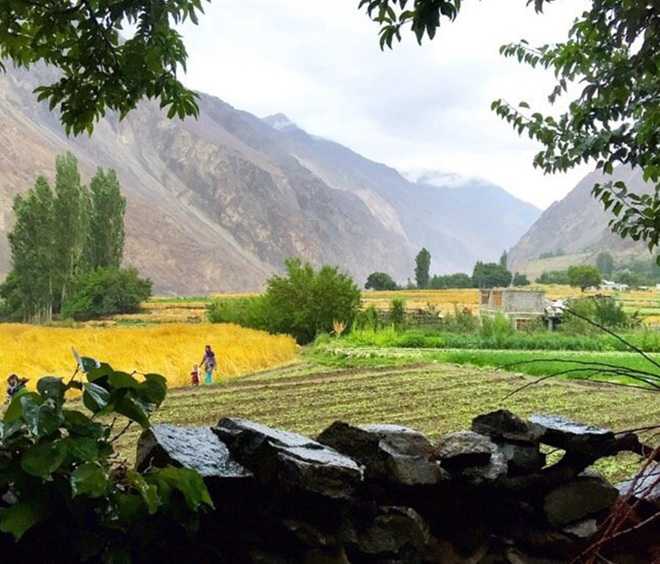
Many areas where the Army is deployed — Ladakh, Kargil, Lahaul and Spiti, Sikkim and Arunachal Pradesh — experience sub-zero temperatures for several months in a year.

The engine horse power of conventional vehicles drops considerably in high altitude areas due to lack of air density and pressure. Further, due to extreme low temperature fuel and oil freeze or their viscosity increase, thereby affecting flow through the engine hoses or blocking injectors and filters increasing the risk of seizure, according to an Army engineer. Lubrication of engines and other moving parts is also affected, leading to frequent change of parts.

Hybrid vehicles with dual power source can overcome such problems as electric drive achieves greater efficiency in stop and go mission profiles as compared to conventional engines. The regenerative braking resources stores power as electrical energy resulting in greater fuel efficiency and an electric motor can generate instantaneous power for better off road maneuvering, engineers said.

Hybrid vehicles are a relatively new concept in India that is available in some passenger cars, but it is restricted to start and stop functions rather than drive power. The US Army is also said to be developing hybrid vehicles.


Don’t add more numbers, forces told

Don’t add more numbers, forces told

Ajay Banerjee

Tribune News Service

New Delhi, August 12

In an important signal on optimum use of available funds, the armed forces have been asked to avoid fresh accretions — adding any more numbers to the existing strength — while continuing with right-sizing of the Army, Navy and the Air Force.The matter of force numbers, the resultant man-power costs and redundancy caused due to technological upgrades was raised by a top government official at the two-day Unified Commanders’ Conference held in New Delhi on July 30 and July 31, sources confirmed to The Tribune. The matter of not increasing numbers was referred to and the rising costs were discussed, a functionary confirmed about the meeting.The Ministry of Defence (MoD) is clear: “Addition of new equipment (modernisation) does not mean a corresponding rise in the strength of men,” said sources. The foundation of this was laid by Prime Minister Narendra Modi very early into his tenure. In his address at one such conference in December 2015, Modi said: “Modernisation and expansion of forces at the same time is a difficult and unnecessary goal.” Over the last decade, the armed forces have absorbed a fair amount of technological developments, including communications and digitisation, which means some of the troops can be redeployed.The high-powered Defence Planning Council (DPC), at its first meeting in May this year, asked for “leaner, meaner and restructured armed forces ready for future wars enabled by proper use of budgetary allocations”. Army Chief General Bipin Rawat had ordered restructuring of the Army on June 12 this year.The Army, the biggest of the three armed forces, about 1.3-million strong, has been asked to improve its teeth-to-tail ratio. In simple words, it means have more fighting units and reduce non-fighting numbers. Last year, the MoD announced a major change as 57,000 officers and soldiers were to be redeployed to have more combat-oriented roles by 2019.It was an outcome of a committee headed by Lt Gen DB Shekatkar (retd), which suggested 99 points for structural changes in the Army, among them being cutting down flab and reducing revenue (maintenance) expenditure. Of these, the MoD has accepted 65 suggestions.Focus on right-sizing

  • In this year’s budget ending March 31, 2019, salaries of the three services and civilians work out to Rs 1,18,966 crore
  • Another Rs 1.08 lakh crore is the pension bill—both salaries and pensions account for 40 per cent of the entire budget
  • More money had to be earmarked for salaries and pensions than for modernisation (Rs 99,563 crore)

Ladakh’s long wait for more

Ladakh’s long wait for more

Think long term: Setting up a Divisional Commissioner’s office will go a long way in meeting the regional aspirations of the people of Ladakh.

P Stobdan
Former Ambassador 

Protecting Ladakh against prolonged troubles in Kashmir was long overdue and so was the imperative of addressing some of the aspirations of the people there. Ladakh holds 60 per cent of J&K’s territory and plays critical role for national security that can’t be overlooked. Also inconceivable has been how Independent India (at the behest of Nehru) reduced Ladakh’s profile of being one of the five kingdoms in the Himalayas into a mere neglected district of the Valley.

Joseph Korbel, father of former US Secretary of State Madelaine Albright, wrote in 1950 that Kashmiri leadership was playing a trick on the people of Ladakh, if not frightening them to surrender under their control. For seven decades, New Delhi has turned a blind eye to Kashmiri sabre-rattling and the trickery upon the people of Ladakh — perhaps even worse than Pakistanis’ exploitation of the people in Gilgit & Baltistan. In the late 1970s, Sheikh Abdullah drove a wedge between Kargil Shia versus Leh Buddhist, besides creating a nefarious ‘Greater Kashmir’ concept to obliterate Ladakh.

The myth of J&K as a unitary state (a heritage of Dogra fiefdom) has outlived its historical inviolability. India should have thought about doing away with any subjugation links that Ladakh notionally had with J&K. After persistent articulation for the status of a UT, the Union government finally agreed in 1993, as interim measure, to create the Ladakh Autonomous Hill Development Council. In 1995, the Ministry of Law, Justice and Company Affairs announced the Act enacted by the President under the powers conferred by Section 3 of the Jammu and Kashmir State Legislature (Delegation of Powers) Act, 1992, to provide for the establishment of Autonomous Hill Development Councils and an Inter-District Advisory Council in the Ladakh region. 

The Act had to be passed during the phase of the third and longest Governor’s Rule (1990-1996). But the Ladakh Autonomous Hill Development Council (LAHDC) Act in 1997, passed by the NC government, was toothless. It was in 2002, during the time of the PDP-led coalition government in J&K, that a semblance of power was devolved to LAHDC of Leh district through an amendment to the 1997 Act.

It was remarkable that then CM, Mufti Sayeed, within two months of his coming to power, decided to delegate greater financial and administrative powers to LAHDC (Leh) and create a similar LAHDC for Kargil as well. Under the new Act, the LAHDC chief executive councillor was given the status and perks of a Cabinet minister and executive councillors of a deputy minister’s rank. The council was empowered to decide on the allotment and distribution of land, superintendence and control over the council employees. 

The LAHDCs of Leh and Kargil have been functioning well, rather in an exemplary way since. But in a major decision on September 27, the State Administrative Council (SAC) — equivalent of a Cabinet in Governor’s rule, under the chairmanship of Governor Satya Pal Malik, has approved yet another LAHDC (Amendment) Bill, 2018, to fully empower the councils with greater administrative and financial powers. Inter alia, the amendments gave more powers to the LAHDC to levy and collect taxes, more administrative control over the staff and more allocation and flow of funds from Centrally-sponsored schemes.

While the people of Ladakh had been seeking a separate legislative arrangement in the form of a UT status since 1951, which the ruling BJP agreed to fulfil prior to 2014, constitutional changes seem unattainable. Since the matter is perceived as linked with the Kashmir issue, it can’t be realised for now. Regions like Ladakh, which are in favour of deeper integration with the national mainstream, cannot be allowed to drift against the current context of destabilising forces in the state.

The Centre also cannot punish the region any longer on the ground of its demographic deficiency (low weight in electoral politics). Considering Ladakh’s geo-strategic significance and in the light of Pakistan recently promulgating the Gilgit Baltistan Order 2018 (entrusting it with an assembly with legislative power) a change in Ladakh is critical. New Delhi has to be mindful of China blustering its way through the region under its CPEC projects which will have direct consequences for Ladakh.

While UT status would remain a long-drawn process, strategic articulation and national security imperative should propel the government to upgrade the administrative status of Ladakh at least to a divisional level. Currently, only a DC-level officer in Leh and Kargil acts as the chief executive officer of the respective council, who, in turn, reports to the Divisional Commissioner of Kashmir and Ladakh based in Srinagar. The Commissioner sitting in Kashmir supervises and controls 12 districts, including Leh and Kargil, in terms of administrative, developmental and law and order situation.

Separating Ladakh from Kashmir Division and setting up a Divisional Commissioner’s office will go a long way in meeting the regional aspirations of the people. The launch of the overarching national vision of a tunnel through Zoji La (11,578 ft), connecting the Valley with Ladakh, in addition to building a high-elevation all-weather Bilaspur-Manali-Leh rail axis and Srinagar-Kargil-Leh axis will go a long way in removing Ladakh’s isolation. The projects are of great strategic, economic and developmental significance. The biggest spin-off will be the region opening up to better influx for tourism.


US Navy veteran sentenced to life for killing Indian engineer

US Navy veteran sentenced to life for killing Indian engineer

New York, August 7

A US Navy veteran, who shot and killed Indian engineer Srinivas Kuchibhotla and injured two others at a suburban Kansas City bar in 2017, was on Tuesday sentenced to life without the possibility of parole.Adam Purinton of Olathe shot and killed Kuchibhotla, and wounded two others — Indian national Alok Madasani and Kansas resident Ian Grillot — at Austins Bar & Grill in Olathe, Kansas, in February 2017.Purinton was sentenced to life in prison without the possibility of parole, Attorney General Jeff Sessions said in a statement.Earlier this year, he pleaded guilty in federal court to hate crime and firearm offenses arising out of the shooting.At his federal guilty-plea hearing, Purinton admitted in open court that he targeted and shot Kuchibhotla and Madasani because of their race, colour, and national origin, and that he shot Grillot during an attempt to flee the scene of the crime.Purinton has also pleaded guilty in state court to charges of murder and attempted murder, and has been sentenced to a term of life imprisonment in state prison.“The crimes at issue in this case are detestable,” Sessions said.“The defendant acted with clear premeditation in murdering one man, and attempting to murder a second man, simply because of their race, religion, and national origin. As a result, a promising young life has been tragically cut short, and other lives have been filled with suffering.”Sessions said in the statement that while the “irreparable harm” that Purinton has done cannot be undone, “some measure of justice for the victims’ families has been achieved.” — PTI


15 Naxals killed in encounter with police in Chhattisgarh’s Sukma

15 Naxals killed in encounter with police in Chhattisgarh’s Sukma

The gun battle took place in the morning in a forest area in south Sukma, around 500 km from Raipur, Deputy Inspector General (anti-Naxal operations) Sundarraj P said.

Raipur, August 6

At least 15 Maoists were killed in an encounter with security forces in a dense forest in Chhattisgarh’s Sukma district on Monday, the police said.

This was one of the biggest anti-Naxal operations in the history of Chhattisgarh, where 15 bodies of rebels were recovered in a single incident, state’s Special Director General of Police (anti-Naxal operations) D M Awasthi told reporters here.

Two Naxals, including a woman who was injured the gun battle, were also arrested from the encounter site.

Based on intelligence inputs about locations of Naxal camps in south Sukma, two teams of security forces were sent into the forest from different directions last evening, Awasthi said.

The teams included personnel of the District Reserve Guard, Special Task Force, Central Reserve Police Force and its elite unit Commando Battalion for Resolute Action (CoBRA).

One of the patrolling teams, comprising around 200 personnel of the STF and the DRG, spotted a Maoist camp this morning at the forest in Nalkatong village, located around 500 km from here, following which it started encircling the place, Awasthi said.

A gun battle took place between Naxals and the patrolling team for about half-an-hour, he said.

After guns fell silent, bodies of 15 Maoists and 16 weapons, including 315 bore and 12 bore guns, were recovered from the spot, Awasthi said.

Besides, an area committee member and an injured woman Naxal were arrested from the spot, he said.

The killed rebels were from three separate militia formations of Maoists active in the tri-junction forest of Konta, Golapalli and Bhejji areas in south Sukma, he said.

Militia platoon commander Vanjam Hunga was among the killed Naxals, Awasthi said, adding that identities of the other 14 cadres were yet to be ascertained.

The injured Naxal was taken to a hospital.

Another patrolling team that had launched the operation from Bhejji area was still inside the forest and conducting its task, he said.

Intensive search operations were underway in the nearby forest areas, he said.

Awasthi said that bodies of 86 Maoists have been recovered in the state so far this year.

On July 19, eight Naxals, including six women, were killed in an encounter with security forces in the state’s Bijapur district. PTI


Centre submits in SC details of Rafale deal decision-making process

Centre submits in SC details of Rafale deal decision-making process

File photo of the Rafale fighter jet. AFP

New Delhi, October 27

The Centre has filed in the Supreme Court details of the decision-making process for the purchase of 36 Rafale fighter jets in a fly-away condition from France’s Dassault Aviation.

The details of the decision-making process were submitted to the Secretary General of the Supreme Court on Friday in a sealed cover as directed by it on October 10 while hearing a PIL by advocate ML Sharma.

The Supreme Court had on October 10 asked the government to disclose details of the decision-making process for the purchase of 36 Rafale fighter jets.

Directing that the information would be furnished in a sealed cover and reach the court by October 29, the court had said that it was not issuing notice to the respondents.

The court had sought information from the government as Attorney General KK Venugopal said the purchase of the French fighter aircraft concerned the national security and described the petition as a “political interest litigation” which had been filed when the government and opposition were locked in a severe political fight.

Addressing the court, PIL petitioner advocate ML Sharma had referred to the pricing of the aircraft that had been quoted at different points of time before different forums to drive home the point that price being paid by India was high.

He had taken the court through the history of deal initially starting in 2008, involvement of a corporate house before finally the deal for purchase of 36 Rafale aircraft in a fit-to-fly condition was signed. IANS


A counter-insurgency op gone rogue ? Pradip Phanjoubam

An affidavit by a serving Colonel’s wife has alleged systemic killing of suspected insurgents in the North-East. The Supreme Court’s monitoring should restore trust in the rule of law and clear the fog around the killings.

A counter-insurgency op gone rogue ?

Pradip Phanjoubam

Editor, Imphal Free Press

In the manner of a ghost, the alleged systematic custodial killings during 2009-2012 by an Army unit of the Dimapur based 3-Corps Intelligence and Surveillance Unit (3-CISU) is returning repeatedly to haunt this formation. It is difficult not to be reminded of Lady Macbeth’s exclamations, wracked by guilt, trying to rid her hands of imaginary blood stains: “Out, damned spot, I say!” The 3-Corps is a formation with a large spread of land area under its command, stretching across Nagaland, Manipur, Tripura, parts of Assam and Arunachal Pradesh, therefore touching three international borders. It is also one which has thrown up a very large number of Army chiefs, including the last three.The tipping point of some consciences within the 3-Corp establishment apparently came after an alleged spree of cold-blooded killings, in particular of three Manipuri men, Phijam Naobi, R.K. Ranel and Th. Prem, reportedly picked up from Dimapur town in Nagaland in 2010. Their bodies were recovered from a jungle just across the Nagaland border in Assam’s Karbi Anglong district, with tell-tale signs of severe torture on their bodies, including nails driven into their skulls.An elder brother of one of the three men lodged an FIR with the Dimapur police. When the police did not show much interest, the brother approached the Guwahati High Court, which asked a special investigation team of the Nagaland Police headed by a Superintendent of Police to pursue the case. But even this probe dragged its feet inordinately.The Army all along has been claiming no knowledge of the three murdered persons. However, on August 1, a copy of a letter from the Army archives came in the possession of a veteran journalist-activist Yambem Laba. The letter, signed by Col. Shrikumar of the 3-CISU, dated June 30, 2010, is a citation recommending a Captain, Capt. Rabina Kaur Keer, for a Sena Medal for busting a terrorist ring, apprehending and killing three of them. Unfortunately, the three bear the same names as the three whose bodies were recovered from the Karbi Anglong jungle.A few weeks earlier, nervous unease within the 3-Corp establishment again become apparent when Lt. Col. Dharamvir Singh of the 1st Para Regiment, who was also attached to the 3-CISU, was “arrested” by the Army on July 1 from his quarters within the Army’s M-Sector outpost in the heart of Imphal, right next to Imphal’s Zero-mile milestone. Col. Singh had in September 2016 written a letter to the Corp commander inquiring about the progress of the Karbi Anglong bodies case but was reportedly made to withdraw the letter on the assurance that the matter would be brought to its logical conclusion.When nothing was heard from or of her husband after his arrest, Col. Singh’s wife Ranju Singh took the help of some local women to hold a press conference on July 3 at the Manipur Press Club to make her husband’s disappearance public. The Army promptly issued a rebuttal, claiming the officer was only being escorted back to his original post at Dimapur as his temporary assignment at Imphal had ended. The rebuttal also charged that the officer had brought his family along to his post without prior permission from his superiors.When her husband still did not show up, Ranju Singh filed a Habeas Corpus writ with the Manipur High Court, and upon the court’s directions, Col. Singh was produced on July 11. Accompanying him were, again upon the direction of the court, the officers who “arrested” him without warrant, Lt. Col. Nanda and Maj. Rathod, against whom an FIR had been earlier lodged with the Imphal West Police by Col. Singh’s wife. She later also said her husband was tortured during detention. The officers were subsequently charged for wrongful confinement, kidnapping and concealing with criminal conspiracy by using arms.” The Army denied this and reiterated that Col. Singh was only being escorted back to his original post.However, just as Lady Macbeth exclaimed “Yet who would have thought the old man to have had so much blood in him,” the 3-Corps case too turned even messier. On July 28, the affidavit filed by Col. Singh’s wife on behalf of her husband to the High Court was flashed by the English daily Imphal Free Press. The affidavit charged a lot more blood was spilled than those of the three bodies in Karbi Anglong. The affidavit claimed systematic arrests, tortures, extra-judicial executions and extortions, perpetrated by a 3-CISU team. Apart from the three men killed and dumped in the jungle, there was also the mention of a Manipuri insurgent leader, G. Jiteshwar alias Gypsy, picked up from Dimapur, killed and buried behind the unit’s mess. Another Manipuri boy, Thangjam Satish, a student, who was reported missing since February 5, 2010, the affidavit says was picked up from his rented accommodation in Shillong and killed along with an unnamed companion by the same team. It also mentions a lady and child who were picked up from Dimapur town but released on the payment of a ransom.The affidavit also called for all officers associated with the 3-CISU from 2009 to 2010 to be questioned and paraded before surviving victims for identification. This horrifying picture of brutality and inhumanity, if established, is probably another warning of what power without accountability that draconian laws like the Armed Forces Special Powers Act, (AFSPA), under which the military in Northeast and Kashmir functions, can do to the souls of men and women given it. This must be the “Heart of Darkness” that Kurtz stared into before going mad.


First biofuel-­blended IAF plane to take flight soon

biofuel,bio-aviation combination,IAF

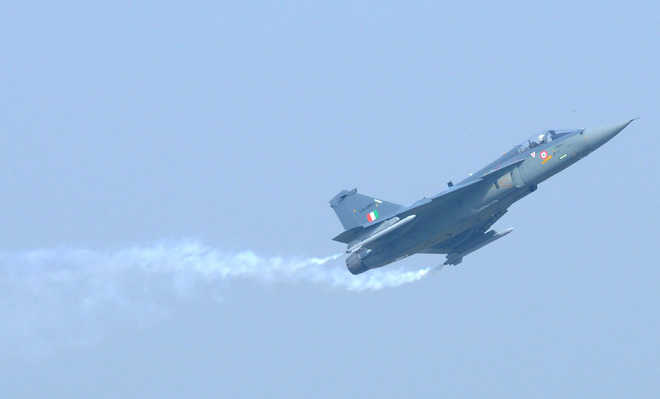
On November 19, a Russian made AN-32 of the Indian Air Force’s transport fleet will take to the skies from a base in the Western Sector using a mix of Aviation Turbine Fuel and Bio-Fuel. This would be the first ever IAF aircraft to use the fuel mix.

After transporters, the helicopter fleet will fly using Bio-Aviation combination. “It will be a gradual move, and ultimately fighters like the Su-30MKi, and Mig-29 will also be flying using Bio-Aviation Fuel, “ said a senior IAF officer who didn’t want to named.

On an average, IAF flies over 100 transporter and over 500 helicopter sorties in a day. “Using Bio-jet blended fuel is a commitment towards lowering the oil import bill and lower the carbon footprint and strengthen the farm-based economy,” Wing Commander Anupam Banerjee, the IAF spokesperson said.

Two years ago, the IAF sent Wing Commander Asheesh Srivastava to study the use of Bio Aviation Fuel at the Centre for Air Power Studies (CAPS). Subsequently, the Indian Institute Petroleum and the Centre for Military Airworthiness & Certification and the Directorate General of Aeronautical Quality Assurance were roped in.

“If we do this well we may never need to import crude oil for our armed forces. This bio-jet product looks, smells and performs exactly like Aviation Turbine Fuel. If we are able to work this out as we anticipate, our aircraft, vehicles and warship can all bank on domestic reserves of indigenously developed and produced renewable fuel,” Dr Anjan Ray Director of the CSIR -Indian Institute of Petroleum said.

Every year, the IAF pays about Rs 40,000 crores for Aviation Turbine Fuel. With Bio-Aviation Fuel, the IAF expects its fuel bill to drop by about 10 per cent. “Initially, the plan is to use a 90-10 mix (90 litres of AFT mixed with 10 litres of Bio-fuel), gradually, as the supply and production of Bio-Fuel increases the plan is to move to a 75 -25 mixture,” a senior official involved with the process who didn’t want to be named said.

To ensure that production of Bio-Fuel doesn’t affect the land available for food-grains, Bio-Fuel will be produced only from non-edible oils that grow well in arid lands. Gujarat, for instance, offered 10,000 acres arid land to produce non-edible oilseeds. Other states that are keen to produce non-edible oil seeds and put up plants to produce Bio- Fuel include Punjab, Haryana, Chattisgarh, Uttrakhand and Telagana.

If the test flight that starts from November mid-week goes as planned, IAF will show-case its capability during the Republic Day fly past on January 26, 2019, a senior IAF official said.

First Published: Oct 17, 2018 10:26 IST