Sanjha Morcha

What’s New

Click the heading to open detailed news

Current Events :

web counter

Print Media Reproduced Defence Related News

Lt Gen Ranbir visits Delta Force, reviews security in Ramban

Lt Gen Ranbir visits Delta Force, reviews security in Ramban

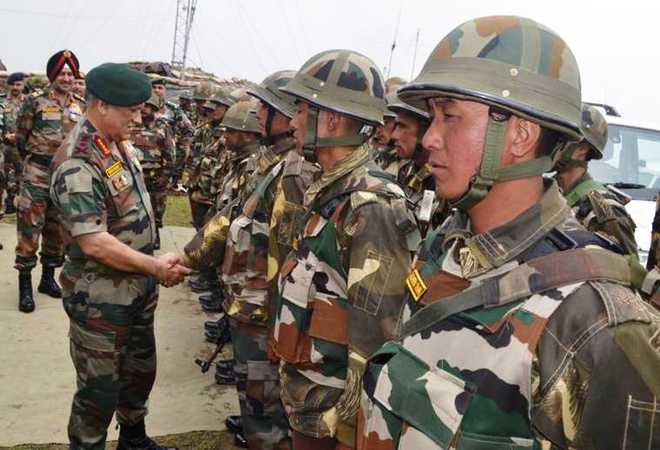
Lt Gen Ranbir Singh interacts with troops during his visit to the Delta Force in Ramban on Tuesday.

Tribune News Service

Jammu, July 31

To review the operation preparedness and the prevailing security situation, Northern Command chief Lt Gen Ranbir Singh on Tuesday visited the counterinsurgency force — Delta — at Dharmund in Ramban district.Lt General Ranbir Singh was accompanied by General Officer Commanding, White Knight Corps, Lt Gen Saranjeet Singh.General Officer Commanding, Delta Force, Maj Gen Rajiv Nanda briefed the Northern Command chief about the prevailing security situation and the preparedness of the force.Defence spokesperson Lt Col Devender Anand said Lt General Ranbir Singh also reviewed the security arrangements for the Amarnath yatra.The defence spokesperson said the Northern Command chief also visited various posts where he was briefed in detail on the actions being undertaken to ensure a robust counterterrorism grid.“He interacted with soldiers and exhorted them to continue to remain vigilant,” the spokesperson said.During the interaction, Lt General Ranbir Singh complimented the formation for its untiring efforts and reiterated the need to remain vigilant to counter the nefarious designs of the anti-national elements, the spokesperson.

41 security men killed in militant attacks this year

Jammu, July 30

In all, 41 security personnel, including 20 policemen, were killed and 907 others injured in militancy-related and stone-throwing incidents in the Kashmir valley this year, officials said on Monday.Giving details, the officials said 39 security personnel, including 17 Army personnel, 20 policemen and two CRPF personnel, were killed and 96 others injured in militancy-related incidents in the first six months of the year.Of these, 28 Army personnel, 31 CRPF personnel and 37 policemen were injured in militancy-related incidents, they said.In stone-throwing incidents, two CRPF personnel were killed and 811 others injured during the same period.Of these, 592 policemen and 219 CRPF personnel were injured in 734 incidents of stone-throwing in the Kashmir valley.According to officials, 32 civilians were killed and 117 others injured in militancy-related and stone-throwing incidents. —PTI


For changes in Army, a study of past vital by Lt-Gen Syed Ata Hasnain (Retd

innovative change is the acme of military effectiveness. However, much depends on the circumstances dictating such change and the process adopted.


For changes in Army, a study of past vital

Changes on anvil: The Indian Army has not lagged in innovation.


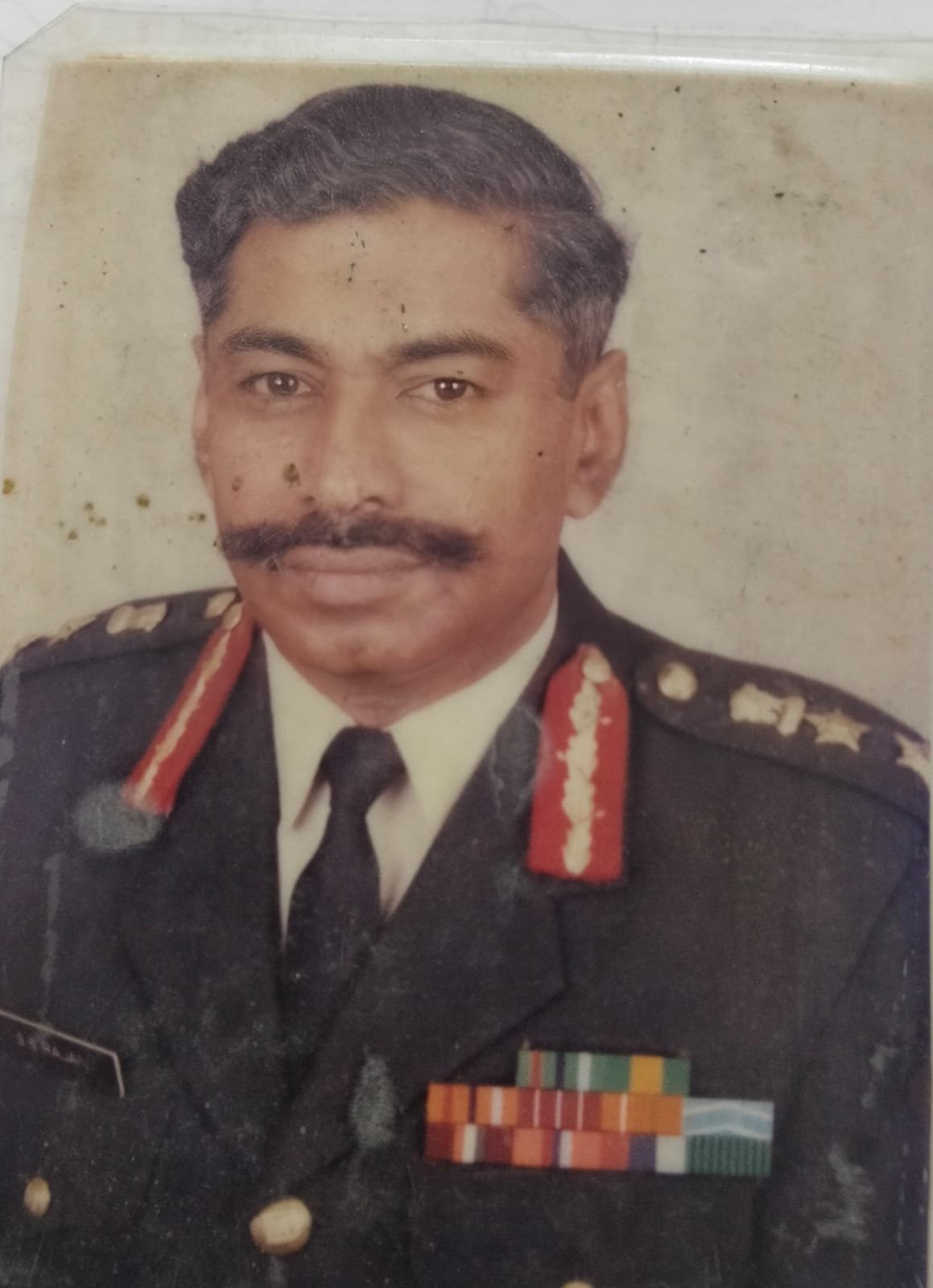
Lt-Gen Syed Ata Hasnain (Retd)

Lt-Gen Syed Ata Hasnain (Retd)

From the reportage about the most recent conference of the Army Commanders, the Indian Army appears hell bent on organisational changes, ostensibly to save Rs 7,500 crore every year and have more money for its capital budget for modernisation. What these changes will be and what effect they will have on the operational capabilities and war-fighting doctrines is an issue that is very comprehensive and can spark a debate. A review of the historical process of change undergone by the Indian Army both at the tactical and operational levels while comparing this with our adversary, Pakistan, can set the tone.The Indian and Pakistan armies have, over the past 70 years, undertaken reviews, like any other army of the world, by continuously studying each other, available technology, concepts and doctrines of other armies, the operational terrain and environment of the times with constraints such as budgeting and resource availability, to optimise their effect in battle. In the Indian context, the two-front threat (China and Pakistan) has been a major consideration; the Pakistan army does claim a second threat on its western front, which in comparison, is marginal. An analysis of some major changes adopted by the two countries over the years is essential for an understanding of the matter.

Pakistan army’s innovations

An immediate recall about the Pakistan army: there are two issues that used to strike us quite starkly many years ago. Very early, Pakistan raised the Recce & Support (R&S) units for the role of tank destruction using anti-tank weapons. These light units reinforced the capability of engaging with a much stronger armoured component of the Indian Army, as a cheaper but very effective option. These units also had heavy infantry automatic weapon detachments to reinforce weaker segments of the holding force in areas under engagement. It afforded much higher flexibility in battle. To overcome its size disadvantage, the Pakistan army decided to enhance firepower at the cost of manpower; it innovatively equipped its basic infantry sub-unit (the section) with two automatics as compared to our one. The Indian Army finally raised R&S units only commencing in 1983 and similarly reinforced our basic sub-units with a second automatic around this time; a good three decades later.

It hardly needs much memory to recall that in 1965, we were surprised by Pakistan’s 6 Armoured Division (a second armoured division), the existence of which was not known to the Indian General Staff. It is after 1971 that we raised a second armoured division and then a third (initially a mechanised division). Among other marked innovations of the Pakistan army was the raising of the artillery division to provide concentrated fire support and flexibility in the mechanised battlefield. We subsequently raised three such divisions. Pakistan also adopted the concept of Air Defence (AD) Command for greater centralisation and control of AD resources all over its territory and defence of its nuclear strategic assets, in the face of a superior Indian Air Force. India has not felt the necessity of such an organisation. Pakistan was the first to include Army Aviation as an essential arm of the Army. It had the advantage of facing no resistance from the Pakistan air force.  Eventually, the Indian Army’s aviation arm did emerge.

One of the most innovative responses in reorganisation within the existing resources was the Pakistan army’s raising of the Centralised Corps Reserve (CCR) for its two desert and semi-desert corps when the threat of the third Indian strike corps emerged in 1990. One may recall the conversion of the HQ Indian Peace Keeping Force (IPKF) of Operation Pawan to a Corps HQ and organised with offensive resources to take the battle across the Rajasthan desert. Unnerved by this, Pakistan quickly put together resources to raise the CCRs by incorporating the returning formations from Saudi Arabia with existing reserves. Gradually, as more resources were raised, these have become two full-fledged mechanised divisions.

Indian Army’s innovations

It is good to give the adversary more than his due just as it’s been done above. However, the Indian Army has not lagged in innovation, although admittedly at the tactical level it was forced to respond to many innovations of the Pakistan army.

At the operational and strategic levels, three innovations mark the Indian Army’s successful adaptation to the changing environment. The 1975 Experts Committee, comprising Lt-Gen Krishna Rao and Maj-Gen K Sundarji (later both Chiefs), recommended a series of measures in reorganisation at operational level of war fighting.
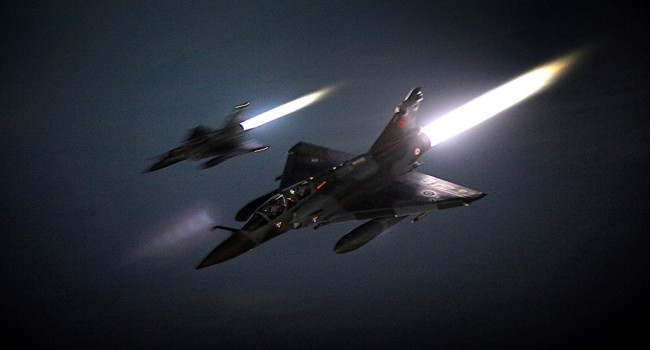
The major lesson here is that none of these were immediately adopted. They underwent a serious doctrinal testing in simulated conditions, wargames and exercises with troops before adoption.

1 Among the most famous was the conversion of many of the divisions of the Strike and Pivot Corps of the plains to the now famous acronym — RAPID (Reorganised Army Plains Infantry Division), giving them a better mechanised capability for manoeuvre in offensive and defensive operations.

The second innovation is the Rashtriya Rifles, 63 units of which today battle terrorists in J&K and manage the counter-terrorist environment. Raised in 1991, this specialised force with a permanent presence in the operational environment, with troops being rotated, has freed up regular units for conventional role; today it optimises for that role. It is one of the finest experiments in Indian military innovation.

3 The third innovation was an almost 180-degree change in concept: the adoption of proactive strategy after Operation Parakaram (the mobilisation effort post the December 13, 2001 terror attack on Parliament). It led to the battle group concept (BG), gave much more teeth to the Pivot Corps to initiate early operations without awaiting the much larger Strike Corps and thereby defeat Pakistan’s much quicker mobilisation effected due to the far shorter distances of its cantonments from the border. Both sides have relocated formations on the basis of this change. Pakistan today unsuccessfully attempts to stymie our thinking through the threats of employing tactical nuclear weapons.

Innovative change is the acme of military effectiveness. But much depends on the circumstances dictating such change and the process adopted. Nothing done in a hurry pays dividend and doctrinal testing, at least through simulated wargaming, and a season or two of exercises with troops contributes to the stability of change


Boeing-made AH-64E Apache attack helicopters to join IAF fleet in ’19

indian air force, apache helicopter

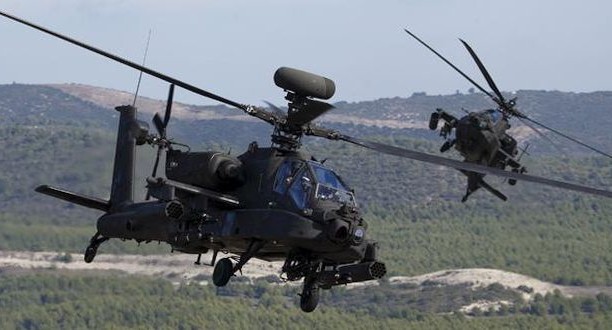
First images of the IAF’s AH-64E Apache painted in the IAF’s signature grey bearing its tri-coloured roundels emerged on Friday from the Boeing production facility in Mesa, Arizona where they’re manufactured (Courtesy: Boeing India).

It’s the most iconic attack helicopter in the world, and the first of its kind, the Indian Air Force lifted off on its inaugural flight last week.

The first images of the IAF’s AH-64E Apache painted in the IAF’s signature grey bearing its tri-coloured roundels emerged on Friday from the Boeing production facility in Mesa, Arizona where they’re manufactured.

Twenty-two such Apaches will begin delivery to the IAF starting March next year as part of a $1.4 billion (approx Rs 96 billion) deal signed in September 2015. The IAF’s Apaches will be deployed at the Pathankot air base, but will also operate from Jorhat in Assam.

Eleven of the 22 Apaches will come fitted with the highly prized AN/APG-78 Longbow fire control radar system that has given the Apache a fearsome reputation for being able to sneak up on targets, open devastating precision attacks at stand-off ranges and operate in hostile airspace with threats from the ground. The IAF Apaches will augment the ageing Mi-35 heavy attack helicopters already in service.

While, the IAF is unlikely to operate more than 22 Apaches, the Indian Army, which signed up for six identical choppers earlier this year is almost certain to multiply that number to at least 30 more, giving India an overall Apache fleet strength of around 60 aircraft.

Pakistan’s military operates US-built AH-1 Cobra attack helicopter variants and is set to receive 30 T-129 Atak combat choppers from Turkey. China deploys the Z-10 attack helicopter with further improvements and inductions likely. India’s Apache fleet will function largely in a deterrent role against conventional ground threats, including tanks and vehicular movement, in the western and eastern frontiers.

Apart from its default Hellfire precision strike missiles and a 30mm chin-mounted chain gun that’s cued by the pilot’s helmet system, the Indian Apaches will also carry air-to-air Stinger missiles specifically requested by the Indian Air Force.

The cockpit, described as a ‘helicopter office’ by operators, is an enormous leap over anything IAF chopper crews have had a chance to fly in operational service.

Large multi-function displays, sensor fusion over networked architecture with other aircraft and digitally shared graphics will see the Apaches plugging into a system that has for long been dominated by Russian systems that have not achieved the sort of networked paradigm required in a modern battlefield.

India has begun production of Fuselages of the Apache.

Last month, the first Indian-built Apache fuselage was delivered ahead of schedule by Tata Boeing Aerospace Ltd (TABL). While the first fuselages are intended for the US Army, later production could be for the Indian Apaches as well.


Darshani Deori at Golden temple to get new doors today Replicas of original ones, seashells used for ivory effect

Darshani Deori at Golden temple to get new doors today

Baba Sukhwinder Singh Bhurewale inspecting the new Darshani Deori doors to be fitted at Golden Temple in Amritsar on Friday. Vishal kumar

GS Paul
Tribune News Service

Amritsar, October 5
The Darshani Deori, the archway leading to the Golden Temple sanctum sanctorum, will get new doors, a replica of the ones installed by Sikh ruler Maharaja Ranjit Singh about 200 years ago. The doors — 118 inches in height, 110 inches wide and with a thickness of 4 inches — will be installed at a ceremony on Saturday that will be attended by SGPC president Gobind Singh Longowal and his colleagues.

The original doors — a sandalwood base with a silver sheet studded with carved ivory attached with golden screws — were unhooked for repairs for the first time in 2010 after these were found to have decayed with time. On July 4, 2010, the mammoth task of restoring their glory was allotted to Kar Sewa Baba Kashmir Singh Bhurewale. Meanwhile, temporary doors were installed as a stop-gap arrangement.

The restoration work was to be completed within a year but was delayed owing to several hiccups, SGPC chief secretary Dr Roop Singh told The Tribune. For one, the wooden base was found to be beyond repair. Another hindrance was non-availability of ivory that was to be engraved on the doors’ borders. As the sale of ivory is banned, the SGPC decided to leave the original doors ‘untouched’ and create replicas with the help of seashells to create the desired effect. On February 15, 2018, it again allotted the work to Baba Bhurewale.

Craftsmen from Agra were specially engaged for carvings on black sheesham. “Every detail was captured through micro-digital photography that helped study the pattern minutely,” explained Baba Sukhwinder Singh Bhurewale. “Barring ivory work (which is replaced with seashells), the new doors are an error-free copy. The craftsmen from Agra took eight months to complete the job, using six quintals of sheesham and 65 kg of silver,” he added.  The original doors will be placed in a glass case at the Golden Temple ‘parkarma’.


Original doors were installed in 1800 AD

  • The original doors carved by Yaar Mohammed Khan were installed by Maharaja Ranjit Singh in 1800 AD
  • These were presented to him by a Sikh family of Sursingh village
14
SHARES

Which Forces Are Authorized to Wear the Maroon Beret/Turban?

A beret is wore by soldiers all around the world. They are in different colours and reveal a bit about the regiment they belong to. Berets became a compulsory component of armed forces uniforms from 20th century. Mass production of Beret began in 19th century France and Spain. They were made in different sizes, shapes and colours.

At some places, the beret was used as tradition, at some places as a uniform and also for fashion.

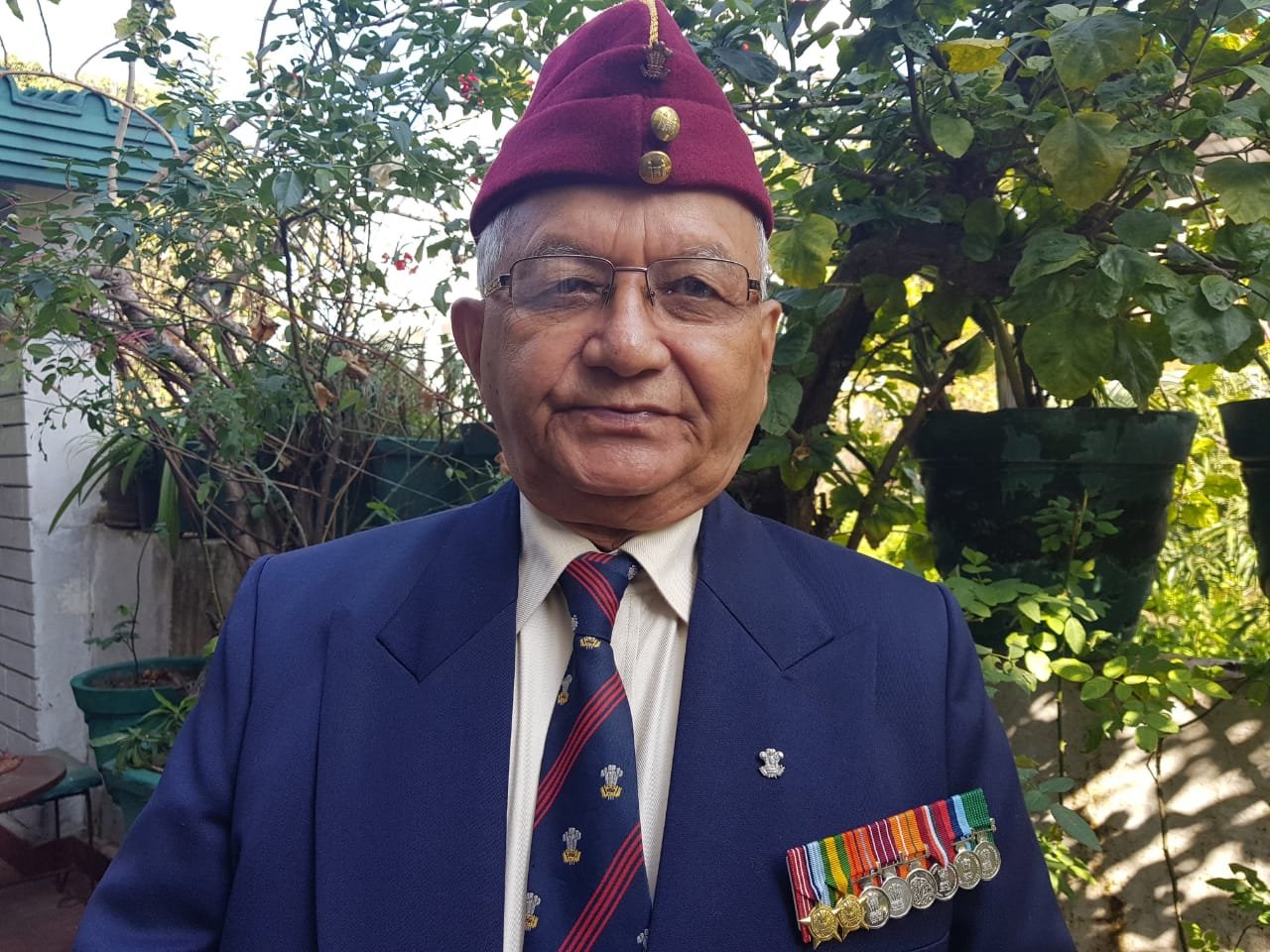
One of the colour which is recognized often is the maroon colour beret. Maroon beret is the symbol of all airborne forces around the globe. Be it Indian Paratroopers, American paratroopers or Italian paratroopers, no matter what gender one has. The Maroon beret is only worn in peace time not during operations. Let us see what forces are authorized to wear Maroon Beret in Indian armed forces.

The Army:

In the army, the personnel of the parachute forces are explicitly authorized to wear the beret. There can be some exceptions in case of medical and other support officers.

50th (Independent) Parachute Brigade-

The personnel of 50th parachute regiment

President’s Bodyguard-

Maj Surendra Poonia of President’s Bodyguard

Special Forces Units

Para SF, Major Mohit Sharma, 1 Para SF, Ashoka Chakra with Maroon Beret

Indian Air Force- In the Indian Air Force, only special forces wear the beret. The forces in IAF which are authorized to wear the beret are:

Garud Commando Force-

And special operations Force.

Indian Navy-

In the navy, only the Marine commandos are authorized to wear the maroon beret.

Para-military forces- Probably the forces which does a lot of work but isn’t heard often.

The special frontier force from the home ministry are airborne and hence they have authority to wear Maroon Beret.

Parachute trained personnel-

Apart from all the above authorized forces, the personnel who are parachute trained but are not from one of the forces that are specified above are eligible to wear the beret with permission from the Commanding Officer of their respective units.

A parachute trained AMC doctor

Jawan found murdered Illicit relations may be the reason behind it

Tribune News Service

Amritsar, September 29

Mystery shrouds the death of an Army man whose body was found near Fatehpur Rajputa village here on Friday.

According to information, victim Tasbir Singh (29), a resident of Jalal village, was posted in Bathinda. He returned to the city on leave. He went to meet his friends on September 25 but did not return.

Harmandep Singh, a family friend, said the family came to know about his death after the police approached the family. He was identified from his identity card, clothes and other belongings found near the body. The family got to know later that he was on leave since September 5. However, he did not reach home. His brother Jagbir Singh, in his complaint to the police, said Tasbir might have been poisoned.

SSP Parampal Singh said an investigation was under way. A case under Sections 302 and 201 of the IPC was registered. As per the circumstances surrounding the body, it appeared that he was murdered. His body was handed over to the family members after a postmortem examination. “We have got some clues and the case will be cracked soon,” the SSP added. Sources said two persons had been detained in connection with the case. Illicit relations appear to be the reason behind the murder.


The feminine face of Indian insurgency

Rashmi Kalia

Most discourses on counter-insurgency view women insurgents as ‘victims’ of male cadres who not only instrumentalised women into their cause but also victimised women cadres with sexual exploitation and aggression. A feminist analysis of women militants often lacks an insight into their agency, often viewing violent women as lacking empowerment since violence is seen as a masculine domain with ends that are mostly patriarchal in nature. However, She Goes To War, written by veteran journalist Rashmi Saksena, is an honest and systematic narrative on the lives of women insurgents active in various parts of India. The book also is a pioneering study that delves deep into the passions, motives and beliefs of women which have led them into the world of terrorism and insurgency. Rashmi Saksena tells the stories of 16 Indian women militants in the insurgency-ridden areas in Kashmir, Chhattisgarh, Manipur, Nagaland and Assam. All these women have much in common, despite the fact that they come in various avatars, of “killers, victims, mercenaries, lured innocents, misguided youth, double agents and even as the bewitched following their love to the end.” The commonality in their lives lies in the role that the conflict in their disturbed native states played in shaping their destinies and a drive to “take ownership of their unorthodox decisions and carry them through without a thought for the consequences.”Even though the author tells us the stories of women militants, she does not view their lives, and decisions, through the prism of militancy. Imbued with a intensely humane insight, Saksena’s stories are about ordinary women who made some extraordinary choices; be it the beautiful Nighat of Kashmir who fell in love with the handsome separatist militant Khalid and was ready to do anything for her love, or Tulsi of Chhattisgarh who initially joined the naxal bands because she believed they would sing and stage plays. However, not all women featured in the book picked up guns for love or out of ignorance. The book narrates the heart-rending accounts of women militants such as Purnima of Manipur who joined the insurgents after having seen her parents getting allegedly tortured at the hands of the Indian Army and Shanti Kunjum of Chhattisgarh who was forced to join the naxals because her village was caught in the crossfire between the Salwa Judum bands and the naxalites. The book brings an entirely new perspective to seeing women in wars. It informs, empathises, but never romanticises.  The book makes the reader see, just a little more clearly, that women with guns, against the State, are still just women. They have fears, maternal love, insecurities and they fall in love too.It also puts forth a very pertinent point to those trying to find a resolution to insurgencies; no insurgency can survive without the support of women. They are either at the forefront or behind the bloodied scenes and bodies. Hence, no resolution can be complete without studying the important roles that women play in these conflicts and also, in helping them integrate into the society when they return from the throes of violence.


Role of Army highlighted Two-day event marks 2nd anniversary of surgical strikes

Role of Army highlighted

A girl poses with a rocket launcher.

Our Correspondent

Jalandhar, September 28

To commemorate the second anniversary of the surgical strikes, a two-day programme was celebrated here today at three places to spread awareness among the youth and the masses regarding what the Army had been doing on the borders and how people are living peacefully.

The two-day programme has been organised by the Ministry of Outreach Bureau, under the aegis of the Ministry of Information and Broadcasting, in collaboration with the Army.

The event was organised at three places — at Curo High Street Mall inaugurated by Lt Gen Dushyant Singh, Commander, 11 Corps of the Army; at MBD Neopolis, in association with the Sikh Light Infantry; and at Jawahar Park, Mall Road, Jalandhar Cantt.

Additional Deputy Commissioner (ADC), Jalandhar, Jitendra Jorwal, and Commanding Officer Col Prashant Aggarwal, along with other senior officers of the Corps, attended the programmes.

The Vajra Corps carried out day-long activities such as pipe and jazz band display and video presentations. Weapons and other equipment such as rocket launchers and AK-47 were also displayed, which were the major attraction for youngsters.

A video was also showcased at the MBD Mall, highlighting why the Army was among the toughest job.

Besides, at Curo Mall, a photo exhibition on the topics ‘Sankalp se Siddhi’, the struggle of the Indian Independence, youth power for the development of the country, women’s empowerment, healthy India and Government’s commitment for social justice was also held.

Lt Gen Dushyant Singh said: “Through such events, a message is passed on to society that progress can only be made if boundaries of a country are safe.”

He said, “Such programmes increased the close interaction with the public and the young generation get inspiration to join the Army, adding that the country was safe and secure till the Army is present.”

A special ‘selfie corner’, where small weapons were installed, was the major attraction. A youth, Kamaldeep Singh, donning an Army t-shirt said: “Its being a great honour to be present here today and learning about various equipment as well as life of Army personnel.”

An information desk was set-up to motivate the youth to join the Army.

People of all age groups, a large number of NCC cadets and schoolchildren visited the venue.

Deputy Director of Regional Outreach Bureau Anuj Chandak, Field Outreach Bureau’s Deputy Director Pritam Singh and Assistant Director Sapna, besides other officials, were among those others present.


Lateral entry into civil services: Why the Ministry of Defence needs it the most by LT GEN PR SHANKAR

The recent announcement by the government to laterally induct 10 joint secretaries into various ministries evoked a lot of reactions. The decision was much debated in the media, with everyone having a view over it. However, one thing came through clear — for a growing power, we need to have expertise beyond the standard IAS officers in the government.

Personally, I felt it was a good decision, and welcomed it. However, it left me bemused. I felt that we were approaching it from the wrong end. I did not see any post advertised for the Ministry of Defence (MoD)!

A bureaucracy that lets its veterans sit on a protest in public and then gets them arrested by police needs introspection. A bureaucracy that lets its veterans sit on a protest in public and then gets them arrested by police needs introspection. (Photo: PTI)

This is the ministry where niche professional knowledge and competence is the most needed. In fact, I have always considered that this is one ministry which is most the disintegrated, though it is designated as the Integrated Head Quarters of the MoD.

Am I being harsh? Just consider this.

Any bureaucrat in any ministry is supposed to serve and promote the interests of the personnel and organisations who are under that ministry. Right? It is only the MoD bureaucrat who has beautifully succeeded in gaining a reputation among service personnel that he is working against them — whether in equipping them, paying them or safeguarding their interests, and, as an extension, the interests of the nation.

A bureaucracy that lets its veterans sit on a protest in public and then gets them arrested by police needs introspection. That too after really having done so much for grant of OROP (which was not bad, despite some drawbacks that could have been ironed out). It was an international shame. The last time veterans were publicly humiliated, in my memory, was by the USA during the Vietnam War. India let itself down.

The incompetence of the MoD is contained in its own task force report on defence procurement — or the lack of it — which the honorable Dr Suresh Bhamre, MOS, reportedly submitted to the PM. It was a damning report. These episodes, from arcoss the spectrum of dealings in the MoD, point in just one direction. It is obvious enough to draw your own conclusions.

Why is this so?

That is because the MoD is manned by people who have very limited knowledge of defence affairs. The first variety is the IAS officers or other officers brought in on deputation from other ministries.  They are seeming know-it-alls and generally carry a chip of misplaced superiority on their shoulder.

The second variety is the Armed Forces HQ civilian cadre, who have very little knowledge beyond Delhi but are permanently near the levers of power. They seek parity with service officers, and hence ensure that the wrong levers are always pressed. The Services HQs are satellites in orbit manned almost exclusively by service officers. All these entities work in exclusive compartments; most of the time at cross-purposes with each other.

As eyewash, some service officers are posted in the MoD at insignificant positions. I have never dealt with a service officer in the MoD in any important appointment in all my assignments in Delhi. On the other hand, I always came across people dealing with important defence matters who had no clue about defence before they entered the portals of South Block. More importantly, they would have no link with defence after they completed their assignment.

Many were from railways, audit, agriculture, animal husbandry, health and other myriad departments. I always wondered as to why these posts could not be manned by service officers of requisite experience. It would add so much to the system, and then Dr Bhamre would not have to be occupied with producing such cathartic reports. Elementary, my dear Watson, but Sherlock would have been stumped!

You think I am exaggerating? Let me quote examples.

I once led a delegation to the USA to carry out a maintenance evaluation of the 155-mm Ultra Light Howitzer (ULH). It was a multidisciplinary team consisting of representatives from Artillery (users), EME (maintainers), DGQA (quality controllers) and the MoD. A director from the MoD acquisition wing was detailed. He was a genuinely good officer with whom I had dealt with. We all landed in their artillery school in Fort Sill to evaluate the Howitzer on the mandated aspects.

In our initial meeting, we introduced ourselves to the US team. We gave out our respective backgrounds. It was then that I came to know that this director was a veterinarian and from animal husbandry background. The Americans were bursting blood vessels, but kept poker faces during the discussion. I have always since wondered as to who selected a veterinary officer to handle capital procurement cases for the Army.

It is now a part of our record that a veterinarian had a hand in assessing the maintainability of the 155-mm ULH for Indian conditions. Photo: India Today/fileIt is now a part of our records that a veterinarian had a hand in assessing the maintainability of the 155-mm ULH for Indian conditions. (Photo: India Today/file)

That selecting officer was a genius in the Alfred E Neuman class. If you are wondering who Alfred E Neuman is, he was the hero of MADcomics of my era. Well, that director did what he could and did it extremely well, due to his other good qualities of the heart. I always admired him for that. But I have also always blamed the system for choosing a veterinary officer for that post. No wonder our procurement is poor.

Anyway, that is history. It is now a part of our records that a veterinarian had a hand in assessing the maintainability of the 155-mm ULH for Indian conditions. The moral — even veterinarians can procure guns for India. Who needs Army officers?

The second case pertains to the time when I was sent to the USA to do an international course on defence management. It was a fantastic course about procurement. I learnt so much there that it stood me in good stead for the rest of the decade I was in service. With the education I got there, I could make a difference to my country, and I would like to think that I did, even if my sense is misplaced about its magnitude or importance.

Anyway, along with me came a director from the MoD to do this course. He was a bright and younger officer from the Indian Railways. Again, in my opinion, a very good officer. He was in an administrative post in the MoD. It was not his fault that he opted for a course in the US. There was probably no one else immediately available to do this course and he was promptly detailed.

So, an officer of the Indian Railways, in an administrative job in the MoD, did a course in defence procurement management from the USA. He never procured any equipment for the Services during his deputation at the MoD. I do hope he is doing some procurement for the Railways. After all, if veterinarians can procure guns for the Army with on-the-job training, Railway men can procure engines or whatever for the Railways after learning about arms procurement in an international environment.

I do hope the honorable Dr Bhamre has got some answers as to why our defence procurement is a mess.

Well, coming back to the present day, I understand that these 10 posts are important and are open for service officers to apply. Great. It brings me to a question. If service officers are considered fit enough to apply for posts of joint secretaries in other ministries based on their service experience, how come they are not fit to be joint secretaries in their parent ministry where their lifetime experience will be invaluable? More so their commitment and understanding?

It will contribute to greater integration of the MoD with the services, whom they are meant for. It will also promote sorely-needed joint-ness between the Army, the Navy and the Air Force. In my view, the MoD, the DRDO, the OFB and the DPSUS need to be populated with good officers from the Forces in all sections and branches. Unless charity begins at home, there is no use of big talk and reforms.

Will this be done? True reform in defence affairs will come when there is integration of the MoD in earnest. Treat this question to be coming from the quintessential common man of India, who has never been answered satisfactorily. He can only look at things in bewilderment.

This is the challenge I am throwing to the people in power — ministers, generals and secretaries. I am confident that this issue will be buried somewhere in the humungous files of the MoD. Will someone prove me wrong?


Another video of ‘surgical strikes’ out

Tribune Web Desk
Chandigarh, September 27

https://pbs.twimg.com/amplify_video_thumb/1045225163887849472/img/9IyJObviTL5Eu0gA?format=jpg&name=small

Almost two years after the Indian Army’s ‘surgical strikes’ on PoK terror camps, another video of the military operation was released on Thursday .

Thus this has added new twist to the raging debate on whether the event should be commemorated by institutes affiliated to the UGC as ‘Parakram Parv’.

The Army had carried out surgical strikes on the night of September 28-29, 2016 in Pakistan Occupied Kashmir, inflicting heavy casualties on terrorists.

The Congress has termed the observance of Surgical Strike Day as a “jumla” (gimmick), contending that the exercise will enhance national prestige.

“This is only meant to increase the prestige of the Army. There is no politics in it. I must denounce the Congress charge that we are politicising the surgical strike. No, we are not doing that,” the Human Resource Development (HRD) Minister had said.

The decision to celebrate the day was announced last Thursday when the University Grants Commission (UGC) in a letter to all Vice Chancellors of the universities had asked them to observe the day in their institutions through special parades by National Cadet Corps, and pledge of support by students to the armed forces by writing letters and cards.