Sanjha Morcha

What’s New

Click the heading to open detailed news

Current Events :

web counter

Print Media Reproduced Defence Related News

MoD set to open OFB for local, foreign firms

Move will turn OFB into public sector corporate entity and help increase exports

MoD set to open OFB for local, foreign firms

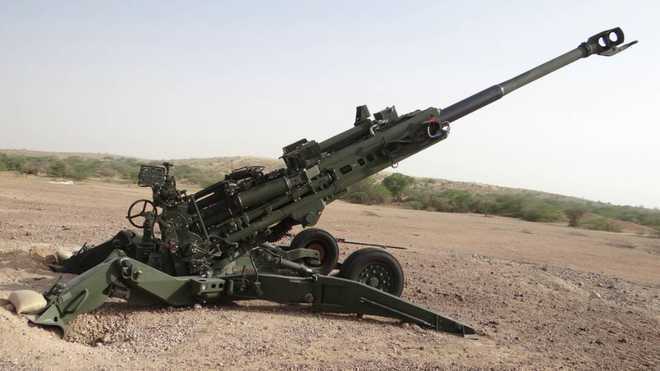
Photo for representational purpose only.

Tribune News Service
New Delhi, August 21

The Ministry of Defence intends to allow foreign and Indian Industry to tie up with Ordnance factories to produce military equipment.

The proposed transformation is to turn the Ordnance Factory Board (OFB) into a public sector corporate entity and help increase export market, self-reliance and add latest technology and innovation.

The OFB is a subordinate or attached office of the Department of Defence Production. It has 41 Ordnance factories, nine training institutes, three regional marketing centres, and four Regional Controllers of Safety working under it. 

The principal products of OFB include tanks and armoured vehicles, artillery guns, small arms and weapons.

Corporatised Ordnance factories may not require finances from the government to fund modernisation and R&D. Ordnance factohave been facing the performance issues for a long time, officials said. The high cost of OFB products is due to high overhead charges and there’s minimal innovation and technology development.

The subject of restructuring of OFB has been examined by various committees. One of them even suggested that the OFB needs to have integrated responsibility for all functions and requires new mode of thinking and decision-making. This corporation will not mean privatisation but will bring about functional autonomy and make them accountable.


Martyr’s statue damaged

Martyr’s statue damaged

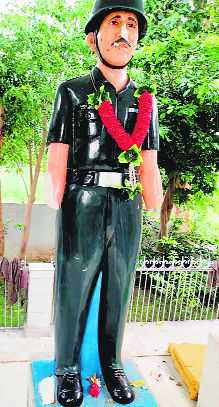
The damaged statue of a martyr at Pahari village. Tribune photo

Our Correspondent

Gurugram, August 7

Tension gripped Pahari village near Pataudi today after a statue of a martyred Army man installed in a local temple was damaged.

Some other idols were also damaged in the temple by unidentified persons. The villagers staged a protest but were pacified by the police.

Early morning today, villagers found that the statue of Anil Kumar (martyred in 2007) and idol of Radha-Krishna installed in the local temple were damaged.

They called the police and on the complaint of Sarpanch Pradeep Kumar, an FIR was registered against unidentified persons under Section 295 (defiling place of worship with intent to insult the religion of any class) of IPC at Pataudi police station. When the villagers staged a protest, a police team headed by Rajesh Kumar, DCP (Manesar), and Rajesh Prajapati, SDM, Pataudi, went there and pacified them


The United States Can’t Solve the Kashmir Dispute

By Sumit Ganguly
On July 22, during a White House meeting with Pakistani Prime Minister Imran Khan, U.S. President Donald Trump made a surprise offer to mediate the long-running dispute between India and Pakistan over Kashmir. “It is impossible to believe,” Trump said, “that two incredible countries who are very, very smart with very smart leadership can’t solve a problem like that. If you would want me to mediate or arbitrate, I would be willing to do it.”
Even more surprising, Trump claimed that Indian Prime Minister Narendra Modi had sought his intervention in the matter. For informed observers, this claim was hard to believe. And indeed, within hours of Trump’s statement, India’s foreign minister strenuously denied that Modi had made any such suggestion. More to the point, he reiterated India’s long-standing position that the Kashmir dispute must be solved through strictly bilateral negotiations between India and Pakistan. Modi, probably wanting to avoid implying that Trump was a liar, maintained a studious silence.
Trump’s offer, however ill-advised, was hardly the first U.S. attempt to intercede in Kashmir. Over the past six decades, successive U.S. administrations have tried to make headway on the dispute. Those efforts all failed—and Trump’s is unlikely to turn out differently.
INDIA’S WAY OR THE HIGHWAY
India and Pakistan have both claimed Kashmir, a majority-Muslim region in the north of the Indian subcontinent, since the two countries’ partition in 1947. India has de facto control over about 55 percent of the region and the majority of its population; Pakistan controls around 30 percent and China the remaining 15 percent. The dispute over the region has led to three wars and countless skirmishes and stands as a permanent threat to stability in South Asia—one that is especially dangerous, given that both India and Pakistan are nuclear armed.
The United States first attempted to mediate the Kashmir dispute in 1962. China and India had just fought a disastrous border war, in which the Chinese People’s Liberation Army routed a poorly armed and ill-prepared Indian Army. New Delhi turned to Washington for military assistance. At the time, Pakistan was an important Cold War ally of the United States, and Pakistani President Ayub Khan, aware of India’s vulnerable position, convinced the administration of U.S. President John F. Kennedy to prod India into negotiations over Kashmir. In coordination with the British, Kennedy dispatched Averell Harriman, the noted diplomat and former ambassador to the Soviet Union, to New Delhi.
The Sino-Indian war had left Indian Prime Minister Jawaharlal Nehru emotionally broken and politically weak. Dependent on diplomatic goodwill and defense supplies from both the United States and the United Kingdom, he allowed himself to be cajoled into talks over Kashmir. Between 1962 and 1963, India and Pakistan held six rounds of negotiations. India was willing to make significant territorial concessions under Anglo-American pressure, but even these were not enough to meet Pakistan’s expansive demands. The talks ended in a deadlock.Since 1972, no Indian government has ever evinced the slightest willingness to allow any foreign power to broker an understanding with Pakistan on Kashmir.
Having seen these talks reach an impasse despite its willingness to compromise, India hardened its position on external interference in Kashmir, fearing that outside powers would force it to offer concessions to Pakistan, the weaker party. The last time New Delhi allowed a foreign power to restore normal Indian-Pakistani diplomatic relations came after the Indo-Pakistani war of 1965, in which Pakistani forces had invaded Indian-controlled Kashmir only to be fought to a standstill. With the United States distracted by the Vietnam War, the Soviet Union helped broker a cease-fire that ultimately led to the 1966 Tashkent Agreement, restoring the prewar status quo.
After the third Indo-Pakistani war in 1971, India became fully committed to preventing external mediation. When the two sides met in 1972 to discuss the postwar settlement, negotiations were limited—at India’s insistence—to Indian Prime Minister Indira Gandhi and Pakistani President Zulfikar Ali Bhutto, along with a handful of trusted aides. The resulting settlement, the Simla Agreement, stated that the two countries would “settle their differences by peaceful means through bilateral negotiations.”
From New Delhi’s perspective, this agreement enshrined the principle that all future discussions about Kashmir must be conducted on a strictly bilateral basis. Since 1972, no Indian government has ever evinced the slightest willingness to allow any foreign power, especially the United States, to broker an understanding with Pakistan on Kashmir. India is convinced that it can extract better terms through bilateral negotiations, and it is suspicious that Washington is too close to Islamabad.
Pakistan has resisted this particular interpretation of the Simla Agreement. Instead, recognizing its weakness vis-à-vis India, it has constantly sought to bring in the United States as a mediator. In 1999, for instance, as the fourth Indo-Pakistani war was drawing to a close, Pakistani Prime Minister Nawaz Sharif flew to Washington to seek American intercession. U.S. President Bill Clinton met with Sharif, but—much to Sharif’s dismay—he unequivocally branded Pakistan the aggressor in the conflict. At Sharif’s insistence, Clinton nevertheless offered to look into the Kashmir dispute. Yet he never followed through, dropping the subject for the brief remainder of his presidency.
Subsequent U.S. administrations have tried to revisit the Kashmir issue, despite intransigent opposition from New Delhi. In 2009, for instance, India embarked on a vigorous diplomatic offensive just as the administration of President Barack Obama was preparing to appoint Richard Holbrooke, the veteran diplomat, as the White House’s special representative for Afghanistan and Pakistan. Some within the administration were convinced that settling the Kashmir issue—and thus soothing Pakistan’s fear of India—would help elicit Pakistani cooperation on Afghanistan. Yet New Delhi, having gotten word that Holbrooke was pushing to include Kashmir in his diplomatic portfolio, explained to the United States that such a move “smacked of interference and was unacceptable” to India. The Obama administration quietly abandoned the idea.
KNOW YOUR LIMITS
Trump (or some in his administration) may believe that the dramatic growth in U.S.-Indian engagement over the past two decades, combined with the president’s personal rapport with Modi, provides this White House with an opportunity to succeed where all of its predecessors have failed. Certainly, Pakistan is trying to convince Trump that this is the case. Yet there are compelling reasons to think otherwise.
India’s permanent foreign policy bureaucracy has a long institutional memory and is extremely resistant to drastic policy shifts. It is likely to advise Modi against caving to the United States, given that India’s current policy has prevented it from being forced into concessions to Pakistan for nearly five decades. India’s new foreign minister, Subrahmanyam Jaishankar, is a career diplomat who shares the bureaucracy’s suspicions regarding foreign, and particularly American, mediation.
No Indian government—and especially not one, like Modi’s, that has assumed a hawkish stance toward Pakistan—will yield any ground on this issue. Already the U.S. State Department seems to have acknowledged reality, stating on July 22 that it believes the Kashmir dispute is a “bilateral” issue between India and Pakistan.
Trump should heed his own State Department’s advice. Pushing New Delhi on Kashmir will get him nothing except a public failure and a damaged U.S.-Indian partnership.

Go to Source
Author:

Hits: 2

Do you like the post?

Revisiting Kargil, the words zone

From personal stories to letters sent home by soldiers, here’s a look at books on the 1999 war

CHANDIGARH: In the countdown to Kargil Vijay Diwas, on July 26, we got to read thousands of stories, firsthand accounts and trivia about the war. A friend of mine, too young to remember the war to reclaim the Kargil Sector that had been taken over by Pakistani insurgents, hit local bookstores and libraries with gusto, me in tow.

ARCHIVES■ July 26, 1999: Indigenous Milan missile targeted at enemy positions in Kargil’s Drass Sector.

Those wanting to revisit the conflict may want to first pick up Punjab chief minister Captain Amarinder Singh’s A Ridge Too Far: War In The Kargil Heights, which has detailed studies of all the battles that were fought during the war.

General VP Malik (retd), chief of the Army staff from 1997- 2000, provides a personal account of the war in his book Kargil: From Surprise To Victory, which is a must-read, says Ajay Arora, proprietor of Capital Book Depot, in Sector 17. Malik, who was instrumental in planning and coordinating the military operations, gives an interesting insight into the crucial war.

Pankaj P Singh, owner of The Browser Library and Bookstore in Sector 8, recommends Colonel SC Tyagi’s The Kargil Victory: Battles From Peak To Peak.

However, an account of the Kargil is grossly incomplete without reading the Pakistani version of the war. Nasim Zehra’s From Kargil To The Coup: Events That Shook Pakistan and Witness To Blunder: Kargil Story Unfolds by Col Ashfaq Hussain of Pakistan’s media wing, Inter-Services Public Relations, also give one a glimpse of the happenings across the border.

Ever wondered what goes on in the minds of soldiers when the hopes of the nation and the fate of their comrades rest on their shoulders? Lt Gen Mohinder Puri’s Kargil: Turning The Tide is a gripping account of the operations of 8 Mountain Division, which was tasked to evict the enemy from the Drass-Mushkoh Sector.

Twenty years on, it isn’t just the war but its impact on the soldiers and their families that has to be understood. Letters From Kargil: The Kargil War Through Our Soldiers’ Eyes is an epistolary account of the war. Author Diksha Dwivedi in her bookgives readers an insight into the soldiers’ lives through letters posted to their loved ones. Lt Praveen Tomar writes home to say “Baptism by fire makes you a man,” and when the war is over he exults, “We did it and we did in style.”

Other books being read in the tricity are India’s Most Fearless by Shiv Aroor and Rahul Singh; A Soldier’s Diary Kargil: The Inside Story by Harinder Baweja and The Brave: Param Vir Chakra Stories by Rachna Bisht.


Attrition in armed forces is more of a myth

More and more service officers are coming from middle and lower-middle-class backgrounds and have legitimate career aspirations. Most officers retire in early-to-mid-fifties and have family responsibilities. The organisational pyramid in the armed forces is quite steep and many bright and deserving officers miss out on board proceedings for higher promotions.
Attrition in armed forces is more of a myth

Choice: The absence of vertical movement avenues goads officers to move laterally.

Bhartendu Kumar Singh
Indian Defence Accounts Service

For long, we have been fed with narratives that the armed forces are suffering from a high level of attrition, where more officers are calling quits. However, recent statistics show that the number of officers who left the defence services voluntarily in the last three years is minuscule and nearly constant: 677 in 2016; 725 in 2017; and 698 in 2018. What is worrying is the continued phobia and artificial concern about the ‘ghost of attrition’ and non-recognition of its positive and dynamic relationship with India’s emerging, vibrant and mature economy.

Established narratives on attrition consider it a bad element for the individual and collective morale of the armed forces. Attrition is often propagated as a major manpower concern for the armed forces. Such narratives are, however, bereft of facts, figures and actual justifications and do not confirm to contemporary trends in normative economics. Also, the impact of the so-called attrition has not been empirically established on issues such as the operational preparedness of the armed forces.

On the other hand, modern managerial principles treat attrition as a part and parcel of the organisational culture. Attrition brings dynamism, agility and mobility to individuals. Organisations are challenged to create an attractive work culture in response. From this perspective, attrition is good since it allows the servicemen and armed forces to retain dynamism and make the best of opportunities. There are credible reasons why established perspectives on attrition amongst officers are not true. 

First, the armed forces are supposed to be a reflection of larger social structure. However, the social profile of the service officers as well as the armed forces has changed in the last few decades. Unlike the old generation military elites who eschewed integration with the civil society even after retirement, the new generation of officers is uncomfortable with the garrison mindset and favours greater integration with civil society. They also detest some archival practices in services, like the overbearing and intrusive influence of the wives’ welfare associations. Some of them have working spouses who find it very difficult to adjust with frequent transfers.

Second, as Morris Janowitz rightly predicted, there has been an increasing narrowing of skill differentiation between military and civil elites; an outgrowth of increasing concentration of technical specialists in the military. Service officers who perform such technical tasks have direct civilian equivalents: engineers, signal experts, doctors, logistics experts etc. Technological developments in the last few decades have led to the ‘civilianisation’ of the military profession due to the blurring of differences with the civil side. The organisational culture that characterises civil jobs has, therefore, permeated the military side. Concurrently, military professionals perceive ‘careerism’ in the same fashion as their civilian counterparts. 

Third, more and more service officers are coming from middle and lower-middle class backgrounds and have legitimate career aspirations. Most officers retire in their early-to-mid-fifties and have family responsibilities. The organisational pyramid in the armed forces is quite steep and many bright and deserving officers miss out on board proceedings for higher promotions. The absence of vertical movement avenues goads them to move laterally, as and when opportunity knocks their doors.

Fourth, attrition is a given fact in developed economies like the US and UK. The military career is transitional for young men after graduation as they settle down in different professions after putting in variable years of military service. Military experience is valued by corporates and duly rewarded. Post 1991, the private sector in India has also become vibrant, mature and, in some cases, fatally attractive. Jobs have grown in public and corporate sectors, apart from entrepreneurship opportunities. Service officers are qualified and experienced enough to handle these jobs. This makes transition through attrition possible.

Critics of attrition forget that it is a social investment where some of the best trained, physically fit and highly disciplined professionals transit to civil society. As Samuel S Huntington wrote, “military function requires high order of expertise. No individual, whatever his inherent intellectual ability and quality of character and leadership, could perform these functions efficiently without considerable training and experience.”

Regrettably, we recognise their contributions only during wars or crisis situations with neighbours and mostly remain insensitive to their continuous training and exposure to security-building exercises. We do have examples of many prominent figures in public life, strategic writings, defence journalism and commercial flying who left the armed forces midway and have done quite well in alternative careers. Attrition is, therefore, a rational choice by officers and attempted only when the scope for upward mobility or betterment in personal life is assured. The society also benefits in process.

It emerges, therefore, that attrition affects the armed forces like other organisations in the public and private sectors and we need not overtly worry about it since the proportions have not reached the alarming level and create stress for manpower planning in services. Instead of perceiving armed forces officers as mere specialists in ‘management of violence’ and suitable only for security-related jobs, we should develop the right perceptions regarding them as specialists in many other segments.

Also, despite public policy efforts like pre-retirement professional education and training, reservation and weightage in jobs etc, institutional mechanisms for facilitating transition of retiring officers into civil society have not moved beyond the public sector. The private sector is still insensitive and accords little credence to incoming military experience.

Finally, our policy discourse needs to discuss ways and means for making attrition more attractive for short-service officers who need a second career more than anyone else and are faced with an uncertain job market when they leave the services in their mid-thirties.

It is time for a paradigm change in perceptions about attrition that is in response to socio-economic changes, re-defined civil-military relations, and above all, legitimate aspirations of service officers for themselves and their families. We need more policy support to make it a win-win situation for officers and society at large.

(Views are personal)



Ban on ‘army’, ‘police’, ‘VIP’ stickers on vehicles

LUDHIANA : Commissioner of police Sukhchain Singh Gill on Thursday banned pasting of ‘police’, ‘army’ and other ‘VIP’ stickers on private vehicles without authority. According to the police chief, anti-social elements and criminals can take advantage of such stickers and words on vehicles and threaten the law and order situation in the city.

DON’T COVER FACE WHILE COMMUTING ON ROADS

The commissioner of police has extended the ban on covering the face while driving or walking on the road perceiving it as a threat to the law and order situation.

Issuing the orders under Section 144 of the Code of Criminal Procedure (CrPC), the police commissioner said miscreants covered their faces to execute crimes, making it impossible for the police to identify them, adding that the violation of the ban will invite penalty.

The ban will last for two months, though the people with allergies or other medical conditions have been exempted.

KEEP RECORD OF BUYERS OF ARMY PRINTED CLOTHES

The commissioner of police also issued orders to shopkeepers to keep record of the buyers of army print clothes and uniform under Section 144 of the CrPC. The commissioner said the shopkeepers sell army print clothes and uniform, but do not keep record of the sale. Anti-social elements can misuse and commit crime in the city by wearing army and paramilitary uniform.

The commissioner ordered shopkeepers to keep picture, identification proof and mobile phone of buyers while selling army uniforms. The shopkeepers will also keep a record of the stock and will submit the same with police stations concerned .

INSTALL CCTV CAMERAS The police chief also ordered owners of petrol pumps, LPG gas agencies, marriage palaces and money exchangers to install CCTV cameras in their premises. The police chief said that as theses establishments possess cash, miscreants target them for robbing cash. They need to be more vigilant to avoid such incidents.

TRANSFER OWNERSHIP OF SECOND HAND VEHICLES

The commissioner also ordered to transfer the ownership of second hand vehicles to the name of buyers within 30 days of the purchase of vehicles. The police chief added that the miscreants used to buy second hand vehicles and do not get them transferred it to their names. Later, they use such vehicles in criminal activities.

NO ENTRY FOR HEAVY VEHICLES IN DAY TIME To reduce traffic snarls in the city, the commissioner has banned the entry of heavy commercial vehicles in the areas falling under the jurisdiction of the municipal corporation from 8am to 10:30pm.

However, light and medium vehicles, such as pick-up trucks, are permitted to ply on city roads from 12pm to 5pm.

BAN ON SALE OF PLASTIC KITE STRING Gill has also extended the ban on the sale and storage of Chinese kite string under Section 144 of the CrPC terming the string as dangerous for humans and animals. The commissioner said violators would ill face stern police action. Many commuters suffer injuries on face and neck after getting entangled in the strings while riding two-wheelers. Many birds have reportedly died after getting entangled in the deadly string, he said.


Honeytrapped’ sepoy to face court martial Held 5 days ago for sharing secret info with foreign national

‘Honeytrapped’ sepoy to face court martial

Ravinder Saini

Tribune News Service

Mahendragarh, July 16

The court of Chief Judicial Magistrate (CJM) in Narnaul has decided that the case of Army man Ravinder Yadav be tried by court martial. He had been arrested five days ago on charges of sharing secret information pertaining to the Army with a foreign woman on Facebook and Whatsapp.

The order was passed by the CJM while hearing a petition moved by advocate of the accused, who pleaded that the case be tried by court martial, citing Section 475 of the CrPC. The advocate gave reference of a High Court order in a similar case to support his plea.

“Under Section 475 of the CrPC, there is a provision to decide that such cases be tried by court martial. We urged the magistrate to transfer the case to the Commanding Officer of 5 Kumaon Regiment in Arunachal Pradesh, where he is posted,” said advocate Ishwar Jakhar.

Yadav had joined the Kumaon Regiment as sepoy in 2017. Jakhar said the court had directed the Station House Officer concerned to hand over the accused to the Commanding Officer after obtaining transit warrants. The Commanding Officer had been asked to send the case back if trial was not held there, he added.

“The advocate pleaded in court that only Army officers could determine how much vital information had been shared by the accused with the woman. Since the police are unable to carry out such investigation, the case should be tried by court martial,” said a police spokesman. The police would obtain transit warrants for handing over the accused to his regiment, he said.

Sources said Yadav had disclosed during interrogation that the woman used multiple mobile numbers to chat with him on Facebook and Whatsapp and he shared information about his station of posting and weapons.

According to the sources, he had come in contact with her last year when he was posted at Amritsar. The woman had deposited Rs 5,000 into his bank account, the sources added.


Indian Army NCC 47 Special Entry Scheme Notification 2019 Out, Apply Online @joinindianarmy.nic.in

Indian Army NCC 47 Special Entry Scheme Notification 2019: Indian Army has released notification for NCC 47 Special Entry Scheme for Short Service Commission. Interested candidates can apply to the posts through the prescribed format on or before 8 August 2019.

Important Dates

  • Opening date of online application submission: 10 July 2019
  • Last date for submission of online application: 8 August 2019

Download our Sarkari Naukri app from Play Store 

Indian Army NCC 47 Special Entry Scheme Vacancy Details

  • NCC Men – 50 Posts
  • NCC Women – 5 Posts

Eligibility Criteria for Indian Army NCC 47 Special Entry Scheme Recruitment 2019
Educational Qualification:

  • For NCC ‘C’ Certificate Holders: Graduation Degree or equivalent with aggregate of minimum 50% marks.
  • For Ward of Battle Casualties of Army Personnel: Degree of a recognized University or equivalent with aggregate of minimum 50%.
  • NCC ‘C’ certificate Not required for Wards of Battle Casualties.

Selection Process for Indian Army NCC 47 Special Entry Scheme Recruitment 2019
Candidates will be selected through interview.

Official Notification PDF Download Here Click Here
Online Application Link Click Here
Official Website Click Here


Best Books for IBPS Clerk Preparation

How to apply for Indian Army Recruitment 2019 
Interested candidates can apply to the posts through the online mode from 10 July to 8 August 2019. Candidates can take a printout of the finally submitted online application for future reference.


Worried about leaks, Indian Army asks personnel to avoid large groups on WhatsApp

The directive, issued by the DGMO, aims to curb pilferage of information from Indian Army personnel, because ‘enemy agencies’ could access it.

Representational image | Chris Ratcliffe/Bloomberg

New Delhi: The Indian Army has asked its personnel not to be part of large groups on internet-based chat or email services. It feels the move will control leak of sensitive information about the armed forces.

However, the Army has allowed them to be part of small, close-knit groups, where members are “service personnel known to each other” and “whose credentials can be ascertained”.

The missive is part of a list of instructions on information security issued last month by the Director General of Military Operations (DGMO) to all Army units and formations, with an aim to curb pilferage of information. It said this is particularly crucial, because enemy agencies have access to advanced monitoring, decryption and data analysis capabilities.

The directive said the primary source of information leakage has been identified as the increasing use of personal devices, especially smartphones, and messaging apps like WhatsApp to exchange official information, and has warned of strict action against personnel found violating instructions.


Also read: How WhatsApp is helping Indians lose weight, gain abs, and make money


Clear instructions

The DGMO has told personnel clearly that no free social media platform is safe, and information shared on such platforms could be compromised.

The presence of Army personnel on social media is to be controlled as per its existing social media policy, and they will have to adhere to the existing norms about revealing their identities and ensuring that pictures of equipment training, maps and other sensitive material are not uploaded. It also made a reference to the increasing instances of honey-trapping of service personnel.

The directive further stated that no information pertaining to the Indian Army should be shared through personal devices, and training material should not be stored in any such devices for future reference.

The use of smartphones is also to be restricted at places of duty, and banned in sensitive locations like ops rooms and training locations, irrespective of seniority. The mobile phones of personnel of all ranks would be checked quarterly, and records will be maintained.

The DGMO insisted that internet should be accessed from a centralised official facility and personal internet services, if any, should comply with cyber policies.

Too many lapses

Speaking to ThePrint, a senior Army officer, who did not wish to be named, said: “Such directives are issued from time to time because there have been too many lapses on the breach of confidential information.

“There are often some WhatsApp group invites where a person has to join using a link, which may not be a secure link. It is always advisable to be cautious of such networks.”

The officer also said the directive was not about banning social media among Army personnel.

“It clearly talks about the existing social media policy, which does not stop Army personnel from being on social media. The idea is to generally tell people to be more aware of which groups they are part of and what are they sharing there. It has come out of genuine security concerns,” the officer said, adding that such breaches have been reported in western militaries too.