









Sanjha Morcha

What’s New

Click the heading to open detailed news

Current Events :

web counter

Print Media Reproduced Defence Related News

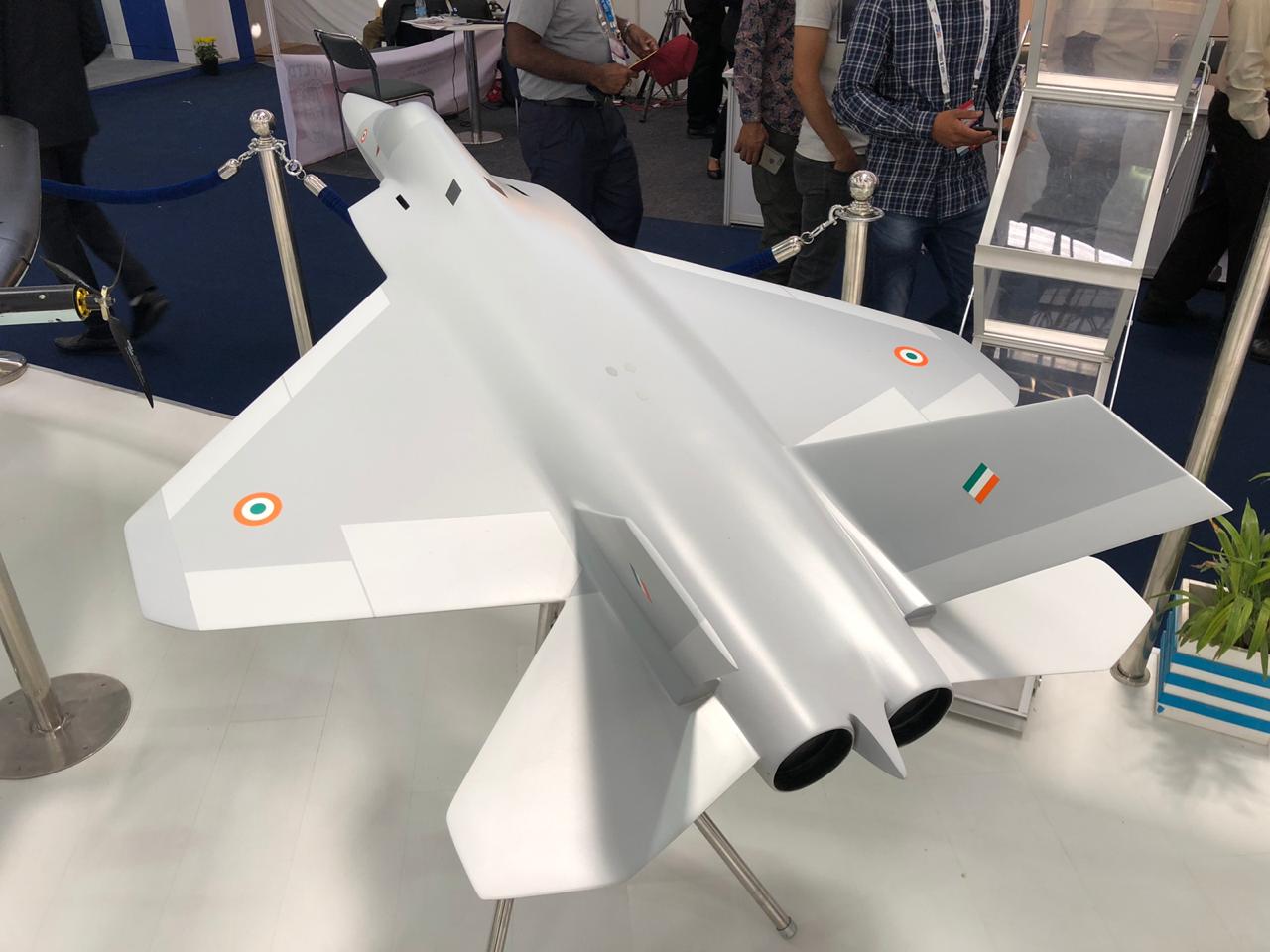
Air Chief Bhadauria’s focus on homegrown AMCA shows IAF learnt nothing from Tejas failure

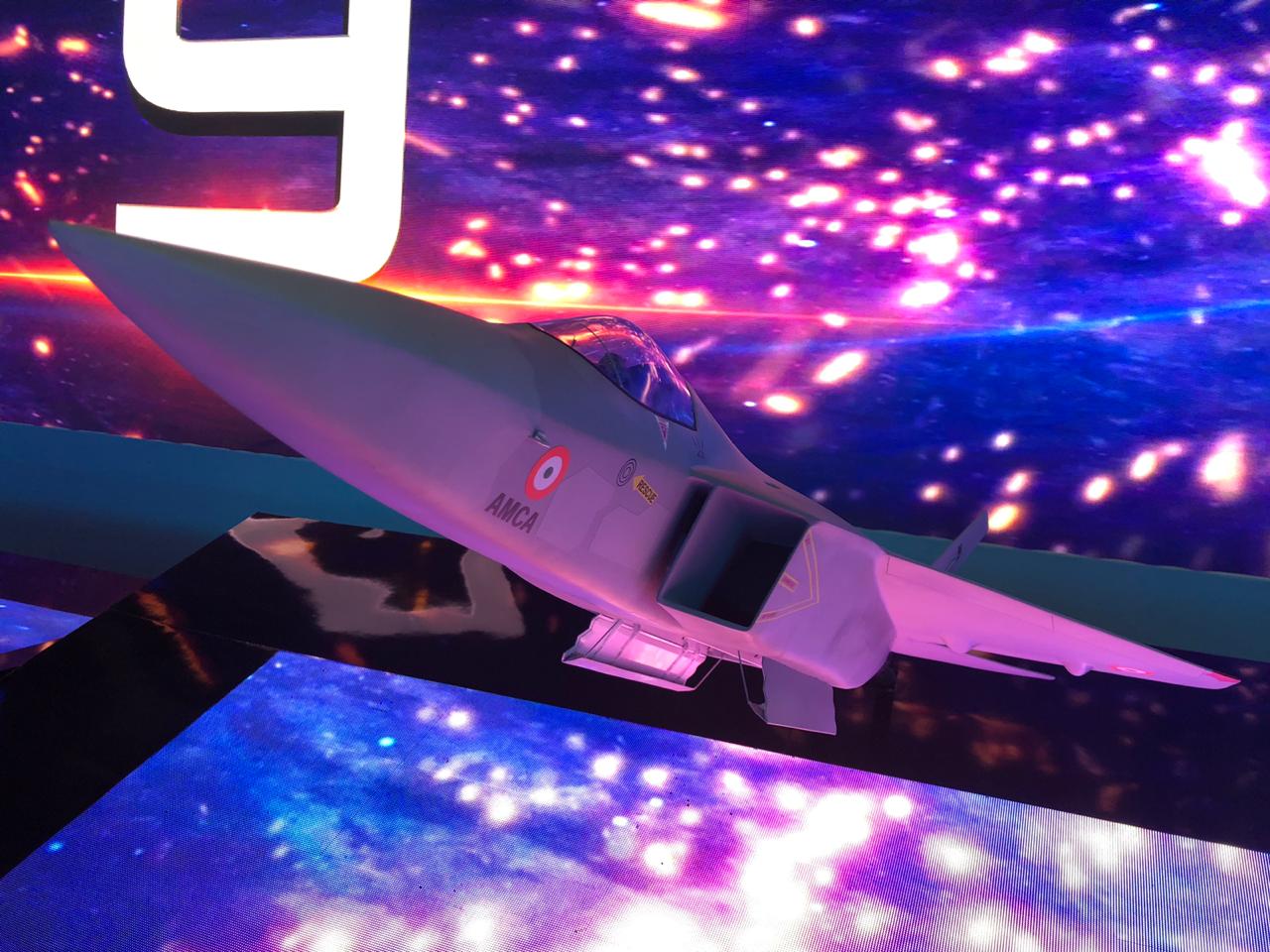
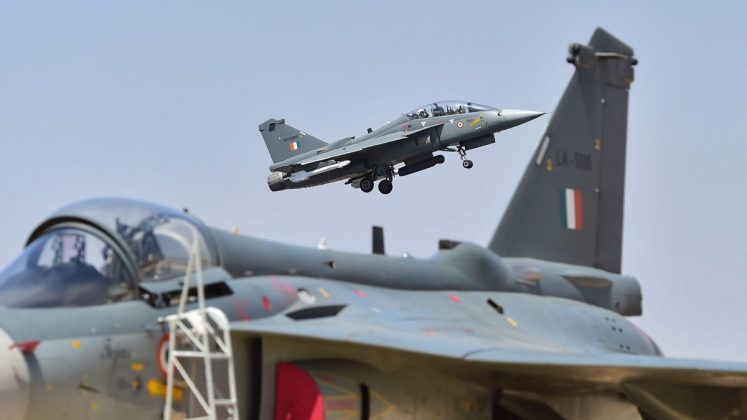
Air Marshal Rakesh Kumar Singh Bhadauria, the new Chief of Air Staff, claimed in a press conference that the days of importing jets were over and that the Indian Air Force will now throw its entire weight behind the fifth generation Advanced Medium Combat Aircraft. This seemingly innocuous statement reveals the deep malaise in our defence thinking, born from a lack of institutional handover of knowledge. To understand what could go wrong with the Advanced Medium Combat Aircraft (AMCA), we need to look at what went wrong with the Light Combat Aircraft (LCA), the homegrown Tejas. After all, the only reason we still fly the “flying coffin” MiG 21s is because of the inordinate delay in the induction of the fourth generation Tejas – the aircraft whose maiden flight took place in 2001 but which is yet to be operationalised 18 years later. This is when the US, Russia, and China have started fielding fifth generation fighters with the US operationalising the F22 back in 2005. Misplaced priorities To start with, both “light” and “indigenous” had become anachronistic even before the Tejas took its first flight. When the aircraft was conceived in an era before fly by wire (fbw) system was introduced, “light” denoted manoeuvrability. Recall how the original Maruti 800 was once considered much easier to drive than the bulky Ambassador, but the entry of electronic steering made even a huge BMW 7 Series just as easy to drive as a minuscule Tata Nano. This obsession with “light” meant that when, within the 4th generation, the emphasis shifted from kinetics to electronics, sometime in the mid-1990s, Tejas had neither the extra power nor the space to accommodate the additional electronics such as data boxes, secure network devices, built-in countermeasures and associated wiring. Moreover, it became painfully obvious that India, still a third world pre-industrial country, did not possess either the industrial depth or width to produce the entire gamut of electronics required to facilitate this change of focus in fourth generation aircraft. Additionally, the need to be “indigenous” was born in an era before the collapse of the USSR, when India was subject to severe technology transfer restrictions, which were rapidly and progressively lifted after US President Bill Clinton’s visit in 1999. In short, by the time the very first Tejas flight came around in 2001, the rationale to be light and indigenous had both evaporated. More significantly, 18 years on, we still haven’t internalised these changes or learnt from our mistakes. Rooting for a ‘deeply flawed’ AMCA While Britain is moving forward with a sixth-generation aircraft, India is pondering rudimentary and deeply flawed designs for a fifth generation Advanced Medium Combat Aircraft, despite being so far behind the technology curve. Why is AMCA flawed? For starters, much like the Tejas, the AMCA seems to focus on paradigms of combat that have long since been bypassed. Defence and foreign policy expert Pushan Das and I had written about this extensively in 2015. A summary of the findings from our analysis are as follows: 1) Too much emphasis on engine thrust and thrust vectoring despite close-range air combat having moved away from G force manoeuvring to get into an attack position to Angle of Attack, which emphasises maintaining power and recovery from a steep manoeuvre. 2) A continuing emphasis on kinetics as opposed to understanding that a fifth generation aircraft is essentially a computer in the air, able to cut short the processing time, and reduce the ‘detect to kill chain’ (the time taken between detecting and killing an aircraft – essentially the ability to detect first and shoot first, and in the case of stealth, hopefully avoid being detected) by several tens of seconds (the difference between life and death). 3) The lack of emphasis on deep networking with other detection and attack assets, which form the basis of the fifth generation combat that allow it to hand over time-critical information to assets that may be better positioned or equipped to fire the first shot. 4) No thought was given to a new range of smaller but long-range weapons to be carried in sufficient numbers concealed within the body of the aircraft. 5) No thought was given to conformal sensors that blended into the aircraft’s body or new materials like cockpit canopies that allow the pilot to look outside but prevent radars from detecting the cockpit (which is a major problem as it is not stealthed up like the rest of the aircraft’s body) or frequency selective radome materials that perform the same function for the radar (allow the radar to function unimpeded, while preventing the radar’s flat surface from being detected by other radars). 6) A range chart that seemed horrendously muddled, implying that the twin-engine AMCA would cover the same range in twice the amount of fuel that an F-35 would with half the fuel. Given these serious conceptualisation flaws that do not bode well from a project and risk management point of view, besides the industrial supply chain problems inherent in the Tejas, we now run a very high risk of chasing another white elephant. It’s one thing that the Defence Research and Development Organisation (DRDO) did not learn anything from its failures — natural given it is a public sector undertaking with no accountability or risk. But the Indian Air Force’s failure to internalise these lessons after so many crashes and deaths and capability shortages is simply appalling.

idrw.org .Read more at India No 1 Defence News Website https://idrw.org/air-chief-bhadaurias-focus-on-homegrown-amca-shows-iaf-learnt-nothing-from-tejas-failure/ .

Amarinder Singh recalls his days in Army, says letters were ‘driving force’

Amarinder Singh recalls his days in Army, says letters were ‘driving force’

Punjab Chief Minister Captain Amarinder Singh. Photo credit: Twitter.

Tribune Web Desk
Chandigarh, October 10

Punjab Chief Minister Captain Amarinder Singh on Thursday got nostalgic remembering his days in the Army. On National Post Day, Captain thanked India Post Office for their services.

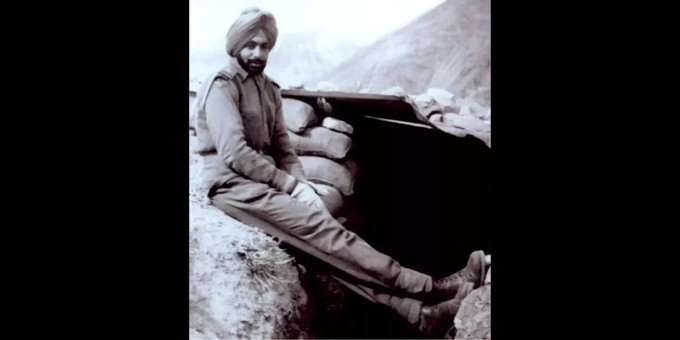
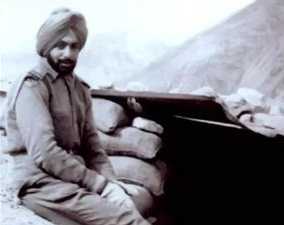
In a tweet, Captain gave a “salute” to India Post Office. He revealed how receiving a letter from home, used to be his driving force. Along with a heartfelt note, he shared a picture of himself in his uniform.

In the black and white picture, Captain can be seen sitting near a bunker. 

He wrote: “Nothing can beat the feeling of receiving a letter from home in the army! It used to be our driving force during my army days & these letters brought both tears & smiles. I salute @IndiaPostOffice for their service to the nation & thank them for the memories. #NationalPostDay.”

Capt.Amarinder Singh


@capt_amarinder


Nothing can beat the feeling of receiving a letter from home in the army! It used to be our driving force during my army days & these letters brought both tears & smiles.

I salute @IndiaPostOffice for their service to the nation & thank them for the memories.

View image on Twitter


Balakot strikes show shift in govt handling of terror: IAF chief

Balakot strikes show shift in govt handling of terror: IAF chief

Indian Air Force chief R K S Bhadauria

Hindon, October 8

The strategic relevance of the Balakot strike reflected the resolve of the political leadership to punish the perpetrators of terrorism and this has been a major shift in the government’s way of handling terrorist attacks, Indian Air Force chief R K S Bhadauria said on Tuesday.

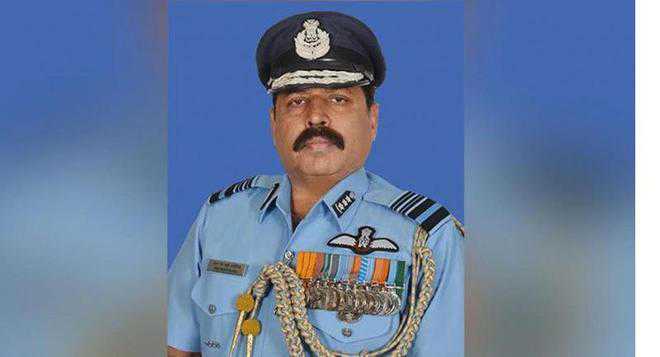
In his Air Force Day message, Bhadauria, who took charge as the Chief of Air Staff a little more than a week ago, said to ensure operational success in all future operations, the IAF must maintain a high serviceability of combat equipment and exceptional training standards.

“The strategic relevance of this is the resolve of the political leadership to punish the perpetrators of terrorism and the capability of the IAF to execute a strike inside Pakistan. This has been a major shift in the government’s way of handling terrorists attacks,” Bhadauria said in a written message on the 87th anniversary of the Indian Air Force.

In a separate address at the Hindon Air Base, he also pointed out that the geo-political environment has been rapidly changing and uncertainties have created numerous challenges to national security.

“It is extremely important that we are always vigilant and alert to the existing sub-conventional threat. In the year gone by, the IAF has demonstrated its resolve and capability in punishing the perpetrators of terrorism and we need to be ever prepared to meet any contingency that challenges the defence of our country,” the Air Force chief said, referring to the Balakot strikes.

Post the Pulwama attack on February 14 that killed 40 CRPF personnel, the IAF launched air strikes on terror camps at Balakot in Pakistan.

Bhadauria said the IAF also acknowledges the contributions of all personnel of commands, stations and units who silently and professionally contributed to the success of the air strikes on the terrorist camps at Balakot earlier this year. —PTI


COLUMN: The IAF Is Right To Marshal Its Full Muscle For The AMCA

By YUSUF UNJHAWALA

There have been interesting and varied reactions to the idea that it will be better for the Indian Air Force (IAF) to put in all its efforts on the 5th generation Advanced Medium Combat Aircraft (AMCA) and cancel the 4th generation LCA MkII which is now known as the Medium Weight Fighter (MWF) program. While
some have been supportive, others don’t think the MWF should be scrapped. Their arguments are that the MWF is required and without the learning from it, India will not be able to make the AMCA. Another argument is that it is needed to replace the Mirage-2000, MiG-29 and Jaguar fleets. Some others fear that any
delay in the development of the AMCA will leave a hole while killing the LCA program.

First of all, the MWF is not required to make the AMCA. The AMCA was a separate development program and is not intended to succeed the LCA. The  technologies and learnings from the LCA Mk1 and the LCA Mk1A will help the DRDO, HAL, ADA and the private sector companies involved to make the AMCA. This was also stated by the HAL CMD R Madhavan. Interestingly, this was in December 2018 when the LCA MkII had not changed into the bigger MWF. Earlier In April 2018, the then Defence Minister Nirmala Sitharaman in a written reply to a question in Lok Sabha stated that the feasibility study for the programme has been already completed So clearly, the making of the MWF has no bearing on the future manufacturing of the AMCA.

The LCA program which was initiated to replace the MiG-21 did not envision a larger MWF as a follow up. After the shortcomings of the LCA Mk1, the LCA MkII
was to be re-engined with a more powerful GE-414 from the current GE-404 along with the advanced avionics and weapons capabilities with modifications to the
airframe. The delays in getting the LCA MkII project led to the LCA Mk1A with upgrades as demanded by the IAF – primarily, the AESA radar and electronic warfare suite.

The Medium Combat Aircraft (MCA) was envisioned in the middle of the 1990s to replace the Mirage and Jaguar fighter jets. As that project didn’t take off, it transformed into the AMCA project in 2010 which the IAF saw as the replacement for its Mirage, MiG-29 and Jaguar fleets. So the question of the recently announced MWF being the replacement for these jets does not arise and is not dependent on it.

The fear of delays in AMCA leaving a hole in capabilities while killing the LCA project is unfounded. Perhaps those saying so doubt the capabilities of our scientists and engineers to deliver. The LCA project is not being killed as a total of 123 jets are on order as on date. But delays in giving full backing to the AMCA will hurt the project as both the LCA Mk1A and MkII projects will run parallelly taking majority of the resources and effort. In fact the LCA project itself could benefit from the AMCA project. The advanced sensors and other technologies that will be developed for the fifth generation AMCA can be used to upgrade the LCA and make it a potent platform. This can potentially lead to an LCA Mk1B model in the future which the IAF will find useful to order in certain numbers. This is what Lockheed Martin has done with the F-16 block 70 which draws from technologies developed for its F-35 5th generation fighter. Incidentally, it is one of the contenders for India’s medium range combat aircraft acquisition project.

Since there are reports of interest in the LCA from other countries, India will have a potent product to offer for export after the requirements of the IAF are completed.

The Indian Navy (IN) will not have an indigenous option if the AMCA is not developed at the earliest as it has rejected the LCA for carrier operations. The IN has stated that it will only buy the AMCA even as it backs the testing of technologies for naval operations with the Naval LCA. The IN operates one aircraft carrier, the INS Vikramaditya and building a second which will be named INS Vikrant. The IN is also going to build a much larger third carrier that will carry twice the number of aircrafts with assisted take off. The carrier which is likely to enter service sometime in the mid 2030s will require about 100 fighter jets.

In the absence of an indigenous option, the navy will be forced to look for an imported jet. It is already looking to buy 57 fighter jets for which the French Rafale and the American F/A-18 Super Hornet are in contention. The navy will also need a replacement for its 45 MiG-29s that currently are in service. The potential requirement for the AMCA from both the IAF and the IN is nearly 400 jets. The time frame for that acquisition to start is in the next 12-15 years. This will only be possible if there is complete backing and support for the AMCA so that it enters production in that timeframe.

Yusuf Unjhawala is a military affairs analyst and Editor of Indian Defence Forum. His work appears in Livefist, Mint, The Print and other publications. His views are his own and may not reflect those of Livefist.

Also read: More Than Tejas, The IAF Needs To Take Over AMCA Project NOW


Can Kashmir compel the ummah to close ranks?

Can Kashmir compel the ummah to close ranks?

ISI views the Islamic State and Al Qaida as adversaries in Afghanistan and Pakistan, but Indian security agencies are weighing if the circumstances have changed enough in Kashmir for ISI to make an alliance with these pan-Islamic ideology-driven terror organisations

Sandeep Dikshit in New Delhi

Kashmir of 2019 is definitely very different from the troubled Valley we have been witness to for the past three decades. Leave alone the diminishing of the politico-governance arrangement from that of a full state to a mere Union Territory with the loss of Ladakh to boot. Also leave alone the scrapping of Article 370, a temporary provision as External Affairs Minister S Jaishankar never tires of educating his audience at American think-tanks, while omitting to mention that it was provisional only till a plebiscite was held.

These two injuries to the Kashmiri psyche are enough cause for the vulnerable and the young to rally to the militant banner. But a more potent one worries Intelligence officials. It has not yet made it to TV chat shows and newspaper articles. Yet it lurks at the back of the Indian Intelligence’s calculations. This is the ebbing of Palestine as the cause célèbre for the activist Muslim all over the world.

Once the second Intifada petered out into the 2008-09 Israel-Gaza conflict and a right wing government took power in Tel Aviv, the Palestine cause has lost a lot of its emotional power to rally Muslims. If not in sending fighters, then in making contributions and providing them moral and diplomatic support.

Impending threat

After the restrictions ease in Kashmir and there is the inevitable violence if the citizenry faces off with the security forces, it is the cheerleaders of the thus-far mythically united Muslim ummah (community) whom India’s Intelligence community will be closely watching.

Security forces would not like to acknowledge, but they have had considerable help in Kashmir from the division among the militancy’s sponsors over the ideology. When militancy first took roots in Kashmir, armed groups were at odds over the end goal: should Kashmir be a part of Pakistan or should it be an independent country?

At times, the armed gangs decimated each other to the delight of the security establishment. Sometimes one group would walk over to the side of the security forces to eliminate their rivals. In one celebrated case, the leader of a gang of gunmen who crossed over became an MLA after one of the poorly patronised elections. At that time, there was little effort at mediation by the sponsors of terrorism sitting in different countries. This was partly because they were involved in other pressing violent mayhem in the Balkans, Chechnya, Indonesia, etc.

It was also because Pakistan kept the insurgency at a low boil. The intention never was to wrest Kashmir valley. It has known that the Indian armed forces have made that impossible. The aim behind frequent violence in the Valley was to deplete New Delhi’s political capital to force it into talks with Islamabad. Pakistan’s bottomline was freezing the Line of Control (LoC) into a de-facto border.

The new reality

Once the equations changed in Kashmir valley, the bets should be off on the other side too. Till a month before the August 5 clampdown, a new rivalry was playing out among militant groups. On one side were groups like Lashkar-e-Toiba (LeT) or Hizbul Mujahideen that want political independence or Kashmir’s merger into Pakistan. On the other, groups like ISJK (Islamic State for Jammu & Kashmir) or AGH (Ansar Ghazwat-ul-Hind) that want to set up an Islamic Caliphate and are affiliated with Islamic State and Al Qaida.

Days before the clampdown, the Army shot dead a few militants in separate encounters. What was unusual was that they were earlier with LeT and had crossed over to ISJK and AGH. There is a strong possibility one group had tipped the security forces about the newly converted Islamic State and Al Qaida fighters.

Though the ISI views the Islamic State and Al Qaida as adversaries in Afghanistan and Pakistan, the security agencies are weighing if the circumstances have changed enough in Kashmir for it to make an alliance with the pan-Islamic ideology driven terror organisations.

The ISI is up against a stable government whose Kashmir policy is driven by the quartet of Modi-Doval-Amit Shah-Bipin Rawat. On the other hand, the desperate appeals of business tycoons to Pakistan’s army chief Qamar Javed Bajwa indicate the economy is severely malfunctioning. Pakistan’s rulers will need a diversion. The old methods may not work with the Indian quartet on Kashmir.

This is where the role of ideologues of armed ‘jihad’ scattered all over the world becomes crucial. Kashmir is the cause that unites all of them as Palestine goes on the backburner, Syria enters a stalemate and the war in Yemen unravels badly for the Sunnis.

Dealing with global backers

India has been well-served in the past by the distractions of the flag-bearers of a united Muslim ummah. This time, India has worked on countries such as Saudi Arabia, Indonesia and UAE that claim this pedestal while Nigeria and Sudan have remained largely neutral. But others such as Malaysia, Turkey and Iran have remained immune to the persuasion by South Block. Their stance gives legitimacy to activists of the Muslim cause to attempt to heal the breach among the jihadis in the Kashmir valley.

The clampdown since August 5 has ensured that the regular season of infiltration has been nipped in the bud. The US, as long as it can, will be holding Imran Khan to his promise to keep a check on cross-border terrorism. Forces inimical to India will have to make do with the current lot of jihadis bottled up in the Valley to create much more than a ripple. But the communications clampdown in the Valley is delaying attempts at rapprochement between the groups.

ISI will be going against its grain if it concedes ground to pan-Islamists. It had sheltered Al Qaida leaders in Pakistan after 9/11 but was equally quick to hand them over to the Americans to keep the military aid spigot flowing. Osama bin Laden was permitted limited contact with his comrades. Now that the old tactics of calibrated violence have not worked with the Modi government since 2014, ISI could consider throwing the kitchen sink. But if it does so, it would do so knowing that the more virulent brand of terrorism, Al Qaida and Islamic State, need a short spell of abetment before they become out-of- control monsters.


Positive move Politicians rise above partisanship for Guru Nanak

Positive move

PEOPLE from all over the world will gather to commemorate the 550th birth anniversary of Guru Nanak Dev. In a spirit that cuts across narrow partisan divisions, which is rare in today’s environment, political leaders both from the Centre and Punjab, along with religious leaders, will be together on the stage. This is the way it ought to be. However, recent politicking and bickering between various political parties, particularly the Congress on one side and the Akali-BJP combine on the other, have raised the unholy spectre of a distastefully fragmented event.

Guru Nanak’s message of universal brotherhood finds resonance far beyond his followers, the Sikhs. The values advocated by Guru Nanak need to be followed, more so in these disturbed times. Credit for reaching out would go to Capt Amarinder Singh, who went the extra mile. President Ram Nath Kovind, Prime Minister Narendra Modi, and former Prime Minister Manmohan Singh, all have accepted the Punjab Government’s invitation to attend the Sultanpur Lodhi celebrations. The SAD announced that it had already invited the President and the Prime Minister. Such one-upmanship needs to be eschewed.

Now, more than ever, coordination between the state government and the SGPC, and thus the SAD, will need to be strengthened to ensure that various irritants are overcome graciously. Statements by both SAD and Congress leaders have betrayed a particularly myopic view focused more on ‘taking credit’ than taking concrete steps that would enrich the celebrations. The eyes of the world will be on what happens at Sultanpur Lodhi. It would be deeply distressing if partisan sniping were to detract from the main event. People who jostle for their spot in the sun must remember that the focus of the event is a celebration of the Guru and his teachings, which guide us to take the path of honest living and sharing. Let the spirit of ‘seva’ prevail among all those who celebrate the birth anniversary of the founder of Sikhism.


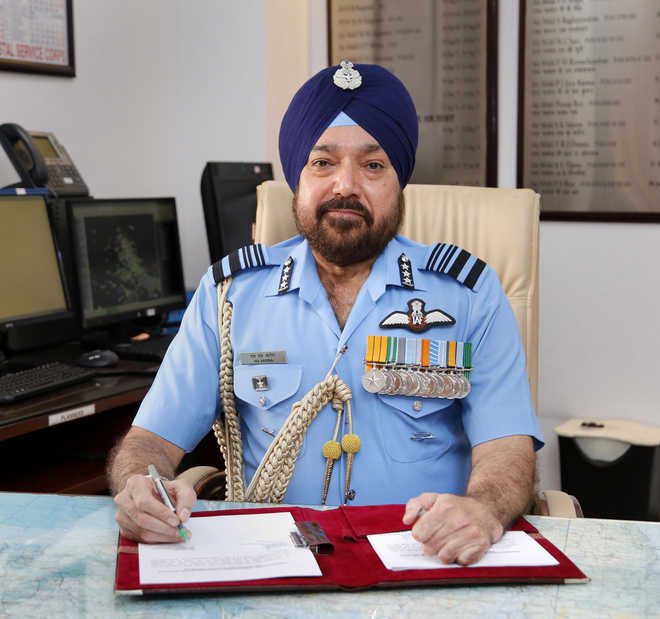
Air Marshal Harjit Singh Arora is new IAF vice chief

Air Marshal Harjit Singh Arora is new IAF vice chief

Air Marshal Harjit Singh Arora assumes the office of Vice Chief of Air Staff at Air HQ, in New Delhi on Tuesday, October 1, 2019. PTI

New Delhi, October 1

Air Marshal Harjit Singh Arora, who has a total flying experience of over 2,600 hours, was on Tuesday appointed the new vice chief of the Indian Air Force (IAF).

Arora succeeds Air Marshal Rakesh Kumar Singh Bhadauria who was appointed the new IAF chief on Monday.

Prior to being appointed the vice chief, Arora, who was awarded the Ati Vishisht Seva Medal in 2011, was the Air Officer Commanding-in-Chief of the South Western Air Command at Gandhinagar in Gujarat. The position of the chief of South Western Command was in turn taken over by Air Marshal S.K. Ghotia on Tuesday. Ghotia is an alumnus of the National Defence Academy (NDA) and is a batchmate of Arora, both of whom were commissioned as fighter pilots in December 1981.

According to defence officials, Air Marshal Arora has rich and diverse experience of accident-free operational flying which includes several fighter aircraft, including the MiG 21, the MiG 29 and other aircraft including helicopters. A graduate of the Tactics and Air Combat Development Establishment of the Defence Service Staff College and National Defence College, Arora has commanded a MiG 21 squadron in the South Western sector where he was later also appointed as the Commander of Air Defence Direction Centre.

Arora holds a Master of Science in Defence Studies and Master of Philosophy in Defence and Strategic Studies.

Arora has not only commanded a premier MiG 29 Base but has also, as an Air Vice Marshal, been appointed the Air Defence Commander at Headquarters Western Air Command and Eastern Air Command.

As an Air Marshal, Arora has held the appointments of Director General (Inspection & Safety) and Director General Air (Operations) at the Air headquarters.

Arora was a Directing Staff at Tactics and Air Combat Development Establishment and has been a Flying Inspector in the Directorate of Air Staff Inspection. He also brings in a certain amount of diplomatic experience because he served as India’s Defence Attache in the Embassy of India, Bangkok, Thailand from 2006 to 2009. He has also served as Honorary Air Force ADC to the President of India. — IANS


An Air Force even Advanced Rafales wouldn’t save: IAF’s 12th crash in 2019

The Indian Air Force (IAF) lost yet another aircraft as a MiG-21 crashed during a routine training session near India’s Gwalior Air Force Base in Madhya Pradesh. This marks the third MiG-21 of the IAF that has crashed in the last six months alone

An Indian Air Force (IAF) MiG-21 crashed near the Gwalior Air Force Base, in India’s Madhya Pradesh region on Wednesday. Indian media reports revealed that the aircraft crashed during a routine training mission, and both the pilots aboard the MiG, a group captain and a squadron leader, ejected safely before the crash.

View image on Twitter
The MiG-21 trainer aircraft belonged to the Indian Air Force (IAF) Tactics and Air Combat Development Establishment (TACDE) training school. The crash occurred around 10 am, near the IAF’s Gwalior Air Force Base.
12th IAF Crash in 2019

Speaking to the Press Trust of India, Rudolf Alvares, Bhind Superintendent of Police said, “The two pilots ejected safely, according to the information passed to us from the village head from the spot, some 60 km from the district headquarters.”

A report by Indian media outlet NDTV reveals that this is the 12th IAF crash this year alone, and the Indian Air Force authorities have ordered an inquiry into the crash in order to determine the cause of the accident.

The MiG-21 was first acquired by the IAF during the 1960s, shortly after the Sino-Indian War, and in 2006, it was upgraded to the MiG-21 Bison version.

Earlier in March, a MiG-21 of the IAF had crashed in Indian Rajasthan’s Bikaner area, and the pilot had managed to successfully eject the aircraft before the crash. Indian media reports revealed that the crash had occurred during a routine mission in the afternoon when the engine began experiencing technical issues.

It is interesting to note that the fighter aircraft flown by the captured Indian Wing Commander Abhinandan Varthaman, shot down by the Pakistan Air Force in the aerial dogfight that ensued on 27th February, was also part of the MiG-21 Bison fleet that is well past its retirement age, and has been maintained by the Indian Air Force with service life extensions, and recurrent upgrades.

MiG-21: Widow Maker

The MiG-21 is a Soviet-era single-engine multirole fighter attack airforce, and it forms the foundation of the fleet maintained by the Indian Air Force. The MiG-21 was first acquired by the IAF during the 1960s, shortly after the Sino-Indian War, and in 2006, it was upgraded to the MiG-21 Bison version.

An Indian media report reveals that the MiG-21 is the most accident-prone fighter aircraft in IAF’s possession, and around 14 MiG-21s have crashed during the period 2010 to 2013 alone. Its reputation for experiencing drastic technical issues and outdated systems has earned it the titles of “widow maker” or the “flying coffin”.

Read more: Indian Air Force lost 27 aircraft in crashes since 2016

The report by News18 stated, “Nearly an average of 12 accidents per year took place between 1971 and 2012. These aircrafts were to retire by mid-1980s but were upgraded to Bison standard, a modern fighter jet with a powerful multi-mode radar, better avionics and communications systems.”

Experts reveal that as an aircraft continues to age and is discarded by the technological innovators of the aircraft industry, old systems and their components begin to fail drastically. However, system components tend to have a longer life potential that the life of a certified fighter aircraft itself, therefore, authorities undertake service life extension programmes to reap maximum advantage from the aircraft.

Prabhatesh Tripathi@prabhatesh
 Unconfirmed images of MIG 21 crash in Gohad, Bhind Madhya Pradesh. @IAF_MCC @101reporters

View image on TwitterView image on Twitter

The report sheds light on IAF aircraft incidents, stating, “Around 14 MiG-21s have crashed between 2010 and 2013. During 2015-2018 there were a total of 24 IAF aircraft accidents leading to the death toll of 39.”


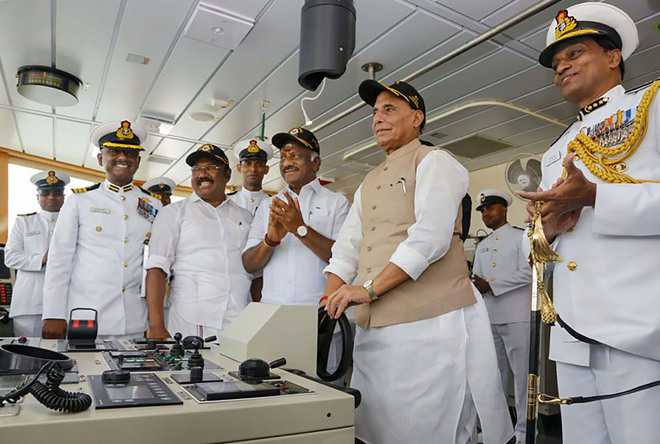
Forces fully prepared: Rajnath on reactivation of terror camps

Forces fully prepared: Rajnath on reactivation of terror camps

Defence Minister Rajnath Singh at the commissioning ceremony of Varaha in Chennai on Wednesday. PTI

Chennai, September 25

Two days after the Army Chief said terror camps in Pakistan were being reactivated, Defence Minister Rajnath Singh on Wednesday said Indian security forces were fully prepared to meet the situation.

He was responding to a query on Army Chief General Bipin Rawat’s statement on reactivation of terror camps in Balakot in neighbouring Pakistan.

“Don’t worry, our security forces are fully prepared,” he told reporters here.

Rawat had on Monday said, “Pakistan has reactivated the Balakot terror camp very recently and about 500 infiltrators were waiting to sneak into India.”

Early this year, tensions flared up between India and Pakistan after a suicide bomber of Pakistan-based JeM killed 40 CRPF personnel in Pulwama district.

Responding to another query about Punjab Chief Minister Capt Amarinder Singh seeking the Home Ministry’s help on incidents of Pakistan-origin drones dropping consignments of arms and ammunition, the Defence Minister said as far as the country’s security was concerned, the armed forces have the capability to defeat any such challenges.

In a tweet on Tuesday, Capt Amarinder said, “Recent incidents of Pakistan-origin drones dropping consignments of arms and ammunitions is a new and serious dimension on Pakistan’s sinister designs in aftermath of the abrogation of Article 370. Request @AmitShah ji to ensure that this drone problem is handled at the earliest.”

Meanwhile, the Defence Minister today formally commissioned the Coast Guard offshore patrol vessel “Varaha” at the Chennai Port Trust here.

After unveiling a plaque commemorating the commissioning ceremony, he said the state-of-the-art ship would be a force multiplier for the Indian Coast Guard, pointing out it has capabilities to operate twin engine ALH Helicopters developed indigenously by HAL.

Singh, who arrived here on Tuesday on a two-day visit, participated in the Investiture Ceremony of the Coast Guard.

“It is indeed reassuring to witness the growing strength of the Indian Coast Guard, the ‘Sentinals of our seas’ and capabilities of Larsen and Toubro Shipbuilding Ltd, one of the strong supporting pillars for production and maintenance of surface assets of our maritime forces,” he said.

He said the name “Varaha” from the puranas reminds one of the principles of sacrifice and rescue at sea, saving mother Earth, restoring harmony and strength. — PTI

‘Don’t repeat mistakes of 1965, 1971’ 

Jaipur: Defence Minister Rajnath Singh on Wednesday said Pakistan should refrain from 1965 and 1971 mistakes of war against India. “I like to suggest Pakistan that it should not repeat its mistake of 1965 and 1971 wars. In the 1971 war, Pakistan was broken into two and Bangladesh was formed,” he warned while delivering a lecture on the 103rd birth anniversary of Pt Deendayal Upadhyay at Dhankya near here. Singh said Upadhyay had given a new direction to Indian politics and coordination.


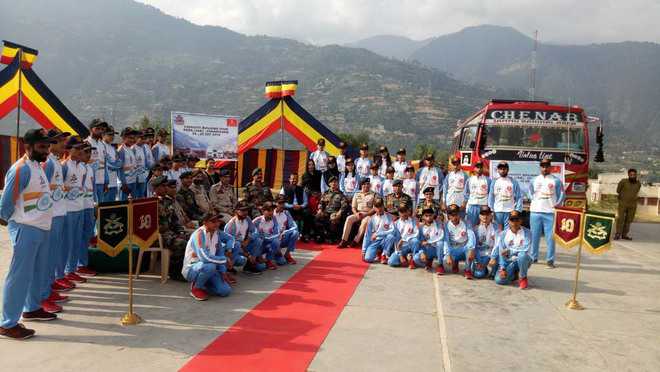
Army Commander flags off capacity building tour

Army Commander flags off capacity building tour

Students from remote areas of Doda district visited Udhampur and interacted with the Army Commander of the Northern Command on Monday. Tribune photo

Tribune News Service
Doda, September 23

A capacity building tour was today flagged off by Brig NJ Singh, Commander, Sector 4 of the Army, to Chandigarh, Amritsar and other parts of north India.

A total of 40 students (20 boys and 20 girls) were a part of the tour.

The tour was organised by the Army’s Sector 4 under Operation Sadbhavana. Deputy Commissioner, Doda, Diofode Sagar Dattatray, Doda SSP Mumtaz and officials of the district administration and police were also present on the occasion.

During the tour, the students will visit various historical places, including the Golden temple in Amritsar, Rock Garden in Chandigarh and other areas. They will also meet GOC-in-C, Western Command, in Chandigarh.

Interacting with students, Brig NJ Singh asked them to take the benefit of the tour and learn in whatever way they can. He assured them of full support from the Army and said with this tour, they would get to know the diversity of the country.

Talking to the media, he said after many years, such a tour had been organised in which students of remote areas had been selected. Most of these students haven’t gone beyond Jammu and they have got their first opportunity to tour outside the state with the help of the Army