Sanjha Morcha

What’s New

Click the heading to open detailed news

Current Events :

web counter

Print Media Reproduced Defence Related News

Pak rules out any deal with India in Jadhav’s case

Pak rules out any deal with India in Jadhav’s case
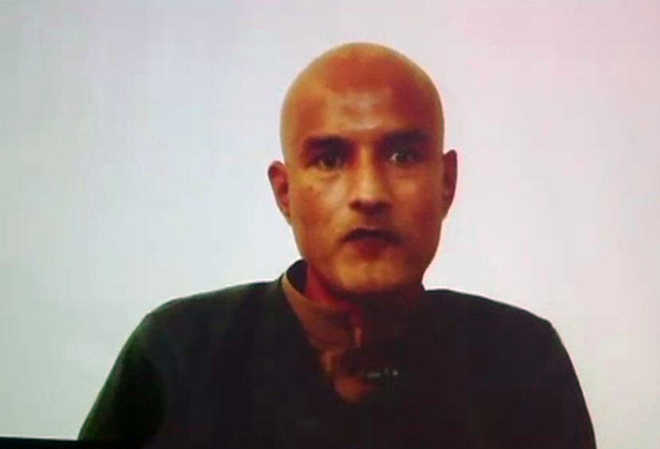
Kulbhushan Jadhav. — File photo

Islamabad, November 14

Pakistan on Thursday ruled out any deal with India in death-row convict Kulbhushan Jadhav’s case and said any step taken to implement the ICJ’s decision will be according to its Constitution.

Foreign Office Spokesperson Mohammad Faisal’s remarks came a day after Pakistan Army said the government was considering various legal options for the review of Jadhav’s case.

Jadhav, 49, a retired Indian Navy officer, was sentenced to death by a Pakistani military court on charges of “espionage and terrorism” after a closed trial in April 2017. India has maintained that Jadhav was kidnapped from Iran where he had business interests after retiring from the Navy.

In a major victory for India, the International Court of Justice (ICJ) on July 17 ruled that Pakistan must review the death sentence given to Jadhav.

Faisal in his weekly press briefing in Islamabad said, “There will be no deal…all decisions will be as per local laws.” He said any step taken to implement the decision of the ICJ regarding Jadhav will be according to the Constitution.

During Jadhav’s trial in the ICJ, India had argued that consular access was being denied to its national in violation of the 1963 Vienna Convention on Consular Relations.

Rejecting Pakistan’s objection to admissibility of the Indian application in the case, the ICJ in its 42-page order held that “a continued stay of execution constitutes an indispensable condition for the effective review” of the sentence of Jadhav that had strained relations between the two neighbouring countries.

The bench, however, rejected some remedies sought by India, including annulment of the military court’s decision convicting Jadhav, his release and safe passage to India.

After much dilly-dallying, Pakistan on September 2 granted India consular access to Jadhav under the direction of the ICJ.

Pakistan claims that its security forces arrested Jadhav from restive Balochistan province on March 3, 2016 after he reportedly entered from Iran.

Faisal also condemned the recent verdict by India’s Supreme Court to award the site of the Babri Masjid to the Hindus.

He said the mosque was in possession of Muslims for over 450 years.

“The Babri mosque verdict has shredded so-called secularism in India,” Faisal said.

He said Pakistan would do “everything” to highlight the “injustice” in the case.

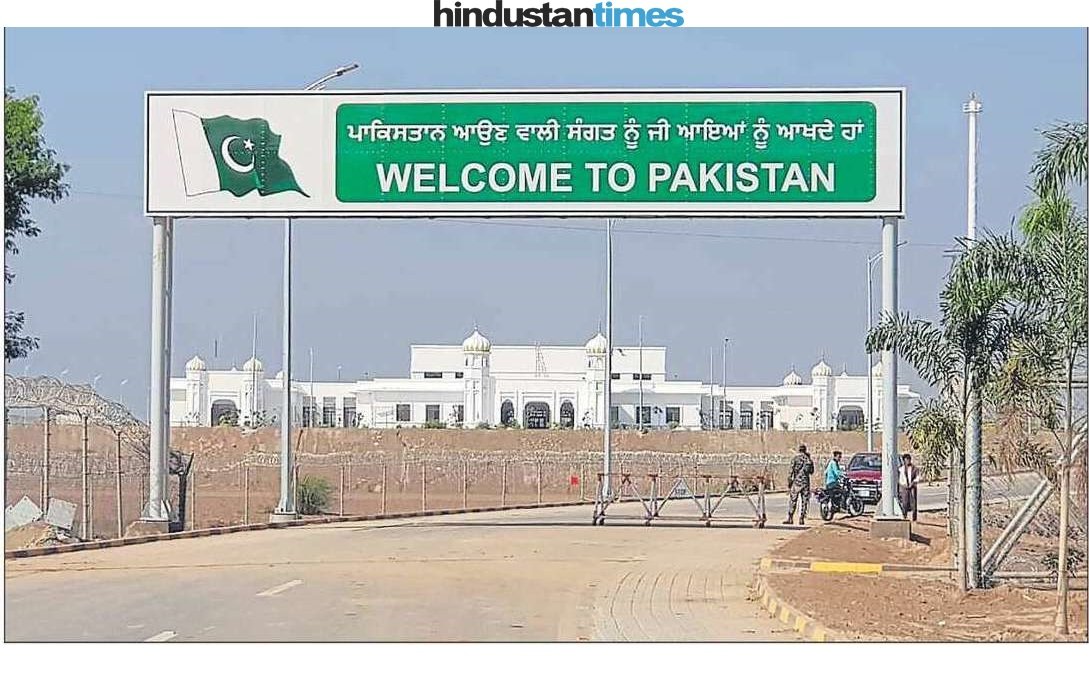
He said about 12,000 Sikhs visited Kartarpur on the opening day of the Kartarpur Sahib Corridor.

He also said anybody from Pakistan can to Kartarpur but the media would need special permission for coverage.

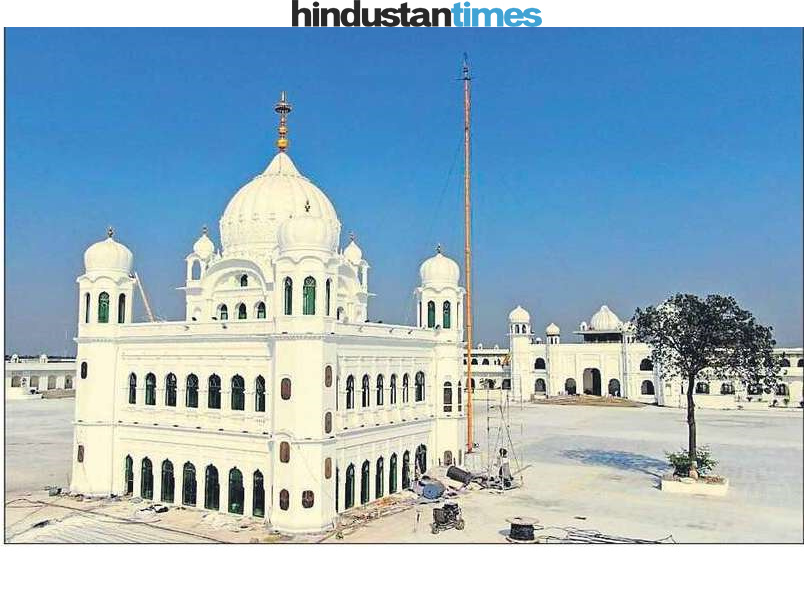
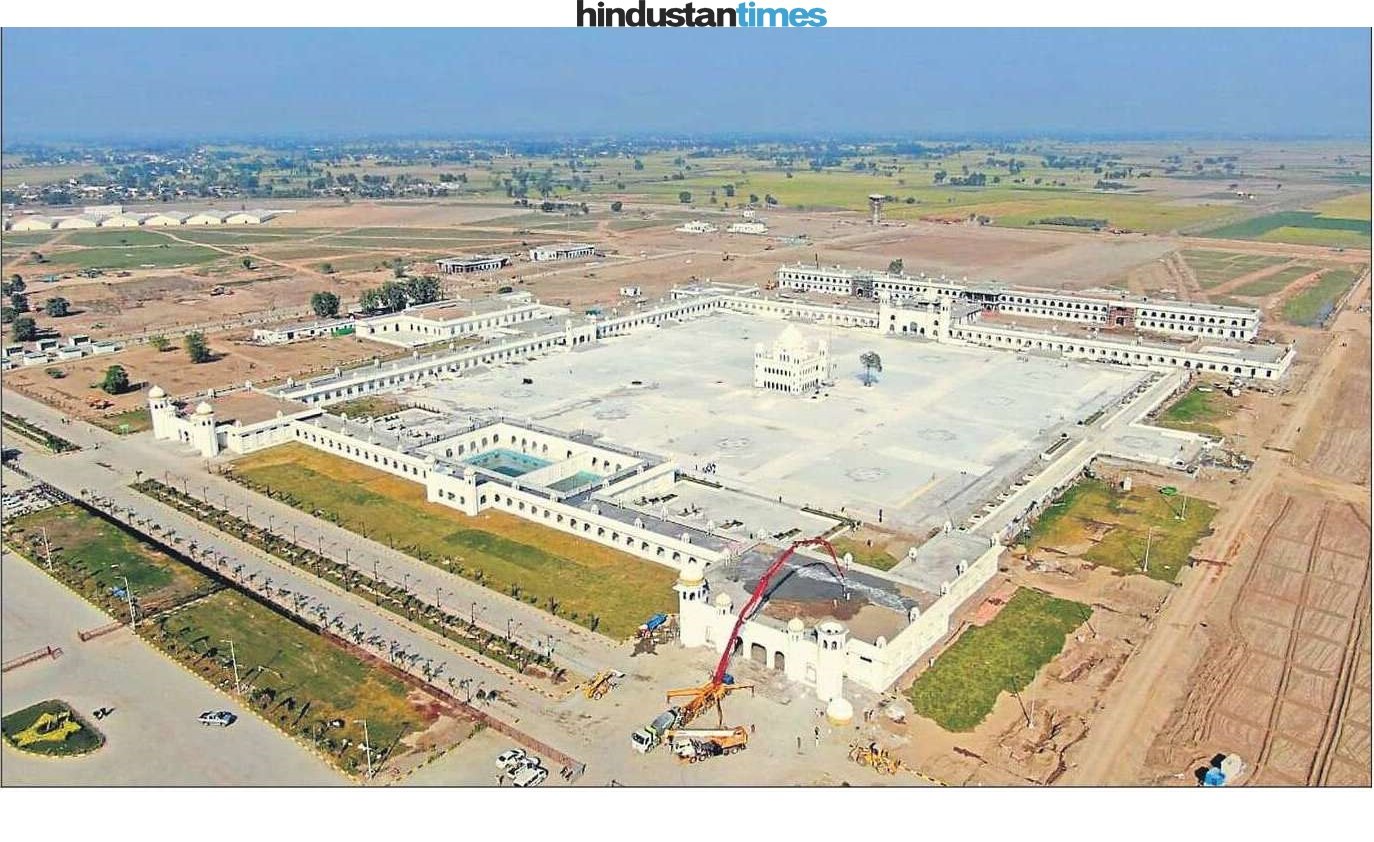
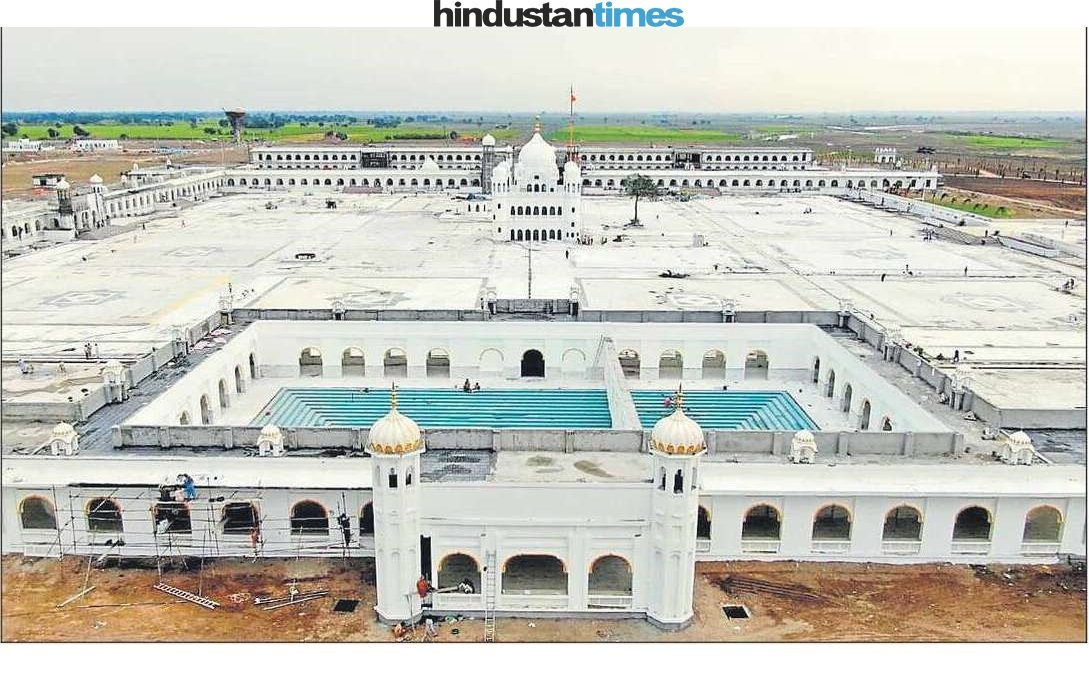
The historic Kartarpur corridor connects Dera Baba Nanak shrine in India’s Punjab with Darbar Sahib at Kartarpur in Pakistan. — PTI


Devotees throng historic Gurdwara Ber Sahib at Sultanpur Lodhi

http://

Sultanpur Lodhi, November 11

A sea of devotees from across the country thronged the historic Gurdwara Ber Sahib here on Monday, a day ahead of the 550th birth anniversary of Guru Nanak.

The highly revered Gurdwara Ber Sahib is where Guru Nanak gained enlightenment at the end of the 15th century.

Union Home Minister Amit Shah will pay obeisance at the shrine later in the day. Haryana Chief Minister Manohar Lal Khattar and Himachal Pradesh Chief Minister Jai Ram Thakur will also be present.

President Ram Nath Kovind will address the celebrations on Tuesday.

A majority of the pilgrims are coming from Punjab, Haryana, Chandigarh, Delhi, Bihar and Maharashtra. Even devotees are coming from abroad, largely from Britain, Canada and the US.

“For the past one week, we are getting an average of 4-5 lakh devotees at the gurdwara every day. Today and tomorrow, we are expecting over 25 lakh devotees,” an official at the shrine told IANS.

Ninety langars or community kitchens are running round-the-clock in the town to serve the visiting devotees.

A grand light and sound show is being conducted every evening here to sensitise the masses about the teachings and philosophy of Guru Nanak Dev. The show will continue till November 15.

Security has been beefed up and closed circuit television (CCTV) cameras have been installed to manage the crowd in all the prominent places, a senior police official told IANS.

Organisers say the desire of devotees is to pay obeisance at the historic Gurdwara Ber Sahib and to have a ‘shnaan’ (dip) in Kali Bein. The devotees are feeling fortunate to have achoola’ (sip of water) from the holy Bein.

It is believed that Guru Nanak disappeared into the waters of the Bein rivulet, reappearing three days later as the enlightened Guru. The ground of Gurdwara Ber Sahib marks the spot, where Guru Nanak entered the rivulet.

Prime Minister Narendra Modi on November 9 morning paid obeisance at the Ber Sahib Gurdwara, before heading for Dera Baba Nanak in Gurdaspur district to inaugurate the Kartarpur Corridor and flag off the first lot of pilgrims to visit Kartarpur Sahib Gurdwara in Pakistan’s Punjab province.

The three-storey Gurdwara Ber Sahib was built by the ruler of Kapurthala in the mid-20th century and features slender octagonal pillars, a marble sanctum and stucco designs at the entrance.

Sultanpur Lodhi, some 200 km from Chandigarh, is dotted with gurdwaras commemorating events from Guru Nanak’s life.

Along with Gurdwara Bebe Nanaki, built to honour Guru Nanak’s sister, is the Gurdwara Sant Ghat, about two km upstream of Ber Sahib, where he emerged from his three-day immersion in the Bein.

Hatt Sahib honours the grain store, where Guru Nanak was employed; and the 13 weights, used by the Guru Nanak to measure provisions are preserved here.

The prison cell, where the Guru was imprisoned under false charges is Gurdwara Kothri Sahib; and Guru ka Bagh is where Guru Nanak lived with his wife, Sulakhni, and their two sons, Baba Sri Chand and Baba Lakhmi Chand. IANS


It’s nothing short of miracle: Sidhu

It’s nothing short of miracle: Sidhu
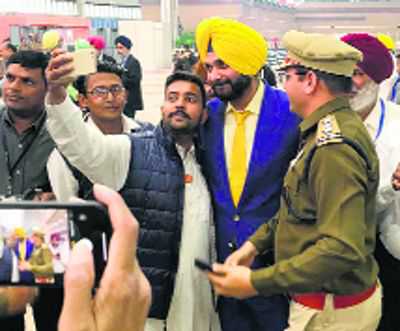
A Pakistani national takes a selfie with Congress MLA Navjot Singh Sidhu at Kartarpur on Saturday. Photo by writer

Rajmeet Singh

Tribune News Service

Kartarpur (Pak), November 9

After lying low since his resignation as a Cabinet minister in July, Navjot Singh Sidhu was the cynosure of all eyes as he crossed over to Gurdwara Darbar Sahib through the Kartarpur corridor along with other devotees today.

Absent at the official function on the Indian side at Dera Baba Nanak, he was the centre of attraction on other side of the border.

Not only did he share the main stage inside the gurdwara with Pakistan Prime Minister Imran Khan and Gurdaspur MP Sunny Deol, he was literally mobbed by devotees, who were a part of the first jatha that went through the corridor and those who had crossed through Attari to be a part of the 550th birth anniversary celebrations of Guru Nanak.

Imran Khan credited Sidhu for the Kartarpur corridor. Earlier, as soon as Sidhu reached the Integrated Checkpost at Dera Baba Nanak before passing through the corridor, party MLAs, cutting across party lines, congratulated Sidhu on the opening of the corridor.

During his address at the inaugural ceremony, Sidhu said the completion of the corridor within 10 months was nothing short of a miracle. He thanked Pakistan PM Imran Khan and Prime Minister Narendra Modi for realising the dream of the Sikh community.

“I am thanking Modi ji also, it doesn’t matter if we have political differences. I am sending a Munnabhai MBBS-style hug to you Modi sahab for this,” said Sidhu. Taking a swipe at those who had criticised him for hugging Pakistan Army chief Gen Qamar Javed Bajwa during Khan’s swearing-in ceremony last August, he said the hug has worked. He called for opening up the India-Pakistan border for trade, saying “Yeh dil maange more (This heart wants more).”


Don’t lower the Bar Lawlessness by lawyers unacceptable, weed out the fakes

Don’t lower the Bar

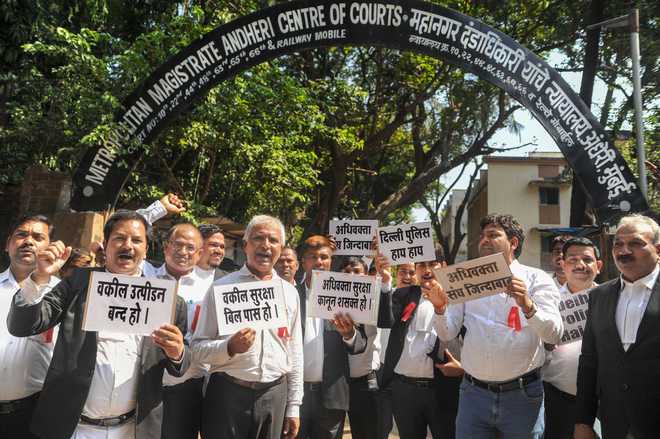
Every fraternity has its black sheep. The Men in Black are no exception. The clashes between law practitioners and law enforcers in New Delhi have prompted the Bar Council of India (BCI) to ask various Bar bodies to identify lawyers who are indulging in hooliganism and bringing the legal institution into disrepute. The profession has also been tainted by the influx of unqualified persons. Aam Aadmi Party MLA Jitendra Singh Tomar had quit as Delhi’s Law Minister in 2015 after he was arrested on the charge of obtaining a fake degree from a Bihar-based law institute. The development had taken place months after the BCI notified the Certificate and Place of Practice (Verification) Rules with the objective of filtering out pseudo-advocates.

In 2017, a verification drive by the Bar Council had revealed that at least one-third of the lawyers on the premises of Indian courts were fake. Later that year, the Law Commission of India had recommended a slew of amendments to the Advocates Act (Regulation of Legal Profession), 1961. The Commission had observed that advocates’ unprofessional conduct, such as going on ‘frequent strikes’ to protest over ‘irrelevant issues’, had reached ‘terrifying proportions’. The proposals, including making lawyers liable to compensate litigants if they struck work, had triggered protests across the country, with the apex Bar body asserting that the ‘utterly regressive’ Bill’s right place was in the dustbin, not in Parliament.

Though the amendments have not seen the light of day amid stiff resistance from the lawyers, it is beyond doubt that the profession needs a self-regulatory mechanism. There should be a uniform qualifying examination, coupled with thorough verification of the person’s documents and credentials, before enrolment as an advocate. The norms for post-enrolment disqualification and re-enrolment must also be made stringent. The chambers should have no place for the likes of Santosh Kumar Singh, an aspiring lawyer and a former IPS officer’s son who is serving life sentence for the 1996 rape-murder of Priyadarshini Mattoo. Unscrupulous elements can’t be allowed to hold the government, the judiciary and the public to ransom.


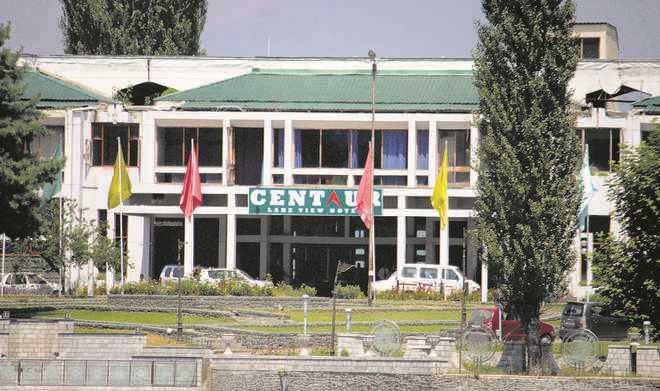
Detained leaders likely to be shifted from Centaur Hotel

Detained leaders likely to be shifted from Centaur Hotel
Centaur Hotel is being used as a sub-jail to detain politicians. File photo

Srinagar, November 3

As winter sets in, the J&K administration is looking for an accommodation to shift 34 political detenues from the Centaur Hotel here as it lacks proper heating arrangements, officials said.

The winter chill has already started taking a toll on the health of the detenues — National Conference, PDP and People’s Conference leaders and prominent social activists — and the security personnel guarding them.

They have been lodged at the hotel on the banks of the scenic Dal Lake since August 5 when the Central government announced its decision to abrogate J&K’s special status under Article 370 of the Constitution and split the state into two Union Territories.

According to the officials privy to the development, Centaur Hotel, owned by the Indian Tourism Development Corporation (ITDC), has submitted a bill of Rs 2.65 crore to the Home Department for 90 days for boarding and lodging of the detenues.

The administration has, however, rejected the claims of the Centaur Hotel and argued that the facility was converted into a subsidiary jail on August 5 and therefore, government rates would be paid.

The rates sanctioned by the administration would be around Rs 800 per day as against Rs 5,000 charged by the hotel, the officials said.

During winter, temperature in Srinagar dips below the freezing point.

The seat of administration in the newly created UT has moved from Srinagar to Jammu for the winter months.

The officials said some measures would be taken soon for shifting the detenues to different locations.

The MLA hostel on Residency Road in the heart of the city could have been an alternative accommodation, but it is now occupied by former MLAs hailing from Jammu and newly elected councillors.

Unwilling to dislodge the former MLAs and councillors, the administration has started looking for a state-run or private hotel for shifting the detenues, they added.

The officials said talks were on with a private hotel in the high-security cantonment area, where some detenues, including Sajad Lone of People’s Conference, Ali Mohammad Sagar of the NC, Naeem Akhtar of the PDP and former IAS officer Shah Faesal, could be accommodated. — PTI


Rs 30,000 pension soon for men who fought in 1965, 1971 wars but didn’t get absorbed in Army

2,000 short-service & emergency commissioned officers played big roles in India-Pakistan wars. Army Commanders’ Conference discussed a pension scheme for them.

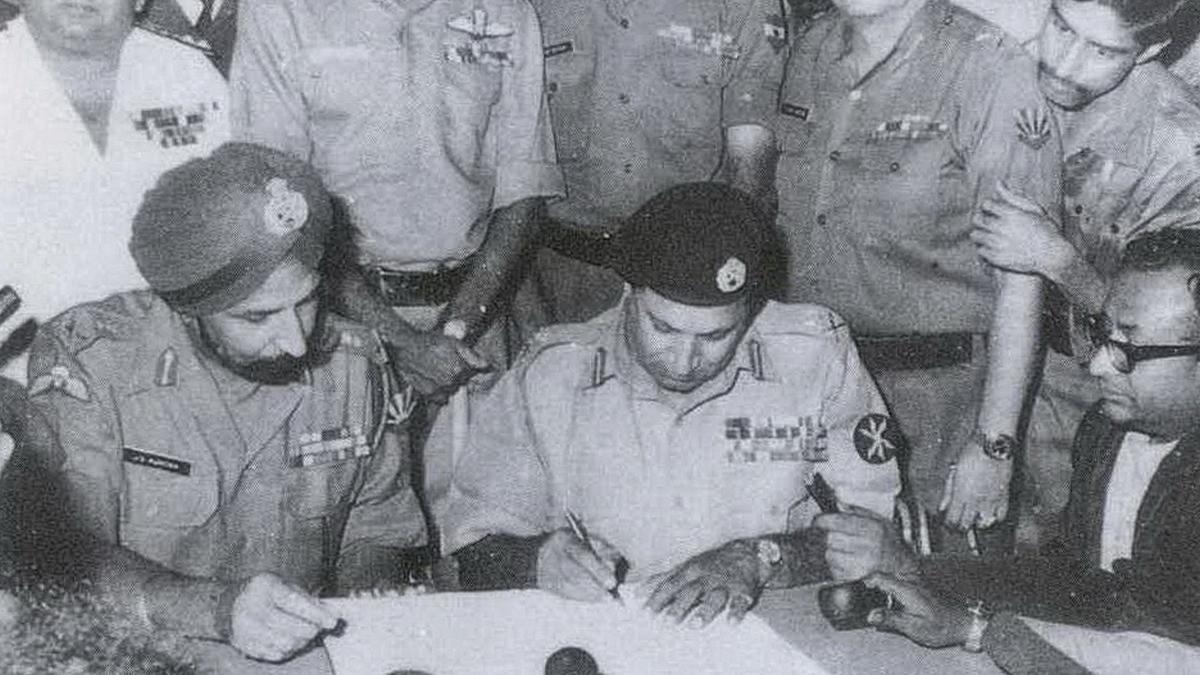
Pakistan Army signing the Instrument of Surrender in Dhaka in 1971

New Delhi: Nearly 2,000 short-service and emergency commissioned officers, who played crucial operational roles in the India-Pakistan wars 1965 and 1971 but could not be absorbed into the Army, may soon start getting a monthly pension of Rs 30,000.

This was among the many issues discussed at the Army Commanders’ Conference Wednesday.

The proposed pension scheme is on the lines of the Ministry of Home Affairs’ scheme for freedom fighters and their families.

Sources in the Army said the force had moved a proposal to the Ministry of Defence (MoD) in March this year. The ministry examined it and sent it back to the Army with some queries. The Army is currently in the process of filing its replies.

A senior Army officer said on the condition of anonymity that about 2,000 such personnel have been identified.

“They could not be absorbed, despite playing crucial operational roles in both the wars,” the officer said, adding they deserve the monthly pension like other war veterans.

In May this year, the Union cabinet approved the Ex-Servicemen Contributory Health Scheme (ECHS) for such short-service and emergency commissioned officers.

The Department of Ex-servicemen Welfare, under the MoD, had written to the states last year to ensure that World War II veterans get a monthly assistance of Rs 10,000, even though there are very few such surviving veterans.Several states had not increased the amount to Rs 10,000, despite repeated reminders from the ministry.


ISI machinations can’t be brushed aside by Lt Gen NPS Hira (Retd)

Lt Gen NPS Hira (Retd)

There are many reasons to rejoice at the opening of the Kartarpur corridor, but we will need to watch out against subversion in particular. Pakistan has ulterior motives to waive visa to encourage the number of visitors. It is India which needs to be on its guard. Politicos underplay security perspective for own reasons.
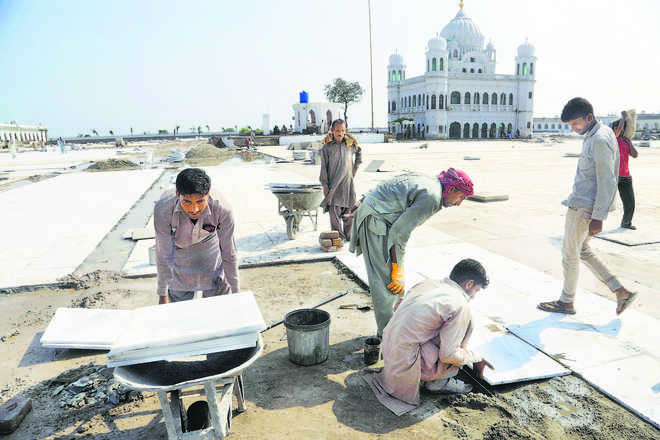
ISI machinations can’t be brushed aside

Corridor an opportunity? ISI is always on the lookout to exploit dissensions.

Lt Gen NPS Hira (Retd)
Former Deputy Chief of Army Staff

There are a number of reports about Pakistan trying to revive militancy in Punjab, besides dropping weapons for use by militants in Kashmir. Given the past diabolic history of the ISI in Punjab, such incidents are no surprise. India is soon to permit 5,000 pilgrims to visit Kartarpur Sahib every day. To avoid any trouble in future, it is important to look at our experience with Pakistan so far.

There were perhaps more players responsible for Punjab militancy within the country than outside. The political parties of the day had their equitable share in the problem. The Punjab police, silent spectators at one stage, later rose to the occasion to get the state out of the dire mess. There is one dimension of the conflict which was not unmasked in its entirety: the role of Pakistan’s ISI.

Intelligence operations being covert in nature, escape attention. The only agencies which get to know about their designs are the security forces or the adversary agencies. A first-hand authentic account of the ISI, which indeed was an eye-opener to the world about its capability, was narrated by Brigadier Mohammad Yousaf of the Pakistan army who was in charge of the ISI’s Afghanistan operations. The revealed magnitude of the operation and the audacity of the ISI shook everyone. Around the same time, the ISI had a parallel operation going on in Punjab, equally notorious. 

The major intelligence agencies of Pakistan are the ISI, IB and military intelligence. It was the poor performance of Pakistan’s IB in 1947-48 war against India that led to the raising of the ISI. It was an external intelligence agency with a major focus on India. General Ayub Khan was distrustful of Bengali police officers in East Pakistan IB. Therefore, he decided to assign the task of internal intelligence of East Pakistan to the ISI. As time went by, there was an increase in the mandate of the ISI in the internal matters to include West Pakistan. When India began to have problems in Nagaland and Mizoram, a separate cell was added in the ISI to exploit trouble in the North-East. Thereafter, a separate cell was raised to assist Sikh Home Rule movement which was in its nascent stage at that time. It was General Zia-ul-Haq who assigned the entire internal intelligence of Pakistan to the ISI. His prime motive was to keep surveillance on his main adversary Zulfiqar Ali Bhutto and the Pakistan People’s Party. Since then, there have been occasional efforts by the Pakistan government to cut down the ISI mandate, with little success.

To begin with, the Khalistan movement was majorly an expatriate venture. It was a master stroke of General Zia-ul-Haq, who shifted the centre of gravity of the Khalistan movement to Pakistan. Zia’s problem was the existing antipathy between the Sikhs and the Muslims, arising out of India-Pakistan partition violence. To mitigate that, he got the Sikh shrines in Pakistan restored and encouraged Sikh pilgrimage. He provided logistics and international propaganda to the movement through Pakistani press. The hypothesis was that keeping Punjab destabilised through militancy was equivalent to Pakistan having an extra army division in war against India at no cost, which holds good even today.

Add to that, the internal politics of Punjab at that time had made the state vulnerable. The evidence of the ISI support to the Khalistan movement can be assessed from the fact that after Operation Bluestar in 1984, the Army recovered 560 rifles, 40 light-machine guns, 90 carbines, 150 pistols and two anti-tank rocket launchers from the temple complex. The ammunition recovered was enough to last a sustained battle for days. The recovery of machine guns and anti-tank rocket launchers in such numbers is a clear evidence of the support from across the border. Had it not been for the support, guidance and training imparted by Pakistan, a state-level law and order problem could not have reached a crescendo. The problem had to be dealt with a fierce war-level action. The Indian Army suffered more than 300 casualties and injuries in one night.

The ISI is a bad word not only in India, but across the globe. It is the largest intelligence agency in the world. It is assessed to be around 10,000 officers and staff, in addition to its informers and assets. Its methods include lobbying and influencing opinions about Pakistan through think tanks in important cities the world over.  Some studies have assessed it to be among the highest rated intelligence agencies. The BBC rated it at number two in the world, next only to Mossad of Israel. The Guantanamo Bay file leaks show that the US considers the ISI to be a terrorist organisation as dangerous as the Al-Qaeda.

During the Punjab militancy, the ISI modus operandi was to fuel the local issues between Sikhs and Hindus by engineering acts of desecration and propaganda. Unaware of ulterior designs, Punjab militants played into the ISI’s hands. Punjab, at present, is peaceful but some local issues can be fomented. Pakistan has been constantly pursuing the policy of ‘death by thousand cuts’ against India. The ISI is very pathological about its work, always on the lookout to create and exploit dissensions.

Our experience so far with the Line of Control (LoC) and border crossings established between India and Pakistan is that the ISI has been constantly at work to trickle in fake currency, drugs, weapons besides subversion. There are many reasons to rejoice at the opening of the Kartarpur corridor, but we will need to watch out against subversion in particular. Pakistan has ulterior motives to waive visa to encourage the number of visitors. It is India which needs to be on the guard. As I saw it happen when trade was opened between Srinagar and Muzaffarabad in 2008, politicos tend to downplay the security perspective for their own reasons. The trade was opened without even installing full-body truck scanners. The trade route has become an additional avenue for the ISI to smuggle in currency and weapons.

Any mass crossing of the border or LoC, on whatever account, has been seen to serve as a coordination place for the ISI’s sources and militant organisations. Such meeting points obviate the need for using radio or mobile communications, which are susceptible to interception by security forces. Therefore, there must be no complacency and short-cuts in monitoring the visitors and installing the biometric equipment, including face recognition software, at the ICP. Given the past experience and desperation of Pakistan, seen after the revocation of Article 370, it may be naive to think the ISI will let go of any such opportunity. Our intelligence agencies are up against one more challenge.



Proud of our Army’s valour: Cong on artillery strikes on terror camps across LoC

Proud of our Army’s valour: Cong on artillery strikes on terror camps across LoC

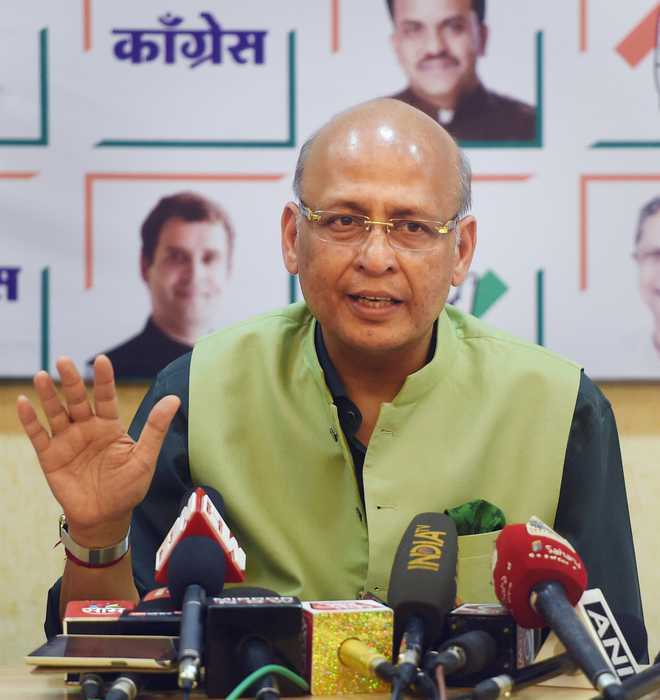
Congress spokesperson Abhishek Singhvi. — File photo

New Delhi, October 20

The Congress on Sunday hailed the Army’s action of destroying terror camps across the LoC, saying it is proud of the armed forces’ valour.

In a major counter-offensive after Pakistan’s unprovoked firing, the Indian Army on Sunday carried out heavy artillery strikes targeting four terror launch pads and several Pakistani military positions in Neelam Valley in PoK, killing 6-10 of their soldiers and as many terrorists, according to Army Chief Bipin Rawat.

“Another spectacular campaign in the direction of destroying terrorist camps across the border by the brave Indian Army. We are proud of your valour and courage,” Congress spokesperson Abhishek Singhvi said in a tweet.

Asked about the exchange of firing at the border, Haryana Congress chief Kumari Selja, at a press conference here, said, “The Indian Army has always kept India’s borders safe. We are proud of our army and we have full confidence on the armed forces that they will protect our borders. Our army is fully capable.”

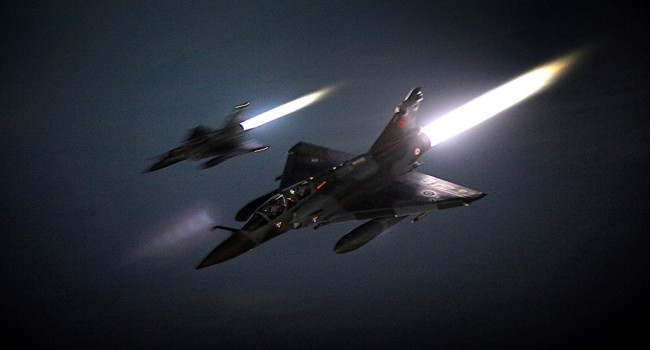
Six to 10 Pakistan Army personnel were killed and three terror camps destroyed in a retaliatory action by the Army opposite the Tangdhar sector in Jammu and Kashmir, Rawat said. — PTI 



Pak to Remain in Grey List Till Feb 2020, FATF Asks It to Step Up Effort to End Terror Financing: Reports

Islamabad: The Financial Action Task Force (FATF) has decided, in principle, to keep Pakistan in its Grey List till February 2020, directing Islamabad to take extra measures for complete elimination of terror financing and money laundering, according to media reports on Wednesday.

The FATF is an inter-governmental body established in 1989 to combat money laundering, terrorist financing and other related threats to the integrity of the international financial system.

In a meeting in Paris on Tuesday, the FATF reviewed the measures that Pakistan has already taken to control money laundering and terror financing, reported Dawn News.

The Paris-based task force has urged Pakistan to take extra measures for complete elimination of terror financing, it quoted Aaj TV. The FATF will take a final decision on Pakistan’s position in February 2020.

A formal announcement about the interim developments will be made on Friday, which is the last day of the FATF’s ongoing session, the report said.

However, Pakistan’s Finance Ministry spokesperson Omar Hameed Khan rejected the reports of the country remaining in the Grey List, saying “it is not true and nothing before October 18 (can be confirmed)”. The FATF has decided to give respite of four months to Pakistan to help her implement remaining recommendations of the task force, Aaj TV reported.

Earlier at the FATF meeting in Paris, Pakistan’s Minister for Economic Affairs Hammad Azhar had explained his country’s positive performance in 20 of the 27 parameters to check terror financing.

China, Turkey and Malaysia “appreciated” the steps taken by Pakistan, Dawn News reported. The support of at least three countries is required to not blacklist any country.

At the Tuesday meeting, India recommended the blacklisting of Pakistan citing Islamabad permitting Hafiz Saeed to withdraw funds from his frozen accounts, the report said. The meeting is being attended by representatives from 205 countries, the IMF, the UN, the World Bank and other organisations.

Concerns were also raised on the tax amnesty scheme offered in Pakistan, the report added.

Pakistan was placed on the Grey List by the Paris-based watchdog in June last year and was given a plan of action to complete it by October 2019, or face the risk of being placed on the black list with Iran and North Korea.

If Pakistan continues in the ‘Grey List’, it would be very difficult for the country to get financial aid from the IMF, the World Bank and the European Union, making its financial condition more precarious. Islamabad is obligated to report its performance to the group every three months.