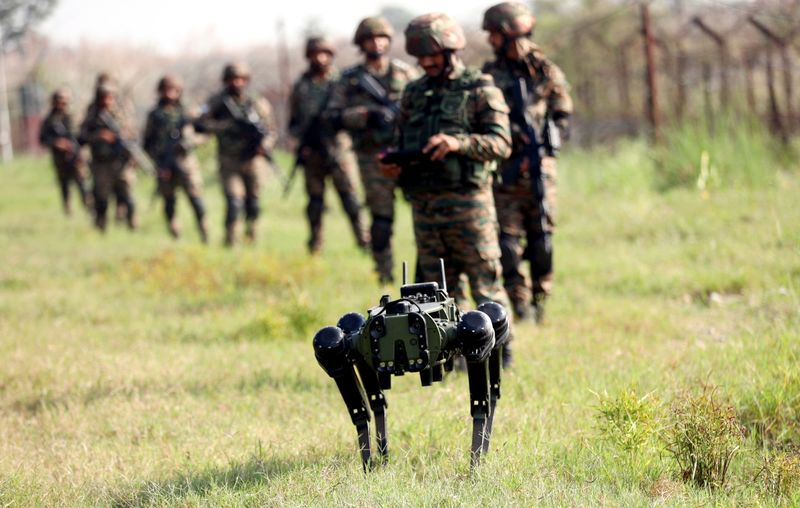
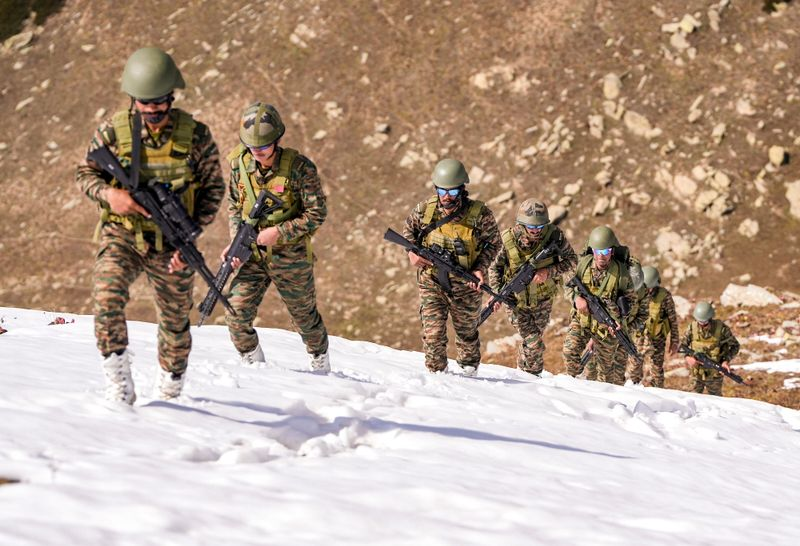
The General Officer Commanding (GOC) of Rising Star Corps visited Kathua district in the Jammu division to review operational preparedness and interact with troops deployed in remote areas.
An official statement said, “GOC Rising Star Corps reviewed operational preparedness of troops deployed in the Bani–Macchedi Sector, Kathua, and lauded their courage, dedication and high state of readiness.”
The Bani–Macchedi region has witnessed multiple terror attacks and encounters in recent years. Intelligence agencies have recently detected movement of Pakistani terrorists in the area, which lies along a traditional infiltration route from across the International Border.
After entering Indian territory, terrorists often move through this sector towards the mountainous districts of Doda and Kishtwar, which are covered by dense forests. The Army maintains strict vigil in the Bani–Macchedi sector to prevent terrorists from infiltrating into the region.
In a series of well-coordinated counter-insurgency operations across the Northeast, the Assam Rifles has successfully thwarted repeated attempts by insurgent groups – ULFA (I) and NSCN Khaplang Yung Aung – to target security forces in recent weeks.
Through effective intelligence integration, the security forces have demonstrated operational preparedness and resolve. A successful ambush was done yesterday near Namsai, South Arunachal Pradesh, resulting in neutralisation of one ULFA (I) cadre and recovery of warlike stores, sources said.
The Assam Rifles was responding to strikes by these insurgents. On October 16, the NSCN launched a standoff attack on the Hedman camp in Changlang district, South Arunachal Pradesh, which was effectively foiled by swift response. The following day, the ULFA (I) attempted a similar strike on the Kakopathar camp in Assam, sources said.
Alert troops retaliated decisively, inflicting a casualty on the insurgents group and apprehending one over ground worker (OGW) involved in the plot. In response, Assam Rifles intensified its operations, activating an extensive counter-insurgency grid supported by modern surveillance assets, drones, and intelligence-based hi-tech teams.
BRO constructs 70-km road along India-China border in Uttarakhand, boosting connectivity
The project is part of the central government’s larger effort to enhance infrastructure along the border with China to improve logistics as well as boost the socio-economic development of the region
The Border Roads Organisation (BRO) provided a new lifeline to Army and Indo-Tibetan Border Police (ITBP) personnel deployed along the Uttarakhand frontier by constructing a new high altitude motorable road linking the state’s Gharwal and Kumaon regions.
The 70-km Sumna-Lapthal-Topidunga road was completed by BRO’s Project Hirak on the eve of Diwali. The project is part of the central government’s larger effort to enhance infrastructure along the border with China to improve logistics as well as boost the socio-economic development of the region.
“Cutting through rugged terrain rising from 13,000 ft to 17,341 ft, BRO excavators and dozers operated in double shifts amid sub-zero temperatures to forge this strategic lifeline for the Army and ITBP,” BRO said on its official X handle.
Sumna is a located in the Chamoli district of Uttarakhand, near the Indo-China border, and is about 85 km north-east of Joshimath by road. Topidunga lies to the south of Sumna. The intermediate point at Lapthal, where an ITBP post is situated, was so far accessible only via a narrow track that was part of a trekking route.
The upgradation of the track to National Highway Single Lane specifications, including widening, black-top surfacing and strengthening of shoulders was carried out at a cost of about Rs 230 crore, BRO sources said.
In January last year, during a visit to Uttarakhand, Defence Minister Rajnath Singh, had inaugurated 35 border infrastructure projects worth Rs 670 crore from the Dhak bridge on the Joshimath-Malari road in the state. These included six roads and 29 bridges, of which three projects were in Uttarakhand.
Most notable among these was the 93-m-long and 12-m-wide Class-70R bridge over the Dhak nullah. The Dhak bridge is strategically important as it connects the India-China border at Rimkhim Axis, the Niti pass and the Sumna-Lapthal-Topidunga road.
Apart from roads and bridges, BRO has also drawn up plans to develop five airfields in forward areas of Uttarakhand, including Gunji, Kalsi, Tanakpur, Tanakpur, Ghansali and Navidhang, which would facilitate faster troop movement and boost logistics.
8th Pay Commission and India’s ‘Impatient’ Middle Class: Will Diwali Bring Cheer?
8th Pay Commission Update: With less than three months remaining before the implementation timeline is set to begin, India’s middle class and government employees are eagerly awaiting an update on the 8th Pay Commission (8th PC). As per convention, the recommendations of the new pay panel are scheduled to take effect from January 1, 2026, but the government is yet to constitute the commission formally.
The Union Cabinet, led by Prime Minister Narendra Modi, approved the formation of the 8th Pay Commission on January 16, 2025. However, the government has not yet announced the chairperson, members, or the Terms of Reference (ToR) — a key document that outlines the panel’s scope of work, including pay structures, allowances, and retirement benefits. Without the ToR, the commission cannot begin its work, making an early salary revision unlikely.
When Can Employees Expect a Salary Hike?
Historically, Pay Commissions have taken about two to three years from formation to implementation. For instance, the 7th Pay Commission, constituted by the Manmohan Singh government in February 2014, submitted its report in November 2015, and the revised pay scales came into effect from January 2016, following a typical three-year cycle.
If the 8th PC begins its work in early 2026, its final report may not be ready before late 2026 or early 2027, which means employees might see revised salaries and pensions only by mid-2027 or early 2028. Each pay commission has an extensive mandate, often taking 18–24 months to complete its work, followed by another 6–12 months of review and approval by the government.
The 7th Pay Commission, for example, made recommendations for a wide range of employees — from Central government staff, All India Services officers, personnel of Union Territories, and Defence Forces to members of regulatory bodies and employees of the Supreme Court.
The Middle-Class Wait
For India’s vast middle class, particularly the nearly 1.2 crore strong workforce of government employees and pensioners, the anticipation is palpable. Over the past year, the government has already announced several measures aimed at offering financial relief and boosting consumption.
In the 2025–26 Union Budget, the government provided a major income tax relief of around Rs 1 lakh crore, making all individual tax filers with incomes up to Rs 12 lakh tax-free. Later, on August 15, 2025, Prime Minister Modi announced a Rs 2 lakh crore ‘Double Diwali Gift’ through GST rate cuts — a move that was quickly approved by the GST Council.
Given this track record of festive-time announcements, speculation is naturally building: could the upcoming Diwali bring another surprise — perhaps a pay or pension-related bonanza?
For now, India’s middle class continues to wait, hopeful that the festive season might bring not just lights and celebrations, but also the long-awaited cheer of higher salaries.
In big revamp after Op Sindoor, Army to induct 4.25L carbines
Force to go in for restructuring of war capabilities
Post Operation Sindoor, the Army on Wednesday announced a major restructuring of its war-fighting capabilities. The revamp includes the induction of 4.25 lakh new carbines, the raising of specialised commando battalions and the deployment of drone-operating specialists with each infantry battalion.
Speaking ahead of Infantry Day, which falls on October 27, Director General of Infantry Lt Gen Ajay Kumar said new weapons were being added to modernise the force. A Rs 2,770-crore order has been placed with two Indian firms for the 4.25 lakh hand-held carbines, with supply expected to be completed within a year. Bharat Forge will supply 60 per cent of the weapons, while PLR-Adani will provide the remaining 40 per cent.
Lt Gen Kumar added that advancements in metallurgy and technology over the years necessitated the procurement of these new weapons.
The first batch is currently undergoing training, which is scheduled to be completed by October 30. Each battalion will comprise around 200 specialised commandos, equipped with advanced weapons and technology to strike deep inside enemy territory. They will integrate various combat elements, including infantry, artillery, special forces, unmanned aerial systems (UAS) and signals.
Tasking for these units will be at the Corps Commander level. Each Bhairav battalion will operate independently, rather than as part of any infantry unit, and will focus on rapid-response operations along the Line of Control with Pakistan and in counter-insurgency zones.
In all, there will be 25 such battalions and will be raised by adding 5,000 troops to the Army.
Lt Gen Kumar said all 380 infantry battalions now have drone platoons, called ‘Ashni’, each comprising roughly 25 personnel. These platoons will operate a wide range of drones for surveillance, combat, logistics and “kamikaze” self-exploding missions.
The Army has accelerated drone induction under a new concept called ‘eagle in the arm’, aiming to train every soldier in drone operations, much like the use of conventional weapons. To achieve this, drone centres have been established at premier training institutions, including the Indian Military Academy in Dehradun, Infantry School in Mhow and Officers’ Training Academy in Chennai. The initiative is intended to make drone operations a standard capability across all arms of the Army.
Sources said drones are no longer a niche capability, but have become essential elements of the battlefield, a fact highlighted during Operation Sindoor against Pakistan (May 7–10).
In July, Army Chief Gen Upendra Dwivedi announced at the Kargil Vijay Diwas celebrations in Drass that every infantry battalion will now have a drone platoon.
The restructuring, which began in 2023, is being implemented in phases to transform the Army into a lean, modern 21st-century force. The plan follows a 2022 study on the “Reorganisation and Rightsizing of the Indian Army”.
SANJHA MORCHA WISHES ALL A HAPPY DEWALI& BANDI CHORH DEWAS
In all, 127 individuals from the local communities benefited from this initiative
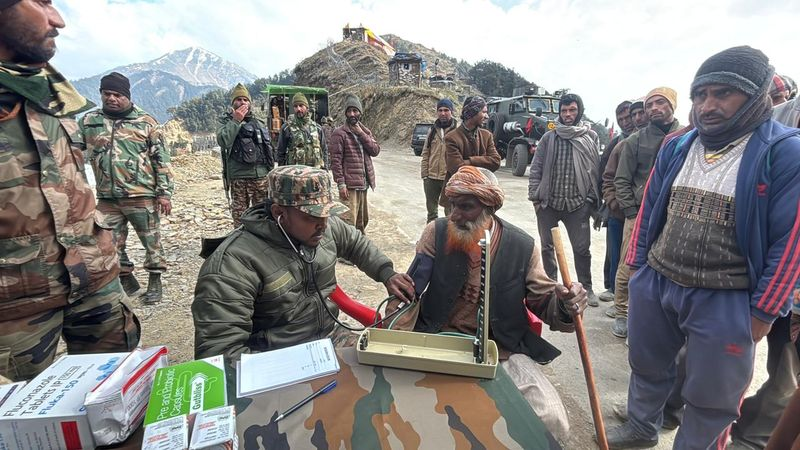
The Indian Army organised a medical and veterinary camp at Chattergala for the Gujjar and Bakkarwal communities as part of the ongoing “Sadbhavana” project.
An Army spokesperson said the initiative aimed to provide essential healthcare and veterinary services to these communities, particularly in the remote areas, enhancing civil-military cooperation and fostering goodwill.
“The camp offered free health check-ups of community members. Essential medicines were distributed among them. Veterinary care was also offered for their livestock, including vaccinations and treatments. Additionally, awareness drives on health, hygiene and the importance of proper livestock care are held to improve the overall well-being of both the people and animals in the region,” the spokesperson said.
In all 127 individuals from the local communities benefited from this initiative, receiving necessary medical attention and care for their livestock. “The camp’s success underscores the Army’s commitment to support the rural communities, ensuring access to vital healthcare services and strengthening the bond of trust between the military and the Jammu and Kashmir people. The initiative reflects the Army’s role in fostering sustainable development of the marginalised communities,” the spokesperson added.
Security forces across Jammu division have stepped up vigil along the borders and in the hinterland ahead of Diwali following inputs suggesting that Pakistani terrorists might attempt to disrupt the celebrations.
While the Army and police continue to monitor forested areas where terrorists are suspected to be hiding, the Border Security Force (BSF) is maintaining a tight vigil along the International Border (IB) in Samba, Kathua and Jammu districts to prevent any infiltration attempts.
Deputy Inspector General (DIG) of Jammu, Samba and Kathua range, Shiv Kumar Sharma, conducted a comprehensive review of security arrangements in Kathua district. He also inspected operational preparedness, particularly in Billawar and Basohli, where intelligence inputs regarding terrorist movement are frequent.
An official said the DIG met police personnel and Village Defence Guard members in sensitive areas to discuss various security issues and directed the establishment of joint checkpoints for greater coordination.
The DIG was briefed on the border security grid, vulnerabilities, surveillance infrastructure and coordination between the J&K Police and other security agencies. His visit also aimed to assess terrain conditions, visibility and defensive layouts in forward areas.
He later visited several Border Police Posts and instructed officials to “remain extra vigilant” and to strengthen checkpoints, especially during night hours.
Meanwhile, the BSF has intensified night patrolling along the border. “Technology has been installed along the border to ensure that no infiltrator can cross over, even at night,” an official said.
“To ensure peaceful festivities, the BSF personnel have been instructed not to leave any stone unturned. Strict vigil is also being maintained on drone activity along the border,” the official added.
State Stalwarts
DEFENCE MINISTER
Minister Rajnath Singh
ALL HUMANS ARE ONE CREATED BY GOD
HINDUS,MUSLIMS,SIKHS.ISAI SAB HAI BHAI BHAI
CHIEF PATRON ALL INDIA SANJHA MORCHA
LT GEN JASBIR SINGH DHALIWAL, DOGRA
SENIOR PATRON ALL INDIA SANJHA MORCHA
MAJOR GEN HARVIJAY SINGH, SENA MEDAL ,corps of signals
.
.
PATRON ALL INDIA SANJHA MORCHA
MAJ GEN RAMINDER GURAYA ,MADRAS REGIMENT
sanjhamorcha303@gmail.com
PRESIDENT SOUTH ALL INDIA SANJHA MORCHA
COL SS RAJAN BOMBAY SAPPERS,
PRESIDENT UTTARAKHAND ALL INDIA SANJHA MORCHA
COL B M THAPA ,BENGAL SAPPERSS
PRESIDENT HARAYANA STATE CUM COORDINATOR ESM
BRIG DALJIT THUKRAL ,BENGAL SAPPERS
PRESIDENT TRICITY
COL B S BRAR (BHUPI BRAR)
PRESIDENT CHANDIGARH ZONE
COL SHANJIT SINGH BHULLAR
.
.
PRESIDENT PANCHKULA ZONE AND ZIRAKPUR
COL SWARAN SINGH
INDIAN DEFENCE FORCES
DEFENCE FORCES INTEGRATED LOGO
INDIAN AIR FORCE
Air Officer C-in-C WESTERN AIR COMMAND
AIR MSHL S PRABHAKARAN AVSM VM
AOC-IN-C, EASTERN AIR COMMAND
Air Marshal Inderpal Singh Walia
AOC-in-C SOUTH WESTERN AIR COMMAND
Air Marshal Vikram Singh
AOC-IN-C, SOUTHERN AIR COMMAND
Air Marshal J.Chalapati
AOC-IN-C TRAINING COMMAND
AIR MARSHAL SK GHOTIA VSM
AOC-IN-C MAINTENANCE COMMAND
Air Marshal Jagdish Chandra
Flag Officer Commanding in Chief, Western Naval Command
ice Admiral R Hari Kumar, PVSM, AVSM, VSM
Flag Officer Commanding in Chief, Eastern Naval Command
Vice Admiral Sanjay Bhalla, AVSM, NM
Flag Officer Commanding in Chief, Southern Naval Command