SIXTY years ago, Pakistan was emboldened by India’s debacle in the 1962 war against China and presumed that the time was ripe to launch a decisive offensive to annex Kashmir. The Pakistan Army was greatly strengthened by the supply of state-of-the-art military equipment from the West, whereas the Indian Army had comparatively lower-grade technology.
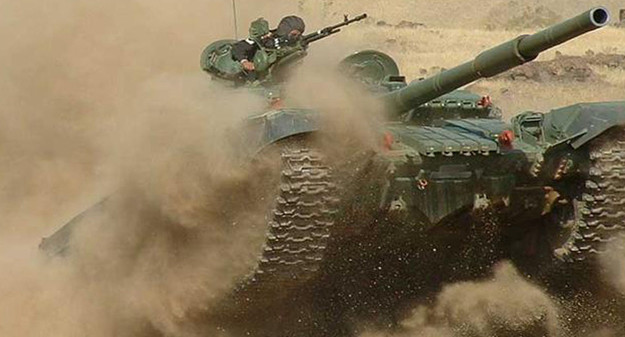
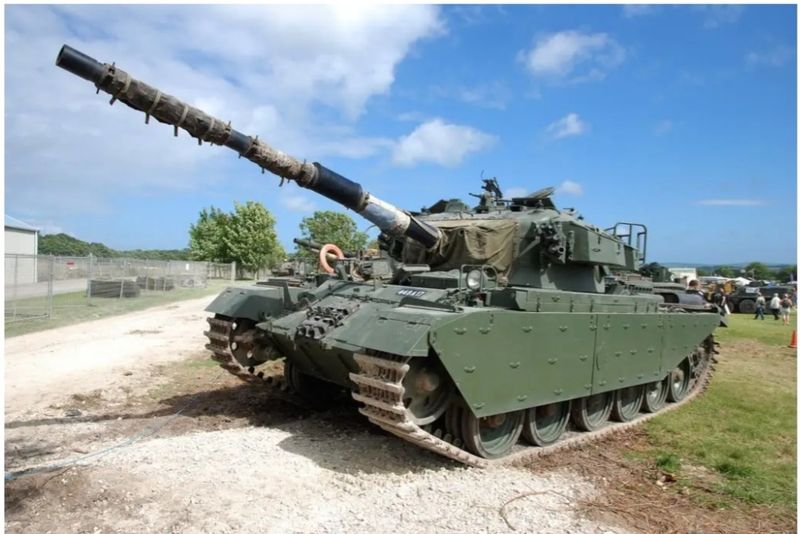
During the 1965 war, the centrepiece of the Pakistan Army was the famous Patton tank. The best tank in the Indian Army at that time was the Centurion Mk 7, which was good but in no way comparable to the Patton.
The US-origin Patton was named after the legendary Gen George S Patton. It was lighter than the Centurion and had a more powerful engine. The Patton also boasted of a stereoscopic range finder to enable the tank gunner to get a high first-round hit probability. Centurions relied on a simple shooting technique which was based on three rounds being fired in quick succession at varying ranges and at least one was assured to hit the target. The Patton had a 90-mm gun firing high-velocity armour-piercing ammunition, whereas the Centurion gun was a 20-pounder (83.4 mm). Pattons also had infra-red capability for drivers, whereas our tank gunners were rendered ‘blind’ at night.
Pakistan also enjoyed a numerical advantage over us in terms of tank regiments. How then did the Centurions succeed against the mighty Pattons is an interesting case study. The first and foremost factor was training. Our tank crews were extremely well-trained. In contrast, the Pakistanis were handling high-technology equipment which had only been recently received.
A major factor in tank-versus-tank engagements is survivability and the ability to take a hit. Here the Centurion scored well over the Patton. Some Centurions took as many as five Patton hits and lived to tell the tale. The Patton armour was more brittle and tended to shatter when struck, causing casualties among the crew. Pakistani crews tended to evacuate the tank speedily on being hit to avoid being burnt alive.
In the Battle of Asal Uttar, Pattons were bogged down in the freshly inundated fields and were quickly abandoned by Pakistani crews. This battle dealt a crushing blow to Pakistan and shattered the myth of the Patton’s invincibility. No wonder Asal Uttar became renowned as the graveyard of Pattons.
The Centurion also proved to be a reliable and rugged tank in the Battle of Phillora. Our crews were able to use this formidable fighting vehicle to defeat a qualitatively and quantitatively superior enemy.
Suicide by two Haryana police officials shows that the rot runs quite deep
WHICH is the greater evil in a democracy — communalism or corruption? That was the question which concerned Indians asked themselves when they wended their way to polling booths during the 2014 Lok Sabha elections. Is casteism worse than these two? That question needs to be added.
The Haryana government is at its wits’ end over two cases of suicide by policemen — Inspector General (IG) Y Puran Kumar and Assistant Sub-Inspector (ASI) Sandeep Kumar.
Puran Kumar, an IPS officer, was a Dalit. His wife, an IAS officer, gave her consent for a post-mortem examination only after receiving an assurance that a fair probe would be conducted and action taken against ‘erring’ officials. In his ‘final note’, Puran Kumar accused eight fellow officers of caste-based discrimination, mental harassment and public humiliation. His grouse was that he was tormented by his ‘big boss’ (state DGP) and a junior officer, besides others, because he belonged to a Scheduled Caste (SC).
Just a week after this incident, ASI Sandeep Kumar shot himself in Rohtak. In a note and a video that he left behind, he levelled corruption allegations against Puran Kumar, who had served in Rohtak district. He also alleged that during Puran Kumar’s tenure, the transfers of employees posted at the IG’s office were made keeping caste into consideration. Even as both cases are being probed, any seasoned cop will conclude that corruption and casteism are intertwined in the police force.
It is true that Jats and Dalits have always had a troubled relationship in Haryana. The relations between Marathas and Dalits in Maharashtra are also strained, though not as starkly as in Haryana and other Hindi-speaking states. (This perception is based on talks with friends in the IPS).
My own experience with SC officers who served with me in Maharashtra and Punjab has been that they are no different from those from privileged castes. There are good, bad and ‘indifferent’ officers belonging to every caste. Also, there are honest and dishonest officers of every caste. The police chief has to get the best out of each of them.
A ganglord named Varadarajan Mudaliar called the shots in the bootlegging trade in Mumbai (then known as Bombay) in the late 1970s and early 1980s. When I took charge as the Commissioner of Police in 1982, I asked for an officer named YC Pawar to be posted there from the Railways. He was an SC officer, but that was certainly not the reason for my request. It was his ability and his willingness to use that ability to deal with those who ruled the underworld that influenced my decision.
Pawar did not disappoint me. He performed a Herculean task with precision and in his own inimitable way. He had a loud voice and he used it to his advantage. Some of his glory rubbed off on me and I was pleased as punch for making a correct choice.
A perennial problem that dogs the armed branch of the police is alcoholism and lack of parental control over cops’ children. Kids living in the Police Lines tend to become school dropouts because their fathers are on prolonged spells of guard duty. The pressure from the political bosses for round-the-clock protection has become so acute that personnel on duty are often not relieved for days together, leading to an extended absence of the head of the family.
I chose a young IPS officer to head the armed branch, which was considered as a “punishment posting” (I learnt later that he belonged to a Scheduled Caste). The imperative of looking after the welfare and morale of these men who felt neglected was of prime importance to me, and I explained to the officer why I had chosen him for this assignment. Again, my choice was spot-on.
The 12.5 per cent reservation (later raised to 15 per cent) for SCs in government jobs and admissions was a “mea culpa” response to centuries of injustice to which those excluded from the Varna system were subjected.
However, the extension of reservation to vacancies in the higher ranks led to widespread dissatisfaction in the police force. When young sub-inspectors trained by inspectors were promoted to the rank of inspector and further as assistant commissioner to meet the quota requirement, experienced and competent inspectors refrained from greeting their new bosses, as demanded by discipline and protocol. Much of the corruption and indiscipline can be attributed to populist measures which were not properly thought through.
Money and greed are the reigning deities in government departments of various states. Narendra Modi rode to power in 2014 on the promise of eradicating the menace of corruption. However, he has been so busy trying to win every election in this vast country that corruption remains prevalent at the cutting edge of governance. And since it is the common citizen who bears the brunt of deep-rooted graft, the remedy is the one most easily available at hand — distribute freebies from depleted coffers just before elections are announced to win over the disgruntled poor people.
Dealing with age-old societal wrongs is a burden our political leaders must learn to bear. The two suicides in Haryana will severely test the mettle of the state leadership.
India, Bhutan hold border security meet after 6 years
Officials discuss various issues like mobile signal spillover, future roadmap for integrated checkposts, maintenance of boundary pillars and cross-border movement
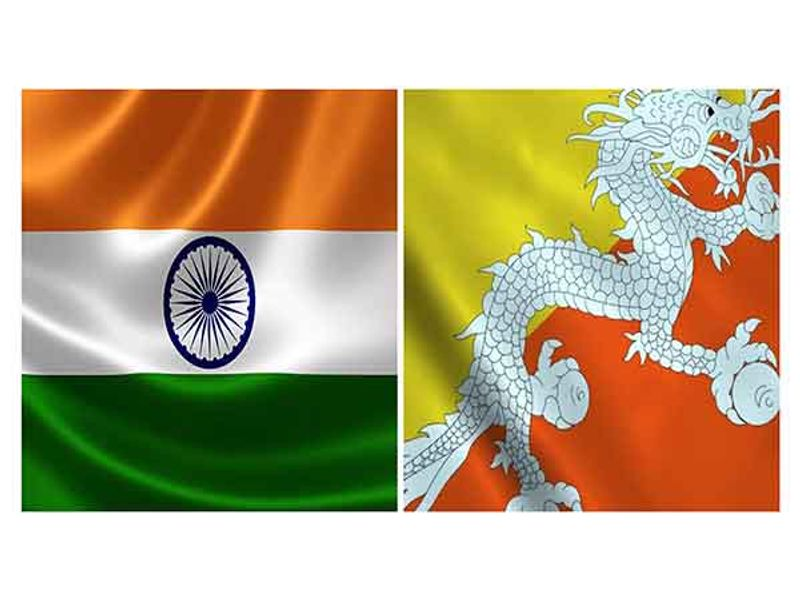
The India-Bhutan border management and security meeting was held in Thimphu last week after a period of six years. The officials discussed various issues like mobile signal spillover, future roadmap for integrated checkposts, maintenance of boundary pillars and cross-border movement.
The discussions on October 16 and 17 also covered the capacity-building programme for the Bhutan’s police, said sources. The last such meeting was held in 2019.
The Indian delegation was led by Rajendra Kumar, Secretary, Department of Border Management in the Ministry of Home Affairs. It also included officials from the Sashastra Seema Bal (SSB), Land Ports Authority of India, Department of Telecommunications, Narcotics Control Bureau, Survey of India, Customs and representatives from Assam, West Bengal, Sikkim and Arunachal Pradesh.
The Bhutanese side was headed by Sonam Wangyel, Secretary, Ministry of Home Affairs. Both delegations expressed satisfaction at the constructive discussions and reiterated their resolve to work together towards ensuring a safe, secure and prosperous border region, a statement issued by the Ministry of Home Affairs said.
Reaffirming their strong friendship, India and Bhutan committed to deepening cooperation across traditional and emerging areas.
MoD clears Rs 79K-cr proposals for drones, warships, missiles
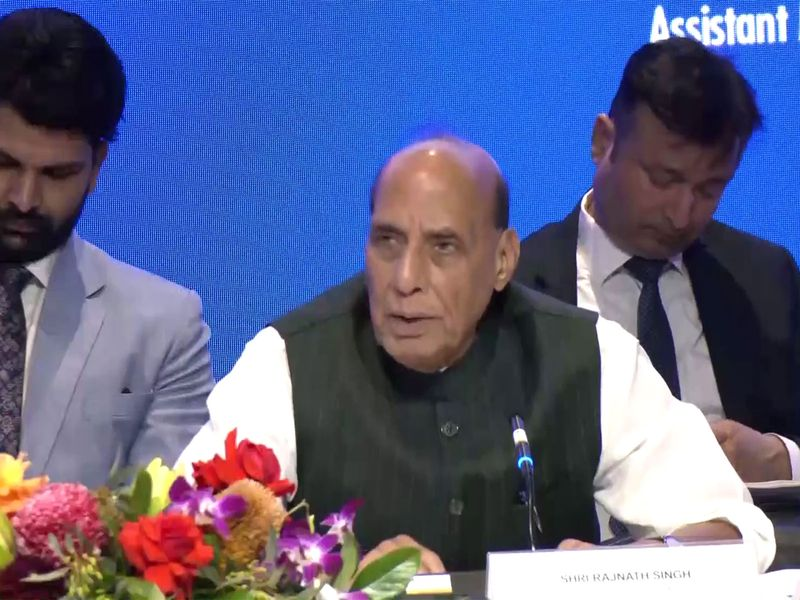
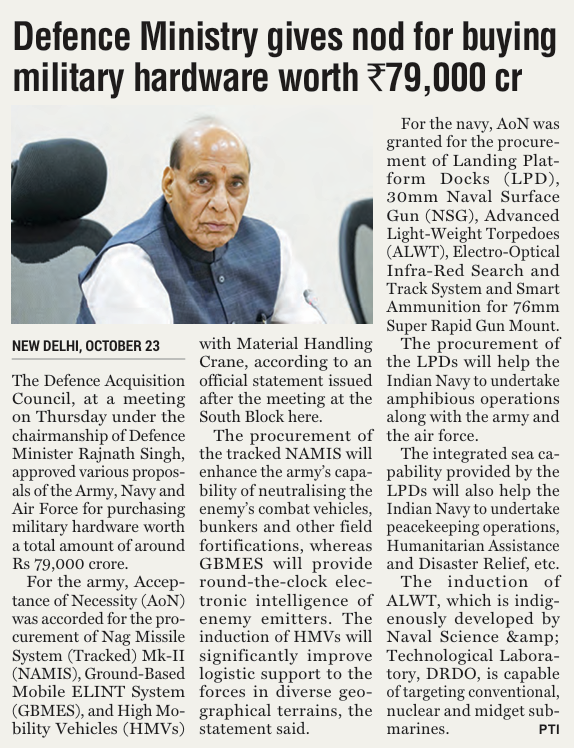
The Defence Acquisition Council (DAC), chaired by Defence Minister Rajnath Singh, on Thursday approved proposals worth Rs 79,000 crore for acquiring a new class of warships, a drone-based attack system for the Indian Air Force (IAF), missile systems, high-mobility vehicles, naval guns and other equipment for the armed forces.
The DAC okayed Acceptance of Necessity (AoN) — the first step in the defence procurement process, the Ministry of Defence (MoD) said in a statement.
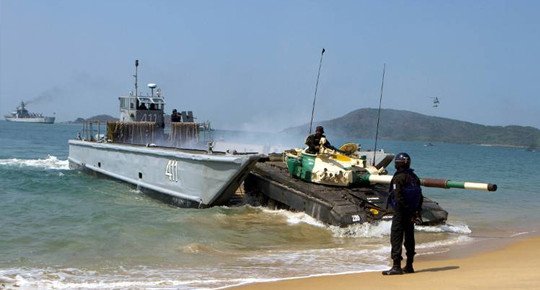
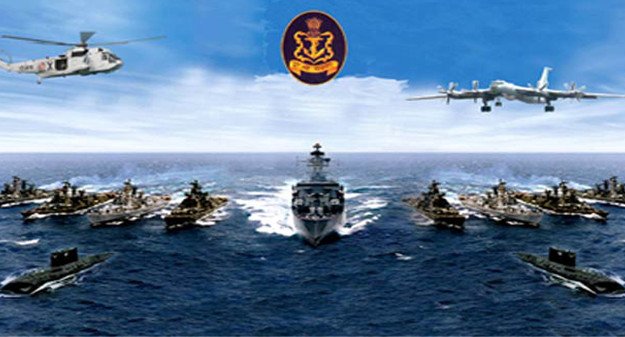
For the Navy, the DAC cleared the procurement of Landing Platform Docks (LPDs) — 30,000-tonne warships capable of amphibious operations alongside the Army and Air Force. The LPDs can land troops, tanks and vehicles directly on shore without berthing at a jetty.
To be built at Indian naval shipyards, the LPDs will be the most ambitious indigenous warships after the INS Vikrant, the 45,000-tonne aircraft carrier. They will be powered by electric propulsion systems developed in collaboration with the UK, offering stealthier, more efficient and cost-effective operations. Earlier this month, India and the UK agreed on an initial funding of £250 million (Rs 2,900 crore) to co-design and co-produce these propulsion systems.
Op Sindoor showed India’s willpower: Rajnath
New Delhi: Operation Sindoor was a symbol of India’s willpower and capability, and a message to the world that we are always ready to respond to any challenge, said Defence Minister Rajnath Singh while addressing the Naval Commanders’ Conference on Thursday. He commended the Navy for establishing a deterrent posture that forced Pakistan’s fleet to remain confined to its harbours or close to its coastline, asserting that the world had witnessed the operational readiness, professional competence, and strength of the Navy during the operation.
For the IAF, the DAC approved the Collaborative Long-Range Target Saturation and Destruction System — a drone-based weapon platform capable of autonomous takeoff, navigation, detection and strike operations. The system will employ multiple drones, including kamikaze (self-destruct) variants with ranges exceeding 1,000 km, designed to disable enemy airbases, runways, aircraft shelters, fuel depots and communication systems.
The DAC also cleared procurements of a 30-mm Naval Surface Gun (NSG) and Advanced Lightweight Torpedoes (ALWT) for the Navy. Developed indigenously by the Naval Science and Technological Laboratory (DRDO), the ALWT can target conventional, nuclear and midget submarines, while the 30-mm NSG will boost the Navy and Coast Guard’s capability in anti-piracy and low-intensity maritime operations.
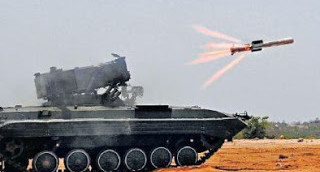
For the Army, approvals were granted for the Nag missile system, ground-based mobile surveillance systems and high-mobility vehicles. The Nag missile will enhance anti-armour and bunker-busting capabilities, while the surveillance systems will provide round-the-clock electronic intelligence. The new vehicles will strengthen logistical mobility across diverse terrains.
The DAC okayed Acceptance of Necessity (AoN) — the first step in the defence procurement process
India faces threat as US sanctions 2 Russian oil firms
Cut-off date for buying crude from both companies is November 21
India’s crude oil purchase from Russia faces an imminent threat after US President Donald Trump imposed sanctions on two of the biggest Russian oil companies — Rosneft and Lukoil.
The cut-off date for buying crude from the two companies is November 21. This comes less than week after the UK imposed sanctions of these two companies.
Sources in New Delhi said after the sanctions on the two companies, there was a dilemma over sourcing Russian crude oil. The fresh sanctions pose two-pronged obstacles for India — one, how to pay these Russian companies for the oil after the cut-off date as no bank will allow payment fearing sanctions and second, India and its oil companies could face secondary sanctions from the US if the import continues.
India imports around two million barrels of crude daily from Russia and its main suppliers are Rosneft and Lukoil. The sources said an option for further import would be possible if the crude oil was offered by Russia through a company that was not sanctioned. Earlier this year, the UK and the US sanctioned Russian energy companies Gazprom Neft and Surgutneftegas.
India already faces a 50 per cent tariff on goods exported to the US. Half of this tariff is reciprocal and the other half punitive for buying crude oil from Russia. Indian oil importers could curtail imports of Russian oil to ensure they are in compliance with the US sanctions. India has become the biggest buyer of Russian oil, sold at a fixed discounted rate after western nations shunned purchases and imposed sanctions on Moscow.
Through the fresh sanctions, unveiled by Treasury Secretary Scott Bessent, the US made it clear that Washington DC stood ready to take action to stop Russia’s ability to continue with the conflict with Ukraine.
“Given President (Vladimir) Putin’s refusal to end this senseless war, the Treasury is sanctioning Russia’s two largest oil companies that fund the Kremlin’s war machine,” Bessent said in a statement. “We encourage our allies to join us and adhere to these sanctions,” he said.
Rosneft, a state-controlled company headed by Russian President Vladimir Putin’s close ally Igor Sechin, and Lukoil, a privately owned firm, account for almost 3.1 million barrels of oil exports daily.
The UK estimates that Rosneft alone is responsible for nearly half of all Russian oil production, which makes up 6 per cent of the global output.
Oil and gas are Russia’s biggest exports with Moscow’s biggest customers, including China and India, making up for most of Russia’s energy exports.
Chopra joined the Indian Army as a Naib Subedar on August 26, 2016 and was promoted to Subedar in 2021 and Subedar Major in 2022
Defence Minister Rajnath Singh conferred the gleaming insignia of Honorary rank of Lieutenant Colonel in the Territorial Army upon star javelin thrower and two-time Olympic medalist Neeraj Chopra during the pipping ceremony in New Delhi, October 22,
Olympic gold medallist javelin thrower Neeraj Chopra was on Wednesday conferred with the rank of Lieutenant Colonel, with Defence Minister Rajnath Singh describing him as an “epitome” of perseverance, and national pride.
Singh conferred the insignia of honorary rank of Lieutenant Colonel to the star javelin thrower, serving in the Territorial Army, at a pipping ceremony in New Delhi that was also graced by Army Chief Gen Upendra Dwivedi and many other senior officials of the force.
Chopra joined the Indian Army as a Naib Subedar on August 26, 2016 and was promoted to Subedar in 2021 and Subedar Major in 2022.
Born on December 24, 1997 in Khandra village in Haryana’s Panipat, he created history by winning India’s first-ever Olympic gold medal in athletics in the men’s javelin throw competition at the Tokyo Olympics 2020.
Chopra continued his stellar performance by winning a silver medal at the Paris Olympics in 2024 and a gold medal at the World Athletics Championships in 2023.
He has also secured multiple gold medals at the Asian Games, Commonwealth Games, and Diamond League events. His personal best throw of 90.23 metres (2025) stands as a milestone in Indian sporting history.
Interacting with Chopra and his family members, Defence Minister Singh described him as an “epitome of perseverance, patriotism and the Indian spirit of striving for excellence”.
“Lt Col (Hony) Neeraj Chopra embodies the highest ideals of discipline, dedication and national pride, serving as an inspiration to generations within the sporting fraternity and the Armed Forces alike,” Singh said.
In recognition of his outstanding achievements and exemplary service to the nation, Lt Col (Hony) Chopra was granted an honorary commission in the Territorial Army by President Droupadi Murmu on April 16, the Defence Ministry said.
Chopra is also a recipient of many coveted awards, including Padma Shri, Major Dhyan Chand Khel Ratna Award, Arjuna Award, Param Vishisht Seva Medal and Vishisht Seva Medal.
Military decoration citations tell tales of courage, tactical acumen displayed during Op Sindoor
Group Captain Ranjit Singh Sidhu’s gallant act during the four-day military conflict between India and Pakistan, which earned him a Vir Chakra recently, finds mention in a list of medal citations published in an October 4 gazette
IAF fighter pilot Group Captain Ranjit Singh Sidhu, who received a prestigious military decoration for his heroics during Operation Sindoor in May, flew “multiple deep-penetration strike missions” to destroy the designated targets with surgical precision while facing “complex threat scenarios” and layered air defences.
His gallant act during the four-day military conflict between India and Pakistan, which earned him a Vir Chakra recently, finds mention in a list of medal citations published in an October 4 gazette issued by the Centre.
During an operation, his squadron equipped with the formidable fighter aircraft, was chosen for strike missions over a predetermined target. His squadron subsequently conducted successful strikes over the targets and achieved the desired objectives, read the citation.
“As the Commanding Officer, Group Captain Ranjeet Singh Sidhu exhibited exceptional acts of gallantry on multiple occasions, displayed resolute leadership and unwavering dedication to duty in a complex and high-stakes combat environment with disregard to personal safety. He ensured the planning and execution of air operations of his squadron from three different locations along the Western sector,” it says.
Group Captain Sidhu led from the front by flying “multiple deep-penetration strike missions to destroy the designated targets with surgical precision and flew air defence missions in aid of own forces flying similar strike missions”.
In each of these missions, he faced “complex threat scenarios and layered air defences”.
Despite overwhelming odds, he demonstrated “unmatched courage and outstanding tactical acumen”, thus ensuring mission success.
The fighter pilot made “dynamic, real-time decisions in the air, adapting swiftly to emerging threats and operational variables. His bold leadership and composure under fire were instrumental in achieving the intended strike outcomes while ensuring survivability of own forces that were undertaking missions under the AD (air defence) cover of his squadron,” it adds.
The IAF was able to achieve an “enhanced offensive posture” owing to the unequivocal results achieved by the squadron under his leadership, the citation says.
In August, nine IAF pilots involved in the precision strikes on terror infrastructure and military installations in Pakistan-controlled territories during Operation Sindoor, launched in the wake of the Pahalgam attack, were conferred Vir Chakra, the third highest wartime gallantry awards after the Param Vir Chakra and Maha Vir Chakra.
India on August 14 recognised the acts of gallantry by the armed forces personnel and the role of senior military brass involved in the planning and execution of Operation Sindoor in its annual list of military honours on the eve of 79th Independence Day.
The recipients of the Vir Chakra also included Group Captains Manish Arora, Animesh Patni and Kunal Kalra.
Group Captain Arora’s citation says his dynamic leadership, expertise in battlefield management and courage inspired confidence not only in other pilots of his unit but in all air warriors.
During an operation, he flew as mission leader of an unescorted strike package to neutralise predetermined targets that were heavily fortified by advanced weapon system of opposing forces, it says.
“The airspace had seamless radar cover and was defended round the clock by aircraft equipped with long range state-of-the-art beyond visual range missiles. Opportunity to penetrate this hostile threat envelope was limited and launch window to deliver the weapon was significantly short. His profile entailed tactical formation routing at low level by dark night followed by aggressive manoeuvring, so as to achieve launch parameters to deliver the weapon accurately and simultaneously evade hostile defences,” it adds.
Despite overwhelming presence of the opposing forces in large numbers, he fired his weapon on the designated targets keeping mission objectives “above personal safety”.
During weapon delivery, he was flying under adversary’s “lethal ranges and had multiple aerial and ground launches on him”. He not only ensured successful target destruction, but alerted his formation ensuring safety of his wingmen, it says.
“During the operation, his audacious and aggressive manoeuvring plunged the opposing forces into tactical chaos. The attacks carried out by him and his unit against the adversary were so intense that they rendered them incapable of retaliating,” the citation says.
President Droupadi Murmu had approved 127 gallantry awards and 40 distinguished service awards to the personnel of the armed forces and Central Armed Police Forces personnel on the eve of Independence Day.
These were — four Kirti Chakras; 15 Vir Chakras; 16 Shaurya Chakras; two Bar to Sena Medals (Gallantry); 58 Sena Medals (Gallantry); six Nao Sena Medals (Gallantry); 26 Vayu Sena Medals (Gallantry); seven Sarvottam Yudh Seva Medals; nine Uttam Yudh Seva Medals and 24 Yudh Seva Medals.
During a mission, another IAF pilot, Squadron Leader Rizwan Malik displayed “resolute valour, tactically adapted audacious and aggressive manoeuvring to plunge the adversaries into tactical chaos”, reads his citation.
The political leadership should ensure people’s participation in inclusive & sustainable development
PUNJAB’s economy has been facing myriad challenges since the mid-1980s. The floods during a prolonged monsoon this year not only caused a heavy loss of life and property but also flagged an urgent problem — dealing with the fast-changing climate conditions in the region.
The impact of the interlinked challenges is reflected in the slow economic progress of Punjab, which is lagging behind several other progressive states. This regression is a matter of concern for policymakers, the intelligentsia and the masses of Punjab.
Successive state governments have made claims about bringing more investment to Punjab to rejuvenate its economy, but evidence paints a grim picture. The gross fixed capital formation (an indicator of the capacity to produce output) continues to stagnate at 15.44 per cent of the Gross State Domestic Product (GSDP). Low capital investment is caused by the burgeoning debt-GSDP ratio (around 47 per cent, the highest among major Indian states). Punjab is neck deep in debt, and each incumbent government promises to reduce the burden. However, it only ends up adding to the ever-growing debt.
Both production and employment are hampered by low-value-added and low-wage economic activities. This phenomenon forces job aspirants to seek opportunities overseas, where they expect their aspirations and dreams of upward mobility to be fulfilled. A state of despair is pushing the most productive young human capital to migrate.
Despite attempts at diversification, the agriculture sector has failed to escape the vicious wheat-paddy cycle, even as the depletion of scarce natural resources has reached alarming proportions.
Punjab is a bulk producer of agricultural commodities and biomass. Farmers suffer losses whenever crop prices crash due to a glut in markets. Burning of agricultural waste is a perennial problem without a long-lasting solution. The manufacturing sector is small in scale and devoid of innovation.
The institutional framework comes under stress when corruption goes unchecked. This gridlock prompts investors to opt for other states.
A dysfunctional fiscal policy is weighing Punjab down. Ideally, the role of fiscal policy is to spur innovation and incentivise economic activities for growth in the long run. Instead, unjust and unfair subsidies (for example, free electricity to households) are being doled out through monetisation of land and other assets and borrowings for the sake of vote-bank politics. The famed entrepreneurial spirit of Punjabis is getting stifled. Consequently, Punjab’s economy is facing underdevelopment, even though the fourth Industrial Revolution and digital technologies have ample opportunities to offer.
How can Punjab reinvent itself to return to the path of sustainable development and regain its pride of place among the states? Considering its financial health and governance model, Punjab alone may not be able to create conditions to turn the tide. A geopolitically strategic state that provides food security to the nation has a legitimate claim to expect handholding by the Centre.
However, Punjab’s economic crisis has worsened in recent decades. The 13th Finance Commission (2010-15) had proposed a package for three debt-stressed states — Punjab, Kerala and West Bengal. However, the package did not see the light of day largely due to an absence of Centre-state coordination.
An alternative that has emerged during disasters is philanthropy. Punjabis living in India and abroad have made collective efforts to provide timely relief and rehabilitation services to flood-hit people. The community has succeeded where the government failed.
In the process, the credibility of the political leadership to govern and enjoy the trust of the people is at stake. The state government has borrowed a city-state model of governance and development, which is distortionary, unsustainable and not suitable for the geographical conditions of Punjab. It is high time the government abandoned this model and explored an alternative that should follow a holistic and inclusive approach in sync with the realities of Punjab.
There is a need to take a cue from 2024 Nobel laureates (economic sciences) Daron Acemoglu, Simon Johnson and James A Robinson, who have reminded us that inclusive, adaptive and resilient institutions are essential for fair and sustained economic progress.
This year’s Nobel Prize winners (Joel Mokyr, Phillip Aghion and Peter Howitt) have laid stress on innovation to replace older technologies with new ones, calling it ‘creative destruction’ that facilitates economic development; the bottom line is that economic growth cannot be taken for granted as the risk of falling back into stagnation looms large. Punjab is suffering both in terms of institutions as well as innovation.
There are two policy options suggested by experts. First, a one-time switching cost for a big-bang change in public policy to put Punjab’s economy on the fast track of long-term growth. This kind of change needs huge financial resources that are available with the Union government. Second, the state government should make short-, medium- and long-term plans. This requires a review of socially unjust subsidies that are burdening the state’s exchequer.
The Punjabi community is ready for change and willing to bear the cost of this change. Only a trustworthy political leadership can harness the resources available while ensuring people’s participation in inclusive and sustainable development.
Lakhwinder Singh is Visiting Professor of Economics, Institute for Human Development.
Indian, Chinese troops share sweets along LAC on Diwali IAF Chief celebrates festival with personnel in Ladakh
Indian Army personnel exchanged sweets with their Chinese counterparts on Diwali at multiple locations along the Line of Actual Control (LAC).
Separately, senior commanders of the Indian Air Force (IAF), including Chief of Air Staff Air Chief Marshal AP Singh, were in Ladakh to celebrate the festival with airmen and Army personnel. As winter sets in, roads to Ladakh will soon be closed due to snowfall, and IAF aircraft will play a crucial role in providing logistical support.
Army sources confirmed that the exchange of sweets took place at all traditional border meeting points between the two armies along the LAC. “This is a routine affair as part of the engagements with China to maintain peace and tranquillity along the borders,” said a source. There are two border meeting points each in Ladakh and Arunachal Pradesh, and one in Sikkim.
A similar exchange took place on Diwali last year, which fell on October 31. That gesture came just ten days after both sides, on October 21, 2024, announced the resolution of the issue of patrolling along the LAC. A “patrolling arrangement” had been worked out at Depsang and Demchok, leading to disengagement from close confrontation points.
Since then, progress has been made in diplomatic talks. In August, National Security Adviser Ajit Doval and Chinese Foreign Minister Wang Yi, under the framework of the Special Representatives dialogue, agreed on “five concrete outcomes” that included setting up an expert group under the Working Mechanism for Consultation and Coordination (WMCC) to explore an “early harvest in boundary delimitation”.
Doval and Wang also agreed on the need to take a political perspective of the overall bilateral relationship while seeking a fair, reasonable and mutually acceptable framework for settling the boundary question, in line with the 2005 agreement on political parameters and guiding principles. They also decided to establish a working group under the WMCC to advance effective border management and maintain peace and tranquillity along the frontier.
On the occasion of Diwali, Air Chief Marshal AP Singh visited the Ladakh sector and interacted with IAF and Army personnel deployed in the region. “He commended them for their dedication and professionalism in safeguarding the nation’s frontiers under challenging high-altitude conditions and extended festive greetings to all,” the IAF said.
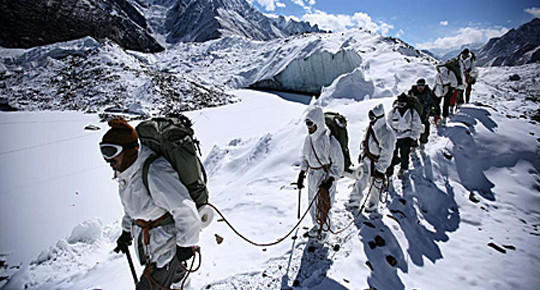
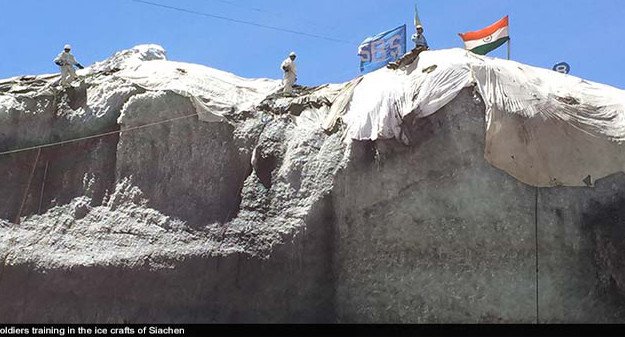
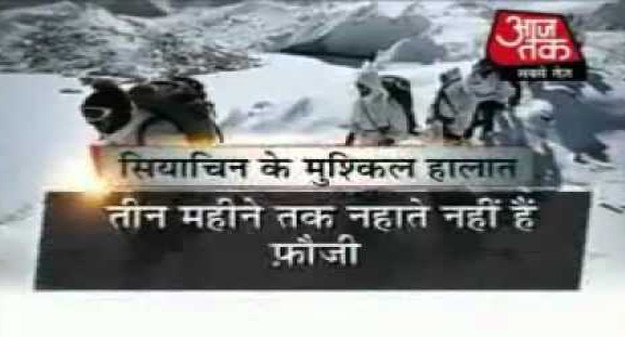
Air Marshal Awadhesh Kumar Bharti, Deputy Chief of the Air Staff, also visited the Siachen Glacier to celebrate Diwali with troops guarding the border. Air Marshal Bharti earlier served as Director General Air Operations during Operation Sindoor
State Stalwarts
DEFENCE MINISTER
Minister Rajnath Singh
ALL HUMANS ARE ONE CREATED BY GOD
HINDUS,MUSLIMS,SIKHS.ISAI SAB HAI BHAI BHAI
CHIEF PATRON ALL INDIA SANJHA MORCHA
LT GEN JASBIR SINGH DHALIWAL, DOGRA
SENIOR PATRON ALL INDIA SANJHA MORCHA
MAJOR GEN HARVIJAY SINGH, SENA MEDAL ,corps of signals
.
.
PATRON ALL INDIA SANJHA MORCHA
MAJ GEN RAMINDER GURAYA ,MADRAS REGIMENT
sanjhamorcha303@gmail.com
PRESIDENT SOUTH ALL INDIA SANJHA MORCHA
COL SS RAJAN BOMBAY SAPPERS,
PRESIDENT UTTARAKHAND ALL INDIA SANJHA MORCHA
COL B M THAPA ,BENGAL SAPPERSS
PRESIDENT HARAYANA STATE CUM COORDINATOR ESM
BRIG DALJIT THUKRAL ,BENGAL SAPPERS
PRESIDENT TRICITY
COL B S BRAR (BHUPI BRAR)
PRESIDENT CHANDIGARH ZONE
COL SHANJIT SINGH BHULLAR
.
.
PRESIDENT PANCHKULA ZONE AND ZIRAKPUR
COL SWARAN SINGH
INDIAN DEFENCE FORCES
DEFENCE FORCES INTEGRATED LOGO
INDIAN AIR FORCE
Air Officer C-in-C WESTERN AIR COMMAND
AIR MSHL S PRABHAKARAN AVSM VM
AOC-IN-C, EASTERN AIR COMMAND
Air Marshal Inderpal Singh Walia
AOC-in-C SOUTH WESTERN AIR COMMAND
Air Marshal Vikram Singh
AOC-IN-C, SOUTHERN AIR COMMAND
Air Marshal J.Chalapati
AOC-IN-C TRAINING COMMAND
AIR MARSHAL SK GHOTIA VSM
AOC-IN-C MAINTENANCE COMMAND
Air Marshal Jagdish Chandra
Flag Officer Commanding in Chief, Western Naval Command
ice Admiral R Hari Kumar, PVSM, AVSM, VSM
Flag Officer Commanding in Chief, Eastern Naval Command
Vice Admiral Sanjay Bhalla, AVSM, NM
Flag Officer Commanding in Chief, Southern Naval Command