










Sanjha Morcha

What’s New

Click the heading to open detailed news

Current Events :

web counter

Print Media Reproduced Defence Related News

Indian Air Force To Establish Central India’s Largest Airbase At Khajuraho, Madhya Pradesh Spanning 1,000 Acres

The Indian Air Force (IAF) is planning to develop a major airbase in Khajuraho, Madhya Pradesh, covering approximately 1,000 acres near the existing Khajuraho Airport.

This development aims to create the country’s largest airbase, which will serve as a crucial strategic hub for fighter jets and military transport aircraft, significantly enhancing India’s defence infrastructure in Central India.

The Ministry of Defence has initiated the preliminary processes for this ambitious project, with land acquisition expected to commence early next year once all approvals are in place. The airbase will play a vital role in bolstering the strategic and economic importance of the Khajuraho region, known globally for its historic temples and tourism.

Khajuraho was chosen after a survey of multiple airports including Prayagraj, Jhansi, and Gwalior. According to Member of Parliament and former Madhya Pradesh BJP president Vishnu Dutt Sharma, Khajuraho emerged as the most suitable and secure location for establishing a full-fledged airbase. Initial groundwork has already begun for the project.

Several factors influenced the selection of Khajuraho. The area is sparsely populated, allowing ample room for future expansion. Its strategic location is ideal for swift operational deployment, being neither too close nor too distant from the Pakistan border. Currently, Gwalior is the only existing airbase in Madhya Pradesh, and the new base at Khajuraho will geographically complement it within the same operational corridor.

The terrain of Khajuraho, mostly plateau, enjoys favourable weather conditions and low civilian movement, which are advantageous for large-scale military operations. The base will also benefit from excellent road and air connectivity. Furthermore, the airbase project is expected to boost not only Khajuraho’s strategic relevance but also the overall defence capabilities and economic development of Madhya Pradesh.

Following the operational experience of missions such as Operation Sindoor, the Air Force recognised the necessity for a strategically positioned new base in Central India. The establishment of this airbase is expected to facilitate effective deployment and operational readiness in the region.

Khajuraho’s large-scale airbase will mark a significant enhancement in India’s central air defence infrastructure, reinforcing India’s military posture while potentially generating economic gains for the local and regional economy.​

IDN (With Agency Inputs)


US-Made Javelin Anti-Tank Guided Missiles Purchase Underway: DG Infantry Javelin missile

The Indian Army has begun an emergency procurement of the American FGM‑148 Javelin anti‑tank guided missile system as part of an accelerated program to strengthen its anti‑armour capabilities. The initial procurement includes 12 launchers and 104 missiles, authorised under the emergency financial powers route to meet pressing operational needs, according to a report by Bharat Shakti.

The confirmation came from Lieutenant General Ajay Kumar, Director General (Infantry), who stated that the decision was motivated by the need to quickly augment firepower in forward areas amid evolving threat conditions along India’s borders.

The Javelin’s advanced design and combat record were central to the Army’s selection. Developed jointly by Raytheon and Lockheed Martin, the third‑generation, shoulder‑fired missile is recognised for its fire‑and‑forget capability and devastating top‑attack flight profile that targets weaker armour from above.

Its soft‑launch mechanism allows safe operation from confined positions, while the reusable Command Launch Unit (CLU) provides day‑ and night‑time target acquisition. Together, these features make it highly effective in the mountainous and rugged terrain where Indian infantry units often operate.

The emergency purchase is only the immediate component of a broader vision. Alongside the quick induction, New Delhi has submitted a formal letter of request to Washington seeking approval for co‑production of Javelin systems within India.

This initiative aligns with the government’s Make in India framework, which aims to establish local manufacturing capacity and reduce dependence on foreign suppliers for critical defence equipment. According to Indian officials, this proposal has been positively received, and technical discussions with U.S. counterparts have been underway since July.

The prospective co‑manufacturing partnership would not only address existing battlefield deficiencies but also build a foundation for long‑term self‑reliance in advanced precision weapons. If approved, India would join a select few countries permitted to produce or assemble the Javelin, consolidating its status as a strategic defence partner of the United States.

The collaboration could also serve as a model for future joint projects involving other platforms such as the Stryker Infantry Combat Vehicle, which was referenced in the joint statement following Prime Minister Narendra Modi’s meeting with President Donald Trump earlier this year.

The Javelin’s induction complements ongoing infantry modernisation efforts that include the acquisition of new carbines, loitering munitions, and enhanced reconnaissance systems. The Army envisions its use at the brigade and company level, particularly for light and high‑mobility units.

In such roles, its man‑portable configuration provides tactical flexibility and allows small detachments to engage armoured threats independently without reliance on heavier vehicles or artillery support. This mobility, combined with its high lethality and proven battlefield reliability, has made the weapon a preferred choice for quick‑reaction and mountain warfare formations.

Officials confirmed that deliveries will be followed by user evaluation trials and crew training before formal induction into service. Once operational, the missiles will significantly improve the short‑range anti‑tank capability of forward infantry battalions.

Lt Gen Kumar emphasised that while immediate acquisitions are necessary to address current vulnerabilities, the larger objective remains to indigenise and sustain such systems domestically. The co‑production proposal, therefore, represents both a tactical and strategic step in India’s continuous pursuit of technological autonomy in defence manufacturing.

Based On Bharat Shakti Report


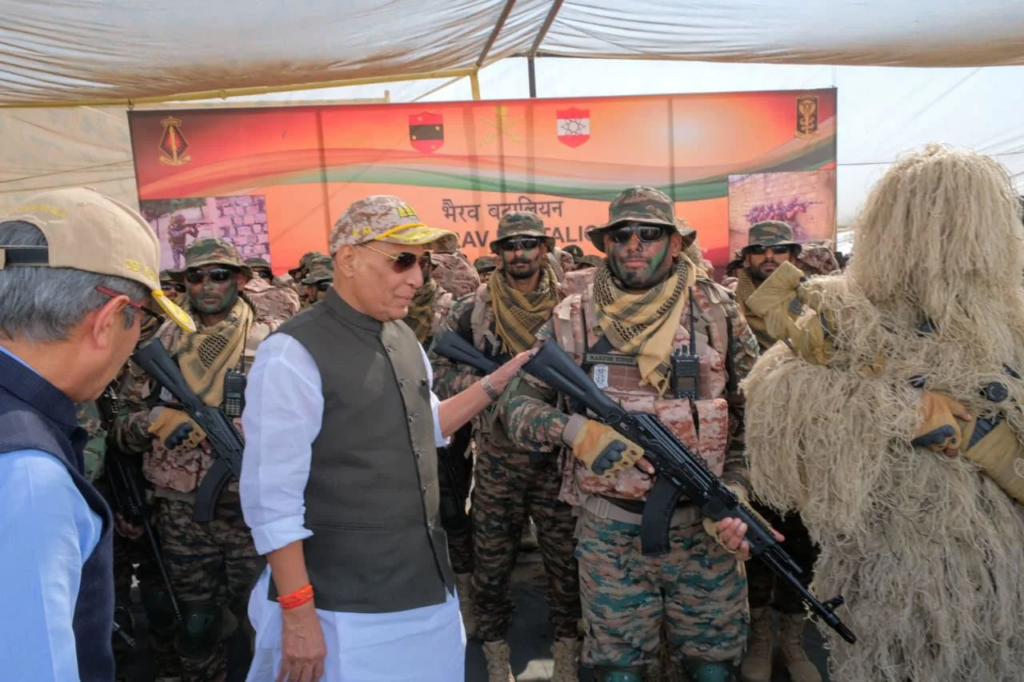
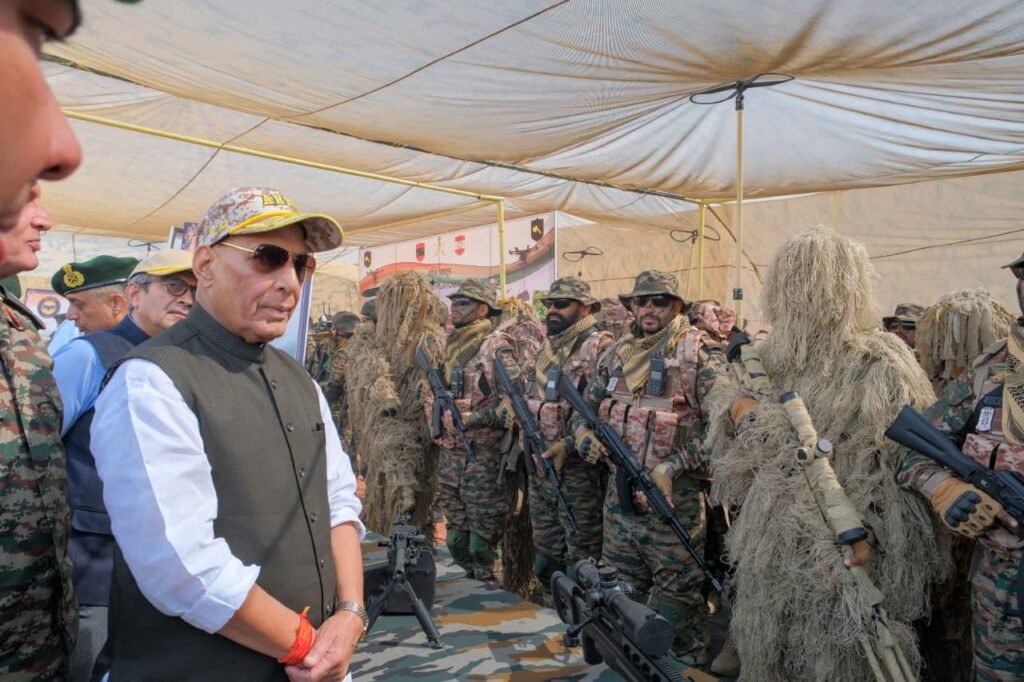
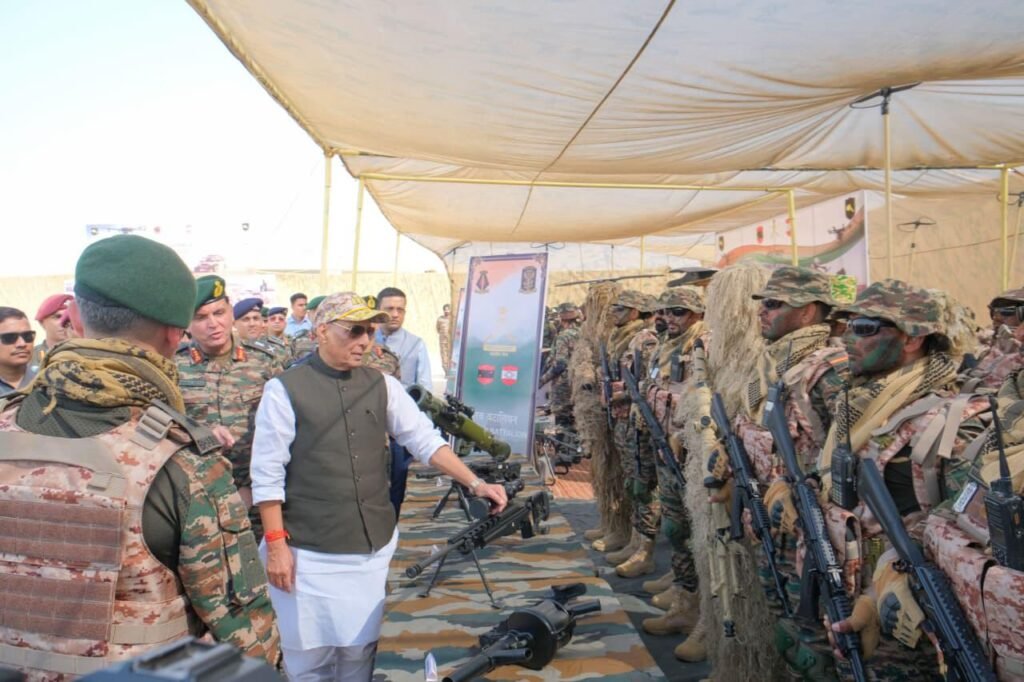
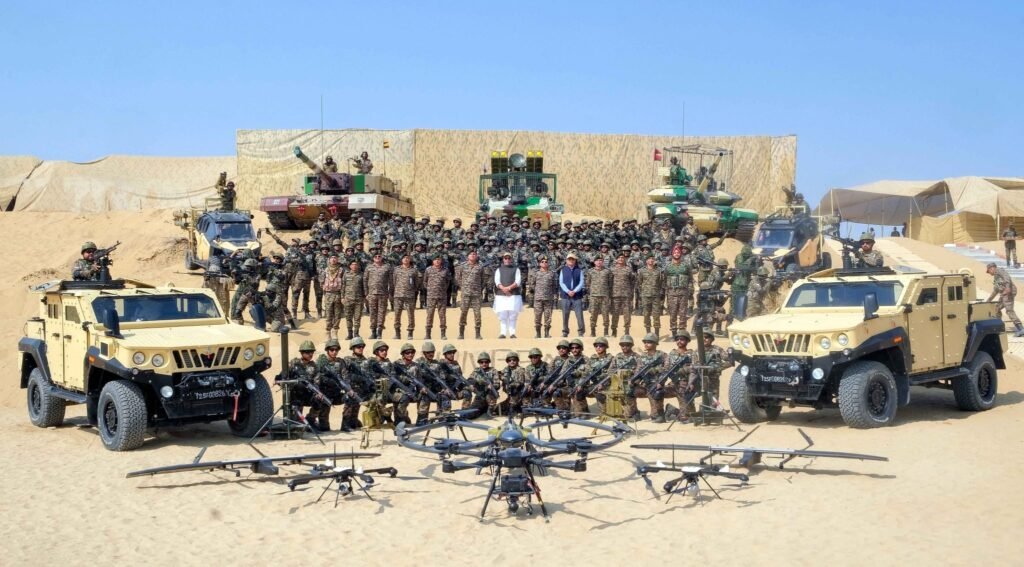
Indian Army Releases First Pictures of Bhairav Battalion Commandos Bhairav isn’t just a name—it’s a warning.

In a move that underscores India’s ramped-up border security posture, the Indian Army has released the first-ever official photographs of its newly formed Bhairav Light Commando Battalions, showcasing the elite commandos in high-altitude training maneuvers along the Line of Actual Control (LAC) and Line of Control (LoC). The images, shared via the Army’s official channels, depict the commandos in razor-sharp focus, clad in advanced camouflage gear and wielding cutting-edge weaponry, signaling a new era of “lean, mean” special operations capabilities.

The Bhairav Battalions, named after the fierce manifestation of Lord Shiva, were announced by Chief of Army Staff General Upendra Dwivedi on July 26, 2025, during the 26th Kargil Vijay Diwas commemorations in Dras, Ladakh. Described by Gen Dwivedi as a “highly lethal special force” designed to “deliver surprise and shock to adversaries at the border,” these units represent a pivotal shift in the Army’s modernization drive. Each battalion comprises just 200–250 personnel—far leaner than traditional 800-strong infantry units—but packs a disproportionate punch through integrated multi-domain expertise drawn from infantry, signals, artillery, and air defence regiments

The debut photos, captured during live-fire exercises in rugged Himalayan terrain, reveal commandos executing precision drone-assisted strikes, night infiltration drills, and rapid heliborne insertions. One striking image shows a squad of Bhairav operators navigating sheer cliffs under drone overwatch, their faces blackened for stealth and NVG (night-vision goggles) mounted on tactical helmets. Another captures a fireteam launching loitering munitions from elevated positions, highlighting the unit’s emphasis on technology-enabled autonomy. These visuals not only humanize the faceless warriors but also serve as a stark message to potential foes amid escalating tensions with China and Pakistan.”

So far, five Bhairav battalions have been raised, trained, and deployed in independent areas of operation,” confirmed Lieutenant General Ajay Kumar, Director General (Infantry), in a recent briefing. These initial units went operational from October 1, with full battle readiness slated by month’s end. Training regimens, spanning 2–3 months at regimental centers followed by attachments with elite Para-SF units, equip the commandos for deep strikes, unconventional warfare, and high-impact tactical ops in mountainous and contested environments. The Army’s long-term vision? A network of 23 such battalions by 2030, all restructured from existing formations under a cost-efficient “save and raise” model—no new troop influx required. This unveiling coincides with broader reforms, including the rollout of ‘Ashni’ drone platoons across all 385 infantry battalions and the formation of ‘Rudra’ all-arms brigades for integrated mechanized warfare. “The Bhairav model reflects our effort to create rapid response, multi-domain combat units that can deliver quick results without the logistical footprint of a full battalion group,” Lt Gen Kumar elaborated, emphasizing their role in “speed, stealth, and autonomy” for border hotspots.

Read More: https://www.ssbcrack.com/2025/10/indian-army-releases-first-pictures-of-bhairav-battalion-commandos.html


Lt Gen Rajan Sharawat Reviews Operational Readiness,

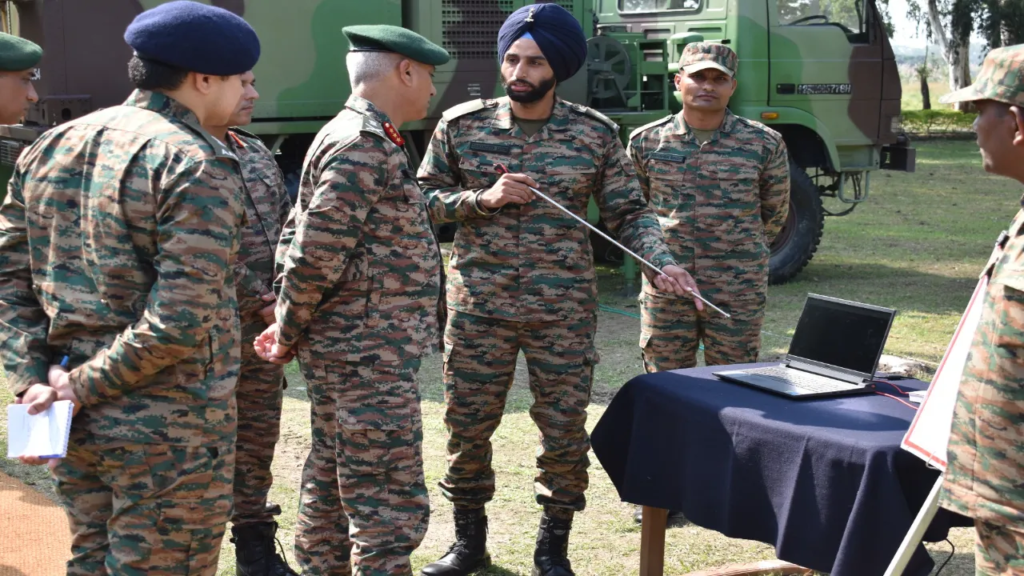
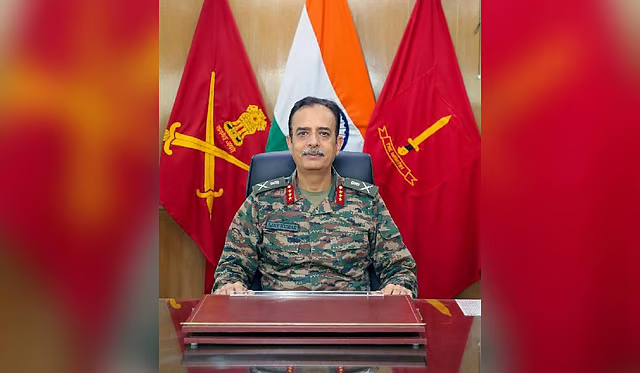
Lt Gen Rajan Sharawat, AVSM, VSM, the General Officer Commanding (GOC) Rising Star Corps conducted a detailed review of the operational preparedness of formations and units in the Pathankot sector, with a focus on the integration of advanced Unmanned Aerial Systems (UAS) and Counter-Unmanned Aerial Systems (CUAS) technologies. During the visit, the GOC commended the troops for their tech-driven operational excellence and indigenous innovations, highlighting the ongoing efforts under Swadeshikaran Se Shaktikaran to strengthen self-reliance in defence capabilities. The review emphasized the Corps’ commitment to leveraging cutting-edge technology for enhanced situational awareness, rapid response, and maintaining a high state of combat readiness in the strategically vital sector. More Read Indian Army Releases First Pictures of Bhairav Battalion Commandos NSG Commandos Summit Mt Satopanth Ahead of Everest 2026 Mission Indian Navy Inducts ‘Mahe’ – First Indigenous Anti-Submarine Warfare Shallow Water Craft Built by CSL

Praises Tech-Driven Excellence in Pathankot Sector GOC Lauds Troops’ Innovation and Self-Reliant Tech Integration in Pathankot Sector.

Read More: https://www.ssbcrack.com/2025/10/lt-gen-rajan-sharawat-reviews-operational-readiness-praises-tech-driven-excellence-in-pathankot-sector.html


Indian Army to operationalise 25 Bhairav light combat battalions in six months

Tasked to conduct cross-border operations, reconnaissance and disruption missions, the Bhairav units will relieve Para-Special Forces for strategic assignments.

Mayank Singh

Lt Gen Ajay Kumar, Director General (Infantry), Indian Army. (FIle Photo |

NEW DELHI: Indian Army’s transformation bid will touch another milestone as plans are afoot to get specialised Bhairav Light Combat Battalions operational within six months.

Lieutenant General Ajay Kumar, Director General of the Indian Army’s Arm of Infantry, said on Wednesday that five Bhairav battalions are now fully functional. Four more are currently in the process of being raised, and the remaining 16 will be operational within the next six months.

“Designed to be lean and lethal, these battalions are built for rapid, high-impact operations along India’s borders with China and Pakistan,” he said, speaking to reporters ahead of the Shaurya Diwas celebrations. The Shaurya Diwas is celebrated on October 27 to commemorate the air-landed operations in 1947 at Budgam Airport in Jammu and Kashmir.

Infantry is the Army’s largest fighting arm, with more than 400 units. The need for such specialised battalions was realised to fill the gap between a conventional infantry unit and the Special Forces. Tasked to conduct cross-border operations, reconnaissance and disruption missions, the Bhairav units will relieve Para-Special Forces for strategic assignments.

As earlier reported by The New Indian Express, Bhairav battalions will be deployed on special tasks and assignments to inflict damage on the enemy. However, these units will not be as heavily armed nor tasked with strategic operations like Special Forces units.


Military units of 1965 war Maha Vir Chakra recipients to be felicitated at Literature Festival

This year’s discussions will focus on Op Sindoor, employment of air power in multi-domain warfare

Units that included Punjab-based Armed Forces personnel decorated with the Maha Vir Chakra for gallantry during the 1965 India-Pakistan War will be felicitated by Governor Gulab Chand Kataria. The ceremony will take place at the ninth edition of the Military Literature Festival (MLF) scheduled to be held from November 7 to 9.

The Commanding Officers of 11 Army and Air Force units, along with their senior JCO, are expected to attend the event.

The family of Chaman Lal, a railway firefighter who was awarded the Ashoka Chakra during the war for battling a blaze that had engulfed an ammunition and petroleum train, will also be felicitated.

The Governor, who will inaugurate the festival, will also honour the veterans from Punjab who had participated in the 1965 war, the diamond jubilee of which is being commemorated this year, or their surviving kin.

Chairperson of the MLF Association, Lt Gen TS Shergill (retd), said that the theme of the event this year is “Heartland and Rimland Powers in Multi-domain Warfare and India”.

He further said that the western, southern and eastern edges of Eurasia have been categorised as Rimland, with central and northern areas being the heartland and this entire region has immense geo-strategic significance.

This year’s discussions will focus on contemporary national and international issues such as the conduct of Operation Sindoor and employment of air power in multi-domain warfare, multi-domain threats from Pakistan and China, challenges in the maritime domain, role of energy in the changing geopolitical scenario and changing dynamics in Af-Pak region and Iran.

Chief of Defence Staff to deliver keynote address

Chief of Defence Staff, Gen Anil Chauhan, will deliver a keynote address on the concluding day. A British delegation will discuss the shared heritage between the militaries of India and Britain

Homage to martyrs, a bravehearts motorcycle rally, weapons and equipment display, exhibition of military paintings and stamps, screening documentaries, horse show and dog show are other events being organised.

Notably, the two 1965 war recipients of the highest gallantry award, Param Vir Chakra, Lieutenant Colonel Ardeshir Burzorji Tarapore and Company Quartermaster Havildar Abdul Hamid belonged to Maharashtra and Uttar Pradesh, respectively.


7-hour window for flight ops at SBSI airport from Oct 26 to Nov 6

IAF takes decision in view of festival season

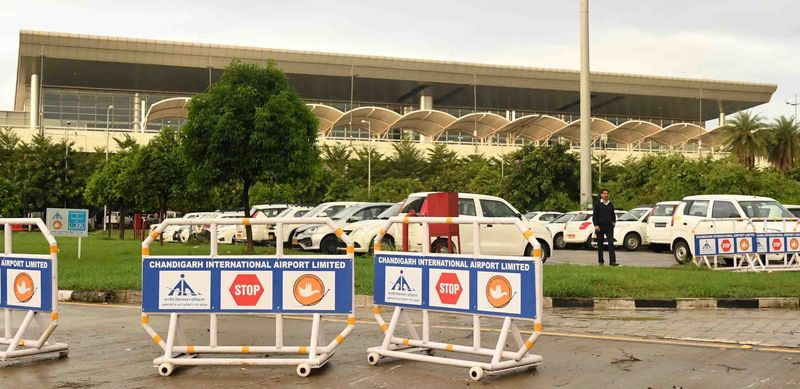
The Indian Air Force (IAF) has allowed a seven-hour window for flight operations during the ongoing repair and maintenance work on the runway of the Shaheed Bhagat Singh International Airport from October 26 to November 6 to facilitate the movement of passengers during the festival season.

The runway will be available for civilian flight operations from 5 am to 12 noon daily during that period. During the second phase of maintenance work, an 18-hour window — from 5 am to 11 pm— has been planned from November 7 to 18.

The IAF had earlier announced the complete closure of the runway for civilian flight operations during the two-week period for maintenance and repair of the single-strip runway. However, the maintenance project has now been divided into phases to avoid inconvenience to the passengers in the peak festival season.

The IAF authorities have issued a revised notice to airmen (NOTAM) for the closure period from October 26 to November 6, from 12 noon to 5 am (next day).

From November 7 to 18, the airport will remain closed from 11 pm to 5 am (next day) during low traffic hours. During this phase, the airport will be available for flight operations for 18 hours a day.

Meanwhile, the Chandigarh International Airport Authority (CHIAL) officials, UT and Mohali administrations, and other stakeholders held a review meeting today to discuss the action taken report (ATR) regarding the unusual bird activity in the vicinity of the airport threatening flight safety.

Chandigarh MP Manish Tewari and Anandpur Sahib MP Malvinder Singh Kang had addressed the issue of the serious flight safety hazard due to increased bird activity during the Airport Advisory Committee meeting held on October 12. Tewari, chairman of the 13-member committee, said, “It is a serious issue and steps are being taken by taking along administrative officials of the Tricity. All actions taken after October 12 meeting will be reviewed again on November 1. Effective waste management and remedial actions are being done on a priority.”

The announcement comes as a major relief to passengers who are travelling to celebrate festivals with family members and attend marriages of their near and dear ones.

Officials said polymer modified emulsion work was being carried out on the runway.

More than 50 flights operate from the airport daily. It operates direct service to 21 destinations — 19 domestic locations and two international destinations


BSF to install 1,000 scanners along Bangladesh border to track infiltrators

296 scanners put up in last 3 months

As many as 1,000 scanners will soon be installed along the 4,096-km India-Bangladesh border to digitally maintain a database of infiltrators — including Bangladeshi citizens entering Indian territory illegally, as well as Indian nationals crossing into Bangladesh illicitly. The initiative will help the BSF track their movements and activities more effectively.

Sources told The Tribune that in the last three months, 296 scanners have already been deployed along the Bangladesh border. These devices have helped maintain biometric records of infiltrators, giving the Border Security Force (BSF) a much clearer understanding of the people who cross the border illegally in either direction.

This first-of-its-kind initiative will see an additional 1,000 scanners installed along the Bangladesh border in the coming months. The scanners record fingerprints of individuals caught attempting to cross the border illegally.

BSF officials noted that, in many cases, the same individuals attempt to enter Indian territory repeatedly, even after being caught and imprisoned previously. Most of these repeat offenders are smugglers, and due to their large numbers, maintaining records manually has been nearly impossible, a senior BSF official said.

Since the scanners have been installed, biometric details of infiltrators are recorded whenever they are arrested. This enables the BSF to track both their movements and profiles. For example, if a Bangladeshi infiltrator is caught while attempting to smuggle cattle, their biometric record can verify whether they had previously been caught for other activities or smuggling attempts, the official explained.

Similarly, several Indian nationals are intercepted while entering India after having crossed into Bangladeshi territory illegally. In such cases, biometric data helps track their movements and maintain accurate records.

The scanners also help in cases where Indian farmers accidentally cross into Bangladesh. Their details can be verified quickly, preventing unnecessary penal action against them, officials added.