For the first time, Ekta Diwas, observed on October 31 to mark the birth anniversary of Sardar Vallabhbhai Patel, will witness a moving parade instead of a static one, featuring contingents from paramilitary and police forces at Kevadia in Gujarat. The event will be attended by Prime Minister Narendra Modi, Director General of the Border Security Force (BSF) Daljit Singh Chawdhary said on Friday.
He added that the guard of honour would be presented by women police personnel.
This year’s parade will include five Shaurya Chakra awardees from the Central Reserve Police Force (CRPF) and 16 gallantry medal recipients from the BSF.
“The CRPF personnel participated in anti-Naxal operations in Jharkhand and counter-terror operations in Jammu & Kashmir, while the BSF personnel who will join the parade took part in Operation Sindoor on the western border,” Chawdhary said.
A cultural programme organised by the Union Ministry of Culture will also be held, featuring 900 artistes performing classical dances to showcase India’s cultural diversity.
In a historic first, the BSF will present an exclusive marching contingent of indigenous Indian dog breeds during the parade, the BSF DG added.
“This year’s parade will also feature a marching contingent comprising exclusively Indian breed dogs of the BSF. These breeds have made contributions as force multipliers during BSF operations, with around 150 dogs currently deployed for patrolling along the Pakistan and Bangladesh borders.
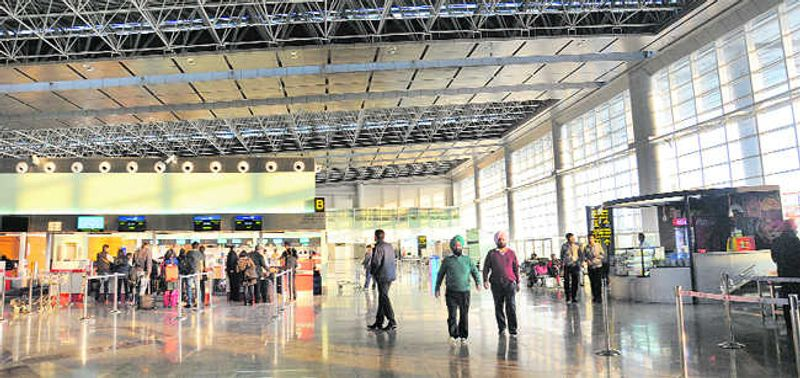
The winter schedule of Shaheed Bhagat Singh International Airport here will become operational from October 26 and remain in force till March 28 with no major new destinations added to it. However, three additional flights, one each to Kullu, Leh and North Goa, have been added to the winter schedule.
The schedule lists 55 flights. The international flights to Dubai and Abu Dhabi will be available from October 7 onwards only.
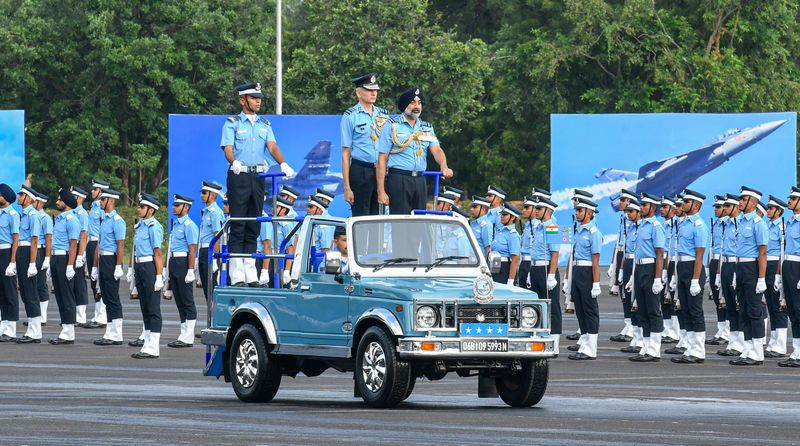
The Indian Air Force (IAF) on Friday announced a seven-hour window for running flight service from October 26 to November 6 to facilitate the movement of passengers during the festival season. Civilian aircrafts will now be able to operate from 5 am to 12 noon daily during that period.
The IAF had earlier announced the complete closure of the single-strip runway for civilian flight operations for two-week period to carry out polymer modified emulsion work.
Damaged fencing fixed by BSF in J&K, work 95% complete in Punjab
Heavy rains between late August and mid-September had flooded around 100 km of border areas along Pakistan and Pakistan-occupied Kashmir (PoK) in Punjab and Jammu & Kashmir
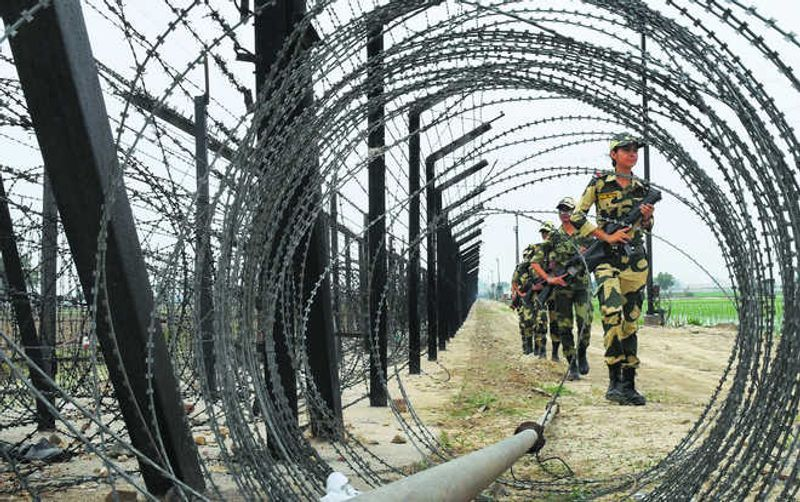
Over 90 days after torrential rains ravaged northern India and washed away stretches of border fencing in the Jammu and Punjab sectors, the Border Security Force (BSF) has almost completed restoration work along the frontier.
Top BSF officials told The Tribune that fencing work in Jammu has been fully restored, while in Punjab it is about 95 per cent complete.
“As of now, fencing along the Pakistan border has been put back in place. Permanent civil repair work on border outposts will be completed gradually,” a senior BSF official said, adding that the restored fencing is “up to the mark” to prevent infiltration.
Heavy rains between late August and mid-September had flooded around 100 km of border areas along Pakistan and Pakistan-occupied Kashmir (PoK) in Punjab and Jammu & Kashmir — 30 km in Jammu and 70 km in Gurdaspur and Ferozepur sectors of Punjab — where fences were either washed away or bent.
While restoration in higher reaches of Jammu and around RS Pura was completed a month ago, progress in Punjab was delayed as floodwaters persisted until the end of September, despite the rains stopping earlier in the month.
Interestingly, officials said the floods had an unintended benefit — several underground tunnels used for infiltration were flooded, leading to a sharp decline in cross-border intrusion attempts.
However, smuggling incidents continued despite the flooding.
On September 11, the BSF arrested two arms smugglers near Fazilka and seized 27 pistols, 54 magazines and 470 live rounds. On September 12, a joint BSF-Fazilka CIA operation led to the recovery of 16 pistols, 38 magazines, 1,847 rounds and a motorcycle.
On September 21, the BSF and Punjab Police nabbed four smugglers near Gurdaspur with 10 kg of heroin. All these incidents occurred even as large parts of the India-Pakistan border remained submerged under floodwaters.
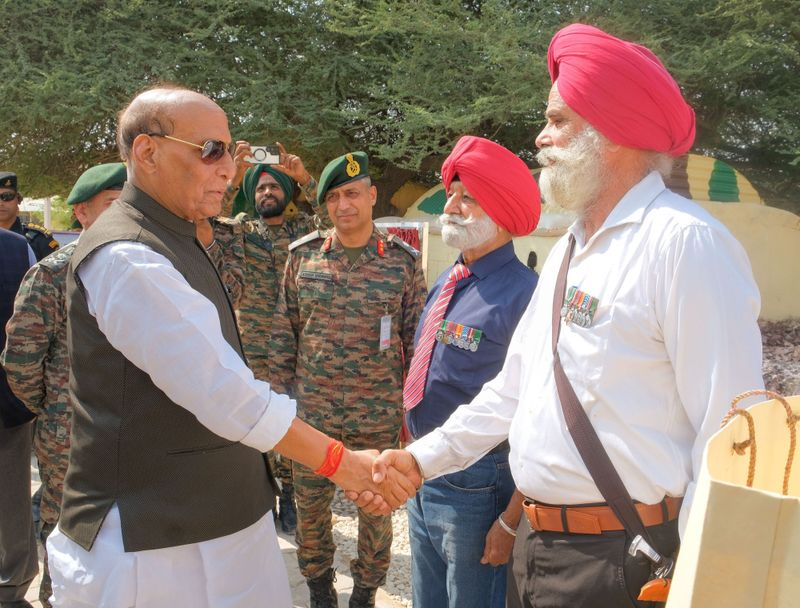
Defence Minister meets veterans of the Battle of Laungewala at Jaisalmer on Friday. Photo: MoD
Minister inaugurates Chandpuri Hall
Defence Minister Rajnath Singh on Friday reviewed the Army’s operational readiness in the Rajasthan sector along the India-Pakistan border. In a nostalgic moment, he met two veterans of the Battle of Laungewala, fought during the 1971 war with Pakistan.
The minister laid a wreath at the Laungewala Yudh Sthal and inaugurated the ‘Chandpuri Hall’, named after Major (later Brigadier) Kuldip Singh Chandpuri, who, with just 120 men, held back a Pakistani brigade, including tanks, during the battle. Brig Chandpuri, who passed away in 2018 in Chandigarh, was awarded the Mahavir Chakra, and his valour was immortalised in the Hindi film Border.Advertisement
Singh, along with Army Chief Gen Upendra Dwivedi and Defence Secretary Rajesh Kumar Singh, met veterans Havildar Mukhtiyar Singh (Retd) and Naik Jagdev Singh (Retd), both of whom were part of the Alpha Company of the 23rd Battalion of the Punjab Regiment. Brig Chandpuri, then a Major, commanded the Alpha Company in December 1971.
Meanwhile, the Defence Ministry said the minister also reviewed the security situation and the Army’s operational preparedness during the Army Commanders’ Conference in Jaisalmer. Earlier, he had visited forward areas in Tanot and Laungewala.
During the conference, the roadmap for jointness among the services was discussed. Singh said Operation Sindoor was “not over”, adding, “Our mission for peace will continue as long as even a single terrorist mindset remains alive.” He noted that Operation Sindoor has shaped a new strategic approach, allowing India to respond to terrorist activity on its own terms, while advising the Army not to underestimate adversaries and to remain alert and prepared.
As part of the conference, Singh also virtually inaugurated the ‘data centres’ of the 12 Corps (headquartered at Jodhpur) and the 14 Corps (headquartered at Leh). He witnessed a capability demonstration exercise showcasing the integrated use of new formations such as the Bhairav Battalion and the Ashni drone platoon, alongside the latest technological assets inducted into the Army for operational readiness.
Commenting on the situation along the northern border with China, the minister said ongoing talks and steps towards de-escalation reflect India’s balanced and firm foreign policy. “Our policy is clear: there will be dialogue, but our readiness on the border will remain intact,” he said.
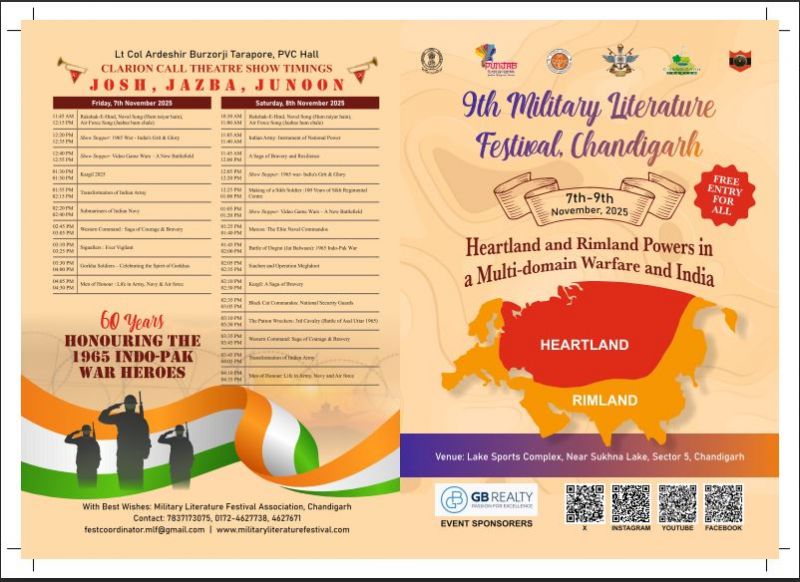
9th Military Literature Festival in Chandigarh from Nov 7–9; Bravehearts Ride on Oct 26 to kick off events
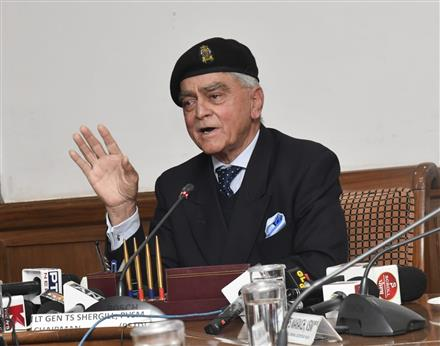
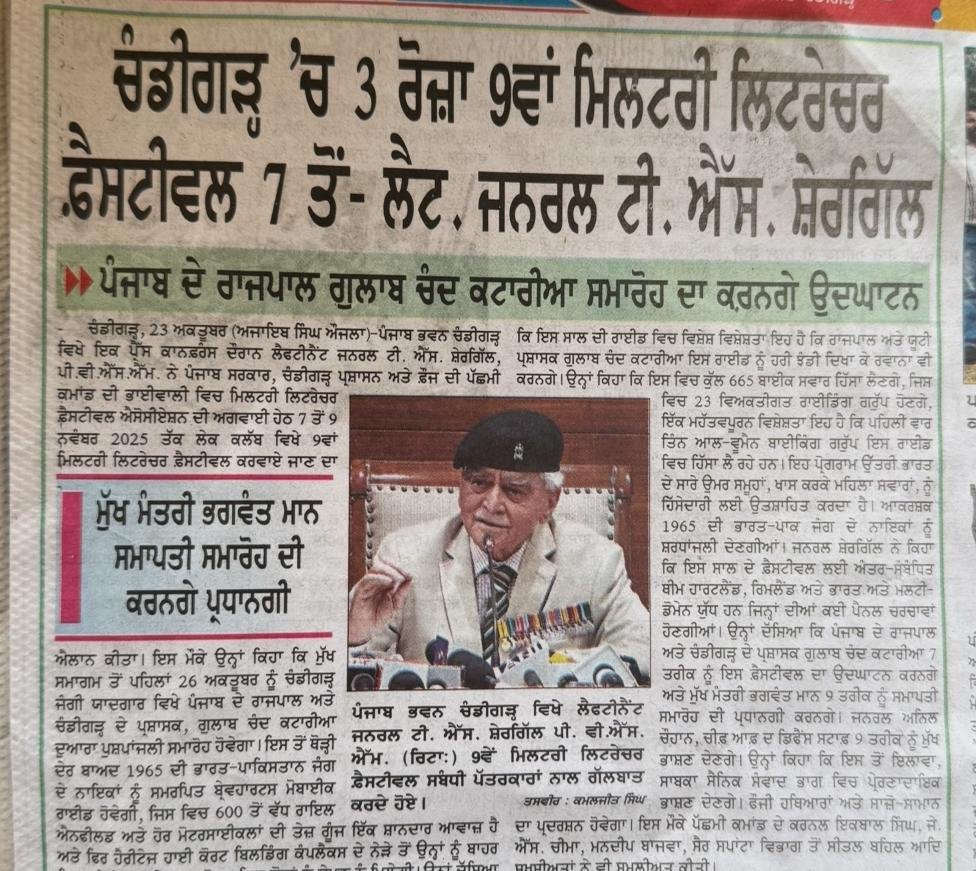
Lt Gen T. S. Shergill, PVSM, announced that the 9th Military Literature Festival (MLF), Chandigarh, will be held at the Lake Club from November 7 to 9 under the aegis of the Military Literature Festival Association in partnership with the Punjab Government, the Chandigarh Administration, and the Indian Army’s Western Command.
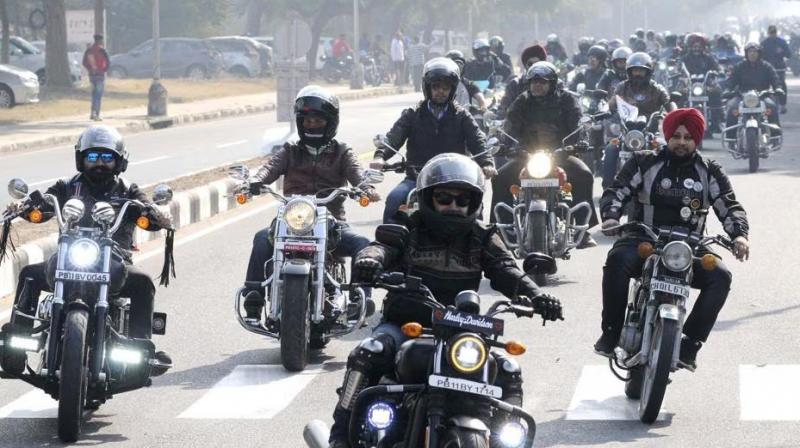
The festival curtain-raiser is slated for Sunday, October 26, with a wreath-laying ceremony at the Chandigarh War Memorial by Punjab Governor and UT Administrator Gulab Chand Kataria, followed by the Bravehearts Mobike Ride dedicated to the heroes of the 1965 Indo-Pak War. The iconic ride—flagged off by Governor Kataria—will see about 665 bikers from 23 riding groups, including three all-women groups for the first time, traverse Chandigarh, Mohali, and Panchkula before culminating at Raina Stadium in Chandimandir Military Station, where participants will be hosted by Western Command.
Shergill said the Bravehearts Ride, led and organized by veteran biking enthusiast Col Raminder Brar, has become a signature MLF event that brings together veterans from the three services and young riders from across Punjab and Haryana on Enfields, Triumphs, BMWs, and Harley-Davidsons to pay collective homage to the fallen. Riders will don MLF badges and blue-yellow jackets to showcase solidarity with the armed forces while promoting disciplined, safe riding.
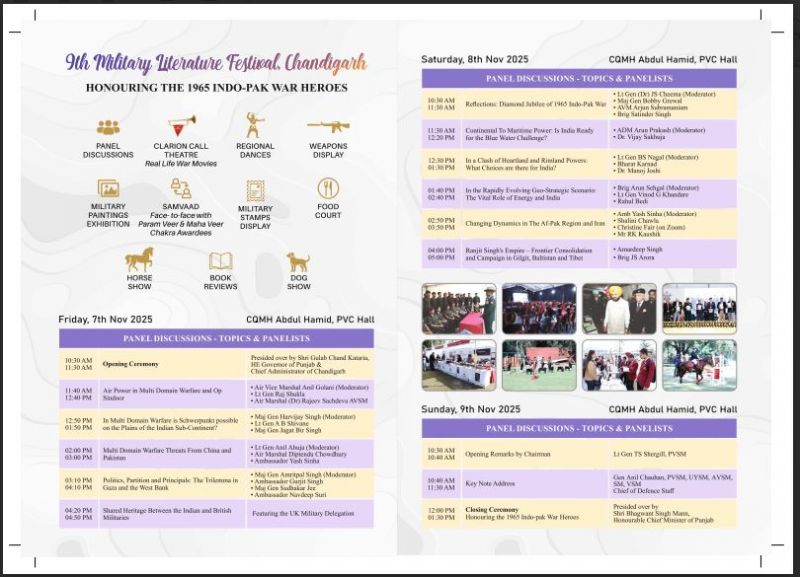
This year’s inter-related themes—Heartland, Rimland and India, and Multi-Domain Warfare—will anchor multiple panel discussions. The military-history focus centers on the 1965 Indo-Pak War, whose 60th anniversary was commemorated earlier this year. Highlights include an interaction with a United Kingdom military delegation on the shared heritage of the Indian and British Armies and an exposition by Sikh scholar Amardeep Singh.
Governor Gulab Chand Kataria will inaugurate the festival on November 7, while Chief Minister Bhagwant Singh Mann will preside over the closing ceremony on November 9. Chief of Defence Staff General Anil Chauhan will deliver the keynote address on November 9.
The popular Clarion Call theatre returns to screen war films showcasing the bravery of the Army, Navy, and Air Force. Two value additions this year include features on the 1965 war and on non-contact warfare—long-distance air and missile strikes—set against scenarios such as Operation Sindoor and recent conflicts in Gaza and Iran. The theatre is named after 1965 Param Vir Chakra awardee Lt Col A. B. Tarapore of Poona Horse.
Veterans will deliver motivational talks in the Samvad section, while the Army mounts daily weapons and equipment displays alongside dog and horse shows at the venue. As part of expanded outreach, an MLF team has organized a seminar on the 1965 war at Panjab University, Chandigarh, with another scheduled at Punjabi University, Patiala, to engage youth and academia.
Expressing gratitude to partners and volunteers, Shergill said the festival’s growth over nine editions has been possible due to sustained support from the Punjab Government, the Chandigarh Administration, and Western Command, and the tireless commitment of volunteers who have helped embed the MLF in the region’s cultural calendar.
9th Military Literature Festival, Chandigarh: 665 bike riders to participate in Bravehearts Mobike Ride
The Ride symbolises a wonderful synergy of like-minded people from across different walks of life who voluntarily come together
9th Military Literature Festival, Chandigarh: 665 bike riders to participate in Bravehearts Mobike Ride Latest News: Lt Gen TS Shergill, PVSM, announced the 9th Military Literature Festival, Chandigarh to be held at the Lake Club from 7th to 9th November 2025 under the aegis of the Military Literature Festival Association in partnership with the Punjab Government, Chandigarh Administration, and the Army’s Western Command, according to a press release.
The main event will be preceded on Sunday, 26th October by the Wreathlaying Ceremony at the Chandigarh War Memorial by HE Shri Gulab Chand Kataria, Governor of Punjab and Administrator of Chandigarh. This will be followed shortly after by the Bravehearts Mobike Ride dedicated to the heroes of the 1965 Indo-Pak War.
The thumping roar of over 600 Royal Enfields and other motorcycles starting up is a phenomenal sound and then to see them streaming out from near the Heritage High Court building complex is a scintillating sight, the press release said.
The iconic ‘Bravehearts Ride’ which has become a special feature of the Military Literature Festival activities is being conducted on 26th October 2025 marking the start of the Military Literature Festival for this year. Veteran bikers alongside other riders from across the Northern Region and The Tricity will be participating in this Ride. The Ride is an awesome spectacle and virtually brings The City Beautiful to a standstill with its superlative display of controlled and disciplined motorcycle riding that perhaps has not been seen before, it added.
The Governor and UT Administrator Gulab Chand Kataria is scheduled to flag off the ride.
A total of approximately 665 bike riders will be participating in this event with 23 individual Riding Groups, a notable feature being that for the first time, three All-Women Biking Groups are taking part in this ride. They will showcase skills of disciplined and safe road driving. The Ride will have veterans from the Three Defence Services and many young bike enthusiasts from across Punjab and Haryana steering spectacular looking Enfields, Triumphs, BMW’s and Harley machines, the press detailed.
The event encourages participation from all age groups across North India, especially women riders. Adorning attractive MLF badges and Blue Yellow jacket,s the riders will show solidarity with the Defence Forces and pay homage to the Heroes of the Indo-Pak War 1965. The ride will go through Chandigarh, Mohali and Panchkula and end up at the Raina Stadium in the Chandimandir Military Station Area where they will be graciously hosted by The Western Command.
The Ride symbolises a wonderful synergy of like-minded people from across different walks of life who voluntarily come together for a common cause and pay singular homage to the fallen heroes and pay respects to their spirit of sacrifice. The Ride is led and organised by Col Raminder Brar, a veteran biking enthusiast and his efforts to encourage greater bonhomie and bonding of the Younger Generation of biking enthusiasts towards the Military Literature Festival and share and experience the Ethos and Culture of the Services has always set an excellent benchmark to follow, the press release further stated.
It continued, “The participation by three, All-Women Biking Groups this year is a moment of pride for us and speaks volumes of the Ride culture that has been established. All the participating Riders acknowledge the exceptional manner in which this Ride is organized and they salute the spirit of the Ride and what it stands for.”
Once again, the popular Clarion Call theatre will entertain and educate the viewing public. The crowd-pulling venue is all set to screen war movies portraying bravery, courage and sacrifice by the Army, Navy and Air Force. Two value additions this time include one on the 1965 Indo-Pak War and the new concept of non-contact warfare based on long-distance air and missile attacks in the context of Operation Sindoor, the Israeli attacks on Gaza and Iran. The state-of-the-art movie theatre is named after 1965 Paran Vir Chakra awardee Lt Col AB Tarapore of the Poona Horse.
General Shergill said that the interrelated themes for this year’s Festival are Heartland, Rimland and India and Multi-Domain Warfare of which there will be numerous panel discussions. The military historical theme is the 1965 Indo-Pak War whose 60th anniversary we commemorated earlier this year. Festival events at the Lake Club, Chandigarh will include an interaction with a military delegation from the United Kingdom who will talk about the shared heritage between the Indian and British Armies. Of special interest would be Sikh scholar Amardeep Singh’s exposition. HE Shri Gulab Chand Kataria, Governor of Punjab and Administrator of Chandigarh would inaugurate the Festival on the 7th and Sardar Bhagwant Singh Mann, Honourable Chief Minister, would preside over the closing ceremony on the 9th. General Anil Chauhan, Chief of the Defence Staff would deliver the keynote address on the 9th.
In addition, veterans would deliver motivational lectures in the Samvad section. There would be a display of military weapons and equipment. The Army would organise dog and horse shows at the venue on all days. A new feature this year is the outreach to universities and through them to youth and students. An MLF team has organised a seminar on the 1965 War at Panjab University, Chandigarh and will be doing so at Punjabi University, Patiala shortly.
“Lastly our everlasting thanks to our partners the Punjab Govt, Chandigarh Administration and the Army’s Western Command. We couldn’t have done what we have over the last 9 years without them,” the press release said.
“Finally, a heartfelt debt of gratitude to our volunteers. Without them we couldn’t have achieved anything,” it added.
(For more news apart from “Surge In Respiratory Illnesses, Pregnancy Complications Due To Pollution After Diwali In Kolkata” stay tuned to Rozana Spokesman.)
India, particularly the state of Punjab, holds a proud and enduring legacy of military service, patriotism, and sacrifice. Punjab has consistently contributed some of the bravest soldiers to the Indian Armed Forces, with generations of families dedicating their lives to the defense of the nation. The Military Literature Festival stands as a powerful tribute to this legacy, offering a platform to honor and celebrate the valiant contributions of India’s defense personnel. This annual event not only highlights the inspiring stories of courage from the battlefield but also serves as an educational and cultural experience that connects citizens—especially the youth—with the nation’s glorious military past.
Organized every year in the month of November, the Military Literature Festival in Punjab has grown into a nationally recognized celebration of India’s armed forces. The festival brings together war veterans, military historians, strategic experts, celebrated authors, and passionate enthusiasts, creating a unique space for dialogue, storytelling, and remembrance. It acts as a bridge between the past and the present, ensuring that the sacrifices of India’s bravehearts are never forgotten and that future generations understand the value of service to the nation.
With a thoughtfully curated mix of activities, the festival attracts audiences from all walks of life. From thrilling shotgun shooting demonstrations and spirited golf tournaments to engaging bird-watching workshops and captivating literary sessions, the Military Literature Festival offers a wide spectrum of experiences. Each event is designed to entertain, educate, and inspire, fostering a deeper appreciation for India’s military traditions. These cultural and intellectual engagements provide a meaningful connection to the lives and legacies of those who have defended the nation with valor and dignity.
The Military Literature Festival goes beyond commemoration; it is a call to reflect, learn, and take pride in the heritage of India’s defense forces. As it continues to grow in reach and impact, the festival reinforces the values of patriotism, honor, and national pride. It is more than an event—it is a living testament to the courage and commitment of the men and women in uniform who have shaped the destiny of India. Through stories, discussions, and community participation, the Military Literature Festival keeps the spirit of India’s armed forces alive, making it an unmissable celebration for every Indian who values the nation’s sovereignty and the heroes who protect it.
Military Literature Festival 2025 – Date, Tickets & Venue
The 8th edition of the Military Literature Festival is set to take place on November 30 and December 1, 2025, at the Lake Sports Complex, located near the picturesque Sukhna Lake, Sector 5. This highly anticipated event continues to celebrate India’s rich military heritage and promises an engaging experience for all attendees.
History of Military Literature Festival
The Military Literature Festival started in 2017 and since then it is organised every year by the Western Command and Punjab Government. It was started as a tribute to martyrs, whose contributions to the safety and security of the country cannot be forgotten. Top authors, curators, thinkers, and panelists were invited to this festival who discussed the stories of bravado and valour of the military men. Punjab has the highest number of Param Vir Chakras added to its name and it was natural to initiate this festival from Punjab. The local administration took a lot of interest in this fest and today, the festival is being organised in different parts of the country.
Major Attractions Of Military Literature Festival 2025
Wreath-layingceremony at the War Memorial to honor fallen heroes
Bravehearts Ride – a motorcycle rally dedicated to Kargil War martyrs
Panel discussions with war veterans, military historians, and defense experts
Book launches and interactive sessions with celebrated authors
Clarion Call Theatre – screenings of war documentaries and short films
Military exhibitions showcasing arms, ammunition, and rare memorabilia
Photo galleries and war art installations depicting historic battles
Live cultural performances including martial music, dance, and patriotic songs
Stalls and kiosks with military gear, handicrafts, and defense literature
Food courts offering regional and traditional cuisines
Youth engagement zones with quizzes, games, and career guidance in the armed forces
Activities for children including live painting, magic shows, and storytelling
How To Reach for Military Literature Festival
Chandigarh is the perfect combination of tradition and modernity. Those who want to enjoy its culture and literature can travel here taking guidance from the below-mentioned means of public transportation.
Situated at an approximate distance of 12 km from the city center, Chandigarh airport is very well connected with other Indian cities. One can easily take a flight to Chandigarh from other Indian cities. After deboarding the flight, you will need to further cover a distance of 25-30 km to reach Lake Club. For this, you can take a cab.
Distance From Chandigarh Airport. 12 Km
By Train
The Chandigarh Railway Station is the nearest railhead from Chandigarh. This railhead has very good connectivity with other Indian cities. After deboarding at the station, you will need to further take a cab or an auto to cover an approximate distance of 7-10 km to reach Lake Club.
Distance From Chandigarh Railway Station. 7.7 Km
By Road
Chandigarh has very good connectivity with other Indian cities via a well-maintained motorable road network. You can also hire private cabs or taxis to reach the venue. Interstate or private buses are also available.
The Military Literature Festival stands as a testament to the indomitable spirit, sacrifice, and valour of those who have served on the frontlines. By commemorating their ultimate sacrifices and delving into the rich tapestry of military history, the festival not only pays homage to the past but also cultivates an enduring appreciation for the bravery and chivalry that have shaped the nation. Through engaging activities and themed events, it serves as a bridge between generations, ensuring that the legacy of India’s military heritage continues to inspire and resonate with all who participate. The festival is not just a celebration of literature but a living tribute to the unwavering commitment of those who have defended the country with unparalleled courage.
Frequently Asked Questions About Military Literature Festival in Chandigarh
Q1. What is the Military Literature Festival (MLF) in Chandigarh? A1. The Military Literature Festival (MLF) is an annual event held in Chandigarh that celebrates India’s rich military heritage. It pays tribute to the armed forces by showcasing their valor, sacrifices, and stories through engaging sessions, discussions, and activities.
Q2. When is the Military Literature Festival held? A2. The festival is typically held in the vibrant month of November or early December. Specific dates are announced closer to the event.
Q3. Where does the Military Literature Festival take place in Chandigarh? A3. The festival is hosted at prominent venues in Chandigarh, such as the Lake Club or the Chandigarh Club, offering scenic and accessible locations for attendees.
Q4. What kind of activities can one expect at the Military Literature Festival? A4. The festival features a wide array of activities, including literary panel discussions, shotgun shooting, golf tournaments, bird-watching workshops, film screenings, book launches, and interactive storytelling sessions.
Q5. Who are the key participants in the Military Literature Festival? A5. The festival brings together war veterans, historians, military experts, celebrated authors, journalists, and enthusiasts, creating a platform for knowledge-sharing and inspiring dialogue.
Q6. Is the Military Literature Festival open to the general public? A6. Yes, the festival is open to everyone, including students, families, and history enthusiasts. Most sessions and activities are free to attend, fostering inclusivity and engagement.
Q7. How does the festival benefit younger generations? A7. The festival educates younger generations about India’s military history and heritage, inspiring patriotism and respect for the armed forces through immersive events and real-life stories of courage.
Q8. Are there opportunities to interact with veterans and authors at the festival? A8. Absolutely. Attendees have opportunities to interact with war veterans, authors, and military historians during panel discussions, book signings, and informal sessions.
Q9. How can someone participate or volunteer for the Military Literature Festival? A9. Interested individuals can participate or volunteer by visiting the festival’s official website or reaching out through its social media channels for registration and event updates.
Q10. What is the significance of the Military Literature Festival? A10. The Military Literature Festival honors the sacrifices and contributions of India’s armed forces while preserving the nation’s military legacy. It serves as a bridge between the past and present, fostering pride and gratitude among citizens.
TAWANG (22 – 24 Oct 1962)(Maj Gen Harvijay Singh, SM)
(Maj Gen Harvijay Singh, SM) Despite great odds, vintage weapons, limited ammunition, dizzy heights and inclement weather, Indian troops fought valiantly. Stories of heroism emerged from the debris of war. Indian Army’s 200 years of unblemished history was routed in just eight days, four days each in Oct and Nov 1962. (The war was fought in two phases by the Chinese; they later declared unilateral Cease Fire and withdrew to previously held locs).
After Namka Chu, the PLA consolidated their gains and captured Lumpu-Ziminthang – next was Tawang. Till 20 Oct, defence of ‘Vital Ground’ Tawang was accorded low priority and placed under Commander 4 Artillery Brigade. He was at Division Tac at Zimithang on 19 Oct and could not fall back to Tawang since both heptrs assigned to 4 Infantry Division were destroyed, Tawang was two days by foot. The enemy following the hasty withdrawal of 7 Infantry Brigade from Namka Chu reached Lumla by early hours of 23 Oct. GOC 4 Infantry Divison (Maj Gen Niranjan Prasad) appreciated that Tawang was not defensible and that PLA would bypass 1 SIKH on Bum La-Tawang track and make for Se La. If Chinese blew up the bridge at Jang on Chaksang track, they would trap his troops on Tawang side of the river. He decided to withdraw all troops from Tawang to Se La and fight the main battle there. Forward HQ of Tibet Military Command ordered pursuit to commence at 4 PM on 21 Oct –
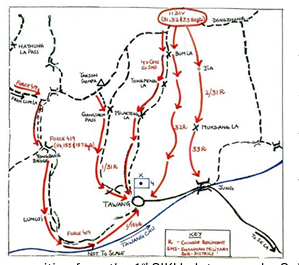
Advance along three different routes culminating in a three-pronged attack on Tawang. Force 419 (comprising three Infantry Regiments), 11 Infantry Division and four coys ex Shanan Military Sub District (SMS): roughly a total str of six infantry regiments were tasked for the capture of Tawang. (A PLA regiment comprised approx 2,500–3,000 troops, organized into three infantry battalions, supported by heavy weapons, logistics, and command elements). The outline plan: • Force 419 to advance from Lumpu via Lumla in the South West and capture Tawang in coord with 11 Infantry Division. • 1st Bn of 31 Infantry Regiment advance from Takson Gompa via Gangshen Pass directly to Tawang and assist Force 419 advancing from the West for capture of Tawang. • 33 Infantry Regiment of 11 Infantry Divison advance along Eastern flank from Bumla via Mukdong La directly to Tawang Chu and cut off route of withdrawal from Tawang, as also prevent any reinforcement. • 32 Infantry Regiment of 11 Infantry Divison and four coys of Shanan Military Sub District to advance on the main Axis Bumla – Tawang via Milakteng La and coord their actions with both the forces advancing on the West and East flanks. Having secured Lumpu and Ziminthaung, Tibet Military Command at 4.30 PM on 22 Oct, ordered troops ex SMS to capture Bumla and exploit to Tawang. The attack commenced at 5 AM on 23 Oct from Bumla and faced stiff opposition from the 1st SIKH platoon under Sub Joginder Singh. The Chinese had to call for reinforcements from 33 Infantry Regiment and readjust their plans. Having eliminated the platoon at Bumla, 33 Infantry Regiment troops continued their attack against the SIKH coy at Tongpengla which managed to make a clean break and withdraw to Jung in good order.
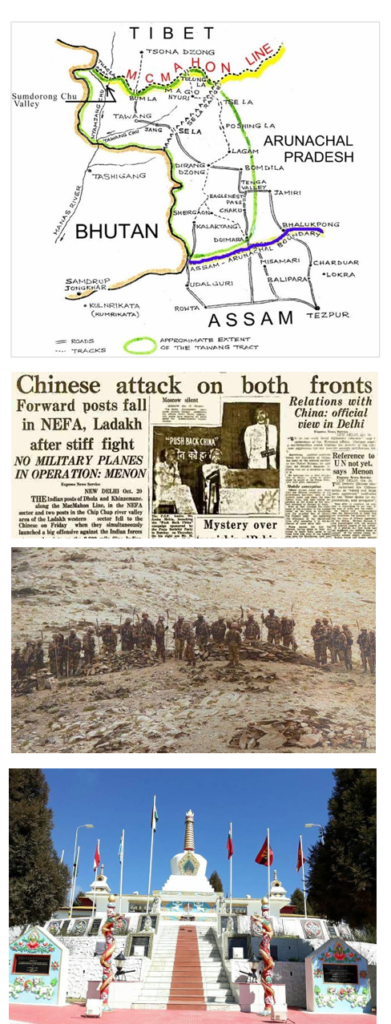
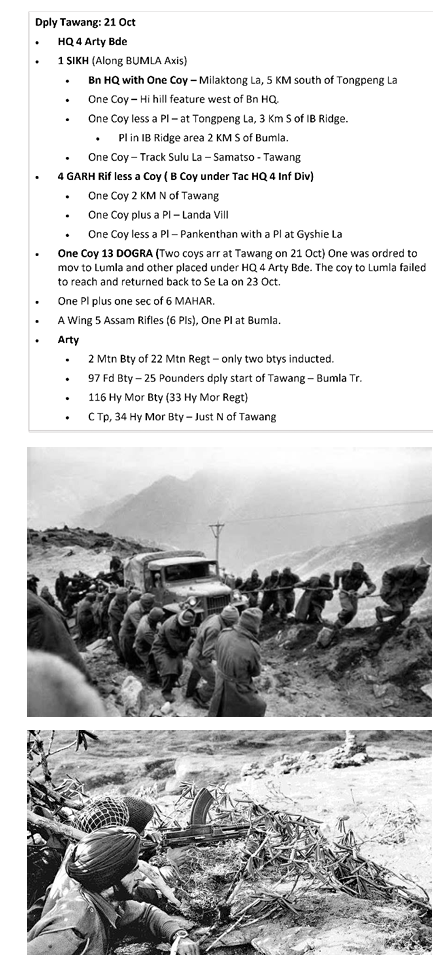
Tawang was defended by 1 SIKH, 4 GARH RIFLES, one artillery regiment, an engineer detachment all under command of Brig Kalyan Singh, Commander 4 Artillery Brigade. As per Chinese estimates Tawang had a total str of about 2700 troops. By last light 23 Oct Tawang came under attack from many directions, by first light 24 Oct Tawang was occupied by Chinese. The Chinese used bulk of their forces (four regiments out of six) to outflank and encircle Tawang. Only one third of the forces were used for direct advance on to the objective. Typical tactics that PLA employed even in the subsequent battles at Se-La and Bomdi-La. The Army Commander, Lt Gen P Sen was in Tawang on 22 and 23 Oct. Before landing at Tawang, he had flown towards Zimithang to get an idea of the terrain which he was not familiar with!! Once in Tawang, he did not appear very confident after the Nam Ka Chu rout. GOC 4 Infantry Division, Maj Gen Niranjan Prasad was planning on falling back to Bomdila with Se-la only a delaying position. The withdrawal from Tawang was an exodus. Large dumps of ammunition, supplies and clothing painstakingly stocked were abandoned. Maj Gen Niranjan Prasad was sacked as GOC 4 Inf Div – for having lost the will to fight. After occupying Tawang, the Chinese did not pursue and there was a lull in the fighting lasting a little over three weeks. Was decision to abandon Tawang well thought of? …….. NO • ‘D’ Coy/1 SIKH fought a successful battle, stopping three Chinese attacks at Bumla. Chinese could not bypass Tongpeng La, reinforcement would have boosted the defence of Bum La. • Two Battalions (4 GARHWAL & 13 DOGRA) were deployed around Tawang, and adequately prepared to defend Tawang. • Had Director of Military Operations not stopped forward move of troops of 62 & 48 Brigade, three more Battalions would be available for defence of Tawang. • The enemy was following remnants of 7 Brigade & 4 Division along Zimithang-Shakti-LumLa-Tawang axis: their Lines of Communications were extended.13 DOGRA guarding Lum La Tawang approach could have effectively disorganised the enemy’s advance. • Even if the enemy rushed to the bridge on by 24 Oct morning, the enemy would have been engaged by own troops on either bank of Tawang Chu. • Tactical Advantages of Tawang – It was the best stocked position in the region. Tawang defences were prepared as a Vital Ground in the last two years. • After the fall of Tawang, Sela was chosen as the Vital Ground. It was not suitable because there was no adequate recce, the heights were unfavourable for deployment, it was easily by passable via multiple existing routes, No defences existed for withdrawing troops who were being closely followed by the advancing enemy, No stocking, No suitable Dropping Zone to cater for the eventuality on being cut off. The Impact of the loss of Tawang – With Tawang lost, the Chinese forces had unimpeded access to the Se La – Bomdi La line, and beyond that, the Assam plains. The lack of depth in Indian defences south of Tawang meant that there was no effective second line to delay or repel further advances. The psychological impact was severe – Tezpur was evacuated, and panic spread across Assam, with fears of a full-scale Chinese invasion.
Taliban-Ruled Afghanistan To Restrict River Water Flow To Pakistan After India’s Move
The Taliban government in Afghanistan has ordered the rapid construction of dams on the Kunar River to restrict water flow to Pakistan. This directive came from Taliban Supreme Leader Mawlawi Hibatullah Akhundzada, who instructed the Afghan Ministry of Water and Energy to start dam construction immediately with domestic companies leading the effort.
This decision follows India’s suspension of the Indus Waters Treaty with Pakistan earlier in 2025, amid escalating regional tensions.
The Kunar River, about 480 kilometres long, originates in the Hindu Kush mountains of north-eastern Afghanistan near the Pakistan border. It flows through Afghan provinces before crossing into Pakistan’s Khyber Pakhtunkhwa region, where it joins the Kabul River near Jalalabad.
Together, these rivers ultimately feed the Indus River, which is essential to Pakistan’s irrigation, drinking water, and power generation, especially in Khyber Pakhtunkhwa and Punjab provinces. Reduced flow from the Kunar would thus have cascading effects downstream on Pakistan’s agriculture and water security.
Afghanistan and Pakistan currently have no formal bilateral water-sharing agreement, unlike the longstanding 1960 Indus Waters Treaty between India and Pakistan, which India has put in abeyance since April 2025 after a terrorist attack in Pahalgam by Pakistan-backed militants.
The Taliban’s move to limit water supply echoes India’s water policy stance and is seen as an assertion of Afghanistan’s water sovereignty amid ongoing conflicts along the Durand Line border with Pakistan.
Despite rising tensions, India and Afghanistan have recently affirmed cooperation on hydropower projects, including India’s funding and partnership in the Salma (Afghan-India Friendship) Dam and the Shahtoot Dam project, aimed at enhancing water security and energy independence in Afghanistan.
These projects contrast with Afghanistan’s current unilateral move to restrict water to Pakistan, highlighting the complex regional water politics.
Pakistan has expressed concerns that Afghanistan’s unilateral action could ignite a wider regional water crisis, especially given Pakistan’s existing challenges in energy and food security. The situation remains volatile as geopolitical and hydrological tensions mount in the India-Afghanistan-Pakistan triangle.
Afghanistan, following India’s lead, is taking significant steps to control trans-boundary water resources by building dams on the Kunar River, signaling a new phase of water security assertion that could escalate regional tensions with Pakistan.
Summary:
Taliban order to build dams on Kunar River to restrict water to Pakistan
Kunar River and its significance to Pakistan’s water needs
Suspension of Indus Waters Treaty by India
India-Afghanistan hydropower cooperation
Pakistan’s concerns over regional water crisis
Based On India Today Report
State Stalwarts
DEFENCE MINISTER
Minister Rajnath Singh
ALL HUMANS ARE ONE CREATED BY GOD
HINDUS,MUSLIMS,SIKHS.ISAI SAB HAI BHAI BHAI
CHIEF PATRON ALL INDIA SANJHA MORCHA
LT GEN JASBIR SINGH DHALIWAL, DOGRA
SENIOR PATRON ALL INDIA SANJHA MORCHA
MAJOR GEN HARVIJAY SINGH, SENA MEDAL ,corps of signals
.
.
PATRON ALL INDIA SANJHA MORCHA
MAJ GEN RAMINDER GURAYA ,MADRAS REGIMENT
sanjhamorcha303@gmail.com
PRESIDENT SOUTH ALL INDIA SANJHA MORCHA
COL SS RAJAN BOMBAY SAPPERS,
PRESIDENT UTTARAKHAND ALL INDIA SANJHA MORCHA
COL B M THAPA ,BENGAL SAPPERSS
PRESIDENT HARAYANA STATE CUM COORDINATOR ESM
BRIG DALJIT THUKRAL ,BENGAL SAPPERS
PRESIDENT TRICITY
COL B S BRAR (BHUPI BRAR)
PRESIDENT CHANDIGARH ZONE
COL SHANJIT SINGH BHULLAR
.
.
PRESIDENT PANCHKULA ZONE AND ZIRAKPUR
COL SWARAN SINGH
INDIAN DEFENCE FORCES
DEFENCE FORCES INTEGRATED LOGO
INDIAN AIR FORCE
Air Officer C-in-C WESTERN AIR COMMAND
AIR MSHL S PRABHAKARAN AVSM VM
AOC-IN-C, EASTERN AIR COMMAND
Air Marshal Inderpal Singh Walia
AOC-in-C SOUTH WESTERN AIR COMMAND
Air Marshal Vikram Singh
AOC-IN-C, SOUTHERN AIR COMMAND
Air Marshal J.Chalapati
AOC-IN-C TRAINING COMMAND
AIR MARSHAL SK GHOTIA VSM
AOC-IN-C MAINTENANCE COMMAND
Air Marshal Jagdish Chandra
Flag Officer Commanding in Chief, Western Naval Command
ice Admiral R Hari Kumar, PVSM, AVSM, VSM
Flag Officer Commanding in Chief, Eastern Naval Command
Vice Admiral Sanjay Bhalla, AVSM, NM
Flag Officer Commanding in Chief, Southern Naval Command