Sanjha Morcha

What’s New

Click the heading to open detailed news

Current Events :

web counter

Print Media Reproduced Defence Related News

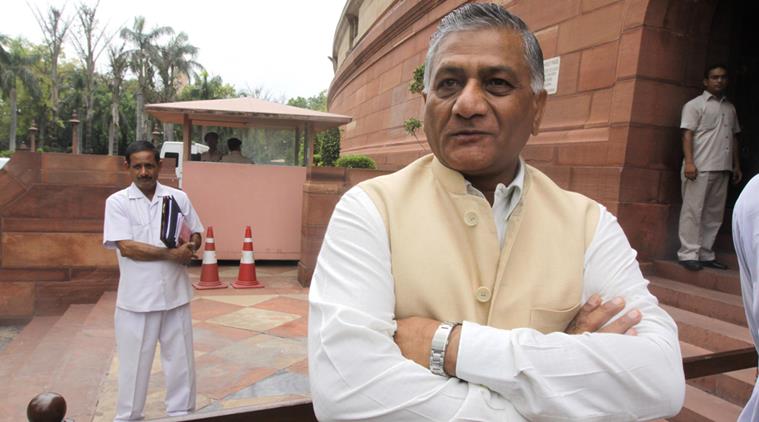
Sadananda Gowda, V K Singh did not fly AI, so their bills on hold

These bills are for 28 official trips between May and August this year — 11 trips were made by V K Singh and 17 by Gowda.

ritten by Shyamlal Yadav | New Delhi | Published:December 11, 2016 3:20 am

Air Travel, V K Singh, Sadnanda Gowda, official trips, Air India, 28 official trips, not cleared, India news, Indian ExpressV K Singh made 11 trips while D V Sadananda Gowda made 17.

Air Travel bills of two Union Ministers who between them made 28 official trips over four months this year are not being cleared because they flew airlines other than Air India.

Under government rules, air travel for official trips have to be only on Air India. An exception is made only if the bill is accompanied by a certificate of non-availability of seat or the person is able to provide documentary proof of the urgency of attending an official meeting.

The Financial Advisor and Additional Secretary of the Ministry of Statistics and Programme Implementation (MoSPI) has withheld clearance of bills raised for official trips of Union Minister D V Sadananda Gowda and his predecessor, former Minister of State (Independent Charge), Gen (retd) V K Singh since they flew airlines other than Air India.

These bills are for 28 official trips between May and August this year — 11 trips were made by V K Singh and 17 by Gowda. The total amount involved, sources said, is around Rs 44 lakh. V K Singh is now Minister of State for External Affairs.

On behalf of the MoSPI, Balmer Lawrie Tours & Travels books the tickets for official trips of Ministers and is later reimbursed by the Ministry.

These were the 11 trips Singh made: Delhi to Kolkata (May 7); Kolkata to Delhi (May 7); Delhi to Indore (May 14) and Indore to Delhi (May 15) (wife Bharti Singh accompanied him); Delhi to Mumbai (June 3); Mumbai to Delhi (June 3); Delhi to Varanasi (June 4); Tirupati to Hyderabad (June 6) (with wife Bharti Singh); Chennai to Delhi (June 21); Delhi to Varanasi (July 1); and, Varanasi to Delhi (July 1).

The 17 trips made by Gowda were: Bangalore to Mangalore (July 8); Mangalore to Bangalore (July 9); Delhi to Bangalore (July 13); Bangalore to Delhi (July 15); Delhi to Bangalore (July 22); Delhi to Bangalore (July 26); Delhi to Bangalore (July 29); Bangalore to Mangalore (July 30); Mangalore to Bangalore (July 31), Delhi to Bangalore (August 5); Delhi to Bangalore (August 12); Delhi to Madurai (August 17); Madurai to Chennai (August 18); Chennai to Bangalore (August 18); Bangalore to Mangalore (August 20); Mangalore to Delhi (August 22); Delhi to Bangalore (August 24).

The Sunday Express has learnt that the MoSPI sent Expenditure Secretary Ashok Lavasa a letter which stated that proposals of the Minister to travel by airlines other than Air India had not been approved by the Financial Advisor of the Ministry. The letter sought advice to deal with such cases.

But when he was asked about it, Lavasa said, “I am not aware of it.”

MoSPI Secretary T C Anant declined to comment. “I have no role in clearing the bills of Ministers, so I don’t want to comment on it,” he said.

MoSPI Additional Secretary and Financial Advisor S K Singh, the officer who has not cleared these bills, also declined to comment.

Both Gowda and Singh did not respond to calls or text messages sent by The Sunday Express.


2 officers, five soldiers killed

Amir Karim Tantray

Tribune News Service

Jammu, November 29

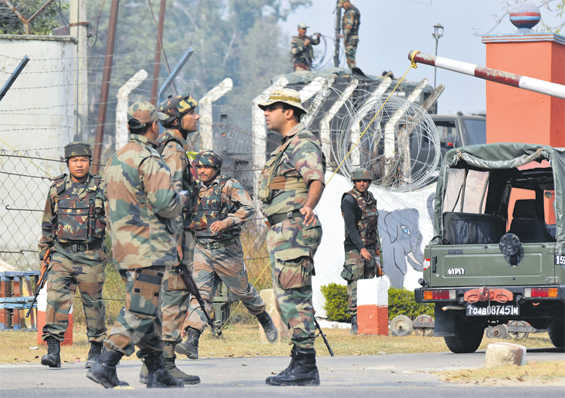
Terror returned to Jammu and Kashmir today when a group of heavily armed terrorists stormed into an Army unit at Nagrota and killed two Army officers and five soldiers.In another gunfight at the International Border (IB) in Ramgarh sub-sector of Samba, three infiltrators were killed and five BSF men, including a Deputy Inspector General, and a police Inspector were injured in a gunfight which lasted several hours. During the day-long gunfight at Nagrota, three terrorists were eliminated. Combing operations were suspended in the evening and will resume tomorrow.A defence spokesperson said these terrorists, disguised in police uniform, targeted the Army installation located at Kour Jagir near the Baloni nullah in Nagrota area of Jammu, 3 km  from the 16 Corps headquarters. “These terrorists forced their entry into the officers’ mess complex by throwing grenades and firing at the sentries. In the initial counter action, one officer and three soldiers were killed,” the defence spokesperson said.“The terrorists entered two buildings occupied by officers, families and men. This led to a hostage-like situation, which was quickly contained. In the entailing rescue efforts, one more officer and two soldiers lost their lives,” he added. The bodies of three terrorists were recovered. “The combing operations will resume tomorrow morning,” and the area will be sanitised,” the spokesperson added.  Till afternoon, there was heavy exchange of fire between terrorists and the Army. Later, the intensity became low. However, intermittent firing continued till late evening.  This is the first major terror strike after the September 18 Uri attack in which 20 soldiers were killed. The fidayeen attack has been carried out near 16 Corps (White Knight Corps) headquarters at a time when there has been change of guard in the Pakistan army. Reports of ceasefire violation were also received from Uri sector of north Kashmir. 

It was Hostage-like situation at camp

  • The terrorists entered two buildings which were occupied by officers, families and men. This led to a hostage-like situation. The situation was quickly contained and thereafter, in a deliberate operation all were successfully rescued, which included 12 soldiers, two women and two children. — Defence spokesperson

Killed in line of duty

  • Major Gosavi Kunal Mannadir (33) from Solapur, Maharashtra.Survived by his wife

  • Major Akshay Girish Kumar (31) from Bengaluru, Karnataka.Survived by his wife

  • Havildar Sukhraj Singh (32)from Batala, Punjab.Survived by his wife Harmeet Kaur

  • Lance Naik KS Yeshwantro (32) from Nanded, Maharashtra.Survived by his wife

  • Grenadier Raghvendra Singh (28) from Dholpur, Rajasthan.Survived by his wife

  • Rifleman Asim Rai (32)from Khotang, Nepal.Survived by his wife

clip

clip

clip

clip

clip


House panel: E-voting urgently needed for defence personnel

Vijay Mohan

Tribune News Service

Chandigarh, December 8

Expressing “serious concern” over 90 per cent of service personnel being denied the right to cast their votes owing to inadequacies in the postal ballot and proxy voting systems, a parliamentary panel has recommended that that the Election Commission should appoint service officers as honorary election commission officers and entrust them with the duty of conducting elections in forward and difficult areas as it would ensure maximum participation of service voters.In its report tabled today, the Standing Committee on Defence has also stressed upon the need for urgently introducing e-voting for members of the armed forces and their family members to overcome the present challenges and limitations.The committee said several issues needed to be sorted out by the Defence Ministry in consultation with the EC. These included reduction in the size of e-postal ballot files to permit easy downloading, finalising standing operating procedure for on-line registration and one-way e-movement of ballots for effective implementation of the system, and devising and promulgating of unique service numbers for service voters.A Cabinet note on e-voting has been prepared and an advance copy sent to the PMO, which suggested migrant labourers also needed to be extended this facility.

Army facilitates surgery of boy with blue baby syndrome

Army facilitates surgery of boy with blue baby syndrome
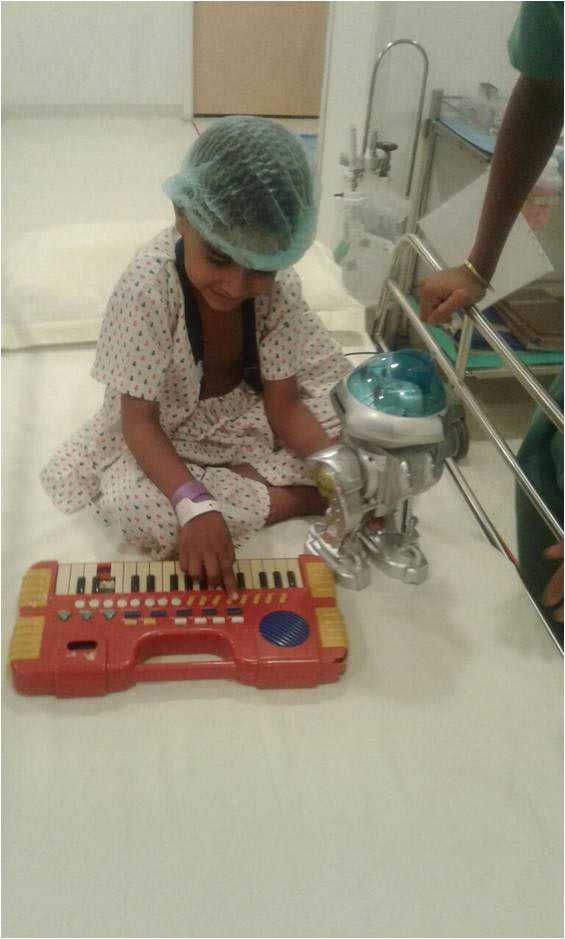
Wasim Akram at a hospital in New Delhi. Tribune photo

Shyam Sood

Rajouri, December 8

Wasim Akram (6) of remote Bachianwali village in Poonch district, who was detected with blue baby syndrome, the serious congenital heart defect known as tetralogy of Fallot, has been provided assistance by the Army for the treatment of the disease.Under this disease a hole between the right and the left sides of the heart causes mixing of pure and impure blood, leading to ineffective oxygen supply to important parts of the body and resulting in fatigue and breathlessness.In July this year, the Romeo Force organised a mega specialised medical camp at Surankot in Rajouri district. Super-specialist doctors from various government hospitals from Jammu along with Army doctors treated more than 3,000 patients and identified 100 persons who were detected with cataract. They also identified 10 children, including Wasim, who were detected with congenital heart disease.“The Army coordinated the preliminary medical tests like echocardiography and pathology for the identified patients in Jammu. Once the diagnosis was confirmed, the Army facilitated liaison with ‘Gift of Life’ project initiated by Rotary Club, which took the responsibility to bear the expenses for the heart surgery,” said a senior Army officer.He said Wasim’s visit to Delhi for treatment along with his father was facilitated by the Army through liaison and coordination with the NGO (Rotary Club) representatives.On October 17, Wasim was admitted to Max Super-Specialty Hospital, New Delhi, and was operated upon by Dr Dinesh Kumar Mani, a renowned paediatric heart surgeon.A review by the doctor confirmed that the surgery had been successful and on October 28, Wasim again joined his family members.Wasim’s family has expressed gratitude to the Army for helping Wasim lead a normal life.

Court refuses to order probe against IAF, state officials

New Delhi, December 8A court here has refused to order an investigation in a complaint against Indian Air Force (IAF) officers and Haryana Government employees for allegedly allowing illegal mining on defence land in the state, saying there was no proper sanction to prosecute them.Special CBI Judge Bhupesh Kumar also dismissed the application seeking a court-monitored probe into the allegation that these public servants allowed illegal land mining in Tilpat Ranges 1 and 2 in Faridabad and caused a loss of over Rs 29 crore to the exchequer.“In the absence of valid sanction, no directions can be made under Section 156(3) (power of magistrate to order probe) of the CrPC. The application reflects that no sanction has been obtained by the complainant to prosecute the public servants.“Hence, the application for monitoring the investigation or to call status report is not maintainable. Consequently, the present application stands dismissed. File be consigned to record room,” the Judge said.A representation was sent on May 26 this year to the Prime Minister’s Office and the CBI Director for issuing appropriate order for instituting independent inquiry against the IAF officers and Haryana employees.The application stated that the complainant has tried to know the status of investigation regarding the complaint from the Prime Minister’s Office and the CBI Headquarters but he has not been informed. — PTI


Will kill 3 Indian soldiers for each killing on our side: Pak Defence Minister

Will kill 3 Indian soldiers for each killing on our side: Pak Defence Minister
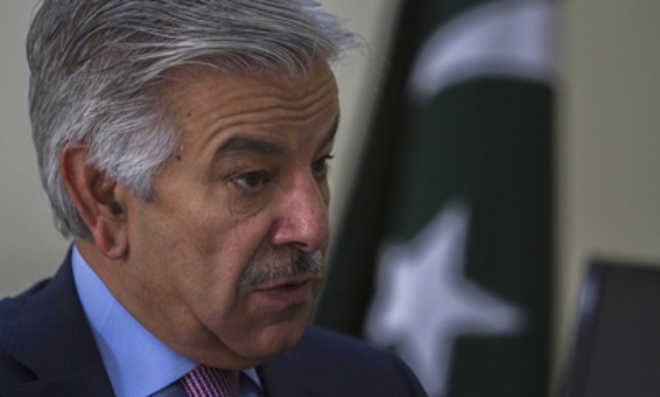
File photo of Khawaja Asif, Defence Minister

Islamabad, November 26

Assuring severe retribution, Pakistan Defense Minister Khawaja Asif has said that they will kill three Indian soldiers for every Pakistani soldier they neutralise.

Speaking in the National Assembly on Friday, Asif said, “Dire consequences would be faced by India, if it went to war against Pakistan.”

Asserting that the situation at the LoC was intentionally being intensified by the Indian government to win people’s support in the upcoming General Election, the Defense Minister alleged that “India was behind terrorism in Pakistan, and they have credible evidence against it”.

“We have sent dossiers and video films to the UN and other countries showing India’s involvement in terrorism in Pakistan,” Asif said.

(Follow The Tribune on Facebook; and Twitter @thetribunechd)

He also accused India of creating hurdles in the way of the China-Pakistan Economic Corridor (CPEC) as India was scared that the project would prove a game changer for Pakistan.

Acknowledging that Pakistan might be economically weaker than India, Asif said India knows that once the CPEC is complete, Islamabad will rise stronger.

However, he said that Pakistan would try to maintain a balance of power in the region and would not respond to India in any kind. —ANI


Jawan, two militants killed in Bandipora encounter

Jawan, two militants killed in Bandipora encounter
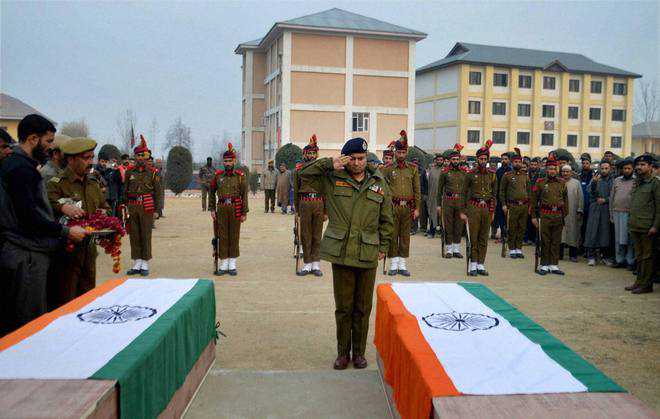
A senior police officer pays tributes to two policemen during a wreath-laying ceremony in Srinagar on Friday. PTI

Ehsan Fazili & Suhail Shah

Tribune Reporters

Srinagar/Anantnag, Nov 25

Two militants of the Lashkar-e-Toiba (LeT) and an Army jawan were killed in an encounter in Bandipora district of North Kashmir, while two policemen were killed in an attack by militants in Kulgam district of south Kashmir today.The police said search operations were launched at Manpora village of the Naidkhai area in Bandipora district of north Kashmir this morning on the receipt of information about the presence of militants. When the Army and elite SOG (Special Operations Group) of the police zeroed in, they were fired upon by the hiding militants, resulting in the death of an Army jawan.He has been identified as Naik Chandra Singh of 13 RR and a resident of Uttarakhand. The wreath-laying would be held here tomorrow, an Army spokesman said. The two militants were killed in the retaliatory fire. Their identity is yet to be ascertained.After the encounter was over, protest demonstrations were reported from the adjacent area where people demanded handing over of the bodies of militants to them.In another incident, suspected militants fired at a police station in the Handwara area of Kupwara district last night. Policemen opened retaliatory fire and the militants fled.A suspected militant of the Lashkar-e-Toiba, identified as Abdul Majeed Mir, was apprehended during a search operation in Sopore town of Baramulla district today.In another major incident today, two policemen were killed and another was critically wounded after militants opened fire on a party of the Jammu and Kashmir Police in south Kashmir’s Kulgam district, some 69 km south of the summer capital, Srinagar.The slain policemen have been identified as Head Constable Tanveer Ahmad and Constable Jalauddin Ahmad. The injured policeman, being treated in Srinagar, has been identified as Shamsuddin Ahmad.All three policemen belonged to 18 Batallion of the Indian Reserve Police (IRP).According to police reports, the attack was carried out by militants in main town Kulgam about 1:30 pm today.“The militants appeared in a car and opened indiscriminate fire at the policemen on duty near the local bus stand,” a senior police official said.The place of attack is less than a 100 ft from the Deputy Commissioner’s office in Kulgam.He said the firing left three policemen wounded, who were immediately admitted to the nearby District Hospital.“Two of them succumbed on the way to the hospital while the third has been shifted to SMHS Hospital in Srinagar for specialised treatment,” the official said. “His condition remained critical till the last reports were received from the hospital,” he said. The militants, however, escaped unhurt after the firing.Following the attack, the police and Army cordoned off the area and were on a hunt to trace and nab the attackers.Police sources said a vehicle suspected to be used by the militants for the attack had been recovered in the area.A wreath-laying ceremony was held for the slain policemen at the District Police lines in Kulgam. Deputy Inspector General (DIG), south Kashmir range, Niteish Kumar also attended the ceremony.


Idea good, execution poor by Sushma Ramachandran

Idea good, execution poor
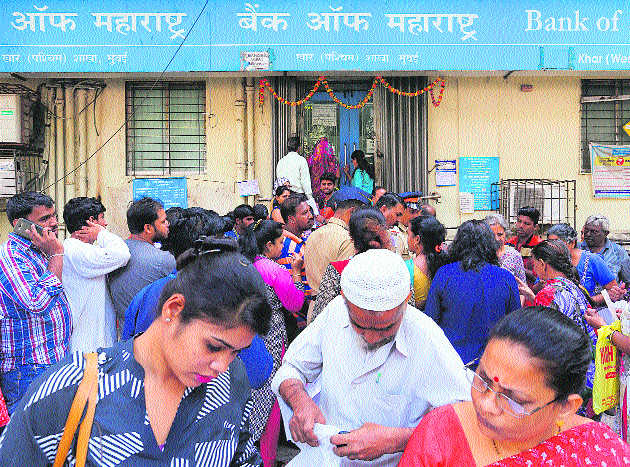
A run for money: Long queues and longer wait have added to the chaos.

THE demonetisation programme is a classic case of a good idea that is poorly executed. The long lines of people snaking in front of banks across  the country seeking to withdraw small amounts of money is testimony to the fact that the withdrawal of Rs 500 and Rs 1,000 notes has created tremendous hardship for the common man. Clearly, the government did not anticipate this level of demand for currency notes in the first few weeks of the scheme. While it is being stated that new currency notes were being printed over the past few months, it is evident that the logistical issues of transporting these notes to the banks and ATMs had not been worked out efficiently. The other technological issue of sensors needing to be changed in the ATMs also needed to have been considered while formulating plans for changeover to the new notes. Surely, in a country renowned as an IT superpower, it should have been possible to get the right advice to ensure that this technological roadblock was quickly overcome. The net result is that instead of discussing various aspects of the demonetisation policy, as was originally planned for this article, one has to comment on the mess created by poor implementation. Any policy that can conceivably lead to the loss of human life should be carried out with extreme care. In this case, persons who require medical assistance from private medical practitioners and institutions have no recourse. It is not enough to say that government hospitals will accept old notes as these institutions do not meet the entire health needs of the people. A special facility should have been created for those facing medical emergencies who have to go to private clinics and hospitals. Human lives need to be valued more highly in this country than has been done till now.One can only hope that the current state of chaos resolves earlier rather than later. And that the general public, especially those living in remote areas where banking facilities are non-existent, are able to recover from the economic setback speedily.As for demonetisation itself, there is no dearth of skeptics but the fact is that it is bound to make a dent in the parallel economy. Data shows that the share of Rs 500 and Rs 1,000 notes in total currency notes has been disproportionately high. The value of 500 notes had reached 47.8 per cent and Rs 1,000 notes had touched 38.6 per cent of the total currency value in circulation, as of March this year. In contrast, Rs 100 notes also comprised 9.6 per cent of the total currency. The rate of increase in the higher value notes has also been at over 30 per cent over the last decade while Rs 100 notes have remained at virtually the same level.It is being argued that the wealth in the parallel economy is being stashed away in other assets like gold or real estate, rather than in hard currency. The fact is that even the World Bank has estimated that one fourth of the Rs 14.6 trillion currency in circulation forms part of this parallel economy. It also forms a big part of the election process. Political parties who have been shying away from laws banning cash donations or ensuring transparency in cheque payments, have blatantly used money power in elections over the years. This is borne out by a recent comment by a former election commissioner who has lauded the demonetisation measure citing the huge movement of currency in states where elections are about to be held. No wonder then that many are accusing the government of trying to create problems for political parties gearing up to face elections in Uttar Pradesh. Social media messages abound, alleging that the BJP has taken care of its own currency needs before taking this decision. As far as the real estate sector is concerned, the stock market reeled after the announcement and share prices fell by 12.5 per cent, a clear indication that hard currency plays a significant role here. Much of the discourse over real estate implies that unaccounted funds are parked in land and buildings so hard cash is not really the issue. On the contrary, any real estate transaction involves from 20 to 50 per cent hard currency. It is extremely difficult to buy or sell property in this country without getting sucked into the parallel economy. Real estate agents often tell prospective clients that prices will be substantially lower if they opt for an ‘all white’ deal. Similarly, currency plays a huge role in jewellery transactions. Customers with bundles of  cash  are a common sight in jewellery showrooms.No doubt efforts have been made after demonetisation to convert hoarded cash troves into other assets like gold and real estate. Besides, a black market has also sprung up for Rs 500 and Rs 1,000 notes, creating yet another facet of the illegal economy. So it will not be correct to say that demonetisation has flushed all the illegal money out of the system. Even so, a large chunk of the black currency in circulation will still be redirected to the banking system or else be rendered useless. The increased funds will improve government revenues substantially.Reducing the element of counterfeit currency has been another reason for this step. But it may not be the major cause as this can be dealt with by introducing more security measures in notes.The question now is, will demonetisation yield the desired results. The parallel economy will not be wiped out overnight by this measure. But some headway will have been made. What is more important is that measures are taken to ensure that currency no longer becomes easy to use as part of the black economy in future. The blame is being put on lax policies in the past which led to the gradual growth of this gigantic parallel economy. Taxation polices need to be structured to incentivise greater compliance. The new GST is likely to be a major element in any such change as it aims at making tax paying easier for citizens. Other measures are said to be in the offing. One can only wait for these to be unveiled and also hope that after all the hardships faced by the common man, demonetisation leads to a cleansing of the entire financial system in the long run.

Feel the aam aadmi’s pain…or pay for it

Surendra Kumar
To call the harassment of the aam aadmi , as a result of demonetisation, just a minor inconvenience betrays callousness. The Finance Ministry underestimated the disruption to lives of ordinary people. The capability of banks, manpower and ATMs to address the citizens’ needs was overestimated.
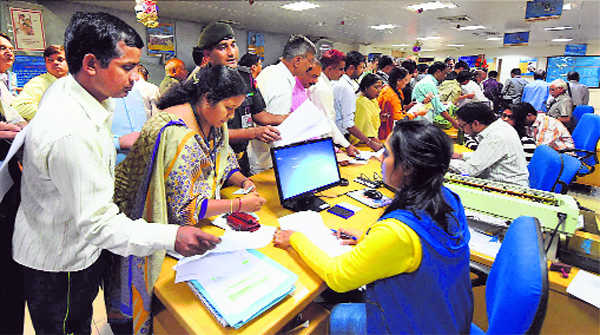
Feel the aam aadmi’s pain...or pay for it
YOU CANNOT BANK ON THEM: As people queue up to exchange old RS 500 and Rs 1000 notes, their patience wears thin. A lot of time of the bank employees is spent in addressing bureaucratic requirements for the measly sum of money they can dispense. PTI

PRIME MINISTER Narendra Modi’s announcement on November 8 that the currency notes of Rs 500 and Rs 1000 will cease to be legal tender from midnight was a bold and imaginative masterstroke. It will deal a crushing blow to the generation and circulation of the black money, funding of terror by induction of fake currency notes and the way political parties fund their activities, especially election campaigns. In the long run, it should impede the ill-effects of the parallel economy and bring large amounts of black money into circulation in the form of white money and facilitate numerous development plans. The government agencies involved also deserve kudos for maintaining absolute secrecy, like the nuclear tests in May 1998, and taking hoarders of black money by surprise. It’s a welcome step which ought to be applauded and supported by all conscientious citizens. Look at it from the perspective of ordinary citizens — who are neither generators of black money nor hoarders — who go about their uneventful daily lives with paltry sums of money in their hands to buy basic necessities. These necessities are requirements for children’s school, cooking oil, rice, wheat flour, sugar, bread, milk, eggs, pulses, vegetables and medicines etc. Then there are small farmers in need of seeds, fertilisers and daily-wage earners who somehow eke out a living. The execution of the brilliant idea has been a  disaster. The simple, unexciting lives of these people have been turned upside down; their work and daily chores have been completely disrupted. This has filled them up with anger, bitterness and frustration, even though they support the Prime Minister’s decision in principle.Leaders and officers who are claiming that the implementation has caused only a minor inconvenience are telling blatant lies. They are living in their ivory towers, cut off from the distress at the grass-roots level. None of the ministers or secretaries or leaders has stood in a queue for eight hours to exchange just Rs 4000. None of them has gone back without getting the new notes and returned to join the queue the following day in hope of better luck! Calling citizens’ harrowing experiences a small inconvenience betrays insensitivity and callousness towards the common man’s plight; it is an insult. Those who are painting a rosy picture and are dismissive of hardships being endured by millions of people all over India are misinforming the Prime Minister about the public’s true feelings. The Finance Minister’s remarks that it will take two to three weeks more to calibrate all the ATMs to disburse new currency notes is bad news; it might further test the aam aadmi’s patience.In the late 1970s, none could disagree that population control was in India’s national interest and deserved to be undertaken nationwide on priority as, in terms of population, we were adding one Australia every year. In medical terms, nasbandi was an inexpensive and effective family planning option. However, the overzealous and insensitive implementation of a sensible initiative antagonised millions of ordinary people who handed to Indira Gandhi and her son Sanjay the most humiliating defeat and voted the Congress Party out of power. Given, the demonetisation decision and nasbandi operations can’t be compared and we are living in totally different times. But, one factor is common;  people surrounding Indira Gandhi, both from the party and the government, insulated  her from the negative reaction and disenchantment; they were simply singing praises about the success of family planning operations. Surprisingly, the same is happening today; the government and the party are insulating Modi from adverse and critical reports. Apparently, the Finance Ministry grossly underestimated the inconveniences and disruption to normal lives of ordinary people and highly overestimated the capability of infrastructure: banks, manpower and ATMs to address the needs of millions of harassed citizens. If the situation continues for two to three weeks more, it might produce unexpected consequences for the ruling party. Millions of the unhappy and frustrated Indians might do a Brexit for the ruling party in the coming state elections.One of the Parkins’ Laws says: “Work expands according to the time available.” A lot time of the banks is being spent in addressing bureaucratic requirements for the disbursement of a measly sum of Rs 4000. One has to fill in a form which requires information about one’s name, address, ID proof, number of currency notes being surrendered and the contact phone number. This makes one feel as if one is buying foreign exchange at the airport. Why not raise the limit to Rs 10,000 and give the new notes on production of an ID card? The man/woman standing in the queue for eight hours isn’t a terrorist or a dealer in fake currency.In big cities like Delhi, millions of menial wage earners work on roads, streets, construction sites and other unorganised sectors and possess no ID proof. They too are human beings. They should be given new currency notes to survive on the basis of a one-line certificate from their employer/hirer of their services. Rs 4,000 is too small an amount for a serious medical treatment; this ceiling should be raised up to Rs 20,000 and both the government and private hospitals must accept this payment in old currency notes till the end of December 2016. As Arvind Kejriwal, the Delhi Chief Minister, is prone to making wild allegations, there are very few takers for  his new allegation about the BJP supporters having been tipped off in advance about the impending demonetisation. But one does wonder why the BJP functionaries sound so nonchalant and tension free about the after-effects of this “surgical strike. “After all, like their rivals, they too have been using black money for their candidates. In the forthcoming Asembly elections in Punjab and Uttar Pradesh, are they going to pay their candidates/workers through credit cards and cheques? Likely? Amen!The writer is a former Indian Ambassador to Libya.

Story of lost opportunities

Story of lost opportunities
Start over: A dose of realistic diplomacy is overdue.

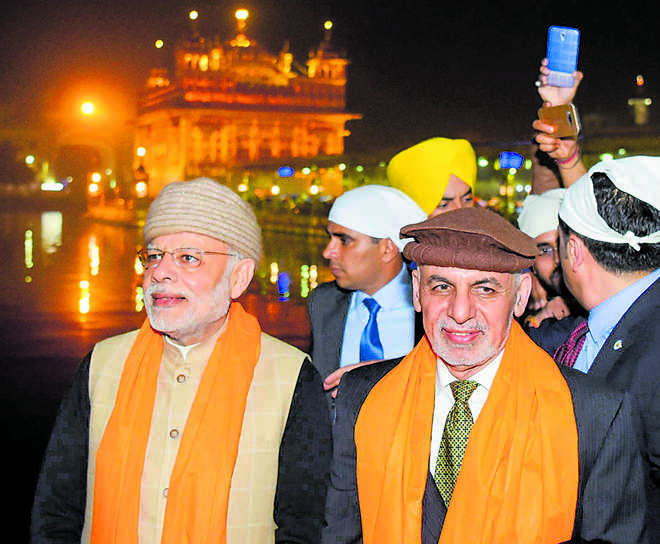
HEART of Asia conference at Amritsar, attended by 14 participating and over two dozen supporting countries was jointly inaugurated on December 4 by Afghanistan’s President Ashraf Ghani and India’s PM Narendra Modi. It brought diplomatic theatre to Punjab and transitory focus on the holiest shrine of the Sikhs. It also stirred, to borrow from Marcel Proust, remembrance of things past. Firstly, the visit of Afghan President and PM Modi to the Golden Temple, the foundation of which was laid by Hazrat Mian Mir, a Sufi saint, on December 28, 1588, was a great opportunity missed to bury past hurts. While Sikh religion rose from the reformist Bhakti movement, it was chiselled by resisting religious persecution by some Mughal rulers and Afghan marauders in the 17th and 18th centuries.  The Golden Temple, often targeted, was eventually defiled and destroyed by Afghans under ruler Ahmad Shah Abdali. His raid of 1764 to target Sikhs, their holy places, particularly Amritsar, is etched in Sikh memory. Thus reducing President Ghani’s Golden Temple visit to a photo-op in the parikarma with PM Modi, without his expressing regret then or next morning, when he addressed the conference, was a great historical opportunity lost for contextualising Afghanistan’s current battle against the Taliban or the entire Islamic world’s struggle with radical Islam. After all, the Taliban destroying the Bamiyan Buddhas or ISIS now levelling churches or old monuments in Syria were displaying the same bigotry that Muslim despoilers of Indian places of worship showed in centuries past or even the Catholic Inquisition did in Portuguese occupied Goa of that period. It took a courageous German Chancellor Willy Brandt to kneel at the Warsaw Ghetto Uprising monument on December 7, 1970, to kick-start the debate in Germany to take ownership for the sins of their Nazi past. Secondly, the rubric ‘Amritsar Declaration’ ignored that the 1994 declaration issued from Akal Takht demanding autonomy for Sikhs is also so titled. Ironically, while that resolution sought a looser federation in India, the present declaration seeks closer integration in the entire region from Central to Southern Asia. It ignores two critical elements. One, globally the trend is towards de-globalisation and protectionism, particularly in the West and the US, where benefits of regional integration are being questioned. Two, the heart of the matter is distrust amongst nations of the region, particularly between India and Pakistan, without which connectivity and trade cannot develop. The Heart of Asia conference was envisioned in 2011 to create a framework for discussion amongst neighbours of Afghanistan, as the declaration states, to increase ‘trust and confidence in the entire region’. This was to ensure that Afghanistan did not relapse into the post-1990 civil war between surrogates of neighbouring powers. It is common sense to conclude that to make Afghanistan economically self-reliant and wean it away from the narco-terror cycle of financing it needs to connect to regional trade and investment pathways. The Amritsar Declaration recognises this and addresses it in two parts. One deals with existing challenges; and the other on how to achieve prosperity. The former highlights the intermingling of terrorism, narcotics and radicalised Islam and exhorts participants to use national means and international commitments to counter that threat. The latter envisions connectivity and free trade across the entire region, based on the linking of existing and planned road, rail and port developments. For instance, the Indian trilateral agreement with Afghanistan and Iran for the development of Chabahar Port and the Chinese One Belt, One Road initiative are but two of a maze of currently separate ventures connecting China and Russia to Central Asia and further to South Asia. At the heart of this vision for a new Asia lie India-Pakistan relations, bedevilled by distrust and rivalry. At Amritsar, India caught Pakistan in a pincer move between President Ghani alleging that without Pakistani help the Taliban could not survive and India’s own lament that Pakistan must stop exporting terror and using it as an adjunct to their foreign policy. Although South block denied any meeting with Pakistan’s de facto foreign minister Sartaj Aziz, it is unbelievable that messages would not have been exchanged. If that did not happen, it was another opportunity lost as no muscular policy towards Pakistan can work without keeping the door open for ascertaining what effect, if any, the policy is having on Pakistan’s thinking. The Amritsar Declaration signals emerging consensus amongst Afghanistan’s neighbours that a stable Afghanistan is a condition precedent for a stable region. This cannot be achieved unless rivalries and zero-sum gaming are abandoned. Pakistan, in particular, has to reconcile that an independent government in Kabul will deal with other neighbours, including India. Furthermore, the region will not allow a regression to the Taliban era with Pakistani veto over who ran Kabul.  Para 14 of the Amritsar Declaration lists terrorist groups endangering the region, including the Lashkar-e-Taiba and Jaish-e-Mohammad which are ISI-sponsored groups for targeting India. This gave India bragging rights on cornering Pakistan as China has been stalling the listing of their leaders by the UN Security Council.The question however remains about Indian strategy in dealing with the troublesome neighbour. The so- called ‘surgical strike’ has failed to deter Pakistan otherwise there would not have been beheadings of Indian soldiers at the LoC or the Nagrota attack. India can either escalate retaliatory strikes, by weapons fire or actual intrusion, hoping the Pakistan army will eventually sue for peace. Alternatively, India could give some time and space to the new chief of Pakistan army staff Gen Qamar Javed Bajwa to see if he modulates his army’s tactics by putting the terror modules on leash, albeit temporarily. Assuming President-elect Donald Trump’s benediction or Chinese President Xi’s restraint, despite provoking him in Arunachal Pradesh, is poor strategising. As a rising power, beset currently with demonetisation disruption, it is not in India’s interest to escalate tension. All talks are not kowtowing, nor is chest-thumping a strategy. A dose of realistic diplomacy all around is overdue. The writer is a former Secretary, Ministry of External Affairs


FM: Small depositors needn’t worry, Rs 500 notes from today Rs 1,000 notes with new features to be introduced soon

Girja Shankar Kaura

Tribune News Service

New Delhi, November 10

Looking to dispel fear among people who would probably have small sums of cash in denomination of the scrapped Rs 500 and Rs 1,000 notes lying at home, Finance Minister Arun Jaitley today clarified that “nobody would be harassed” over smaller deposits, less than Rs 2.5 lakh in their bank accounts.The clarification came even as Economic Affairs Secretary Shaktikanta Das announced that currency notes of Rs 1,000 will be reintroduced in next few months with a new dimension, design and security features.Besides, the Rs 1,000 newly-designed notes, the government would soon come out with new Rs 50 and Rs 100 notes, having new design and security features. The new notes would be issued without withdrawing the existing ones.As people began thronging banks nationwide to exchange or deposit Rs 500 and Rs 1,000 notes that were demonetised on Tuesday night, Jaitley, speaking at the Economic Editors’ Conference, asserted: “Nobody will face questions or harassment for small deposits. It is only those with large amounts of undisclosed money who will have to face the consequences under existing laws.”He said people might face problems initially but in the long run they would definitely benefit from the policy of scrapping large currency notes in a bid to curb corruption, unaccounted wealth and terror financing.The new Rs 500 notes, which will be issued by banks from Friday, have extra security features, besides having a peculiar colour, theme and size which differentiate the new bills from the earlier series. The Rs 2,000 notes, which are being introduced for the first time, are in magenta colour with Mangalyaan imprinted on the reverse side. The Rs 500 notes will be stone grey in colour with a predominant new theme of the Indian heritage site Red Fort.


Air tickets made‘non-refundable’

New Delhi: The government has directed airlines to ensure tickets issued using the now-withdrawn Rs 500 and Rs 1,000 notes directly from counters at airports are “non-refundable” following an unusual surge in such bookings. Some airlines have announced that tickets booked in the last 48 hours using old notes will not be refunded or cancelled. PTINotes can be used to pay utility bills, tax New Delhi: The Centre has said old Rs 500 and Rs 1,000 notes can be used to pay utility bills, taxes, penalty and fees to central and state governments till midnight of November 11.Bank lockers won’t be digitised: JaitleyNew Delhi: Finance Minister Arun Jaitley has denied any move to digitise personal lockers in banks. “Completely factually incorrect, no such proposal,” he said.


GOC-in-C arrives at Bathinda Military Station

Tribune News Service

Bathinda, November 24

Lieutenant General Sarath Chand, General Officer Commanding-in-Chief (GOC-in-C), Sapta Shakti Command, arrived at the Bathinda Military Station today on an official visit.He interacted with Army officers and emphasised the need for a continuous vigil.The Army Commander was briefed by Lieutenant General Ashwani Kumar, General Officer Commanding, Chetak Corps and other senior officers about the operational and administrative readiness of the formation. The Army Commander also visited the military station and reviewed various infrastructural projects and amenities being developed for the soldiers.The General Officer emphasised on maintaining a high threshold of operational readiness in order to meet any challenge. He reiterated that the success of any military operation is depend on the quality of situational awareness, excellence in training, high degree of security consciousness, purposeful work culture and focused human resource management.He complimented the resolute leadership of the corps and exhorted them to remain focused on professional excellence and remain committed to the nation building.


File ATR on comments by Rahul, Kejriwal on surgical strike: Court

File ATR on comments by Rahul, Kejriwal on surgical strike: Court
A criminal complaint was filed against six persons, including Rahul Gandhi and Arvind Kejriwal.

New Delhi, November 8 The Delhi Police have been directed by a city court to file an action taken report (ATR) on a criminal complaint filed against six persons, including Rahul Gandhi and Arvind Kejriwal, for questioning the recent surgical strike carried out by the Army.Additional Chief Metropolitan Magistrate Sunil Beniwal asked the police to file the ATR by February 5 next year, the next date of hearing.(Follow The Tribune on Facebook; and Twitter @thetribunechd)The court was hearing a complaint filed by east Delhi resident Pravesh Kumar against six persons — Congress vice-president Rahul Gandhi, Chief Minister Arvind Kejriwal, Congress leaders Digvijay Singh and Sanjay Nirupam, Delhi Water Minister Kapil Mishra and actor Om Puri.The plea filed through advocate Rakshpal Singh and Sanjeev Shukla alleged that the six persons had termed the surgical strikes by the Army in Pakistan-Occupied Kashmir (PoK) as false and politically motivated and aimed at taking political advantage. The statements had hurt the image of the Army as well as the country, it claimed.The Army had conducted surgical strikes against terror launch pads in PoK on September 29 in response to the Uri terror attack.The plea sought lodging of FIR against them for alleged offences under Sections 121A (conspiracy to wage or attempt to wage was against India), 124A (sedition), 131 (abetting mutiny or attempting to seduce a soldier, sailor or airman from his duty), 153B (imputations, assertions prejudicial to national integration) and 120B (criminal conspiracy) of the IPC.The complainant, who also annexed media reports with the plea, said it had given a complaint at Jagatpuri police station on October 7 but no action was taken by cops after which he approached the court. — PTI