Sanjha Morcha

What’s New

Click the heading to open detailed news

Current Events :

web counter

Print Media Reproduced Defence Related News

Let the phones ring Communication blackout in Kashmir must end right away

Let the phones ring

RESTRICTIONS on mobile telephony in the Kashmir Valley should have been lifted soon after they were removed in the Jammu region. Now, after two months, there is no apparent security reason for the administration to continue with the clampdown on communications. When the Union government is justified in congratulating itself for preventing the loss of lives in the Valley while it scrapped Article 370 of the Constitution, for the same reason, it is not justified in prolonging the mobile phone shutdown. By switching on the Valley phones earlier, the Modi government would have legitimately been able to take pride in being responsive towards its citizens. It is already late.

On Monday night, the US House foreign relations committee issued a strongly-worded statement while retweeting a New York Times story on the death of a snake-bite victim in Baramulla: ‘India’s communication blackout in Kashmir is having a devastating impact on the lives and welfare of everyday Kashmiris. It is time for India to lift these restrictions and afford Kashmiris the same rights and privileges as any other Indian citizen.’ The statement has come ahead of the Asia subcommittee hearing scheduled on October 22. The tweet is significant, for the US House committee has described Kashmiris as Indian citizens, unequivocally.

This endorsement of the Indian position on the status of J&K comes in the wake of Imran Khan’s desperate attempts to drum up support for his jihad against India. The world has had enough of Islamist expansionism and no amount of breast-beating in the name of the people of the Valley can legitimise a proxy war. Yet, it needs to be underscored that the biggest threat to the Indian state in the Valley is often itself. The Union government seems to be in a state of amnesia in its actions towards all those who had kept the flag flying in the Valley. In fact, until the phones are buzzing, nobody outside the Valley will even believe that there is no restriction on movement there. Kashmiris, too, need to be protected and connected to the rest of the world, like any other Indian citizen.


Aam Kashmiri, soldier keep suffering

Aam Kashmiri, soldier keep suffering

PS Randhawa

The removal of Article 370 has brought Kashmir into focus in a big way. While the official narrative is focused around ending the problems of Kashmiri people and integrating them with mainstream India, the other side is harping about the end of the special status and security clampdown along with restrictions on communication.

Having served in Kashmir on a number of occasions, starting from 1989, I can say that to date — since the beginning of insurgency — only two kinds of people (besides Kashmiri Pandits who fled) have suffered in Kashmir. One is the common man and the other is the soldier — from all uniformed forces.

There is abject poverty in remote areas of the Valley. The only job available there is of a porter, for taking rations to Army posts located at higher altitudes. That job only lasts for a limited period. The common man has very small landholdings. Those in towns are mostly dependent on tourism-related jobs that last for about six months. Insurgency has severely affected the common man. Frequent calls of shutdown have hit the small businessman, shopkeeper and daily-wage earner. He has to join protests lest he is seen as a ‘traitor’ to the cause. Studies of his children have suffered. His children, brainwashed by wily politicians, turn militants and get killed in the bargain. It is not so-called ‘azadi’ that is his biggest problem, it is to earn his living, somehow. While politicians of all hues from the Valley have prospered, he is the one who has suffered the most. His suffering continues.

Next is the soldier. There were days when posting to the Valley was much sought-after. It is no more so.  Soldiers are performing duties under severely stressful conditions. One is never sure from which direction a bullet or a stone is going to hit him. Travelling on foot or in a vehicle is equally dangerous. He doesn’t know whether he will safely return to the barracks at the end of the day. He, at times, has to skip meals, rest and sleep. He is out of communication with his kin for days. There are times he doesn’t get leave due to many compelling reasons. His folks at home live on the edge, with prayers on their lips till he returns from Kashmir. They are apprehensive to pick up the phone lest they get some bad news about him. Besides getting killed in the line of duty, a number of soldiers have lost their limbs and fallen prey to post-traumatic stress disorder (PTSD). He has sacrificed the most.

For the rest of the lot, nothing much has mattered. The business of politics has prospered. Other business continues as usual with interruptions. One can only hope and pray that peace returns to the Valley, and the common man and soldier, both enjoy a peaceful life they deserve.


Drone attack: A definite danger by Lt Gen Ata Hasnain

Saudi Arabia

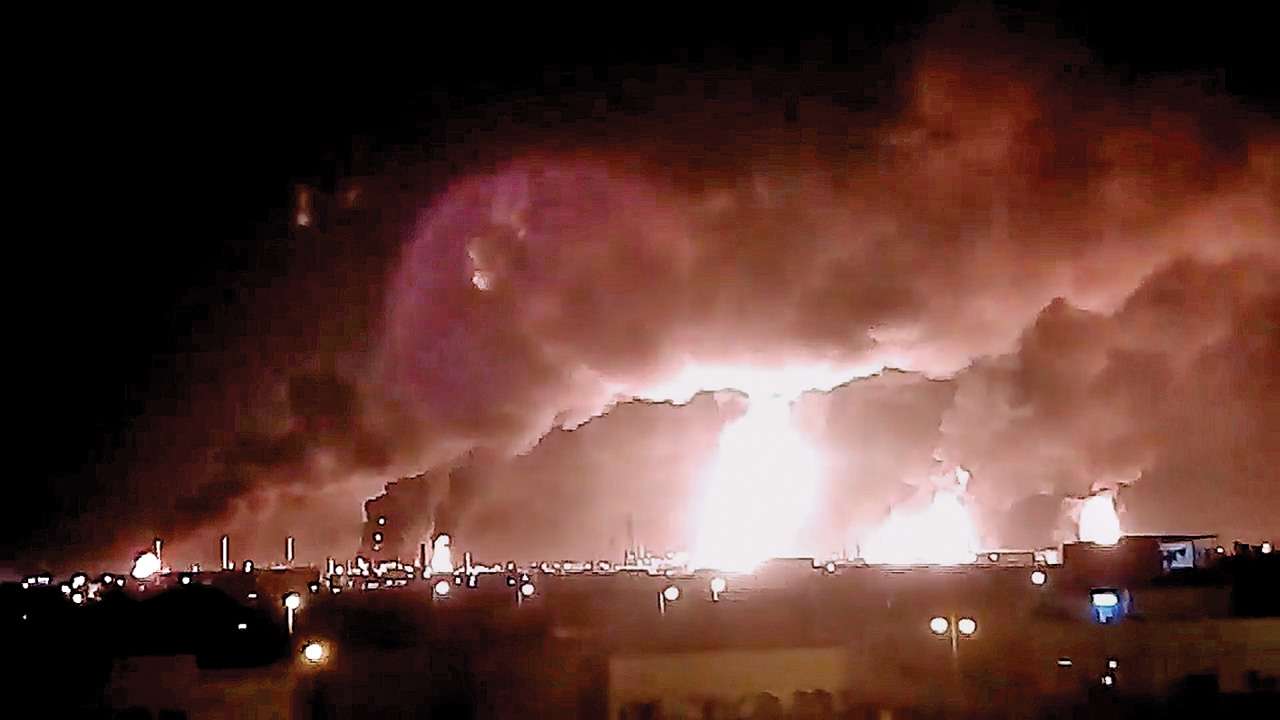
For the last two months, there was relative quiet in the Middle East and the standoff between the US and Iran appeared easing although tensions never abated. Perhaps by sheer coincidence that was also the period during which President Trump and his security policy team were focusing on the possible US pullout or further drawdown from Afghanistan. The hiatus was broken on Sep 14 with the Saudi Aramco oil processing facilities at Abqaiq and Khurais being targeted by 18 drones and 7 cruise missiles.

Image result for ata hasnain


Abqaiq refinery is the largest crude oil stabilization plant in the world producing 7 million barrels of oil every day or about 7% of the world’s production. That makes it a crucial part of the energy infrastructure of Saudi Arabia, the world’s largest exporter of oil.  Ownership of the attacks was claimed immediately by the Zaidi Shia Houthi rebels, Iran supported rebels fighting the Saudi backed government in Yemen. The Houthis control a part of western and southern Yemen with access to the sea. Since 2015, Saudi Arabia has led a military coalition against the Houthis after they overthrew the government led by President Abdrabbuh Mansur Hadi. The war was assumed to be over in a few weeks but continues to date despite efforts at a full blockade which the coalition has attempted to establish. Iranian arms supplies apparently continue to reach the Houthis assisting them in their fight which has previously witnessed missile attacks on the Saudi territory.

The Yemen-Saudi war has all the manifestations of the Shia Sunni conflict fought by proxy in a wretchedly impoverished land. That larger ideological and sectarian confrontation may continue long and without outcome, but spurts of it fought by proxies have all the potential of lighting fires in the volatile Middle East.

Here is how it can happen. Swarming from the air with comparatively inexpensive but fitted out drones can be a nightmare for the most advanced air defence systems. The Saudi air defence was clearly not prepared for such a contingency when high profile vulnerable points (VPs) are attacked en masse. As proxies get bolder they are likely to employ more of these against Saudi oil infrastructure, water purification facilities and other installations in the Gulf countries. Shipping itself could be the target as large tankers move in and out of Saudi waters. The first impact of this will always be a cut back in oil production, increase in oil prices and enhanced cost of insurance for shipping. Already prices for Brent crude have jumped 20% to touch US$ 76 a barrel. One-off attacks may yet find a staving off of military confrontation. However, persistence will result in compulsive turbulence.

Passivity in the face of such direct intimidation may not be acceptable to the US as it is a direct challenge to its alliances and power in the Middle East. Going into election year President Trump was keen to withdraw troops from Afghanistan. Does this mean that he may not pursue US strategic interests and support its main allies in the Middle East too? The US decision to drop the potential agreement with the Taliban for the sake of pursuing its chief interests would equally apply here irrespective of the internal impact on US electoral politics.

The US as the major supporter of Saudi interests and in 40-year confrontation with Iran has accused Iran’s Islamic Revolutionary Guard Corps (IRGC) of masterminding the drone attacks. Proof of the same is yet to be produced but in such situations that isn’t necessary; the US did, after all, invade and fight Gulf War II in 2003 on the basis of unproven allegations of nuclear ‘weaponisation’ by Saddam Hussain. It led to the eight-year deployment in Iraq.  Robert McNally a former NSA from the Bush-era stated – “This drone attack was about Iran demonstrating that it has the means and will to execute exquisitely precise attacks on the most vital oil infrastructure in the world by far; they can do this again and again”. Is this a rational surmise? Is Iran in triumphal mood seeking confrontation or is it defensive because of the effect of sanctions? Perhaps the IRGC may have wished to demonstrate the capability of executing a proxy war which could target Saudi Arabia’s critical infrastructure; an attack to cause deterrence. However, any repetition of this will discount any theory of attempting deterrence and will probably invite retaliation. Why this seems implausible strategy by the IRGC is that in due course the Saudi-Israel-US combine will find solutions to counter swarming attacks by drones which will neutralize one element of surprise which cuts across the tactical to the strategic level.

Iran is confident that the Saudis are incapable of launching war alone. The US projected its will to some extent in a buildup towards confrontation just a few months ago. Conventional all-out war is ruled out, or anything entailing ground operations for entry into Iranian mainland. A US carrier group, each south of the Persian Gulf and the Mediterranean, may form the bulk of the naval and air resources while a buildup of ground troops to identified vulnerable hot spots in Iraq, Syria and Saudi Arabia will take place. But none of this will deter the thousands of proxies that the IRGC controls and can launch without international borders being an obstacle. It’s a case where conflict initiation could still be easy but termination would be in no one’s control. In the absence of a firm US commitment, Saudi Arabia has little capacity to actively resist Iran’s intent. That could be a temptation by the proxies to strike again, creating conditions for the US to step into the cauldron of what could be another of the Middle East’s interminable wars.

The start point of any measures to offset potential showdown is to terminate the war in Yemen. That will be a virtual admission of Saudi defeat and a serious threat to its stature in Middle East politics. The US has limited options and military ones are far and few. Inaction on its part will prove the failure of its strategy of pressurizing Iran through the abrogation of the Joint Comprehensive Plan of Action (JCPA) of 2015 and looking for regime change to weaken it. Iran’s control over many proxies in the region is the key to its capability and ability to offset ideas of military confrontation. It’s the next violent move which will throw open even more challenges and hurtle the Middle East towards war, the impact of which will have serious implications for the world economy and the balance of power in the Middle East.

The author commanded the 15 Corps in J&K

Indian Army To Procure One Million Anti-Personnel Mines From Private Sector To Secure LoC Against Infiltration

In what is likely the Indian Army’s largest such order till date, private players have been invited to participate in the bidding process for a contract of around 1 million anti-personnel mines, reports The Economic Times. Interestingly, it is only private companies who are being asked to bid.

Such mines are used regularly along the Line-of-Control (LoC) to tackle infiltration attempts by terrorists and by their Pakistan Army backers. The LoC remains the world’s most mined area after the Korean Demilitarized Zone (DMZ) dividing North and South Korea.

Currently, there is no Indian private firm which produces or supplies anti-personnel mines; some do however provide parts for anti-personnel mines manufactured by the Ordnance Factory Board (OFB), so responses to the invitation are expected from such private players.
The company which clinches the contract will be required to supply one million mines over a five year timeline. The mines which the Indian Army wants to procure are of the Non Metallic Mine (NMM) 14 type, which is especially difficult to detect as it is primarily made of plastic.


Loud blasts rock Pokhran as Army detonates old ordnance

A panic gripped across Rajasthan’s Jaisalmer district after loud explosions were heard as the Indian Army destroyed its old ordnance on Tuesday evening.

The Indian Army stated, “Old ordnance was being destroyed between 6.30 pm and 7.15 pm at Pokhran area of Thar desert.”

The force said it is a routine affair and there was nothing unusual about it. As the sound of the blasts reached across the border, the Pakistan security forces started running a campaign of fake news that India was conducting a “thermonuclear and tactical nuclear weapons test”.
People in the vicinity came out of their homes in panic as the window panes rattled due to the impact of the five or more blasts.

Many thought the blasts were emanating from across the border. Sources in the armed security forces clarified that “it is just destruction of old ordnance and there is nothing to panic”.


Delay in funds starve CRPF jawans of ration money allowance The Federal

CRPF, jawans, ration money allowance

CRPF jawans and its non-gazetted officers receive the allowance for their daily meals and is included in their monthly salaries (PTI File)

The Central Reserve Police Force (CRPF) has ordered to stop the ration money allowance (RMA) given to its troops for this month since the government delayed the sanctioning of ₹800 crore additional funds, news reports said on Sunday (September 29).

However, news agency PTI reported that the paramilitary force has denied reports that jawans have “run out” of ration money and said that the September allowance will be paid shortly.

CRPF jawans and its non-gazetted officers receive the allowance for their daily meals and is included in their monthly salaries. It said that the RMA was recently revised by the government, due to which, the issue occurred.

“On account of the revision of the ration money allowance made by the MHA (Ministry of Home Affairs) on July 12, ₹22,194 per head ration money (in arrears) was paid to around 2 lakh CRPF personnel in July,” the force said in a statement. This amount, it said, is more than six times the monthly ration allowance of jawans and other non-gazetted rank officers.

Also read | CRPF’s Kashmir helpline 14411 reactivated, over 500 calls received

It further said that the process of the payment of the allowance (about ₹3,600) is in progress and will be paid shortly. Therefore, it clarified that it will be “incorrect, baseless and preposterous” to contend that the jawans have run out of money. “There is no crisis whatsoever,” it said.

According to a communication issued last month, the CRPF has sought sanction of reserve funds worth ₹800 crore from the Union Home Ministry to pay the revised RMA to its troops, the report further said. The CRPF has made at least three communications to the ministry in the past.

It said that the RMA will be provided to the troops once they receive the additional budget from the ministry.

(With inputs from agencies)


Army red-flags MHA move to take over Assam Rifles

Army red-flags MHA move to take over Assam Rifles

The Army has red-flagged a proposal by the Home Ministry to bring the Assam Rifles under its operational control, saying such a move will seriously jeopardise surveillance over the country’s sensitive border with China when it has been ramping up military infrastructure along the frontiers with India.

Top military sources said concerned over the proposal, the Army strongly took up the issue with the Defence Ministry last week, urging it to intervene in the matter, considering the possible national security implications if the operational control of the nearly 185-year-old Assam Rifles was handed over to the Home Ministry.

The Cabinet Committee on Security (CCS), headed by Prime Minister Narendra Modi, is likely to examine the Home Ministry’s move to merge the Assam Rifles with the Indo-Tibetan Border Police (ITBP) and bring overall operational control under it.

“Shifting the operational control of the Assam Rifles from the Army to the Home Ministry will severely jeopardise the surveillance along the Line of Actual Control with China,” a top military official said. Sources said the Army’s views on the matter had been conveyed to the top defence and security brass.

The Home Ministry has already prepared a draft note to be presented at the CCS seeking total control of Assam Rifles. The biggest concern for the Army is that this could impact the Army’s capability to effectively guard the sensitive border with China.

“The Assam Rifles fills the void when Army units carry forward the battle to the enemy territory. This is the only genuine paramilitary force which actively participated in all wars since Independence, including the 1962 and 1971 wars,” said a senior Army official. — PTI

50,000-personnel defence line 

  • The nearly 55,000-strong Assam Rifles, with 46 battalions, has been guarding India’s border with Myanmar
  • It has been providing operational & logistics support to Army in keeping vigil in key sectors in Arunachal
  • It has also been carrying out counter-insurgency operations in militancy-hit North Eastern region
  • At present, Home Ministry has administrative authority over Assam Rifles and the Army its operational control

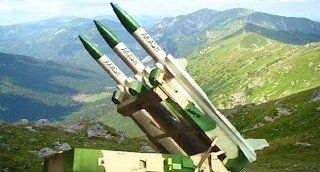
President Kovind Honours Corps Of Army Air Defence With President’s Colours Award

President Kovind Honours Corps Of Army Air Defence With President’s Colours Award 

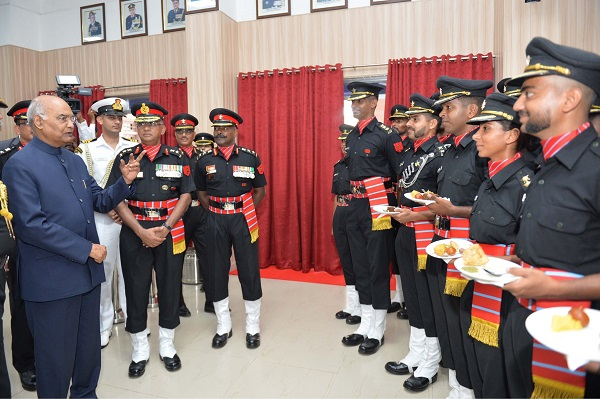
President Ram Nath Kovind on Saturday (28 September) handed over the prestigious President’s Colours Award to the Corps of Army Air Defence at Gopalpur in Odisha’s Ganjam district.

The President’s Colours Award is the highest military honour for an armed forces organisation. This award is given in recognition of exceptional service rendered by to the nation, both during peace and hostile.

The President was presented the Rashtriya salute at the commencement of an impressive parade led by the contingent.

In his address, he recalled the glorious legacy of the Indian Armed Forces in protecting the unity, integrity and sovereignty of the nation in general and the Corps of Army Air Defence in particular.

The occasion was attended by senior officers and civil dignitaries. Prominent amongst those present on the occasion included Odisha Governor Professor Ganeshi Lal.

During World War II, the Air Defence troops participated in various operations like Burma campaign, Siege of Imphal and Kohima, recapture of Rangoon, operations in Arakans, Myitkiyina, Hongkong, Singapore, Malaya, Bahrain, Iraq and Persia and won multiple gallantry awards namely four Military Crosses, one Medal of the British Empire, seven Indian Distinguished Service Medals and two Orders of the British Empire, said sources.

The Air Defence has been in existence since 1940 as a part of Corps of Artillery however, as an independent arm, it got recognition in 1994. The Corps of Army Air Defence has been awarded with two Ashok Chakras, two Kirti Chakras, 20 Vir Chakras, nine Shauryas Chakras, 113 Sena Medals and 55 Mention-in-Despatches in addition to four Honour Titles awarded during 1971 Indo-Pak war.

(This story has been published from a wire agency feed without modifications to the text. Only the headline has been changed.)


Militant killed in encounter with security forces in J-K’s Ganderbal

Militant killed in encounter with security forces in J-K’s Ganderbal

A weapon was recovered from the scene of the encounter. Tribune file

Srinagar, September 28

A militant was killed in an encounter with security forces in Ganderbal district of Jammu and Kashmir on Saturday, the Army said.

The encounter broke out between militants and security forces in the Trumkhal area, in the upper reaches of Ganderbal on Saturday morning, an Army official said.

He said one militant was killed in the gun battle.

A weapon was recovered from the scene of the encounter. PTI


Doval arrives in Kashmir Valley on second visit since abrogation of J-K’s special status

Doval arrives in Kashmir Valley on second visit since abrogation of J-K’s special status

Srinagar, September 25

National Security Advisor Ajit Doval arrived here on Wednesday to take stock of the situation in Kashmir Valley and decide the future course of action for the smooth implementation of government plans after the withdrawal of special status of Jammu and Kashmir, officials said.

Doval will meet top security officials and take stock of security and development-related activities in the state, which will be converted into two Union Territories—Jammu and Kashmir, and Ladakh—on October 31, the officials said.

It was not immediately known how long the NSA would stay in the Valley.

The NSA had camped for 11 days in the Valley after the Centre announced its decision to withdraw the special status of the state under Article 370 and split it into two UTs on August 5.

During that period, he had ensured that there was no violence in the aftermath of the government’s decision.

During his previous stay, he had taken rounds of the militancy-hit Shopian town in south Kashmir and Downtown Srinagar.

He had also addressed personnel of the Jammu and Kashmir Police, CRPF and Army separately, telling them about their successes in disturbed areas and underling their importance in ensuring the safety of the country and citizens.

The NSA has been closely monitoring the situation and ensuring smooth coordination between all arms of security forces in the hinterland as well as along the line of control.

On August 5, the government announced the decision to abrogate special status of Jammu and Kashmir under Article 370 of the Constitution, and dividing the state into two Union Territories. — PTI