Sanjha Morcha

What’s New

Click the heading to open detailed news

Current Events :

web counter

Print Media Reproduced Defence Related News

IMA’s Passing Out Parade on Dec 9

Image result for IMA

Tribune News Service

Dehradun, November 14

The much-awaited Passing out Parade of the Indian Military Academy will be held on December 9. Ahead of the parade, the graduation ceremony of ACC wing of the academy will take place on December 1. This will be followed by the award ceremony on December 6 and subsequent Commandant’s Parade on December 7.Over 500 Gentlemen cadets, including foreign cadets, will participate in the parade. Preparations have already begun for the event at the academy.Since its establishment during the pre-Independence days, around 60,000 officers have passed out from the academy. The parade is held in June and December, which is also known as the autumn term parade, every year. Events to be heldDec 1: Graduation ceremony of ACC wing

Dec 6: Awards ceremony

Dec 7: Commandant’s Parade

Dec 9: Passing Out Parade


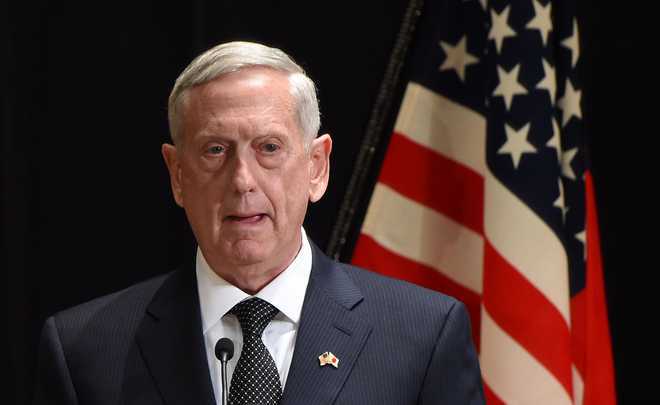
‘Mattis’ meeting with Pak leaders was to find common ground in fight against terror’

'Mattis' meeting with Pak leaders was to find common ground in fight against terror'

The meeting of US Defence Secretary Jim Mattis with the leaders of Pakistan during his visit to Islamabad early this week was to find common ground in fight against terrorism, the Pentagon said on Friday.“The Secretary had very fruitful conversations about where we can find common ground,” Pentagon chief spokesperson Dana White told reporters at her weekly news conference.She said the effort was to broaden the relationship between the two countries.

(Follow The Tribune on Facebook; and Twitter @thetribunechd)

“As he said no one had lost more troops and lives to terrorism than the Pakistanis. So again, this is about broadening our relationship and looking for opportunities. I think there are opportunities. I think his trip showed that,” White said.She was responding to a question on Mattis’ conversation with Pakistani leaders in Islamabad on Monday.“Terrorism. I mean, the threat of terrorism–I mean everyone has–Pakistan has an interest in ensuring that terrorism is defeated. They’ve lost thousands of troops, and they’ve lost thousands of innocents as well,” White said.The Pentagon chief spokesperson said it was in the interest of Pakistan and the US to find a lasting solution to the Afghanistan problem.“It is in the interests of Pakistan, the US, the region to ensure that we can encourage that Afghanistan has a political reconciliation. So we’ll look for ways to work with Pakistanis to find that common ground and move forward,” White said.Mattis had on Monday asked Pakistan to “redouble” efforts to confront militants operating from its soil. PTI


General record

With the only occurrence of three brothers as Generals in the Indian Army, this trio has entered the record books

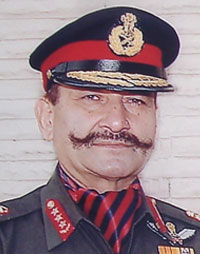
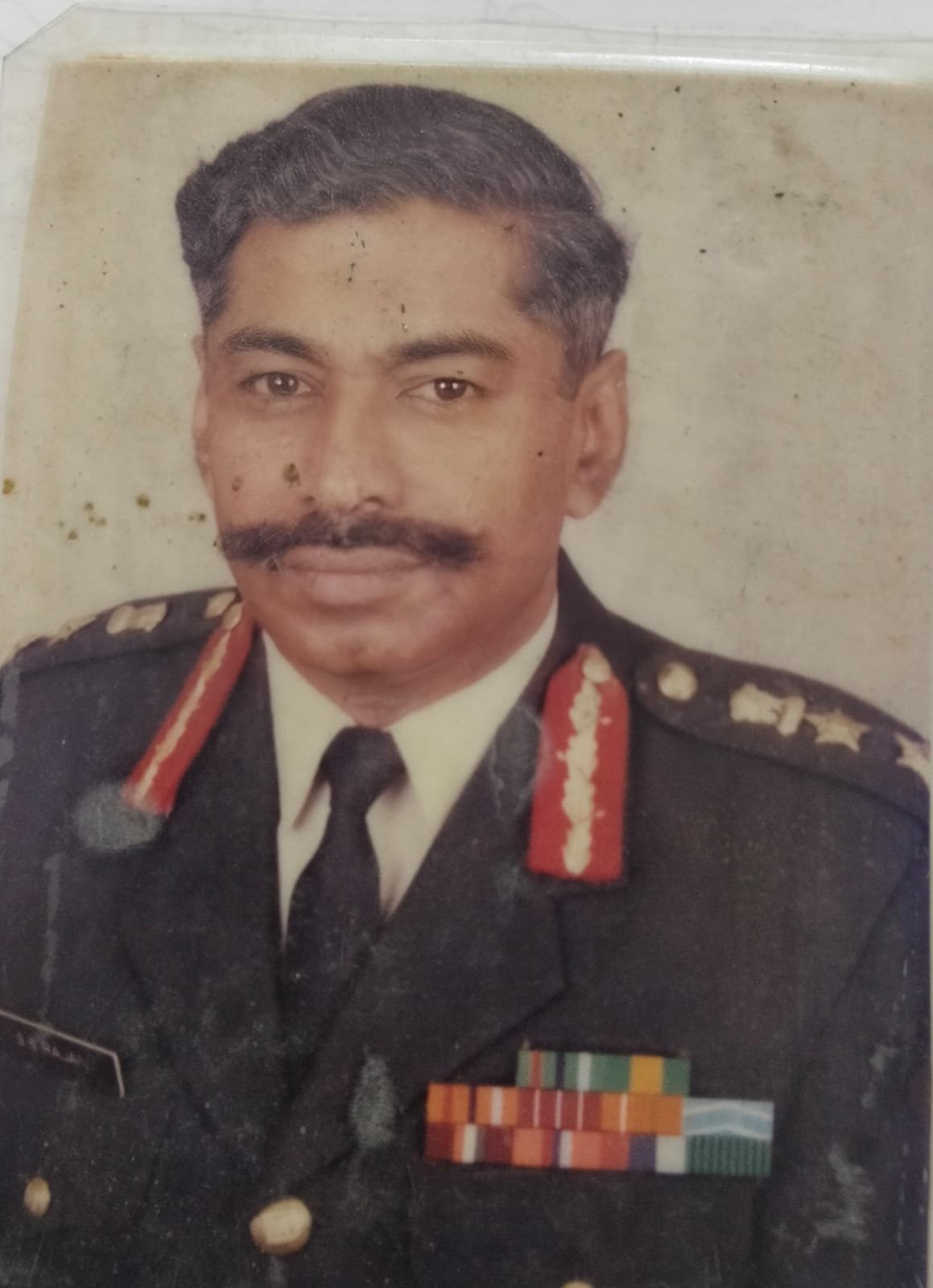
Ambitions can be common but attaining them together and without a pre-planned accord was more than a coincidence. After around 35 to 40 years of serving the army and being posted all over the country, Lt Gen (retd) Anup Singh Jamwal,

Image result for Lt Gen (retd) Anup Singh Jamwal

Lt Gen (retd)Kuldip Singh Jamwal and Maj Gen(retd) RajinderSingh Jamwal found themselves posted in record books. Entering the Limca Book of Records for being the first trio of brothers to be serving as generals at the same time, for the Jamwals, service indeed began from home.

The three brothers served as Generals in 2006 together from February 20 to August 31. Appearing in the 2007 Limca Book of Records, incidentally their village too was featured the same year. Gurha Slathia, a village south of Jammu and their native where two of the brothers are currently settled was in the limelight for nine out of 10 men having served the army and having 14 serving colonels and several Brigadiers at that time. “It was my father Mahatam Singh’s discipline who retired as a Major from the army as well as the regularity of in our village that was a major inspiration for us. While my brothers went through the National Defence Academy, I went through the Technical Grant commission after engineering,” adds Maj Gen RajinderSingh Jamwal, the youngest of the three who after retiring chose to settle down in the city.

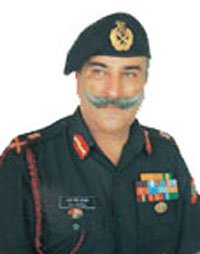
Image result for Lt Gen Kuldip Singh Jamwal.

Lt Gen Anup Singh Jamwal commissioned in December 1966 and Lt General Kuldip Singh in 1967 both from the regiment of artillery and commissioned into the EME in December 1973, RajinderSingh Jamwal became a General in March. “With the initiative of few friends who went ahead with the procedures, we were enrolled in the national records. It was later a halfhearted attempt to enter the world records however, since I remained very busy we eventually did not go ahead. While in service we have always tried to maintain a low profile and this feat towards the end of it was a pleasant achievement,” says Lt Gen Kuldip Singh Jamwal.


Nirmala to reconsider fee cap for martyrs’ children

Nirmala to reconsider fee cap for martyrs’ children
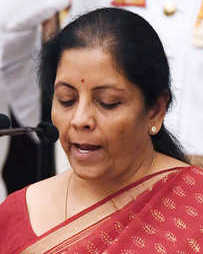
Defence Minister Nirmala Sitharaman

Tribune News Service

New Delhi, December 5

Defence Minister Nirmala Sitharaman tonight said she would reconsider the cap on the education expenses of children of martyrs.Speaking in Ahmedabad, she said fee capping was part of the 7th Pay Commission recommendations. The Cabinet took a call on it. “I will go back and reconsider it,” she said. Terming it a sentimental issue, she said, “Our government is never against soldiers.”(Follow The Tribune on Facebook; and Twitter @thetribunechd)The Tribune was the first to report the matter in its edition dated December 1.The Ministry of Defence (MoD) has already asked for details in this regard and is expected to sort out the matter. In September, the Department of Ex-servicemen in the MoD decided to cap the fee at Rs 10,000 per month, impacting around 3,200 students in schools, colleges and professional institutions.The forces raised an objection on October 10, but the ministry turned it down. Now, the forces, under the banner of the Chairman Chiefs of Staff Committee (a body of three service chiefs), have sought removal of the cap.A letter by the committee says “these personnel made the supreme sacrifice for the country and the provision of educational concessions to their wards is a small gesture to recognise their commitment to the defence of the country”. The committee has sought a review of the government decision.Under the scheme, rolled out in 1972, the tuition fee of children of martyrs or those disabled in action is paid by the ministry.The scheme to bear the cost of education of children of martyrs was announced in the Lok Sabha on December 18, 1971—two days after the Pakistani forces surrendered to the Indian forces at Dacca (now known as Dhaka).


2 IAF commandos killed in Valley gunfight

2 IAF commandos killed in Valley gunfight
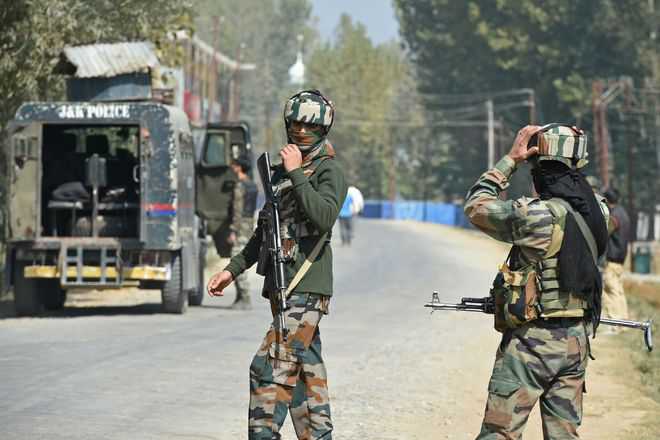
A paramilitary trooper stands guard after a gunfight with militants at Hajin village, Bandipora. PTI

Samaan Lateef

Tribune News Service

Srinagar October 11

Two Indian Air Force (IAF) commandos were killed in a counter-militancy operation in Kashmir today. Two  ‘wanted’ Lashkar-e-Toiba (LeT) militants were also killed in the gunfight that took place at Paribal-Salamabad village in Bandipora district this morning.“Two wanted LeT militants and two IAF Garud commandos were killed in Hajin, Bandipora, this morning,” said Sheikh Zulfikar Azad, Senior Superintendent of Police, Bandipora. The commandos were with the Army for operational experience and training, he said. (Follow The Tribune on Facebook; and Twitter @thetribunechd)On specific information about militants’ presence in a house at Hajin, the police, Army and CRPF launched a joint operation around 2.30 am.As the security forces zeroed in on the militants, they came out of the residential building and opened fire,  triggering a gunfight, the police said. An IAF commando was killed on the spot while the other succumbed to his injuries at the Army’s 92-Base Hospital in Srinagar. Security personnel gunned down the two LeT militants as they tried to break the cordon and flee.The slain IAF personnel were identified as Sergeant K Milind Kishor and Corporal Nilesh Kumar Nayan. Kishor, 33, of Sakri town in Nashik, Maharashtra, had joined the IAF in 2002.  Nayan, 31, of Udhadih village in Bhagalpur district of Bihar, donned the IAF uniform in 2005.The killed militants were identified as Nasrullah Mir (alias Anna) of Hajin and Ali Bai (alias Maaz) of Pakistan. The police found two AK rifles, a pistol, 19 rounds, a grenade, two pouches and other ammunition at the encounter site. Mir had joined militancy in May, while Ali  had been active since January 2015.The police said both militants were involved in several attacks, including the killing of local BSF jawan Mohammad Ramzan in September, civilian Muzaffar Ahmad Parray (whose decapitated body was found in the Jhelum in August) and dreaded counter-insurgent Rashid Billa in April.Sources said LeT commander Mehmood Bhai had also been injured in the gunfight. “We are yet to confirm this information,” Zulfikar said.


2 cops arrested for aiding Hizbul Srinagar: Two Jammu and Kashmir constables were arrested on Wednesday for allegedly supplying ammunition to Hizbul Mujahideen. Constables Shabir Ahmad Malik and Nazir Ahmed Najar allegedly supplied 40 rounds of ammunition to overground Hizbul workers in south and central Kashmir, the police said. They were arrested along with two others “affiliated” with the group. DGP SP Vaid complimented the police for busting the “unholy nexus” PTI


Jammu And Kashmir: Home Minister On A Reconnaissance Mission by Lt Gen Ata Husnain

Jammu And Kashmir: Home Minister On A Reconnaissance Mission

SNAPSHOT

Home Minister Rajnath Singh is in Jammu and Kashmir at a very important time. The security forces have retrieved the situation from the nadir it had hit early in the year. Now, it is up to the political leadership to build on it.

India’s Home Minister, Rajnath Singh is in Jammu and Kashmir (J&K) almost a year after his flurry of visits in mid 2016. That was when violence had consumed the state in a seriously threatening way and the public was yet again demonstrating its alienation from the idea of India. Singh’s calm demeanour, choice of some very sedate language and willingness to listen rather than talking loudly actually helped bring some sense of proportion at that very turbulent juncture. His mission may not have succeeded in bringing immediate peace, but his willingness to go many miles in remaining open minded, reaching out to people even in the face of mounting criticism in other parts of India and not losing his cool even when the Chief Minister was irked by media queries, were sufficient pointers to his resilience.

The period in between his visits has been turbulent. From the low to which the control had slid, when the ratio of terrorists killed matched the fatal casualties of the Army, to the terrorists audaciously executing selective targeting of policemen and even a young Kashmiri Army officer, to the degree of control which exists today, it’s been a slow recovery of lost confidence. When such situations become overly negative its best to shun past attempts at investment in peace and seek fresh pastures. That is why any amount of urging by multiple peace groups to get back into engagement with those who tested national patience while unhesitatingly living off the national exchequer, was shunned, while the security forces (SF) were given greater leeway to achieve the previous level of domination. It would have been very poor strategy to give in to the pressure which was mounted on the government. Singh’s contribution here has been the continuous empowerment of the security forces although he does not control the Army. It is well known that he has been in consultation mode for very long.

The positive trigger for the Home Minister to make a top down approach in engaging stakeholders in J&K has quite obviously been the reference in Prime Minister Narendra Modi’s speech to the need for an engagement mode rather than just domination. Probably discussed in the Cabinet Committee for Security, the translation of the intent into practice and allowing it to take shape through fresh experimentation is the strategy. This needs to be developed into a doctrine if the same has to permeate the thinking of security practitioners.

There is no doubt that SF domination changes thinking of the public and many other stakeholders. The enormity of attempting to get past a massive security grid once again dawns on the people and notions of azadi start taking a backseat from the idea that the same is likely to be achieved in a day or two.

However, overkill of domination too is counterproductive. Once that overkill starts to manifest, the actions of the SF impinge on dignity and self esteem. It’s easy to be roused by those who do not have the long term goal in mind and live by temporary success being perceived as permanent. We still haven’t reached the stage where any pullback from proactive operations is possible. The real test will be in the coming winter when levels of violence and the strength of terrorists will indicate how effective were the SF operations against infiltration or recruitment (or both).

My feedback from the ground reveals that we are at one of those rare moments when the public’s stamina and desire to resist is at its lowest. While there may not be positive thoughts about India and Indians, there is enough alienation against violence, Pakistan, terrorists and the separatist leadership. Such moments come rarely in a long drawn proxy conflict. It will thus be a failing to understand the demands of the situation if the moment is not seized. Yet, that seizing of the moment must be to create a new hope in the people and not further disappoint them. The Prime Minister’s words have not come even a moment too late and the Home Minister is doing the probing. His idea about engaging any and everyone must be like a ‘recce in force’ creating the opportunities. The Chief Minister and her deputy have huge roles to play in guiding Delhi. The Deputy Chief Minister must put Jammu into an engagement mode too.

While the Home Minister is ensuring that he gives his time, energy and focus to the strategy adopted by the government after the Prime Minister’s speech, it would have been good if he had been advised to conduct one or two public meetings not in the hinterland but in the peripheral areas of Uri, Gurez or Tangdhar. It would have a symbolic gesture of gratitude to those who have supported India and conveyed an indication to those who await outreach in the hinterland. It would be the resumption of political activity in an area devoid of the public voice reaching their representatives due to the prevailing circumstances.

It would also be good for the Home Minister to not just meet Kashmiri stakeholders in Srinagar and Jammu based stakeholders in Jammu. His presence brings what cannot be brought by others and thus it’s essential for him to invite a few Jammu based representatives to Srinagar to meet and discuss the future alongside Kashmiri representatives of civil society. Repeating the same at Jammu would be a great gesture and including a few people from Ladakh at both locations would be a winner. For long have I believed that it is Jammu which holds the key in calming Kashmir’s social and economic landscape. That calming will bring forth responsible and nationalistic leaders even as it helps the Kashmir media to cast away the shroud of the fear of the separatists under which it exists.

From my experience of Kashmir there is one thing I would always wish to see the home and defence ministers of India to do each time they visit the Valley or Jammu. I want them to meet officials who do not report in their channels. The Home Minister must visit the Line of Control not to say hello to the few Border Security Force troops assisting the Army but to get a wholesome brief from the Army’s perspective. When the Defence Minister goes calling, she must visit the police headquarters to take a brief. For too long have officials below pushed their ministers to function in their channels. The world of hybrid conflict is much larger than any of them can ever imagine. The ministers in turn will return empowered beyond the bracketed information they are provided.


The Challenges of Securing Local Soldiers and Policemen in J&K by Lt Gen SYED ATA HASNAIN

A third off duty Indian Army soldier has been killed this year in Kashmir’s Shopiyan area of south Kashmir. The body of Irfan Dar from one of the Territorial Army (TA) Home & Hearth (H&H) units has been found this morning. He had driven from his home in his private car the evening before and did not return, thus prompting a search.

It serves as a grim reminder of how Lieutenant (Lt) Umar Fayaz of the 2 Rajputana Rifles, a young Kashmiri officer with just eight months of service, was killed by terrorists in May this year.

Thereafter, there was a spate of attacks on the JK police, some while on duty and some off-duty.In September, Mohammad Ramzan Parray of the Border Security Force was shot dead by terrorists when he and his family resisted attempts to kidnap him, in central Kashmir.
Fayaz Ahmed Bhat’s body in a paddy field in Tangmarg, J&K. 
Fayaz Ahmed Bhat’s body in a paddy field in Tangmarg, J&K.
(Photo: ANI)
Why Are Off-Duty and Unarmed Policemen Easy Targets?
Why do terrorists target local off-duty and unarmed soldiers and policemen, and how can these brave hearts who defy societal pressures to serve the nation, be secured. The answer to the first is relatively simple.
Terrorists have two broad targets – first, the Army and Police or anyone who functions as an organised armed force; second, the populace which they must keep under control.
While it is important to win over and take support of the population so that logistics, safe houses and early warning of security forces (SF) presence is available, it is equally important to prevent any kind of public support to the SF.

SF recruitment schemes to their ranks is considered a major threat because a local Kashmiri once recruited is considered to have ‘crossed over’ or is no longer reliable. Surprisingly, through the 27 years of proxy war the targeting of such soldiers and policemen was minimal, almost like some kind of unwritten agreement. There are several reasons for this.
These servicemen provide sustenance to extended families and in an environment where jobs aren’t too many, the employment opportunities are far too tempting to ignore.
Targeting SF personnel therefore does not create anything positive for terrorists. In the past too, targeted killings of such off-duty SF personnel was always considered the handiwork of rogue terrorists.
In recent times and especially after 2016, we have witnessed a planned targeting of JK policemen in particular and some soldiers.
The strategy here is to dissuade young people seeking these services as career options so that there is no dilution in the anti-national movement by those considered loyal to India.
At the same time the intent is to demoralise local SF men and prevent them from being effectively loyal to their organisations. Publicity by the police and army about thousands of local youth queuing up for a chance at recruitment unnerves the terrorists and separatists, who then dissuade the youth through such acts.
Also Read: ‘We Miss Him’: Family & Friends Remember Slain Army Lt Ummer Fayaz
Rioters protesting against security personnel in Srinagar. 
Rioters protesting against security personnel in Srinagar.
(Photo: PTI)
Equal Number of Locals Involved
For every couple of thousand local Kashmiris who serve in the JK Police, there are a couple of thousands who serve the Jammu & Kashmir Light Infantry (JAK LI) and the J&K Rifles (JAK RIF), besides BSF and the CRPF. They are deployed all over the borders and return home on brief periods of leave. The TA (H&H) units composed of locals serve in the Valley itself and their local personnel proceed on leave on many weekends.
Thus, at any given time at least a ballpark figure of 2000-3000 local soldiers would be on leave in their villages, excluding the policemen who outnumber them.
The army did make some efforts towards procedures involving reporting of a local soldier on leave to the nearest army post. These posts could be anything from a hundred meters to two to three kilometers from the residence of an off-duty soldier.
Responding in real time to a situation is near impossible and yet allowing the targeting of off-duty SF personnel with impunity has a debilitating effect on the morale of all soldiers while enhancing terrorist confidence. This is where confidence building with the populace and strengthening of the intelligence grid makes a difference.
Arming these personnel with personal weapons has been considered in the past but never entered the options list.
The troops to population ratio is never such so as to allow SF presence in groups of villages; there are in fact large tracts where they may be no SF presence at all. Among the very few options that do exist for security is the continued domination, night and day, of the grid, keeping terrorists off balance and building reliable sources of information.
As the SF progressively achieves greater military domination, the terrorists are going to opt for more soft targets which have an out of proportion effect. Unarmed and off-duty personnel virtually become quasi-strategic targets because their targeting makes bigger news and secures brownie points for rookie terrorists.

The army and J&K Police will have to reconsider their methodology of securing these vulnerable targets if they wish to convert their current domination to an eventual victory because the terrorists are realising where the SF vulnerability really lies.
Also Read: Bullet-Riddled Body of Army Jawan Found in Shopian, Kashmir

8
(The writer, a former GOC of the army’s 15 Corps, is now associated with Vivekanand International Foundation and Institute of Peace & Conflict Studies. He can be reached at @atahasnain53. This is an opinion piece and the views expressed above are the author’s own. The Quint neither endorses nor is responsible for the same.)


Defence minister’s visit to Arunachal irks Beijing

BEIJING: China on Monday contended Indian defence minister Nirmala Sithraman’s visit to Arunachal Pradesh would destabilise peace in the “disputed” region, saying New Delhi and Beijing should work together to maintain peace along the frontier.

PTI FILE■ Defence minister Nirmala Sitharaman interacts with officers and jawans at Kibithu, Arunachal Pradesh, on Sunday.

Sitharaman visited forward army posts in the remote Anjaw district of Arunachal Pradesh, which borders China, on Sunday. It was the newly appointed minister’s first visit to the state, which China claims is part of south Tibet.

The minister was accompanied by general officer commanding-in-chief of the Eastern Command, Lt Gen Abhay Krishna, and other senior army officers.

China was quick to react to the visit.

“You must be very clear about China’s position. There is a dispute in the eastern section of the China-India boundary. This visit by the Indian side to this disputed area is not conducive to peace and tranquillity of the relevant region,” foreign ministry spokesperson Hua Chunying told a regular news briefing when asked to comment on the visit.

“We hope the Indian side would work with the Chinese side to continue to make contribution to properly resolve the boundary issue through dialogue and create an enabling atmosphere and conditions for this.”

Hua added, “We hope India will work with China for the shared goal of seeking a solution applicable to both sides and to accommodate our concerns in a balanced way.”

China’s reaction to Sitharaman’s visit to Arunachal Pradesh was markedly different from how it reacted when the defence minister visited forward army posts in Sikkim and exchanged greetings with Chinese soldiers at the border.

Beijing was also furious when Tibetan spiritual leader, the Dalai Lama, visited Arunachal Pradesh earlier this year.

The Line of Actual Control (LAC) between India and China stretches to 3,488 kms. Both sides have held 19 rounds of talks by the Special Representatives to resolve the dispute.


Soldiers, spiritual leaders twin pillars of nation: President

Soldiers, spiritual leaders twin pillars of nation: President
Photo courtesy: PIB

Kollam, October 8

Hailing the contributions of soldiers and spiritual leaders, President Ram Nath Kovind on Sunday said they were the “twin pillars” on which the country rested its hope.

Launching a Rs-100 crore initiative of the Mata Amritanandamayi Math to provide clean water to rural India at the math headquarters at nearby Vallikkavu, Kovind also lauded the centuries-old legacy of Kerala in accommodating different religions.

“This is a state where one community has willingly given space to another,” he said, addressing a function organised in connection with the 64th birthday celebrations of spiritual leader Mata Amritanandamayi Devi, known as “Amma” among her devotees.

The President said his first visit outside New Delhi after assuming office was to meet the soldiers posted in the border town of Leh in the Ladakh region of Jammu and Kashmir, who, he said, were defending the country’s borders in extremely difficult conditions.

“The bravery of our soldiers on the one hand and the compassion, love and wisdom of our spiritual leaders on the other are the twin pillars on which we rest our hopes,” he said.

Kovind praised Kerala as a state that “has done so much to defend our ethos and culture”.

Referring to spiritual leaders and social reformers from Kerala like Adi Shankaracharya, Sree Narayana Guru and Ayyankali, he said the southern state was “one of the leading spiritual homes in our country and composite society”.

“Kerala’s spiritual consciousness is well beyond faith and religious distinctions, the Christian community in Kerala is one of the world’s oldest,” the President said.

Pointing out that the first mosque to be built in India was in Kerala, Kovind said he was told that it was constructed by the Arab merchants in the seventh century, during the lifetime of the Prophet himself.

He said Kerala also had a rich tradition of Jews who settled in the state 2,000 years ago.

“These historical instances reflect the mutual accommodation and understanding of different faiths and religious communities in Kerala’s history,” he added.

Lauding the contributions of Mata Amrtianandamayi, Kovind said “Amma” represented the enlightened spiritual tradition of Kerala and described her spiritual mission as a contribution to nation building.

The president launched the math’s ‘Jivamritam’ filtration system, envisaged to provide clean drinking water to one crore villagers across the country.

According to the math authorities, the initial phase of the ‘Jivamritam’ project, aimed at installing specially designed filtration systems for clean drinking water in 5,000 villages, was entirely being funded by it.

Earlier, Kerala Governor Justice (retd) P Sathasivam and Chief Minister Pinarayi Vijayan were among those who received the president on his arrival at the Air Force Technical Area of the airport at Thiruvananthapuram. —PTI