










Sanjha Morcha

What’s New

Click the heading to open detailed news

Current Events :

web counter

Print Media Reproduced Defence Related News

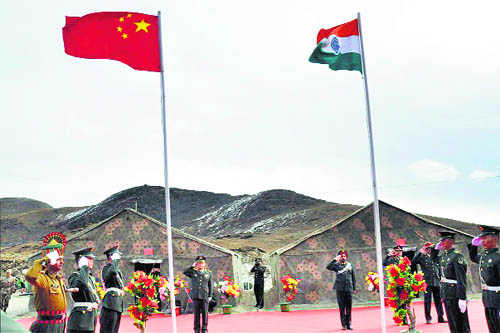
China’s Troops at Doklam This Winter Is Just Strategic Messaging BY LT GEN SYED ATA HASNAIN

The 72-day-long Doklam standoff between India and China may have ended but its effects will be felt for some time. When relationships at the border deteriorate, all kinds of issues become triggers, not necessarily for a show of arms but more for the purpose of strategic communication.

Also Read: Doklam Standoff Explained: Who’s Involved & Why’s India Bothered?

Is China Anticipating a Threat from India?

The recent crash of an Indian drone on a reconnaissance mission, somewhere along the India-Tibet border in the state of Sikkim, has upped the Chinese propaganda in the state-controlled media. The incident gave enough leeway for China to unleash its propaganda machinery and information warfare, all of which, in modern parlance, is referred to as communication strategy. The intent is to pick up such issues and browbeat India in order to curb initiatives from our side, thus granting China moral ascendancy.

Interestingly, alongside the incident of the crash of the Indian drone, there are media reports suggesting the presence of 1,800 soldiers of the People’s Liberation Army (PLA) camping at Doklam for winter, something never done in the past. China has improved infrastructure by constructing two helipads and many store sheds and prefabricated huts for winter accommodation.

Roads in the area are also reported to have been improved. Is China anticipating an Indian threat or attempting to intimidate the Indian Army and the Indian political leadership?

Also Read: Lessons from Doklam: Not China, Not India, But Bhutan’s the Winner

Is This Merely ‘Advance Winter Stocking’?

India’s patience in dealing with Doklam received international praise. In military terms, India advanced the dates for the annual operational alert of the Siliguri-based 33 Corps.

The Advance Winter Stocking (AWS) as part of the annual logistics exercise continued except for a precautionary increase in vigil. Barring the additional troops being staged forward, nothing else seems to have been done. This appears to be the correct strategy.

The presence of less than a regiment (brigade in PLA’s parlance) of the PLA in an encampment mode, no doubt, with improved infrastructure should not necessarily intimidate the Indian Army. Of course, the issue need not be trivialised to presume that all is well, because Doklam remains a serious issue between the two neighbours who are perceived to be competitors for power in their own right.

What India should be aware of and competent to deal with is the level of intimidation by China, both politically as well as militarily. In this politico-military domain, it needs to be understood that the Chumbi Valley is not necessarily the most suitable area for China to optimise its operational capability for a major showdown.

Encampments and increased troop presence do not necessarily mean a higher optimisation of war-based capability. There is a big difference between the tactically deployed troops and the encamped ones.

Also Read: China Hints at Keeping Sizeable Troop Presence Near Doklam 

Muscle-Flexing at Doklam

The PLA’s continued presence in winter at Doklam, against normal practice, is more a political ego issue. China probably perceives that the BRICS summit at Xiamen (China) 0n 7 Sep 2017 and the 19th Congress of the Chinese Communist Party in Oct 2017 prevented China from being able to play out the Doklam standoff as per its strategy.

While India too played down the termination of the standoff and did not make any intimidating statements, the final status probably did not satisfy the Chinese. A full withdrawal of Chinese resources from Doklam would have communicated an abdication of its intent and in its perception, given India an unacceptable psychological strategic advantage.

It would probably also communicate that India was morally correct, something extremely difficult for China to accept, especially with the run of events in Asia in general.

Nations engaged in a dispute with China will take a cue from Doklam and flex their muscles, a situation that is unacceptable to Beijing. In light of this, reinforced military presence in the Doklam area would convey that China had not abandoned its quest to build the road in an area it claims its own and that the world has not seen the last of Doklam.

Also Read: Army Moves Troops of Sukna-Based 33 Corps to India-China Border

Strategic Engagement with China

For India, there is a need for both political and military circumspection as well as close synchronisation to read the indicators. China’s characteristic vitriol has been slightly toned down but this is likely to increase as the summer of 2018 approaches. Our military activity needs to be calibrated to the extent of being balanced with no unnecessary intimidation; we need not be overly defensive either. However, political engagement with China needs to be enhanced with specific reference to the Doklam standoff.

The circumstances post the disengagement at Doklam did not give sufficient opportunity for focused engagement as both sides parried the issue. Diplomatic niceties alongside a few barbs have continued but if Doklam is not to become a thorn once again, a more considered strategic engagement with China – political, diplomatic and military – might be needed.

To an extent, it is already happening, as is evident from the type of strategic seminars being organised in Delhi marked by the presence of Chinese academics. India’s messaging needs to be clear; there are enough border protocols for resolution of the border issue and India will abide by these – but military intimidation aiming to cause strategic disadvantage, as was attempted in Doklam, is not something India will accept.

Also Read: Do 1,800 Chinese Troops in Doklam Indicate a Permanent Presence?

(The writer, a former GOC of the army’s 15 Corps, is now associated with Vivekanand International Foundation and Institute of Peace & Conflict Studies. He can be reached at@atahasnain53. This is an opinion piece and the views expressed above are the author’s own. The Quint neither endorses nor is responsible for the same.)

HEADLINES PRINT MEDIA NEWS ::19 JAN 2018

  1. EX-SERVICEMEN OF DISTT PATHANKOT COMPLETE GOG TRAINING ( GUARDIANS OF GOVERNANCE )::: KHSUHALI DE RAKHE
  2. Guardians of Governance to ensure transparency in execution of developmental works::Lt Gen TS Shergill
  3. INDIAN ARMY REDUCES VACANCIES FOR IMA PERMANENT COMMISSION
  4. PM MODI & DEFENCE MIN BREAK TRADITION, SKIP ARMY DAY AT-HOME EVENT
  5. ARMY TO HOLD MINI-MARATHON ON JANUARY 22
  6. FLAG WAR TO CONTINUE AT ATTARI-WAGAH BORDER
  7. SEPOY’S LAST RITES PERFORMED WITH FULL HONOURS IN PANIPAT VILLAGE
  8. SEPARATISTS HIT OUT AT ARMY CHIEF
  9. NOT DONE WITH DOKLAM YET BY LT GEN SYED ATA HASNAIN (RETD)
  10. MODI, SUSHMA MISLED NATION ON DOKLAM STANDOFF: CONGRESS
  11. ATTACK HELICOPTER RUDRA FIRST TIME IN R-DAY PARADE
  12. A GENERAL & HIS LOQUACIOUSNESS BY HARISH KHARE
  13. APP FOR ARMY VETERANS IN TELANGANA, ANDHRA ::WILL HELP THEM BOOK ONLINE APPOINTMENTS WITH DOCTORS AT ALL ECHS POLYCLINICS
  14. FIRST WOMAN DEFENCE MINISTER ON SUKHOI
  15. SITHARAMAN FLIES IN SUKHOI FOR 40 MINUTES IN RAJASTHAN

China’s double offer is opportune

India should consider Chinese twin offers on BRI route and border dispute since they address its military and strategic concerns.

China’s double offer is opportune

Pravin Sawhney,Editor, FORCE

his could well be India’s opportunity to manage China. In an interesting gesture, China has offered to assuage India’s sovereignty concern on the Belt and Road Initiative (BRI). China has also proposed to start a series of dialogues for an “early harvest” on the disputed border issue, provided India agrees to consider finding common ground between its Act East policy and other development strategies, and the BRI. Both Chinese proposals have come from its Ambassador in India, Luo Zhaohui. “We can change the name of the China Pakistan Economic Corridor (CPEC). Create an alternate corridor through Jammu and Kashmir, Nathu la (pass) or Nepal to deal with India’s concerns,” he said at Jawaharlal Nehru University in New Delhi. Earlier, he wrote in this newspaper (November 16), making a connection between the BRI and Act East policy. In what may not be a coincidence, the Russian Ambassador in India, Nokolay Kudashev, said that China and India should talk on the BRI and set aside their differences in favour of economic cooperation.The timing of the Chinese offer is opportune. In December, the foreign ministers’ trilateral meeting between India, China and Russia is to be held in Delhi followed by the 20th round of border resolution talks between special representatives of India and China. The Chinese interlocutor, Yang Jeichi, has been elevated as member of the Politburo of the Communist Party of China. India’s military anxiety

India should consider the Chinese offer since it could address India’s two core concerns: military and strategic. Let’s start with the military anxiety. Given the unbridgeable gap between the Indian and Chinese military power; the fact that the disputed border is neither agreed on maps nor ground; that the terrain favours China owing to better infrastructure and acclimatisation of troops; and above all, that the border has a military moniker called the Line of Actual Control (LAC), which can be shifted by military force by the powerful side, India is constantly worried about intrusions and transgressions by Chinese troops.This is why, departing from protocol, PM Narendra Modi, during Xi Jinping’s visit to India in September, 2014, publicly sought clarification on the LAC at the joint press conference. Unlike the present LAC, transgressions on an agreed LAC — a de facto border — would be an act of aggression tantamount to a declaration of war. Since China did not want to lose the advantage of exercising military coercion by sauntering across the LAC at will, it rejected Modi’s proposal. This proposal, which is the best that India could get short of the border resolution (which is unlikely anytime soon), could be the “early harvest” hinted by Luo in exchange for India considering the BRI.Strategic concerns

Moreover, India has two strategic concerns — the said and the unsaid. The said one is about the CPEC which passes through territory held by Pakistan, but is claimed by India. China has responded by saying that a mutually acceptable route could be formulated. The unsaid concern, which is the trickier, is this: India believes that joining the BRI would limit its strategic options necessary for its rise. The best option, India believes is to partner with the US, and other like-minded democracies and friendly nations, in ensuring that the present regional architecture does not get upended by the BRI. India, therefore, has announced its Act East policy with connectivity, trade and security as its three pillars. Its other development strategies include Sagarmala, Spice Route and Mausam initiatives, the Asia-Africa sea corridor with Japan, and the Quadrilateral — India, the US, Japan and Australia — dialogue for strategic and maritime cooperation. Moreover, the US, by renaming the Asia-Pacific as the Indo-Pacific has sought maritime partnership with India from East Asia — with the pivot in ASEAN —across the Indian Ocean Region. The US has also proposed connectivity on land and sea to counter the BRI.Important issues

While all this appears exciting, India should consider three issues:1 Its national power (economic, military and technological) does not compare favourably with China; the Indian Navy warships lack long-legs, numbers and endurance. Not to forget its limited annual allocations and an unenviable shipbuilding industry. The BRI is a strategic threat since it impedes India’s rise by getting its neighbourhood and “extended neighbourhood” on board the BRI. Soon, this would translate into military threat for India (on land and seas) since the People’s Liberation Army would develop defence ties with nations that have joined the BRI to protect its own people, assets, infrastructure and interests there.The US administration, with its withdrawal from the Trans-Pacific Partnership and ‘America First’ policy, has handed over the economic leadership of the Asia-Pacific to China. This has resulted in a review of the regional balance-of-power by US’ allies Japan, South Korea and Vietnam, who are gravitating towards China. Since these nations are hedging their bets, does it make sense for India to position itself as China’s rival, especially when China is a power which cannot be contained? India’s interests would be better served by considering the Chinese double offer. Strategic hedging or as the foreign secretary, S Jaishankar, recently said, “rigidity of positions no longer holds” should be adopted soonest.


Army jawan ‘mastermind’ of snatchings

Nawanshahr, November 13

The police today busted a gang of snatchers that was planning to loot a cash van. Two pistols, a kirpan and a bike were recovered from the possession of five gang members.The police said Army jawan Vikramjit Singh, who belongs to Hoshiarpur and is posted in Rajasthan, was the mastermind of the snatchings along with Jagdish of Jalandhar. Both are on the run.Those arrested have been identified as Bihar resident Mithilesh Kumar, Nandish of Balachaur, Malkit and Rampal of Ropar and Prabhlobhan Singh of Banga. The police said Vikramjit had recently gone back to Rajasthan after spending holidays with his family. — TNS


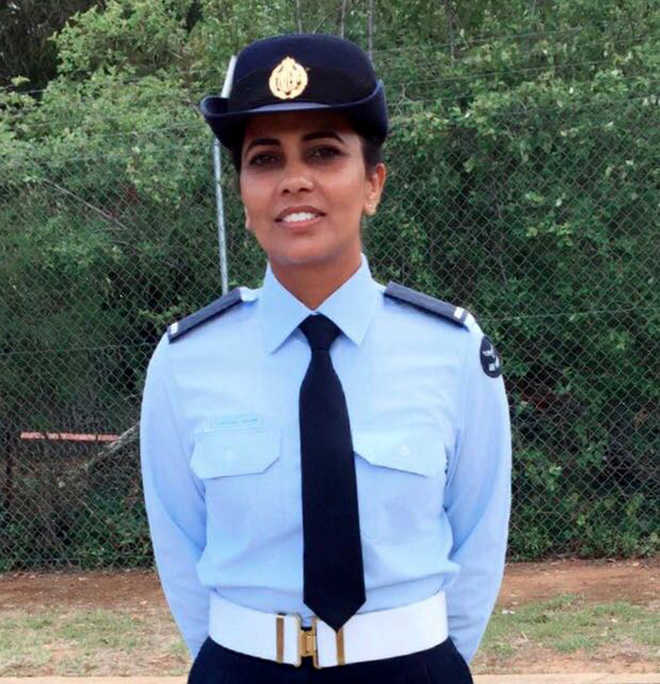
Muktsar woman shows mettle, makes it to Australian air force

Muktsar woman shows mettle, makes it to Australian air force
Manjit Kaur has been recruited into the RAAF.

Archit Watts

Tribune News Service

Muktsar, December 9

Manjit Kaur (36) from Muktsar has been recruited as an aircraftwoman in the medical wing of Royal Australian Air Force (RAAF). Before her recruitment, she underwent a three-month physical training there.She hails from a family of a marginal farmer of Bhala Saryamalwala village in Ferozepur. Manjit married Roop Singh Sandhu of Muktsar in 2002. He is employed with the Australian government and drives a truck.Manjit, along with her husband, went to Australia on a study visa in 2009. At that time, she had two daughters. She got the PR in 2013.“Our maternal uncle, who retired as a Colonel from the Indian Army, was Manjit’s inspiration to serve the armed forces,” said Manjit’s brother Gursahib Singh, an employee in the judicial courts of Gidderbaha.“She cleared the physical test twice to get selected in the RAAF. She got success on December 6,” he said.About Manjit’s job, Gursahib said she would be attending to Air Force personnel suffering from medical conditions.“Manjit has worked at a community welfare and disability centre in Brisbane. She has done some study in this field as well. These things helped her get the job,” he added.


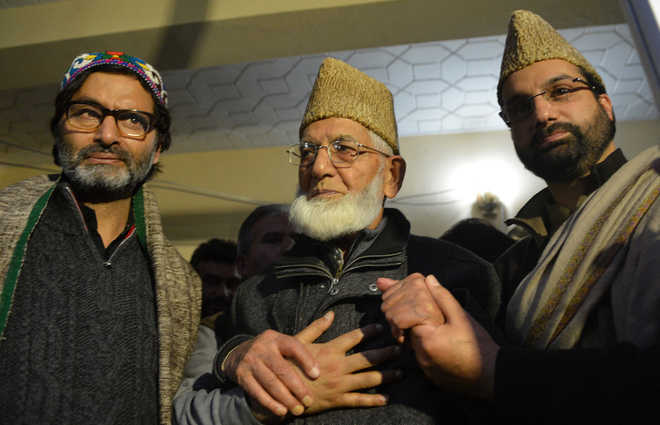
Kashmiri separatists did U-turn on talks on Nov 4

Kashmiri separatists did  U-turn on talks on Nov 4
File photo

Arun Joshi

tribune news service

Srinagar, November 10

The Kashmiri separatists had made up their mind to give another try to an engagement with New Delhi and also to bring Pakistan on board as latest as November 4, but a notice to JKLF chief Yasin Malik the very same day made them do a U-turn and reject the talks offer in almost absolute terms.“They felt the space to operate for the Hurriyat Conference was being completely squeezed. Since there was no back channel at work, they thought it was time to tell Delhi that separatists cannot be cowed down and made to sit across the table,” sources said. This also gave a boost to pro-Pakistan elements like Syed Ali Shah Geelani, who on Thursday reaffirmed that “Kashmir should be a part of Pakistan”.(Follow The Tribune on Facebook; and Twitter @thetribunechd)According to the separatists, Delhi’s special representative Dineshwar Sharma was being used as a ruse.Sources said the Hurriyat, like all other groups in Kashmir, was convinced that “Pakistan, good or bad, cannot be wished away. It has a historical stake and also controls the levers of militancy to a large extent”. Already there is dismay among separatists over the very limited public support they have garnered against the NIA raids, and the opening of doors to the interlocutor would have strengthened the impression propagated by Delhi that they had been doing wrong all through.


Two to tango: Serving PVC awardees muse about a war won, and comrades lost

CHANDIGARH : They are the only two serving Param Vir Chakra (PVC) awardees of the Indian army – the Kargil heroes who were honoured with the highest military honour in the country for going beyond the call of duty. But Subedar Yogendra Yadav and Naib Subedar Sanjay Kumar wear their bravery lightly.

SANT ARORA/HT■ Subedar Yogendra Yadav (left) with Naib Subedar Sanjay Kumar (right) in Panchkula on Thursday. Both wear their bravery lightly.“We did what had to be done,” shrugs Yadav, who at 19 was the youngest recipient of the award. It was the summer of 1999. Yadav had come home to Bulandshahr to marry on May 5. He returned on May 20 to find his battalion in Drass.

Son of a soldier, Yadav, who was recruited to the Grenadiers at 16, knew how to counter insurgents in the Kashmir Valley, but fighting soldiers from across the border in freezing cold was a different ball game.

Kumar, who was a 23-yearold jawan in 13 JAK Rifles at that time, recalls feeling excited at the prospect of fighting the battle. “My uncle was killed in the 1965 war, in the unit they used to always talk of 1971 war; here we were in the middle of a real war.”

‘DEATH THE

NEW NORMAL’

Yadav’s battalion was tasked with capturing the Tololing Peak held by Pakistani intruders. In 22 days, they lost two officers, two junior commissioned officers and 21 jawans. “Death became the new normal,” recalls Yadav, an avid reader of Munshi Prem Chand. Perched high, the enemy found easy targets in Indian soldiers who climbed up to regain lost territory.

For the first 22 days, Yadav and two others were tasked with ferrying ration from the base camp to the forward posts. “We used to start at 5.30 in the morning and reach there at 2.30 next morning.”

On 23rd day, Yadav found himself part of a ‘ghatak’ platoon tasked with attacking Pakistani posts from an unused and very steep path. It was after climbing two nights and a day that they found themselves near the Pakistani post at the hilltop. They were asked to launch an attack. “We had to use ropes to climb the final stretch. Even though we tried to climb soundlessly, some rocks slipped and the enemy opened fire on us. Only seven of us made it to the top,” Yadav recounts.

In the battle that ensued, they killed four Pakistani soldiers and holed up in their bunker. After five hours of crossfire, they decided to conserve their ammunition and wait for the enemy come close enough. Taking them for dead, Pakistani soldiers came to check. “We shot all of them but for one.” He returned with artillery fire and a heavy reinforcement. “All my buddies were killed,” Yadav grimaces.

He played dead even when Pakistani soldiers went around pumping bullets into the dead Indian soldiers and talking about their plans to attack Mushkoh valley.

“An enemy soldier fired a bullet at my chest but it ricocheted after hitting some coins in my wallet. For me, that was a sign that I would live to warn my comrades.” With 18 bullets in his body, a bone jutting out of his left arm, Yadav lobbed a grenade at a departing soldier. Thinking that Indians had returned, the Pakistanis fled and Yadav crawled down a nullah to warn his platoon. He was in the hospital for 16 months.

IN THE LINE OF FIRE Mountains were not alien to Naib Subedar Sanjay, a Himachali from BIlaspur, but it was unnerving to climb peaks with bunkers around. “The Pakistanis would let us climb up and then open fire.”

Sanjay volunteered to be the leading scout of the attacking column tasked to capture area Flat Top of Point 4875 in the Mushkoh Valley on 4 July.

Very near the top, he found the nozzles of two machine guns above his head. Kumar pulled down the guns, climbed up and then ran firing towards the enemy bunker. In the ensuing hand-to-hand combat, he killed three of the intruders and was himself seriously injured. But undeterred, he charged onto the second bunker. Taken by surprise, the enemy fled.

Kumar’s citation mentions that although he was bleeding profusely, he refused to be evacuated. For this, Kumar is grateful to his battalion medical officer, Dr Rajesh Adhow.

KARGIL FORGOTTEN? Eighteen years on, the two look back with awe.

Kargil changed them forever. Kumar rues that the civilian world seems to have forgotten the fallen soldiers. “Everyone salutes the rising sun,” he philosophises.

But they understand. “We must familiarise the youth with the uniform, may be through the NCC. You can’t feel for it unless you wear it,” reasons Kumar.

Yadav has the last word, “Patriotism can’t be taught, it comes from within. And when you feel for your country, you will feel for the soldier.”


Indian Military Veterans should stop bringing disgrace to the country

Without reviving martial spirit of Indian State, Military Veterans can’t expect justice 

—- Many TV Channels showed on October 30, 2017 that the Indian Military Veterans (protesting for one-rank-one-pay, OROP) were humiliatingly removed from India’s capital New Delhi at Jantar-Mantar [ allegedly due to order of National Green Tribunal (NGT) which expects protestors to protest at Ramlila ground and not at Jantar-Mantar]. But protest venue (either Jantar-Mantar or Ramlila ground) is not the real issue. The real issue as generally mentioned at ( http://www.pakistanchristianpost.com/detail.php?articleid=2422 ) is the disgraceful manner in which Military (including its Veterans) is being treated in India and for this mainly the senior / top brass of Indian Military, the serving and Veterans, are to be blamed. The Indian Military will not come out of this disgraceful situation unless the following is done which, what to talk of OROP or any other legitimate demand of Military Veterans and serving Military men, but even respect and honor of Indian Military and (its Veterans) will rise to the exalted level:- 

(1)- Military Veterans should launch a new registered NGO (by giving its membership to other Indians too than merely to Military Veterans) which will carry out demonstrations at all the State Capitals and District headquarters for demanding the following which are exclusively concerned about the martial matters of Indian State. 

(2)- Martial Court (separate from Court Martial) should be constituted which will decide all the grievances of members of Indian Military. 

(3)- BJP came in Government in the State of Assam mainly on the issue of identifying, tracking and deportation of Bangladeshi illegal migrants in Assam. Hence Government of India and of Govt of Assam should immediately start the process of sending all the Bangladeshi infiltrators to Bangladesh from India as these illegal immigrants have become serious security threat to India especially in view of Rohingya crises 

(4)- India should immediately talk to Pakistan for the retrieve of PoK (even militarily if necessary) as mentioned at http://www.alwihdainfo.com/India-trying-to-be-over-smart-by-not-talking-to-Pakistan-about-Kashmir_a58779.html 

(5)- The dispute with China is legal (unlike dispute with Pakistan which is political) hence India should pressurize China to constitute a judicial commission (preferably through UN of which China is a privileged veto wielding permanent member) in order to settle Indo-China border dispute without any further delay. 

(6)- India should immediately recover Rs ~ 1,000 Trillion State capital as Income Tax as mention at ( http://www.alwihdainfo.com/Now-India-bound-to-get-Rs–1000-Trillion-income-tax-as-Delhi-Police-steps-in_a31456.html AND http://www.newsnation.in/article/121125-news-nation-disclosure-on-blackmoney-kharabpati-farmers-take-agriculture-route-t.html ) so that in addition to solving many of the problems of India (arising out of financial hardship) the Military power of India can also be buttressed further. 

Indian Military Veterans have already faced enough of humiliations and it is high time they use some common-sense and realize that ‘seedhi ungli se ghee nahi nikalta’ (without pressure nobody listens) especially in democracy where other interest groups have taken control of Indian State. 

Regards 

Hem Raj Jain 
(Author of ‘Betrayal of Americanism’) 
Bengaluru, India
Read more at http://www.alwihdainfo.com/Indian-Military-Veterans-should-stop-bringing-disgrace-to-the-country_a58977.html#IrA1QeJwZiHsBdbv.99


39 soldiers killed in J&K from 2015 to ’17

Deepender Deswal

Tribune News Service

Hisar, October 24

An RTI application has revealed rise in the number of armed forces’ personnel killed in action in J&K ever since the NDA government came to power in mid-2014.The application filed by Hisar-based RTI activist Naresh Saini revealed five Army men and eight BSF personnel were killed from 2011 to 2014. The number of casualties tripled in two years and nine months from 2015 to September 2017, during which 39 soldiers, including 27 Army men and eight BSF personnel, were martyred.The information provided by the Ministry of Home Affairs relates to Army men and BSF personnel killed in J&K due to ceasefire violations and cross-border firing along the Indo-Pak border. The MHA diverted the query on Indo-China border.