





Sanjha Morcha

What’s New

Click the heading to open detailed news

Current Events :

web counter

Print Media Reproduced Defence Related News

How science is shaping art of war

Military reforms are about developing leaders capable of navigating the intersection of warfare, technology and organisational change
article_Author
Lt Gen Karanbir Singh Brar Retd

HE debate on military reforms and theatreisation has rightly highlighted an important reality: military transformation cannot be the responsibility of a single individual, institution or appointment. While the creation of the Chief of Defence Staff (CDS) and the efforts toward jointness and theatre commands are significant milestones, they represent only one part of a much larger transformation that the forces must undertake.

The central challenge facing militaries worldwide today is adaptation to a rapidly changing character of warfare. The nature of war may remain constant, but the means through which military power is generated, exercised and sustained are undergoing a profound change. Consequently, military reform must be viewed not only through the lens of structures and command arrangements but also through the lenses of technology, human capital, doctrine and national capability.

The future battlefield is increasingly defined by technologies that transcend traditional service boundaries. Multi-domain operations (MDO), integrated intelligence, surveillance and reconnaissance (ISR), net-centric warfare, sensor-to-shooter architectures, AI-enabled decision support, cyber warfare, electronic warfare, autonomous systems, drones, robotics and space-based capabilities are redefining how military power is applied.

In such an environment, military effectiveness will depend less on the number of platforms a nation possesses and more on how effectively it connects sensors, decision-makers and effectors across all domains.

The decisive military advantage of the future will not come merely from possessing tanks, aircraft, ships or missiles. It will come from achieving decision superiority – the ability to observe, orient, decide and act faster and more accurately than an adversary.

This requires integrated systems, common operational pictures, secure communications, data fusion, AI-enabled analytics and resilient networks. Theaterisation can facilitate such integration, but it cannot create it by itself. A theatre command without integrated data architecture may simply become three services operating under a common headquarters. True transformation demands much more.

If future military capability is tech-driven, then military reforms and technological self-reliance become inseparable. India’s pursuit of Atmanirbharta in defence must therefore extend beyond manufacturing platforms. Indigenous production of equipment is important, but the future battlespace will increasingly be shaped by control over software, algorithms, data, communications, cyber capabilities, sensors, semiconductors, autonomy, and artificial intelligence.

Dependence on external sources for critical technologies may create vulnerabilities far more significant than dependence on traditional military hardware. AI models, data repositories, operating systems, communication networks, cyber tools and digital infrastructure are becoming strategic assets. Technology-driven military reforms therefore require technology-driven Atmanirbharta.

This demands a national effort involving the armed forces, academia, startups, industry, research institutions and policymakers. Defence capability can no longer be viewed solely as the output of military organisations. It is increasingly the product of an entire national innovation ecosystem.

Much of the military leadership architecture of today was designed for the industrial-age military. The challenges of the future are different.

The AI age requires leaders who can operate simultaneously in the physical, informational, cyber, cognitive and technological domains. It requires institutions capable of rapid adaptation. It requires closer integration between military organisations and national innovation ecosystems.

Most importantly, it requires recognition that military reforms extend far beyond headquarters’ reorganisation. Theaterisation, jointness, and organisational restructuring are necessary. But they are only part of the solution.

The larger challenge is creating a force capable of achieving decision dominance in an era characterised by data abundance, algorithmic warfare, autonomous systems, cyber contestation, and persistent surveillance.

The discussion often evokes an important counterpoint – that while technology continues to advance at an unprecedented pace, the enduring principles of warfare remain unchanged. Leadership, judgment, initiative, courage, strategic foresight and operational art will always lie at the heart of military success. The art of war therefore retains its relevance and primacy.

However, the challenge before modern militaries is not one of choosing between the art and the science of war. It is about understanding how the science of war is increasingly shaping the manner in which the art of war is conceived and executed.

Historically, technological change certainly influenced warfare, but its impact on operational decision-making and battlefield outcomes was often limited by the pace of information flow and the relative simplicity of military systems. Today, the relationship has fundamentally changed. Artificial intelligence, integrated ISR networks, cyber warfare, electronic warfare, space-based capabilities, autonomous systems and sensor-to-shooter architectures are no longer peripheral enablers. They increasingly determine how commanders perceive the battlefield, generate situational awareness, make decisions and apply combat power. They are becoming central instruments through which military commanders achieve operational effects.

A commander who lacks technological understanding may struggle to exploit emerging capabilities effectively. Equally, technologists who lack understanding of warfighting realities risk creating solutions in search of problems.

The art of war and the science of war can therefore no longer be viewed as separate domains. Modern operational art is increasingly exercised through technological systems. A commander may still rely on intuition, experience and judgment, but these are now informed by data, algorithms, networks and machine-assisted decision support. The commander remains central, but the tools through which command is exercised are undergoing profound transformation.

The military challenge of our era is therefore not preserving the art of war from technology but incorporating the science of war into it. Those who master both will shape the future battlefield; those who treat them as separate disciplines risk being overtaken by adversaries who understand their convergence. That convergence is the real driver behind the transformation of modern warfare.

Therefore, framing the debate as a choice between the art of war and the science of war is not appropriate. The reality is that modern warfare increasingly demands mastery of both. The challenge is integrating them. It might well now be termed as “art & science of war”.

It naturally leads to the conclusion that future leaders must understand warfighting, technology and transformation simultaneously because the art and science of war are now inseparable.

Organisational reforms or technological infusion does not transform organisations by itself. People do.

The success or failure of military reforms will ultimately depend upon whether the armed forces can develop leaders capable of understanding and integrating operational requirements, technological possibilities, and institutional change.

This may require a new category of military leadership – what may be termed the “three-dimensional officer.” Historically, military leaders were primarily expected to master operations and command. In the future, that will remain essential but no longer sufficient.

Three-dimensional officers, particularly at the two-star and three-star levels where capability development and institutional transformation are shaped, must possess three distinct competencies.

First, they must have a comprehensive understanding of the operational environment across the spectrum of conflict and all domains of warfare. They must be capable of identifying operational challenges and translating them into future capability requirements and warfighting use cases.

Second, they must possess sufficient technological understanding to engage meaningfully with scientists, engineers, startups, academia and industry. They need not become technologists themselves, but they must understand what technology can and cannot do. They must be capable of guiding projects, evaluating outcomes, and ensuring that innovation remains aligned with operational requirements.

Third, they must be able to integrate emerging capabilities into doctrine, operational concepts, force structures, training systems, and war plans. Military innovation is successful only when technology becomes embedded within the way a force fights.

Possessing one or even two of these dimensions is no longer enough. Future military leaders must master all three. The critical question is therefore not whether India possesses talented officers. It undoubtedly does. The more important question is whether our institutional structures, education systems, career pathways, and promotion models are producing enough three-dimensional officers – or whether they continue to reinforce functional and service-specific silos.

Military reforms are therefore not merely about changing structures. They are about transforming capabilities. They are about building technological sovereignty. They are about creating institutions that learn faster than their adversaries. And above all, they are about developing leaders capable of navigating the intersection of warfare, technology and organisational change.

Military reforms are indeed not a one-man act. Nor are they merely an organisational exercise. They are a national endeavour requiring vision, military leadership, technological innovation, industrial capability and a new generation of three-dimensional officers who can convert technological possibilities into operational realities.

That may well be the defining challenge of military transformation in the twenty-first century.
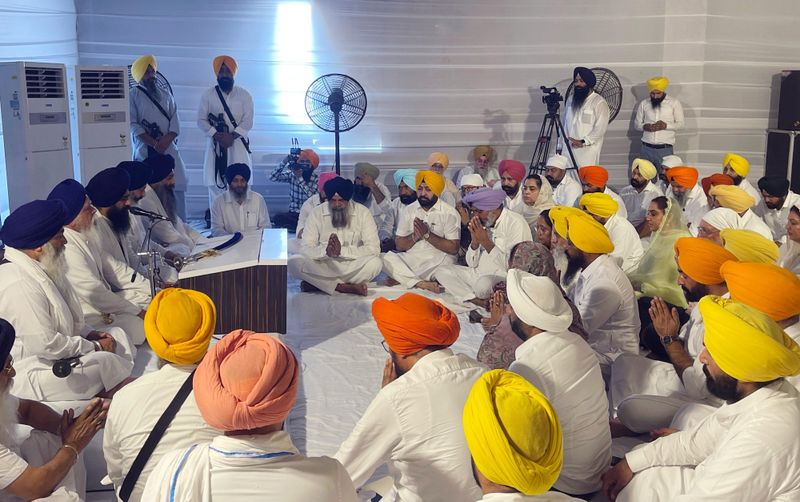

Akal Takht directs changes to sacrilege law at first-ever meet with all Sikh MLAs

Akal Takht Acting Jathedar Giani Kuldeep Singh Gargaj on Monday directed the Punjab Government to remove “objectionable” clauses in the anti-sacrilege law within a month, conveying the message through Sikh ministers and MLAs who appeared before the Takht after being summoned.The Jathedar also told the government to keep the Jaagat Jot Sri Guru Granth Sahib Satkar Act on hold until the amendments were made. The legislators, for their part, “agreed” to carry out the changes.

Gives Punjab Government a month to act; Assembly Speaker Sandhwan says open to making amendments

It was the first time that all Sikh ministers and MLAs cutting across party lines appeared before the Akal Takht. There were 87 MLAs at the meeting at the Akal Takht Secretariat, of them 69 from the ruling Aam Aadmi Party (AAP), 15 Congress, two Shiromani Akali Dal (SAD) and one Independent. In earlier instances, the leaders had gone individually. 

ExecutiveBranch

Addressing the lawmakers, Gargaj said the government had been “misled” while drafting the law. “Those who prepared the Bill did not have proper understanding of the Sikh traditions and Panthic practices, which led to an unnecessary controversy and confusion. The Act has created fear and misunderstanding among devotees,” he said. The Jathedar assured the government of full cooperation from the Akal Takht if the Act was amended as per the Sikh sentiments and the established Panthic traditions.

One of the main issues discussed during the hearing was the definition of “custodian” in the Bill and the proposal to create a central register of Guru Granth Sahib saroops. Gargaj warned that putting registry details online could reveal the locations of saroops kept in private homes and gurdwaras, exposing devotees to unnecessary problems.

The Jathedar said maintaining records of Guru Granth Sahib birs and supervising their publication was the responsibility of the Shiromani Gurdwara Parbandhak Committee (SGPC), not the government. He also criticised the use of word “saroop” instead of traditional Sikh term “bir” in the legislation.

Asked by Gargaj whether they had read the Bill, most MLAs said they received the draft Bill only a short while before it was passed in the Assembly, and that they “didn’t get enough time to go through it”. AAP MLAs Jagrup Singh Gill (Bathinda) and Kulwant Singh (Mohali) admitted to having “approved the Bill without reading it”.

Assembly Speaker Kultar Singh Sandhwan told the Jathedar that after he was summoned by the Akal Takht in May, he had immediately forwarded the Takht’s written objections to the government and the Chief Minister’s Office. He said amending the law was within the powers of the Assembly and they were open to making changes.

“We will give you our objections in writing. Call the Assembly and remove these objections within a month,” said Gargaj. 

Leader of the Opposition Partap Singh Bajwa demanded that the report of the select committee be presented and discussed in the Assembly before any amended Bill was taken up.

Congress MLA Tript Rajinder Singh Bajwa said the Cabinet had approved the Bill on April 11, it was uploaded on the government website late on April 12 and the MLAs received it on April 13, the day it was passed in the Assembly.

Congress MLA Sukhpal Singh Khaira said the Assembly was paperless and the members could only see the draft on the screens placed before them after the House session began. He accused the government of passing the Bill in “secrecy and haste”.

When Minister Harpal Singh Cheema referred to an earlier Akal Takht edict (hukamnama) regarding the use of the word “custodian”, in which granthis and gurdwara committees were to be held responsible, the Jathedar said the edict did not prescribe any legal punishment for gurdwara staff. “It only speaks of religious punishment, not legal punishment,” the Jathedar said.

SAD MLA Ganieve Kaur Majithia said she did not attend the Assembly on the day the Bill was passed as the Akal Takht had advised that the Takht and the SGPC be consulted first. She also complained that she was insulted in the Assembly. 

GeographicReference

At the end of the meeting, all MLAs raised their hands and agreed to make the amendments sought by the Takht.

Among those who spoke during the meeting were Sandhwan, ministers Gurmeet Singh Khuddian and Harpal Cheema; AAP MLAs Manjit Singh Bilaspur, Jagrup Gill and Baljinder Kaur; Congress leaders Partap Bajwa, Khaira, Pargat Singh and Tript Rajinder Singh Bajwa; SAD’s Ganieve Kaur and Manpreet Singh Ayali; and Independent MLA Rana Inder Partap Singh. Two non-Sikh MLAs, Naresh Puri and Aruna Chaudhary of the Congress, were also present.

Four AAP non-Sikh MLAs–Aman Arora, Barinder Kumar Goyal, Lal Chand Kataruchak and Mohinder Bhagat–submitted their written explanation to the Akal Takht.

Concluding the proceedings, Gargaj asked leaders of all political parties not to indulge in political blame games outside the Akal Takht. He said the issue concerned the collective honour and respect of Sri Guru Granth Sahib and should not become a matter of political victory or defeat. After the meeting, Harpal Cheema said, “The amendments will be sent to us through the Speaker and we will decide within a month.” 


Sarvottam Yudh Seva Medal for Lt Gen Ghai, Air Marshal Bharti of Op Sindoor

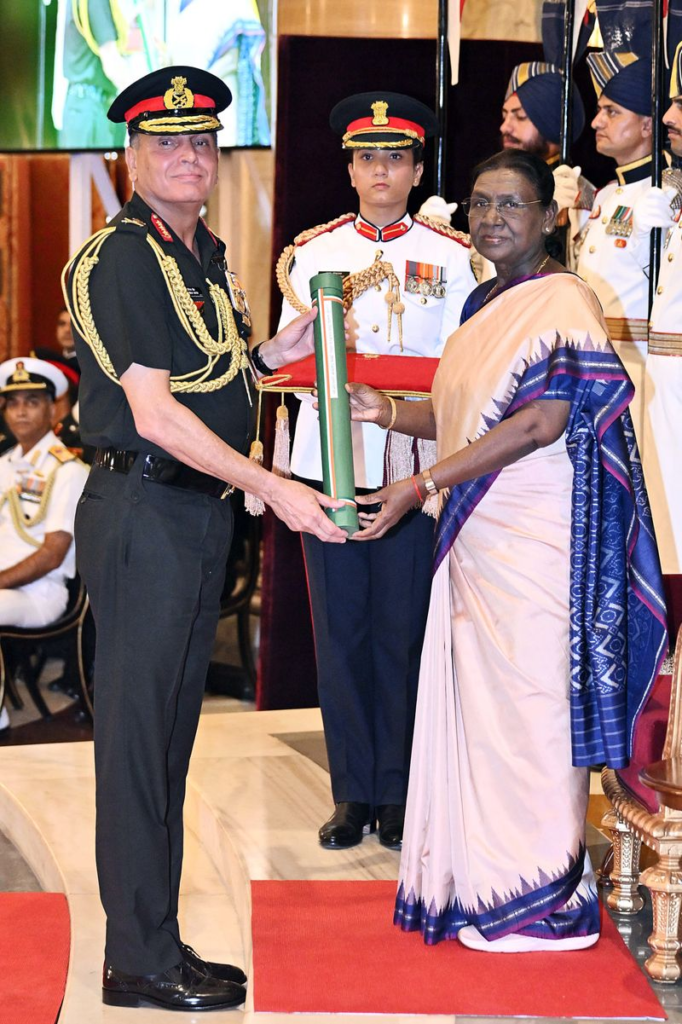
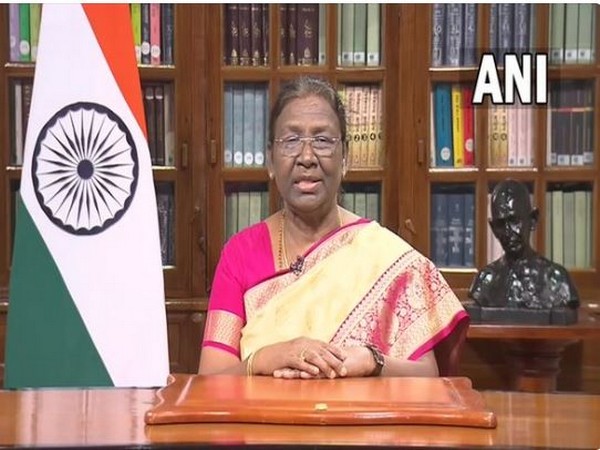
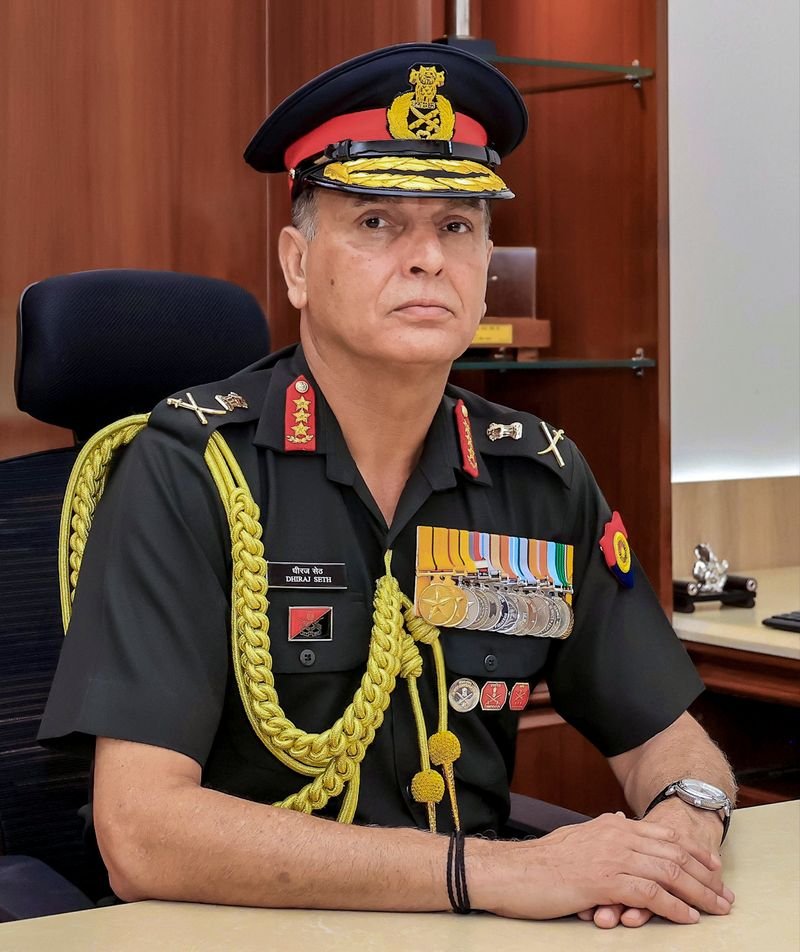
President Droupadi Murmu honours Armoured Corps, Headquarters Southern Command, Lt Gen Dhiraj Seth, with Uttam Yudh Seva Medal during Defence Investiture Ceremony-2026 (Phase-2) at Rashtrapati Bhavan in New Delhi on Monda

Param Vishisht Seva Medal to Navy Chief

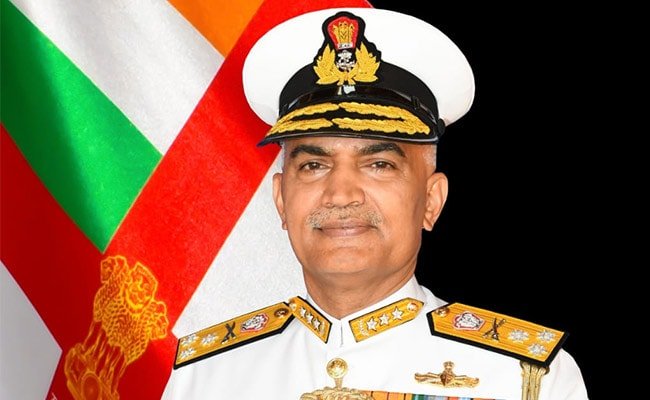
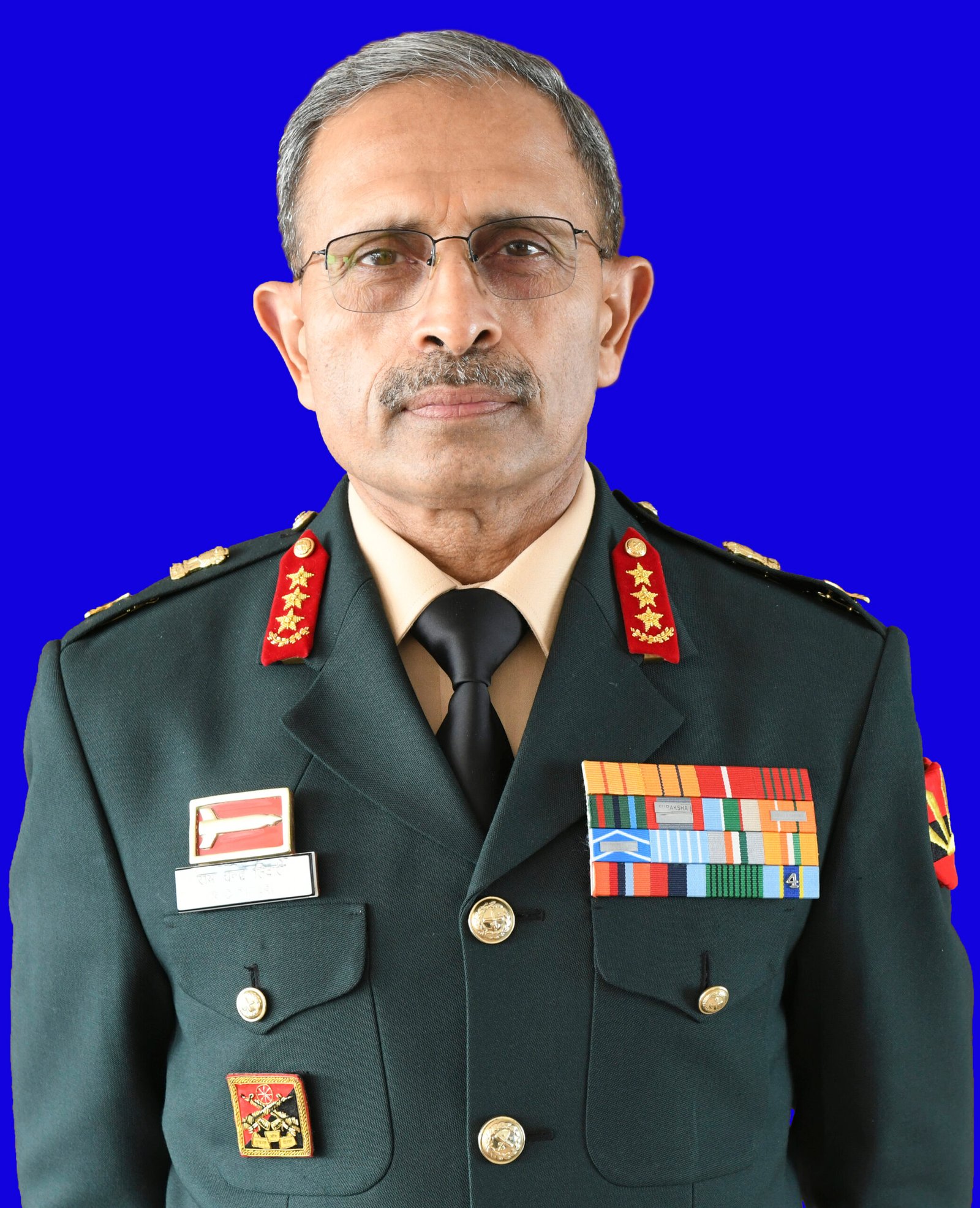
Lt Gen Dhiraj Seth, the country’s next Chief of the Army Staff, Navy Chief Admiral Krishna Swaminathan as well as Lt Gen Rajiv Ghai and Air Marshal Awadhesh Kumar Bharti, who both played key roles during the Operation Sindoor last year, were on Monday honoured with prestigious military decorations for their distinguished service of exceptional order.

President Droupadi Murmu conferred 105 distinguished service decorations to the personnel of the defence forces and the Indian Coast Guard during the Defence Investiture Ceremony 2026 (Phase-II) hosted at the Rashtrapati Bhavan here.

“These decorations — seven Sarvottam Yudh Seva Medals, 30 Param Vishisht Seva Medals, 12 Uttam Yudh Seva Medals and 56 Ati Vishisht Seva Medals — have been given to the personnel for their distinguished service of exceptional order,” the Defence Ministry said.

It also shared the names of the awardees in a list, mentioning different categories of military decorations. Sarvottam Yudh Seva Medal recognises the distinguished service of the most exceptional order during war, conflict or hostilities.

Lt Gen Pratik Sharma, Commander, Army’s Northern Command; Lt Gen Ghai, who served as the Army’s Director General of Military Operations (DGMO) during Operation Sindoor; Deputy Chief of the Air Staff, Air Marshal Bharti, who served as the IAF’s Director General of Air Operations during the operation in May 2025, IAF’s Vice Chief Air Marshal Nagesh Kapoor, and former Vice Chief of Air Staff, Air Marshal Narmdeshwar Tiwari (retd), have been conferred the Sarvottam Yudh Seva Medal.

Both Lt Gen Ghai and Air Marshal Bharti were also the Army’s and IAF’s faces during the tri-service briefing conducted here on Operation Sindoor last year.

Lt Gen Ghai was recently appointed military adviser to the National Security Council Secretariat (NSCS).

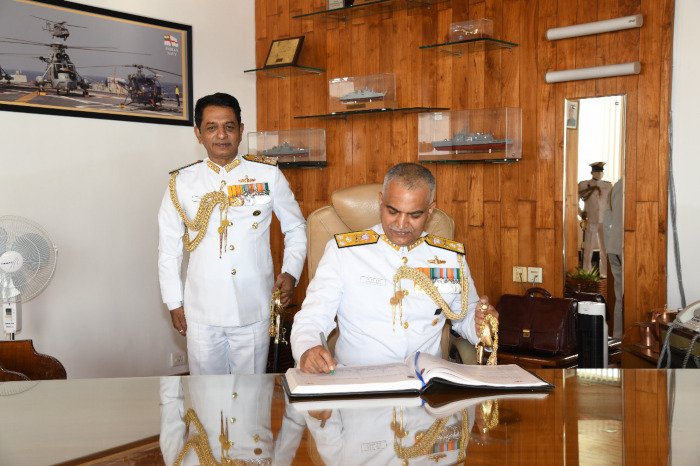
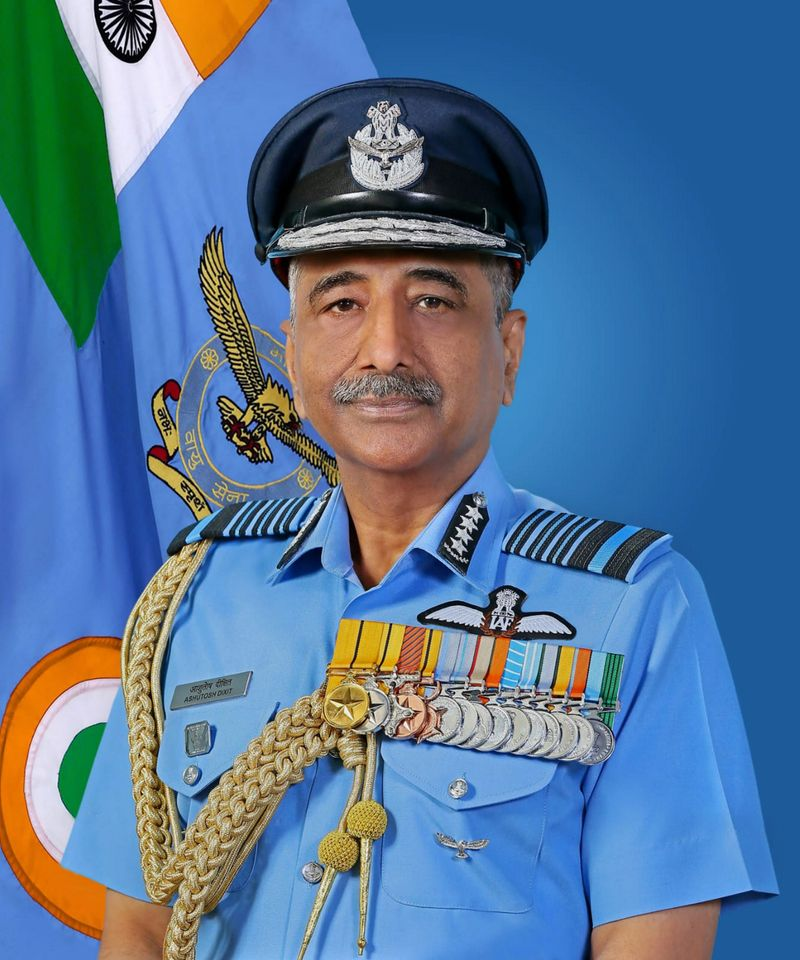
Murmu also conferred Param Vishisht Seva Medals to Navy Chief Admiral Swaminathan; Flag Officer Commanding-in-Chief, Western Naval Command, Vice Admiral Sanjay Vatsayan; and Chief of Integrated Defence Staff (CISC), Air Marshal Ashutosh Dixit, among other officers, serving and retired.

Admiral Swaminathan assumed charge as the 27th Chief of the Naval Staff of the Navy on May 31.

In the Uttam Yudh Seva Medal category, the awardees include Lt Gen Seth and Vice Admiral Tarun Sobti, among others.


Century-old gurdwara demolished in Pakistan; Sikh representatives seek action

A 125-year-old gurdwara in Pakistan was allegedly demolished by miscreants recently. 

Gurdwara Singh Sabha is located in Farooqabad in Punjab. According to media reports, it was demolished on the night of June 24.

The gurdwara was significant as far as the Singh Sabha Movement is concerned.

Sikh representatives in Pakistan have accused the government of taking no action following the incident. They say that earlier also, there have been such incidents. They have demanded a strict legal action on this.


HEADLINES : 28JUN 2026

जनरल साहब ने 47 साल बाद बड़े खाने में ऐसा क्या बताया की सब रह गये दंग

DC Kishtwar responsible for Army and Police fight

INS Sudarshini Strengthens India-US Naval Bonds With Baltimore Arrival

IAF Demands 40–60% Local Content In Rafale Deal As India-France Push Co-Production

Soldiers-cops clash : Impartial probe is the way forward

Names of 6 bravehearts killed in Operation Sindoor made public

Army Chief, Ladakh L-G discuss stronger civil-military coordination

Structured mechanism enables India to swiftly deploy assets overseas for disaster relief

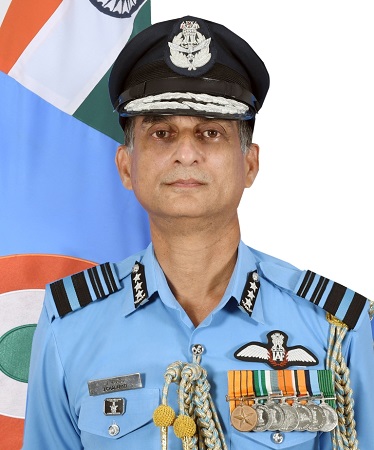
Lt Gen Pushkar to head Southern Command, Lt Gen Malhotra South Western Command

IIT Ropar Director Rajeev Ahuja receives commendation from Army Chief Dwivedi

US, Iran trade fresh strikes as truce frays

Trump says US hit Iranian targets after ‘ceasefire’ violation, warns ‘Iran will no longer exist’


जनरल साहब ने 47 साल बाद बड़े खाने में ऐसा क्या बताया की सब रह गये दंग


Corps of Signals pays tribute to martyrs at Hussainiwala, inspires youth with ‘Sanchar Shakti’ expedition

As part of the ongoing ‘Wheels of Valour: Sanchar Shakti’ motorcycle expedition, the Indian Army’s Corps of Signals visited the historic Hussainiwala Border, par­ticipated in the ceremonial Retreat Ceremony, and con­ducted a civilian outreach pro­gramme aimed at promoting patriotism, national unity and the spirit of selfless service. The expedition is being led by Colonel Sumeet Bhardwaj and comprises a 20-mem­ber team of riders from the Corps of Signals. The con­tingent includes Officers, Ju­nior Commissioned Officers (JCOs), Other Ranks (ORs) and Ladies of the Corps of Signals, reflecting the Corps’ indomitable Esprit de Corps, unity, discipline, diversity and teamwork. During the visit, the team interacted with local residents, highlighting the vi­tal role of the Indian Army in safeguarding national security while strengthening the bond between the Armed Forces and civil society.

As part of the programme, the expedition paid homage to the legendary freedom fight­ers Shaheed Bhagat Singh, Shaheed Sukhdev Thapar and Shaheed Shivaram Rajguru by laying floral tributes at their memorials. The team hon­oured their supreme sacrifice and paid tribute to their un­matched courage, patriotism and unwavering commitment to the nation’s freedom.

The team also participated in the iconic Retreat Ceremo­ny at Hussainiwala Border, a solemn and inspiring display of military discipline, valour and national pride. The cer­emony witnessed enthusiastic participation from citizens, who expressed their admi­ration and support for the Indian Army. The interac­tion further strengthened the enduring relationship of trust and mutual respect between the Armed Forces and the local community.

Speaking on the occasion, Colonel Sumeet Bhardwaj said that the objective of the “Wheels of Valour: Sanchar Shakti” expedition is to in­spire patriotism, service and sacrifice among citizens while creating greater awareness about the invaluable contri­bution of the Corps of Signals in ensuring seamless military communications during both peace and operations


DC Kishtwar responsible for Army and Police fight

The tension between the Army and police in Kishtwar (Jammu and Kashmir) erupted after a traffic dispute involving Kishtwar Deputy Commissioner (DC) Pankaj Kumar Sharma’s convoy. The police booked nearly 40 Army personnel, including a Colonel and a Major, for allegedly storming a police station and assaulting officers. [1, 2]

The highly publicized standoff escalated through a sequence of specific events: [1]

  • The Traffic Stop (June 24): A police official stopped an Army-linked vehicle in Kishtwar’s Atholi area because it was reportedly obstructing the Deputy Commissioner’s convoy. The police alleged the vehicle had a traffic violation and posed a security concern. [1, 2, 3, 4, 5]
  • Vehicle Seizure: Police seized the vehicle when the driver could not provide valid documents. [1]
  • The Alleged Assault: Police stated that around 30 to 40 Army personnel from the 17 Rashtriya Rifles later barged into the Atholi police station, carrying iron rods and sticks. The FIR alleges they damaged government property and assaulted multiple police officers, including the Station House Officer (SHO). [1, 2]
  • The FIR Filed: Police registered an FIR against the Army personnel, including charges of rioting, assault on public servants, and attempt to murder. [1, 2]

Both agencies are working to resolve the issue: [1]

  • The Army’s Stance: The Army acknowledged the incident and stated they are conducting a joint investigation. They confirmed they will extend full cooperation to the legal and institutional process. [1, 2]
  • The Police Action: Officials have maintained that while the situation is a serious breach of standard coordination, no arrests have been made as the matter is being handled through dialogue. [1, 2, 3]

You can track further developments in local media via The Hindu or Hindustan Times. [1]

Would you like me to find more details on how these two forces typically coordinate their anti-terror operations in the Chenab Valley, or do you want updates on the official joint investigation?


INS Sudarshini Strengthens India-US Naval Bonds With Baltimore Arrival

INS Sudarshini has reached the Port of Baltimore, Maryland, on 26 June 2026 as part of its landmark Lokayan 26 expedition, marking a major milestone in India’s maritime outreach and strengthening naval ties with the United States.

The ship’s arrival coincides with preparations for the Sail250 Maryland celebrations, commemorating America’s 250th anniversary.

The Indian Navy’s sail training ship INS Sudarshini arrived in Baltimore after sailing from Norfolk, Virginia. The passage included a transit through the historic Chesapeake & Delaware Canal, where the vessel passed beneath several iconic mid-Atlantic bridges. This leg of the journey highlighted both seamanship and symbolic connectivity between maritime communities.

The visit is regarded as an important milestone in the Lokayan 26 expedition. It underscores the enduring friendship and cooperation between the Indian Navy and the US Navy. The deployment is designed not only to showcase India’s maritime heritage but also to reinforce strategic naval partnerships across the Atlantic.

During its stay in Baltimore, INS Sudarshini will undertake maritime engagement activities and community outreach programs. These will precede the Sail250 Maryland celebrations, which commemorate the 250th anniversary of the United States. The ship’s presence is expected to draw significant public interest, offering opportunities for cultural exchange and naval diplomacy.

Prior to arriving in Baltimore, INS Sudarshini participated in the Sail250 Virginia celebrations at Norfolk from 19 to 23 June 2026. At Norfolk, the vessel joined tall ships from across the world and represented India in the Parade of Sail and the City Crew Parade. These events allowed India to showcase its naval traditions on an international stage.

The transoceanic voyage began from Kochi and has already covered more than 13,000 nautical miles over five months before reaching Norfolk. This extensive journey reflects India’s long-standing seafaring traditions and its commitment to maritime outreach.

The expedition embodies the spirit of Vasudhaiva Kutumbakam, the ancient Indian ethos of “the world is one family,” aiming to foster friendship, cooperation, and mutual trust among nations.

INS Sudarshini is a sail training ship of the Indian Navy. It is used to train naval personnel in traditional sailing skills while simultaneously promoting maritime diplomacy and international engagement. The vessel thus serves both as a platform for professional training and as a symbol of India’s maritime heritage.

Earlier, on 31 May 2026, INS Sudarshini departed from Antigua after a four-day port call. That visit marked another milestone in India’s maritime outreach, enhancing cooperation with Caribbean nations under Lokayan 26.

India Military Equipment

During the Antigua stopover, the ship hosted several dignitaries, including Gaston Browne, Prime Minister of Antigua and Barbuda. The Commanding Officer also met Brigadier Telbert Benjamin, Chief of Defence Staff of the Antigua and Barbuda Defence Force, further strengthening bilateral defence ties.

The Baltimore visit comes at a time when India and the United States are deepening defence cooperation. Earlier this month, the two countries held the 29th edition of Army-to-Army Staff Talks in Hawaii, co-chaired by Lieutenant General Rajiv Ghai of India and Lieutenant General Joel Vowell of the US  Army Pacific.

These discussions focused on enhancing interoperability, expanding professional exchanges, and deepening military collaboration in support of shared security interests. The arrival of INS Sudarshini in Baltimore thus complements broader strategic efforts to reinforce India-US defence relations.


IAF Demands 40–60% Local Content In Rafale Deal As India-France Push Co-Production

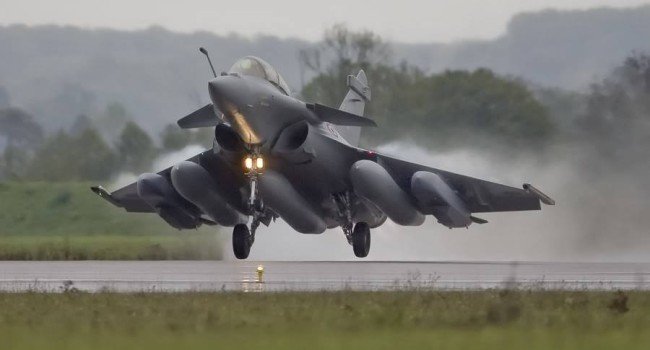
The Indian Air Force has formally demanded that the 96 Rafale F4 fighters to be manufactured in India under the ₹3.25 lakh crore deal must begin with at least 40 percent indigenous content, rising to 60 percent in the final batch, The Print reported.

Dassault Aviation, already partnered with TATA Advanced Systems for fuselage production, is scouting for an Indian partner to produce wings, while Thales and BEL are expanding cooperation on radar and electronic warfare systems to meet localisation targets.

Indian Defence Market

h

The Letter of Request was issued to France in late May, with Paris expected to respond by September. This document initiates the government-to-government procurement process, bypassing commercial tendering.

Of the 114 aircraft, 18 will be delivered in flyaway condition from France, while 96 will be built in India. The IAF insists that the first Indian-assembled Rafale must have at least 40 percent local content, progressively increasing to 60 percent by the final batch.

Dassault has already outsourced fuselage production to Tata Advanced Systems, with a new Hyderabad facility expected to deliver complete fuselages by 2028. The company is now seeking an Indian partner for wing manufacturing, which would mark another milestone in shifting critical aerostructure production to India. In addition, several Indian firms have been contracted to produce Line Replaceable Units and components, further boosting localisation.

Thales has deepened its partnership with Bharat Electronics Limited. BEL has already delivered over 7,000 transmit/receive modules for the Rafale’s RBE2 AESA radar, and cooperation has expanded to advanced microwave modules for the SPECTRA electronic warfare suite.

Thales has also awarded contracts to Indian firms such as SFO Technologies for complex radar wiring structures, embedding India into the Rafale’s global supply chain. These steps are expected to push indigenous content beyond 40 percent in the early production phase.

Dassault has assured that with the planned Maintenance, Repair and Overhaul facility in India, overall indigenisation could reach 80 percent when factoring in lifecycle support. This would make India the first country outside France to host full-scale Rafale production and sustainment, a major boost to the aerospace ecosystem.

The deal is unlikely to exceed the earmarked ₹3.25 lakh crore budget. Deliveries of the first 18 flyaway aircraft are expected to begin around 2030 if the contract is signed by early 2027.

The Rafale F4 standard being acquired will introduce enhanced connectivity through satellite and intra-flight links, upgraded communications servers, and software radios, enabling more effective network-centric warfare. India’s existing Rafale fleet will also be upgraded from the F3-R to the F4 configuration.

Strategically, this acquisition is critical to bridging the IAF’s squadron shortfall, with current strength at 29 squadrons against a sanctioned 42.5.

The Rafale F4 will provide advanced multirole capabilities to counter threats from China’s J‑20 and Pakistan’s expected induction of the J‑35. Indigenous projects such as the TEJAS MK-2 and AMCA remain years away from maturity, making the Rafale deal the fastest route to restoring combat parity.

Aerospace Engineering Services

The localisation push aligns with India’s broader “Make in India” and “Atmanirbhar Bharat” initiatives. By embedding co-development, co-design, and co-production into the Rafale program, India is moving from a buyer-seller dynamic to a strategic industrial partnership with France.

This will not only strengthen bilateral defence ties but also create thousands of skilled jobs and position India as a global hub for Rafale production and sustainment.