
All posts by webadmin
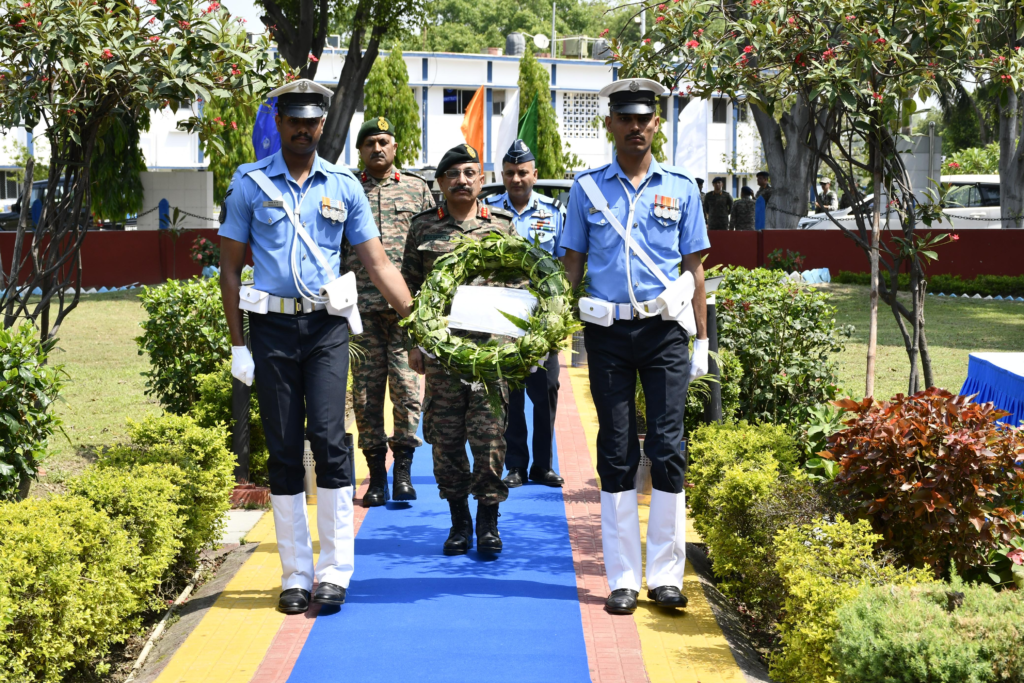
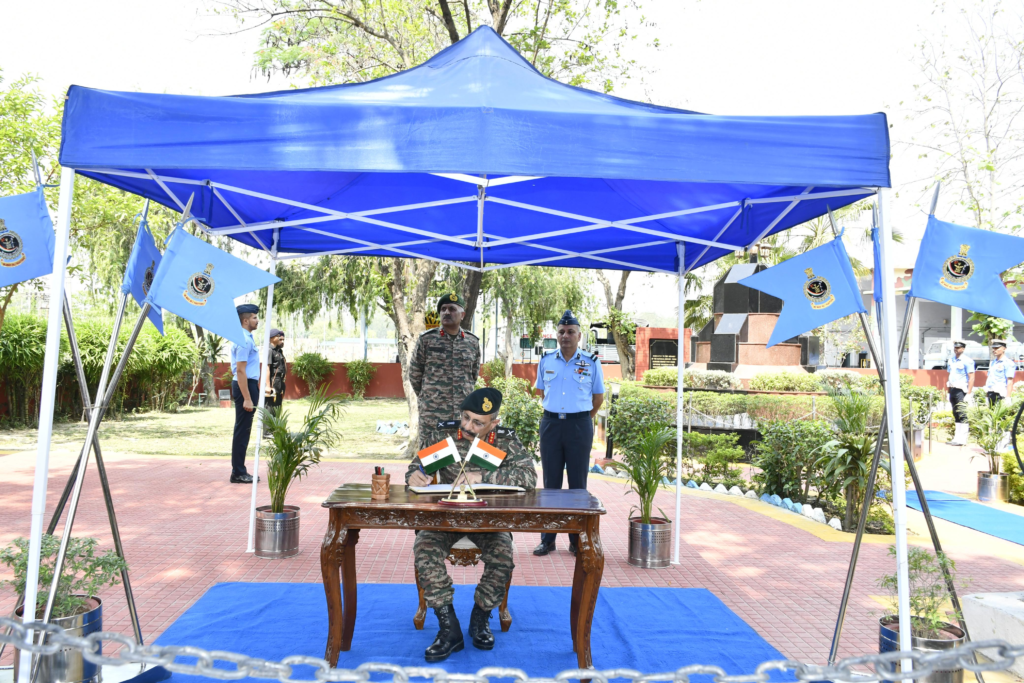
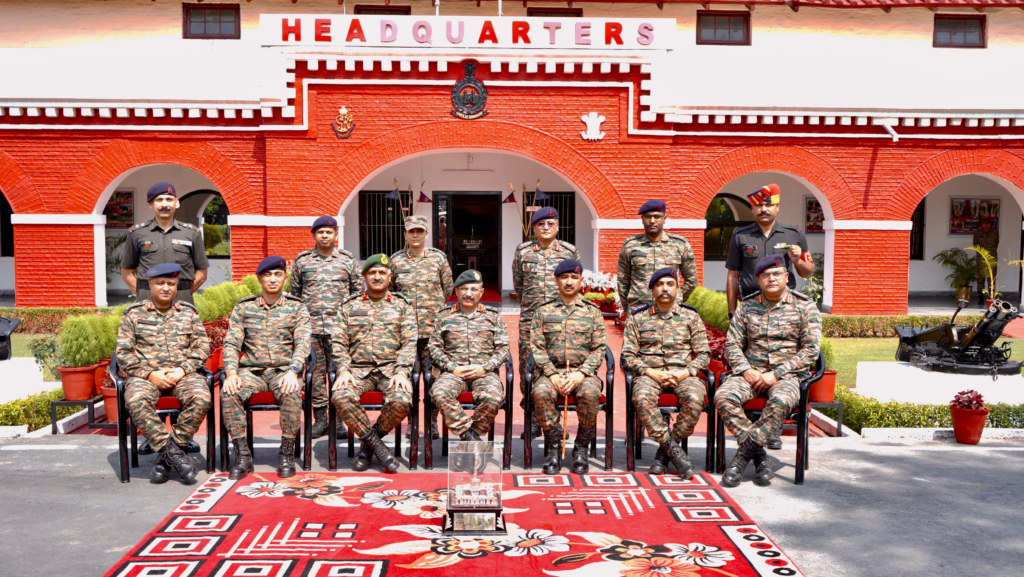
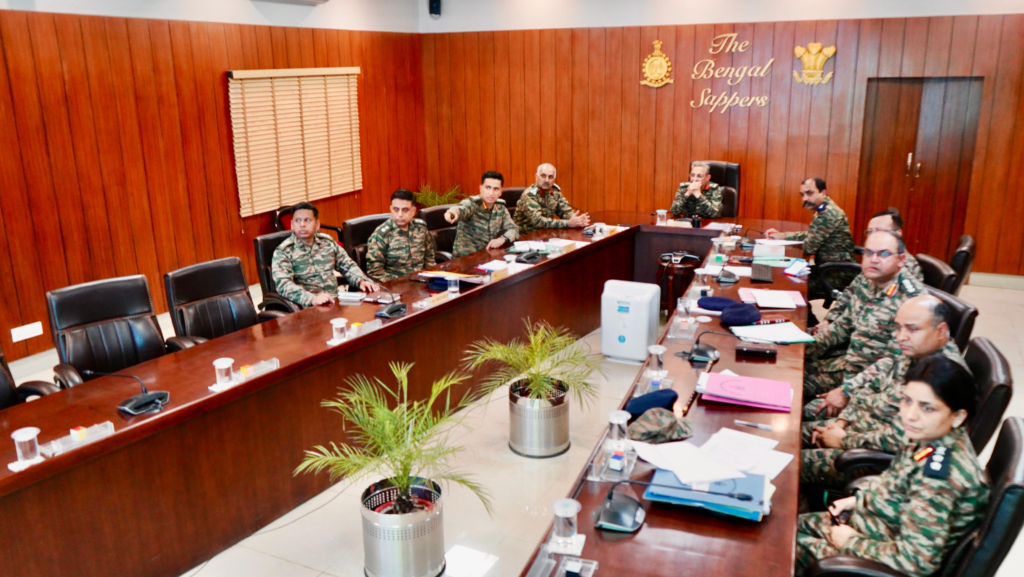
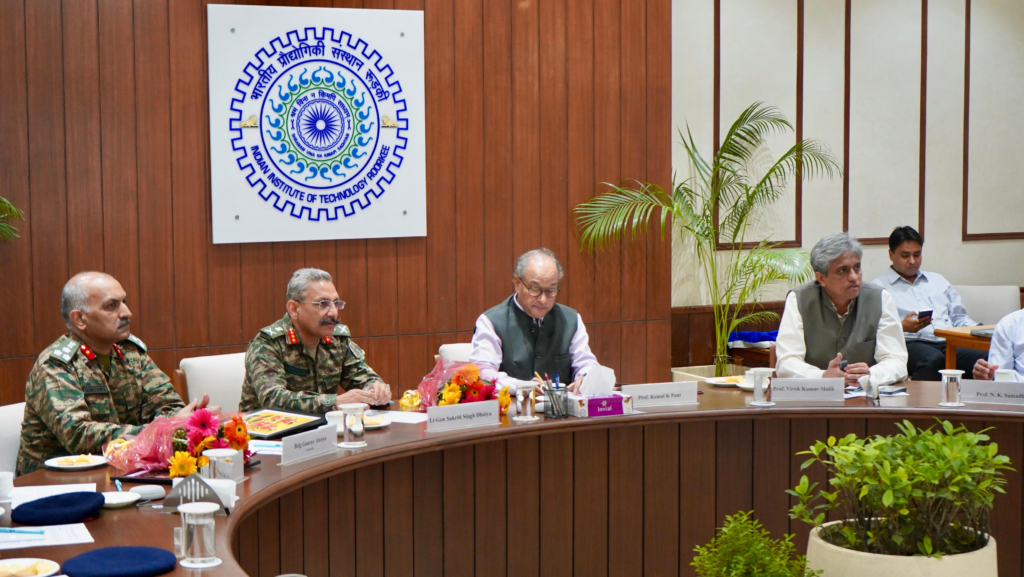
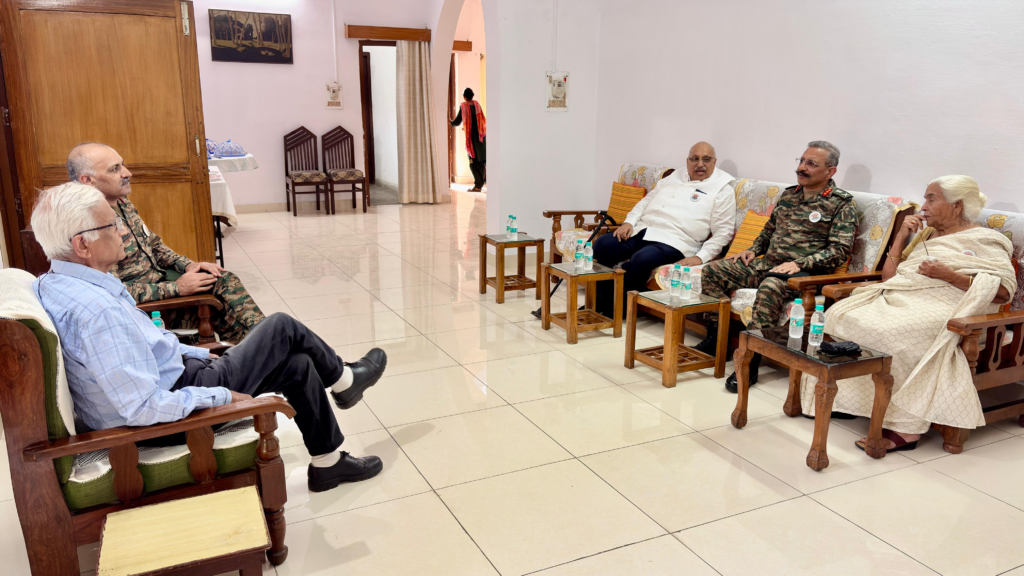
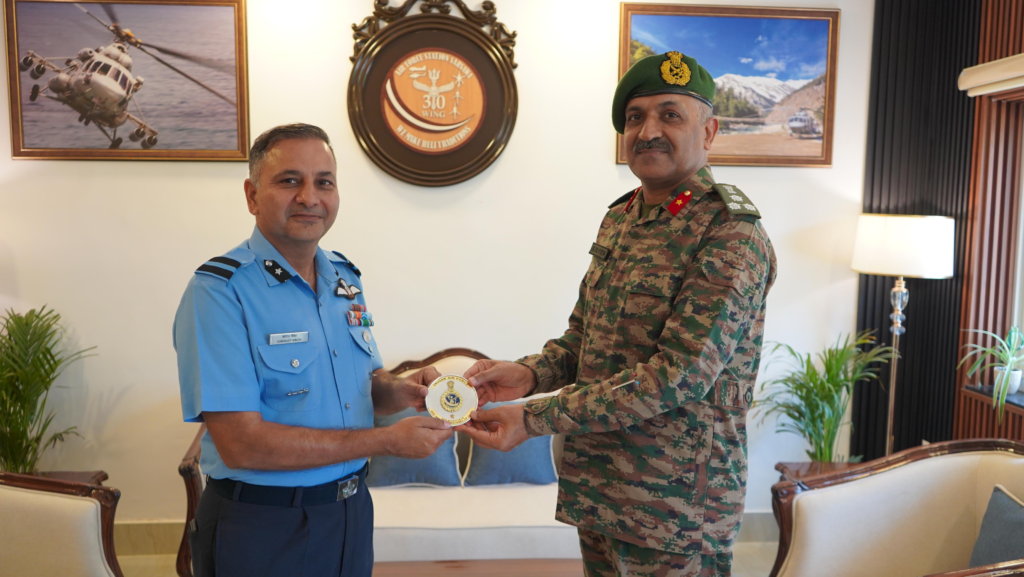
Col Comndt Bengal Sappers write about his visit to HQ BEG Gp & Centre & Airforce Station, Sarsawa.
I had a very fruitful visit to BEG & Centre yesterday. Primary objectives were to-
- Interact and exch views with the new Centre Comdt.
- Interact with all COs & OsC of Bengal Sappers & Mil Svy over video conf.
- Visit and view the actives of Soni Foundation Trust.
- Interact with our veterans.
- Enhance professional, academic and social exch between IIT Roorkee and BEG & Centre.
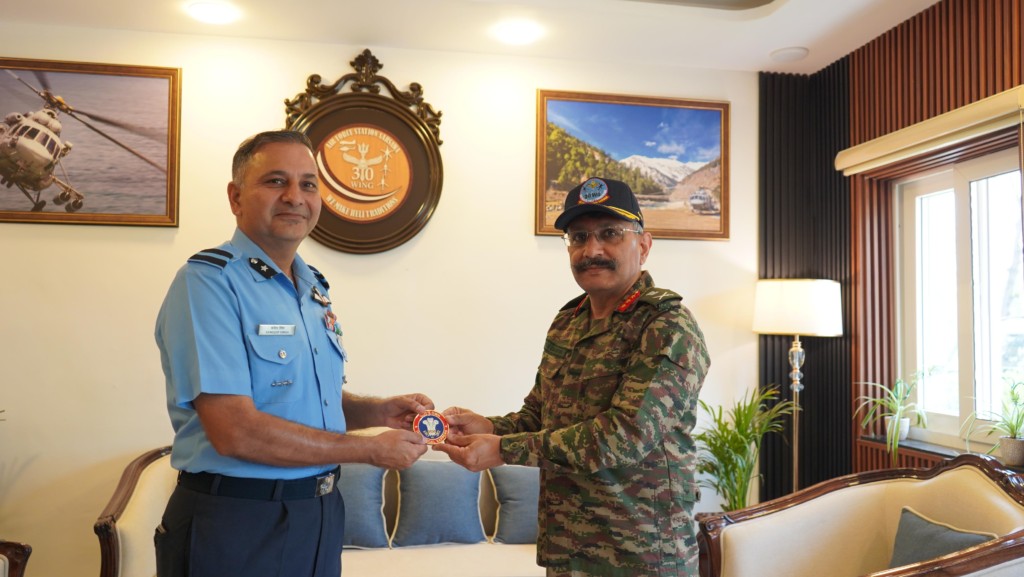
- Invigorate the fraternal bond with Airforce Station, Sarsawa.
Happy to say, we could achieve all of these over the course of last two days.
Reassuring to see the new Comdt has hit the grnd running and our Units are doing well. Soni foundation is living up to the noble cause.
The centre has an extremely healthy symbiotic relation with IIT Roorkee and spearheads IAs tech collaboration with them.
30 Wg, Sarsawa was a very warm rxn and educative tour- reassuring us of the continued bonhomie.
God bless Bengal Sappers
Lt Gen NS Raja Subramani appointed next CDS; Vice Admiral Krishna Swaminathan to be new Navy Chief
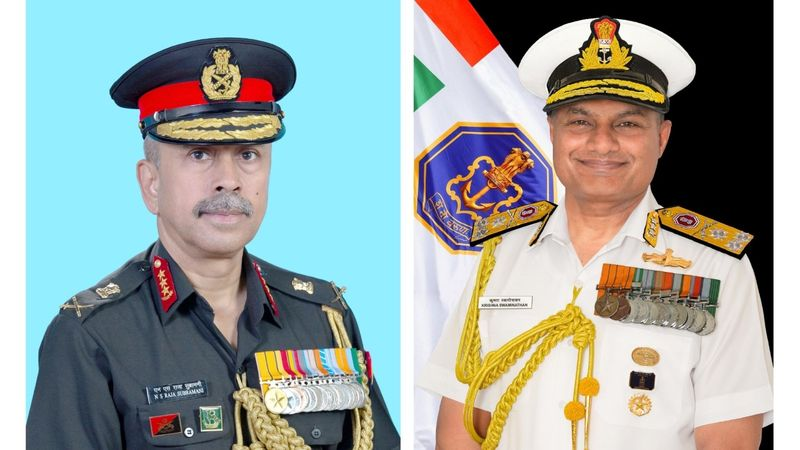
Lt Gen Raja Subramani will also serve as Secretary to government of India, Department of Military Affairs
Heartiest congratulations to Lt Gen N S Raja Subramani, PVSM, AVSM, SM, VSM (Retd),Former Vice Chief of the Indian Army on his appointment as the new Chief of Defence Staff (CDS). He succeeds Gen Anil Chauhan, PVSM, UYSM, AVSM, SM, VSM, who completes his tenure on May 30, 2026.
Lt Gen Subramani will also serve as Secretary to the Government of India, Department of Military Affairs. He is currently Military Advisor to the National Security Council Secretariat (NSCS) under the National Security Advisor.
The Government has also appointed Vice Admiral Krishna Swaminathan, the present Western Navy Commander, as the next Chief of the Indian Navy. He will succeed Admiral Dinesh Kumar Tripathi, who is retiring from service on May 31.
Vice Admiral Krishna Swaminathan
Both appointments were announced on Saturday morning.
The government order announcing the appointment of Lt Gen Subramani as CDS stated that he “will continue until further orders”.
As per existing rules, the CDS serves till attaining 65 years of age. The Government can also appoint retired officers of the rank of Lieutenant General to the post.
Lt Gen Subramani has in the past commanded the Central Army—tasked to the Line of Actual Control (LAC) in Himachal Pradesh and Uttarakhand.
After being appointed as CDS , he will also serve as Secretary, Department of Military Affairs. Lt Gen NS Subramani is currently serving as Military Adviser in the National Security Council Secretariat, a position he assumed charge on September 1 last year.
He was commissioned into the 8th Battalion of the Garhwal Rifles on December 14, 1985. He is an alumnus of the Joint Services Command Staff College in Bracknell. UK, and the National Defence College in New Delhi.
During his career, he commanded 16 Garhwal Rifles in counter-insurgency operations in Assam as part of Operation Rhino, 168 Infantry Brigade in Jammu and Kashmir, and 17 Mountain Division in the Central Sector during a challenging operational environment. He also commanded 2 Corps, the Indian Army’s premier strike corps on the western front.
He has also served as Defence Attache in Kazakhstan.
Meanwhile, Vice Admiral Krishna Swaminathan has been appointed the next Navy Chief. Commissioned into the Indian Navy on July 01, 1987, he is a specialist in communication and electronic warfare.
An alumnus of the National Defence Academy at Khadakvasla, the Joint Services Command and Staff College in Shrivenham, UK, the College of Naval Warfare at Karanja, and the United States Naval War College in Newport, Rhode lsland, Vice Admiral Swaminathan has held several key operational, staff and training appointments in his naval career.
He has commanded missile vessels INS Vidyut and INS Vinash, the missile corvette INS Kulish, the guided missile destroyer INS Mysore, and the aircraft carrier INS Vikramaditya.
Pak-China affairs expert Lt Gen Raja Subramani picked up as next CDS
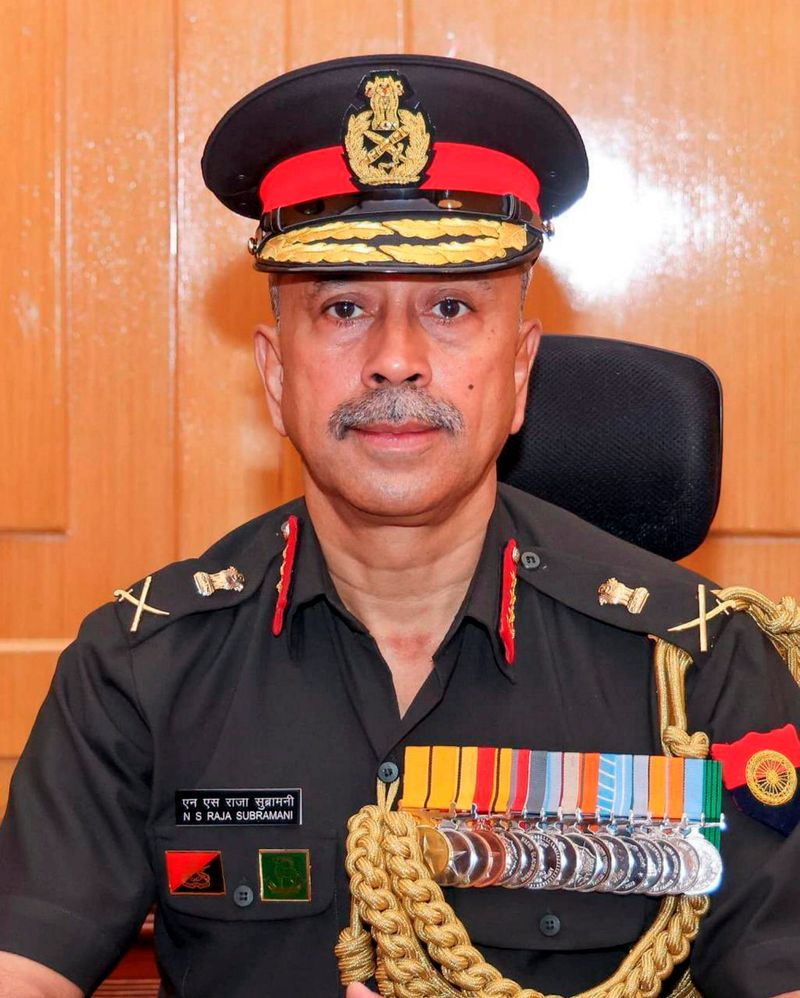
Army’s former Vice-Chief, Lt Gen NS Raja Subramani (retd), was on Saturday appointed the next Chief of Defence Staff (CDS). He will succeed Gen Anil Chauhan, who retires on May 31.
The government also appointed Vice Admiral Krishna Swaminathan, the current Western Navy Commander, as the next Navy Chief. He will succeed Admiral Dinesh Kumar Tripathi, who too retires on May 31.
The government order on the CDS appointment said Lt Gen Subramani “will continue until further orders”. Under the existing rules, the CDS serves till attaining the age of 65 years. The government can also appoint retired officers who have served in the rank of Lieutenant General as CDS.
Widely known as an expert on Pakistan and China, Lt Gen Subramani previously commanded the Central Command, which is responsible for the Line of Actual Control (LAC) in Himachal Pradesh and Uttarakhand.
As CDS, he will also serve as the Secretary, Department of Military Affairs. Lt Gen Subramani is currently serving as Military Adviser in the National Security Council Secretariat and assumed the charge on September 1 last year.
He was commissioned into the 8th Battalion of the Garhwal Rifles on December 14, 1985. He is an alumnus of the Joint Services Command and Staff College, Bracknell (UK), and the National Defence College, New Delhi.
During his career, he commanded 16 Garhwal Rifles in counter-insurgency operations in Assam under Operation Rhino, the 168 Infantry Brigade in Jammu and Kashmir and the 17 Mountain Division in the central sector during a challenging operational environment. He also commanded the 2 Corps, the Army’s premier strike corps on the western front. He has also served as Defence Attaché in Kazakhstan.

Vice Admiral Krishna Swaminathan
Vice Admiral Swaminathan was commissioned into the Navy on July 1, 1987, and is a specialist in communication and electronic warfare. He is an alumnus of the National Defence Academy, Khadakwasla; the Joint Services Command and Staff College, Shrivenham, UK; the College of Naval Warfare, Karanja; and the United States Naval War College, Newport, Rhode Island.
During his naval career, he has held several key operational, staff and training appointments, including command of the missile vessels INS Vidyut and INS Vinash, missile corvette INS Kulish, the guided missile destroyer INS Mysore and the aircraft carrier INS Vikramaditya.
Russia holds scaled-back World War 2 victory parade as worries over war in Ukraine deepen
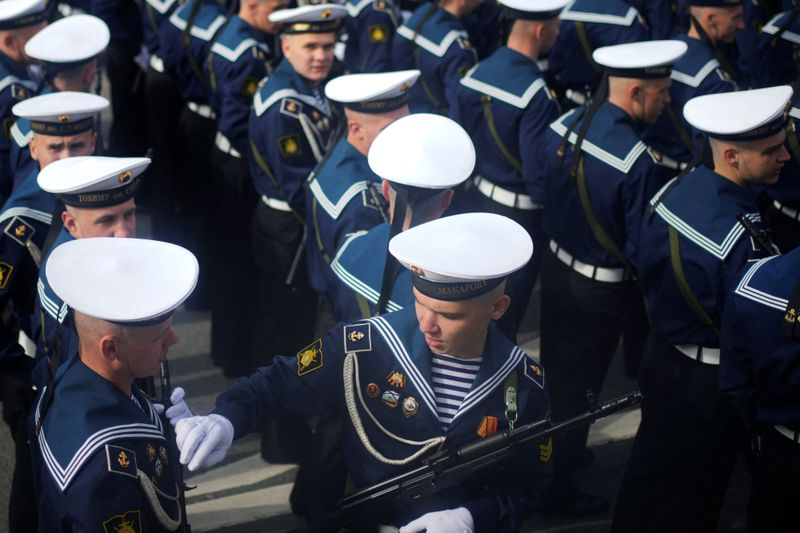
Russia holds its most scaled-back Victory Day parade in years on Saturday due to the threat of attack from Ukraine, where victory for Moscow’s forces has proven elusive more than four years into the deadliest European conflict since World War Two.
The May 9 parade on Red Square marks Russia’s most revered national holiday – a time to celebrate the Soviet Union’s victory over Nazi Germany and to pay homage to the 27 million Soviet citizens, including many from Ukraine, who perished.
Once used to show off Russia’s vast military, including its nuclear-capable intercontinental ballistic missiles, the parade this year will have no tanks or other military equipment rolling over the cobbles of Red Square.
Trump wants ‘big extension’ to ceasefire
Soldiers will still march and cheer in the shadow of Vladimir Lenin’s Mausoleum, fighter planes will fly above the towers of the Kremlin and President Vladimir Putin will make a speech before laying flowers at the tomb of the Unknown Soldier.
“In general, everything is as usual, except for the demonstration of military equipment,” Kremlin aide Yuri Ushakov told reporters.
After Russia and Ukraine accused each other of violating unilateral ceasefires they had each declared over recent days, US President Donald Trump announced a three-day ceasefire from Saturday to Monday that was supported by the Kremlin and Kyiv.
The two sides also agreed to exchange 1,000 prisoners.
“I’d like to see it stop. Russia-Ukraine – it’s the worst thing since World War Two in terms of life. Twenty-five thousand young soldiers every month. It’s crazy,” Trump told reporters in Washington.
He added that he would “like to see a big extension” of the ceasefire.
Russia, which invaded Ukraine in 2022, had warned that any attempt by Kyiv to disrupt Saturday’s event would lead to a massive missile strike on the Ukrainian capital. Moscow told foreign diplomats that they should evacuate Kyiv staff in the event of such an attack.
Ukrainian President Volodymyr Zelenskiy issued a tongue-in-cheek decree “allowing” Russia’s May 9 military parade to proceed and saying Ukrainian weapons would not target Red Square.
Security was tight in Moscow. Reuters pictures showed soldiers with guns atop pickup trucks and roads blocked around the centre of the capital, which along with the surrounding region has a population of 22 million.
War in Ukraine haunts Russia’s parade
After Nazi Germany invaded the Soviet Union in 1941, the Red Army eventually pushed Nazi forces back to Berlin, where Adolf Hitler killed himself and the red Soviet Victory Banner was raised over the Reichstag in May 1945.
Nazi Germany’s unconditional surrender came into force at 11:01 p.m. on May 8, 1945, marked as “Victory in Europe Day” by Britain, the United States and France. In Moscow it was already May 9, which became the Soviet Union’s “Victory Day” in what Russians call the Great Patriotic War of 1941-45.
But this year’s parade comes amid a wave of anxiousness in Moscow about the ultimate outcome of the conflict in Ukraine.
The war has killed hundreds of thousands of people, left swathes of Ukraine in ruins and drained Russia’s $3 trillion economy, while Russia’s relations with Europe are worse than at any time since the depths of the Cold War.
“The crisis is still deepening gradually, but any sharp movement can send the economy (and not only the economy) into a tailspin,” jailed pro-war Russian nationalist Igor Girkin, who has criticised the Kremlin for its conduct of the war, said in a post on Telegram.
Girkin, a former Federal Security Service officer, used a naval analogy to say that Russia’s leaders were more worried about being kicked out of their cabins than about a shipwreck.
Kremlin spokesman Dmitry Peskov dismissed CNN and other Western media reports that Putin’s protection had been intensified because of fears of a coup or assassination. Russian officials have dismissed reports of a coup plot as nonsense.
Just 21 years ago, Putin sat beside US President George W Bush at the Moscow parade, along with France’s Jacques Chirac and Chinese President Hu Jintao.
This year, Belarusian President Alexander Lukashenko, Malaysia’s King Sultan Ibrahim and Laos President Thongloun Sisoulith will attend.
Indian sailor killed in dhow fire near Strait of Hormuz
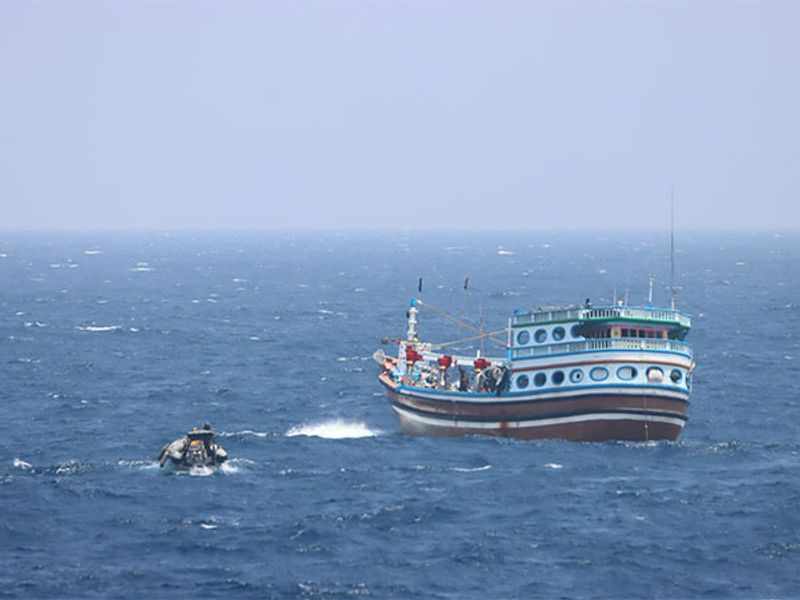
An Indian sailor was killed and several others injured after their wooden dhow caught fire near the Strait of Hormuz, government sources said on Saturday.
17 other Indian crew members were rescued following the incident on Friday, they said, noting that the exact cause of the blaze is still being ascertained.
The crew members were rescued by a vessel which was passing by in the area, the sources said.
The incident came amid increasing hostilities between Iran and the US in the Strait of Hormuz, a vital maritime chokepoint between the Persian Gulf and the Gulf of Oman through which a significant portion of the world’s oil supply passes.
“A wooden Dhow, carrying general cargo, with 18 Indian crew capsized yesterday close to the Strait of Hormuz after it caught fire,” said a source.
“In this incident, one Indian on the dhow died while four received burn injuries. The injured are receiving medical treatment in Dubai and are safe,” the source said.
Officials from the Indian Consulate in Dubai met the rescued Indian nationals last night, said another source.
The consulate is also in touch with the dhow owner and is extending all possible assistance, the sources said.
From trucks to tanks: How the Army is enhancing mobility of its Akashteer air defence system post-Op Sindoor
The Army is looking at procuring 83 indigenously manufactured systems, referred to as Carrier Air Defence Tracked (CADET), which would be fitted with Akashteer equipment to provide real time air defence control and reporting for self-propelled gun and missile units in mechanised formations
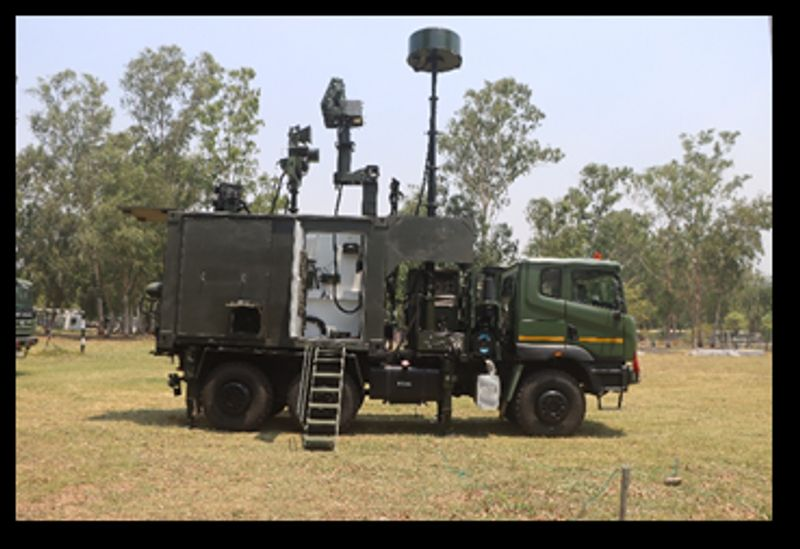
Following the success of the Akashteer air defence command and control system during Operation Sindoor a year ago, the Indian Army has drawn up plans to integrate these systems on tracked armoured vehicles that will enhance their cross-country mobility and enable them to keep pace with armoured formations during manoeuvres.
The Army is looking at procuring 83 indigenously manufactured systems, referred to as Carrier Air Defence Tracked (CADET), which would be fitted with Akashteer equipment to provide real time air defence control and reporting for self-propelled gun and missile units in mechanised formations, according to a request for proposal (RFP) issued by the Ministry of Defence (MoD) last week.
“Army Air Defence has a need for a common tracked platform for serving as a carrier for a number of current and future equipment for employment in support of mechanised platforms in various units. CADET is the planned common platform to meet the above-mentioned need,” the RFP states. It would be merged with the new generation Integrated Battlefield Management System (BMS) and the Identification of Friend or Foe (IFF) System giving a common operational picture.
The Army Air Defence, a combat support arm, is responsible for providing protective cover to field formations in the tactical battlefield area and point defence to static establishments, for which it is equipped with tracked and wheeled self propelled platforms as well as fixed weapon systems.
At present, the Akashteer system is based on canisterised trucks. Though it makes it mobile and enables quick redeployment to cater to emerging tactical situations, trucks have limited cross-country mobility and protection vis-a-vis armoured vehicles. The Army is already using modified BMP armoured fighting vehicles as command posts, radar carriers and for other specialist tasks.
Highly mobile air defence control and reporting assets, while providing field commanders with a real-time situational picture, also gives them greater operational flexibility to deal with threats in their immediate vicinity without having to depend upon rear echelons and thereby reducing the sensor-to-shooter loop.
Developed by Bharat Electronics Limited, Akashteer is a fully automated network of different radars and sensors, and forms the core of the Army Air Defence. According to the MoD, it had a near 100 percent success rate in detecting and intercepting Pakistani drones and missiles during Operation Sindoor.
Seamlessly connected with the IAF’s Integrated Air Command and Control System (IACCS) and Navy’s Trigun air defence network, it forms part of the broader C4ISR (Command, Control, Communications, Computers, Intelligence, Surveillance and Reconnaissance) framework. This enables quick and effective use of both offensive and defensive weapons. Because all three systems work together, it improves situational awareness and allows for precise, powerful action.
The CADET has been conceptualised as a high-powered tracked chassis with a suitable structure with space inside for comfortably accommodating a crew of at least five along with their personal weapons and the required technical components, as well as external attachment points for mounting various equipment and structures.
The equipment being considered for fitment on the CADET platform includes the Akashteer component, integrated drone detection and interdiction system, drone kill system and vehicle mounted counter-swarm drone system.
CADET will be deployed in all terrains like plains, deserts, semi-deserts and high altitude areas up to 16,000 feet, in temperatures ranging from minus 30 degrees Celsius to 50 degrees Celsius. It would be capable of operating both by day and night and equipped with navigation aids to facilitate cross country move.
Need to better capabilities in AI, autonomous systems: Rajnath Singh
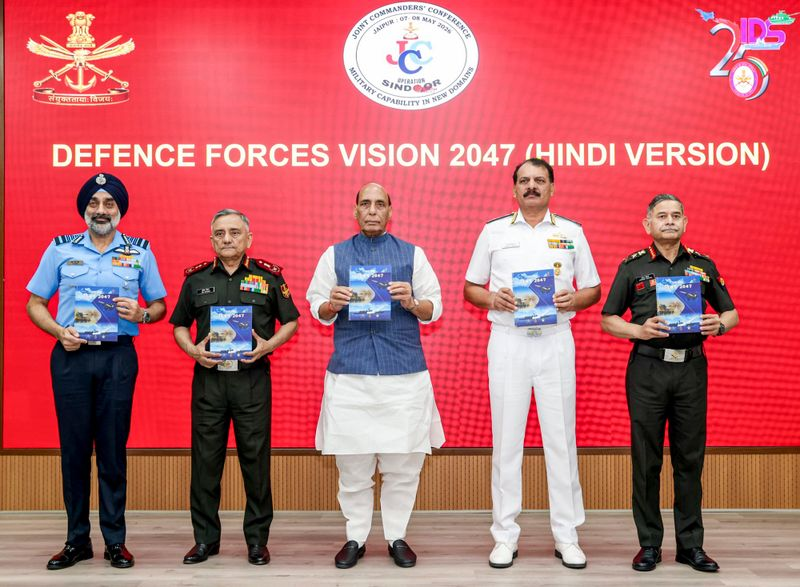
Defence Minister Rajnath Singh with CDS Gen Anil Chauhan, Army Chief Gen Upendra Dwivedi, Navy Chief Admiral Dinesh K Tripathi and IAF Chief Air Chief Marshal AP Singh in Jaipur. PTI
Defence Minister addresses Tri-Services Joint Commanders Conference at Jaipur
Marking the first anniversary of Operation Sindoor, the skirmish with Pakistan last May, Defence Minister Rajnath Singh today said there was a need to strengthen capabilities in artificial intelligence, autonomous systems, data analytics and secure communication networks.
The Defence Minister highlighted the transformative impact of emerging technologies and stressed on the importance of ensuring integrated national preparedness across all spectrums of conflict.
He was addressing the Tri-Services Joint Commanders Conference at Jaipur and emphasised that future conflicts would increasingly be shaped by hybrid threats, information dominance and operations conducted simultaneously across cyber, space, electromagnetic and cognitive domains.
On Operation Sindoor, he said it is a testament to the swift, precise and joint response of the Indian defence forces to safeguard national interests. He called upon the Commanders of the three Services to remain future-ready by learning from the operation as well as the current global security landscape.
He described Operation Sindoor as a short-duration, deep-penetration, high-intensity and high-impact operation which showcased India’s ability to compel its adversary to surrender. The operation was a demonstration of India’s growing capabilities and a symbol of the nation’s collective resolve and new military ethos, he added.
HEADLINES : 04 MAY 2026
46 years after having gone missing, soldier presumed dead by AFT; widow to get pension, arrears
HC imposes Rs 2L cost on Army Chief, Defence Secy for pension delay
Army officer suspended over custodial death in Punjab
Restore old pension, demands ex-paramilitary forces’ assn
Chandimandir Command Hospital’s first heart retrieval saves Sudanese boy’s life
Who is Lt Gen Balbir Singh, the new commander of Srinagar-based XV Corps
HOT AND COLD WAR
India must look beyond UAE’s OPEC exit
Iran has damaged 16 US military bases in ongoing West Asia conflict: Report
Bomb blast in Manipur on third anniversary of ethnic conflict; no casualty
Indian Navy Chief Admiral Dinesh K Tripathi in Myanmar to boost maritime ties
Army seeks industry solutions for tech gaps in combat systems
Nepal objects to India’s plans to conduct Kailash Mansarovar Yatra via Lipulekh
With no signs of resolution, protests mark 3rd anniversary of Manipur violence
India’s 1st pvt earth observation satellite placed in orbit
46 years after having gone missing, soldier presumed dead by AFT; widow to get pension, arrears

Om Prakash Pradeshi from Himachal Pradesh was enrolled in the Corps of Military Police in September 1969
About 46 years after a soldier went missing with no clues about his whereabouts and was later declared a deserter, the Armed Forces Tribunal (AFT) has ruled that he should be presumed dead and his widow would be entitled to pension and arrears from 1993, when she first approached the authorities for benefits.
The soldier, Om Prakash Pradeshi from Himachal Pradesh, was enrolled in the Corps of Military Police (CMP) in September 1969. When he went missing in November 1980, and in December 1983, after the stipulated three-year period, the Army declared him a deserter and dismissed him from service. Consequently, he or his next of kin were not granted pension.
The Tribunal’s Chandigarh Bench comprising Justice Umesh Chandra Sharma and Lt Gen Ranbir Singh held that there is no evidence that the Army or, on their directions, the civil authorities ever tried to search the individual as to whether he is alive or not and whether he was seen by anyone just before his disappearance. There is also no evidence that the individual is alive and is living or working somewhere else or he voluntarily abandoned his service.
Observing that after seven years from the date of missing, the presumption of death would arise under Section 108 of the Indian Evidence Act and there is not an iota of evidence that the individual was ever seen alive within 30 years, the prescribed period under the Act, the Bench said that it can be inferred that he was no more.
The Bench also rejected the claim of the respondents that Pradeshi is alive and he had voluntarily deserted the service. “In such a condition, the burden of proving that he is alive is shifted to the respondents who affirm his aliveness,” the Bench said.
Ruling that the court is of the considered view that it is not proved that the individual had the intent to desert or he was alive and even then he did not join the service, the Bench inferred that due to unavoidable circumstances and circumstances which were beyond his control, he could not join the service. Hence, he cannot be said to be deserter.
Holding that accordingly, the order of the Court of Inquiry declaring him deserter and on its basis, the order of dismissal from the service is liable to be held illegal and void, the Bench said that it is a direct example of the negligence of the authorities who never tried to search out the individual or take any pain for knowing his whereabouts.
“The order dated 03.12.1980 and 22.12.1983 regarding declaration of desertion and dismissal of the applicant’s husband Om Prakash Pradeshi along with the letter dated 23.09.2020 are hereby quashed. The applicant’s husband Om Prakash Pradeshi is presumed to be dead since 03.11.1987, after completion of seven years from the date of his missing,” the Bench ruled.
“As a result, the applicant is held entitled to all the service benefits obtained in colours and reserve and also the family pension in accordance with law. Since the applicant first sent the letter to CMP Records on 03.03.1993 and started claiming family pension and other monetary benefits hence, the applicant is entitled for the pension and other benefits as an NOK of a missing Army Personnel since then,” the Bench said.






























