With Chief of Defence Staff Gen Anil Chauhan set to hand over the baton to Lt Gen Subramani, executing transformational structural, administrative and operational changes tops the agenda
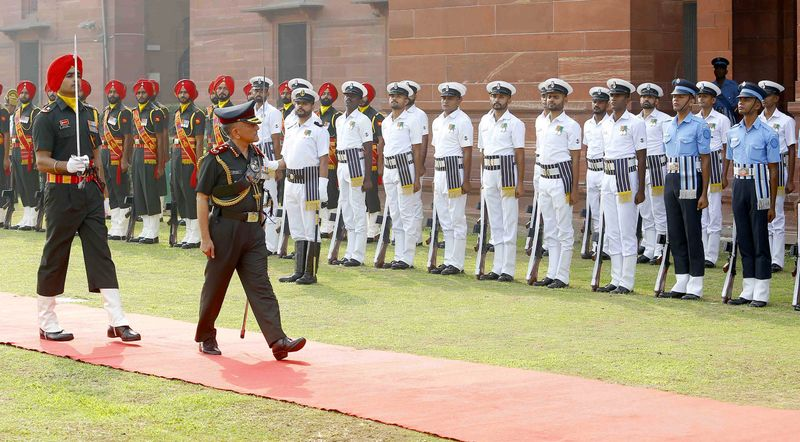
The incoming Chief of Defence Staff (CDS), Lt Gen NS Raja Subramani, takes over at a time when the Indian armed forces are sitting on the cusp of a technology-led transformation. His almost three-year tenure — that begins on May 31 —
Lanka airport lease near China-controlled port opens door for India
New Delhi is watching the new opportunity with keen interest as both neighbouring countries have sought to forge greater trade and strategic relations following Prime Minister Narendra Modi’s visit to the island nation last April.
ndia is closely monitoring Sri Lanka’s decision to offer foreign investors control of an airport near the China-controlled Hambantota port, as it could present a rare opening for Indian firms seeking strategic footholds in the Indian Ocean, people familiar with the matter said on Sunday.
The Sri Lankan government has already called for expressions of interest from domestic and international investors by June 9 to take control of the Mattala Rajapaksa International Airport (MRIA) in Hambantota under a 30-year build-operate-transfer (BOT) model.
In 2017, China gained control of the strategic Hambantota port through a 99-year lease that had raised concerns in New Delhi in view of the location of the mega transit hub.
New Delhi is watching the new opportunity with keen interest as both neighbouring countries have sought to forge greater trade and strategic relations following Prime Minister Narendra Modi’s visit to the island nation last April.
The Mattala Rajapaksa International Airport, located about 250 km from the capital Colombo, has endured a troubled first decade, the people said.
Launched in 2013 with grand ambitions, the project cost USD 209 million, funded primarily by China’s Export-Import Bank. However, despite having a swanky terminal building and a 3,500-metre runway, it failed to draw the passenger traffic and airline commitments required for commercial survival.
For years, the facility languished underutilised and mocked globally as the “world’s emptiest airport”.
Now, the Sri Lankan government has issued a fresh Expression of Interest (EoI), inviting strategic investors — domestic and international — to take over, operate and transform MRIA into a modern aviation hub.
The EoI presents two independent investment tracks. The first is aerodrome operations — a management contract for civil airport operations, requiring a minimum of five years’ relevant aviation experience or operation of at least one international airport handling over one million passengers annually, the people cited above said.
The second is landside operations, offered on a BOT model with a 30-year lease and extension provisions. It will provide for the development of 238 hectares of land, comparable in scale to the Chinese-developed Colombo Port City but without any of the political risks, they said.
The land parcel can be used for setting up maintenance, repair and overhaul (MRO) facilities, a flying school, logistics parks, solar installations, industrial parks and resort hotels.
Crucially, the two tracks are independent: investors can enter via landside operations alone, airside alone, or both — allowing meaningful flexibility to build a diversified, de-risked portfolio, the people said.
From India’s perspective, they said the project has a strategic dimension against the backdrop of China’s increasing attempts to expand its political and economic influence over the island nation.
“An Indian presence in Hambantota will be a tangible expression of India’s Neighbourhood First policy and Vision MAHASAGAR commitment to the Indian Ocean region, especially as a confidence-building investment in a close partner,” said one of the people.
Explaining the importance of the project, they said India’s aviation sector is the world’s fastest-growing and its MRO industry is under significant capacity pressure.
Mattala’s long runways, uncongested airspace and generous land footprint make it a natural candidate for an MRO hub serving Indian carriers, reducing turnaround times and costs while establishing a genuine Indian Ocean base, they said.
A flying school here makes equal sense: pilot training capacity in India is stretched and Mattala’s uncongested skies are an asset, not a liability, they noted.
The landside opportunity is also highly attractive as it includes 238 hectares of government-leased land perfect for industrial parks, logistics and solar projects, they said.
Because Sri Lanka is actively courting Indian investment and shares preferential trade access with India, a strategic opportunity like this is rare in the region, they added.
The new opportunity comes one-and-a-half years after a planned project close to Mattala by certain Indian investors didn’t fructify.
The previous government had nearly finalised a 30-year lease with an Indo-Russian joint venture anchored by Shaurya Aeronautics Pvt. Ltd, but the deal could not materialise following a change in the government.
The current EoI is a clean, fresh start, and the strategic logic is stronger than ever, the people said.
Last month, India’s state-run Mazagon Dock Shipbuilders Ltd (MDL) acquired a 51 per cent controlling stake in Sri Lanka’s Colombo Dockyard PLC, in a boost to its strategic presence in the Indian Ocean Region.
Located in the Port of Colombo, Colombo Dockyard PLC (CDPLC) gives MDL a foothold in the island nation.
US approves $428 million support services sale for India’s Apache helicopters, M777 howitzers
US State Department says proposed Foreign Military Sale includes long-term logistics, training and technical support for Apache helicopters and M777A2 howitzers, aimed at strengthening India’s defence capabilities
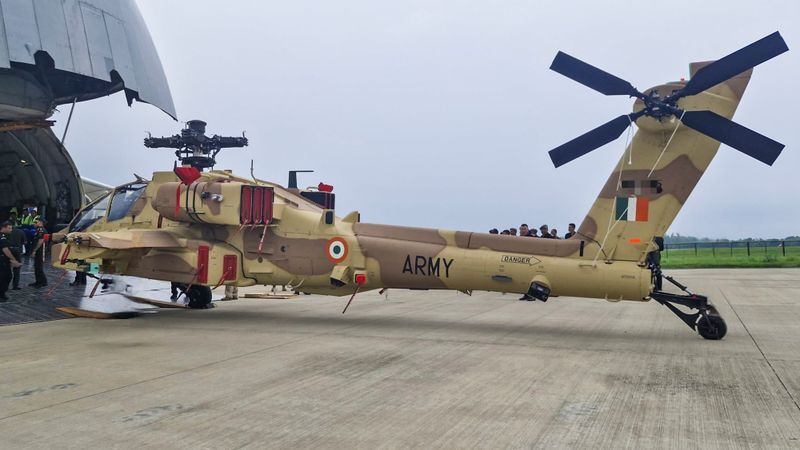
The US has approved the possible sale of support services and related equipment for Apache helicopters to India for an estimated cost of USD 198.2 million, the US Department of State said.
The Department of State also approved a possible sale of sustainment support for M777A2 Ultra-Light Howitzers for an estimated cost of USD 230 million.
The principal contractors for the Apache support services deal will be the Boeing Company and Lockheed Martin, the State Department said.
For the howitzers support, the principal contractor will be BAE Systems, located in Cumbria, UK.
The Department of State said India has requested to buy AH-64E Apache sustainment support services; US Government and contractor engineering, technical, and logistics support services; technical data and publications; personnel training; and other related elements of logistics and program support.
India had also requested to buy long-term sustainment support for M777A2 Ultra-Light Howitzers.
The following non-major defence equipment items will be included: ancillary items; spares; repair and return; training; technical assistance; field service representative; depot capability; and other related elements of logistics and program support, the Department of State said, referring to the support services for the howitzers.
The possible sale of support services for the helicopters and the howitzers will take place under the Foreign Military Sale channels.
The Department of State said the proposed sale of helicopters and howitzers will support the foreign policy and national security objectives of the US by helping to strengthen the US-Indian strategic relationship.
It will also help improve the security of a major defence partner, which continues to be an important force for political stability, peace, and economic progress in the Indo-Pacific and South Asia regions.
The proposed sales will improve India’s capability to meet current and future threats, strengthen its homeland defence, and deter regional threats.
India will have no difficulty absorbing these articles and services into its armed forces, the Department of State said.
The proposed sales of the equipment and support will not alter the basic military balance in the region. There will be no adverse impact on US defence readiness as a result of this proposed sale, the Department of State said.
PM Modi’s visit to Abu Dhabi was largely aimed at boosting President Sheikh Mohamed’s morale
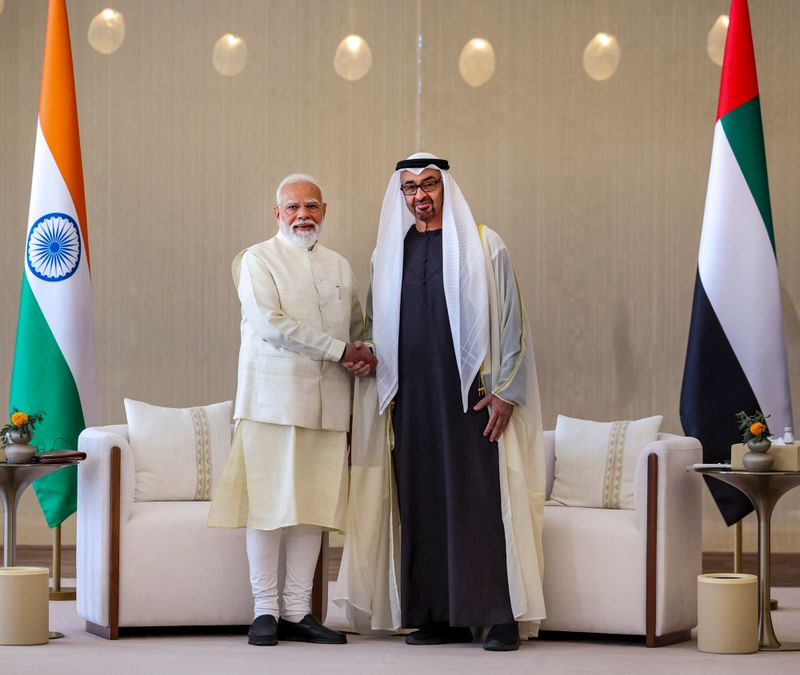
PRIME Minister Narendra Modi’s May 15 stopover in the United Arab Emirates (UAE) coincided with the conclusion of US President Donald Trump’s visit to China and the BRICS foreign ministers’ meeting in New Delhi. These developments took place under the shadow of the war in West Asia.
Two questions arise: How did the UAE get embroiled in the ongoing conflict? What was the purpose of PM Modi’s meeting with President Sheikh Mohamed bin Zayed Al Nahyan (popularly known as MbZ)?
Ever since seven emirates formed the UAE in 1971, it has been stuck between Iran, covering the entire northern Gulf coast, and Saudi Arabia — a self-proclaimed regional and Islamic power — in the south. In the 1950s, Sheikh Zayed bin Sultan Al Nahyan — who later became Abu Dhabi’s ruler and the UAE’s first President — confronted the Saudis when they offered him a bribe to grab the Buraimi belt, which was believed to have huge oil deposits. He led Abu Dhabi’s forces in ejecting them.
Sheikh Zayed used native wisdom to steer the UAE towards prosperity by avoiding entanglement in regional disputes like the Iran-Iraq war and the occupation of Kuwait by Iraqi President Saddam Hussein. After Sheikh Zayed’s death in 2004, his younger son Sheikh Mohamed bin Zayed Al Nahyan first became the Crown Prince and then the de facto ruler when the elder son, Sheikh Khalifa, suffered a stroke in 2014. Sheikh Mohamed formally assumed presidency in 2022.
Saudi Crown Prince Mohammed bin Salman had a parallel rise, assuming office in 2017. President Sheikh Mohamed took him under his wing, especially protecting him from US ire over journalist Jamal Khashoggi’s 2018 killing in Turkey.
However, their relationship soured when US President Trump came up with the 2020 Abraham Accords. They envisaged an Arab-Israel alliance to contain Iran, with the Palestinian issue sidelined. While the UAE promptly signed alongside Bahrain, the Saudis demanded that Israel first specify the path to Palestinian statehood. Trump withdrew the US from the Joint Comprehensive Programme of Action (JCPOA), the Iran nuclear deal signed by P5+Germany. That allowed Iran to escalate its nuclear enrichment. Meanwhile, the UAE increased its commercial, technological and military engagement with Israel.
After the October 7, 2023, attacks on Israel and the brutal Israeli retaliation against Gaza civilians, Arab countries’ membership of the Abraham Accords became questionable. Neither the UAE nor Bahrain withdrew. Late Iranian Supreme Leader Ali Khamenei called the UAE a “traitor to Arab states and to Palestine“, declaring that those hosting Zionists were living in “glasshouses”.
The UAE and Bahrain ignored these warnings. Once the US and Israel attacked Iran on February 28, the Iranian Supreme Leader’s “glasshouses” prediction came true. The Gulf Cooperation Council (GCC) has split into three groups, each aligned with the US. One group comprises Saudi Arabia, Egypt, Pakistan and Turkey. Qatar is attempting to be neutral. And then there is the UAE, stuck with the Israel-US axis. India favours the last two.
The Washington Institute for Near East’s 2023 poll revealed that 96% of the Saudis supported severing ties with Israel. The Saudi ruling family, running a country with a population of over 35 million, is more responsive to popular sentiments. The UAE’s nearly 11-million population has only one million locals. Economic and financial benefits are supposed to keep locals appeased. The 2011 Arab Spring uprisings, which ousted the rulers of Libya, Algeria and Egypt, frightened the Gulf ruling families. When the Muslim Brotherhood assumed power in Egypt, the Gulf rulers, especially Emiratis, panicked. Subsequently, they became obsessed with countering the Brotherhood and Islamists in the Arab world.
The UAE’s interventions to support factions in South Yemen, Somaliland, Sudan and Libya were basically focused on containing perceived radical Islam. Saudis and Emiratis initially cooperated but eventually split. Saudis supported old regimes, while the UAE began backing factions. Israel also began using the cover of the UAE to launch intrusions, especially along the Red Sea. Iran-backed Houthis in Yemen opposed the often divided forces backed by the UAE and Saudi Arabia.
Former US President Barack Obama claimed that he rejected the same plan to attack Iran which Israeli Prime Minister Benjamin Netanyahu successfully sold to President Trump. Perhaps PM Modi, who visited Israel days before the attacks on Iran, and the UAE President were similarly misled. Israel’s four-stage operation started with the Iranian Supreme Leader’s assassination, followed by neutralisation of Iran’s missile-launch capability. A popular uprising was then expected, leading eventually to a secular government. This regime change sequence failed miserably. Instead, the Strait of Hormuz became a new obstacle.
Despite the UAE’s discomfort over being geographically stuck between Iran and Saudi Arabia, it hosted about 8,000 Iranian companies. It also provided Iran a trade outlet, bypassing US sanctions, lifting trade to $29.2 billion in 2025. But President Sheikh Mohamed bin Zayed wanted the UAE’s strategic reach to match its wealth. The Emirati sovereign fund exceeds that of Saudi Arabia. Israel was seen as enabling this expanded influence to deter Iran and rival Saudi Arabia. Instead, Israel has dragged the UAE into the current impasse.
Even the US has abandoned talk of Iranian regime change. Trump, who is now insistent that Iran should not have nuclear weapons, is keen to restore navigational freedom in the Strait of Hormuz. If sanctions on Iran are lifted and its energy exports freed, will it normalise Iran-UAE relations? Without that deal, Dubai cannot revert to past success. Netanyahu complicated matters by revealing his secret meeting with the UAE President in Abu Dhabi in March. Does Netanyahu, by damaging the Emirati President’s standing, hope to ensure that the UAE does not abandon the Abraham Accords or cut a deal with GCC neighbours or even Iran?
PM Modi’s visit was aimed more at boosting the UAE President’s morale than creating new strategic openings. The proposed $5-billion investment in Indian infrastructure mostly goes to a private housing development company. The move to enhance Indian strategic petroleum reserves by 30 million barrels is welcome, but it merely implements old proposals. The LPG supply would depend on the Iran-US peace deal.
Considering the fractured GCC and Pakistan’s defence agreement with the Saudis, India is left with the Abraham Accords-compliant faction or “neutral” nations like Qatar. Notably, during his visit to Delhi last week, Iranian Foreign Minister Abbas Araghchi suggested that the Chabahar port awaited India.
The Gulf Sheikhs must begin, like Kuwait, to gradually introduce democratic rights. Discussion and debate minimise the chances of recurrence of strategic mistakes.
SC allows euthanasia of stray dogs posing threat to human life
Refuses to recall verdict on relocation and sterilisation of stray canines at public places
As incidents of stray dog bites and attacks continue to occur across India with “alarming frequency and severity”, the Supreme Court on Tuesday, for the first time, allowed euthanasia of rabid, incurably ill or demonstrably dangerous stray dogs to curb the threat to human life.
A three-judge Bench led by Justice Vikram Nath, however, made it clear that such action might be taken only after assessment by veterinary experts and strictly in accordance with the provisions of the Prevention of Cruelty to Animals Act, 1960, the Animal Birth Control Rules, 2023, and other applicable statutory protocols.
The Bench, which also included Justice Sandeep Mehta and Justice NV Anjaria, refused to recall its November 7, 2025 directions that stray dogs picked up from public places such as hospitals, bus stands, schools and railway stations must not be released back to the same locations after vaccination or sterilisation.
“This court cannot remain oblivious to the deeply disturbing ground realities emerging from various parts of the country where young children and elderly persons have been attacked, ordinary citizens have been left vulnerable in public places, and even international travellers have fallen victim to such incidents,” it said.
The court dismissed applications seeking modification of its directions issued in November last year in a suo motu case concerning the stray dog menace. Holding that stray dogs did not possess an “indefeasible or absolute right” to occupy all categories of public spaces irrespective of their nature and use, the top court clarified that the statutory framework for humane management of stray dogs could not be interpreted as conferring a perpetual right of occupation in sensitive institutional spaces.
The right to live with dignity encompassed the right to move freely without the threat of harm from dog bite attacks, it said, directing states and UTs to ensure implementation of its earlier order that dogs picked up from public places should not be returned to the same spots after vaccination or sterilisation.
Ordering states and UTs to strengthen the animal birth control framework, the court said erring officials who failed to implement the directions would be liable for contempt and disciplinary action.
“Article 21 necessarily encompasses the right of every citizen to move and access public places without living under a constant apprehension of physical attack or exposure to life-threatening events such as dog bites in public areas. The state cannot remain a passive spectator where preventable threats to human life continue to proliferate despite statutory mechanisms specifically designed to address them,” it said.
“The Constitution does not envisage a society where children, elderly persons and vulnerable citizens are compelled to survive at the mercy of physical strength, chance or circumstance due to failure of the state machinery,” the court added.
The top court directed high courts across the country to register suo motu writ petitions to monitor compliance with its directions through continuing mandamus proceedings.
However, it clarified that high courts would be free to expand or tailor the scope of directions depending on local conditions and exigencies, without diluting the intent of the Supreme Court’s order.
“The jurisdictional courts shall be empowered to take appropriate action, including contempt proceedings, against erring officers responsible for non-compliance, inaction or wilful disregard of this court’s directions,” it said.
Issuing a fresh set of directions for implementation of its earlier orders, the court asked states and UTs to establish at least one fully functional Animal Birth Control (ABC) centre in every district, equipped with adequate infrastructure, trained personnel, surgical facilities and supporting logistics.
It also directed authorities to undertake comprehensive capacity-building measures, including training personnel, augmenting veterinary services, strengthening shelter facilities and conducting vaccination drives in coordination with relevant departments.
The court further asked governments to ensure adequate availability of anti-rabies vaccines and immunoglobulin in all government medical facilities and put in place an effective public health response mechanism for dog-bite cases.
The Bench directed the National Highways Authority of India, in coordination with states and UTs, to formulate and implement a comprehensive and time-bound mechanism for addressing the presence of stray and other animals on national highways and expressways.
This includes deployment of specialised transport vehicles for safe handling and relocation of street cattle and other animals, creation of shelter facilities, and coordination with animal welfare organisations.
“No FIR or criminal proceeding shall ordinarily be initiated against officers in respect of bona fide action undertaken for implementing directions of this court, except where a prima facie case of mala fide intent and gross abuse of authority is made out,” the Bench said.
A spokesperson for the Balochistan government, Shahid Rind, tells the media in Quetta that the operation, which began on May 13, saw the deaths of 35 terrorists over the past 4 days
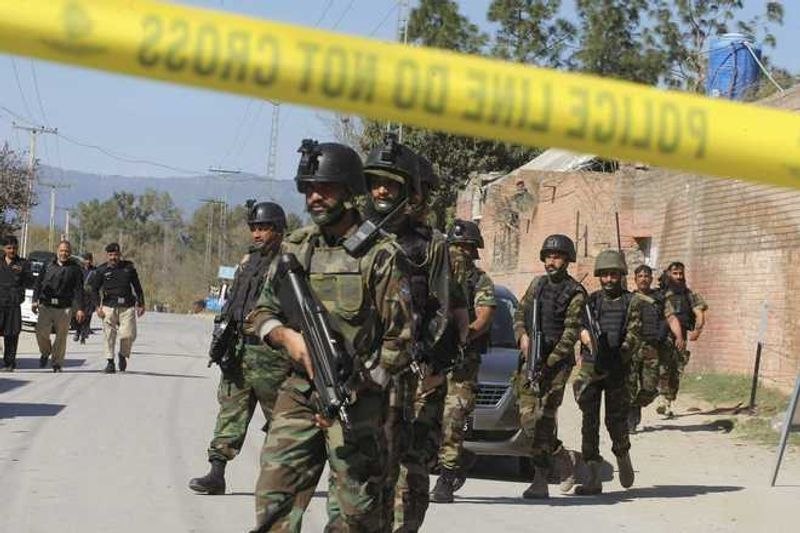
Pakistani security forces killed 35 terrorists and captured three high-profile senior commanders during an ongoing intelligence-based operation in Balochistan’s Mangla Zarghoon Ghar area.
A spokesperson for the Balochistan government, Shahid Rind, told the media in Quetta on Sunday night that the operation, which began on May 13, saw the deaths of 35 terrorists over the past four days.
“The operation was against the banned Tehreek-e-Taliban Pakistan and their proxy groups in Balochistan,” Rind said.
Rind mentioned that the three captured commanders are high-profile figures, and the operation was conducted based on intelligence gathered from previously captured militants in the province.
“The security forces also destroyed several base camps in the Mangla Zarghoon Ghar region,” he added.
He noted that additional operations are under way in the province, based on credible, actionable intelligence aimed at apprehending the facilitators, handlers, and financial supporters of these terrorist elements.
The Pakistan military is yet to release a statement regarding this latest anti-terror operation.
Last Wednesday, five soldiers, including a major, were killed during a clean-up operation against terrorists in Balochistan’s Barkhan district, according to the Inter-Services Public Relations, which also stated that at least seven terrorists were killed during that operation.
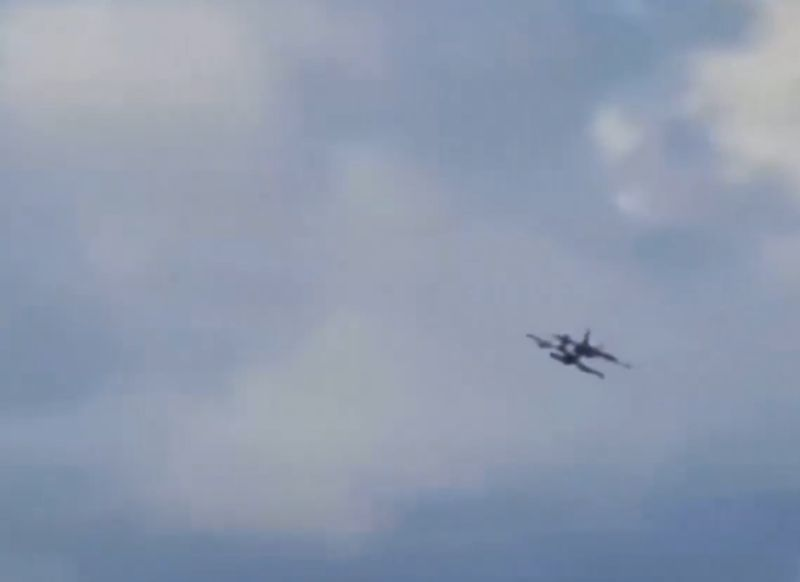
2 US jets collide mid-air during Idaho air show; crew members eject safely
The collision involved two US Navy EA18-G Growlers from Electronic Attack Squadron 129 in Whidbey Island, Washington
All four crew members ejected safely after two Navy jets collided and crashed Sunday during an air show at the Mountain Home Air Force Base in western Idaho, officials said.
The collision involved two US Navy EA18-G Growlers from the Electronic Attack Squadron 129 in Whidbey Island, Washington, said Cmdr Amelia Umayam, spokesperson for Naval Air Forces, US Pacific Fleet.
The aircraft were performing an aerial demonstration when the crash occurred, Umayam said in a statement. The four crew members from both jets safely ejected, and the crash was under investigation, she said.
The crew members were in stable condition, base officials said.
Nobody at the military base was hurt, said Kim Sykes, marketing director with Silver Wings of Idaho, which helped to plan the air show.
Everyone is safe, and I think that’s the most important thing,” Sykes said.
Planes fell to the ground together
The base said in a social media post that it was locked down immediately following the crash. The remainder of the air show was cancelled.
Videos posted online by spectators showed four parachutes opening in the sky as the aircraft plummeted to the ground near the base about 50 miles (80 kilometres) south of Boise.
The EA-18G Growler is a variant of the F/A-18 Super Hornet fighter jet with sophisticated electronic warfare systems.
Shane Ogden said he was filming the two jets as they came close together. A video he captured shows the two aircraft appear to make contact and then spin in tandem as the crew members eject and their parachutes open. The planes then fall together, exploding into a fireball upon impact as the crew members drift to the ground nearby.
“I was just filming thinking they were going to split apart, and that happened, and I filmed the rest,” Ogden said in a text message. He said he left soon after the crash because he did not want to get in the way of emergency responders.
Organisers said the popular air show that includes flying demonstrations and parachute jumps is a celebration of aviation history and a look at modern military capabilities. The U.S. Air Force Thunderbirds demonstration squadron headlined the show both days.
The National Weather Service reported good visibility and winds gusting up to 29 mph (47 kph) around the time of the crash.
Little room for error
It was remarkable that both crews were able to eject from their planes, and aviation safety expert Jeff Guzzetti said that may have been possible because of the way the planes collided and appeared to remain stuck together in midair before falling to Earth. Crews usually don’t have a chance to eject in a midair collision, he said.
“It’s really striking to see,” Guzzetti said. “It looks like they struck each other in a very unique fashion to cause them to remain intact and kind of stick to each other, and that very well could have saved them.”
“It appears to be a pilot issue to me. It doesn’t look like it was a mechanical malfunction,” he added. “Rendezvousing with another aeroplane in formation flight is challenging, and it has to be done just right to prevent exactly this kind of thing.”
Aviation safety expert John Cox, who is CEO of Safety Operating Systems, said the pilots who perform at air shows are among the best, but there is little room for error.
“Air show flying is demanding. It has very little tolerance,” Cox said. “The people who do it are very good, and it’s a small margin for error. I’m glad everybody was able to get out.”
This year’s Gunfighter Skies event was the first at the base since 2018, when a hang glider pilot died in a crash during an air show performance.
In 2003, a Thunderbirds aircraft crashed while attempting a manoeuvre. The pilot, who was not hurt, was able to steer the plane away from the crowd and eject less than a second before it hit the ground.
The air show industry has been working to improve safety for years at the roughly 200 events held each year in the US. The last fatal crash at an air show came in 2022 when two vintage military planes collided at an event in Dallas and killed six people.
An average of 3.8 deaths a year occurred at US air shows from 1991 to 2006, said John Cudahy, president and CEO of the International Council of Air Shows. That fatality rate has been improving, and since 2017, there have been an average of 1.1 deaths per year, even including the 2022 crash. There were no US air show deaths in 2023 or 2025, and a spectator hasn’t been killed at an air show in the US since 1952.
“Safety-wise, we’ve enjoyed really an unprecedented term of few accidents,” Cudahy said.
Investigators may be able to quickly get an idea of what happened in Sunday’s crash because the crews of both planes survived and will be able to tell investigators what they saw and experienced before the collision. The Navy will lead the investigation, so there won’t be as much information shared publicly as in civilian crashes.
The Iran war has led to the cancellation of some air shows this year at bases where military units are flying missions related to the conflict.
Mann, Western Command chief discuss border security, civil- military coordination
J&K L-G Manoj Sinha inaugurates ‘Shaurya Gatha’ complex in Karnah
Pakistan Conducts Training Launch of Fatah‑4 Ground‑Launched Cruise Missile
India Condemns Attack On Indian‑Flagged Vessel Off Oman, Crew Rescued Safely
IAF veteran, who took up voluntary teaching, feted:awarded with Dr BM Munjal Social Impact Award-2026 Pakistan’s Activates Multiple Restricted Air Corridors After India Successfully Tests Agni MIRV ICBM
The covenant and the contract
Not a story of a murder. It was a story of love, betrayal, anger, honor, media, and the clash with the law
Hav Sawan Barwal of 501 FSEG: breaks 48 year old National record in Marathon at Rotterdam , Netherlands
Balochistan: Armed groups kill 14 Pakistani soldiers in coordinated attacks
Iran is finished, should make deal to end war: Trump after talks with Xi Jinping
Mann, Western Command chief discuss border security, civil- military coordination
Chief minister Bhagwant Mann on Thursday stressed the need for stronger civil-military coordination in the border state during his meeting with General Officer Commanding-in-Chief (GOC-in-C), Western Command Lieutenant General Pushpendra Singh.
Published on: May 15, 2026 6:22 AM IST
Chief minister Bhagwant Mann on Thursday stressed the need for stronger civil-military coordination in the border state during his meeting with General Officer Commanding-in-Chief (GOC-in-C), Western Command Lieutenant General Pushpendra Singh.
Lieutenant General Pushpendra Pal Singh felicitates Punjab chief minister Bhagwant Mann during a meeting in Chandigarh on Wednesday. (@westerncomd_IA X)
During the meeting, both sides focused on expediting ongoing projects in border areas and evolving a coordinated framework to tackle emerging security and humanitarian challenges in the border state.
“Both sides agreed that priority will be accorded to completing all ongoing projects in border areas to further strengthen the operational capability of the armed forces,” an official release said.
Mann said Punjab shares a 550km international border and therefore close civil-military cooperation was crucial for the state.
Discussions on issues related to border management, internal security, youth empowerment, rehabilitation of Agniveers, and land acquisition matters linked to operational preparedness were also held.
Issues related to disaster management, recruitment in the armed forces, and welfare initiatives, including housing projects for serving army personnel and veterans, were also deliberated upon.
Will erase blot of drugs from Punjab: Mann
BATALA Chief minister Bhagwant Mann on Thursday asserted that the Punjab government will erase the “blot of drugs” from the state at any cost.
Addressing an anti-drug awareness programme dedicated to the 38th ‘Gurugaddi Divas’ of Sant Trilochan Das in Batala, Mann said the ongoing ‘Yudh Nashian Virudh’ campaign has delivered a blow to the narcotics network.
“Over 63,707 drug smugglers have been arrested in 437 days since the launch of the campaign, and illegal properties built through drug money are being demolished across the state,” the chief minister said.
Mann said the fight against drugs and organised crime had now become a people’s movement, with every citizen standing shoulder-to-shoulder with the government.
He also highlighted the simultaneous crackdown under the anti-gangster campaign, ongoing welfare measures for women and healthcare, and credited the strict anti-beadbi law enacted by the state government for bringing an end to incidents of sacrilege of Guru Granth Sahib in the state.
Referring to the Jaagat Jot Sri Guru Granth Sahib Satkar (Amendment) Act, 2026, Mann said, “This Act will ensure that such unfortunate incidents are prevented in the future.”
J&K L-G Manoj Sinha inaugurates ‘Shaurya Gatha’ complex in Karnah
n a major boost to border tourism and cultural preservation in the Karnah region of north Kashmir, Lieutenant Governor Manoj Sinha on Thursday inaugurated the ‘Shaurya Gatha’ Complex at SM Hill.
Officials described the initiative as a significant milestone in the promotion of battlefield tourism, heritage preservation and border area development.
According to a statement, the Lieutenant Governor applauded the Northern Command, Chinar Corps and all officers, soldiers, engineers, workers and local residents for completing the prestigious project within a short span of time.
He said the brave soldiers who laid down their lives defending the nation should remain a source of pride and inspiration for every Indian.
“The dedication of our forces and people is the true strength of the nation. The Shaurya Gatha Complex stands as a tribute to the valour and sacrifices of Indian soldiers. This initiative will create new opportunities for border tourism, homestays, local crafts and youth entrepreneurship,” the Lieutenant Governor said.
He also highlighted the contrast between development on this side of the Line of Control and the situation in Pakistan-occupied Jammu and Kashmir, stating that Jammu and Kashmir was witnessing an era of peace, progress and prosperity, while PoJK continued to suffer from neglect and misgovernance.
The Lt Governor reiterated that Jammu and Kashmir “was, is and will always remain an integral part of India.”
“Jammu and Kashmir is moving forward on all fronts of development. There is renewed self-confidence and society is more prosperous and peaceful than ever before,” he said.
He observed that initiatives such as promotion of valour sites under the Bharat Rannbhoomi Darshan initiative would usher in economic growth and prosperity in the Tangdhar-Karnah region while showcasing its rich defence legacy and culture.
Sinha said seven villages in Tangdhar and Karnah had been included under the Vibrant Village Programme to ensure improved infrastructure, livelihood opportunities and quality of life.
Highlighting the importance of the Sadhna Tunnel, he said the project would significantly improve connectivity, security and economic activity in the region by providing all-weather access and facilitating trade, education, healthcare and disaster response.
The L-G also praised the Army for its contribution to the Nasha Mukt Jammu Kashmir campaign. “Tangdhar remains a strategic location where our neighbour persistently attempts to escalate narco-smuggling activities. The development of an airport-like facility by the Army in the region will serve as a critical asset in our mission against drug smuggling,” he said.
State Stalwarts
DEFENCE MINISTER
Minister Rajnath Singh
ALL HUMANS ARE ONE CREATED BY GOD
HINDUS,MUSLIMS,SIKHS.ISAI SAB HAI BHAI BHAI
CHIEF PATRON ALL INDIA SANJHA MORCHA
LT GEN JASBIR SINGH DHALIWAL, DOGRA
SENIOR PATRON ALL INDIA SANJHA MORCHA
MAJOR GEN HARVIJAY SINGH, SENA MEDAL ,corps of signals
.
.
PATRON ALL INDIA SANJHA MORCHA
MAJ GEN RAMINDER GURAYA ,MADRAS REGIMENT
sanjhamorcha303@gmail.com
PRESIDENT SOUTH ALL INDIA SANJHA MORCHA
COL SS RAJAN BOMBAY SAPPERS,
PRESIDENT UTTARAKHAND ALL INDIA SANJHA MORCHA
COL B M THAPA ,BENGAL SAPPERSS
PRESIDENT HARAYANA STATE CUM COORDINATOR ESM
BRIG DALJIT THUKRAL ,BENGAL SAPPERS
PRESIDENT TRICITY
COL B S BRAR (BHUPI BRAR)
PRESIDENT CHANDIGARH ZONE
COL SHANJIT SINGH BHULLAR
.
.
PRESIDENT PANCHKULA ZONE AND ZIRAKPUR
COL SWARAN SINGH
INDIAN DEFENCE FORCES
DEFENCE FORCES INTEGRATED LOGO
INDIAN AIR FORCE
Air Officer C-in-C WESTERN AIR COMMAND
AIR MSHL S PRABHAKARAN AVSM VM
AOC-IN-C, EASTERN AIR COMMAND
Air Marshal Inderpal Singh Walia
AOC-in-C SOUTH WESTERN AIR COMMAND
Air Marshal Vikram Singh
AOC-IN-C, SOUTHERN AIR COMMAND
Air Marshal J.Chalapati
AOC-IN-C TRAINING COMMAND
AIR MARSHAL SK GHOTIA VSM
AOC-IN-C MAINTENANCE COMMAND
Air Marshal Jagdish Chandra
Flag Officer Commanding in Chief, Western Naval Command
ice Admiral R Hari Kumar, PVSM, AVSM, VSM
Flag Officer Commanding in Chief, Eastern Naval Command
Vice Admiral Sanjay Bhalla, AVSM, NM
Flag Officer Commanding in Chief, Southern Naval Command