All posts by webadmin

Facing contempt before High Court, Defence Ministry hikes payscale of 82 Major Generals getting lower pension than juniors

The Military Service Pay (MSP) component introduced under the Sixth Central Pay Commission has been restricted to officers up to the rank of Brigadier. This created an anomalous situation whereby Brigadiers and equivalent rank officers in the Navy and Air Force started getting higher pay and higher pension than Major Generals

Over three years after the Armed Forces Tribunal (AFT) directed the Union Government to step up emoluments of Major Generals who were drawing lesser pension than their immediate juniors at the level of Brigadiers, the Ministry of Defence, facing contempt notice from the High Court, has hiked the pension of 82 such affected Major Generals.

“Sanction of the Competent Authority is hereby accorded for conditional implementation of AFT (PB) New Delhi orders in Maj Gen Pay Anomaly cases in respect of applicants as mentioned at Appendix to this letter to step-up their pay retrospectively with effect from such date so as to bring it at par with their immediate juniors (Brigadier) and thereafter grant all arrears of pay retrospectively with effect from the date of assumption of Maj Gen rank till superannuation. The difference would be paid as ‘Personal Pay’ which would be treated as ‘Pay’ for all purposes,” a letter sent by Army Headquarters to the Principal Controller of Defence Accounts on August 31 states.

“Subsequently, pension to be fixed and all other consequential benefits including enhanced rate of leave encashment be granted to the applicants with effect from date of retirement along with applicable interest, if any from the date due till payment of arrears,” the letter adds.

The Military Service Pay (MSP) component introduced under the Sixth Central Pay Commission has been restricted to officers up to the rank of Brigadier. This created an anomalous situation whereby Brigadiers and equivalent rank officers in the Navy and Air Force started getting higher pay and higher pension than Major Generals.

A large number of officers moved the AFT, which by a common order in March 2023, ruled in favour of the affected Major Generals and equivalent ranks in the other services and directed the government to step up their pay and pension and ensure that under no circumstances they will receive lesser pay and pension than their immediate juniors.

However, the government did not implement the AFT’s order despite several execution orders issued by AFT. In one such case the government filed a writ petition in the Delhi High court challenging the AFT order.

“Though the High Court admitted the petition, it declined to stay the AFT judgement. The AFT issued an order directing the government to comply with the judgement conditionally after obtaining an affidavit from each petitioner that they would abide by the High Court order, if any, subsequently passed in the connected matter,” Col Indra Sen Singh (retd), counsel for some of the petitioners, said.

When the government still didn’t implement the AFT judgement despite all petitioners having rendered such undertaking in the form of affidavit, 82 affected Major Generals and some equivalent rank officers of Navy and Air Force filed a number of contempt petitions in the Delhi High court against the Defence secretary and Controller General of Defence Accounts (CGDA) among others.

The High Court issued contempt notices to the concerned officers, directing them to comply with the AFT judgement by the next date or be present before the High Court to answer the contempt.

The Army Headquarters’ letter of August 31 states that the implementation of the AFT’s orders are subject to the outcome of the matter pending before the Delhi High Court or any further appeal before the Supreme Court.

Each retired officer shall submit a fresh undertaking that he will refund the entire amount so paid in accordance with any order passed by the High Court or the Supreme Court in the future.

Sources said that same orders have been issued for Navy and Air Force officers who have obtained similar orders from the AFT in their favour, but the hike is only for those officers who filed cases and not for all affected officers
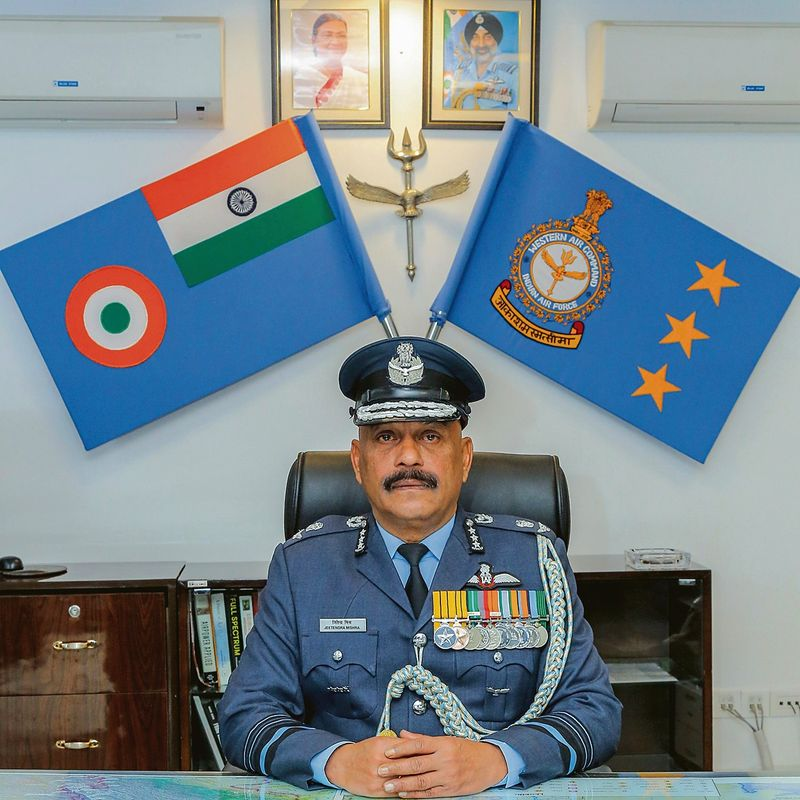
Air Marshal Jeetendra Mishra is ex-Western Air Command chief with 38-year experience

Air Marshal Jeetendra Mishra (retd), the newly appointed first CEO of the Shri Ram Janmabhoomi Teerth Kshetra Trust in Ayodhya, was commissioned into the Indian Air Force (IAF) as a fighter pilot in December 1986. He has logged more than 3,000 flying hours during his distinguished career.

He was heading the Western Air Command when India launched Operation Sindoor against Pakistan in May 2025. Following the operation, Prime Minister Narendra Modi visited the IAF frontline base at Adampur where Air Marshal Mishra briefed him on the operation.

The Western Air Command oversees key airbases, including Adampur, Halwara, Pathankot, Ambala, Chandigarh, Leh, Srinagar, Bathinda, Hindon and Sirsa. These bases are spread across Punjab, Haryana, Jammu & Kashmir, Ladakh and Uttar Pradesh.

Advertisement

Related news: Op Sindoor veteran Mishra named Ram Temple Trust’s first CEO

Air Marshal Mishra, who hails from Deoria district of Uttar Pradesh, headed the Western Air Command from January 1, 2025, till his retirement on April 30, 2026. Under his command were Rafale, Sukhoi 30-MKI and MiG 29 fighter jets, Apache and Mi-25 attack helicopters, a large transport fleet, S-400 air defence missile systems and BrahMos units.

During Operation Safed Sagar in Kargil in May-July 1999, Air Marshal Mishra, then a Squadron Leader, was tasked with test-flying the Mirage-2000 jets that had been rapidly integrated with laser-guided bombs to target Pakistani positions on mountain heights.

He is an alumnus of the National Defence Academy, Pune; Air Force Test Pilots School, Bengaluru; Air Command and Staff College, US; and Royal College of Defence Studies, UK.

During a career spanning over 38 years, he commanded a fighter squadron at Tezpur, Assam, and served as the Chief Test Pilot at Aircraft and Systems Testing Establishment, Bengaluru. As an Air Commodore, he commanded frontline airbases at Pathankot and Bareilly.

He also held several other posts, including IAF’s Director (Operational Planning and Assessment), Principal Director and Assistant Chief of Air Staff.

In the tri-services organisation, he was Deputy Chief of Integrated Defence Staff (Operations).

He has been awarded the Ati Vishisht Seva Medal and the Vishisht Seva Medal for his distinguished service.


How Group Captain Varthaman had downed an F-16 jet in a ‘dog fight’ lasting just 90 seconds in 2019

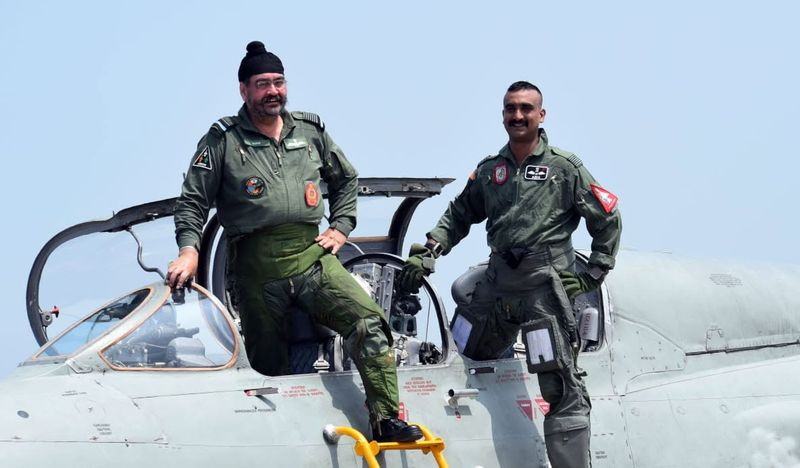
Group Captain Abhinandan Varthaman with former IAF Chief Air Chief Marshal BS Dhanoa at his first sortie after the ejection inside Pakistan in Sept 2019. Image credit/IAF

As Group Captain Abhinandan Varthaman (retd) has bid adieu to the Indian Air Force (IAF), his strike to bring down a US F-16 jet of the Pakistan Air Force seven years ago has etched his name in history of military aviation.

In a mid-air duel with the adversary, lasting just 90 seconds in the air, the IAF pilot had brought down an F-16 on February 27, 2019, while his own plane, a MiG 21, also got hit. He had ejected and landed inside Pakistan-occupied Kashmir (PoK) only to be released two days later on March 1, 2019.

On that day, Group Captain Varthaman, then a Wing Commander, was posted to Srinagar air base and tasked to be in a state of ‘operational readiness’ – in aviation parlance, it means the pilot and jet are ready to take off within a minute or so, of getting orders. At 10 am on February 27,  Varthaman was among the pilots tasked to intercept a ‘package’ of F-16 and Chinese-made J-17  jets of the Pakistan Air Force approaching the Line of Control (LoC).

Group Captain Varthaman was at an altitude of 15,000 feet in his MiG-21 when he spotted an F-16 at 8,000 feet, near Nowshera, close to the LoC. He alerted his mates, who were at lower altitudes to watch against missiles that the F-16 could launch. He then took on the jet, “I am going after him,” Varthaman had said over the secure radio to his mates flying in the patrol.

With this started a 90-second intense chase in the sky — called dogfight or close combat in military parlance — with jets flying at a speed of roughly 900 km per hour. The dogfight rose to an elevation of 26,000 feet and then swooped down a few thousand feet and then rose again. The two pilots were literally eye-to-eye and trying to get a “lock” for the missile to home in.  Both pilots, Varthaman and the adversary, were trying to get a ‘lock’— at 60° angle, in air force parlance. This angle provides the widest spectrum to be hit by a missile, a ‘lock’ means the missile’s trajectory has been fixed and its target is locked. The missile then homes-in onto the target.

An air-to-air missile called the “R-73” was fired from the MiG 21 and it hit an F-16 jet and it was downed. The MiG 21, piloted by Group Captain Varthaman was also hit by a missile fired by another PAF pilot. By then Varthaman’s plane was a couple of kilometres on the other side of the LoC.

Group Captain Varthaman had ejected at a fairly high altitude. The parachutes which fighter pilots use are not maneuverable and the wind draft took him at least 7 km away to the Pakistan side.

The entire thing was being tracked through airborne radars mounted on a plane.

Later, the government awarded him a Vir Chakra, the third highest battle honour. The citation for the award says “Wing Commander Varthaman pursued a retreating enemy fighter bomber aircraft, and in the ensuing aerial combat, shot down an F-16 aircraft with his on-board missile. However, in the melee, an enemy aircraft fired multiple advanced missiles, one of which hit his aircraft forcing him to eject in enemy territory”.

Despite the enemy’s immense numerical and technological superiority, Varthaman had proceeded to courageously engage the enemy aircraft with utter disregard to his personal safety, the citation reads. The ‘technological superiority’ being obliquely referred to in the citation, is that the F-16 is better equipped than the MiG 21 in terms of missiles, radars and avionics.

Upon parachuting down inside Pakistan, Varthaman sustained injuries while attempting to destroy classified documents and evade hostile locals. He was captured by the Pakistan Army. Videos released during his captivity showcased his composure, dignity and adherence to the Geneva Convention protocols regarding the disclosure of information under duress — earning widespread admiration across India.

Once back home, amid a frenzy in the media, Group Captain Varthaman recuperated and was back to flying on Sept 2, 2019. The then Air Chief Air Chief Marshal BS Dhanoa, had accompanied him on his first post-ejection sortie at the Pathankot air base in Punjab.

The air duel between IAF and PAF had ensued a day after IAF launched strikes on Balakot in Khyber Pakhtunkhwa of Pakistan to strike at terrorist camps. Days prior to the Balakot strikes, terrorists had struck at Pulwama in Jammu and Kashmir. 


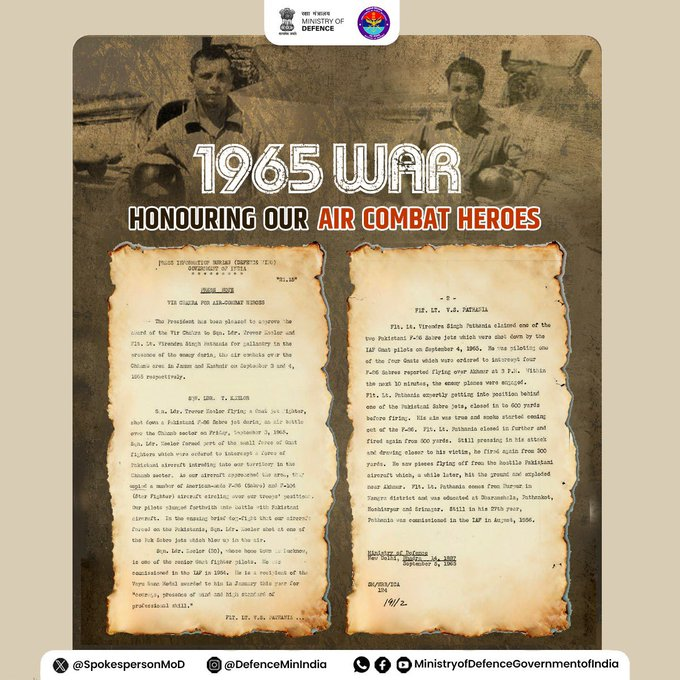
First air duel, shooting down of Pakistani jets in 1965 war: Defence Ministry recalls IAF heroes

‘Squadron Leader Trevor Keelor and Flight Lieutenant Virendra Singh Pathania displayed exceptional gallantry during air combat on September 3-4, 1965,’ MoD says in a post on X

In remembrance of independent India’s first air battle with Pakistan, the Ministry of Defence (MoD) on Thursday marked the anniversary of the exploits of IAF pilots over Chhamb-Jaurian in Jammu and Kashmir during the 1965 war.

“The skies over Chhamb witnessed remarkable acts of courage during the 1965 War,” the MoD said in a post on X, terming the occasion a tribute to “our combat heroes”.

“Squadron Leader Trevor Keelor and Flight Lieutenant Virendra Singh Pathania displayed exceptional gallantry during air combat on September 3-4, 1965,” it said.

or their bravery, determination and valour, both air warriors were awarded the Vir Chakra, the country’s third-highest battle honour. The MoD also posted the citations of the two pilots on X.

The MoD’s tribute recalled a significant air battle of the 1965 war. The sequence of events of September 3, 1965, was recorded by the MoD’s History Division. The pre-dawn briefing at Pathankot airbase that day was tense, with the tactical plan calling for an offensive response. The IAF was seeking to avenge the losses suffered a day earlier, when the Pakistan Air Force had shot down Indian Vampire aircraft, killing three pilots.

SN Prasad, in his book ‘The India Pakistan War of 1965’, an authorised account based on the Ministry of Defence archives, describes the aerial duel on September 3.

“Two Mysteres were sent on normal operational sorties with a high-altitude cover by a formation of Gnats. When Pakistan’s F-86 Sabres tried to shoot the Mysteres down, the Gnats pounced on them from above,” he wrote.

A Pakistani F-86 Sabre, a US-made fighter armed with missiles, appeared on the scene. Squadron Leader Keelor opened fire and shot down the PAF jet, etching his name in history as the first Indian pilot to “shoot down an enemy plane in mid-air”.

“Sqn Ldr T. Keelor shot down the first Sabre in a dog fight,” wrote Prasad, who was Director of the MoD’s History Division from 1964 to 1969.

The shooting down of the battle-hardened F-86 Sabre by the smaller Gnat had a major impact on the morale of IAF pilots. It was the first time the Gnat had been used in combat and it opened its account with a “kill” in its very first encounter, without suffering any loss to enemy action, Prasad noted.

Within hours of the first kill, Flight Lieutenant VS Pathania also claimed a PAF jet, according to the book.


Hathnikund Barrage boat tragedy: Army pays tribute to 2 Special Forces soldiers killed on September 1

A Court of Inquiry has been ordered to ascertain the circumstances that led to the incident

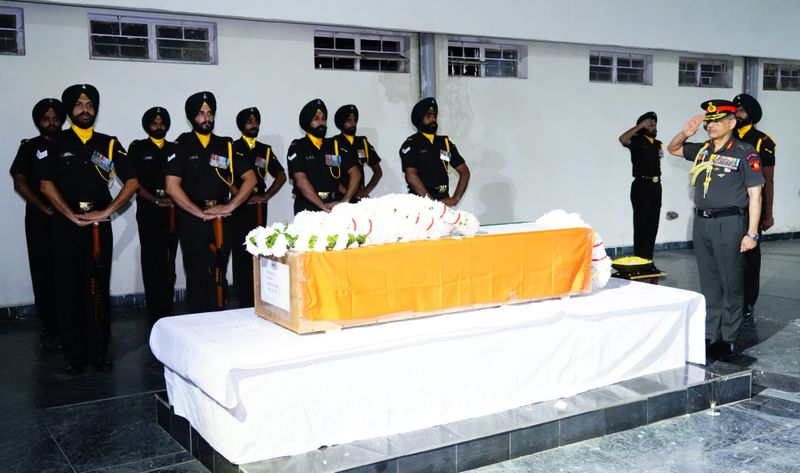
The Army on Friday paid tribute to two Special Forces personnel who lost their lives after their boat capsized during a training exercise at the Hathnikund Barrage in Yamunanagar on September 1.

The deceased soldiers were identified as Naik Ajay Kumar, a resident of Akhnoor in Jammu and Kashmir, and Lance Naik Rohit Narayan Patil from Maharashtra’s Sangli district. Both were serving with the 1st Battalion of the Parachute Regiment, headquartered in Nahan.

A Court of Inquiry has been ordered to ascertain the circumstances that led to the incident.

Ajay Kumar’s body was recovered late on September 2 from near Bartha village in Uttar Pradesh, around 15 km downstream of the barrage. Patil’s body was later found in the Hansi Branch Canal near Jind in Haryana, nearly 200 km from the accident site.

The mortal remains of the soldiers were brought to Command Hospital, Chandimandir, where post-mortem examinations, identification and other official formalities were completed before the bodies were handed over to their families for the last rites.

Lt Gen Pushpendra Singh, General Officer Commanding-in-Chief, Western Command, who is also the Colonel of the Parachute Regiment, laid wreaths on their coffins at Chandimandir military station, while a ceremonial guard reversed arms as a mark of respect.

“Their unwavering courage, dedication and commitment to duty will forever remain etched in our hearts and continue to inspire generations,” the Western Command said in a statement.

In the evening of September 1, during a joint watermanship training at Hathni Kund Barrage in Yamunanagar district of Haryana, a boat carrying five soldiers got caught in strong currents towards the downstream barrage.

The teams made swift efforts to retrieve the boat. However, the boat got stuck in strong eddies around the sluice gates and capsized resulting in the crew getting swept away by the strong currents, according to information shared by the Army.

Three of them survived. The troops had deployed from a Chinook helicopter. The drill involved an inflatable boat being dropped from the helicopter followed by the commandos jumping into the water to board the boat to carry out the envisioned task.

A full-scale search and rescue mission, including helicopters and drones, was launched by the Army, Indian Air Force, local police and civil administration along the barrage and downstream parallel canals — the Western Yamuna Canal flowing towards Haryana and the Eastern Yamuna Canal towards Uttar Pradesh.

Different Army units regularly conduct exercises on rivers and canals to hone their skills for various offensive and defensive operations that involve negotiating water bodies.


India, Sri Lanka to sign 3 MoUs during Rajnath’s visit, including one likely on air defence weapons supply

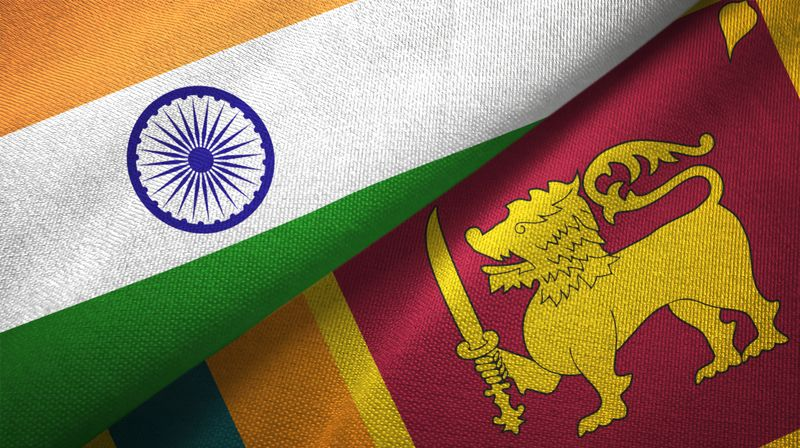
India and Sri Lanka are set to expand their military ties and sign three new MoUs, including one likely to cover the supply of air defence weapons by India. Defence Minister Rajnath Singh will undertake a three-day visit to Colombo from September 8 to 10 to finalise the projects.

Sri Lanka is seeking Indian air defence guns to tackle incoming aerial threats. India produces short- and medium-range air defence systems, including the Akash. The other two agreements are expected to expand the existing training facilities India offers to the Sri Lankan military.

The two countries will also review the India-Sri Lanka Defence Cooperation MoU, signed in April last year during Prime Minister Narendra Modi’s state visit to Colombo. The five-year umbrella agreement institutionalises joint exercises, training, port calls and equipment cooperation.

The framework provides for India to supply Sri Lanka with military hardware to augment the island nation’s defence capabilities.

Rajnath Singh is scheduled to meet Sri Lankan President Anura Kumara Dissanayake, who also holds the defence portfolio.

The Ministry of Defence said on Sunday that Rajnath Singh would hold consultations with the Sri Lankan leadership on a range of issues. He will be accompanied by a high-level delegation comprising senior officials from the Ministry of Defence and the Ministry of External Affairs.

Notably, this is the first visit by an Indian Defence Minister to Sri Lanka since KC Pant, who was Defence Minister in Rajiv Gandhi’s Cabinet, visited the island nation in 1988.

India and Sri Lanka share deep civilisational ties and a multifaceted partnership, anchored by regional security, defence, economic and trade cooperation, and strong people-to-people ties.

The bilateral relationship received further impetus when India assisted Sri Lanka during its economic crisis and provided assistance as one of the first responders in the aftermath of Cyclone Ditwah in Sri Lanka in 2025. This underscored India’s continued commitment to its ‘Neighbourhood First’ policy and Prime Minister Narendra Modi’s vision of MAHASAGAR (Mutual and Holistic Advancement for Security and Growth Across Regions).

Cooperation now spans joint military exercises, training exchanges, naval port calls, maritime security coordination, disaster response, and equipment and capability support.

The two countries also undertake joint efforts on Indian Ocean surveillance, anti-smuggling operations and search-and-rescue coordination, given Sri Lanka’s strategic location along key shipping lanes.

India has increasingly supplied military stores, platforms and aid packages to Sri Lanka, mostly through grants rather than commercial sales. Recent Indian assistance included assets to improve the Sri Lankan Coast Guard’s search-and-rescue capabilities, along with items such as personal watercraft for coast guard use.


Army sets up lab to detect Chinese components in drones

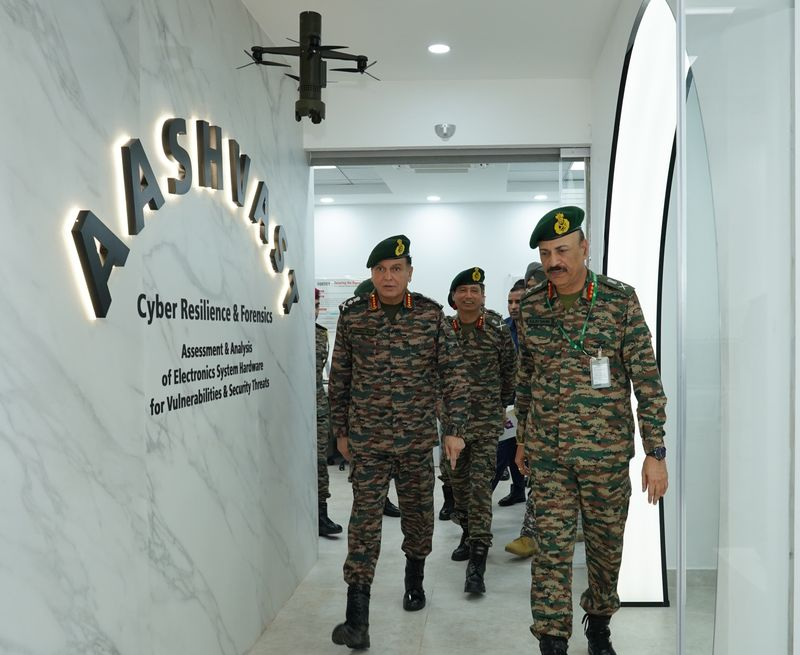
Called ‘AASHVAST’ (Assessment and Analysis of Electronic Systems Hardware for Vulnerabilities and Security Threats), the facility is aimed at enhancing the integrity, reliability and security of mission-critical military electronics.

o strengthen the electronic security of military drones, the Army has set up a special lab that uses advanced software to weed out Chinese components and assess “vulnerabilities” in unmanned systems.

Each drone is examined to verify that it is genuine and has not been modified. The facility, based in New Delhi, scans for hidden passwords, embedded keys and remote-access tools. It also determines whether a drone accepts only manufacturer-approved software updates and evaluates location-security controls that govern its behaviour during GPS spoofing or jamming attempts by an adversary.

Called ‘AASHVAST’ (Assessment and Analysis of Electronic Systems Hardware for Vulnerabilities and Security Threats), the facility is aimed at enhancing the integrity, reliability and security of mission-critical military electronics.

AASHVAST is an analysis and validation suite built for the Directorate General of Electronics and Mechanical Engineering (DG EME). Rajib Roy, the director of QuickPay Tech which established the suite, says “the system addresses a gap that has, until now, gone unexamined in routine practice”.

Anshuman Tripathi, a former member of the National Security Advisory Board (NSAB) and patent holder on “semi-conductor modification”, says “such a system was long overdue”. The Chinese have copied US-designed semiconductors which are virtually the same as the original ones.

The system examines the software embedded in a drone. While airframes are routinely inspected, weighed and bench-tested, the firmware that determines how an aircraft flies, what commands it accepts, and where it can or cannot operate often remains invisible to conventional inspection.

“Hidden keys, embedded credentials, secret command paths or altered flight limits surface only under detailed inspection,” Roy added.

AASHVAST runs entirely offline inside the air-gapped facility and is read-only by design. Nothing is ever written about the aircraft under examination. The software can be read directly off a connected flight controller or camera payload, or uploaded as a stored image.

Findings are rated for their severity and written in plain language, rolled into a single security posture read and exported to a structured record in one action — so that the technician at the bench and the officer signing acceptance work from the same document.

Army Chief General Dhiraj Seth inaugurated the facility on August 14. The Army had then said it would enable the evaluation of critical defence platforms, strengthen cyber resilience, improve operational readiness and promote the growth of the domestic defence ecosystem.


Military commanders meet at LAC in Arunachal ahead of Chinese President Xi Jinping’s visit to India

The meeting was held between Corps Commander-level officials at the ‘border personnel meeting’ point at Wacha, north of Kibithu in Anjaw district of the state, sources have confirmed. The meeting marked the first Corps Commander-level interaction at the Wacha point since it became operational in 2014.

A week ahead of Chinese President Xi Jinping’s expected visit to India, senior military commanders of India and China met along the Line of Actual Control (LAC) in Arunachal Pradesh on Sunday.

The meeting was held between Corps Commander-level officials at the ‘border personnel meeting’ point at Wacha, north of Kibithu in Anjaw district of the state, sources have confirmed. The meeting marked the first Corps Commander-level interaction at the Wacha point since it became operational in 2014.

Advertisement

The Army’s 3 Corps Commander Lt Gen Girish Kalia represented India. A Corps Commander is responsible for a designated operational area. The Corps oversees a major portion of the 1,140-km LAC in Arunachal Pradesh.

The development comes just a week ahead of the BRICS Leader’s Summit, where Xi, among other leaders like Russia’s Vladimir Putin, is scheduled to arrive in New Delhi.

The meeting at the LAC comes less than a month after a misunderstanding between the two militaries near Taksing in the Upper Subhansiri district of Arunachal Pradesh. Taksing is also under the command of 3 Corps. Sources said the Army had maintained a firm stance in responding to Chinese troop activity in the area.

India and China have different perceptions of the LAC in their territories and at times, that leads to issues on the ground. So far, there is no official statement by the Ministry of Defence. However, sources said the Corps Commander-level meeting discussed ways of maintaining peace along the LAC.

National Security Advisory Board former member Lt Gen SL Narasimhan (retd) said: “A meeting between senior officers along the LAC can bring stability and resolve friction, if any.”

Last month, Ministry of External Affairs spokesperson Randhir Jaiswal, while responding to questions on the ‘military situation’ along the LAC in Arunachal Pradesh, said developments along the border were a “serious matter” and would have a bearing on broader bilateral relations.

India and China have held several Corps Commander-level meetings at the Chushul-Moldo border meeting point in eastern Ladakh since the Galwan clashes of 2020, during which both sides suffered casualties.

Sunday’s meeting also comes less than two weeks after the Special Representatives of India and China met in Beijing on August 25 and agreed to continue efforts towards a political settlement of the boundary dispute in keeping with the long-term interests of both countries. National Security Adviser Ajit Doval and Chinese Foreign Minister Wang Yi serve as the Special Representatives of the two sides.


HEADLINES :28 AUG– 2026

Lt Col cashiered, gets 1-year RI in medical supplies scam

School Girls Celebrate Raksha Bandhan with Air Force Personnel at Adampur

DRDO successfully tests high-altitude combat parachute system in Ladakh

Army foils intrusion bid by Pak drones along LoC in Rajouri

From tunnel rescue teams to Bailey bridges, India expands Nepal aid; NDRF offer awaits no

India seals deal to procure Javelin anti-tank guided missiles from US

Make-in-India push: MoD allows missile tech transfer to private players

Former CDS’s Kirana Hills remarks raise questions on India’s Operation Sindoor

India to get 100% transfer of technology on Rolls Royce aero engine for AMCA

New facility to overhaul 80 Army tanks annually to come up at Jabalpur

Bodies of four Naga civilians killed in Manipur ambush retrieved

India acquires advanced Javelin anti-tank missiles from US

Threat of divorce by wife employed overseas forms grounds for seeking pre-mature retirement: AFT

Mecca accord raises the stakes for India


Lt Col cashiered, gets 1-year RI in medical supplies scam

Lt Col D Maji was tried on 14 charges under the provisions of Sections 52(a), 52(f) and 63 of the Army Act for making false statements, intent to defraud and acts prejudicial to good order and military discipline

A Summary General Court Martial (SGCM) has cashiered a Lieutenant Colonel from the Army Medical Corps and sentenced him to one-year rigorous imprisonment for financial misappropriation and administrative irregularities in the procurement of medical supplies for a military hospital in Jammu and Kashmir.

Lt Col D Maji was tried on 14 charges under the provisions of Sections 52(a), 52(f) and 63 of the Army Act for making false statements, intent to defraud and acts prejudicial to good order and military discipline. The court found him guilty on five counts. The trial concluded in Nagrota (near Jammu) on August 28. The court’s findings and sentence are subject to confirmation by the higher authorities–in this case, the General Officer Commanding-in-Chief, Northern Command.

The misappropriation relates to 2018 and 2019, when the officer was posted at 166 Military Hospital. He served as the indenting officer for the procurement of medical supplies and was also the presiding officer for the technical and financial board proceedings.

The Lieutenant Colonel had pleaded not guilty to the charges, contending that his actions had been bona fide and that documents relating to the case were forged and did not bear his signatures. He had earlier approached the Armed Forces Tribunal (AFT). While the AFT’s Principal Bench, headed by Justice Rajendra Menon, declined to stay the disciplinary proceedings against him, it directed that no final decision be taken in the matter until further orders from the tribunal.

The SGCM, convened on the orders of Maj Gen HS Brar, General Officer Commanding, 10 RAPID, was presided over by Col RP Yadav, Commanding Officer of an Ordnance unit. Brig DK Ahluwalia (retd) was the prosecution counsel.

According to the chargesheet, the officer, in his capacity as the presiding officer of the technical and financial boards, had on several occasions during 2018 and 2019 falsely projected urgent requirements for various medical supplies worth about Rs 3 crore. He was also accused of violating provisions of the Defence Procurement Manual, 2009, and wrongfully selecting and rejecting vendors, resulting in undue gains for certain parties.

Sources said the total allocation for the procurement of medical supplies during the two-year period covered by the chargesheet was about Rs 30 crore. The chargesheet further stated that despite “noticing that his signatures had been forged during various technical board proceedings, he had improperly omitted to report the same to his superior officers”.

This is the same case in which a Major General, then Commandant of the hospital, was cashiered from service and sentenced to one-year rigorous imprisonment by a separate SGCM in July for misappropriation in the procurement of medical supplies worth Rs 11 crore. He had also approached the AFT to challenge his trial, which had directed that the SGCM’s orders not be implemented until further orders.