All posts by webadmin

Retd Col’s son found dead at farmhouse

Ambala, July 15

A 46-year-old man was found dead under mysterious circumstances at his farmhouse in Janaitpur village of Ambala here on Sunday.The body was in a decomposed condition and it appeared that it was there for nearly 10 days. The deceased has been identified as Jeet Mahender Singh. He was the son of Colonel Sucha Singh (retd), a resident of Defence Colony.As per information, Jeet was a divorcee and was living alone there. He last met his father on July 2.Investigating Officer Surender said, “The father of the deceased said that on Sunday, he went to a gurdwara to pay obeisance. There is a shop near the gurdwara from where his son used to purchase groceries. He inquired about his son and the shopkeeper informed that he hadn’t seen him for the past several days. Then, he went to the farm house and found his son dead.”Station House Officer of Panjokhra police station said, “The cause of death will become clear after post-mortem examination.” — TNS



fixation of pay of Officers of the rank of Lt Col (Level 12A) and Colonel (Level 13) Vide MOD

Dear Sir,
1. The Govt of India, Ministry of Defence letter No: No.1(27)/2017-D(Pay/Services) dated 06 Jul 2018 deals with fixation of pay of Officers of the rank of Lt Col (Level 12A) and Colonel (Level 13). Many Officers have approached me to explain the implications of this letter both to the Serving and Retired soldiers. The ibid Government letter dated 06 Jul 2018 is a clarificatory letter as certain anomalies were introduced by 7th CPC by which defence services officers were drawing less  pay than those of CAPFs as in Jan 2016 and thereafter. This is due to incorrect fixation of Index of Rationalisation (IOR)  which was fixed at 2.57 for Lt Cols and Cols whereas their counterparts in CAPFs were fixed at IOR of 2.67.
IOR Vs Multiplication Factor of 2.57
2. Index of Rationalisation (IOR). Many of us do not understand the difference between IOR and Multiplication factor 2.57 recommended by 7thCPC. Most of us tend to believe both are same. IOR is a factor when multiplied with Entry pay gives the total initial pay of any soldier from rank of Sepoy to Lt Gen (HAG+) as on Jan 2016 in the Def Pay Matrix. The IOR is linked to Degree of responsibility exercised by all ranks and therefore it  is higher for higher ranks as CPC felt higher ranks have higher degree of responsibility. Of course this principle is not followed by 7th CPC when they recommended IORs of various ranks. The IOR of Lt Col to Brigadier is same at 2.67. Does it mean a Lt Col who is now a Coy Cdr and Brigade Cdr have same degree of responsibility? COAS has lesser IOR than Army Cdrs. Can it be explained why so by 7th CPC? The first cell in the Def Pay Matrix is worked out by multiplying IOR with Entry Pay for that rank. Thereafter, second cell for various ranks is enhanced by multiplying the first cell by 1.03 (3% increment). In this manner the Def Pay Matrix is made for all ranks. Def Pay Matrix lays down the pay of all serving soldiers as on Jan 2016. It is not that your pay or pension as on Dec 2015 is multiplied by 2.67 if IOR is enhanced to 2.67 for Lt Cols and Brigs. Your pay or pension in Jan 2016 will continue to be your pay in Dec 2015 x 2.57. IOR is therefore more relevant to serving soldiers and is used in making Def Pay Matrix for Serving Soldiers. For example if Pay of Soldier in Dec 2015 is Rs 10,000 and his pay in Jan 2016 has to be minimum of Rs 10000 x 2.57 = Rs 25,700. Thereafter one has to go Def Pay Matrix and see if Rs 25,700 is there. This is because his pay as per 7th CPC should be IOR x Entry Pay. Generally you may not find Rs 25,700 in the De Pay Matrix. Then you have to go to next cell where figure higher to Rs 25,700 is available. Say it is Rs 26,200. Then the pay of this soldier is fixed at Rs 26200 pm + DR as on Jan 2016. Then next year his pay will be increased by 3%.  Therefore you have to understand IOR is different than Multiplication Factor of 2.57.
3. Multiplication Factor. The 7th CPC recommended enhancement of minimum pay of Rs 7,000 in 6th CPC to Rs 18,000 in 7th CPC. Therefore, the multiplication factor = 18000 / 7000 = 2.57. Therefore the minimum pay in Jan 2016 has to be Pay or pension in Dec 2015 x 2.57. Even if IOR is enhanced to 2.67 the pensioners will not get benefitted as their pension in Jan 2016 = Pension in Dec 2015 x Multiplication Factor of 2.57. But you have to understand the pay of serving soldiers is pay in Dec 2015 x 2.57. Then this figure is seen in Def Pay Matrix and his pay in Jan 2016 is closest to this figure ( pay in Dec 2015 x 2.57) ad explained in para 2 above. Therefore, Multiplication factor of 2.57 is used even for fixing pay of serving soldiers in the Def Pay Matrix. I will explain this with an illustration.
4. Enhancement of IOR to 2.67 to Lt Cols and Colonels. The ibid Govt letter dated 06 Jul 2018 clearly mentions when the IOR of Lt Cols and Cols was fixed at 2.57 initially. Therefore, their initial pay as on Jan 2016 in the first cell of Defence Pay Matrix was Rs 1,16,000 for Lt Cols and Rs 1,25,700 for Cols. This is the minimum pay for these officers as on Jan 2016. However if pay in Dec 2015 multiplied by 2.57 is higher than Rs 1,16,000 for Lt Cols or Rs 1,25,1700 for Cols,  then one has to go to next cell in Def Pay Matrix where figures higher than Rs 1,16,000 and Rs 1,25,700 are located. That will be pay in Jan 2016. Every year the pay will be enhanced by 3% as increment.
5. Effect of Increased IOR of 2.67 on Pay of Serving Soldiers. The first cell in Def Pay Matrix is arrived by multiplying  IOR  with Entry Pay.  Higher the IOR, therefore, higher is the pay for serving soldiers in Jan 2016 in the Def Pay Matrix. The first cell is multiplied by 3% to arrive at pay in next year.  Therefore, the next cell in Def Pay Matrix is previous cell x 1.03 (or 3%). On the other hand the multiplication factor of 2.57 is to bring pay or pension of Dec 2015 onto pay or pension in Jan 2016. You must understand this difference between IOR and Multiplication factor.
6. Enhancement of IOR to 2.67. Service HQ intervened and brought the down gradation of pay scales of Lt Cols and Cols in 7th CPC to the notice of Central Government due to incorrect fixation of IOR at 2.57 whereas that of equivalents in CAPFs was fixed at 2.67. The Govt of India accepted the argument of the three service HQ and enhanced IOR to 2.67 for Lt Cols and Col vide their letter dated 06 Jul 2018. This has resulted in higher figure in first cell of New Def Pay Matrix (with IOR of 2.67) and subsequent cells. Since the first cell = IOR of 2.67 x Entry Pay, this entails making a new Def Pay matrix. Every subsequent cell for any rank in the Def Pay Matrix is enhanced by 3%.  As increment is 3%, then if the first cell has higher figure, then subsequent cells also have higher figures in the new def pay matrix with IOR of 2.67. You can see the first cell of Lt Col with IOR of 2.67 is Rs 1,21,200 (vis – a – vis Rs 1,16,700 when  IOR was 2.57) and first cell of Col is Rs  1,30,600 (against Rs 1,25,700 when IOR was 2.57). In summary when IOR was enhanced to 2.67 the pay in first cell of New Def Pay Matrix in  Jan 2016 of Lt Cols and Cols went up by Rs 4,500  (Rs 121000 – 116700) for Lt Cols and Rs 4,900 (Rs 130600 – 125700) for Cols. You can make out the subsequent cells also undergo change by 3% with IOR of 2.67 compared to subsequent cell of pay matrix with IOR of 2.57.
7. To understand the implication of enhancement of IOR to 2.67, let us take an example of two Lt Cols i.e. Lt Col AK Singh and Lt Col DS Thakur. The pay of these two officers i.e. Pay in Pay band and Grade pay is say Rs 45,000 and Rs 48,000 respectively in Dec 2015. Let us see what their pay is in Jan 2016 with IOR 2.57 and IOR of 2.67.
8. Lt Col AK Singh. His pay in Jan 2016 = Pay in Dec 2015 x Multiplication Factor of 2.57 = Rs 45000 x 2.57 =  1,15,650. But the first cell in Def Pay Matrix when IOR was 2.57 is Rs 1,16,700. Therefore his pay in Jan 2016 is fixed in first cell of Def Pay Matrix which is Rs 1,16,700 with IOR of 2.57. But when IOR goes up to 2.67 his pay in the first cell is Rs 1,21,200. Therefore his gain because of IOR of 2.67 is Rs 121200 – Rs 116700 = Rs 4,500 pm + DR. In subsequent years, his pay will go up by 3% over Rs 1,21,200 pm. So this officer has gained substantially by IOR of 2.67.
9. Lt Col DS Thakur. His pay in Jan 2016 = Pay in Dec 2015 x 2.57. This comes to Rs 48000 x 2.57 = Rs 1,23,360. But the next cell higher in pay matix with IOR of 2.57 is Rs 1,23,807. His pay in Jan 2016 is fixed at Rs 1,23,807 with IOR of 2.57.  But when IOR went up to 2.67, the cell in pay matrix next to Rs 1,23,360 is Rs 1,24,800.  His pay in Jan 2016 in now fixed at Rs 1,24,800 pm + DR. The gain is Rs 124800 – Rs 123807 = Rs 993. Though Rs 993 is small, yet it is gain. The gain is dependent upon where the next cell which contains higher figure of Pay in Dec 2015 x Multiplication Factor of 2.57. Some people get higher gain and some get lower gain but everyone will get some gain in pay when IOR is enhanced to 2.67.
10. If you have not understood the above, then let me summarise the effect of increased pay of Lt Cols when IOR  is 2.57 and when IOR went upto 2.67 in a tabular form for better comprehension.
Description Lt Col AK Singh
(Figs in Rs) Lt Col DS Thakur
(Figs in Rs)
Pay in Pay Band + Grade Pay in Dec 2015 45,000 48,000
Pay in Jan 2016 in Def Pay Matrix with Multiplication factor of 2.57 = 45000 x 2.57
= 1,15,650 but in first cell in Def Pay Matrix with IOR of 2.57 is Rs 1,16,700. His pay fixed is Rs 1,16,700 in Jan 2016  = 48000 x 2.57
= 1,23,360 But the first cell in Def Pay Matrix with IOR of 2.57 is Rs 1,23,807. His pay is fixed at Rs 1,23,807 in Jan 2016
Pay in Jan 2016 when IOR is enhanced to 2.67 First cell in Def Pay Matrix with IOR of 2.67 is Rs 1,21,200. Pay is enhanced from Rs 45000 in 6th CPC to Rs 1,21,200 in 7th CPC  Next higher cell in New Def Pay Matrix with IOR of 2.67 is Rs 1,24,836
Gain in Enhancement of IOR to 2.67 = 121200 – 116700
=  4,500 + DR per month = 124836 – 123807
=   993 + DR per month
11. You can work out the gain in pay for Colonels when IOR has been enhanced to 2.67 if you have understood the basic concepts of IOR and Multiplication Factor of 2.57. The Ministry of Def vide para 6 of their ibid letter dated 06 Jul 2018 says if pay fixed with IOR  of 2.57 is more than IOR of 2.67 then such over payment if made will not be recovered. You can see this is silly & stupid para which is not required as there is no way pay with IOR of 2.57 will be more than pay with IOR of 2.67. This is simply the way lower level babus of Desk Officer, Under Secretary, Deputy Secretary level to save their back side unnecessarily mention such clauses to confuse readers and to guard themselves against any legal cases in case someone goes to court of law.
12. All serving soldiers have been asked to exercise option to come on to pay scale of 7th CPC within 3 months. If the option has been exercised once there is no need to exercise option second time just because IOR has been changed to 2.67. This is extra paper work. How do you expect a Dy Secy to think on these lines? Therefore para 8 of ibid Government letter dated 06 Jul 2018 is again superfluous. This is how Min of Def dominated by lower level babus issue letters without application of mind.
Warm regards,
Brig CS Vidyasagar (Rtd)
040-48540895

Security, not displacement Punjabis in Meghalaya should not be relocated

Security, not displacement

The recent violence has brought the Punjabi Colony in Shillong into the limelight and it remains that way because of the incalcitrant attitude of a small section among the majority Khasi population. The small enclave in Shillong has housed Punjabis, mostly Sikhs, for two centuries and counting. After the violence against the Sikhs, the state was expected to provide succour and assurance about their safety. The Meghalaya Government, however, is sending adverse signals about its intention by dusting out a 15-year-old plan to relocate the Sikh families that live there. The last thing that a minority community that has been at the receiving end of violence should have to fear is dislocation from homes. The National Commission for Minorities’ direction to maintain status quo is thus a positive development that gives a breather and allows various parties concerned to find ways to promote communal amity.The state’s urban department puts the number of inhabitants at around 6,000 Sikhs and 4,000 Hindus. Even if the number is less, a minority needs to be treated with extra empathy. However, the local administration and the residents operate on different wavelengths. If the Sikhs are resisting their relocation, people living in places where the population is supposed to be relocated are also up in arms. A small incident had triggered the earlier violence, and it is clear that the security forces will have to continue to play a role in protecting the minority community.It is noteworthy that there has been no loss of life unlike during  the distressing progroms witnessed against the Bengalis, Nepalis and Biharis. But the communal colour which the clash took has similarities with the earlier targeting of minorities. It is sad that Khasis, themselves in a minority outside Meghalaya, did not show the required sensitivity in dealing with another minority community in their midst. The tribal and religious loyalties need to be subsumed under the requirements of justice, the rule of law and the administrative dharma. Those who live in the Punjabi Colony are as much a part of Meghalaya as anyone else. They must be treated and made to feel as such.


Rifleman Aurangzeb’s killing must show soldiers why SOPs matter, but Rashtriya Rifles can’t be labelled ‘unprofessional’ by Lt Gen Shyed Ata Hasnain

Rifleman Aurangzeb of the Jammu and Kashmir Light Infantry (JAKLI) posted with 44 Rashtriya Rifles (RR) was killed by terrorists on 14 Jun 2018 after he was abducted at gunpoint near Shopian in south Kashmir. The 25-year-old Gujjar Muslim from Poonch was part of the operation which neutralised Hizbul Mujahideen (HM) leader Sameer Tiger and was on the terrorist outfit’s hit list along with his company commander Major Shukla who was then convalescing in a hospital due to a bullet wound.

Aurangzeb was abducted soon after he stepped out of his 44 Rashtriya Rifle company post near Shadimarg in Shopian and hailed a private car to Shopian town in order to take another cab to Poonch, his hometown, to reach home for Eid-ul-Fitr, the festival depicting the end of the 30-day period of fasting (Ramzan). Many other JAKLI soldiers from the Valley would have done the same to reach their homes.

Now, fresh versions of the killing have revealed that a local woman who Aurangzeb had befriended could have been forced by the terrorists to part with information about his travel plans. Since mobile communication is now freely available in Rashtriya Rifles camps, Aurangzeb did not need to physically meet her often, as would have been the case in earlier years; information exchange would have taken place through the airwaves.

The involvement of a local woman adds to the many questions that people less aware of the ways of soldiers in the Valley are already asking, such as: what was a JAKLI soldier doing with an RR unit affiliated to the Rajput Regiment; why was he sporting a beard and long hair against normal army practice of proper grooming; why was he allowed to proceed alone on leave against the established practice of catching an organised convoy from Srinagar and traveling under escort; isn’t the security of individual soldiers the responsibility of the Indian Army? These need answers and some additional explanations to restore the full professional confidence which Indians have in the Indian Army.

From a generic point of view, it must be known that there is no consistent pattern of terror activity in the Valley. The 44 Rashtriya Rifles has long been deployed in Shopian, one of the hotbeds of terrorism in Kashmir. The RR units have a personnel relief system wherein almost half the manpower turnover every year but most units stay where they are adding to the continuity in intelligence gathering and familiarisation with the operating environment. So, every soldier does two years and a little more as a tour of duty.

Operations are like adrenaline to soldiers and they can take tremendous stress and strain. Many a time small team operations are launched to set up larger operations; the formers are much more stressful. An inherent system of adherence to SOPs exists at all times but is contingent upon the environment and certain freedoms and leeways are always permitted. That is because these are not conventional operations and need much more individual and team guile, local knowledge of history, culture, personalities, ability to cultivate sources and to merge with the environment when necessary. Aurangzeb’s work was just that — the enhancement of local contact and liaison; a dangerous work at any time.

A successful high profile operation against Sameer Tiger had exposed him somewhat. It was a practice by higher commanders in earlier years wherein they preferred to ease out those officers and men who were exposed or had a personal threat focused against them. Yet, that is not always necessary if the unit is confident of adhering to the time-tested basic SOPs with everything else being flexible.

So, Aurangzeb was with the 44 Rashtriya Rifles like many other local soldiers for the purpose of liaison, language and for a better understanding of local conditions. Growing hair and beard in an operational environment is no big deal as this helps hide the ‘fauji‘ in the soldier. It is a risky business, thus it’s necessary to ensure that full precautions are taken at all times.

In the heat of operations, as successful as those of 44 Rashtriya Rifles (I still consider it as one of the best units under my command), it’s easy to get carried away with the over-confidence, the nonchalance and the romance of small team operations. That is where the senior hierarchy comes in. An experienced senior commander especially one who has experienced similar environment will, on the one hand, encourage innovation, guile, and fearlessness, he will also quietly ensure that the basics are never forgotten.

Many a commander I have known at brigade and division level institute a system of their staff resorting to taking turns to ensure that limited micromanagement for security is always in place through reminders to appropriate appointments in units. A system many soldiers have followed adheres to nightly calls to high-risk units on the Line of Control (LOC) and the counter-terror grid to speak to officers, men motivating them and appreciating their achievements but also equally rendering advice on precautions and drills which in moments of elation must not be forgotten; adding own experience to this is always good as many senior officers these days are those who have been actively involved in such operations at junior levels. This system adds to written advisories which sometimes take time to permeate lower down.

A lapse must not be allowed to label the Rashtriya Rifles units as unprofessional and insensitive; they hardly function in a zero-error environment. Yet, such lapses are highly avoidable as the risk for operational effectiveness may still be taken but not for individual safety. The security of soldiers is very much a collective responsibility. Gladiatorial type-casting is the other phenomenon to avoid as it gives a false sense of bravado in this unpredictable environment.

Lastly, the Rashtriya Rifles has been the best thing which happened to the Indian Army, it’s the boldest experiment in years. For the Indian Army, it is worth debating whether some additional turnover of units, from high risk to lower intensity environment and vice versa, will be in order. No doubt the continuity of the units despite a 50 percent turnover of personnel has held out well, but some units continue to remain in risk-prone areas far too long hogging all the glory while others receive little such chance.

A befitting tribute to late Rifleman Aurangzeb will be the absence of any further isolated killing of a soldier through the best adherence to drills and orders without losing full operational control.

The author is a retired lieutenant general and former general officer commanding 15 and 21 Corps


IPS officer’s brother joins militant ranks in Kashmir

IPS officer's brother joins militant ranks in Kashmir

Majid Jahangir
Tribune News Service
Srinagar, July 8
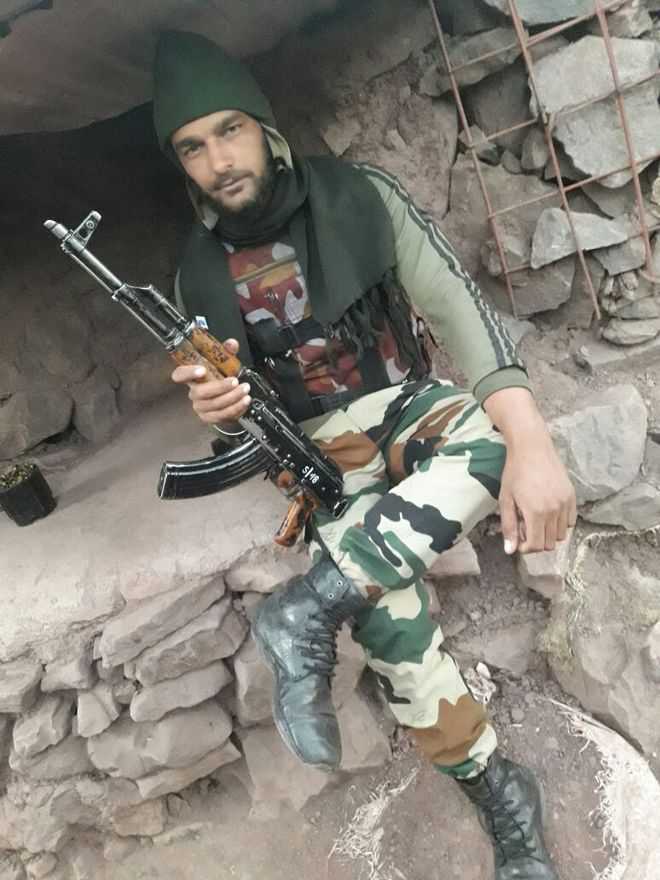
On militant commander Burhan Wani’s anniversary on Sunday, militant group Hizbul Mujahideen released pictures of new recruits that include brother of an Indian Police Service (IPS) officer.Shamsul Haq Mengnoo, 25, a resident of south Kashmir’s Shopian, was pursuing his BUMS from a government college at Zakura on the outskirts of Srinagar and went missing from May. Shamsul’s elder brother Inamul Haq is 2012 IPS batch officer who is posted in north East.“Yes, Shamsul has joined Hizbul,” a police officer said.The picture of Shamsul holding a gun shows his date of joining militant ranks on May 25, 2018.  His code name shown in the picture is Burhan Sani. Over the past two years, it has been a trend of the new age militants they announce their joining by releasing pictures with guns on social media.  Shamsul is the fourth highly-educated youth to join militant ranks this year.  Hizb has reportedly also released pictures of over a dozen other new recruited militants on Burhan’s anniversary.  Over 50 youth already have joined militant ranks so far this year.Meanwhile, normal life was affected across Kashmir Valley on death anniversary of militant commander Burhan Wani.  His killing in 2016 had triggered a six month long unrest that led to the killing of nearly 80 people.  Authorities had imposed curfew in Tral- the native town of Wani and restrictions were imposed in many part of Srinagar to ensure peaceful day.


CRPF women commandos all set to deal with stone throwers

CRPF women commandos all set to deal with stone throwers

Women CRPF personnel keep vigil at the Jammu base camp for Amarnath yatra. Tribune Photo

Srinagar, July 1

The Central Reserve Police Force (CRPF) is all set to launch a special unit of over 800 women commandos to deal with stone throwers, among whom women are increasingly figuring, in Jammu and Kashmir from mid-July, say officials of the force.The CRPF, which is handling internal security in Jammu and Kashmir along with the state police, took the step to launch a special women’s unit as the number of women stone throwers is rising in the strife-torn region.The officials in the 3.5 lakh strong force said the initiative was taken as commandos had to face criticism from human right activists whenever they took action against women stone throwers.Women commandos are currently getting one-and-a-half month training at CRPF’s Humhuma recruitment training centre here and the force has decided to deploy them with their male colleagues whenever any stone-throwing incident is reported in the Valley.Like their male counterparts, the women personnel of the unit will be equipped with full body protection suits, helmets, wooden sticks, tear gas shotgun shells as well as pelargonic acid vanillyl amide (PAVA) shells or chilli-filled grenades, plastic bullets and other necessary things used to control the crowd during incidents of stone throwing.“Stone-throwing incidents have been repeatedly challenging security forces across the state. It is more challenging than militancy,” Zulfiqar Hasan, Inspector General (Operations), CRPF, said.“We are in the process of launching a special CRPF women commando unit to deal with women as well as men who throw stones. Over 800 women personnel are being trained here for the purpose,” said Hasan.Asked about the exact time of their deployment, he said, “Our women commandos are about to complete their training. They will be used to deal with stone throwers within 15-20 days.”“As we had to face denunciation from public and human rights departments for using force against women stone throwers, we thought of raising a women force to deal with the situation. Stone throwers have often been accused of hindering anti-terror operations in Jammu and Kashmir and it has been observed that women have started participating in such incidents in recent times,” said the IG.Controlling stone-throwing becomes all the more sensitive when women are involved, said another CRPF officer. He said the decision to deploy women commandos would be a big help for the CRPF. “These commandos are being given rigorous training, including being blindfolded to deal with night-time deployment and repairing malfunctioning weapons in under a minute,” he said. — IANS


800 personnel under training 

  • Over 800 women personnel are being trained for the purpose
  •  The CRPF, which is handling internal security in J&K along with the state police, decided to launch a special women’s unit as the number of women stone throwers is rising in the Valley
  •  Commandos of the force had to face criticism from human right activists whenever they took action against women stone throwers


Major arrested in murder case sent to 14-day judicial custody

Major arrested in murder case sent to 14-day judicial custody

Major Nikhil Rai Handa being taken to a court. PTI file

New Delhi, June 29

An Army major, arrested for allegedly killing another officer’s wife, was on Friday sent to 14-day judicial custody by a Delhi court after the police did not seek his further remand. Metropolitan Magistrate Manisha Tripathy sent Major Nikhil Handa, who was produced before the court on expiry of his four-day police custody, to Tihar Jail here, while allowing the application moved by the crime branch of Delhi Police seeking the same.“Accused is remanded to judicial custody for 14 days. To be produced on July 13, 2018,” the magistrate said.Handa was arrested on June 24 from Meerut in Uttar Pradesh for his alleged involvement in the killing of another Major’s wife in west Delhi on Saturday.The court also held as “infructuous” the applications moved by the counsel for the accused — one for medical examination of Handa every day during police custody and another application seeking lawyers’ assistance at the stage of interrogation.“Since the accused has been sent to judicial custody remand, both the applications have become infructuous and are disposed of,” the court said.During the hearing, the investigating officer told the court that several recoveries were made during the four-day custody and he was no more required for interrogation.The counsel for Handa, advocate Sanjeev Sahai, moved an application to have a 10-minute meeting with the accused, which was allowed by the court.The Delhi Police told the court that it yesterday recovered the knife, allegedly used by Handa to slit the throat of a fellow Army officer’s wife, from a spot near the Meerut-Muzaffarnagar highway. Traces of burnt clothes were also recovered from the spot, it said.The woman’s body was found with her throat slit near the Brar Square in the Delhi Cantonment area.Initially, the police was informed that a woman had died in an accident. Later, when they inspected the body, it was found that her throat was slit, the police had said.The accused had allegedly run a car over her face and the body in order to make the incident appear as an accident, the police have claimed. — PT


Militant killed in encounter in Kupwara district of J&K

Militant killed in encounter in Kupwara district of J&K

A police official said security forces launched a search operation in the forest of Kupwara. Tribune file

Tribune News Service

Srinagar, June 29

A militant was killed in an encounter that broke out on Friday between security forces and militants in the forests of Kupwara district of Jammu and Kashmir, police said.A police official said security forces launched a search operation in the forest of Kupwara following information about the presence of militants there.He said the exchange of firing was going on between the two sides. With agencies


Army chief reviews security in Kashmir

Army chief reviews security in Kashmir

Army Chief Gen Bipin Rawat meetings jawans during his visit to forward areas in North Kashmir on Saturday. A Tribune photo

Tribune News Service
Srinagar, June 23
Days after Governor rule was imposed in J&K, the Chief of Army Staff, Gen Bipin Rawat reviewed the security situation along the Line of Control and hinterland in Kashmir.Gen Rawat arrived in Srinagar on Saturday and immediately visited forward posts along the LoC in the frontier districts of Kupwara and Baramulla, where he was briefed on all aspects of operational and logistical preparedness.He was accompanied by the Northern Army Commander Lt Gen Ranbir Singh and the Chinar Corps Commander Lt Gen AK Bhatt.”The chief was appreciative of the measures and Standard Operating Procedures instituted by the units and formations to meet the challenges posed by the inimical elements,” army spokesman said.Commending the performance of the troops in the recent successful operations, the Army Chief stressed the need to maintain the extra vigil to defeat the evil designs of hostile forces and assured his full support to further strengthen the security posture.Later in the day, the Army Chief called on the Governor NN Vohra at Raj Bhavan in Srinagar and discussed the overall security situation in the Valley.


Army chief meets murdered soldier Aurangzeb’s family

Army chief General Bipin Rawat on Monday met the family of martyred soldier Aurengzeb who was kidnapped and killed by terrorists in Kashmir last week.

Rawat spent over 30 minutes with the parents of Aurangzeb who was a rifleman with 4 Jammu and Kashmir Light Infantry. His bullet-ridden body was found on June 14 at Gusoo Pulwama after a day long search operation.

A video has also surfaced on the internet in which the trooper is seen being interrogated by suspected Hizbul Mujahideen militants about the encounters he had participated in.

The video is believed to be taken moments before the army jawan was killed by militants.

The rifleman was abducted by militants at Kalampora in Pulwama when he was on his way home in Rajouri district for Eid celebrations.

The soldier’s family has also demanded PM Modi to take action. “I want to ask PM Modi if he’s listening to me, why are you appeasing stone-pelters and separatists? Punish the terrorists who killed my son. Why was Ramzan ceasefire announced? Terrorists have no religion, then why operations were stopped against them during Ramzan?” Mohammad Haneef, Aurangzeb’s father had said earlier.

ALSO READ | Shiv Sena attacks ‘extremely weak, inactive’ Defence Minister Sitharaman