All posts by webadmin

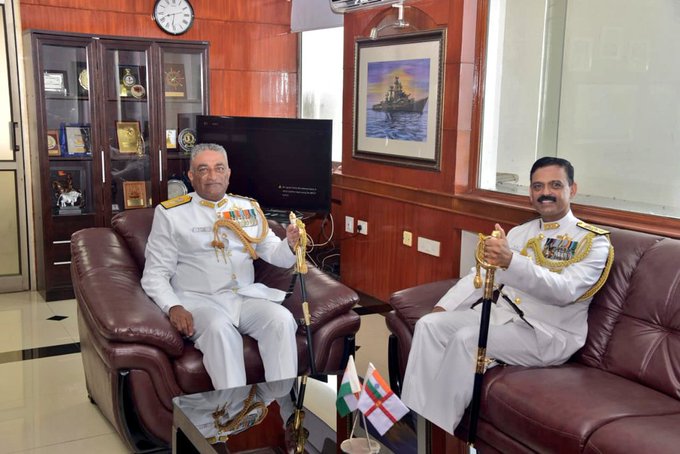
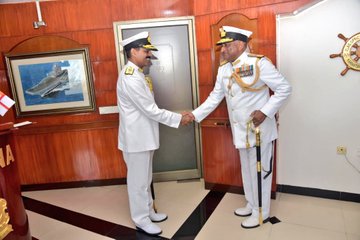
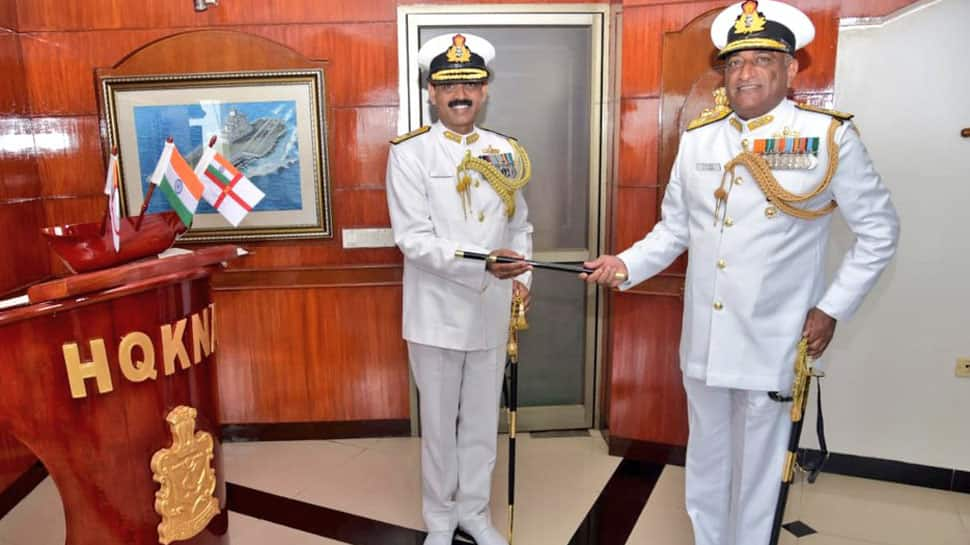
Rear Admiral Mahesh Singh assumes charge as Flag Officer Commanding Karnataka Naval Area

Rear Admiral Mahesh Singh assumes charge as Flag Officer Commanding Karnataka Naval Area

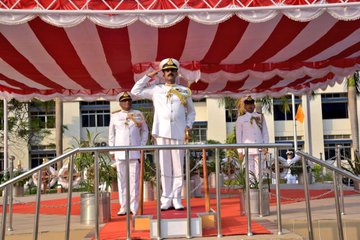
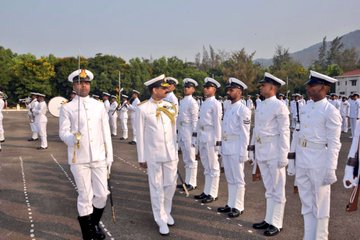
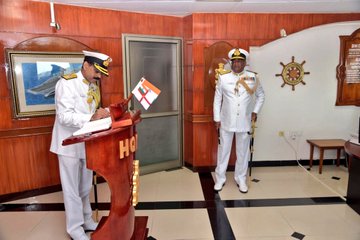
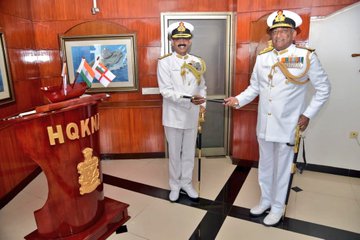
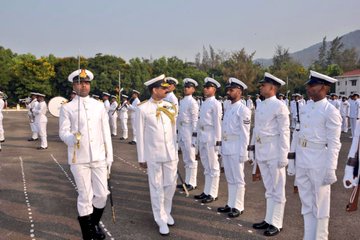
New Delhi: Rear Admiral Mahesh Singh NM on Saturday assumed charge as Flag Officer Commanding Karnataka Naval Area (FOK) at a ceremonial parade at Karwar. Details and pictures from the ceremony have been shared on the official Twitter account of the Spokesperson of the Indian Navy.

View image on TwitterView image on TwitterView image on TwitterView image on Twitter

SpokespersonNavy

@indiannavy

Rear Admiral Mahesh Singh, NM assumes charge as Flag Officer Commanding Karnataka Naval Area (FOK) at a ceremonial parade at Karwar.
An alumnus of the National Defence Academy, he was commissioned into the in Jan 1987 & is a Navigation & Direction specialist 1/n

His notable sea appointments include commissioning crew of INS Akshay and Jyoti, Executive Officer of Frigate Tabar and Command of missile vessel INS Nirghat during Op Vijay, MCGS Vigilante whilst on deputation to Government of Mauritius and the LPD INS Jalashwa 2/n

View image on Twitter

His staff assignments include tenures as Joint Director at the Directorate of Naval Operations and and Principal Director at Directorate of Personnel. He has also headed the Navigation and Direction School at Kochi and the Maritime Warfare Centre at Visakhapatnam 3/3 pic.twitter.com/T6QWnIwwHL

 View image on TwitterView image on Twitter
 40 people are talking about this

Rear Admiral Mahesh Singh is an alumnus of the National Defence Academy and was commissioned into the Indian Navy in 1987 and is a Navigation and Direction specialist.

He has commissioned the crew of INS Akshay and Jyoti and also served as the Executive Officer of Frigate Tabar and Command of missile vessel INS Nirghat during Operation Vijay, MCGS Vigilante while on deputation to Government of Mauritius and the LPD INS Jalashwa.


Ex-servicemen, Veer Naris felicitated

Rajouri, June 16

Sector Headquarters Rashtriya Rifles (RR), under the aegis of Counter Insurgency Romeo Force, on Sunday organised a function at Manjakot in Rajouri district to felicitate former servicemen and Veer Naris. A medical camp was also organised on the occasion.

Maj Gen PS Bajwa, GOC, Romeo Force, inaugurated the event. Brig Akhilesh Kumar, Commander, 13 Sector Headquarters, was also present at the function.

A spokesman for the Romeo Force said about 286 ex-servicemen, Veer Naris and dependents of the martyrs attended the function. About 308 persons, including locals, were provided treatment at the medical camp, organised at the venue by 43 Rashtriya Rifles Battalion. — OC


Army man crushed under truck; villagers block road

Army man crushed under truck; villagers block road

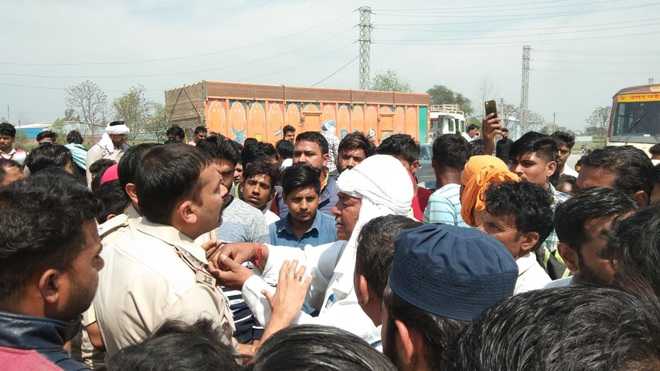
A cop tries to pacify protesting residents of Tigra village in Yamunanagar district on Wednesday. tribune photo

Tribune News Service

Yamunanagar, March 27

Residents of Tigra village blocked traffic on the Yamunanagar bypass, part of the Yamunanagar-Panchkula national highway, near Karera village on Wednesday after an Army man was crushed to death by a truck.

The protesters blamed police officials deputed at a police post situated near the Karera chowk for the death of Naseeb Singh (25) of Tigra village, who was a sepoy in 72 Engineer Regiment of the Army.

They alleged the accident occurred due to the negligence of police officials, who tried to stop him to check his motorcycle documents. He had come home on leave.

Shiv Kumar, a family member of the deceased, lodged a police complaint, demanding action against police officials responsible for his death.

The complainant said Naseeb Singh was going to Jathlana village. When he reached near Karera chowk, two traffic cops and Home Guard personnel were checking overloaded trucks.

“When policemen and Home Guard personnel tried to stop Naseeb Singh, he lost control over the motorcycle, fell down and was crushed under a truck,” said the complainant.

The accident took place around 12.30 pm. As soon as the information of the accident reached deceased’s village, his family and other villagers reached the spot.

They allegedly created ruckus and demanded action against the police and the truck driver. Later, they blocked the national highway.

After getting information of the blockade, officials and Radaur MLA Shyam Singh Rana reached the spot and persuaded the protesters to lift the blockade. However, they lifted the blockade in the evening when the body reached the village after the post-mortem.

DSP Kushal Pal said the matter would be investigated and action would be taken against those responsible.


Pulwama eyewash Pakistan probe findings on expected lines

Pulwama eyewash

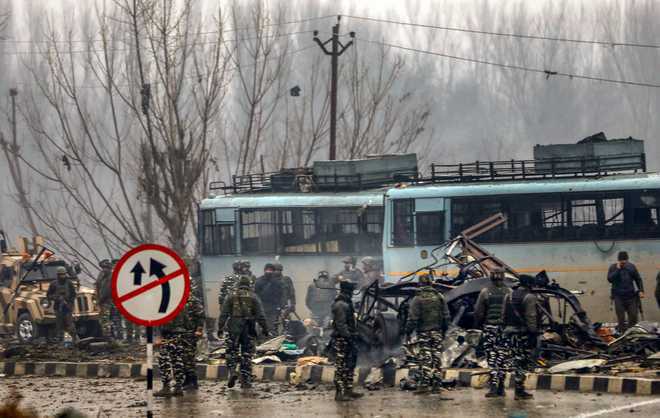
Playing an all-too-familiar tape, Pakistan has claimed that no terror camps exist on 22 ‘pin locations’ shared by India. A month after India handed over a dossier with details of Jaish-e-Mohammed’s (JeM’s) complicity in the Pulwama attack and the presence of JeM terror camps and its leadership in the neighbouring country, Pakistan says it has found no evidence to prosecute 50-odd persons who were detained in connection with the February 14 terror strike. For the record, these suspects had included JeM chief Masood Azhar’s son and brother. After having denied access to the media to the area where the Balakot airstrikes took place on February 26, Pakistan has finally expressed willingness to allow visits — on request — to the locations. These spots have in all probability been duly ‘sanitised’ over the past month. Indian investigators are not likely to find even a shred of credible proof there, as sought by the wily neighbour.

Though these are ‘preliminary’ findings, India can’t expect the outcome to change once the investigation is complete. If Pakistan is sincere about taking its purported counter-terror operations to their logical conclusion, it should throw open the doors of its seminaries, some of which are notorious as breeding grounds for terrorists. This should have been done right after the Pulwama outrage. The reluctance has undone Pakistan’s efforts, already half-hearted, to convince the international community about its intentions to tackle terror.

Amid the jingoistic din raised by a section of the media, credible journalists with an unbiased approach could have shown the true picture to the world, but they were denied the opportunity. Creating a smokescreen has laid bare Pakistan’s agenda to shield the perpetrators of the Pulwama attack, for which the JeM had promptly claimed responsibility. India can go on providing evidence to Pakistan, but it will all be like water off a duck’s back. The fact that Pakistan has laughably identified ‘social media content’ as the basis for India’s documents makes it obvious that this probe is being stage-managed by the deep state.


Once Rafale jets come, Pakistan won’t come near LoC or border: IAF chief Dhanoa

B S Dhanoa,Rafale jets,Balakot airstrikes

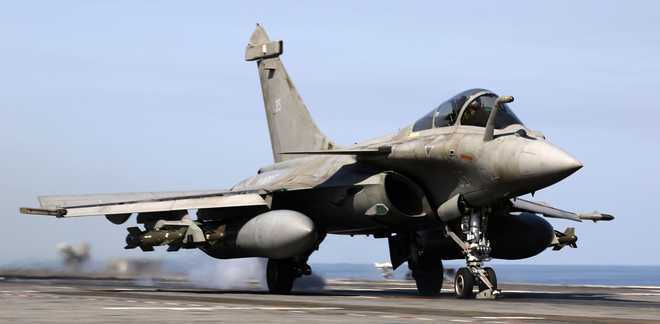
Indian Air Force (IAF) chief BS Dhanoa on Monday said that Rafale jets will the best combat aircraft in the Indian sub-continent and once these are inducted, Pakistan won’t dare to come near the Line of Control (LoC) or the international border.

In an exclusive talk with ANI on Rafale’s air-to air capability in a combat situation, Dhanoa said, “When the Rafale comes in, it will ensure that the deterrence of our air defence will increase manifold and they (Pakistan) will not come anywhere near our Line of Control or border. That kind of capability we will possess for which presently they (Pakistan) don’t have an answer.”On the sidelines of a function organised in Chandigarh for the induction of four US-made Chinook helicopters, he was asked about the situation on February 27 when Pakistani F-16 jets tried to attack Indian military positions, a day after the IAF strikes in Balakot in Pakistan in response to the Pulwama terror attack.

The first Rafale aircraft under a 36-plane deal with France is scheduled to be delivered in September to the IAF.

In military circles, there has been a talk that if Rafales were in the IAF, these would have not have allowed the Pakistan planes to come close to the LoC. The Rafales will be armed with Meteor air-to-air missiles which have the capability of shooting down enemy planes at strikes ranges upto 150 kms.

Air Chief Marshal Dhanoa asserted that at present, it is going to be the best aircraft in terms of the weapons capability in the Indian sub-continent and would be also the best in comparison with what China and Pakistan have.

“We are going to get Rafale in the month of September. Rafale will give a tremendous jump to our capability and it is superior to all the aircraft in the inventory of both our adversaries,” he said.

He also outlined the salient features of the Chinook helicopters and said that these aircraft will be very useful for the IAF in high-altitude regions.

“Ability to transfer heavy loads and acclimatise troops from high altitude into another valley is a game-changing capability. If the enemy surprises us in any such valley, we can move troops immediately to such spots to get into battle. Our ability to do this is now enhanced for day and night with this helicopter,” he said.

Dhanoa, while asserting that inter-valley troop transfer will be helpful for the Indian military along borders with Pakistan and China, outlined that “the high-altitude game is more with China than Pakistan”.

Meanwhile, in response to a question on Pakistan’s claim that Air Chief Marshal Mujahid Anwar Khan flew a JF-17 and led from the front on its National Day, Chief Marshal Dhanoa took a dig at him saying he should be asked where was flying the fighter plane, in the rear cockpit?

Addressing the media during his visit to the Air Force Station at Jodhpur last year, he had said, “Rafale is always a need for the Air Force. It (fighter jets) took a long time to come. Others have upgraded their squadrons.”

The Rafale jet deal controversy has been on the boil over the last few months. Congress has alleged irregularities in the deal for 36 aircraft and claimed that the Narendra Modi government is buying them at a price much higher than the one that was being negotiated by the previous government.

(This story has been published from a wire agency feed without modifications to the text.)

First Published: Mar 25, 2019 13:50 IST


A date with war heroes

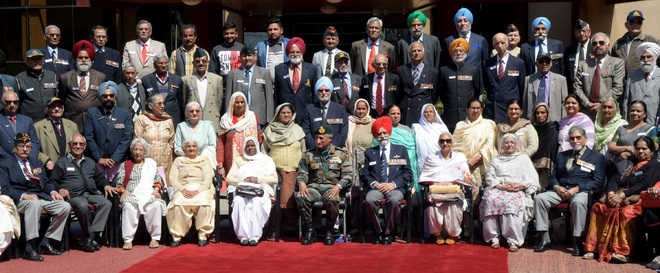
Participants at the national convention-cum-reunion of the War Decorated India in Chandimandir on Friday. TRIBUNE PHOTO: RAVI KUMAR

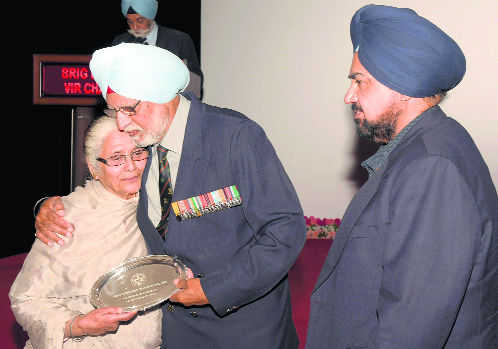
Maha Vir Chakra recipient the late Brig KS Chandpuri’s widow Surinder Kaur Chandpuri and son Hardip Chandpuri (right) being felicitated by Lt Gen GS Sihota (retd) during the national convention-cum-reunion of the War Decorated India in Chandimandir on Friday.

Tribune News Service

Chandigarh, March 15

The two-day national convention-cum-reunion of the War Decorated India (WDI) began at Chandimandir Military Station today. Gallantry award recipients from various parts of the country and next of kin of deceased war heroes attended the event.

Tributes were paid to the recently departed members of the association and war widows were honoured on the occasion. The election of the association president, nomination of executive committee members and issues relating to gallantry awardees and their welfare were part of the agenda. As tales of heroism flowed, old camaraderie was reignited.

The WDI was set up in 1991 to serve as a platform for strengthening camaraderie among the war heroes, further their cause and to provide them any assistance in times of need. Its members consist of recipients of gallantry awards won in the face of the enemy that include the Victoria Cross and Military Cross of the pre-Independence era and the Param Vir Chakra (PVC), Maha Vir Chakra and Vir Chakra, which were instituted post-Independence.

Chief of Staff, Western Command, Lt Gen PN Bali, addressed the gathering. He said the serving military men drew inspiration from the bravehearts who fought valiantly for the motherland and in the process many had laid down their lives.

The convention is held once in four years. The event this time was relatively a low-key affair with lesser number of participants as compared with past occasions as the number of war heroes has been dwindling over the years.

Among the Victoria Cross awardees, relatives of the Late Nb Sub Nand Singh of the Sikh Regiment, Late Sub Ram Sarup Singh of the Punjab Regiment and Late Badlu Singh of the Jat Lancers were felicitated. Dhano Devi, wife of Late Col Hoshiar Singh of the Grenadiers and daughter of Late Sub Joginder Singh of the Sikh Regiment, both of whom were decorated with the Param Vir Chakra, the nation’s highest gallantry award, was also honoured.

Col Hoshiar Singh was awarded the PVC for his actions while establishing a bridgehead across the Basantar river and repulsing enemy attacks in the Shakargarh Sector during the 1971 Indo-Pak War, while Sub Joginder Singh had led his troops in the face of the enemy despite being heavily outnumbered and defended his post near Bum La in the north-east until he was wounded and captured during the 1962 Sino-Indian War.

Sub Nand Singh’s son, Ripu Daman, who was attending the convention for the first time, pointed out that the names of Indian Victoria Cross recipients did not find a place in the newly constructed National War Memorial in the Capital.

Among those present was Lt Col (Dr) Virendra Sahi, a Vir Chakra recipient form the Battle of Laleali in the Chhamb Sector in December 1971. He had killed a Pakistani officer, who was physically much larger, in hand-to-hand combat after his weapon had jammed. Pakistani troops under the command of a major were able to gain a foothold on the forward tip of the Laleali post that resulted in a hand-to-hand combat between Indian and Pakistani soldiers. Sahi, who was also then a Major commanding an infantry company, had sent a handwritten citation to Pakistan, detailing his opponent’s actions.


Balakot gains being frittered away by Vappala Balachandran

Claims have been made that the Balakot airstrikes were intended to be a strategic step to deliver a strong message and isolate Pakistan. However, any such step has to be followed by other measures by other countries to debar Pakistan from every possible venue. Nothing concrete has been achieved so far.
Balakot gains being frittered away

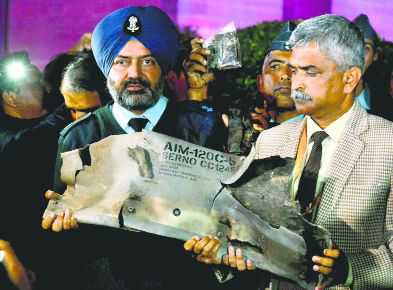
Hazy picture: The government has failed to clear the air over the casualties caused by the Balakot airstrikes.

Vappala Balachandran 
Former Special Secy, Cabinet Secretariat

THE discordant national security discourse after the Pulwama and Balakot incidents is denigrating our armed forces. Widespread exultation over the achievements of our Air Force in Balakot, its heroic resistance to Pakistan’s air aggression and the shooting down of their F-16 have been drowned out by a cacophony of opposing dialectics, including controversies triggered by the ruling party.

The first instance was on March 1 when BJP MP Subramanian Swamy tweeted that ‘just seven persons’ had ‘conceptualised’ the Balakot bombing. His list did not include Defence Minister Nirmala Sitharaman. This made people wonder how our armed forces could operate without their minister’s knowledge. Then came BJP president Amit Shah’s claim during an election rally that over 250 terrorists were killed in the Balakot airstrikes. He criticised the opposition parties for demanding proof of the deaths. This provoked the Congress to say that the BJP was politicising the armed forces. This and other interventions forced the Air Force Chief to draw the red line: “Government counts casualties, not us.” By implication, he conveyed that the Air Force was given targets, which they hit successfully. “We hit the target… otherwise why would they (Pakistan) have responded?”

Since then, all efforts of BJP spokespersons have been to justify the remarks of their president by quoting different sources, named or unnamed. No official figures have been released by the government so far. Simultaneously, the foreign media has been relentless in reporting the Pakistani version that no damage was caused. The opposition parties also complained that the Prime Minister was revealing details during public meetings, not officially. 

That did not prevent leaks from secret operational intelligence, collected by our National Technical Research Organisation (NTRO), from appearing in the media. It was claimed that the NTRO had detected 300 active mobile phones in Balakot area before the airstrikes. No explanation for why the media was given this secret information unofficially was forthcoming. Simultaneously, an investigation by a leading Indian weekly found that residents of Balakot and police officials in Pakistan-occupied Kashmir (PoK) were admitting that the IAF strikes had resulted in military casualties too, “not just destruction of terror infrastructure and militants.”  If this is so, why is the government reluctant to reveal these details, which would only strengthen the official version?

It is true that Union Home Minister Rajnath Singh had indirectly confirmed the NTRO story when confronted by the media during a BSF function on March 5: “Were these mobile phones used by the trees? Will you not believe the NTRO also?” He added that the number of dead at the Jaish training camp would be known “today or tomorrow”. Still, no official account was published. 

At times, the BJP’s dialogue resembled egregious politics descending to the street level when ministers spoke about the dissenters. On March 6, Minister of State for External Affairs and former Army Chief VK Singh called critics and journalists as jonk (leeches).

Such remarks made the Opposition hit back. On March 11, National Conference leader Farooq Abdullah made a frontal charge that the airstrikes were aimed at “winning the Lok Sabha elections”. The next day, West Bengal Chief Minister Mamata Banerjee alleged that the Centre was “stretching the elections till May-end for another strike in April”. Simultaneously, a Central investigating agency appears to be pitting the entire Muslim population in the Valley against New Delhi. The National Investigation Agency’s (NIA’s) recent summons to Hurriyat Chairman Mirwaiz Umar Farooq to come to New Delhi have united all 20 disparate Muslim religious groups behind him as he represents Srinagar’s Grand Mosque, a 300-year-old institution.

Claims have been made that the Balakot airstrikes were intended to be a strategic step of escalation to deliver a strong message and isolate Pakistan. However, any such strategic step has to be followed by other measures by other countries to debar Pakistan from every possible venue. Unfortunately, nothing concrete has been achieved so far. As regards compelling Pakistan to give up its support to terrorists, all we could earn so far is a message from US National Security Adviser (NSA) John Bolton about his talk with Pakistan Foreign Minister Shah Mehmood Qureshi, who had assured to “deal firmly with terrorist groups operating from the country”.

To me, the Balakot strikes were as spectacular as the US bombing of Libya on April 15, 1986. Both conveyed the message, but did not have any strategic impact on the target country. Former CIA Director Robert Gates, who was then President Ronald Reagan’s Deputy National Security Adviser, writes in his memoirs From the Shadows that there was no consensus in the National Security Council (NSC) on the bombing, although the Reagan administration was ‘obsessed’ with Gaddafi from 1981. Secretary of State George P Shultz was clearly against it. Gaddafi was a bigger threat to world peace than even Pakistan, having supplied munitions to the Provisional Irish Republican Army. The immediate provocation was Gaddafi’s bomb attack on a Berlin discotheque patronised by American troops on April 5, 1986, killing 2 Americans, besides a missile attack on a US Air Force plane in the Gulf of Sidra on March 24, 1986.

Seymour Hersh, in his New York Times piece ‘Target Qaddafi’ (February 22, 1987), claims that the entire planning was done by a clandestine group in the NSC led by Col Oliver North, keeping senior NSC members, including Shultz, in the dark. (Do we see a parallel here if we were to believe Subramanian Swamy?) North came to grief only in 1988 for a similar illegal intervention in the 1987 Iran-Contra Affair.

Did the bombing stop Gaddafi in his tracks? No, he executed a much bigger attack by planting a bomb on Pan Am Frankfurt-Detroit Flight 103, killing 270 persons, on December 21, 1988. Gaddafi was killed over two decades later on October 20, 2011, during the Libyan Civil War



Leaked Rafale papers jeopardised national security: Centre to SC

Leaked Rafale papers jeopardised national security: Centre to SC

Documents unauthorisedly produced by petitioners are exempt from disclosure under Right to Information Act, the Centre said.

New Delhi, March 13

The Centre on Wednesday told the Supreme Court that documents filed by the petitioners seeking review of its Rafale deal verdict are “sensitive to national security” and those who conspired in photocopying the papers have committed theft and put the security in jeopardy by leaking them.

The Ministry of Defence said an internal enquiry commenced on February 28 and is currently in progress over the leakage of sensitive documents and it is of utmost concern to find out where the leakage took place.

The affidavit filed by the ministry said documents attached by the petitioners — former Union ministers Yashwant Sinha and Arun Shourie as also activist advocate Prashant Bhushan — relate to war capacity of combat aircraft and have been widely circulated, available to the country’s enemy and adversaries.

“This puts the national security in jeopardy. Without consent, permission or acquiescence of the Central Government, those who have conspired in making the photocopy of these sensitive documents and annexing it to the review petition/ miscellaneous application and thereby committing theft by unauthorised photocopying of such documents relied in this regard…have adversely affected the Sovereignty, Security and Friendly Relations with the foreign countries,” said the affidavit, filed by Defence Secretary Sanjay Mitra.

The affidavit assumes significance as Attorney General K K Venugopal on March 6 hearing before a bench headed by Chief Justice Ranjan Gogoi had alleged that the review petition was based on the documents which were stolen from the ministry.

Two days later, Venugopal claimed the Rafale documents were not stolen from the Defence Ministry and he had meant in his submission before the top court that petitioners in the application used “photocopies of the original” papers, deemed secret by the government.

In the affidavit, the ministry said secrecy was envisaged in various agreements that the Centre had entered into with France and others concerning matters of national security.

It said even though the Centre maintains secrecy, Sinha, Shourie and Bhushan are relying on documents annexed and “are guilty of leakage of sensitive information, which offends the terms of the agreements”.

The Centre said those who have conspired in this leakage are guilty of penal offences under the Indian Penal Code including theft by unauthorised photocopying and leakage of sensitive official documents affecting National Security.

“These matters are now a subject of an internal enquiry which has commenced on February 28 and it is currently in progress. In particular, it is of utmost concern to the Central government to find out where the leakage took place so that in future the sanctity of decision making process in governance is maintained,” said the affidavit, which will come up for perusal before the apex court on Thursday.

The Centre asserted that Sinha, Shourie and Bhushan are using “unauthorisedly accessed documents” with the intention to present a selective and incomplete picture of internal secret deliberations on a matter relating to National Security and Defence and have been used by them with an intention to mislead the apex court.

“The documents presented by the petitioners are failing to bring out how the issues were addressed and resolved and necessary approvals of the competent authorities taken. The selective and incomplete presentation of the facts and records by the petitioners are intended to mislead this court into deriving wrong conclusions which is very damaging to National Security and public interest,” it said.

The affidavit added that the Performance Audit Report of the Comptroller and Auditor General of India on Capital Acquisition in Indian Air Force Report No. 3 of 2019 has already been presented to Parliament and thus is in public domain.

It said documents relied in petition belong to a class “in which the Government of India is entitled to claim privilege under Section 123, 124 of the Indian Evidence Act”.

The documents unauthorisedly produced by petitioners are exempt from disclosure under Right to Information Act and as such petitioners have no authority whatsoever to produce it “before the court without the explicit permission of the Government of India, Ministry of Defence”, it added.

While claiming privilege over the documents relied upon by the petitioners to support the review petition, the Centre said since they have unauthorisedly and illegally produced those documents it has become imperative for the Union of India to seek removal of these documents from the record. — PTI


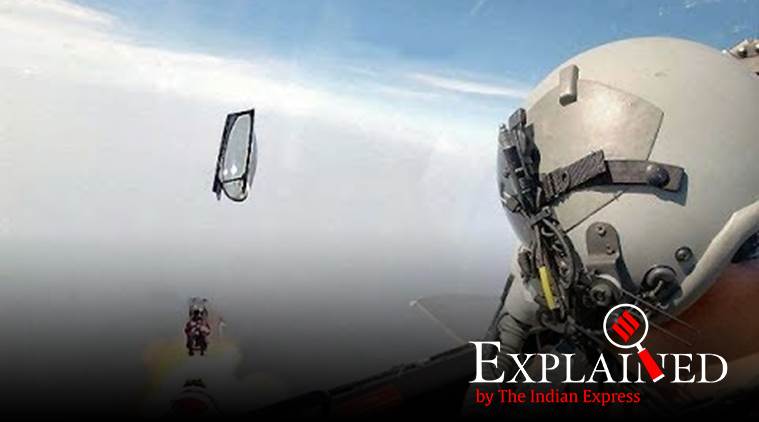
Explained: What happens to a fighter pilot when he ejects from an aircraft

 pilot usually sustains injury either due to the forces involved in ejecting the aircraft, or due to how he landed. There could be significant pain in the back, particularly with standing or ambulating.

IAF flight crash, Mig 21 crash, mig 21 pilot eject safely, mig 21 news, plane crash news, express explained, indian express explained, today explained, explained news

Written by Dr. A.K. Ghori

Within days of what happened to Wing Commander Abhinandan, another MiG 21 pilot has ejected safely in Bikaner on Friday. Fighter pilots face serious challenges in the unfortunate scenario they have to eject. Spine fractures are a common sequela of combat aircraft ejections and these injuries fall on a spectrum from stable compression fractures to unstable burst fractures.

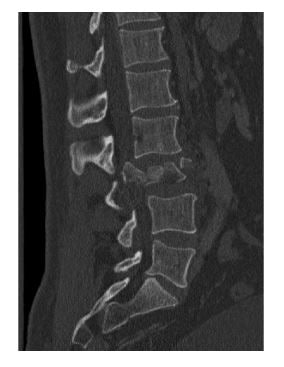
Ejection and landing are the two events when a fighter pilot can sustain a spine fracture. The most common injury is a compression fracture in the thoraco-lumbar junction (T10—L2). (Image 1) Compression fractures are painful, but they heal over 12 weeks with no long term consequences in most patients.Image 1: Compression Fracture- The vertebra is “squished” but overall spinal column is stable allowing for upright posture and ambulation.

With low altitude ejections there isn’t enough time to decelerate adequately for a smooth landing. A hard landing can lead to much worse injuries, such as burst fractures, or fracture-dislocations. These injuries are extremely painful, the pilot would not be able to stand or ambulate, and may experience loss of sensation or motor function in his legs. This injury may require surgical intervention and long term outcome depends on the type of injury, success of surgery, and rehabilitation.


In many cases several of them have gone back to their normal activities, and some have even returned to challenging endeavors such as sky diving and ATV racing.

Image 2: “Burst Fracture” – the vertebra is damaged badly and overall spinal column is not stable, patient cannot stand up or ambulate.

A pilot usually sustains injury either due to the forces involved in ejecting the aircraft, or due to how he landed. There could be significant pain in the back, particularly with standing or ambulating.

MRI and CT scans of the cervical, thoracic, and lumbar spine can reveal a compression fracture. If that is the only spine injury, then pain would probably resolve in six weeks. At this point the pilot can start physical therapy to strengthen his paraspinal and core muscles. After the spine therapy programme, the pilot should be ready for fitness testing to evaluate return to flying status.

The irony is that even with all the modern testing available to us, the most important piece of information is simply looking at the patient’s ability to walk.

Dr. A.K. Ghori, is a Harvard University trained Spine Surgeon practicing in Fort Wayne, Indiana, USA


Five Times The Fire Power: Indian Air Force’s Sukhoi Su-30 MKI Now Capable Of Carrying Up To Five Brahmos Missiles

Five Times The Fire Power: Indian Air Force’s Sukhoi Su-30 MKI Now Capable Of Carrying Up To Five Brahmos Missiles

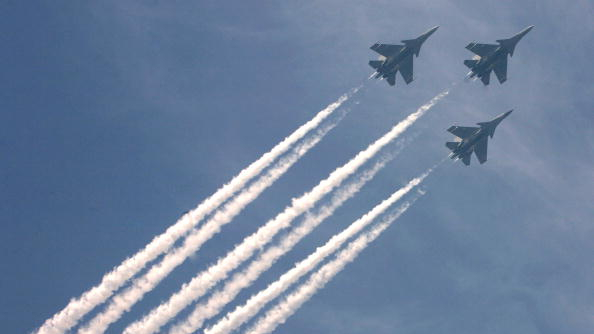
The Russian-origin Sukhoi Su-30 MKI fighter jets of the Indian Air Force (IAF) will be capable of carrying up to five new BrahMos missiles that are being developed by the BrahMos Aerospace – a joint venture of India and Russia.

BrahMos is a medium-range ramjet supersonic cruise missile that can be launched from submarine, ships, aircraft, or land. It is the fastest cruise missile in the world.

At present, the Su-30 MKI can carry one BrahMos missile under its fuselage. However, with the introduction of the BrahMos NG (Next Generation), the IAF fighter jet will be capable of carrying up to five BrahMos missile.

“We proceed from the fact that it will be possible to furnish Su-30 MKI fighters with as many as five new BrahMos NG missiles, which are being developed for light fighter jets. We are planning that a Su-30 MKI plane will be capable of carrying two missiles under each wing and one missile under the fuselage,” BrahMos Aerospace’s chief manager for marketing and exports Praveen Pathak said, as reported by Russian news agency TASS.

BrahMos NG is a mini version based on the existing BrahMos, and will have the same 290 km range and mach 3.5 speed, but will be lighter and shorter than its predecessor.

“Currently, Su-30 MKI planes carry only one missile under the fuselage. The new missiles will considerably boost the aircraft’s capabilities,” he added.