All posts by webadmin

Army operating with people-friendly rules of engagement: Gen Rawat

Army operating with people-friendly rules of engagement: Gen Rawat

File photo of Army Chief General Bipin Rawat. PTI

New Delhi, June 29

Days after imposition of Governor’s rule in Jammu and Kashmir, Army Chief General Bipin Rawat on Friday said Army was operating with “people-friendly” rules of engagement in the Valley.

“Our basic purpose is to go after terrorists who create violence and disturbance in the Valley. Our aim is not to cause inconvenience to civilian population who are not indulging in arson or violence,” he said on the sidelines of an event here.

Jammu and Kashmir was placed under Governor’s rule on June 20, the fourth time in the last one decade, after the BJP withdrew support to its alliance partner PDP forcing Mehbooba Mufti to resign as the chief minister of the state.

“There is nothing like stepping up… Army continues to operate with the formulated rules of engagement,” Rawat said when asked whether security has been stepped up in the Valley after the fall of the government.

The Army chief said in addition to the “stringent” rules of engagement, local formation commanders continuously give guidelines to soldiers as to how to operate.

“Our rules of engagement are very people-friendly and we conduct operations in a very people-friendly manner. And, motivated reports that Indian Army is carrying out brutal operations in Kashmir is not true,” he said.

Gen Rawat had earlier dismissed the recent UN report on alleged human rights violations in Kashmir as “motivated” and asserted that Indian Army’s record in this regard was “absolutely above board”.

The Army chief today interacted with a group of school students, including five girls, from Baramullah and other neighbouring regions of the Valley who visited him here at South Block as part of a national integration tour.

“The message we want these children to go back with, is that if terrorist activities and stone-pelting stops in Kashmir, it too can prosper like Delhi or other big cities, and perhaps even better,” he said. PTI


Indo-Sino military ties have history of sliding into ‘freeze’

Indo-Sino military ties have history of sliding into ‘freeze’

Doklam was the latest standoff

Ajay Banerjee

Tribune News Service

New Delhi, July 15

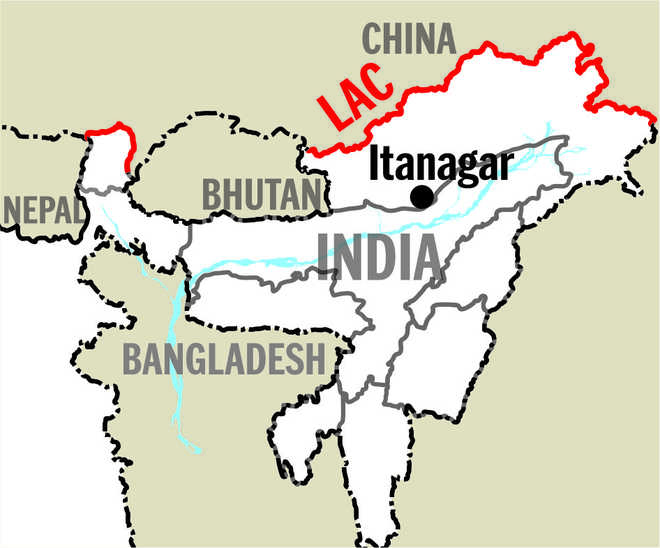
As the militaries of India and China have re-started an interaction and the Ministry of Defence on either side scales up the engagement, history of the past decade reminds of the frequent ups and downs in the relationship. Notwithstanding the recent meetings, the military on either side has not dropped guard. Incidents along the Line of Actual Control (LAC) — the de-facto boundary — have been reduced. However, till there is a resolution on demarcating the LAC on ground, a sense of alertness shall remain, sources indicated to The Tribune. There is no slackness in India’s infrastructure building in the Himalayas.Lt Gen SL Narsimhan (retd), a former commander of the 3 Corps based in the North-East, says, “India-China military relations were never ‘frozen’ as such. Yes, there were issues on the border and they have been managed.” The General is now part of the National Security Advisory Board.  During the 73-day (June–August 2017) Doklam stand-off, there was no major flare up at the LAC barring the clash between troops of either side at Pangong Tso in eastern Ladakh. In the past decade, India-China military relations are dotted with bonhomie turning into a freeze. In December 2007, the two countries conducted their first-ever joint military exercise “hand-in-hand”. In August 2010, India snapped military ties after China denied visa to Northern Army Commander Lt Gen BS Jaswal. Almost 18 months later in January 2012, an attempt to restore ties failed. India cancelled delegation visit after China refused visa to Arunachal-origin IAF officer.Chinese Defence Minister General Liang Guanglie visited India in September 2012 as both sides announced resumption of exercises. A few months later in April 2013, a military stand-off ensued at the Depsang plains, eastern Ladakh—one of the hotly contested areas. In July that year, Defence Minister AK Antony visited China.In September 2014, there was another  change, a  military stand -off ensued at Chumar in South-eastern Ladakh even as Modi- Xi Jinping meet in India.A few months later, in May and August 2015, two additional formal border meeting point opened at Kibithoo,  Eastern Arunachal Pradesh and  Daulat Baig Oldie,  Ladakh, respectively .In   December 2015, Lt Gen DS Hooda, the then northern Army commander led  a military delegation to China. In October 2016 was another watershed event. India and China did a first-ever joint tactical exercise in Jammu and Kashmir, at Chushul, Eastern Ladakh.In February 2017, a 15-member Chinese military delegation visited India. Three months later in May 2017, China put off the military exercise. In April this year, Defence Minister Nirmala Sitharaman met her Chinese counterpart twice and in the same month, Modi-Xi summit was conducted at Wuhan. In the past four weeks, there has been a joint yoga session at Daulat baig Oldie, Ladakh, and a visit by China’s senior military leadership to India.



Major Handa called girlfriend to inform ‘he killed Shailza’

NEWDELHI:Minutes after allegedly killing his fellow officer’s wife, Major Nikhil Rai Handa called and “confessed” about the crime to one of his “girlfriends” in Delhi, police said.

VIPIN KUMAR/HT PHOTOThe police said Handa killed Shailza for objecting to his marriage proposal and unwanted advances.A police officer who interrogated Handa and went through the content on his mobile phones said the arrested officer had at least three girlfriends in the city.

The woman he allegedly called and informed about the murder is much older to him, police said. “He is most attached to this woman. But when he told her about killing Shailza Dwivedi, she thought he was bluffing and disconnected the phone call. She did not feel the need to alert the police,” said the officer.

The woman was questioned by the police but was ignorant about Handa’s crime, which investigators said was “pre-planned”.

“The woman is a divorcee and has grown-up children. We tried to ensure her relatives or neighbours did not get a whiff about her relations with Handa,” said the officer who is not authorised to speak to the media.

Handa had befriended some of these women in 2015 by allegedly creating a fake Facebook profile to send friend requests to unknown women.

“Handa had come across Shailza’s Facebook profile while surfing from the fake account but did not send a friend request when he realised she too was the wife of an Indian Army Major. Instead, he met her directly during a get-together,” said the officer.

Handa told his interrogators that Shailza was “obsessed” with him but her family as well as the police maintained that it was the other way round. Police said she was killed for objecting to his marriage proposal and unwanted advances.

“Each of these women he has had an affair with or was chasing had a faint idea of his multiple affairs but he was able to convince them to continue their relationships with him,” said the interrogator.

To pursue Shailza, Handa arrived in Delhi on June 4 on the pretext of getting himself treated for migraine. Instead, he was using the opportunity to allegedly confront and interact with Shailza at the army’s base hospital in Delhi Cantonment where she was visiting for physiotherapy

sessions

It was the visit to the hospital that gave him away. “When Shailza’s husband could not contact his wife , he visited the hospital and requested to see CCTV footage and spotted Handa in the video,” said the investigator. Since Amit was aware of the alleged unwanted attention his wife was receiving from Handa, he approached the police who informed him of his wife’s murder.

He immediately pointed the finger of suspicion at Handa.


Avoid civilian casualties even during extreme provocation: Guv tells Army after Kulgam clashes

Indian Army in Jammu and Kashmir

Three civilians, including a girl, were killed and two others injured on Saturday when Army personnel opened fire during clashes with stone-pelting protesters in Jammu and Kashmir’s Kulgam district. Image for representation. Photo: Reuters

Following clashes in Jammu and Kashmir’s Kulgam that claimed three lives, including that of an 11-year-old girl’s, Governor NN Vohra on Saturay instructed the Army to follow strict guidelines to avoid incidents of civilian casualties. Authorities ordered a security clampdown in Kashmir on Saturday, on the eve of the second death anniversary of Hizbul Mujahidden commander Burhan Wani.

Expressing deep anguish over the loss of civilian lives, Vohra reiterated the importance of the Army and all security forces strictly adhering to the Standard Operating Procedures (SOPs) to avoid civilian casualties and collateral damage, even in situations of extreme provocation, a Raj Bhavan spokesperson said.

The Governor also re-emphasized the importance of sustained collaborative action and synergy between the armed forces and the state police with the civil administration in dealing with difficult situations to prevent the loss of civilian lives, he added.

The meeting came hours after militants lobbed grenades at security forces in Srinagar and Pulwama.

Three civilians, including a girl, were killed and two others injured on Saturday when Army personnel opened fire during clashes with stone-pelting protesters in Kulgam district.

Meanwhile, Jammu and Kashmir authorities have suspended the Amarnath yatra for today in view of a strike called by separatists to mark the second death anniversary of Wani.

The Pahalgam and Baltal routes will remain closed following precautionary measures on Burhan Wani’s second death anniversary

The 60-day yatra to the 3,880-metre-high holy cave shrine of Amarnath began on June 28.

(With inputs from Ashraf Wani, Ashwini Kumar and agencies)

Also read: How Burhan Wani was killed in encounter on July 8 last year: An exclusive account

WATCH | Burhan Wani’s entire gang eliminated after Shopian encounter


NSG introduces psychology test to select future commandos

NSG introduces psychology test to select future commandos

The new system of induction will ensure that physically and mentally fit personnel are inducted into the force. Reuters file

New Delhi, June 24

The NSG has included a new and comprehensive psychology test for entry-level soldiers aspiring to be inducted and honed as ‘Black Cat’ commandos who undertake special counter-terror and counter-hijack operations in the country.

The federal contingency force till now used to put Army and paramilitary troops under rigorous physical and mental strength tests once they join the commando conversion course (CCC) to get inducted into the premier force.

Soldiers desirous of joining the National Security Guard (NSG), modelled on the lines of special counter-terror forces of the UK and Germany, will now have to undergo a special capsule of psychology tests and questions during the three-month CCC, a senior official in the Union home ministry said.

He said a threshold mark has to be obtained by a soldier in the psychology test like qualifying the other physical and mental parameters in order to join the force.

The force had a “pressing” need for a full-time pyschologist in its commando selection panel and experts of this domain have recently been hired in the NSG, he added.

The new system of induction will ensure that physically and mentally fit personnel are inducted into the force to become and perform as the best commando unit of the country, the official said.

PTI had reported in January that the force, while conducting a Psychological Screening Test (PST) when chosen personnel from various uniformed forces join it on deputation, wanted to have a “regular process” of measuring psychological attributes of a trooper wanting to join it and also for those who are already in the ranks.

The force had also included yoga in the daily fitness curriculum and gradings given by the yoga instructor and the newly-hired psychologist will henceforth be reflected in the performance records of commandos, who undertake continuous training when not part of an operation.

The ‘Black Cat’ commandos of the NSG are segregated into two major units—SAG (Special Action Group) manned by officers and jawans from the Army and the SRG (Special Rangers Group) comprising personnel from paramilitary forces.

The force was raised under an act of Parliament in 1984 as a federal contingency combat unit. It has undertaken numerous operations till now. These include flushing out terrorists during the 26/11 Mumbai siege in 2008 and the 2016 operation when they were deployed to kill terrorists who attacked the Indian Air Force (IAF) base in Pathankot.

Recently, a small team of its commandos has been deployed in the Kashmir Valley to undertake specific ‘house intervention’ and terrorists’ neutralisation operations as part of  their new mandate to “strengthen the security grid” in Jammu and Kashmir.

The force will also train personnel of the Special Operations Group (SOG) of the J&K Police and the CRPF which regularly undertake counter-terror operations in the Kashmir Valley. PTI


Theatre of the absurd Don’t reduce drug tests to a farce

Theatre of the absurd

A NEW demonstration of political piety is participating in drug tests in Punjab—in the full glare of the media, naturally. The unseemly hurry with which politicians are taking tests is unfortunate. Even as the people of Punjab would like reassurance about the “clean” status of their political leaders, they would be far better served by leaders who cleaned up the state. Indeed, the challenge before the state is to remove the scourge of drug abuse and thereby save the future generations from going to waste. Far more critical than Capt Amarinder Singh’s offer to take the test is his announcement that all government employees would be required to submit to an annual inspection. Along with this, the move to make such tests compulsory for all those who seek government service as employment is something that is likely to have a ripple effect. Government jobs are the most sought after, and thus all aspirants would have to ensure that they are drug-free. Since aspirants far outnumber employees, there is a powerful incentive for the young Punjabis to steer clear of drugs. This rule applies to the police also,  both those who aspire to be in uniform and those already in the force. The issue of drug abuse is complicated and needs a multi-pronged approach, based on a nuanced understanding of the problems — unemployment that has made it difficult for the youth to be meaningfully engaged, education that does not empower them with enough skills to get jobs, general disenchantment, and the easy availability of drugs. Just concentrating on the addicts and low-level peddlers is not enough. The clampdown on the trade has to come from the top—the politicians and the police need to be held accountable. The involvement of a shockingly high number of police personnel is dismaying. They have to be weeded out ruthlessly. Instead of posing at photo-ops, political leaders should do their duty in providing the leadership and the atmosphere that will ensure a drug-free Punjab.


IMA cadet robbed of car at gunpoint

Tribune News Service

Yamunanagar, June 20

An under training Army officer was robbed of his car at gunpoint near the district’s Bhambhauli village on Wednesday.Under training Lieutenant Bhanu Pratap (27) of Jagadhri had gone to Saharanpur in Uttar Pradesh to attend his friend’s wedding on Tuesday night.The next day, he was to visit Chandigarh. He left from Saharanpur at 3.30 am. On the way, he stopped his car at a “dhaba” on the Jagadhri-Panchkula national highway near Bhambhauli village to take a nap inside his car.“After 15 minutes, a man knocked at the window of my car. I woke up and when I opened the window, a man pointed a pistol at me. Soon, two more persons joined him. They snatched the key of the car and my wallet,” Bhanu Pratap told The Tribune.He said the robbers came in Toyota Liva. “They left their car at the ‘dhaba’ and took away my i20 There was more than Rs10,000 ATM cards, a voter card, a PAN card and an Aadhaar card in my wallet,” Bhanu said.He said the robbers were between the 25 and 30 years. “Two of them were speaking Haryanvi and the third was speaking a local language.”Bhanu’s father Somesh Chauhan said Bhanu had joined the Army as a trainee Lieutenant on January 1, 2018. “He is undergoing training at Indian Military Academy, Dehradun. He came home on June 10 on leave.”Chhappar police station SHO Ramesh said Toyota Liva was robbed from Barwala in Panchkula district on April 16 and a case was registered at Barwala police station in that connection the next day.On Bhanu’s compliant, a case has been registered against unidentified persons under Sections 392 (robbery), 397 (robbery or dacoity with attempt to cause death) and the Arms Act at the Chhappar police station.


The Defence Minister’s statements on the Cantonment issue only adds insult to injury

In a recent post, I had pointed out the confoundment of serving and retired armed forces personnel, many of whom like me are votaries of this government, at the inexplicable decisions adverse to the welfare and morale of armed forces, taken by successive defence ministers in the past four years. Last in the series of such decisions was the arbitrary order passed by the present Defence Minister for the opening of all cantonment roads to the public.

In view of certain inaccurate and misleading remarks made by the Raksha Mantri (RM) during her recent press conference, here’s an examination of this decision and her defence of it in detail. It’s not clear whether it was the positive reaction by a handful of people benefitted by the opening of these roads, lack of accurate advice, or poor judgement which prompted these remarks. But inaccurate they definitely were. The aim is to present facts in case the minister isn’t already fully aware of them. It is also to ensure that this government, which is doing good work in many other spheres, isn’t ‘penny wise pound foolish’ to trip on such issues.

First of these statements is, “a total of 850 roads were closed in various cantonments, out of which 119 were blocked without following laid down procedures and now some 80 of them have been opened while 24 remain closed and rest of the 15 have been partially opened. Of the 39 roads that remain closed despite the order for their re-opening; 14, the highest, is in Secunderabad.”

The inconsistencies in this are as follows:-

The amended Cantonments Act was passed in 2006, as per the Article 258 of which, the GOC-in-C is the competent authority to sanction closure of roads for security reasons. It further states that public notice will be given inviting objections prior to closing such roads.

This act was passed in 2006, and cantonments have been in existence for much before that, governed by the earlier Cantonment Act of 1924. Section 192 of this act applied to the closing of roads, which did not have any provision for giving public notice or inviting objections. The roads were closed much before 2006, as per prevailing rules, obtaining the sanction of the GOC-in-C. The Act of 2006 does not mention anything about giving public notice/seeking objections with respect to roads already closed at the time of its enactment.

In 2014, eight years after the Act of 2006 was passed, Andhra Pradesh High Court ruled on a collection of writ petitions and PILs against the closure of the 14 roads in Secunderabad cantonment mentioned by the Defence Minister. Dismissing all the petitions, the honourable High Court ruled that these closures were valid and within the powers of the GOC. On the other hand, it took cognisance of the fact that petitioners wanted to use these roads “for convenience or because of their better motorability”, a matter that “required immediate attention of the civilian authorities” who should “take expeditious steps to improve the alternate roads so that ordinary people are not subject to any inconvenience.” It further stated that “the army authorities have imposed restrictions in a phased manner and such decision cannot be held as one made in an arbitrary manner.” Since the Cantonment Act of 2006 is cited in above judgement, it is clear that the ruling did not consider any irregularity vis a vis the same. It’s on the strength of this judgement that the 14 roads remain closed despite orders by MoD.


The above judgement quotes rulings by other courts in similar cases from across the country, including one from Supreme Court, in all of which the closure of roads has been upheld. (full text of judgement here)

After the defeat in court, the residents and their elected representatives did not appeal in Supreme Court as they probably knew it would meet the same fate. Instead of pressurising the civic authorities to provide better alternate routes as per the judgement, they took the easier route of trying to put political pressure on the then Defence Minister Mr Parrikar. There were several rounds of meetings in which the army authorities down to the station commanders were summoned to the Minister’s office and given an opportunity to explain the ground realities. Based on this, Mr Parrikar upheld the army’s decision and even offered handing over defence land to construct alternate route as directed by the court.

Instead of using his influence to speed up the construction of the alternate route, the local MP built an alliance of interest with local representatives of areas adjoining the 62 cantonments. This group seems to have started the whole discussion de novo once Ms Sitharaman was appointed the Defence Minister. It’s not clear whether she was aware of Mr Parrikar’s decision and whether she consulted him on the matter before arriving at a decision to go against it, not only in the specific case of Secunderabad, but across all 62 cantonments. Consequently, she ordered the Ministry of Defence to issue the following letter-

Not only do these instructions completely ignore the judgement of 2014 and subsequent deliberations and the decision by Mr Parrrikar, but also subsume the powers of the GOC-in-C to be the final authority for closing any roads as laid down in the Act of 2006. To my mind, this letter is not only in contempt of court (whose order cannot be overruled by a ministry letter), but also implies that the Ministry considers the GOsC-in-C, the senior most rung of field commanders under whom the nation’s army would go to war, incompetent to take prudent decisions on this matter without supervision by it. It is also an insult to the Parliament which vested these powers in the GOC-in-C through the Act of 2006.

Did the Minister consider these aspects before taking the decision and thereafter publicly defending her decision?

The second statement that is inaccurate and misleading is “The order by the ministry of defence addresses traffic related issues. Places where unit lines exist or where families of our servicemen are living, we are cautious about its security”. The Ministry of Defence letter does not distinguish between roads closed to address ‘traffic related issues’ and places which have security implications. On the contrary, the letter calls for an ‘annual review’ of all roads closed. Do they expect the unit lines and family quarters to shift to different locations warranting such annual reviews?

The third misleading statement is “Army Chief General Bipin Rawat and other top brass of the force were consulted before the government decided to allow civilian access to roads in military cantonments across the country”. Misleading, because of the time allocated for such deliberations, as is apparent from the schedule below (Source)

As per this schedule, the issues of road closure was discussed by the Defence Minister with various stakeholders for a total of 485 minutes (8 hours and 5 minutes) between 2nd April and 23rd May before the blanket order dated 28th May was issued. Out of this, the Chief of Army Staff (COAS) or any other army representatives were included for 170 minutes (2 hours and 50 minutes) and time allotted to meet with elected representatives was 2 hours. It’s questionable whether the decision to open 119 roads could be adequately deliberated in this time frame.

The Army brass cannot be completely absolved of blame either, as they seem to have been unable to put across the facts and implications of such a decision convincingly enough. On the contrary, when asked to bow, they kneeled. Although the ministry letter talks only about the opening of roads, without mentioning any restriction on checking vehicles that pass by, the following letter issued by the Army Headquarters did away with any security checking as well.

Delhi Cantt shown Independent below in pre-1965 map

IMG-20180611-WA0024

It’s unbelievable that security checks, which are routinely carried out at hotels, malls, airports etc, have been dispensed with for vehicles passing through cantonments. Whether this was because of any instructions in addition to this MoD letter, or due to over-enthusiasm by the army authorities to comply with the order and even go a step further, is unclear.

How much of all this has happened with the full acquiescence of the Defence Minister based on complete knowledge of facts is difficult to say. Whether the inconsistencies in her statements pointed out above are deliberate or due to lack of adequate briefing is hard to guess. But at the end of the day, she’s responsible for this irrational and hasty decision. And heaven forbids if there is a single untoward incident, will she look back and wish she had given more time and thought to the matter?


First time: CRPF inducts 500 women personnel to counter protesters in Kashmir

First time: CRPF inducts 500 women personnel to counter protesters in Kashmir

File photo for representation.

Srinagar, July 1

Breaking yet another glass ceiling a special contingent of about 500 women CRPF personnel has been brought to Kashmir Valley for regular security duties and tackle the unruly crowds and stone-pelters, a senior officer of the paramilitary force said.The women personnel, largely in constable ranks, are based at Central Reserve Police Force recruit training centre in Humhama in the summer capital of Jammu and Kashmir and are being trained in counter-riot and anti-militancy operations.“This is the newest theatre of operations where women personnel have been brought in. This is the maiden team of women personnel in the Kashmir Valley. A few years back, the CRPF women troops were inducted into the anti-naxal operations grid in Chhattisgarh and Jharkhand,” the officer told PTI.He said the women, after their 45-day induction training and combat-stress inoculation, will be deployed in the Valley to tackle stone-pelters and protesters, including women.It was believed that the special anti-riot wing of the paramilitary force — the RAF — could be brought into the Valley to tackle violent protests by civilians and stone-pelting incidents but that was not found feasible, he said.“It was then decided why not induct women to tackle these situations faced by CRPF units in the Valley on a regular basis. These 500 women personnel will be deployed in downtown Srinagar and other parts of the Valley very soon,” he said.The women, according to their training officer Manju K, were now familiarising with the topography of the Valley, Srinagar town and are being trained to handle “less-lethal” ammunition and weapons such as rubber bullets, pellet guns, pump-action guns and tear gas shells and PAVA shells, chilli-based non-lethal munitions.They will also be armed with regular assault and lethal weapons such as the AK-series rifles and the INSAS so that in case of a terrorist attack they can retaliate, take the opponent down and defend themselves, the training officer said.A fresh lot of body protectors and bullet-proof armour is also being procured for the special women squad inducted for operations in the Valley for the first time, the officer said.It was thought, the official said, by CRPF commanders that with instances of women and girls undertaking pitched battles with security forces and targeting them with stones, it will be wise to deploy women personnel to counter them.“There are women personnel in regular CRPF and Rapid Action Force units in all parts of the country so why not in Kashmir? The women were inducted into these combat forces with the belief that they are as good as their male counterparts,” the officer said.Constable Nita K, who is a part of this squad, told PTI she and her colleagues are taking special training sessions to understand the security situation and the response mechanism.“The focus of the training is to ensure that there is no collateral damage during action from our side and that force is used rationally as those whom we face are our countrymen and youngsters who are misled. Tacking stone-pelters and protestors, both men and women, will be a special task for us,” the trooper from Jharkhand said.The training officer said the force has started building accommodation and other infrastructure for the women personnel at its camps in the Valley and they will be deployed in combination with regular CRPF units working there for decades.Mobile toilets and troop carriers are also being brought in to aid the female troopers, he said.The CRPF, India’s largest paramilitary force with about 3 lakh personnel, has about 60 battalions deployed in Jammu and Kashmir for law and order and counter-militancy operations. — PTI