All posts by webadmin

Himachal in peril: Climate change unleashes fury on Dev Bhoomi

Catastrophic floods and landslides now frequently devastate mountain slopes, washing away human habitations, orchards, crop fields, water mills and even damaging hydropower projects

Himachal Pradesh, often called Dev Bhoomi — the abode of Gods — is reeling under the fury of nature. Known for its pristine landscapes, cultural richness and favourable climate, the state has long been a favourite destination for Indian and international tourists alike. Its thriving fruit orchards and off-season vegetable economy not only sustain local livelihoods but also add to its charm as a year-round tourist attraction, except for the monsoon slowdown. Interestingly, even during the rains, regions such as Pangi, Lahaul and Spiti and Kinnaur remain accessible, while pilgrimages like the Manimahesh Yatra, Shri Khand Mahadev Yatra and Kinnar Kailash Yatra draw devotees in large numbers between Janmashtami and Radha Ashtami.

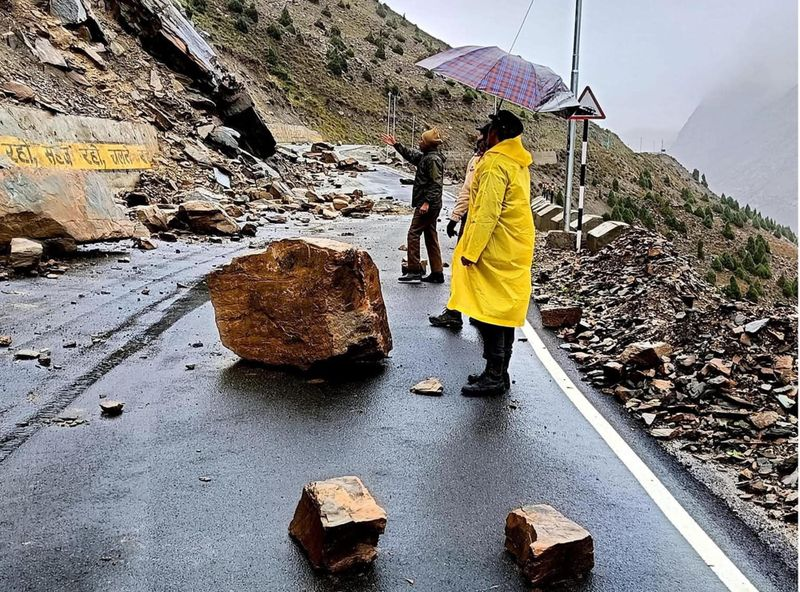
Yet, in recent years, climate change has unleashed disasters of unprecedented intensity. Catastrophic floods and landslides now frequently devastate mountain slopes, washing away human habitations, orchards, crop fields, water mills and even damaging hydropower projects. Precious lives, property and livelihoods continue to be lost. While cloudbursts are not new to the Himalayas, their frequency and scale in the last few years have been alarmingly high. Last year, the year before and now again, the state has witnessed nature’s fury on a terrifying scale — beyond the imagination of both citizens and planners.

Reports suggest that cloudbursts have struck across Himachal — from Chamba to Nahan — but the devastation in the Janjehli-Thunag area of Mandi district is particularly alarming. For the second consecutive year, this region has suffered heavily: 69 lives lost, hundreds injured, livestock perished and around 400 homes destroyed. With road networks crippled and communication lines snapped, relief has become a daunting challenge. Essential supplies — food, clothing, medicines — are now being air-dropped with the help of Army helicopters, while NDRF and SDRF teams work tirelessly on the ground.

Advertisement

This raises urgent questions: Why is nature’s fury intensifying each year? What has gone wrong with our approach to mountain development and planning? Is reckless road construction, unplanned urban expansion or indiscriminate hydropower development at fault? The Himalayan temperature is rising faster than the global average and factors such as methane emissions from hydropower reservoirs (eight times more potent than carbon dioxide) may also be aggravating the crisis.

Equally worrying is the unscientific approach to road building — reckless dumping of debris, improper rainwater channelisation, steep slope cutting and poor stabilisation work — all of which destabilise fragile mountain slopes. The obsession with four-lane highways needs rethinking. Alternatives like ropeways for mainstream transport, improved public transport and the adoption of electric vehicles could ease tourist traffic and reduce ecological strain.

The way forward requires political will. Committees of ecologists, geologists, meteorologists and technocrats with ecological expertise must be empowered to recommend scientifically sound, sustainable strategies. Only then can Himachal Pradesh — and the fragile Himalayas at large — hope to balance development with ecological preservation, turning the much-talked-about but seldom-practiced idea of sustainable development into a lived reality.

(The writer is president of the Himalaya Niti Abhiyaan)
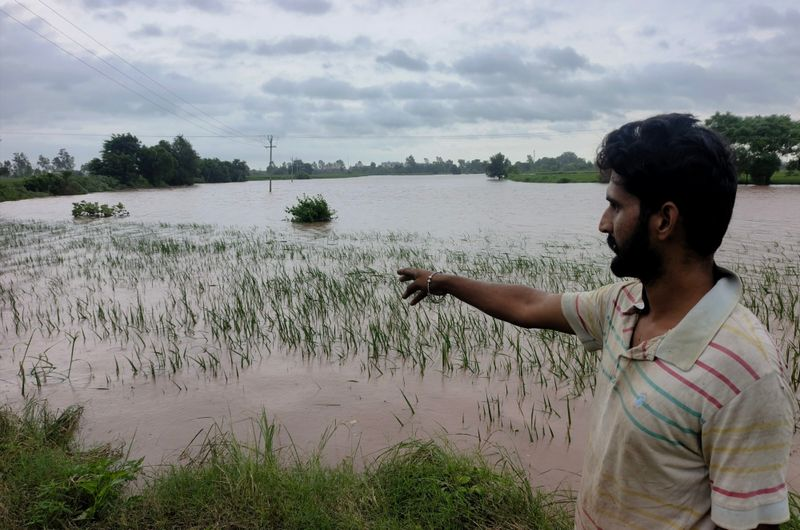

Ghaggar overflows, submerges crops on 1,450 acres in Patiala

Tribune News Service

Crops on around 1,450 acres in 16 village have been affected after water entered the fields falling alongside the Ghaggar, said Deputy Commissioner Preet Yadav. No breach has been reported in the banks.The rising water has claimed one life.

At Jul Heri village, Sita Ram said although no breach had been reported, water was flowing over the banks and entering the nearby fields. A similar situation was witnessed at Kami Khurd, Chamaru, Sarala and Untsar villages.

The Ghaggar level had touched the danger mark near Sarala Kalan village.

The Tangri, which covers much of the area in Haryana and crosses through parts of Patiala, is flowing 1.7 feet above the danger mark of 13.7 feet, followed by the Markanda, which is flowing at 21.2 feet, while its danger mark is 22 feet.


Relentless downpour, snowfall cut off Lahaul-Spiti

article_Author
Dipender Manta

Continuous heavy rain and fresh snowfall have disrupted normal life in Lahaul and Spiti district, leaving the region cut off from the rest of Himachal Pradesh. Several key roads have been blocked due to landslides, flash floods and snow accumulation, severely affecting transportation and power supply across the valley.

The district has been witnessing relentless rainfall for the past three days. As a result, temperatures have dipped sharply. Higher reaches have been blanketed in snow. The strategic Kunzum Pass, located at an altitude of 14,931 feet on the Sumdo-Kaza-Gramphu highway, received fresh snowfall of over 23 cm. The accumulation has completely halted vehicular movement between Gramphu and Losar, leaving commuters stranded and cutting access to Spiti valley.

Similarly, the Darcha-Shinkula-Padum road remains blocked due to flash floods in the Zanskar valley of Union Territory Ladakh. The Manali-Leh highway is also closed at multiple points. A flash flood at Pagal Nala damaged a temporary bridge, snapping connectivity. Beyond Darcha, landslides have been reported at various locations, further obstructing the route. In addition, the Sansari-Killar-Thirot-Tandi road, the lifeline to the remote Pangi region, is impassable beyond Udaipur due to multiple landslides.

With all key roads blocked, Lahaul and Spiti district is effectively isolated. While efforts are being made to restore connectivity, the situation has triggered a crisis for local farmers. The region’s vegetable growers, particularly those cultivating high-value exotic crops like cauliflower and broccoli, are facing mounting losses.

Ramesh Kumar Rulba, former chairman of Zila Parishad Lahaul and Spiti, expressed deep concern over the plight of farmers. “Our farmers are in shock. Cauliflower, broccoli, and other vegetables are ready for harvest, but with roads blocked, there is no way to transport the produce to markets. The crops are beginning to rot in the fields,” he said.

He urged the government to take immediate steps to clear roads and explore alternative means, such as airlifting produce, to save farmers from financial ruin.


All 23 districts in Punjab declared flood-hit

Depts to repair infra on war-footing; telcos told to ensure seamless connectivity

article_Author
Ruchika Khanna Tribune News Service

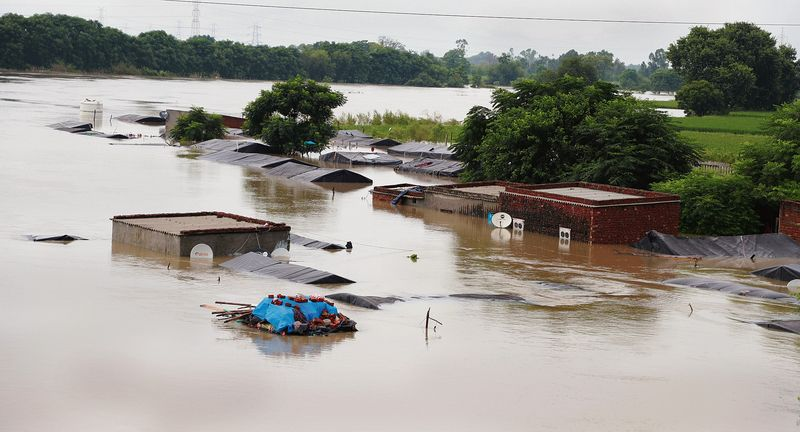
All 23 Punjab districts were declared flood-hit on Tuesday by the state government, which activated emergency responses under the Disaster Management Act, 2025.

Till Monday, 12 districts were affected by the worst-ever floods witnessed in decades. In an order issued by Chief Secretary KAP Sinha, deputy commissioners have been empowered to act on their own in case of any threatening disaster situation and be prepared for emergency.

19,600People rescued

Around 1,400 villages hit and standing crops on 4 lakh acres submerged under floodwater

The Public Works, Water Resources and Power Departments have been instructed to start repairs of their infrastructure on a war-footing.

Telecom operators have been instructed to ensure mobile and landline connectivity while officers instructed to ensure smooth movement of people and essential services in their respective areas.

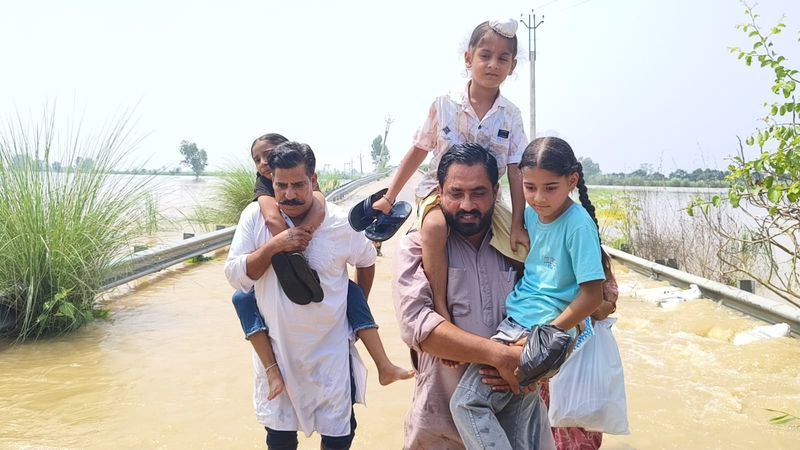
Even as the situation in flood-ravaged Punjab is yet to be assessed by central teams, 30 deaths have been reported in the state. The floods have affected close to 3.55 lakh people till date. Around 19,600 persons have been evacuated from flood-affected areas, including 1,400 villages.

Standing crops on over 4 lakh acres have submerged under floodwaters.

Both Punjab Governor Gulab Chand Kataria and Chief Minister Bhagwant Mann toured flood affected areas to oversee relief and rescue operations on Tuesday, as civil administration and rescue teams from the Army, Air Force, NDRF and the BSF braced for another spell of heavy rainfall predicted for Wednesday and Thursday.

Till date, 171 relief camps have been set up. As many as 5,167 persons have been shifted there. The rains in the catchment areas, located upstream of the Ravi and Beas in Jammu and Kashmir and Himachal Pradesh, led to the rivers swelling once again.

The water flow in the Ravi at Ujh barrage increased from 7,474 cusecs this morning to 52,341 cusecs in the evening.

A little further downstream of the Ravi at Dharamkot, the gauge at 4.63 lakh cusecs is still inaccessible as water flow continues to be much higher.

Even in the Beas, the water flow at the Chakki bank increased from 1,910 cusecs to 8,400 cusecs by evening. At Dhilwan in Sultanpur Lodhi, the water flow was recorded at 2.04 lakh cusecs, having receded slightly since morning. The Sutlej water flow declined at Ropar. It was flowing at 1.02 lakh cusecs in the morning and came down to 71,486 cusecs in the evening.

The water flow recorded at Harike this evening was 2.93 lakh cusecs. Harike is the place where the Beas and Sutlej converge.

Meanwhile, the water level in the Pong Dam, built on the Beas, was recorded at 1,391 feet, above the danger mark of 1,390 feet. At the Bhakra Dam reservoir, it neared the danger mark of 1,680 feet and was recorded at 1,677.32 feet.

The inflows in both these dams, as well as at the Ranjit Sagar Dam. The highest inflow of 1.71 lakh cusecs was recoded at the Ranjit Sagar Dam, built on the Ravi.


Record rain: Red alert in Punjab, Himachal, J-K; Chandigarh’s Sukhna gates open for record 9th time

Amid ongoing heavy rain in several states, the India Meteorological Department (IMD) has issued red alert warnings for several districts across Jammu and Kashmir, Ladakh, Himachal Pradesh, northern Punjab, northern Haryana, eastern Rajasthan, southwest Uttar Pradesh, northwest and eastern Madhya Pradesh and Odisha.

The updated nowcast suggests moderate to intense spells of rain in these regions over the next three hours, posing risks of flash floods, landslides, and waterlogging.

According to the IMD, districts under red alert in Jammu and Kashmir include Poonch, Mirpur, Rajouri, Reasi, Jammu, Ramban, Udhampur, Samba, Kathua, Doda, and Kishtwar. In Punjab, Kapurthala, Jalandhar, Nawanshahr, Rupnagar, Moga, Ludhiana, Barnala, and Sangrur are under red alert; while in Himachal Pradesh, Mandi, Una, Bilaspur, Sirmaur, and Solan are under similar warnings. Haryana’s Yamuna Nagar, Ambala, Kurukshetra, Panchkula, and SAS Nagar are also under the same warning.

Yamuna level in Delhi continues to rise, evacuation underway

September 3, 2025 10:04 am

The Yamuna River level was recorded at 206.83 metres at the Old Railway Bridge (ORB) on Wednesday at 8 am, officials said. As the river level is expected to rise further, authorities have issued a flood warning, forecasting the water level to reach around 206.90 metres. “As per current indications, the water level by 7 am on September 3, 2025, is likely to be 206.90 metres, and thereafter, the water level is likely to rise,” the flood advisory issued on Tuesday evening had said. PTI

Chandigarh rain: Sukhna Lake floodgates open a record ninth time this monsoon

September 3, 2025 9:29 am

Following incessant rain in the catchment area, the Chandigarh Administration opened two of the three floodgates of Sukhna Lake this morning after the water level of the lake crossed the danger mark of 1,163 feet. The excess water of the lake was released into the Ghaggar river through the Sukhna Choe. According to officials, one floodgate was opened around 7.30 am and the second gate was opened around 9 am up to the height of three inches. It was the ninth time the floodgates were opened this monsoon season.

6 dead, one missing after devastating landslide hits Mandi’s Jangambag area

September 3, 2025 9:21 am

A devastating landslide struck the Jangambag area in the Sundernagar subdivision of Mandi district, Himachal Pradesh, claiming six lives — including four members of a single family — and leaving one person missing, officials said on Wednesday. The sudden landslip buried two residential houses and also trapped a passerby on Tuesday evening. Mandi SP Sakshi Verma said residents heard loud rumbling noises moments before the hillside collapsed, engulfing homes located at the base. “A massive rescue operation was launched immediately after the incident,” said the SP, adding that all six bodies were recovered from the rubble by late Tuesday night despite difficult conditions.


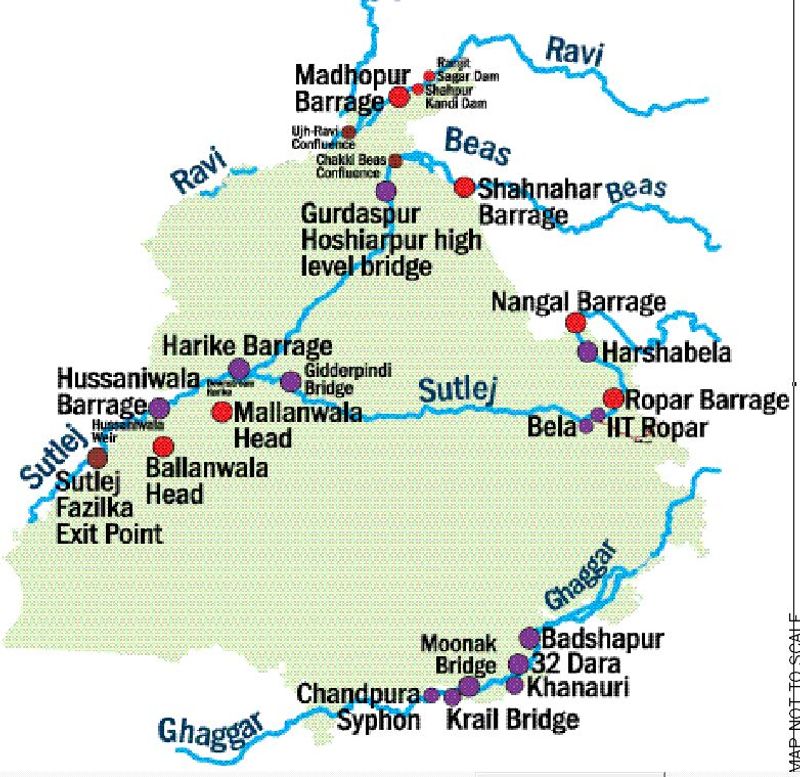
Rivers, Dams, and Headworks of Punjab

Why in the news?

Floods hit Punjab villages due to heavy rain in Himachal, high dam discharges (Bhakra, Pong, Ranjit Sagar), and regulated headworks flow.

Rivers, Dams, and Headworks of Punjab

About the Rivers, Dams, and Headworks of Punjab:

RiverOrigin & Entry into PunjabMajor Dam (Location & Key Facts)Headworks & Functions
SutlejOrigin: Rakshastal Lake (Tibet); enters India at Shipki La (HP); enters Punjab at Rupnagar; joins Beas at Harike, then Chenab in Pakistan.Bhakra Dam (near Nangal, HP–Punjab border).One of India’s highest gravity dams; reservoir = Gobind Sagar Lake; irrigation + hydropower.Ropar: Feeds Sirhind & BML canals (Punjab + Haryana).Harike: Diverts Sutlej–Beas water to Rajasthan & Punjab canals.Hussainiwala: Feeds Bikaner & Eastern Canals (Punjab + Rajasthan).
BeasOrigin: Beas Kund (Rohtang Pass, HP); enters Punjab near Mukerian (Hoshiarpur); flows via Hoshiarpur, Gurdaspur, Tarn Taran, Amritsar.Pong Dam (Maharana Pratap Sagar), HP (Kangra).Major irrigation + power dam; supplies Harike.Harike: Regulates Beas + Sutlej water; feeds Rajasthan & Punjab canals.
RaviOrigin: Bara Banghal (Rohtang Pass, HP); enters Punjab near Pathankot; flows via Pathankot, Gurdaspur;Enters Pakistan and joins Chenab.Ranjit Sagar Dam (Thein Dam), Pathankot (Punjab–J&K border). Irrigation + hydropower.Madhopur: Feeds UBDC canal (Punjab).Madhopur–Beas Link: Transfers surplus Ravi to Beas before Pakistan.
[UPSC 2021] With reference to the Indus river system, among the following four rivers, one of them joins the Indus directly:Options: (a) Chenab (b) Jhelum (c) Ravi (d) Sutlej*

Army swings into action as Beas water level rises to 2.30L cusecs

As the level of flood waters around the Beas in Sultanpur Lodhi has been rising, the district administration on Thursday requisitioned the Army to assist in evacuation of the affected families.

Army jawans reached the site with boats and quickly started the relief operation, helping farmers come out to safer places. The State Disaster Response Force (SDRF) team on Thursday evacuated 100 persons from flood-affected villages and about 60 persons were brought out by the teams of AAP MP Balbir Seechewal.

The level of floodwater rose to 2.30 lakh cusecs this morning, endangering the lives of 2,000 persons choosing to stay back in the marooned villages in the mand areas. Seechewal’s team and the district administration pressed eight motor boats for relief. Seechewal said, “With the water level rising upto 8-10 feet in some locations, the affected farmers were waiting for evacuation. For the same reason, we felt that there is the shortage of motor boats and eight were insufficient to evacuate such a large number of A sunny weather and no rain, however, was the only solace for the villagers and the rescue teams. Meanwhile, the breach in temporary bundh widened to 700 feet, according to official sources.

As many villagers were still unwilling to come out, Deputy Commissioner, Kapurthala, Amit Kumar Panchal has made a fervent appeal to residents of Baupur Mand to immediately move to safer locations as the flood water level continues to rise following heavy rainfall in the hilly regions.

He emphasised that the safety of people remains the administration’s foremost priority and urged those still staying in their houses in affected areas to evacuate at once. The DC said emergency relief centres have been established at Government School in Lakh Waryan, Sultanpur Lodhi, and at Gurdwara Sahib in Mand Kooka for residents of Dhilwan block. These centres have been equipped with arrangements for accommodation, food supplies, and medicines.

40 animals rescued

The district administration has also intensified efforts to protect livestock in flood-affected regions. Officials confirmed that around 40 animals were rescued, using boats and safely relocated these to higher ground. Panchal said teams from the Animal Husbandry Department are conducting regular health check-ups, administering vaccinations, and asking dairy farmers to take preventive measures against water-borne diseases.

The DC appealed to residents in vulnerable areas to seek immediate assistance from administration teams to safeguard their animals. Dr RP Singh, Deputy Director of the Animal Husbandry Department, said six teams have been deployed round the clock for veterinary care. So far, the teams have treated nearly 512 animals and distributed over 172 quintals of fodder in affected areas.

The district administration has urged people to promptly contact control rooms for any assistance. Helpline numbers are 62800-49331, 01822-231990, and the Sultanpur Lodhi Sub-Division Flood Control Room at 01828-222169, all of which remain operational 24/7.

AAP leaders make beeline at flood site

Cabinet Minister Mohinder Bhagat visited flood-affected areas in Baupur to oversee ongoing relief operations. Accompanied by Seechewal, the minister travelled by a tractor to evaluate the government’s flood response efforts. Bhagat issued directives to expedite the evacuation of residents from the affected areas to safer locations. The minister instructed officials to enhance facilities at relief camps established at Lakha Varyan and Mand Kuka gurdwara, focusing on adequate shelter, medical supplies, and food ration. Special attention was directed toward meeting the healthcare needs of women, the elderly, and children. Bhagat also reviewed relief efforts in the flood-affected villages of Baguwal and Kamnewal in Dhilwan.

Jarnail Nangal, Chairman of the Phagwara Improvement Trust and Doaba Zone In-charge of Aam Aadmi Party’s SC Wing, went to Baupur mand area in extending immediate assistance to stranded residents. He, along with volunteers, actively helped in evacuating people trapped in rising waters.


Homes lost, humanity found in flood crisis as relief pours inarticle_Author Manmeet Singh GillTribune News Service


Homes lost, humanity found in flood crisis as

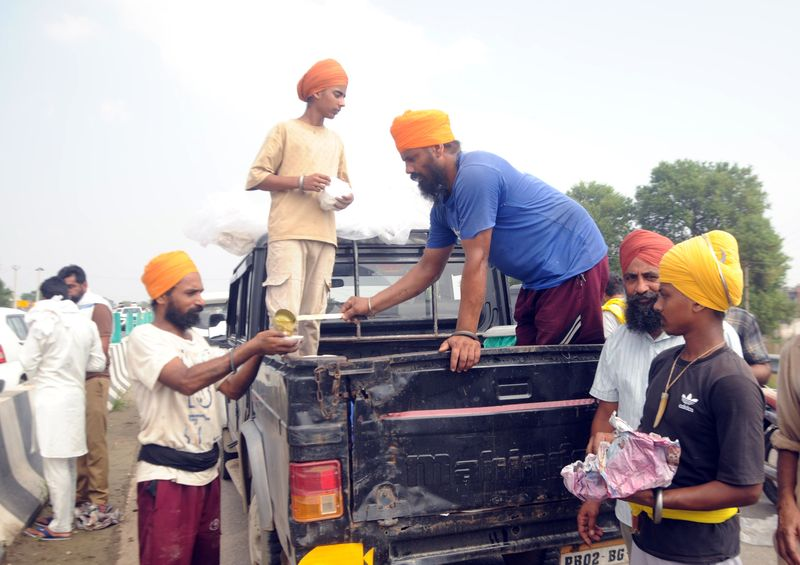
Religious organisations distribute langar to residents of villages affected by floods at Gaggomahal village in Amritsar on Thursday. Tribune photo: Vishal Kumar

Severe floods have recently caused widespread damage across the state, forcing families from atleast 40 villages to leave their homes and belongings behind in areas near Ajnala. The rising waters destroyed houses, crops and livestock, leaving people in a state of shock and helplessness.

But in this time of crisis, a strong wave of support has come from individuals, organisations and religious and social groups who are working together to help the victims. The district administration too has set up three relief camps — Dana Mandi, Ajnala; Cooperative Sugar Mill, Bhalla Pind; and Gurdwara Guru Ka Bagh.

The administration officials informed that an animal shelter has also been set up in Ajnala, where feed and medical help for animals is also available. The administration has also issued helpline numbers for the public.

Apart from the administration, residents of the surrounding areas have also opened homes for people of affected areas. Many residents have made posts on the social media platforms in this regard.

Sarwan Singh Pandher of Kisan Mazdoor Sangarsh Committee said, “We are also setting up camps and langar at Fatehgarh Churrian-Ramdas road and Ajnala. The farmers are also helping the administration with their tractors and trolleys.”

Meanwhile, Balbir Singh Rajewal of Bharti Kisan Union has also issued directions to the members and leaders of the union to help people in this hour of need. “Atleast eight districts of the state have been affected and it is the duty of the residents of areas which remain unaffected to help those who have been affected,” he said.

Local organisation, Voice of Amritsar (VOA) has also come forward to help the residents of affected villages. Seenu Arora of VOA said, “We have set up a collection centre where city residents can contribute help for the affected areas. These centres have been set up at Gurdwara Chevin Patshahi Ranjit Avenue, Krishan Dham Mandir Ranjit Avenue, Ajanta Senior Secondary School Dhab Khatika, and Gurdwara Baba Bhkhari Sahib Majitha road.”


Flood situation turns grim in Ramdass; more villages flooded

The water has reached in the villages near Ajnala town while many villages in the Fatehgarh Churian are also inundated in flood waters

he flood situation in Ramdass belt on the Amritsar and Gurdaspur border has turned grim.

Since the breach in the earthen embankments due to heavy release of water in the Ravi river, more villages had been flooded.

The water has reached in the villages near Ajnala town while many villages in the Fatehgarh Churian are also inundated in flood waters.

The peculiar situation that the administration has been facing that the residents in many villages are not leaving their houses. Apart from administration various NGO, religious organisations, farmer organisations are provided the relief material to those stranded in their houses.

Meanwhile, rescue operations were on in Ramdass area. Administration has been on their toes.

Jasbir Singh of Hardorawal village located in Fatehgarh Churian where the flood water reached yesterday said that the situation has turned dangerous.

Kot Maulvi village resident said that the entire village has been submerged in water and around 500 residents were stranded there. He said the village was ravaged because of Amritsar to Dera Baba Nanak railway line which is higher from the ground.


Villages swamped, flood risk now in Ajnala townarticle_Author PK JaiswarTribune News Service

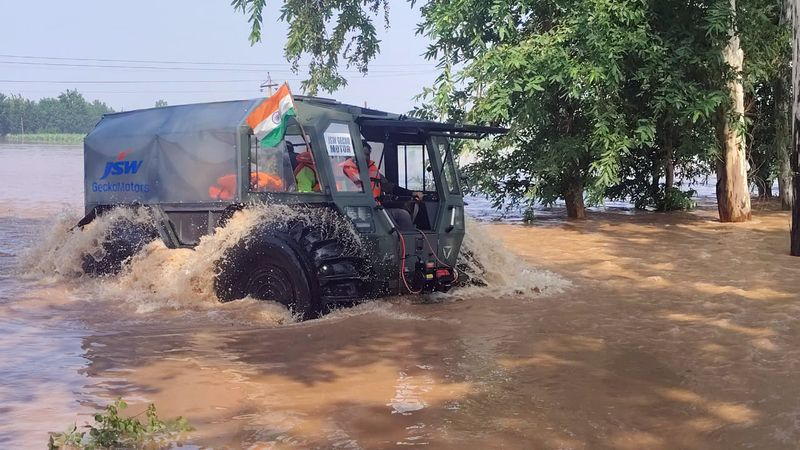
An all-terrain vehicle on its way to rescue villagers in Ramdass.

An all-terrain vehicle on its way to rescue villagers in Ramdass.

The flood crisis in Punjab’s Amritsar district has worsened, with 10 more villages of Ajnala and Lopoke subdivisions inundated over the past 24 hours and water now entering the low-lying areas of Ajnala town.

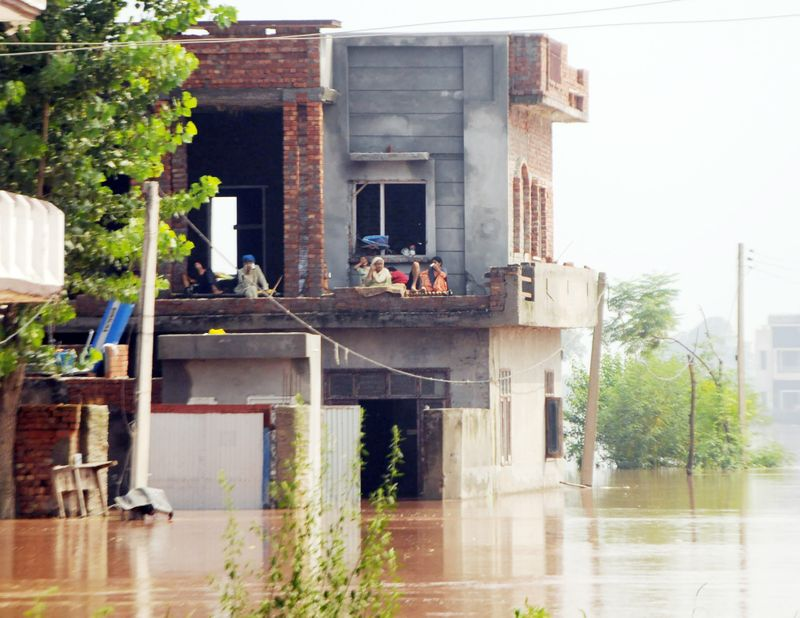
More than 50 villages have been marooned since Wednesday when the swollen Ravi breached a ‘dhussi bundh’ (earthen embankments) in Ramdass.

The district administration has so far shifted around 1,000 people to safer places, with some being rescued by air. Army and police personnel distributed food packets among the affected residents of the villages in Ramdass area, including Gonewawl, Machiwal, Shehzada, Jatta, Pashia, Talibpur, Nishoke, Singoke, Ghaggar, Nangal Sohal and Abbadi Chandigarh.

In some parts, rescue teams encountered resistance as some villagers refused to desert their waterlogged houses, preferring to stay on their rooftops.

The shortage of rescue teams too came to light as several villagers alleged that they had been waiting for two days to be shifted out. Ranjit Kumar of Mandirawala village near Ramdass managed to escape with his family after the water receded slightly. “We kept waiting for help for 50 hours, but to no avail. Our house walls developed cracks and we had to move out on our own. We will staying with our relatives in Amritsar until the situation improves,” said Ranjit.

Jasbir Singh of Hardorawal village in Fatehgarh Churian (Gurdaspur) said the water flow had increased significantly in the last 24 hours. “The floods are a reminder of the 1988 devastation. Our village is now under 10 feet of water,” he said.

A government official said a breach in the Kalanaur canal had caused the flooding in several Fatehgarh Churian villages.

Administrative Secretary Kamal Kishore Yadav and Deputy Commissioner Sakshi Sawhney supervised the relief and rescue operations in Ramdass and Ajnala. Sawhney said 45,000 drinking water bottles and more than 17,000 food packets were distributed, besides 100 quintals of dry fodder and 850 bags (50 kg each) of animal feed.