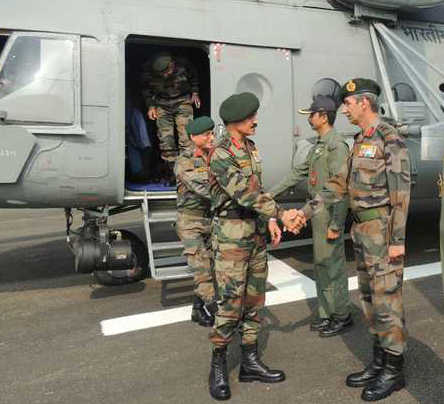
India’s surgical strikes in PoK against terror bases, hotly denied by the Pakistani establishment, were bound to evoke a response. Such a response, in fact, can be treated as confirmation of the strikes and their success. Pakistan’s deep state chose Baramulla as the response target and launched a sneak action against the co-located camps of the BSF and the HQ of 46 Rashtriya Rifles (RR).
There is tremendous misinformation in the public perception about the security of camps of all security forces. This must be corrected with an informed analysis of what we should now expect to unfold in the Valley theatre. The sneak action is just a subset of the overall response that should be expected from the deep state.
At the outset, to term these actions by terror groups as attacks is to give military legitimacy to them. These actions are mere sneak attempts by suicide attackers who are willing to die in the course of their action. Predictability is low and the aim is to create a splash with whatever can be achieved.
Baramulla can be classified as a knee jerk response with poor planning so as to cause casualties, divert attention, impose caution and thereby seek time for a more professionally planned and executed set of events which are likely to follow. It needs to be known that preventing a sneak attempt is always difficult because every part of the perimeter is not manned. If a penetration does occur damage control must be swift.
The unfortunate thing is that India quickly forgets its past experience. This is exactly what happened in 1999 in the wake of the Kargil operations and the forced retreat of the Pakistan army to the PoK side of the LoC. A small team of Pakistani terrorists (rarely, if ever, are local Kashmiris involved) staked out various camps, identified their weaknesses and routine and then attempted a forced or sneak entry.
Dressed in fatigues as they are, it is always difficult to identify friend or foe. They awaited an opportunity and then unleashed heavy fire, holding out till as late as possible until they were neutralised but not without having inflicted a couple of casualties. In many cases they were eliminated at the entry point itself, their deception having failed.
Who were these terrorists at that point of time? Many were death row convicts from the jails of Western Punjab and many simply HIV patients. They were tempted with fat sums of money for their families and motivated to do something for the faith and for the families as they were anyway on the path of doom.
A common modus operandi was to steal a car or better still an official government vehicle and use it as a decoy. In one case they almost made a successful entry into Srinagar airport by using a forest department vehicle and placing it behind a minister’s motorcade.
‘Fedayeen’, the term incorrectly used for them by the local media, made a tactical point without achieving victory. They imposed immense caution on all the security forces, forced a complete revamp of intelligence and camp security and led to more being deployed on defensive rather than offensive counterinsurgency operations.
Now with strength of foreign terrorists at the lowest in the Valley and the streets in turbulence the deep state has resorted to a return to the tactics of 1999. Its intent appears to be threefold. First, avenge the trans-LoC surgical strikes; second, force the security forces, especially the army, to defend itself; and third, create motivation for the youth not to succumb to the moral domination operations of the army which is backing the J&K police and CRPF.
In choosing to do the above the deep state can muster resources from within PoK for strikes at the LoC and its vicinity as in the case of Poonch, Tangdhar and Uri, because they lie in the shallow infiltration zone. To execute these acts deep inside the hinterland as in Baramulla, less than two days ago, it has to rely not on sleeper cells as much as active terrorists in the Sopore, Handwara and Rafiabad belt. By succumbing to the temptation of using its scarce resources in North Kashmir to make an impact, the deep state has jeopardised its balance if it had one at all.
Suicide attacks erode human resources and the counter-infiltration grid being robust will not permit making up numbers. If the army manages to keep up the good work at the counter-infiltration grid, the result will be more attempts at the LoC and its vicinity, including repeat attempts. The temptation of the hinterland may yet seize the deep state because of deeper connect with the people; the LoC zone population is not supportive of Pakistan.
What we can expect in the next few weeks is most likely an odd attempt of a Border Action Team at the LoC, offset in time with attempts on army installations in the LoC zone and a certain attempt at a high profile act in the hinterland.
We need to thwart them all. This will have a salutary effect too on the campaign to stabilise the streets in the Valley.

Is there a Plan B? Now a brawl over surgical strike tapes
The temporary coagulation of political unity soon after the Indian army conducted surgical strikes in Pakistan has fractured. The two sides of the political coin are now locked in a sterile debate over the existence of the videos of the army’s strikes. This is symptomatic of the political leadership mixing up the means with the ends. The continuing slugfest over releasing the tapes hardly promises what the social media and ruling party politicians have primed the citizenry to expect — a teeth-grinding fight to the finish with Pakistan over terrorism. An alternative narrative suggests that the four-hour operation has chastened Pakistan into dumping terrorism as a geopolitical tool.Pakistan withstood 15 years of American diplomatic pressure and drone killings of top Taliban leaders. And now Kabul has been forced to accommodate the “butcher of Kabul” and ISI asset Gulbuddin Hekmatyar. Mercifully, the attack on the army camp in Baramula was unsuccessful. What if militants strike again with a large body count as in Uri? A repeat of the cross-border raid is ruled out. The only option for the government to hang on to its aura of machismo and sustain public expectations may be a full-blown war. Are we ready to pay the ensuing consequences of domestic economic distress and international isolation? Talking of war, there are lakhs of inconvenienced civilians on Pakistan’s border with Punjab and J&K. The political accord between the Akali Dal, the Congress and AAP has dissipated amidst questioning about the purpose of their dislocation. Having taken a leap in the unknown, the onus is on the Modi Government to land on its feet. For this, the government needs an alternative plan to retain public support. If the Modi government opts for talks, it would begin to look like a soaped-up version of the Manmohan Singh government. The only difference was the UPA undertook covert cross-border forays that set the stage for dialogue while this government banks on over-the-top media exposure. Meanwhile, the nation stands diverted while both sides succumb to the lure of extracting political mileage.
Pak PM Sharif pins blame on India, says ‘we are against war
Asserting that his country wants peace and not war, Prime Minister Nawaz Sharif on Wednesday said Pakistan has done everything to bring India to the dialogue table but New Delhi did not let that happen.Addressing a joint session of Parliament, he also spoke about the ‘surgical strikes’ carried out by the Indian Army across the Line of Control (LoC).(Follow The Tribune on Facebook; and Twitter @thetribunechd)
“On September 28, India’s ceasefire violation resulted in the death of our two soldiers. It was befittingly responded and was conveyed that Pakistan Army is fully capable to respond to any aggression.”Apparently responding to Indian Prime Minister Narendra Modi’s statement that both nations should battle to eradicate poverty, Sharif said if New Delhi wants Islamabad to fight them to end poverty then the Asian neighbour should realise that “poverty cannot be ended by driving tanks on farmlands”.Sharif said within hours of the terrorist attack on the Indian Army camp in Uri, India started blaming Pakistan for it without carrying out any investigation.Sharif said Pakistan has a firm commitment to continue its support to “Kashmiris for their legitimate” struggle.The UN resolutions on Kashmir are still on the agenda of the UN Security Council and the international community should take immediate steps for implementation on these resolutions, Radio Pakistan reported Sharif as saying.Kashmir is “burning continuously like a volcano and a convoy of Hurriyat is on its way to achieve the objectives”, Sharif said.”Indian forces cannot suppress the struggle of Kashmiris for right to self-determination.”Meanwhile, the Pakistan Tehreek-e-Insaf (PTI) announced that it would boycott Wednesday’s joint parliamentary session on the Kashmir issue, with party chairman Imran Khan saying his party would no longer endorse this Parliament.”We fully back Kashmiris’ right to self-determination,” said Imran, adding there wasn’t much left for discussion in the joint session of Parliament.He said that Nawaz Sharif had lost the moral authority to stay as the Prime Minister and that Tehreek-i-Insaf would no longer endorse this parliament. — Agencies
NO 36-MONTH WAIT? INDIA MAY GET RAFALE JETS SOONER
PUNE: Defence minister Manohar Parrikar said on Sunday India might start getting Rafale fighter aircraft from France earlier than the agreed upon 36-month period.
“As per terms of the deal it is 36 months (during which the delivery has to start), but it may come slightly earlier. We have requested them to (deliver it) as fast as possible,” he said.
On September 23, India and France signed the much-delayed 7.87-billion euro (`59,000 crore approximately) deal for 36 Rafale fighter jets that will come equipped with latest missiles and weapon systems besides multiple India-specific modifications that will give the IAF greater “potency” over arch rival Pakistan.
The “vanilla price”, or the price of the aircraft lone, will be about 91 million euros for a single-seater and about 94 million euros for a two-seater.
Parrikar also said a 12-member committee to suggest structural changes in the military on cutting down flab and reducing revenue (maintenance) expenditure would soon submit its report.
The deal is crucial for the IAF that is grappling with a drawdown of its fighter fleet. The IAF has 33 fighter squadrons, each consisting of 18 fighter planes. It requires 45 combat units to counter a combined threat from China and Pakistan.
The delivery of the jets will begin in 36 months and will be completed in 66 months from the date the contract is inked.
The Centre had initially planned to purchase 126 fighter planes but later opted for just 36 jets in fly-away condition with PM Narendra Modi announcing the revised deal in Paris last year.
Army Chief reviews ‘operational preparedness’ along LoC
Army Chief General Dalbir Singh Suhag on Saturday visited the Northern and Western Commands to review India’s “operational preparedness” along the border with Pakistan in the wake of heightened tension between the two countries following the surgical strike at terror camps across the LoC.
The Army Chief was briefed by top commanders in both the crucial commands about the prevailing situation and their overall preparedness and contingency plans.
At the Udhampur headquarters of the Northern Command, which planned and executed the surgical strike, General Singh interacted with special forces personnel who successfully carried out the operation.
He was briefed by Lt Gen DS Hooda, GOC-in-C Northern Command on the overall security situation in the Command theatre.
“The Army Chief interacted with the Corps Commanders and took a first-hand assessment of the prevailing security situation and operational preparedness,” a top Army official in the Northern Command said.
He said General Singh also interacted with the troops who participated in the surgical strike operation and conveyed his appreciation for the successful operation.
Singh personally complimented officers and men who “successfully” targeted seven terror launch pads located in Leepa, Tattapani, Kel and Bhimbar.
“The Army Chief was briefed on the operational matters by GOC-in-C, Western Command, Lt Gen Surinder Singh,” a defence spokesman said in Chandigarh.
“The Army Chief interacted with senior formation commanders and exhorted them to continue to maintain the highest vigil and alertness on the western borders,” he said.
Sources had said the decision on the surgical strike was taken soon after the attack on the Uri Army base on September 18. They said India was ready with contingency plans considering the possibilities that Pakistan may retaliate in the wake of the surgical strike.
It has been estimated that the number of casualties was at least 40 on Pakistani side but there was no official confirmation.
The Army has also trashed reports in Pakistan about Indian casualties during the operation, saying one member of the special forces received minor injury while returning but it was not due to any enemy or terrorist action. — PTI
Crossing the line India must consolidate the advantage
With its soldiers crossing the Line of Control (LoC) on Wednesday night, India has paid back Pakistan with the same strategy of sub-conventional warfare it has followed with impunity for over two decades. India has conducted cross-LoC operations in the past to subdue a pesky Pakistan army post or haul in militants about to enter the Kashmir Valley. This operation stood out for the panache with which it was handled. Two officers, one a General and the other a seasoned diplomat, came up with a carefully measured account of India’s first public admission of a cross-border operation into Pakistan. There was none of the disorderliness associated with last year’s strike across the eastern border when blustering politicians nearly messed up India’s bilateral ties with Myanmar.India’s upfront admission of the strike-back was in stark contrast to the sneak attack in Uri on sleeping soldiers. An Indian Army officer called up the Pakistan army to own up the operation unlike the perpetual denials from the other side even when the signatures are visible to all. Worse, the much-vaunted Pakistan army stood exposed. Despite having been put on notice by Modi and Rajnath Singh, it allowed an eight-hour operation that inflicted heavy casualties. The Pakistan army then closed its options to respond or try to influence international public opinion by denying that there was a cross-border operation at all.Prime Minister Narendra Modi has definitely retrieved the political capital he lost after not responding to several terrorist outrages. America’s advice to Pakistan to mothball UN-indicted militant outfits indirectly rationalises the operation. Having played the game adroitly, the ruling party must resist the temptation of turning a professional military strike into political theatre. Social media is already ablaze and the politician could be seduced into riding the feel-good wave by deriding Pakistan. Such an attitude can trigger an escalation and economies don’t take kindly to upheavals. The stock markets have already tanked. As India is isolating Pakistan by other means, a prudent politician should put the war drums in storage and wait for this strategy to bring the desired results.

All attempts to secure release of Indian soldier: Rajnath
New Delhi, September 30All attempts are being made to secure the release of the Indian soldier who inadvertently crossed over to Pakistan, Home Minister Rajnath Singh said on Friday.Singh said the government had taken note of the reports which stated that an Indian soldier is in Pakistan’s captivity.“All attempts are being made to secure his release,” he told reporters here.The Home Minister said New Delhi would take up the matter with Islamabad for his early release.Indian Army sources had said on Thursday that “one soldier from 37 RR with a weapon has inadvertently crossed over to the other side of the Line of Control. Pakistan has been informed by the DGMO on the hotline”.Sources had said that his crossing-over was not related to the surgical strikes.“Such inadvertent crossing-over by Army and civilians are not unusual on either side. They are returned through existing mechanisms,” they had said.
The Indian Army on Thursday had rejected as “false and baseless” reports in a section of Pakistani media that eight Indian soldiers were killed and one captured by Pakistani military in retaliatory fire.Indian Army sources said, “As regards (to the) report of killing of eight Indian Army personnel reported in sections of Pakistani media, the report is completely false and baseless.”The Army’s reaction had came after Pakistan’s Dawn News reported that Pakistani military had claimed that it had killed eight Indian soldiers and captured one while retaliating to India’s firing at the first line of defence at the Line of Control (LoC) at Tatta Pani.India had carried out surgical strikes on seven terror launch pads across the LoC with the Army inflicting “significant casualties” on terrorists preparing to infiltrate from PoK. PTI
A General learns his lesson:— Col DS Cheema (retd)
MY posting to Leh had the major advantage that the family was only an hour away at Chandigarh, but it had certain disadvantages, one being the headache of looking after the stream of VIP visitors from Udhampur-Srinagar and Delhi in summer. In true fauji style, I had evolved an SOP to look after the guests. My 2IC or a suitable LO (Liaison Officer), generally a JCO, would receive the guests at the airport and bring them to the guestroom, where all necessary arrangements would be made for their comfortable stay. The guests would then receive a folder containing medical instructions along with other necessary information. When I met them in the evening, I would pull out the laminated page and request them to go through it. This drill was working fine till a Major-General from the Army HQ landed with his wife and children.When I informed him in the evening that acclimatisation for at least 24 hours was a must, he gave me an ‘I know it all’ smile and disarmed me of my logic that they should relax for some time. He informed me that he had been a Military Attaché for four years at a place with much lower temperatures and as such had experienced even worse climatic conditions. He had a packed schedule and was keen to see all he could in Leh, visit a unit in the forward area, pedal-boat in Pangong Tso and fly back to Delhi on the fourth day as he had an important assignment awaiting him. I was told to get everything organised in a manner that would not disturb his schedule. I was expected to accompany him and his wife in the staff car, followed by a back-up Jonga in which his children and supporting staff were to travel. While having dinner, I once again pleaded with him to change the itinerary, this time receiving the full support of his wife and children, but the stubborn General did not budge.As planned, we commenced the journey at 9 am sharp. The General was very cheerful and delighted to see the snow-capped peaks. He interacted with me enthusiastically till we reached the outskirts of Karu, barely a 45-minute drive, when he started feeling giddy and asked the driver to stop. I loosened his belt and sewadars rushed water, tea, coffee, etc., to the car from the Jonga. After waiting for half-an-hour in the wilderness, we started the return journey as his condition worsened. I decided to take him straight to the Military Hospital. Soon, the Commandant of the hospital also arrived and after some discussion with doctors informed me that the General had to stay under observation for two days. I also learnt, for the first time, that whenever any officer of the rank of Major-General and above got admitted to hospital, certain information was required to be sent to the HQ. His wife stayed with him in the hospital while his children had some fun going to the market and a nearby monastery. On the fourth day, the family took a flight back to Delhi. In a few days, I received a demi-official letter from him, thanking me profusely for all that I had done for him. I made it a point to share this story with new guests and never had any problem thereafter.


State Stalwarts
DEFENCE MINISTER
Minister Rajnath Singh
ALL HUMANS ARE ONE CREATED BY GOD
HINDUS,MUSLIMS,SIKHS.ISAI SAB HAI BHAI BHAI
CHIEF PATRON ALL INDIA SANJHA MORCHA
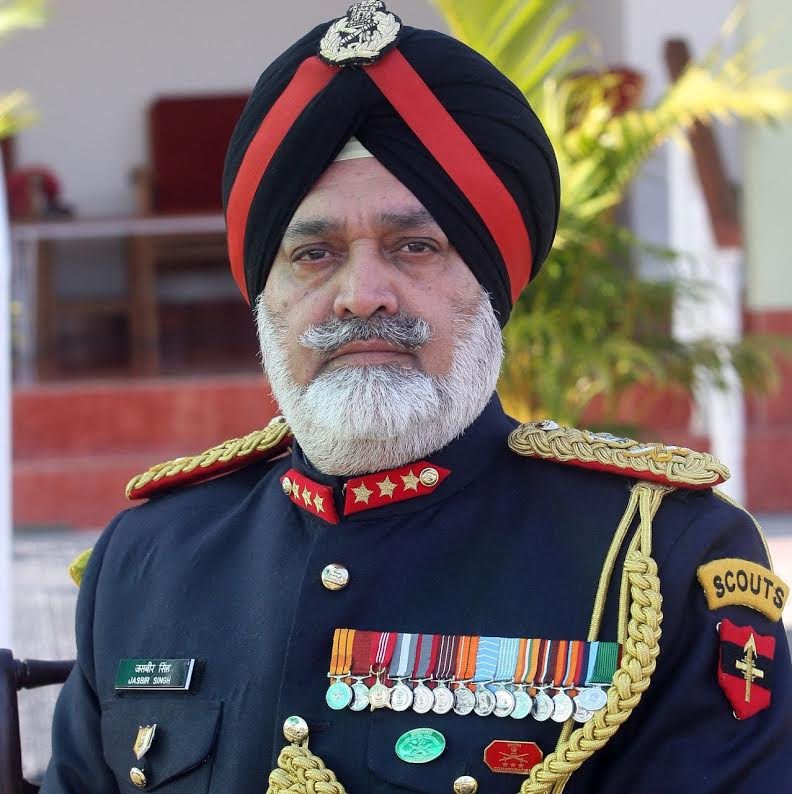
LT GEN JASBIR SINGH DHALIWAL, DOGRA
SENIOR PATRON ALL INDIA SANJHA MORCHA
MAJOR GEN HARVIJAY SINGH, SENA MEDAL ,corps of signals
.
.
PATRON ALL INDIA SANJHA MORCHA
MAJ GEN RAMINDER GURAYA ,MADRAS REGIMENT
sanjhamorcha303@gmail.com
PRESIDENT SOUTH ALL INDIA SANJHA MORCHA
COL SS RAJAN BOMBAY SAPPERS,
PRESIDENT UTTARAKHAND ALL INDIA SANJHA MORCHA
COL B M THAPA ,BENGAL SAPPERSS
PRESIDENT HARAYANA STATE CUM COORDINATOR ESM
BRIG DALJIT THUKRAL ,BENGAL SAPPERS
PRESIDENT TRICITY
COL B S BRAR (BHUPI BRAR)
PRESIDENT CHANDIGARH ZONE
COL SHANJIT SINGH BHULLAR
.
.
PRESIDENT PANCHKULA ZONE AND ZIRAKPUR
COL SWARAN SINGH
INDIAN DEFENCE FORCES
DEFENCE FORCES INTEGRATED LOGO
INDIAN AIR FORCE
Air Officer C-in-C WESTERN AIR COMMAND
AIR MSHL S PRABHAKARAN AVSM VM
AOC-IN-C, EASTERN AIR COMMAND
Air Marshal Inderpal Singh Walia
AOC-in-C SOUTH WESTERN AIR COMMAND
Air Marshal Vikram Singh
AOC-IN-C, SOUTHERN AIR COMMAND
Air Marshal J.Chalapati
AOC-IN-C TRAINING COMMAND
AIR MARSHAL SK GHOTIA VSM
AOC-IN-C MAINTENANCE COMMAND
Air Marshal Jagdish Chandra
Flag Officer Commanding in Chief, Western Naval Command
ice Admiral R Hari Kumar, PVSM, AVSM, VSM
Flag Officer Commanding in Chief, Eastern Naval Command
Vice Admiral Sanjay Bhalla, AVSM, NM
Flag Officer Commanding in Chief, Southern Naval Command