All posts by webadmin

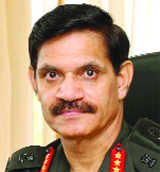
Gen Suhag in China on trust-building op

Gen Suhag in China on trust-building op
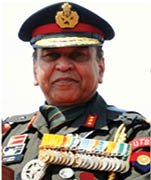
Army Chief Gen Dalbir Suhag

Ajay Banerjee

Tribune News Service

New Delhi, November 21

Army Chief Gen Dalbir Singh Suhag today led a military delegation to China as part of an effort by both countries to enhance high-level military exchanges aimed at building trust and ensuring peace along the 3,488 km disputed boundary on the Himalayan ridgeline.The Gen Suhag-led delegation’s four-day visit (November 21-24) is the second high-level military engagement this month. The 8th Annual Defence Dialogue (ADD) was conducted in New Delhi on November 8 between Defence Secretary G Mohan Kumar and Sun Jianguo, deputy chief of the Joint Staff Department of China’s Central Military Commission (CMC).Yet another interaction is coming up in December when Gen Zhao Zongqi, Commander, Western Theatre Command of People’s Liberation Army (PLA), visits Delhi.“The visit is aimed at engaging with China on subjects of mutual concern and shared interest, which include terrorism, humanitarian assistance and peacekeeping training,” an Army spokesperson said today.The visit coincides with a joint military exercise —‘Exercise Hand-in-Hand’—that is underway in Pune since November 16. Its theme is to “understand and practice” methods to tackle transnational terror. This is the sixth edition of the exercise — and first since December last when Beijing passed a law authorising its military to venture overseas on counter-terror operations and even sent some 5,000 troops to tackle the Islamic State in Syria.Both countries separately face transnational terror in their respective regions—India in Kashmir and China in Xinjiang (north of J&K in India). Besides, both have collective threat of their own youth joining the IS. On October 19, the two armies held their first-ever joint drill in Ladakh, J&K, the same place where the two fought in 1962.Will meet top gunsGen Suhag and his team will be visiting key military installations, including Infantry Division and Army Air Defence Brigades. The Army Chief is also scheduled to meet a number of dignitaries of PLA and CMC. 


Union Cabinet clears release of DA instalment to central employees

Union Cabinet clears release of DA instalment to central employees
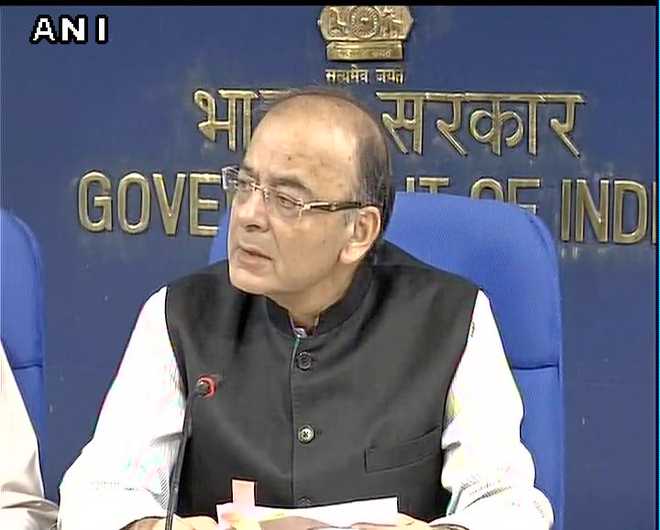
FM Arun Jaitley addresses the media. ANI

KV Prasad

Tribune News Service

New Delhi, October 27

The Union Cabinet on Thursday announced an instalment of Dearness Allowance for central government employees and dearness relief for pensioners at 2 per cent with effect from July this year.                     This was announced by Finance Minister Arun Jaitley, who was addressing the media after the cabinet meeting.

(Follow The Tribune on Facebook; and Twitter @thetribunechd)

The cabinet also cleared Rs 500 crore for horticulture under the PM package for Jammu and Kashmir.

It also announced a package for apple-growers. Indirect benefits were approved for allied sectors.                        The cabinet also approved setting up of a National Academic Depository as envisioned under Digital India, he said.


Soldier’s life no cheap, sir Dinesh Kumar in Chandigarh

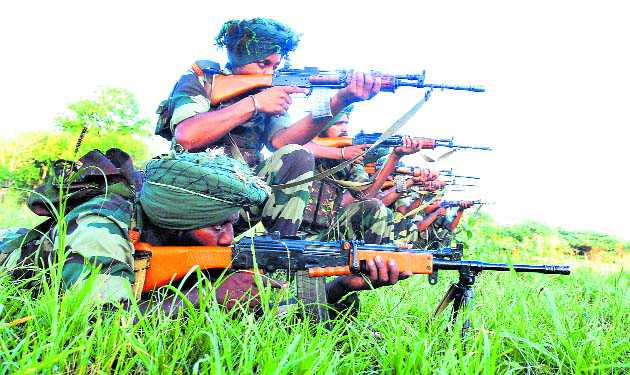
Ever wondered about the plight of the Army’s Infantry soldier! Dressed in battle fatigues, the semi-literate rifle-wielding soldier from a rural or semi-urban part of the country spends much of his career patrolling and guarding disputed borders with China and Pakistan in tough terrains that range from hilly jungles to very high-altitude barren, rocky mountains and glaciers and in extreme weather conditions. For the last 60 years, starting the Infantry soldier has been fighting a bleeding and fatiguing irregular war against terrorists and insurgents. Soldiers have silently suffered hostility, at best, indifference of sections of people in parts of J&K and some states in the northeast. Plus, they have to help in times of natural disasters such as earthquake, floods and landslides.Yet the Infantry’s 382 battalions, which comprise the largest arm of the Army, are also among the most neglected and lacking even in some basic equipment. Lost in the race for acquiring the more glamorous and highly expensive ‘big ticket; items such as tanks, artillery,

surface-to-air missiles, helicopters etc, the not-so-glamorous Infantryman does not evoke the same level of urgency even though it is the public face of the Army and bears the maximum casualties whether during war or peace. In April 2005 the Army conceived a major modernization plan for the Infantry with the fancy title of F-INSAS (Futuristic Infantry Soldier as a System). The project, spread over three phases and originally scheduled to have begun rolling out in stages from 2012 to 2020, is meant to upgrade, if not altogether revolutionize, the Infantry into an ultra-modern fighting machine. The aim is to provide the soldier with lethality, mobility, survivability, communications and situational awareness. The F-INSAS is based on five major technologies: (i) modular weapons; (ii) body armour and individual equipment; (iii) weapon sights and hand-held target acquisition devices; (iv) communication equipment to enable soldiers to transmit and receive complex voice, data and video systems; and (v) portable computers for soldiers and officers. The ambitious programme has made little progress and compares poorly with the ground realities 11 years after the project was conceived. Let alone modular assault rifles with interchangeable barrels (7.62 mm for counter-insurgency operations and 5.56 mm for conventional warfare), the Army has been unable to replace the existing and flawed 5.56 mm indigenously produced INSAS (Indian Small Arms System) rifle. A global tender floated in 2011 has been cancelled as all the competitors failed to clear the trials. The Infantry needs 1,85,000 new and better assault rifles which continue to remain elusive. But let alone buying new rifles, the Army has been unable to even change the orange colour of the existing INSAS rifles which compromises the camouflage of the soldiers thus putting them to risk.The Infantry presents a microcosm of the existing deficiencies in the Army which includes even basic and non-lethal items. Starting from 1,26,270 mosquito nets, 1,86,092 brown canvas rubber sole shoes with laces and 2,17,388 high-ankle boots, the Infantry is suffering a shortfall of 4,47,000 ski masks (required in the mountains) and three lakh bullet-proof vests, which can help protect the lives of soldiers in counter-insurgency operations and along the Line of Control. There is uncertainty over the current tenders for 44,600 carbines and 4,097 light machine guns that the Infantry is in dire need of even as about 1,000 Infantry combat vehicles need an upgrade. One other ‘small stuff’ is the need to replace the existing thin brown canvas shoes with proper sports shoes. Over 10 years later, the Army continues to await 8 lakh superior quality PT shoes for its troops. The Army is already suffering a woeful shortfall of ammunition including the Armoured Corps, Artillery, Air Defence and Infantry. So severe is the deficiency in ammunition that the Army’s War Wastage Reserve (WWR) has fallen from the required 40 days to between 15 and 20 days. In other words, the Army does not have ammunition enough to fight a war for more than 15-20 days. The depletion of the WWR is partly also because the Army is being forced to divert resources to raise a new Mountain Strike Corps (17 Corps). The first of its kind Mountain Strike Corps, sanctioned in July 2013 and to be raised by 2021, is being established at a cost of Rs 65,000 crore and will add 90,274 more soldiers and 32 new Infantry battalions. This will increase the number of existing Infantry battalions to 414. The WWR is expected to reach 100 percent only in 2019. Owing to delays in the F-INSAS project which has since been restructured and modified, the Infantry is a long way from becoming a fully networked all-terrain, all-weather personal-equipment platform with enhanced firepower and mobility for the digitalized battlefield of the future. The Infantry soldier’s wait has only become longer.

dkumar@tribunemail.com


MoD won’t accept Rs 5 cr from Johar

Tribune News Service

New Delhi, October 24

The Ministry of Defence has decided not to accept Rs 5 crore which film  producer Karan Johar had been asked to deposit in the armed forces’ battle casualty fund in lieu of his movie  ‘Ai Dil Hai Mushkil’ being allowed to be released. MoD sources said the battle casualty fund accepts only voluntary donations.There is a procedure for vetting each such donation. Donations to the fund are allowed income tax rebate. There can be no money coming in which is not voluntary, officials confirmed.


Stopped using term ‘strike’: Parrikar

Stopped using term ‘strike’: Parrikar
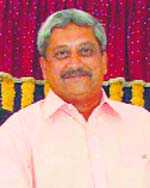
Defence Minister Manohar Parrikar

Panaji, October 23

Faced with a barrage of criticism from various quarters over his statements on cross-LoC strikes by the Army, Defence Minister Manohar Parrikar today said he has stopped using the word “strike”.The minister had faced flak from the Opposition for a flurry of remarks over the surgical strikes carried out by the Army in Pakistan-occupied Kashmir in September.“I will not touch any controversial issue. I have already stopped using the word ‘strike’,” Parrikar, who was in his home state of Goa, said during the inauguration of a helicopter engines’ maintenance unit in Sattari tehsil.On October 17, Parrikar had appeared to give credit to “RSS teaching” for the decision to launch cross-LoC surgical strikes even as he slammed those seeking proof for the Army’s anti-terror operation.He had also trashed claims of such operations under the UPA, provoking a counter-offensive from the Congress, which accused him of “blatant politicisation” of the issue. The Congress had demanded that the Prime Minister tame his “belligerent” minister and apologise to the Army. — PTI

‘Charis make better arms than OFB’

  • Defence Minister Manohar Parrikar on Sunday said the local ‘chari’ community, listed in backward class, probably makes better arms than the Ordnance Factory Boards
  • They (chari community) have skills with them. We need to harness that skill by giving training to switch over from age-old technologies which they are using to the latest ones,” he said

Have already stopped using the word strike: Parrikar

Have already stopped using the word strike: Parrikar
The minister had faced flak from the Opposition for a flurry of remarks over the surgical strikes carried out by the Army in Pakistan-occupied Kashmir in September. PTI file photo

Panaji, October 23

Defence Minister Manohar Parrikar said on Sunday he has stopped using the word “strike”, as he faces criticism from various quarters over his statements on cross-LoC strikes by the Army.

The minister had faced flak from the Opposition for a flurry of remarks over the surgical strikes carried out by the Army in Pakistan-occupied Kashmir in September.

“I will prefer to address the gathering in local language. I hardly get an opportunity to address in local language. But I promise you I will not touch any controversial issue. I have already stopped using the word strike,” Parrikar, who was in his home state of Goa, said during the inauguration of a helicopter engines maintenance unit in Sattari tehsil.

“You brought the term (strike) in your speech referring to labour issues,” he said on a lighter note after the speech by Chief Minister Laxmikant Parsekar during the event.

On October 17, Parrikar had appeared to give credit to “RSS teachings” for the decision to launch cross-LoC surgical strikes even as he slammed those seeking proof for the Army’s anti-terror operation.

The minister had also trashed claims of such operations under the UPA, provoking a counter offensive from the Congress, which accused him of “blatant politicisation” of the issue.

Condemning Parrikar for rejecting its claim of surgical strikes having been undertaken by the Army under UPA, Congress had demanded that Prime Minister Narendra Modi tame his “belligerent” minister and BJP chief Amit Shah, and apologise to the armed forces.

The surgical strikes were carried out on seven terror launch pads across the LoC, with the Army inflicting “significant casualties” on terrorists preparing to infiltrate from PoK. The strikes of September 29 came days after Prime Minister Narendra Modi warned that the Uri attack, which left 19 Indian soldiers dead, would not go unpunished. — PTI


The battle for Mosul and its fights:——-Lt Gen Syed Ata Hasnain (retd)

To what extent the US Air Force will follow humanitarian norms in Mosul cannot yet be assessed. The battle for the core of the city will be equally bloody contingent upon the will of the defender, the resources available and the effectiveness or otherwise of the isolation and investment of the city.

The battle for Mosul and its fights
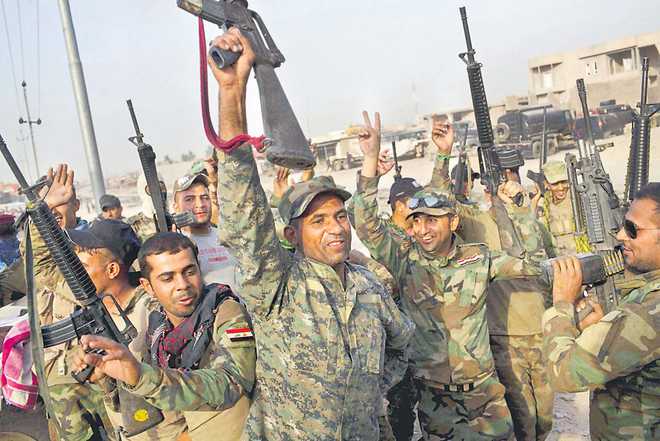
Retaking Mosul: Soldiers of the Iraqi army raise their weapons in celebration on the outskirts of Qayyarah, Iraq, on October 19, 2016. A senior Iraqi general called on Iraqis fighting for the Islamic State group in Mosul to surrender as the operation to retake the militant-held city entered the third day. AP/PTI
8

WITH ISIS (Daesh) under increasing pressure in Northern Iraq, it’s future in West Asia may well be decided by the battle for Mosul which began on October 17. Western electronic media is beaming live pictures of the hostilities which have not yet begun in earnest. However, it will be a long-drawn and tragically a very bloody affair. How are battles for major cities fought in modern times and what major issues will decide the outcome of this battle? Before delving into any detail it may be remembered that Daesh is not down and out yet. It has the resources, the will and the capacity to fight; especially since it’s so-called Amir, Abu Bakr Al Baghdadi is known to be in Mosul.Mosul is the second-largest city of Iraq, with a population which was earlier 2.5-million strong. Currently, approximately a little more than one million people reside there after Daesh defeated the Iraqi army in 2014. The presence of civilian population of this magnitude creates more problems for the attacker who has to restrict the use of firepower and tip toe around the populated zones, if the morals of warfare are implicitly followed. The defender, on the other hand, has the option of using the population as a human shield to prevent unrestricted movement of the offensive force. This isn’t conventional warfare so rules are grudgingly followed as is evident with the kind of destruction witnessed in  Fallujah a few months ago. Cities usually have suburbs and even further away from the city centre are  small rural clusters. These are used by the defender to prevent the offensive elements from closing with the city. Open stretches are mined with both anti-personnel and anti-tank mines and covered by missiles or anti-tank rockets to prevent tanks and infantry combat vehicles opening routes for the infantry. Once these peripheral zones are breached at the cost of heavy casualties, the defender will fall back on improvised explosive devices (IED) to cause more attrition as the battle moves into the city. The presence of population prevents the freedom of use of air power due to the high risk of collateral damage. In the case of the war in Syria and Iraq, estimates of civilian casualties from air strikes against cities have been extremely high. Entire stretches of Aleppo have been reduced to rubble and humanitarian considerations have not been in focus. To what extent the US air force will follow humanitarian norms in Mosul cannot yet be assessed. The battle for the core of the city will be equally bloody contingent upon the will of the defender, the resources available and, most importantly, the effectiveness or otherwise of the isolation and investment of the city. It is at that stage that the civilian population suffers the most. In Fallujah, one avenue of escape was kept open for the civilians to flee. Many Daesh fighters may attempt to exploit this opening too. What are isolation and investment? Before commencing the attack on a city, it is important for the attacker to cut off avenues of reinforcement or escape. The resultant isolation in the case of Mosul will ensure that Daesh fighters from elsewhere do not get in. Once the city is being reduced, there is no escape for Daesh to live and fight another day. The isolation involves placing tanks and  ICVs centred on infantry deployments which are occupied astride the roads and tracks which act as avenues. Since Daesh would have deployed in the rural clusters around Mosul to deny close reconnaissance and a foothold into the city it is important for the Iraqi army to push back a major part of these elements to afford launch pads, footholds and other multiple options for the direction of commencement of the main attack against the city. The intent is to keep Daesh guessing and address the crust of the defences to punch holes through which the attacking troops will be funnelled. The use of artillery to reduce the buildings from where resistance will be intense will be restricted but again contingent upon the discretion of the attacker. Once the penetrations have been effected, it becomes a slogging match. A city like Mosul is not closely packed with buildings. There are sufficient open spaces where helicopters can hover or land disgorging Special Forces who would target some specific objectives like command centres and communication facilities. The chief weapons of the infantry of the Iraqi army should be the rocket launcher to punch holes and destroy pill boxes; the sniper; and the flame thrower.  The term Iraqi army, is being generically used here to signify the attacking force. It is however well-known that the offensive against Mosul has three or even four elements. First, is the Iraqi army, largely Shia but with many Sunnis too. Second is the Kurdish Peshmerga of Masoud Barzani from the north. Third are the US Special Forces and air force. The  Shia militias are an important element, although there are reports that they may not participate unless things go wrong for the Iraqi army. The latest entrant is Erdogan’s Turkish army which is attempting to secure a role for itself in both Syria and northern Iraq to prevent undue influence and political significance to the Kurdish elements involved in the fight. The US has made it clear that the presences of any foreign armed elements require approval of the government at Baghdad and such approval has yet to be given. The planning, command and control and application of a force of such disparate groups with their diverse interests and operational methods will be a big  challenge. The possibility of some elements of Iran also being directly involved cannot be ruled out. Russia is unlikely to be directly involved but it has promised full support to the Peshmerga in terms of arms and equipment supplies. Russia has also provided helicopters and artillery equipment to Iraq with the intent of ensuring that it retains influence in a fight which will be dictated by US advisers and planners. The bewildering issue currently is the emerging relationship between Turkey and Russia which is apparently taking a positive turn. How the Russian support to the Kurds of any hue and nationality will be taken by the Turkish leadership is unclear at present. The factor which should be uppermost in all minds is the effect that the operations and the intensity of Daesh resistance will have on the civil population. The displacement of the large population is not something the United Nations Office for the Coordination of Humanitarian Affairs (UNOCHA) is fully prepared for, financially or from infrastructure point of view. For a change in Iraq the human angle is being looked upon with great concern but clearly resources do not match requirement. The challenge is greatly multiplied by Daesh’s propensity to remain unpredictable and resort to unethical practices such as a potential mass use of chemical weapons known to be in its possession. Finally, does the timing indicate any considerations other than military and strategic. With the US presidential election in another two weeks, could this have waited? That’s the question no one will answer for now.

 The writer, a former GoC of the Srinagar-based 15 Corps, is now a Fellow with the Delhi Policy Group.


Pak warns of action if India breaches Indus Water Treaty

Pak warns of action if India breaches Indus Water Treaty
Zakaria’s remarks come amid reports that India may review the 56-year-old Indus Water Treaty. File photo

Islamabad, October 20

Pakistan on Thursday warned of “appropriate action” if India violates the Indus Water Treaty and said it was closely monitoring the situation, amid reports that New Delhi may revisit the key water sharing accord.“Appropriate action will be taken in line with the Treaty in case of any violation by India,” Foreign Office (FO) spokesperson Nafees Zakaria said at the weekly briefing.Pakistan was keeping a close eye on the situation, Radio Pakistan quoted him as saying.Zakaria’s remarks come amid reports that India may review the 56-year-old Indus Water Treaty.He said that India was making “desperate attempts” to divert attention from the “atrocities and human right violations” being committed in Kashmir.He said Pakistan was highlighting Indian brutalities in Kashmir at world fora and there had been “very substantive outcome” of these efforts but the international community remains concerned about the situation.Responding to a question, he claimed that India violated ceasefire on the Line of Control for more than 90 times this year.The notion of isolating Pakistan is “ridiculous”, Zakaria said, adding that India’s “negative attitude” had been exposed which is the biggest hurdle in the way of regional development and prosperity.He also termed the Indian treatment to the Pakistani artistes as “very disappointing and highly regrettable” as he deplored India’s decision to “use SAARC for its political ambition”, according to the report.Zakaria also referred to a media report quoting US Republican presidential candidate Donald Trump, who described tensions between India and Pakistan as a “very, very hot tinderbox” and offered to be “the mediator or arbitrator”.Zakaria noted that though Pakistan does not comment on media reports usually, in this case it welcomed the mediation offer.“We continue to urge our American friends including those in the administration to play their due role in resolving bilateral issues between Pakistan and India, particularly the Kashmir dispute,” he said.“And definitely Pakistan has welcomed in the past also any role of mediation, we welcome such offers,” he added. — PTI


Naval Chief opens Beeji’s Park in DPS

Naval Chief opens Beeji’s Park in DPS
Chief of the Naval Staff Admiral Sunil Lanba, along with his wife, after inaugurating Beeji’s Park at DPS Dalhousie on Saturday.

Our Correspondent

Dalhousie, October 15

Chief of the Naval Staff Admiral Sunil Lanba, on the 46th Founder’s Day of Dalhousie Public School (DPS), today inaugurated Beeji’s Park as a tribute to mothers on the premises today.The park has a MiG 21 aircraft, two surface-to-air Pichorra missiles, a T-55 battle tank, a model of Shivalik Frigate and many other such items of interest.This inaugural ceremony was followed by the main function of the school. Students performed a cultural show which rendered the audience spellbound for two hours.A unique religious cultural rendition of ‘Hanuman Chalisa’ transformed the scenario into a spiritual atmosphere and bhangra performed by about 300 students created vibrations which made everyone to dance on the beat of drums.An impressive physical training show and Tae-Kwan-Do techniques were the other interesting features of this function.The Admiral in his keynote address exhorted the students that they were the future of the country and must imbibe the values of courage, integrity and service to the nation. He also praised the school for its clean campus and high level of cultural show.


The Terror Strike At EDI: Dangerous Portents Of Pakistan’s Desperation

The Terror Strike At EDI: Dangerous Portents Of Pakistan’s
Desperation

SNAPSHOT

The EDI strike by the LeT followed close on the heels of attacks at Baramula and Langaiyat – all an attempt to recover lost pride.

The Pakistan Army and ISI have assumed full control of foreign and defence policy.

In a calculated and sensible move the Indian Army used available means to neutralise the terrorists

8

Syed Ata Hasnain – October 14, 2016, 12:45 pm

The clock appears to have turned back a couple of years; this happens in India Pakistan relations ever so often. The manifestation is felt most in J&K. There are trends of the past which return to haunt the political, diplomatic and security establishments but memories are usually short and leaderships change hands. That is why it is important to recall the past and examine the new to synthesise the two in order to obtain a better picture for our response.

Post Uri and the surgical strikes Pakistan is obviously seething. The Pakistan Army and ISI have assumed full control of foreign and defence policy, no longer leaving even a sham projection of civilian control. Linking Afghanistan to peace in Kashmir and such absurdity comes from the cupboard of the deep state and is being roundly criticised by all; it is an attempt to obfuscate. Gen Raheel Sharif, in possibly his last few weeks in charge appears to be floundering. It’s a situation gone awry where options are many but the end results do not appear to be plausible successes the way the deep state had visualised.

The surgical strikes has upset certain things; Pakistan’s diplomacy failed, leading to its increasing isolation. Its own media developed feathers and reported that the civilians were getting restive too, demanding that action be taken against the ‘friendly terrorists’ to give the citizens and the nation a modicum of respect and esteem. In such a confusing situation the best bet for Raheel Sharif was to go on an offensive. The only way he could is with the help of the strategic assets the deep state has developed. That is why the rapid attempts to target the Indian Army and make statements with actions such as the EDI attack. A big success is what he is seeking and his final decision to stay or make way will largely depend on that. The greater a villain he is considered by India the larger his image and post retirement persona, if at all.

The EDI strike by the LeT and the earlier two at Baramula and Langaiyat were in quick succession to keep the wagging tongues in Pakistan quiet as Raheel looks for options and probably approves the choice of objectives; the response is now on an extended window of opportunities. Resident Pakistani terrorists inside the Valley appear to have been told that they must recover the lost pride after the surgical strike which in spite of a very experienced public relations organisation (ISPR) and its efforts, has exposed the Pakistan Army.

Baramula was ham handed, Langaiyat was the handiwork of the Rajawar brigands but the EDI strike was better thought out and more in the suicide mode as escape was impossible. These were not newly infiltrated terrorists. Which goes to prove that even with the low footprint Pakistan is willing to take the risk to motivate the local street and align itself behind it. That is the cost it is willing to pay and hence the seriousness and the desperation. No doubt the public relations effort will focus on the destruction of the EDI building to project that the Indian Army is hell bent to destroy every vista of education and employment opportunity of the Kashmiri youth. However, this does not cater for one thing and that is the strength of the moral domination of the Indian Army, none of which has been eroded.

In dire need people still come to the door of the Indian Army because they know it is inherently kind and helpful. The quantum of support the youth of the valley has received in the field of education from the Indian Army is not realised by people in the rest of India. This is the time that the Army must speak of all the Goodwill Schools, the Youth Guidance Nodes (YGNs), the skill development programmes, the efforts at job hunting, the computer centres it has set up, the national integration and aspiration tours it has organised and the general shoulder it has lent to the efforts despite years of militancy.

The EDI strike is likely to be a trailer creeping to a situation which Pakistan appears to be building towards; a bigger strike. Badami Bagh is at risk as much as Avantipur’s Victor Force HQ, both locations well known to me personally, having served there extensively. Recall of 1999 may help compare precedence.

In July 1999, the Musharaf Plan lay in tatters at the heights of Kargil, the Pakistan Army was disgraced. In response it hit back with vengeance. In the third quarter of 1999 the Valley experienced a large number of incidents of ‘fedayeen’. The first big blow was the attempt to penetrate Badami Bagh. The Defence PRO was killed but the action was contained by the Army. Subsequently a car bomb struck the Batwara gate of Badami Bagh killing soldiers on duty. The Army had a temporary setback before it took defensive measures and went on the offensive. It was fortunate that it had an entire reserve division in the Valley that pre-winter season and could undertake operations to bust many hideouts in the upper reaches and the jungles. Although it achieved very little in terms of terrorists killed, the destruction of winter infrastructure, sustenance and habitat resulted in terrorists operating out of built up areas. Victor Force of the Rashtriya Rifles (RR) went on a virtual partridge hunt that winter as intelligence flowed in like a stream. So is this the kind of mayhem that Raheel wishes to create? If so, it is old wine and the cadres are insufficient.

Returning to the EDI firefight and engagement, the terrorists chose their objective well and approached it from the river rather than from the regular entry near the National Highway. The real aim was to engage the Army and impose maximum casualties when the intervention operations began. They never did. In a calculated and sensible move the Army used available means to neutralise the terrorists, showed no urgency this time, preserved its resources but caused immense destruction on the building. I fully endorse this approach but found social media with a difference of opinion and queries being asked as to why modern means of anti-terror technology is not available to the Indian Army.

Suggestions were made for thermal screening of hideouts and precision strikes. This building is strewn with windows and is six levels high. Sniper operations are possible but with little guarantee. Thermal screening of an entire building and that which is difficult to approach due to open ground and minimal cover is well-nigh impossible. Efforts with smaller drones were made but on date armed drones are yet to reach service. The solution was simply – wait and watch, let the stamina drain and the effect of exhaustion seep in. There will be more of these as we approach winter but securing the high profile objectives will be a challenge.

Much will of course depend on the outcome of the next few attacks to predict the extended future. It will also decide Raheel’s own future.


India, Russia seal big-ticket defence deals; resolve to fight terrorism unitedly

Deals include purchase of missile systems, frigates and joint production of helicopters
India, Russia seal big-ticket defence deals; resolve to fight terrorism unitedly
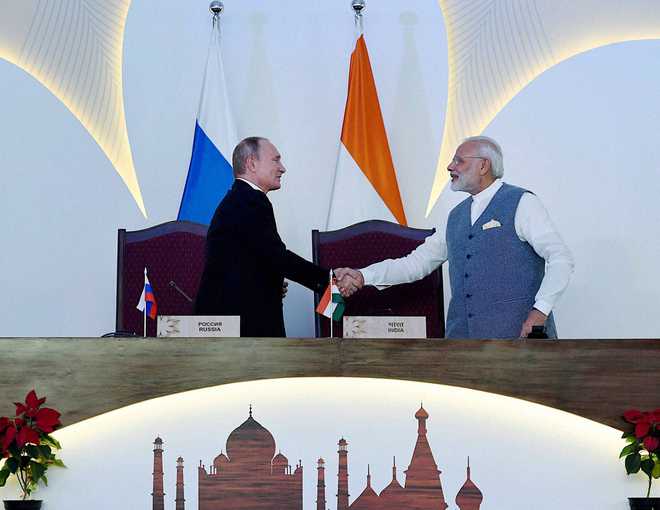
Prime Minister Narendra Modi shakes hands with Russian President Vladimir Putin at the agreement exchange ceremony in Benaulim, Goa. — PTI

Benaulim (Goa), October 15

India and Russia on Saturday sealed a number of big-ticket defence deals, including purchase of missile systems, frigates and joint production of helicopters, besides deciding to deepen cooperation in a range of crucial sectors even as the two close allies resolved to fight terrorism unitedly.

Prime Minister Narendra Modi and Russian President Vladimir Putin held wide-ranging talks covering the entire expanse of bilateral engagement following which the two sides signed a total of 16 MoUs and made three announcements to boost ties in sectors like trade and investment, hydrocarbons, space and smart cities.

The two leaders also dedicated the unit two of Kudankulum nuclear power plant and witnessed foundation laying of its Unit 3 and 4.

(Follow The Tribune on Facebook; and Twitter @thetribunechd)

The defence deals included India buying the ‘gamechanger’ S-400 ‘Triumf’ air defence systems from Russia at a cost of over $5 billion. The two countries will also collaborate in making four state-of-art frigates besides setting up a joint production facility for making Kamov helicopters.

Reading out a statement to the media in the presence of Putin, the Prime Minister appreciated Russia’s understanding and support of India’s actions to fight cross-border terrorism, an oblique reference to India’s surgical strike across the LoC targeting terror launch pads.

“Russia’s clear stand on the need to combat terrorism mirrors our own. We deeply appreciate Russia’s understanding and support of our actions to fight cross-border terrorism that threatens our entire region.

“We both affirmed the need for zero tolerance in dealing with terrorists and their supporters,” Modi said.

Putin, on his part, said both countries have close cooperation in fighting terrorism.

Modi said the “highly productive” outcomes of the meeting clearly establish the special and privileged nature of strategic partnership between the two countries.

“They also lay the foundations for deeper defence and economic ties in years ahead. The agreements on manufacturing of Kamov 226T helicopters, constructions of frigates, and acquisition and building of other defence platforms are in synergy with India’s technology and security priorities,” he said.

The two sides signed an Inter Governmental Agreement for the purchase of S-400 ‘Triumf’ long-range air defence missile system which has the capability to destroy incoming hostile aircraft, missiles and even drones at ranges of up to 400 km.

Another important deal is for four Admiral Grigorovich-class (Project 11356) guided-missile stealth frigates.

Modi said they have agreed to work on an annual military industrial conference that will allow stakeholders on both sides to institute and push collaboration.

“These projects are new chapters in a long history of strong and diverse defence partnership that both sides can take much pride in,” he said.

He said, “We are working to model a partnership that befits our common ambition and meets our shared goals for the twenty-first (21st) century.

“Our close friendship has given clear direction, fresh impulse, stronger momentum and rich content to our ties. In the emerging regional and global landscape, it has been a source of strength and substance, a driver of peace and a factor of stability.”

On cooperation in atomic sector, he said the dedication of Kudankulum 2 and laying of foundation concrete of Kundankulum 3 and 4 were examples of tangible results of India-Russia cooperation in the field.

“And, with proposed construction of another eight reactors, our wide ranging cooperation in nuclear energy is set to bring rich dividends for both of us. It also fits in with our needs of energy security, access to high technology and greater localization and manufacturing in India,” said the Prime Minister.

Talking about India’s expanding presence in Russia’s hydrocarbon sector, he said in last four months alone, Indian companies have invested close to $5.5 billion in that country’s Oil and Gas sector.

“And, with President Putin’s support, we are ready and willing to expand the scope of our engagement further. We are also undertaking a joint study of a gas pipeline route between our two countries.

“A combination of robust civil nuclear cooperation, LNG sourcing, partnership in the Oil and Gas sector, and engagement in renewables can construct a promising ‘Energy Bridge’ between our two countries,” he said.

The Prime Minister said the two countries also agreed to set up a Science and Technology Commission.

“Through this our societies will reap the benefits of joint development, transfer and sharing of cutting edge technologies in different fields,” he said.

On trade ties, Modi said both countries continue to expand, diversify and deepen economic engagement.

“Businesses and industry between our two countries are connected more deeply today. Trade and investment ties are on the upswing.

“And, with President Putin’s backing, we hope to fast track India’s association with Eurasian Economic Union Free Trade Agreement,” he said.

Modi added that efforts by the two sides for early setting up of the Investment Fund of USD 1 billion between National Investment and Infrastructure Fund (NIIF) and Russia Direct Investment Fund (RDIF) will help advance infrastructure partnership.

The Prime Minister said success of the Summit “shines a spotlight on the abiding strength of India-Russia strategic partnership.

“It also highlights our strong convergence of views and positions on pressing international and regional issues,” he said.

Modi said both he and Putin noted the similarity of views on the situation in Afghanistan and turmoil in West Asia.

“We also agreed to work closely to respond to the challenges posed by the unsettled nature of the global economic and financial markets. Our close collaboration at the United Nations, BRICS, East Asia Summit, G-20 and Shanghai Cooperation Organization makes our partnership truly global, both in its scope and coverage,” he said. — PTI