All posts by webadmin

J&K rifleman’s widow fights depression, joins Army as Lieutenant

J&K rifleman’s widow fights depression, joins Army as Lieutenant

Lt Neeru Sambyal with her daughter Sanidhya in Chennai

Dinesh Manhotra

Tribune News Service

Jammu, September 11

Lieutenant Neeru Sambyal is a proud woman today, her resilience having helped her fight all odds and overcome the toughest phase of her life.

Hailing from Samba  in  Jammu and Kashmir, the Army officer has set an example for those trying to pick up the threads of life. Her message: “Never give up”. “On May 2, 2015, when I lost my husband, I lost everything and slipped into depression. But my two-year-old daughter gave me motivation to come out of hopelessness. I succeeded after several attempts,” says Lt Sambyal.

A ‘C’ certificate holder of the National Cadet Corps, Lt Sambyal was commissioned as a Lieutenant in the Army Ordnance Corps on September 9. She joined the Army in 2017 and graduated as an officer after undergoing a one-year training at the Officers Training Academy, Chennai.

Lt Sambyal lost her husband Rifleman Ravinder Sambyal after three years of their marriage. He passed away while attending a drill in his regiment.

“I belong to a Rajput family  where lot of social stigma is attached to widows. As such, joining the Army would never have been easy… I reluctantly shared the idea with my father-in-law who not only supported it but went out of the way to help me realise my dream,” says Lt Sambyal, her voice choking with emotions.

Lt Sambyal’s brother Varinder Singh Slathia, who is serving in the Air Force, also encouraged her to translate her “bold” decision into reality. Her parents belong to Gurha-Slathia village in Samba district, which is known for producing valiant soldiers. She was married in Baada village in the same district.

“I understand the trauma and agony faced by widows in our conservative society. I was able to take this decision only with the support of my in-laws and brother,” the officer says. Having cracked the SSB exam in the first attempt, Lt Sambyal says her father-in-law and brother’s encouragement were enough for her to fight the odds. “I was least bothered what people would think after my family openly backed me,” she says, adding she now would serve the nation with the same zeal as her late husband did.


Pakistan troops violate ceasefire along LoC in Kupwara

Srinagar, September 10Pakistani troops violated the ceasefire along the Line of Control in Jammu and Kashmir by opening firing towards an Indian post in Karnah area in Kupwara district, officials said on Monday.

However, no casualties had been reported, the officials said.

The Pakistani troops from Ziarat post opened firing with small arms at Indian Army’s Black Rock post at 8 pm on Sunday, defence officials said.

“In retaliation, Indian Army at Black Rock also fired on the Pakistani post. The firing was going on from both sides,” the officials said.They said no injury had been reported so far. PTI

Army sets up prayer room in Hajin camp

Tribune News Service

Srinagar, September 9

In a bid to connect to local people, a Rashtriya Rifles (RR) unit in militancy-infested Bandipora district has set up a prayer room inside an Army base.

An Islamic theme-based room has been established at the company operating base (COB) of 13 RR at Shahgund, Hajin, and it was thrown open for the locals on Saturday.

The Army has opened a separate gate for the visitors at the COB.

“We have specially opened a gate inside our camp, which is only for those who want to offer prayers at the Islamic theme-based room. There are no restrictions for the visitors and the gate is open round the clock,” said an officer. He said the aim was to get connected to people and bridge the gap.

The opening event was held in a traditional Islamic way on Sunday and attended by students of the local Darul-ul-Uloom and local religious leaders.

“A felicitation ceremony was also held, wherein 20 students of Darul-ul-Uloom were presented gifts for their academic and sport excellence,” the officer said.

“The huge participation reflected the commitment of the local populace to support the Army’s effort to establish peace and restore normalcy in the region,” he added.

IAF retrieves bodies of two trekkers

IAF retrieves bodies of two trekkers

Our Correspondent

Anantnag, September 9

The Indian Air Force (IAF) on Sunday retrieved the bodies of two trekkers killed during an expedition to Kolhai glacier in Pahalgam and airlifted them to Srinagar.

The deceased include a Kashmir Administrative Services (KAS) officer, Naveed Jeelani, and another trekker Adil Shah of the Alpine Group (a trekking planner based in Srinagar), both residents of Srinagar.

The two trekkers were killed and another was injured after they fell into a crevice at 4,500-metre-high Kolhai Galcier on Friday.

Following the incident, a rescue operation was launched by the police and the State Disaster Response Force. Also, the divisional commissioner had asked the IAF to intervene, following which two helicopters were ready to be pressed in service.

Inclement weather, however, did not permit the flying of helicopters for the whole day on Saturday. The machines flew on Sunday morning and retrieved the bodies of the two deceased.

The bodies have been handed over to the families for the last rites.

Jeelani was a 2015 batch KAS officer and alumnus of the National Institute of Technology in Srinagar. He was presently serving as the excise and taxation officer in the state government.

Shah was a BTech graduate from the Islamic University of Science and Technology and had passed out in 2016.


Nirmala reviews security grid ahead of J&K local body polls Meets new Guv amid heightened militant activity in state

Nirmala reviews security grid ahead of J&K local body polls

Defence Minister Nirmala Sitharaman, with Army Chief Gen Bipin Rawat, interacts with troops in Keran sector on Sunday. PTI

Tribune News Service

Srinagar, September 2

Close on the heels of the announcement of panchayat polls in Jammu and Kashmir, Defence Minister Nirmala Sitharaman and Army Chief General Bipin Rawat arrived in Srinagar on Sunday to discuss internal and external security situation with newly appointed Governor Satya Pal Malik.

It was their first meeting together since the new Governor assumed office.

“They discussed several important issues concerning effective management of internal and external security, particularly in the context of increasing attempts at infiltration and the ongoing anti-terrorist operations,” an official spokesman said.

The two held discussions on the urban local bodies and panchayat elections to be held in October-December.

The meeting comes at a time when terror group Hizbul Mujaideen has issued an open threat to those contesting the polls. “People who want to participate in polls should keep their shroud ready,” Hizbul chief operations commander Riyaz Naikoo said in an audio message. J&K Police chief Shesh Paul Vaid on Sunday said they were prepared for the elections.

The state has already retained over 15,000 Central Armed Police Force personnel deployed for the Amarnath Yatra. However, the situation on the ground is quite difficult, especially in south Kashmir, which continues to remain on the edge.

Militant attacks on policemen have risen sharply in recent months. On Eid, three off-duty cops were shot dead and days later, four more were killed. For the first time in decades of insurgency in Kashmir, militants abducted 10 family members of policemen from south Kashmir in retaliation to the detention of militants’ family members. Though they were later released, it is a cause for concern for the police.

The forces, on the other hand, have intensified anti-militancy operations and killed at least 28 militants along the Line of Control or hinterland since August.

Militants are continuously making attempts to infiltrate into Kashmir. On Saturday, three suspected Pakistan militants were killed in Bandipore.

The militant recruitment this year has overtaken the number of local youth who joined militant ranks in 2017. The spike has set alarm bells ringing for the security forces.

Visits Kupwara forward posts

Accompanied by Army Chief Gen Bipin Rawat, Defence Minister Nirmala Sitharaman visited forward posts in Kupwara on Sunday. She was briefed by commanders about the operational preparedness and counter-infiltration grid, said an Army statement.


A compromised force by Lt Gen Bhopinder Singh

Meerut District Magistrate Anil Dhingra (L) and Senior Superintendent of Police Rajesh Kumar Pandey (R) prepare to sprinkle rose petals over "Kanwariyas" during an aerial inspection, in Meerut on August 8, 2018. AFP

he Uttar Pradesh Police is amongst the oldest, and clearly the largest, police force in the country and the world. With a population of over 200 million under its protectorate, it covers a population that is equivalent to that of Brazil. The physical scale aside, the socio-economic challenges and tensions within the state with a known history of civic disorders, riots and societal unrest makes it extremely challenging to police. The 1980 Moradabad riots, 1987 Meerut riots, 1992 demol…

Read more at: https://www.deccanherald.com/opinion/main-article/compromised-force-688731.html..


Don’t demoralise soldiers by diluting AFSPA

If the Armed Forces Special Powers Act is watered down, the army will hesitate to engage with militants

NO SOLDIER WANTS TO SPEND TIME RUNNING AROUND IN CIVIL COURTS TO JUSTIFY HIS ACTIONS WHILE DEALING WITH INSURGENTS AND TERRORISTS

At some point when disenchantment and alienation of the people of an area or state against the political and administrative dispensation go out of hand, the affected state or area is declared ‘disturbed’. In such a situation, if the police are unable to control lawlessness and insurgency, the Indian Army’s help is sought to restore order. Since the military does not have normal police powers for it to control unruly mobs or combat insurgents, the Armed Forces Special Powers Act (AFSPA) was enacted. But before AFSPA is brought in, the concerned area or state has to be declared disturbed by the state or central government. The Act gives the military legal protection, especially when there are injuries or death of miscreants/insurgents. To initiate any legal action against any soldier, acting under AFSPA, the central government’s permission is required.

To give added protection to the military, earlier the civil authority seeking assistance had to provide the military a certificate, saying that all resources have been deployed and the situation is well outside the control of civil administration, and so the military’s help is being sought. This was done to put a check on civil administrations from seeking the military’s assistance at the drop of a hat. But such a certificate showed the civil administration in a poor light, and so the requirement was scrapped. Unfortunately, the military’s high command meekly accepted this decision to do away with the certificate.

In a disturbed area, the local population is usually alienated and anti-national feelings prevail. Consequently, any incident involving casualties to civilians, the locals give evidence against the military. While a few dare to give evidence against the local police, there are always enough witnesses to give false evidence against the military.

Here are two cases that illustrate my point: First, the 2004 Thangjam Manorama case in Manipur.

It was alleged that she was tortured, raped and killed by the military and that she was innocent. But the truth is that she was a terrorist and member of the People’s Liberation Army of Manipur. As part of the organisation, she was involved in laying IEDs that killed six civilians and two security personnel. During the search operation, one transmitter and two grenades were recovered from her. Two independent autopsies ruled out rape and torture, and the nature of the bullet wounds corroborated that she was shot while escaping. Yet allegations continued to be levelled against military personnel.

The second case relates to the alleged murder and rape of two women at Shopian in the Kashmir Valley by military personnel (2009). The local doctor confirmed rape and murder. Later, their bodies were exhumed and a team of independent doctors conducted another round of autopsies. The team ruled out rape and murder. In certain cases, even the local police and administration back down under local public pressure, adopting a hostile attitude towards the military. So, there is an obvious need of AFSPA for the military to operate in disturbed areas.

If the Act is diluted, military personnel will hesitate to engage with militants. No personnel wants to spend time running around in civil courts to justify his actions while dealing with insurgents and terrorists, where for sure, witnesses from local, alienated population will align against him. During firefights, locals gather at the spot and often terrorists fire at them. They do this because they know that any casualty could be pinned on the military. Let us not forget that to date, the Indian Army has lost more than 700 officers and 9,000 soldiers to the insurgency.

Last week, a group of over 300 soldiers approached the Supreme Court, appealing against any “dilution” of AFSPA. The petition said prosecuting soldiers who are doing their duty by the civilian authorities like the police and the Central Bureau of Investigation will lower their morale and endanger national security. This development is a serious one and shows the utter failure of the military’s high command to prevent the development of such circumstances where serving military personnel have to approach the court.

In insurgency-hit areas, the military is the ultimate instrument of the State to be deployed to ensure territorial integrity and security of the country. So why are we so willingly and purposefully demotivating the military?


Puris, pakoras & golf, all so fauji! by Col Avnish Sharma (retd)

Puris, pakoras & golf, all so fauji!

Col Avnish Sharma (retd)

Interesting diktats lately issued by Army Chief Gen Rawat include a radical shift in diet pattern of jawans and  selective ban on  golf. There is also a talk to do away with the Brigadier rank in a fresh restructure attempt.  The General is a well-meaning guy. His recent utterances might fulfil the former two objectives, but whether the third one meets his quest shall be debatable, since to us veterans, all three of his resolves may die a natural death.Puris and pakoras are a staple for our troops. My second-in-command,  an upwardly mobile fellow, during an eventless lull, trooped into my office. ‘Sir, don’t you think we need to transform the diet pattern?’ Now, that sounded out of the box. ‘Tell me, have we had health issues with the boys?’ I was concerned. ‘No, Sir. It may occur in the future and moreover, we need variety in the fare.’ I was relieved and gave the go ahead and forgot about it. The first one to observe the change was my wife. During a welfare meet with soldiers’ families sorely missing the pakoras,  when she enquired about their absence, the Risaldar Major’s wife expressed her woe, ‘CO sahib ka hukam hai madam.’ I brushed aside the predicament of my wife since the change was meant for our soldiers and the peripherals would fall in place with time.

The same evening, during a function, the CO of the neighbouring unit came to me with a concerned look. ‘Are there any disruptions in supplies of rations in your unit?’ ‘Not that I know of,’ I was sceptical, ‘why do you ask?’ ‘A lot of your jawans cross over to my unit for  breakfast!’ The second-in-command’s innovative move saw its end that very moment.Our GOC was a thorough professional, but somewhat eccentric. One saw him at regular morning walks but he despised golf, golf course and   golfers. To reiterate his conviction, he would often echo his conversation with a group of officers’ wives, who he referred to as ‘golf widows’— ‘We would rather prefer our husbands having an affair than play golf!’ Most of us were convinced that this dialogue was self coined.

Our weekly golf round was threatened when he contemplated turning the golf course into an obstacle course, when suddenly there was a pleasant buzz. His son, studying abroad, had turned into an accomplished golfer and was coming with his golfing friends to enjoy the exquisite course. Golfers in station heaved a sigh of relief when the GOC started echoing a fresh sermon, ‘Golf is an enriching game which exercises your body and mind. It has unmatched therapeutic benefits!’Prasads and we are long-time friends. Mrs Prasad is a diehard believer in astrology. An astrologer had predicted that her son, a young Army officer, would reach the rank of a Brigadier. With the proposal to do away with the rank, she is all set to lose faith in her erstwhile belief. Alas.


COMMENT Vajpayee, Sidhu crossed the line, others need to

Vajpayee, Sidhu crossed the line, others need to

Punjab as a state can do little about how India and Pakistan ties develop or regress. But it stands to directly gain the most if a greater exchange of people and trade is allowed. The benefits of logistics and trade routes are only too obvious. The state, however, almost singly continues to serve the purpose of keeping the flame of a positive bond alive. File photo

Kuljit Bains

Atal Bihari Vajpayee crossed the line in a bus. Navjot Singh Sidhu has done it on foot. As the former departed a world no less divided than he inherited, the latter took a step in the direction shown by his one-time mentor; the direction of peace in the face of obvious hostility. As with the bus initiative, Sidhu’s little excursion across Wagah can be seen as an anti-national act, or an undying faith in the strings that tug at the human heart. Either way, all arguments are semantics.What is, however, not mere wordplay, is the undeniable bond that the two Punjabs across the Radcliffe Line continue to sustain, even as it flies in the face of the narrative generated from New Delhi and Islamabad. Punjabis are simply unable to see it through the prism of history and past hatred; the violence, mayhem, and wars, which they suffered the most. That is because what they feel is present here and now. When a young Punjabi born in the Nineties, post-Independence, post-militancy, even post-Kargil, comes across a Pakistani, what strikes him is the absolutely same features, dialect, idiom, music, folklore. It is just so hard to bury the bond that it’s almost tribal.The past week of Independence Day, Vajpayee’s departure, Imran Khan’s swearing-in, and Sidhu’s walk churned up endless stories and reminders of the conflict between what our hearts yearn for and what realpolitik demands.The most visible sign of the gap was the Retreat ceremonies at Wagah and Sadiqi (Fazilka) border posts. Wagah receives droves of nationalistically motivated tourists, who are treated to a ceremony of aggression, if not hate. Far less known, but much more poignant moments are seen at Sadiqi, where thousands come each year to catch a glimpse of their friends or relatives across the fence, or Zero Line; the frenzied scan of faces to spot their own, followed by a desperate wave, and a shout. Till a few years ago, people were even allowed to shake hands, shed a few tears. Try explaining Indo-Pak ties to them.Exchange of prisoners on Independence Day may be an act of cold diplomacy, yet one cannot but feel the human tragedy we perpetrate in keeping people in jail for decades for no justifiable reason. The Tribune reported the yearning of 96-year-old Amar Kaur (Read story) living in Khanpur, Hoshiarpur, to visit her home in Lahore, and walk the streets of Anarkali Bazaar once before her death. A million such hopes flicker every day.On the other hand was the contemporary political posturing: attacks on Sidhu for hugging the Pak Army chief (despite the Vajpayee-Musharraf handshake); Dal Khalsa in Punjab seeking Pakistan’s help for the “Sikh cause”; social media battles over cricketer Imran and PM Imran. The cynicism, fear, and suspicion could not be better symbolised than the scare caused by mere balloons carried by the wind from Pakistan, bearing messages of “jeeve Pakistan”, that landed in some towns in the Indian Punjab.Punjab as a state can do little about how India and Pakistan ties develop or regress. But it stands to directly gain the most if a greater exchange of people and trade is allowed. The benefits of logistics and trade routes are only too obvious. The state, however, almost singly continues to serve the purpose of keeping the flame of a positive bond alive. That is essential because as and when we are done with hatred – which no doubt has to happen one day – we will need the seed of love to grow back what has been lost. Without that seed, it will be hard to jump across the huge time divide to rekindle the historical bond. Punjab is a repository of that seed.The battle is not about Vajpayee, Imran or Sidhu crossing the line, but about too few people crossing too few lines. If the Pakistani political leadership at one time could think up a “war of thousand cuts” against India, why can’t the people on both sides wage a war of a thousand hugs? Pakistan only sunk while inflicting the thousand cuts, and India suffered in responding to those. No harm trying the alternative.

Back from Pak, Sidhu brushes aside criticism

Faces protest outside Integrated Check Post at Attari

Back from Pak, Sidhu brushes aside criticism

Tourism Minister Navjot Singh Sidhu and Vikram Singh Mehta, a friend of Pakistan PM Imran Khan, at the Attari-Wagah border on Sunday. Tribune photo: Vishal kumar

Tribune News Service

Attari, August 19

Tourism Minister Navjot Singh Sidhu on Sunday returned from Pakistan after attending the swearing-in ceremony of Prime Minister Imran Khan in Islamabad.Though the visit was approved by the Centre, it evoked strong reactions from various quarters.Sidhu even faced a protest outside the Integrated Check Post (ICP) at Attari. Activists of “Pagri Sambhal Jatta”, carrying anti-Sidhu placards, showed black flags to the minister’s cavalcade.He tried to pacify his critics by saying that Imran Khan intended to improve ties between India and Pakistan and “has pledged to take two steps if India takes one”.“Now the need is to take that one step convincingly. The decisions are made at the government level. I was just an invitee in my personal capacity, but I have retunred loaded with love and warmth,” he said.What had offended some back home was his preference of attending Khan’s oath-taking ceremony over the last rites of his “political mentor” and former Prime Minister Atal Bihari Vajpayee. He also drew flak for hugging Pakistan’s Army chief Omar Javed Bajwa and sharing seat next to PoK president Masood Khan.Clarifying his stance, Sidhu said: “When the General walked down to greet me, a brief conversation started on a lighter note. He said to me, ‘Navjot, we want peace’. Then on his own, he cited a proposal to open the corridor leading to Gurdwara Kartarpur Sahib on the occasion of 550th birth anniversary of Guru Nanak Dev. It is a four-decade-long demand. How could have I reacted to it in a better way other than giving him a hug,” he said.On sharing seat next to the PoK president, he said: “I was sitting with another Indian friend of Khan Sahib when the protocol official asked me to take a seat in the front row. I just abided by it as it was an official function. Many Pakistan dignitaries were sitting there whom I did not recognise. The PoK president was among them. What is the point of giving it a political colour?” he said.The Congress had on Saturday defended Sidhu’s Pakistan visit, calling it a step in the right direction.PPCCchief Sunil Jakhar had said: “Sidhu has shown sportsmanship by accepting the invitation from Imran Khan. The ball is now in the latter’s court, whether he can reciprocate the gesture and show he’s his own person and not a Pakistan Army proxy.”

2018 sees highest ceasefire violations by Pak in 8 years

2018 sees highest ceasefire violations by Pak in 8 years

Army men during an encounter with militants in the Keran Sector of Kupwara district. file photo

Amir Karim Tantray

Tribune News Service

Jammu, August 12

Even though the intensity of firing on the Line of Control (LoC) has come down and the International Border (IB) is witnessing peace, the ceasefire violation by Pakistan on the borders this year has been the highest in the past eight years.The ceasefire violations have also led to major casualties to civilians and security forces.According to official data, Pakistan has violated the truce agreement this year on both LoC and IB over 1,432 times, killing 59 security personnel and civilians.“Of the 1,432 ceasefire violations, the Pakistan Rangers have violated the agreement 490 times on the IB alone,” said the data released by the government a few days ago.When the data was released, the casualty count stood at 55. The death count has, however, increased with the killing of the four soldiers, including a Major, in the Gurez sector on Tuesday, taking the number to 59.India shares the 198-km-long IB with Pakistan in the Jammu region, while the LoC, the dividing line between Jammu and Kashmir and Pakistani-occupied Kashmir, is 740 kilometres long.The LoC is the most volatile border in the state which sees ceasefire violations, infiltration and narcoterrorism. The IB is manned by the BSF while the LoC is under the operational control of the Army with the BSF battalions posted at a few places.As many as 133 infiltration attempts have been made this year. Of them, 69 have been successful.According to the data, Pakistan had in 2017 violated the truce agreement 771 times on both LoC and IB and 449 times in 2016. The figure was 405 in 2015, 583 in 2014, 405 in 2013, 347 in 2013, 114 in 2012, 62 in 2011 and 70 in 2010.Around 30 people, including security personnel, were killed in 2017.Since May-end, the IB has seen relative calm and the intensity of firing on the LoC has decreased.Peace pact violated 1,432 times* Pakistan has violated the truce agreement this year on both LoC and IB over 1,432 times, killing 59 security personnel and civilians* In 2017, Pakistan violated the truce agreement 771 times on both LoC and IB and 449 times in 2016. The number of ceasefire violations were 405 in 2015, 583 in 2014, 405 in 2013, 347 in 2013, 114 in 2012, 62 in 2011 and 70 in 2010

Wives of Army jawans show culinary skills at food fest

Wives of Army jawans show culinary skills at food fest

Participants at work during the food festival at Hyatt in Amritsar on Saturday. Photo: Vishal Kumar

Neha Saini

Tribune News Service

Amritsar, August 11

One of the perks of being an Army man’s wife, according to one of them, is that you pick up little culinary secrets from every nook and corner of the country. “Even if one is a beginner in cooking, over the years you tend to become as good as a professional chef,” shares Geetanjli Kalra. One of the star chefs invited by the Hyatt to cook their special recipes for the Border Food festival, the festival celebrates the contribution of the wives of Army officers, who are unsung heroes of their lives.Donning the chef’s hat, these women created their favourite recipes for a fun afternoon. Adjusting their lives to the tough postings, the ladies admitted that their palate too has to adjust to a lot of moving around. “Sometimes, you are posted in places that do no have even a dhaba or you do not have access to basic things like fresh milk. For instance, Tenga valley in Arunachal Pradesh does not have any cattle so you do not get milk and are dependent on packed milk. Similarly, we have been posted in remote areas in MP where you do not have even a dhaba. So eating out is not an option,” shared Geetanjali. Therefore, your kitchen becomes your playground. “We pick up special recipes from every place of posting. Cooking at home becomes interesting as there are lot of flavor influences,” she said.For the festival, Geetanjali prepares chicken canelloni pasta, which she said is her and her husband’s favourite dish. The spread included Punjabi chole, gatte ki sabzi that Geetanjali’s fellow Army wife, Shubham Yadav made and Dal Makhani. The recipes will be added to the menu of border Food Festival as star dishes.“The Border Food Festival at Punjab Province will serve an epicurean spread of cuisines representing the border states of Punjab, Rajasthan and Jammu & Kashmir in an ode to the soldiers guarding the borders at Wagah, Jaisalmer and Siachen. The menu representing the Wagah Border will offer delectable delights like Matka Gosht, Kadi Pakora and Aloo Wadiyan. From Jaisalmer, dishes like Dal Bati Choorma, Laal Maas, Gatte Ka Saag and Kachhi Mirch Ka Murgh, from J&K, the exotic bread-like Seermal, Roganjosh, Yakhni Pulao and Kahwa will complete the platter,” informed head chef Shiv Parvesh.“Army men’s families play a crucial role by wholeheartedly supporting their husbands and boosting their morale, for which they deserve a huge applause. Today’s engagement was meant to provide a platform to Army men’s wives where they can showcase their culinary skills and prepare delicacies close to their hearts,” said Suman Dutta Sharma, General Manager, Hyatt Regency.


In northeast India, an ISIS threat is brewing WRITTEN BY Syed Ata Hasnain

ISIS

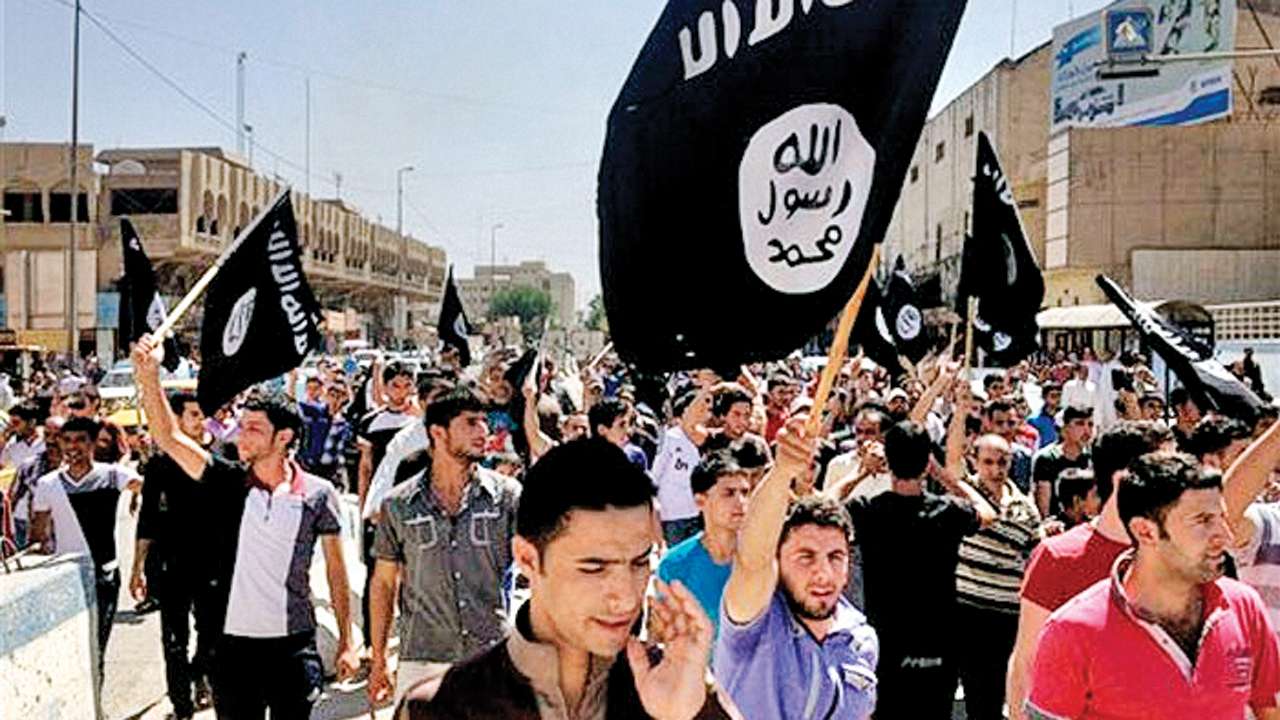
The world is so used to hurtling from crisis to crisis that it rarely stops to think of the last one and whether the threats from it have passed or continue to persist. This understanding is best applicable to the rise and supposed fall of the Islamic State of Iraq and Syria (ISIS), also known as Daesh. ISIS burst on the international scene in mid-2014, declared an Islamic Caliphate, employed the most depraved methods of fighting in its battle against followers of all other beliefs, including those within Islam, and acted as an established state with a defined territory, imposing taxes and even indulging in trade. Its intellectual capacity led to the creation of some of the most attractive online messaging of an ideology to draw recruits from all over the world, many of them from diverse faiths with an attitude bordering on nihilism. It ran an empire briefly with a political capital at Raqqa in Syria and an economic stronghold at Mosul in northern Iraq. In spite of modern technologies of surveillance, no international boundaries could hold back the supporters who flocked to it from around the world and the military wherewithal that ISIS received. It even sold the oil it produced from the captured oil refinery at Mosul and among its customers were nations with whom it fought.

ISIS fought as a state and in the conventional military mode against organised forces, giving battle at Fallujah, Mosul and Raqqa, even as the empire shrank. The last battle of the built-up areas was at Raqqa (Syria) or so we thought; it lasted through June to Oct 2017. Even as this battle was raging, a similar major standoff was underway in the Philippines city of Marawi, Mindanao, where ISIS fighters had captured the city and the Philippines Army fought a pitched street-to-street battle to regain control. Marawi was an attempt to establish an alternative base for ISIS, away from the humdrum of the Middle East and the Af-Pak region, both of which were under major surveillance and domination of adversaries; it would take far too long to establish in Af-Pak anything like Mosul or Raqqa and would need far more resources. Marawi was considered an interim alternative.

Now we learn that Raqqa wasn’t really the last battle to evict the ISIS which continues to exist in more than just a virtual state. The organised terror attacks in European cities may have ended and its revolutionary tactics of information warfare may have ceased but in the eastern Syrian city of Hajin, ISIS continues to exist; with a reported strength as high as 4000 fighters. It has switched its strategy from the conventional defence of strongholds and rapid forays to the typical guerilla style of fighting small. In the Euphrates Valley, a US-backed alliance of Syrian Kurds and Arab rebel fighters had battled this element effectively until a series of Turkish attacks against the Kurdish areas in the north in January 2018 forced the Kurds to leave and assist their own compatriots against the Turkish army. This diluted the campaign allowing the ISIS fighters to spring back. The US propensity to keep threatening the withdrawal of the 500 Special Forces personnel who act as the core directors of the campaign also gave ISIS the potential window it was seeking. Now a fresh campaign has commenced with the return of many of the Kurds, induction of French Special Forces and renewed support from US naval warplanes and the Iraqi Air Force.

What is ISIS attempting and why? Many of its fighters escaped the Raqqa dragnet and are still in the process of making their way to newly designated areas. These areas could be in Africa, Af-Pak region and South East Asia.

There has been no high-end success anywhere although the Philippines still continues to remain in focus due to ongoing Islamic insurgencies and the sheer nature of terrain and presence of hundreds of islands. ISIS is still looking for a temporary parking place pending establishment of a more effective stronghold closer to the Middle East. For its ultimate destination, ISIS is essentially on the lookout for a region/nation where there is disaffection with an Islamic colour, transnational border regions are weakly held and potential for turbulence is high; this is the environment it would thrive in. The closer it is to the Islamic territories of the Middle East the better it would be for its Caliphate-based ambitions. The ideal location for such intent is the Af-Pak region and north-west Afghanistan has been on the scanner for long. Two reasons for this have been spoken over some time: One, the existence of a lucrative illegal narcotics trade network and two, the potential of moving north towards Turkmenistan’s rich gas resources, both of which can finance the future ambitions of ISIS. However, the presence of Taliban and what’s turning out to be its surprising cooperation with Iran is still helping to keep ISIS at bay.

From Syria-Iraq to Af-Pak and on to Mindanao in the Philippines is a huge geographical expanse. However, many times the scans miss out another area which has emerged with serious potential for the kind of revival ISIS seeks.

This is the Myanmar- Bangladesh border. Bangladesh reports the eviction of a million plus Rohingyas, Muslims from Myanmar’s Rakhine province bordering Bangladesh, due to a virtual genocide-like campaign by the mainly Buddhist army of Myanmar. Refugees camped in an area near the Myanmar-Bangladesh border in inhuman conditions, is the type of breeding ground that ISIS seeks. Bangladesh has also been subjected to ISIS influence and in July 2016 suffered a major terror attack at the Holey Artisan Bakery, Dhaka, which had a deep-dyed ISIS colour. This area borders India’s Northeast which has been restive for many years. There is a Muslim population on the Indian side which could be vulnerable too. With an active ISIS lookout for future potential zones with criteria which suits its strategy, the broad swathe of territory from Thailand to Northeast India bears vulnerability towards an ISIS perception of a temporary parking space and exploitation of the human capital from this region. ISIS efforts towards targeting the Indian subcontinent have not succeeded for the want of an effective operating base. India’s northeast must be prevented from becoming any part of that.

he author commanded the 15 Corps in J&K and is now the Chancellor, Central University of Kashmir. Views expressed are personal.