All posts by webadmin

Pak accuses Modi of ‘well thought-out vilification campaign

Pak accuses Modi of ‘well thought-out vilification campaign’
File photo of Prime Minister Narendra Modi and his Pakistani counterpart at the SAARC summit in Kathmandu, Nepal. — Reuters

Islamabad, September 25

Pakistan on Sunday rejected Prime Minister Narendra Modi’s assertion that it was exporting terror, saying the remarks were part of a “well thought-out vilification campaign” to distract attention from Kashmir.

Pakistan Foreign Office, in a statement, said Prime Minister Modi at a public meeting in Kerala “tried to malign Pakistan”.

“It is unfortunate that Indian leadership continues to indulge in a well thought-out vilification campaign against Pakistan by making provocative statements and baseless accusations. Such irresponsible display of behaviour at the highest political level is regrettable,” the Foreign Office said.

(Follow The Tribune on Facebook; and Twitter @thetribunechd)

“It is evident that, as an act of desperation, India is trying to distract world attention from the atrocities perpetrated” by its forces in Kashmir against “innocent and defenseless” Kashmiris, including children and women, the statement said.

The “atrocities” in Kashmir intensified since the “extra-judicial killing of Kashmiri youth leader” Burhan Muzaffar Wani in July this year, it said of the slain Hizbul Mujahideen commander.

Pakistan’s reaction came after Prime Minister Modi launched a blistering attack on it yesterday in his first public address after last Sunday’s deadly Uri terror attack.

Modi said the sacrifice of 18 soldiers would not go in vain while all-out efforts would be made to isolate Pakistan globally.

“Terrorists should hear out clearly that India will never forget the Uri attack… I want to tell the leadership of Pakistan that the sacrifice of our 18 jawans will not go in vain,” Modi told a public meeting at the Kozhikode beach held on the sidelines of the BJP national council meet.

He said while countries in Asia were working to make the 21st century Asia’s, Pakistan was engaged in a conspiracy of causing bloodshed across the continent by sponsoring terrorism and killing innocents.

The Pakistan Foreign Office statement alleged, “In the last seventy-five days, Indian occupation forces have brutally martyred more than 100 Kashmiris, blinded hundreds and injured thousands.”

The Foreign Office claimed that the international community had taken notice of these “blatant human rights violations” with concerns expressed by several countries as well as UN and Organisation of Islamic Cooperation (OIC).

It also accused India of continuing to sponsor terrorism in Pakistan through state apparatus.

“The arrest and confession statements of a serving Indian Navy officer and intelligence operative, Kulbhushan Jadhav, reveal beyond a shadow of doubt as to how India fuels terrorist activities in various parts of Pakistan, including Balochistan and FATA (Federally Administered Tribal Areas),” the statement said. — PTI


Uri attack martyr to be cremated today

Uri attack martyr to be cremated today
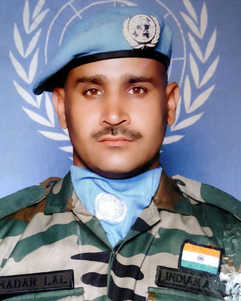
Havildar Madan Lal

Tribune News Service

Pathankot, September 21

A pall of gloom descended on Gharota, the native village of Havildar Madan Lal (40) who died in cross-firing with militants near the LoC in Kashmir on Tuesday. The village is 13 km from Pathankot.Deputy Commissioner (DC), Pathankot, Amit Kumar said all necessary arrangements were being made for the martyr’s funeral that will be held tomorrow.An officer said the body would be brought to the village tomorrow from Kashmir.He said he would visit the village on Thursday morning to oversee the arrangements.Shaheed Sainik Parivar Surakshna Parishad, a social organisation which works for the uplift and security of families of martyrs, stated that it would collaborate with the Army and the district administration authorities to ensure that the Havildar’s family gets its dues.Parishad’s general secretary Kunwar Ravinder Singh Vicky said he and other workers of the organisation visited the village today to oversee preparations afoot for the funeral.Madan Lal is survived by his wife Bhawna Sharma, daughter Shavita Sharma (5) and son Tanav Sharma (3).


Modi right on Baloch issue: Afghan envoy

Modi right on Baloch issue: Afghan envoy
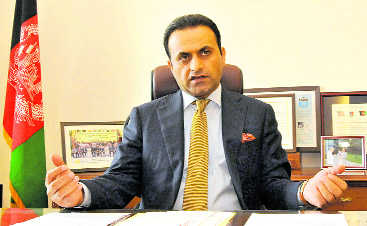
Shaida Mohammad Abdali, the Afghan Ambassador to India.

Simran Sodhi

Tribune News Service

New Delhi, September 21

Afghanistan today came out in strong support of Prime Minister Narendra Modi raising the Balochistan issue and said it was a “legitimate concern”. In an exclusive interview to The Tribune, Afghanistan’s ambassador to India Shaida Mohammad Abdali said, “Modi has rightfully raised his voice on the basis of human rights violations in Balochistan.”(Follow The Tribune on Facebook; and Twitter @thetribunechd)He said the people of Balochistan were suffering in a manner similar to Afghan people. “I think this is the right and moral obligation of everyone in this region to speak for those who are being oppressed,” Abdali said. The Afghan stand on Balochistan should come as great support for India as it begins its global strategy of isolating Pakistan.Abdali said Afghanistan sympathises “with those who are suffering, whether they are in our neighbourhood or beyond; and it is not the issue of just Balochs, it’s the issue of Pashtuns and that of the entire neighbourhood suffering from the menace of terrorism”.On the option of using surgical strikes against Pakistan, Abdali was clear that the first preference has to be the political and diplomatic route, “but that should also not mean that we should not resort to activities that will bring about a change in the attitude of those who have been perpetrating against peaceful nations in violent ways and means”. For Afghanistan, this indicates a shift in its strategy as it comes onboard for considering surgical strikes against a neighbour where diplomacy and dialogue fail.While the Afghan envoy said the terrorist act in Uri was “unacceptable”, he also added that “we are happy that we see strong statements, but these statements must translate into practical action”. He called for re-visiting the counter-terrorism mechanism in the region since the present one didn’t seem to be working.Abdali repeatedly pointed to a “spoiler” in the region who has made progress in SAARC and its related activities impossible. The reference is of course to Pakistan and Abdali bluntly said, “We should not allow any ‘spoiler’ in this region to spoil our unified struggle for a better future.”When asked about the functioning of SAARC, he said it has become a dysfunctional organisation as “the spoiler in the mechanism has failed the entire mechanism”. Maybe it was time to ask whether SAARC should remain as a body for the region or change, he added.When asked if India was ready to give Afghanistan the military equipment it was seeking, the envoy said “absolutely”, and pointed to the relationship that India and Afghanistan share.


Five things India needs to do post-Uri attack

THIS A SERIOUS MOMENT IN INDIA-PAK TIES. EVERY STEP – AND MODE OF SIGNALLING – WILL HAVE A BEARING ON WHETHER THE SITUATION ESCALATES OR DEFUSES

NEW DELHI: India is seething about Sunday’s attack at Uri where 18 soldiers lost their lives. The Narendra Modi government is contemplating its strategy. There is a measure of febrile anticipation about what a BJP-led regime in Delhi will do. The Prime Minister and BJP general secretary Ram Madhav said the attack will not go unpunished — the latter even added that “restraint in the face of repeated terror attacks betrays inefficiency and incompetence”.

VIRENDRA SINGH/HTDefence minister Manohar Parrikar arrives to attend a meeting in the wake of Uri terror attack, in New Delhi on Monday.

This a serious moment in India-Pakistan ties. Every step — and mode of signalling — will have a bearing on whether the situation escalates or defuses. There are five things that the government can do in a crisis situation like this. First, avoid the crowd. Frenzied reactions on social media that call for a hardline response that matches the establishment’s instincts can be heady and gratifying but they can also be misleading and often not in the country’s interest. A descent into instability is not what India needs, not least its economy.

Two, understand the strategic consensus that there are no easy military options. Measures like a surgical airstrikes on militant camps, covert action and lining up troops on the border are either difficult to execute or run the risk of escalating conflict, not a sight that the international community or financial markets will respond encouragingly to. It’s worth noting that even conservative Indian hawks who push for immediate reprisals are not very forthcoming about specifics.

India is better off, three, focusing its energies elsewhere. It will need to unravel the forces responsible for the attack and continue efforts to rally international opinion against Pakistan. The diplomatic and institutional battle to project Pakistanbased terrorists as threats to global security is an ongoing process and Delhi will need a set of deliverables that the international community can work towards in order to exert more pressure on Islamabad. These will be more effective in the long-term than merely condemnatory statements at international fora.

There is, four, no getting away from the fact the Uri was a serious security lapse. How a camp so close to the Line of Control was so vulnerable must be examined and questions asked about steps taken at military installations after the attack at Pathankot. There is, not least, the crisis in Kashmir to attend to which is the context in which Uri happened.

The Centre needs a strategy that protects security forces from militants and it needs a political strategy that addresses the ongoing unrest. There is an inordinate emphasis nowadays on the need to be aggressive in our response to challenges. In the process of being muscular, India must not lose sight of its equities and squander its strengths.


US, UK condemn attack but don’t name Pak

WASHINGTON/LONDON: The US and Britain on Sunday strongly condemned the terrorist strike that killed 17 Indian soldiers at Uri in Kashmir and said they would work with India to fight terror.

The official reactions from both countries did not name Pakistan or Jaish-e-Mohammed, which has been blamed by India for the attack. American experts agreed with the Indian assessment of the origin of the attack, if not the reasons for it. The US statement issued by state department spokesman John Kirby said: “The US strongly condemns the terrorist attack on an Indian army base in Kashmir… We extend our condolences to the victims and their families. The US is committed to our strong partnership with the Indian government to combat terrorism.”

British foreign secretary Boris Johnson said in a statement that the UK “strongly condemns” the terrorist attack. “I offer my deepest condolences to the victims and their families and friends. The UK condemns all forms of terrorism, and stands shoulder to shoulder with India in the fight against terrorism, and in bringing the perpetrators to justice,” he added.

The phrase “strong partnership” in the US statement was a reiteration of secretary of state John Kerry remarks at a recent news briefing in New Delhi, where he had said, echoing India, that the US “cannot and will not make distinction between good and bad terrorism”.

The reference was to Pakistan making a distinction between good terrorists — those it uses as an instrument of its state policy such as the Haqqani Network in Afghanistan and Lashkar-e-Taiba and Jaish-e-Mohammed against India — and bad terrorists, such as the Pakistani Taliban responsible for many attacks on Pakistani soil.

Though the state department did not name Pakistan, it was clear to experts who was behind the attacks. Bruce Riedel, a former CIA operative and expert on the region, said it was the work of the Pakistan Army. “It has been clear for several months that the Pakistan Army believes the situation in Kashmir is ripe for a re-intensification of the conflict and that India has few credible options to respond.”


Army’s task in Kashmir: Restoring order :::::::::Lt Gen Syed Ata Hasnain (retd)

A responsibility in counter-insurgency situations is never considered complete until the political legitimacy and authority is fully established.

Army’s task in Kashmir: Restoring order
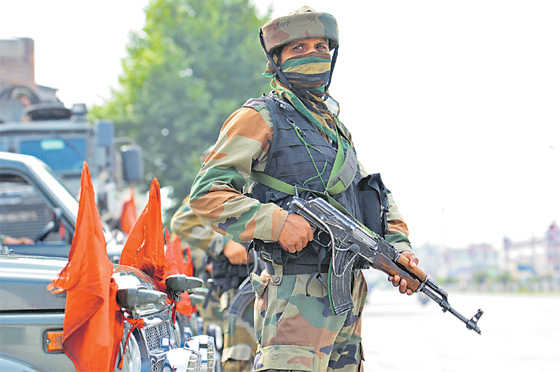
WATCH AND WARD: An Army soldier stands guard outside the Civil Secretariat in Srinagar. File photo

Two months after the killing of Burhan Wani on July 8, the Army has returned in strength to South Kashmir, the core centre of the recent street turbulence, and has been tasked to restore the situation. What needs to be understood here is that the Army is not restoring law and order but a virtual public order situation which has seen complete paralysis and inability of the police forces to handle. This is the classic situation in which the Army steps in to execute its responsibilities in the realm of operations other than war, hybrid in nature.What the Army will be dealing with is an intractable segment of population with a diffused and invisible leadership, backed by financial, ideological, psychological and planning support from across the LoC. It’s a situation akin to 1989-90, made worse by emotions. However, the presence of the Rashtriya Rifles (RR) today is a force multiplier and enabler unavailable then. Yet, there is a population, perhaps not as large as contemplated by the Chief Minister, which is pining for peace and is held hostage by the lumpen youth. It is this population whose conscience and courage has to be given a boost by the Army’s unconventional operations.The Army’s forced vacation and reduction of strength over the past few years was due to the intense pressure that the local politicians imposed on the Government of India. A task in counter-insurgency/terror situations is never considered complete until the political legitimacy and authority is fully established. The clamour for withdrawal of the Army under the rabble rousing of the Deep State and separatists, on grounds of the presence of a trumped up figure of 7 lakh security personnel, led to incorrect decisions. Hopefully the lessons have been learnt.The Army is currently tasked for restoration of the situation in South Kashmir but is deployed in good measure in North Kashmir too where its task towards restoration should also be mandated, lest there be doubts. It works on a principle of concepts which are based on the task, giving its commanders the required flexibility to function as per local conditions. The first point in the concept should clearly be the need for preventing any further alienation with all segments of society. That sets the tone for the degree of robustness in operations. It’s not a carte blanche for use of armed force and no one understands this better than the Army itself.The fact that there are no black and white situations here is an element for use of manoeuvre philosophy, something a modern army should invariably be executing, especially in irregular conflict situations. It is not flag marches but the show of force through domination of both physical and moral kind. The moral domination of the Army has always been its chief weapon and its commanders at all levels have been immensely proud of that fact; it sets them apart and creates an aura which must never be lost. In all other parts of the country the arrival of the Army to handle law and order is accompanied by a silent sigh of relief. People trust it to do the right thing, the fair thing, and its officers always have that capability to reach out to the people. It is a delight sometimes to see a young Army officer presiding over a meeting of elderly citizens, giving them all the respect due. So there is no reason why the Army won’t achieve the same thing in a public order distressed situation. In the domain of physical domination the move into the areas of South Kashmir is to occupy the physical space and reduce the burden of size of individual responsibility of sub-units of the RR and the CRPF. Simultaneously, if it is true that there has been a marginal surge in infiltration, the CI/CT operations must be conducted energetically and intelligently. These must be intelligence based and surgical. For that the assistance of the JK Police is mandatory. The intelligence grid has taken a beating but not to the extent it cannot be revived.Conceptually, the most important task for the Army is not to go on an offensive mode; that’s the most ham-handed way of doing things. The need is to bolster the morale and capability of the JK Police, which remains as good a force as ever. It only needs a boost and a bit of correction in terms of personnel drawn from the same area serving locally. The JK Police must be able to hold its police stations and ensure that all weapons, records and legal documents are immediately secured. A similar thing in restoration of order is to ensure that government employees can return to work unimpeded and the secretariats everywhere must get to function. These places must be secured with the help of the CRPF. No one really knows how much digitisation has been completed in land records as it only began less than a year ago; the state government can ill afford to have tehsil and district offices as the next targets to create mayhem in land records, which will add to the turbulence.I would be naïve if I did not appreciate that this time the degree of antipathy and alienation among the rural folk is manifold higher. The Army cannot expect a cakewalk in engagement through conventional methods but it also knows the pulse of the population and its basic needs. A combination of material and psychological engagement will help. I am aware that the inducted formations and units have trained themselves in their force ethos, an essential pre-requisite. You cannot have a bunch of non-professionals in the field with their understanding limited to inputs from social media.The Army can do nothing on its own. It has to be a whole of government approach as anywhere in hybrid operations. It can and will lead by its professional and cooperative approach. The diffused leadership will need to be identified, engaged or weeded out. It must be replaced with the presence of elected political leaders whose movement and engagement with the people must be jointly facilitated by all security forces. The writ of the state has to return.Lastly, the Army’s RR formations and units remain the mainstay. Their resilience and knowledge of the physical and cultural terrain is the plus which should not be lost sight of. All operations of any variety must be under the control of the RR commanders with no ego and such like notions becoming obstacles. It will need immense energy and understanding, something Army personnel are known for. We should expect no miracles. Healing processes are slow but remaining loyal to the concept of operations is the winning factor.The writer, a former GOC of the Srinagar-based Chinar Corps, is now associated with the Vivekananda International Foundation and Institute of Peace and Conflict Studies.



Capt joins veterans against pay anomalies

Capt joins veterans against pay anomalies
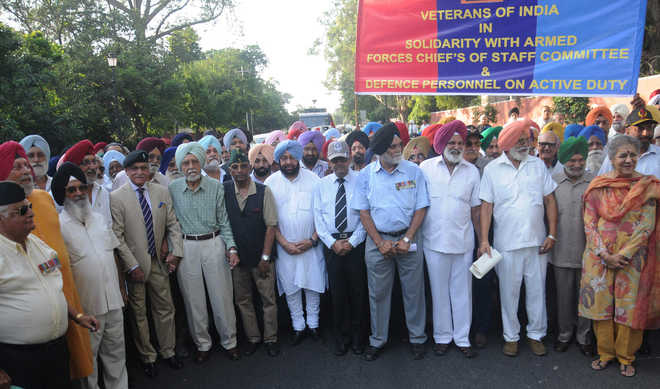
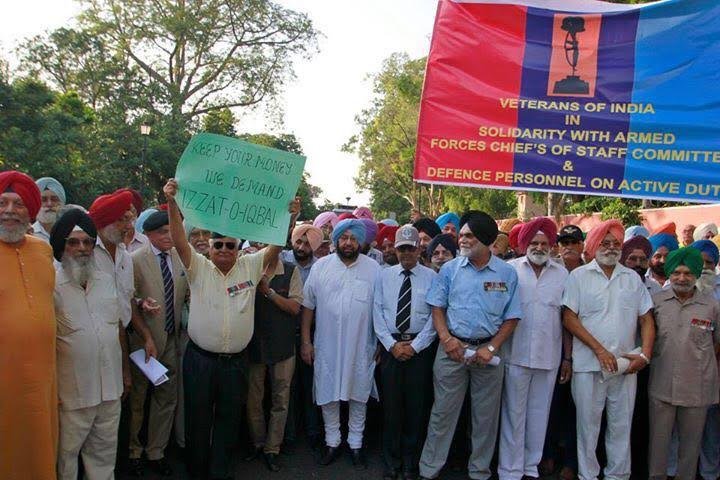
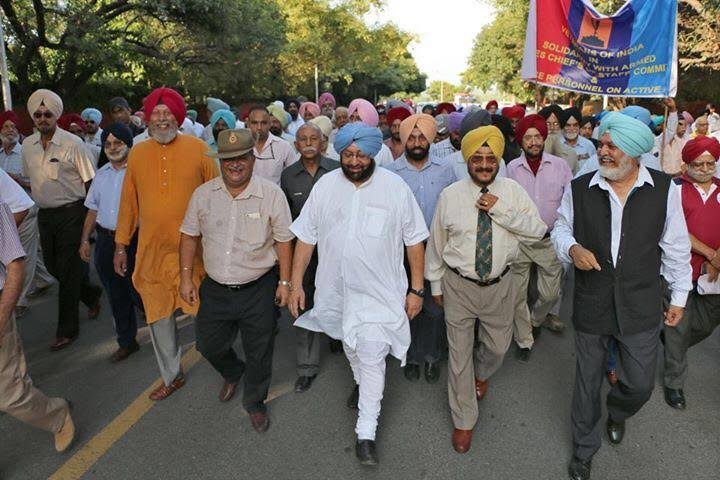
PPCC chief Capt Amarinder Singh (left) with members of ex-servicemen organisations during a march in Chandigarh on Thursday. tribune photo: Manoj mahajan

Tribune News Service

Chandigarh, September 15

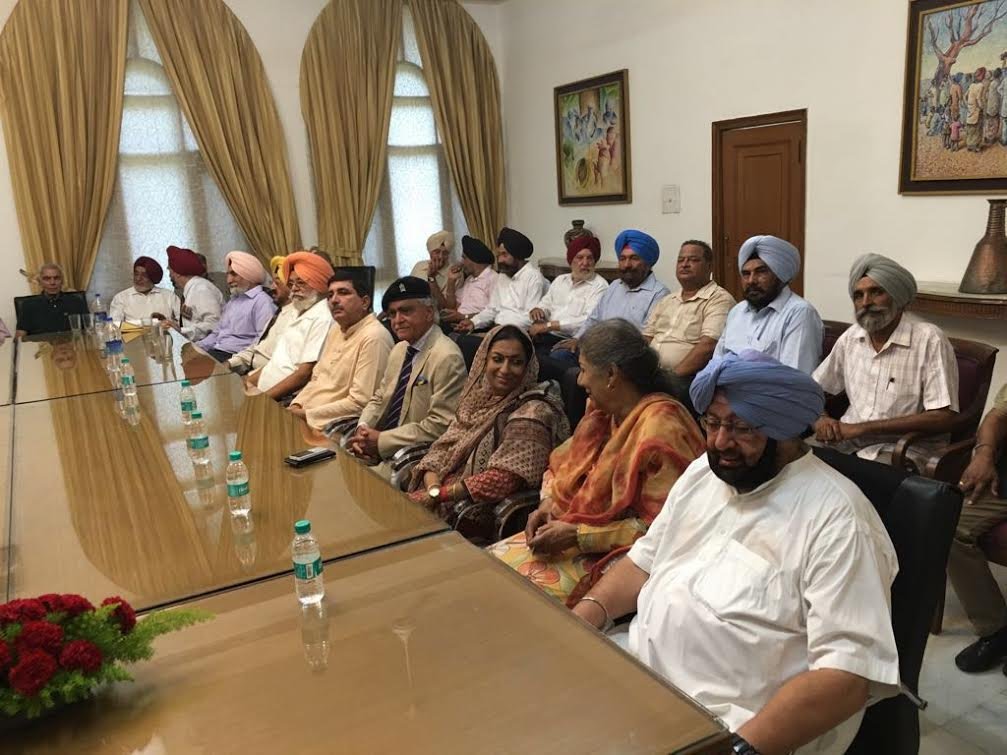
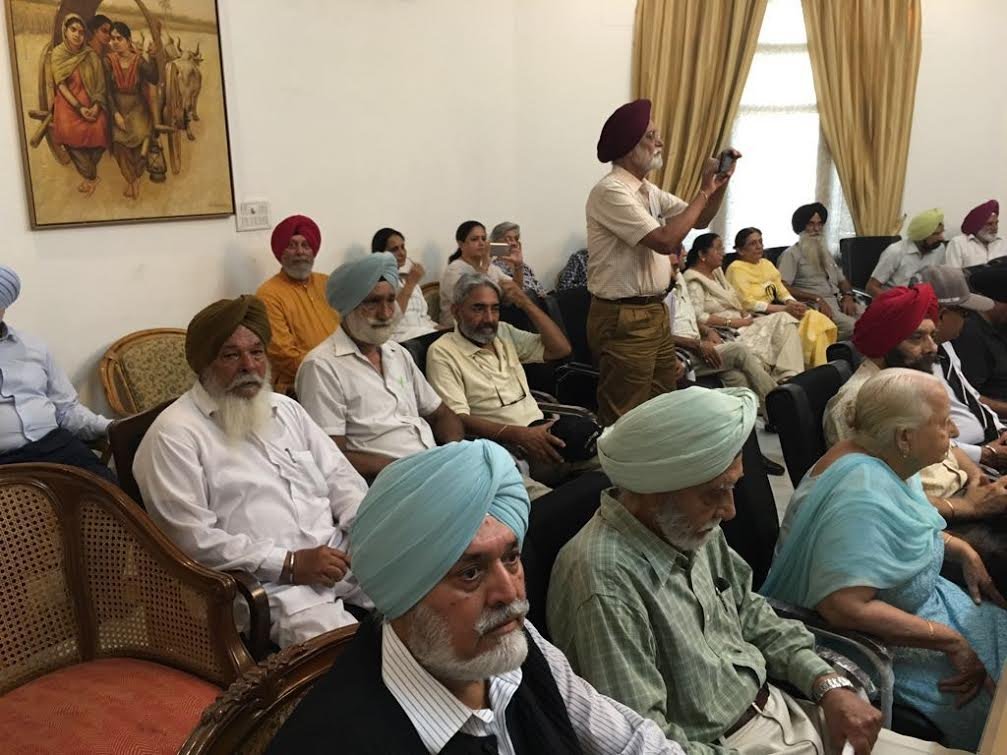
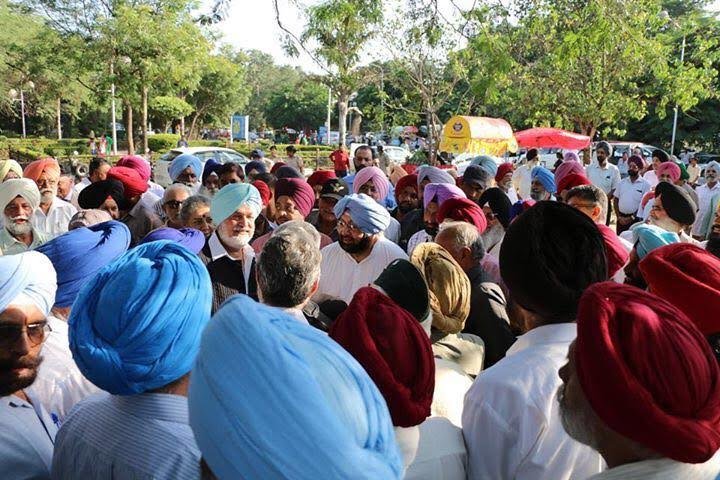
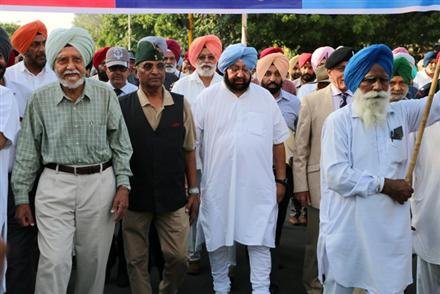
Punjab Pradesh Congress Committee president Capt Amarinder Singh today joined the defence veterans’ march to Governor VP Singh Badnore to submit a memorandum. They stated that they supported the stand taken by three defence services’ chiefs against the alleged bias against defence personnel in the Seventh Pay Commission.The march was led by Lt Gen (retd) SS Brar, the seniormost amongst the veterans.Senior Congress leaders Ambika Soni, Asha Kumari and Harish Chaudhary too participated in the march.The memorandum addressed to the President, who is also the Supreme Commander of the Armed Forces, read, “The community of veterans across the country fully endorses the stand taken by the Chiefs of Army, Navy and Air Force with regard to the recommendations of the Seventh Central Pay Commission.”Capt Amarinder said such repeated “wrong” steps on the part of the government demoralised the defence forces. He said India could not afford to do that considering it had “a belligerent China and a mischievous Pakistan” as its neighbours. “Just because our soldiers are disciplined does not mean their rights should be trampled upon,” he said, saying that the anomalies should be removed at the earliest.

 
unnamed (1)
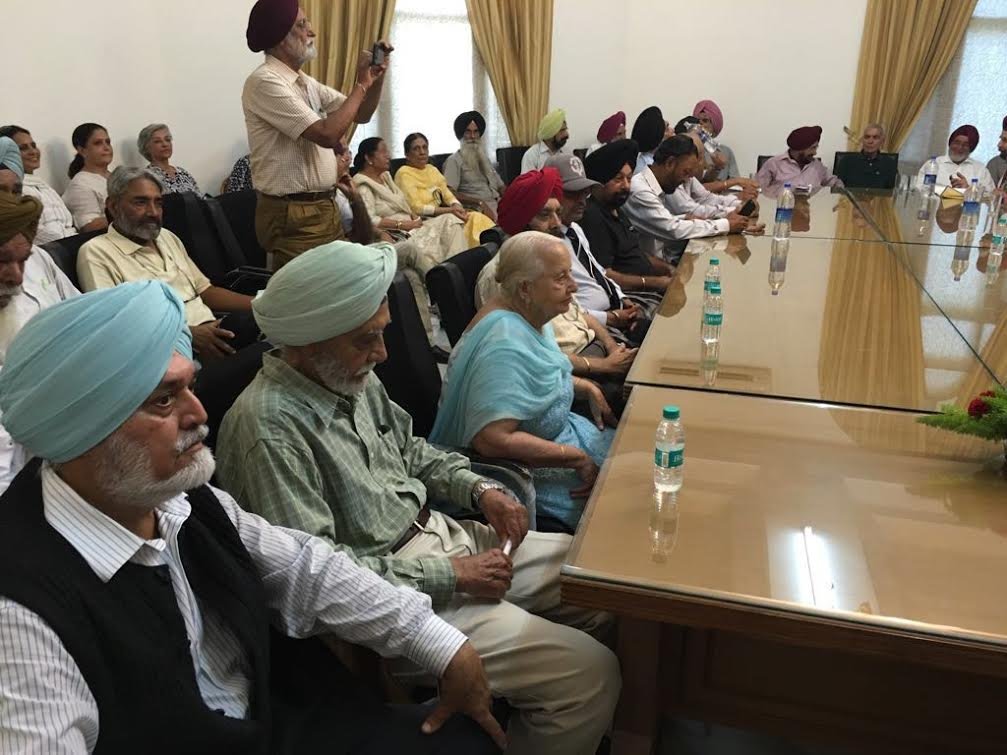
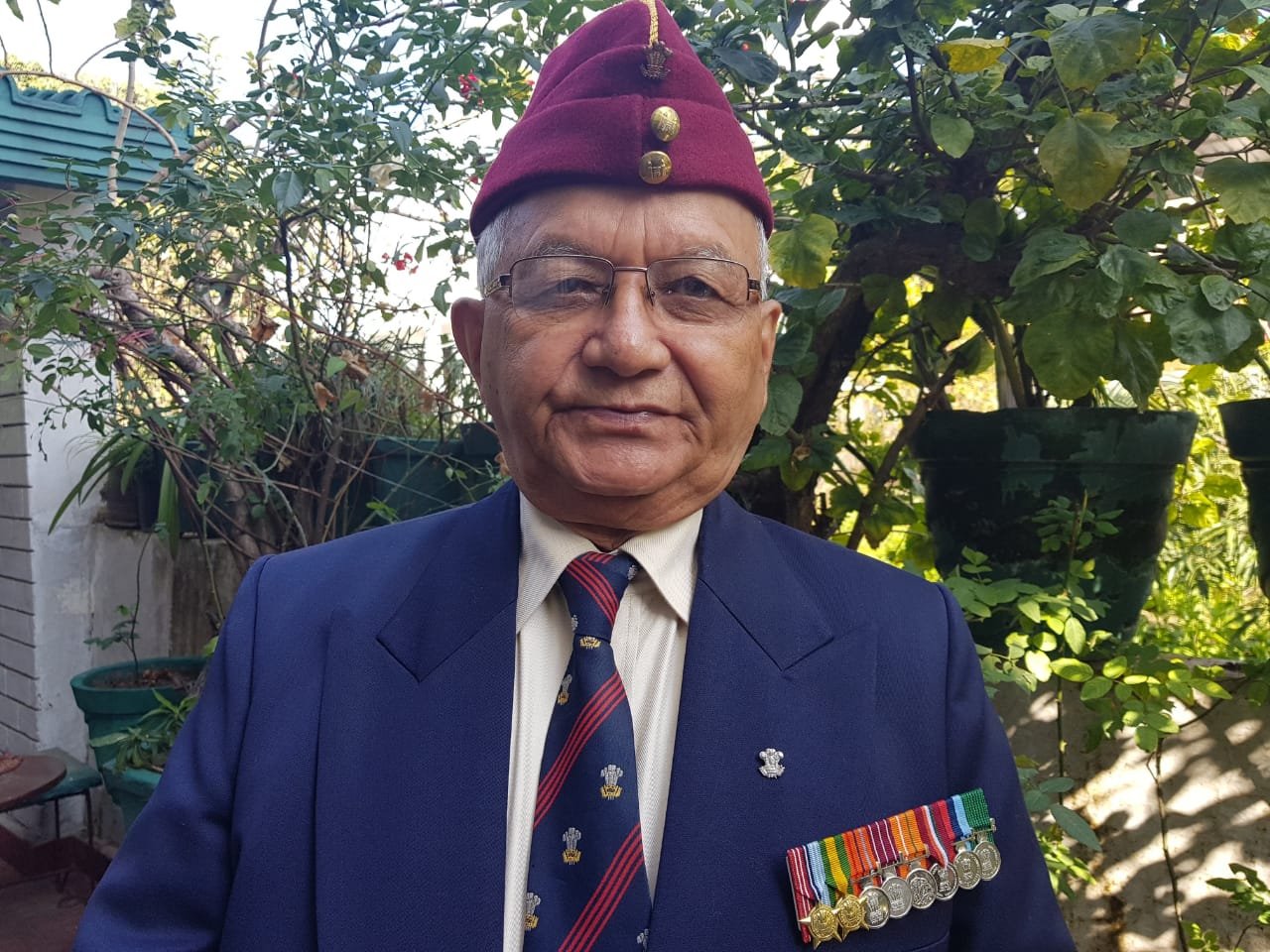
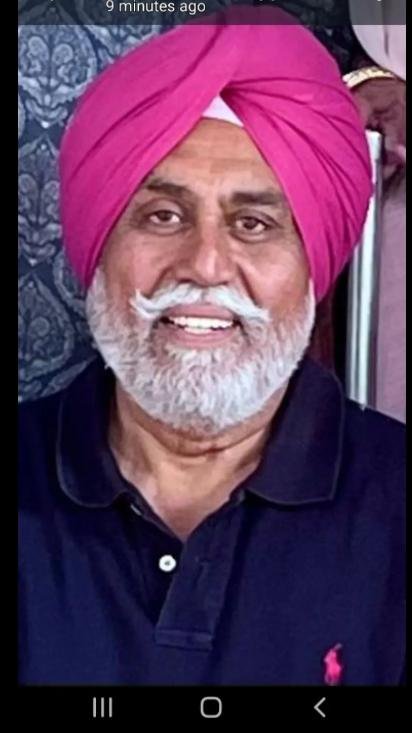
L to R –Lt Gen JS Dhariwal, Lt Gen SS Brar,Ms Ranjit Dayal w/o Late Lt Gen Ranjit Dayal
unnamed (2)
R to L—Capt Amarinder Singh.Ms Ambika Soni w/o Naval Officer,Ms Asha kumari daughter -in -law of 16 Dogra officer,Lt Gen TS Shergill,

unnamed (3) unnamed (4) unnamed (5) unnamed (6)

article53229
Lt Gen SS Brar,Capt Amrajit SIngh,Capt Amarinder singh

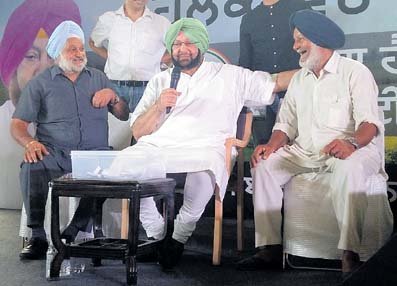
AMARINDER MEETS COLLEAGUE AFTER 53 YRS, TURNS NOSTALGIC

SAMRALA (LUDHIANA): Punjab Congress chief Captain Amarinder Singh’s joy knew no bounds when he met his colleague, ex-serviceman Balbir Singh of Machhiwara, after 53 years at ‘Halke Vich Captain’ in Samrala on Saturday.

Balbir who retired from the 2 Sikh, served in Amarinder’s platoon in 1963. When his name was called for asking a question to Amarinder during the question-answer session, Balbir said, he only desired to meet Captain, and his wish has been fulfilled.

Taken by surprise, Amarinder called Balbir, who was sitting in the audience, to come to the front row from where he was taken to the stage. The former CM asked for the chair and made Balbir sit along with him.

“It is indeed a moment of great joy for me to meet a colleague after 53 years and that too in the best of his health,” said the state Congress chief.

When Amarinder asked Bablir if he could do anything for him, he replied: “I only pray that Captain becomes the chief minister again. It will be in the interest of Punjab and ex-servicemen.”

11009CD-_20160910_


ILLEGAL DEDUCTION OF INCOME TAX ON DISABILITY PENSION

Law Office of :NAVDEEP   SINGH

Advocate, Punjab & Haryana High Court

Office- cum-Residence : # 1063, Sec 2, Panchkula – 134112, HaryanaPhones : 099888-LEGAL, 093161-32817

Email : navdeepsingh. india@… Your reference :                                                                         Our  reference :

To:Chairman- cum-Managing Director (CMD)State Bank of India, Mumbai                        

01 September 2016  ILLEGAL DEDUCTION OF INCOME TAX ON DISABILITY PENSION BY THE STATE BANK OF INDIA IN CONTRAVENTION OF DIRECTIONS OF THE GOVT 

 1.    Shocking instances have come to light wherein your bank has indulged in deduction of Income Tax at source in case of Disability Pensioners. On further inquiry, it has been informed that the action is based upon some ‘advice’ rendered by a Chartered Accountant that income tax exemption is only available to those pensioners who have been invalided out before completion of their service for normal pension, that is, those released earlier than 20 years in case of Commissioned Officers and 15 years in case of ranks other than Commissioned Officers, and that the said exemption is not available on the service element of those who have been released/retired/ discharged with a pension after serving more than 20/15 years of service as above. 

2.    Firstly, your attention is invited to Instruction No 2/2001 issued by the Central Board of Direct Taxes in this regard which amply explains the issue (Appx A). Your attention is also invited to Paragraph 88.3 of the Pension Payment Instructions issued to all your banks by the Government (Appx B) which leaves no scope of doubt regarding exemption of income tax from the entire disability pension, including service element. Moreover, the interpretation of your bank in this regard is absolutely incorrect, absurd and militates against the rules and norms promulgated by the Government as above. It may be recalled that Income Tax exemption on complete disability pension is available to defence personnel since the 1920s.

 3.    On discussion, it emerges that the confusion has been created due to the terminology of ‘Service Element’ which is hereby clarified for your benefit in the following lines. Disabled personnel who are granted disability benefits at the time of release from service are known as Disability Pensioners.  The said Disability Pension consists of two elements- service element and disability element. Both elements taken together are known as Disability Pension. There is no minimum qualifying service required for the grant of Service Element with effect from 01 January 1973. The calculation of service element however is different in cases of those personnel released from service before completion of pensionable service limits vis-a-vis those who are released on completing pensionable service limits. In case of the latter, the service element is granted at a rate equal to Service Pension. The fact that the pension granted for service in both cases is known as Service Element becomes clear from a bare perusal of Regulation 183 of the Pension Regulations, 1961, which contains two clauses, that is, 183(1)(a) for those who are released with sufficient service to earn a pension, and 183(1)(b) for those who are released before completing sufficient service to qualify for normal service pension. The said Regulation is enclosed as Appx C. Please note from the Regulation that in both cases the service part of the pension is known as Service Element. Even the normal service pension rates reflected under Regulation 183(1)(a)(i) are categorized as ‘Service Element’.

 4.    The fact that the service part of pension, whether a person is released prior to completion of service limits or after completion of service limits (20/15 years), is known as ‘Service Element’ also becomes clear from a perusal of the recent Circular No 554 (Appx D) issued by the Principal Controller of Defence Accounts (Pensions) to all banks, including yours. Paragraphs 1(i) and (ii) and then 1(iv) & 1(v) as well as Paragraph 6 of the same clearly stipulate that in case of disability pensioners, the amount of service part of the pension is known as ‘Service Element’ irrespective of the fact whether a person has lesser or more than 20/15 years of service. In simple words, the service element of pension in cases of those disabled personnel who have completed pensionable limits is equal to normal service pension, but being disability pensioners, it is nomenclatured as ‘Service Element’.

 5.    Even otherwise, it would be important to point out that disabled personnel released prior to completion of pensionable terms as well as those who are released on completion of terms or at own request are all treated at par as far as disability pension is concerned. In fact, all those who are in low medical category at the time of release are to be treated as ‘invalided’  as per rules (Also Appx C) as has also been held as per interpretation of teh pre-existing rules by the Hon’ble Delhi High Court in CW 2967/1989 Mahavir Singh Narwal Vs Union of Indiadecided on 05 May 2004 as affirmed by the Hon’ble Supreme Court in SLP 24171/2004 on 04 January 2008 and also in the recent decision of the Hon’ble Supreme Court in Civil Appeal 11208/2011 Union of India Vs Angad Singh Titaria decided on 24 Feb 2015.

 6.    In view of the above, you are requested to inform all your branches to cease and desist from flouting guidelines of the Central Board of Direct Taxes in this regard and direct them to honour income tax exemption on both service as well as disability elements of disability pensioners as was being done till now. It may be appreciated that the opinion of your Chartered Accountant cannot override existing law and rules that have been followed since times immemorial.

 7.    You are requested to issue directions to refund the illegally deducted amount to all affected disabled pensioners within a period of 7 days from the receipt of this letter. 

 Thanking You 

Sd/-Navdeep SinghAdvocate, High Court Enclosed: As above