All posts by webadmin

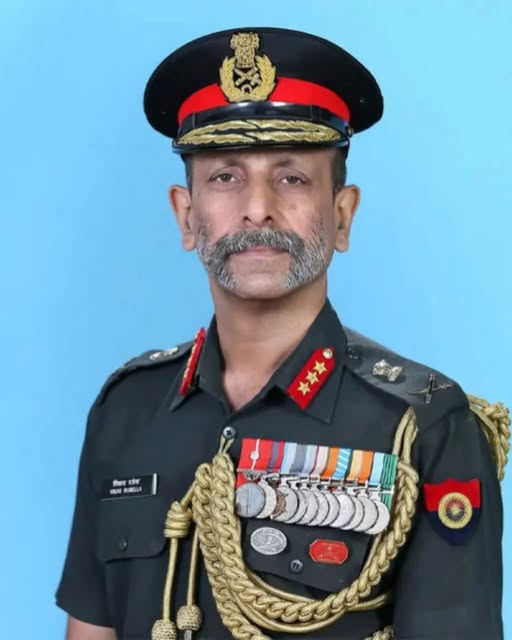
Lieutenant General Vikas Rohella has been appointed as the Engineer-in-Chief of the Indian Army,

Lieutenant General Vikas Rohella has been appointed as the Engineer-in-Chief of the Indian Army, officially taking command of the Corps of Engineers in a ceremony filled with tradition and gravity

Lieutenant General Vikas Rohella has been appointed as the Engineer-in-Chief of the Indian Army, officially taking command of the Corps of Engineers in a ceremony filled with tradition and gravity.

During the event, Lt Gen Rohella paid tribute at the National War Memorial by laying a wreath to honor the Bravehearts who have made the ultimate sacrifice for the nation.

In his address to the Corps of Engineers, the newly appointed Engineer-in-Chief emphasized the importance of maintaining a legacy of selfless service. He also encouraged the adoption of innovation and the integration of technology to boost the Army’s operational readiness amid changing battlefield dynamics.

The Corps of Engineers, a crucial component of the Indian Army, is instrumental in combat engineering, providing mobility support, developing infrastructure, and engaging in nation-building efforts. With Lt Gen Rohella at the helm, the Corps is anticipated to continue its pursuit of technological advancement and operational efficiency.
Armed forces demonstrated strength of jointness during Op Sindoor:

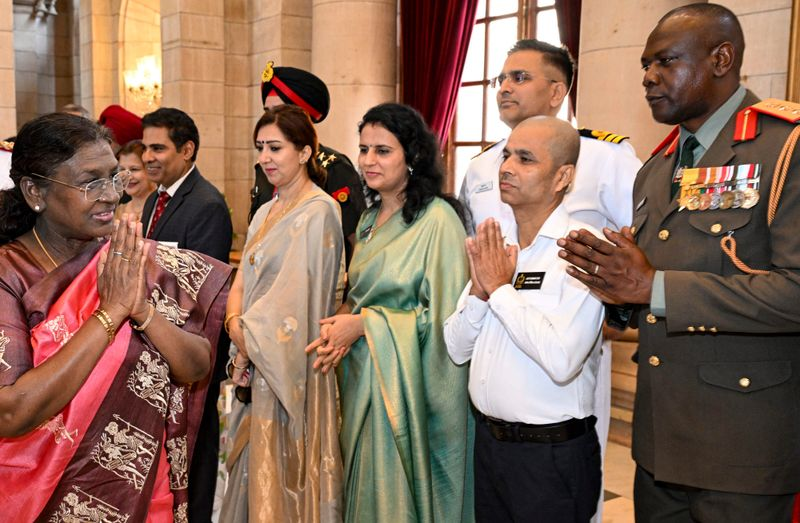
President Droupadi Murmu on Tuesday said the country’s armed forces demonstrated the strength of jointness and strategic foresight during Operation Sindoor, which also resulted in dismantling of terror infrastructure across the Line of Control (LoC).

Addressing the faculty and course members of the 65th National Defence College course, who had called on the President at the Rashtrapati Bhavan here, Murmu emphasised that national interests and objectives form the foundation of India’s security framework, while universal values remain at its core.

“Indian tradition has always viewed humanity as one family. Universal brotherhood and peace have been our articles of faith,” she said, adding that the nation simultaneously prioritises readiness to counter threats to humanity and the nation.


She highlighted structural reforms undertaken to promote jointness, including the creation of the Department of Military Affairs with the Chief of Defence Staff as its secretary, and ongoing efforts to establish integrated theatre commands and integrated battle groups.

“In a changing geopolitical environment, India is transforming its armed forces into a technologically advanced, combat-ready force capable of multi-domain integrated operations,” the President said, underlining the importance of dynamic responses to emerging security challenges.

The President also praised the National Defence College for its international programme, calling it a benchmark learning intervention that fosters better understanding, mutual cooperation, and linkages in national, regional and international security affairs.


Indian Navy warship INS Sahyadri deployed to South China Sea

INS Sahyadri’s deployment marks second Indian Navy operation in two weeks

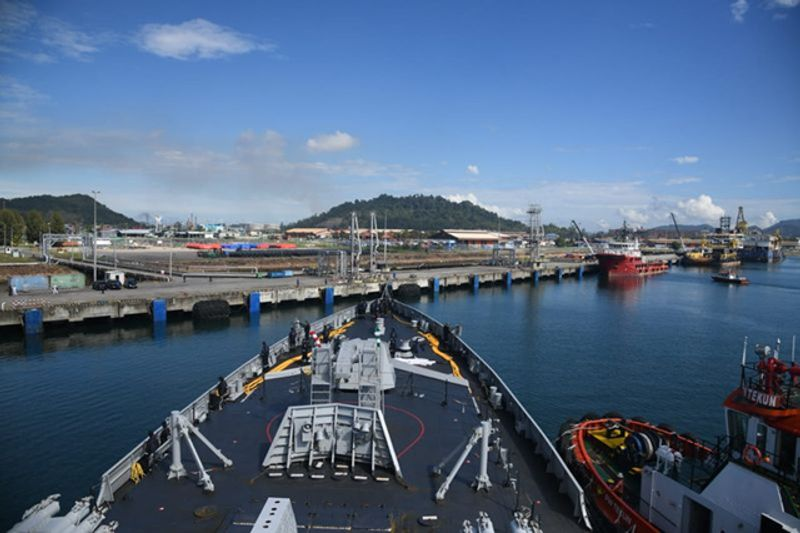
Indian Navy warship INS Sahyadri is currently on an operational deployment to the South China Sea, marking the second such maritime activity by India in the disputed waters in the past two weeks.

The Navy said on Sunday that INS Sahyadri had made a three-day port call (October 2-4) at Kemaman, Malaysia, as part of its Eastern Fleet’s deployment in the South China Sea and the broader Indo-Pacific region.

“INS Sahyadri’s ongoing operational deployment underscores India’s stature as a responsible maritime stakeholder and a preferred security partner in the Indo-Pacific,” the Navy said.

Less than two weeks ago, Indian warship INS Nistar conducted a ten-day deployment as part of Exercise Pacific Reach-2025 (September 15-25), a multi-nation submarine rescue exercise. Uniquely, the US, South Korea and Japan were among the 40 participants in the drill hosted by Singapore.

Meanwhile, the INS Sahyadri’s visit to Malaysia aimed to strengthen India-Malaysia naval cooperation, enhance interoperability between the two navies, and facilitate the exchange of best practices. Malaysia is one of five countries engaged in a maritime territorial dispute with China in the hydrocarbon-rich South China Sea.

Beijing has unilateral overlapping maritime claims in South China Sea with Malaysia, Vietnam, the Philippines, Brunei and Taiwan. 

With the increasing significance of the Indo-Pacific in the geopolitical seascape, both nations have increasingly recognised the importance of building regional partnerships based on mutual interest, the Navy added.

During the three-day visit, the ship’s commanding officer paid courtesy calls on Royal Malaysian Navy officers. The crew also conducted a yoga session and charity event, reflecting the Navy’s commitment to wellness and humanitarian engagement, and strengthening India-Malaysia friendship.

INS Sahyadri, a guided missile stealth frigate, has visited Malaysia twice before – at Port Klang in 2016 for a goodwill mission and at Kota Kinabalu in 2019 for Exercise Samudra Laksamana. These visits underscore the strong and evolving naval ties between the two countries.


AI enables 94 per cent accuracy in targeting enemy assets: Indian Army

Live data is collected by integrating feeds from all sensors, drones, radars, and satellites onto a single screen for the commander to take action

A mix of modern-day technology juxtaposed with 26 years of historical data and processed through artificial intelligence (AI) provided the Indian Army with information on Pakistan Army’s movement during Operation Sindoor, enabling pinpoint targeting. Lt Gen Rajiv Sahni, who was the Army’s Director General Information Systems during Operation Sindoor, said today that the system’s accuracy in locating and enabling targeting was more than 94 per cent.

Explaining the working, he said live data is collected by integrating feeds from all sensors, drones, radars, and satellites onto a single screen for the commander to take action. “Everything is aggregated, and that includes data about enemy positions, assets, and logistics,” said Gen Sahni, who is now Director General Electronics and Mechanical Engineers (DG EME).

The modelling of the battlefield was done using 26 years of data that had tracked and stored each radio emission and every frequency signature. This included where each equipment had moved in the past and was tasked with which unit in Pakistan. “With this modelling and live feed, 94 per cent accuracy was achieved, allowing us to pinpoint where a particular machine, such as a gun or missile unit, would be located on the border,” Gen Sahni added.

The infrastructure enables other services – the Navy and Indian Air Force (IAF) – to use the same data. The Army even got the India Meteorological Department (IMD) to provide weather data. A specialised ‘app’ developed in-house by the Army makes a forecast of 200 km into enemy territory, providing usable data to military commanders on wind speed, wind direction, and other factors needed to calculate the trajectory of long-range missiles using AI.

The data-based targeting was possible because the home-grown application for ‘electronic intelligence collation’ was modified in record time during Operation Sindoor. This enabled a common surveillance picture, allowing for target acquisition. This enhanced coordination of resources, improved decision-making, and provided commanders at all levels with greater agility and situational awareness, Gen Sahni added.


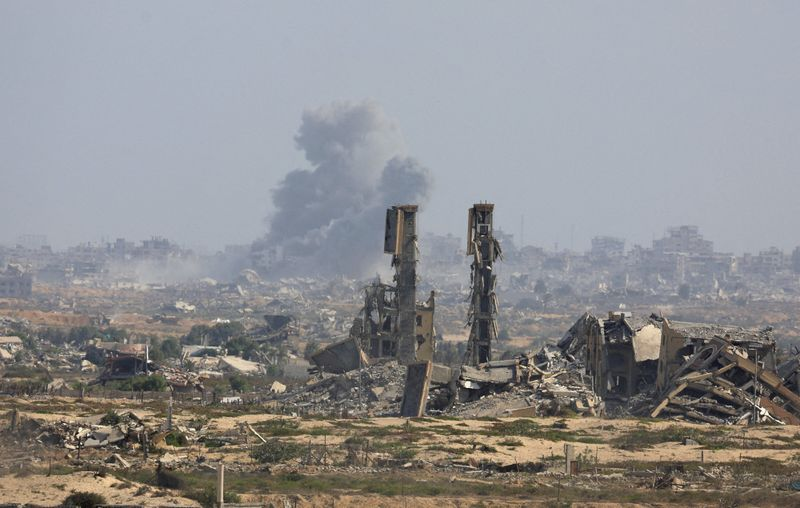
Gaza war: Two years after Hamas attack, talks raise hopes

The Tribune Editorial: However, a contentious point — disarmament of Hamas and its exclusion from governance in Gaza — might impact the outcome of the talks.

HE start of US-brokered talks in the Egyptian resort of Sharm el-Sheikh has raised hopes worldwide that the two-year-old Gaza war will finally come to a halt. The war was triggered by the stunning attacks carried out by Hamas-led militants on Israeli soil on October 7, 2023. About 1,200 people, mostly Israeli civilians, were killed and around 250 taken hostage in what was described as the bloodiest day for Jews since the Holocaust. The no-holds-barred Israeli retaliation has snuffed out the lives of over 67,000 Palestinians, mainly civilians, even as the majority of the 2.2 million Gazans have been left homeless and hungry.


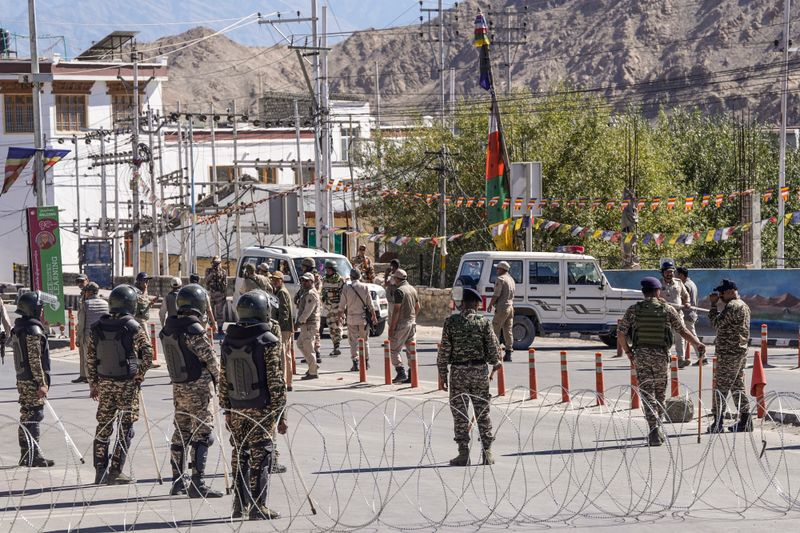
Arrests continue over Leh violence: Bar assn

Even as local courts in Leh have granted bail to around 40 individuals arrested in connection with the September 24 violence, the Ladakh Police continue to make more arrests, according to lawyers familiar with the case.

Mohd Shafi Lassu, President of the Bar Association, Leh, said approximately 75 people have been arrested so far. “Around 40 have already been granted bail by the court, and more bail hearings are scheduled in the coming days,” Lassu said.

He, however, expressed concern over the continued arrests, calling them a “pressure tactic by the administration”.

The violence erupted during a hunger strike led by climate activist Sonam Wangchuk, who had been on a 35-day fast demanding constitutional safeguards for Ladakh. On September 24, security forces opened fire during protests, resulting in the deaths of four people and injuries to nearly 100 others. Wangchuk ended his hunger strike shortly after the incident.

On Monday, 14 more individuals were released, while 26 others had previously been granted interim bail. However, the number of fresh arrests continues to rise.

Police officials in Ladakh defended the ongoing arrests, stating they are part of a continuing investigation into the violence. “The investigation is underway. We are arresting only those whose involvement in the violence has been established,” a senior police official said on Monday.

Meanwhile, the Leh Apex Body (LAB), one of the two prominent groups leading the ongoing movement in Ladakh, disputed the administration’s claim that normalcy had returned to the region. The group has demanded the immediate lifting of restrictions, release of all detainees, and restoration of mobile internet services, which remain suspended.

“These steps are essential to restore public confidence,” said LAB co-chairman Chering Dorjay, who also accused the administration of harassing village heads (numberdars) for informing locals about the LAB-led hunger strike held from September 10 to 24.


Indian Navy commissions anti-submarine warfare vessel ‘Androth’Commissioned in Visakhapatnam,

The Indian Navy on Monday commissioned INS Androth, the second of its next-generation Anti-Submarine Warfare Shallow Water Craft (ASW-SWC), designed to detect enemy submarines operating close to the coast.

The warship was commissioned at the Naval Dockyard in Visakhapatnam by Vice Admiral Rajesh Pendharkar, Flag Officer Commanding-in-Chief of the Eastern Naval Command.

The first ship of the class called INS Arnala was commissioned in June this year. INS Androth derives its name from an island in the Lakshadweep archipelago.

The ship is built by Garden Reach Shipbuilders and Engineers (GRSE), Kolkata, in collaboration with L&T’s Kattupalli shipyard in Tamil Nadu.

The Navy has contracted 16 such ships at an overall cost of nearly Rs 13,000 crore, with Cochin Shipyard Limited and GRSE manufacturing eight each.

The primary role of these ships is to detect, track and prosecute enemy submarines, particularly in coastal and shallow water regions. Equipped with advanced underwater sensors, such as the hull-mounted sonar Abhay, an underwater acoustic communication system and a low-frequency sonar, the vessel can carry out comprehensive underwater surveillance.

To neutralise underwater threats, the ships feature a state-of-the-art weapon suite, including lightweight torpedoes, rockets, anti-torpedo decoys and advanced mine-laying capabilities.

The 77.6-metre-long vessel has a displacement of 1,490 tonnes.

The Androth incorporates more than 80 per cent indigenous content. Major Indian defence firms such as Bharat Electronics Limited (BEL), L&T, Mahindra Defence and MEIL have supplied advanced systems for the ship. The project has also engaged over 55 Micro, Small and Medium Enterprises (MSMEs), promoting domestic industry and generating related economic activity.


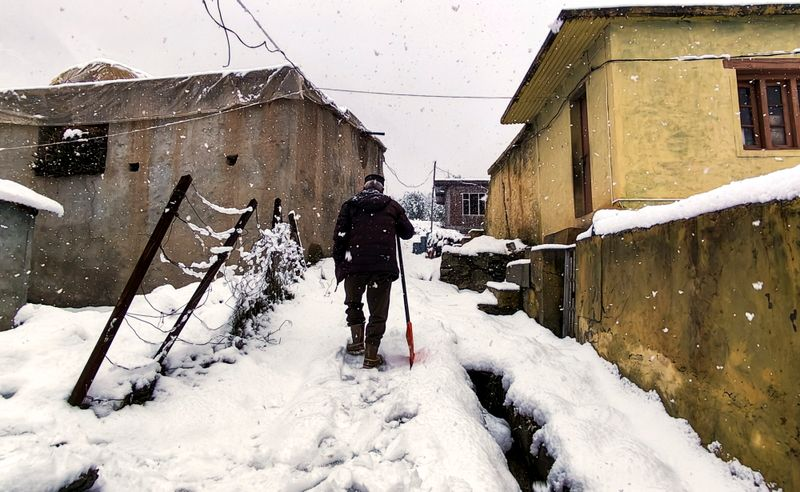
Shimla shivers at 8.8°C, snowfall continues in higher reaches

MeT Department says that light rainfall will continue in isolated places of the state till October 9

The state capital shivered at 8.8°C minimum temperature as snowfall continued in the higher reaches of Himachal. In Shimla, the minimum temperature dipped by 2.7°C, leading to cold weather conditions throughout the day along with rainfall.

As per the state’s Meteorological Department, the maximum temperatures across the state fell by 6°C to 14°C and were in the range of 1°C to 30°C while the minimum temperatures fell by 3°C to 7°C and were in the range of minus 1 to 22°C during the past 24 hours.

While snowfall continued in the higher reaches of Lahaul and Spiti, Kinnaur and Chamba districts, heavy rainfall was recorded in many parts of the state. Gondla village in Lahaul and Spiti recorded 26.4 cm of snowfall, Keylong (20 cm) and Kukumseri (5 cm).

Pachhad in Sirmaur district received the highest 60 mm of rain, Nahan (41.6 mm), Solan (34.2 mm), Manali (30 mm), Shimla (25 mm), Kalpa (22.2 mm), Dharamsala (18.8 mm), Kangra (18.4 mm), Bhuntar (16 mm), Mandi (15.2 mm), Sundernagar (14.2 mm) and Bilaspur (11.4 mm).

The MeT Department said that light rainfall would continue in isolated places of the state till October 9 after which the weather would remain dry for the rest of the week. The maximum temperatures are expected to rise by 6°C to 10°C while the minimum temperatures are expected to rise by 2°C to 4°C within the next three or four days.

The minimum temperature in Dharamsala was 14.8°C, Manali (6.1°C), Dalhousie (6°C), Kufri (6.7°C), Narkanda (4.9°C), Kalpa (3°C), Nahan (15.1°C), Solan (12.6°C), Bilaspur (16.1°C), Hamirpur (13.7°C) and Kangra (15.2°C).

Una recorded the highest maximum temperature of 26°C while Keylong in Lahaul and Spiti was the coldest at minus 0.5°C.