




Sanjha Morcha

Centre lifts curbs, allows Sikh jathas to visit Pakistan

The authorised groups are expected to cross via the Attari-Wagah border and visit historic gurdwaras in Pakistan, including Gurdwara Nankana Sahib, the birthplace of Guru Nanak Dev.

The Centre on Thursday lifted its restrictions and allowed select Sikh jathas to travel to Pakistan to participate in the upcoming Parkash Purb of Guru Nanak Dev, officials said.

The move follows criticism of a September 12 directive from the Ministry of Home Affairs (MHA) that had barred cross-border travel by Sikh pilgrims to Pakistan on security grounds. Religious bodies and political leaders had protested the ban, arguing that pilgrimage should not be singled out while other cross-border activities continued.

Under the new decision, permission is limited to jathas specifically recommended by state governments and cleared by central ministries after security vetting. The state authorities will screen and forward the applications in coordination with intelligence and security agencies, while the final clearance will be granted by the MHA in consultation with the Ministry of External Affairs (MEA). Officials emphasised that even travellers holding valid Pakistani visas will not be permitted to make independent trips — approvals must come through the official jatha mechanism.

Home Ministry to give final approval

The move follows criticism of a September 12 directive from the MHA that had barred cross-border travel by Sikh pilgrims to Pakistan on security grounds

States will screen and forward applications in coordination with intelligence and security agencies, while the final clearance will be granted by the MHA

The authorised groups are expected to cross via the Attari-Wagah border and visit historic gurdwaras in Pakistan, including Gurdwara Nankana Sahib, the birthplace of Guru Nanak Dev. The arrangement, the officials said, would follow the 1974 India-Pakistan protocol on visits to religious shrines that had previously governed limited cross-border pilgrimage despite strained bilateral ties.

Delhi Minister Manjinder Singh Sirsa, who welcomed the decision, said the MHA had issued a notification directing states to submit jatha applications by October 22. “I request prominent Sikh bodies, including the SGPC, to complete the procedure at the earliest so that applications reach the MHA after due scrutiny and verification,” Sirsa said, and thanked Prime Minister Narendra Modi for the move.

Analysts said the decision carried both humanitarian and symbolic value — accommodating religious sentiment while preserving central control over security. Details on the size of the contingents, precise itineraries and security arrangements were being finalised.

The announcement comes against the backdrop of heightened India-Pakistan tensions. The Kartarpur Corridor — a visa-free route that previously allowed Indian pilgrims direct access to Gurdwara Darbar Sahib, Kartarpur — has remained suspended since May 2025 following the Pahalgam attack and subsequent security concerns, underscoring the sensitive environment in which the pilgrimage will take place.
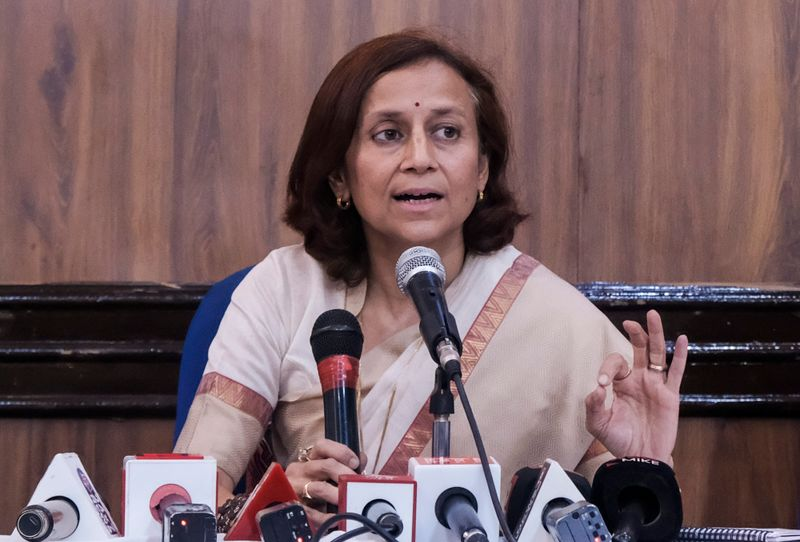
Sonam Wangchuk’s wife seeks President Murmu’s intervention for his release

Wangchuk was detained under the National Security Act on September 26, two days after violent clashes in Leh town left four persons dead and scores of others injured

Sonam Wangchuk’s wife, Gitanjali J Angmo, on Wednesday sought President Droupadi Murmu’s intervention for the release of the climate activist, who has been lodged in Jodhpur jail in Rajasthan since being taken into custody following the September 24 violent clashes in Ladakh.

In a three-page letter addressed to the president, Wangchuk’s wife alleged “witch-hunt” against her husband for espousing the cause of the people over the past four years and said she was completely unaware about her husband’s condition.

“We request for an unconditional release of Wangchuk, a person who can never be a threat to anyone, leave alone his nation. He has dedicated his life to serve the brave sons of soil of Ladakh and stands in solidarity with the Indian Army in defence of our great nation,” Angmo said in the representation forwarded through the Deputy Commissioner, Leh.

Wangchuk was detained under the National Security Act on September 26, two days after violent clashes in Leh town left four persons dead and scores of others injured. The violence broke out during the protests in support of the demands, including statehood for Ladakh and the region’s inclusion in Sixth Schedule of the Constitution.

She termed Wangchuk’s detention as “illegal” and said she was informed of this by a Station House Officer.

“I was also told the officer would explain to me my legal rights. Even that has not been done till today. I am shocked and devastated,” she said, adding that while being taken away, he was not even allowed to take his clothes. “I am not aware whether he has been given fresh clothes and basic amenities including medicines that he needs on a daily basis, especially after his fast of 15 days in September that has weakened him physically.”

Calling the treatment “deplorable”, she said Wangchuk had been speaking about climate change, educational reforms, and grassroots innovation, and raising his voice for the uplift of a backward tribal belt that is ecologically fragile, in a peaceful Gandhian manner for the last four years.

“To treat the son of the soil of Ladakh so shabbily is not just a sin but a strategic error for building strong borders with solidarity and peaceful coexistence,” she said, while highlighting that Wangchuk had been building shelters for the Indian Army officers and jawans.

Asking if it was a sin to fight against reckless and unchecked development activities in an ecologically fragile area of Ladakh, she said, “This country has learnt its lessons from its experiences from Uttarakhand, Himachal and the North-east of late. You, being from a tribal community background, would understand the feelings of the people of Ladakh better than anyone else.”

Angmo, who is the founder and chief executive officer of the Himalayan Institute of Alternative Learning (HIAL), also stated that she was put under CRPF surveillance and referred to a communication received from in-charge of the special investigation team, seeking details of students and staff residing at HIAL. She also said that two members of the institute were taken into custody three days ago.


No ‘misadventure’ in Sir Creek, Pakistan warned

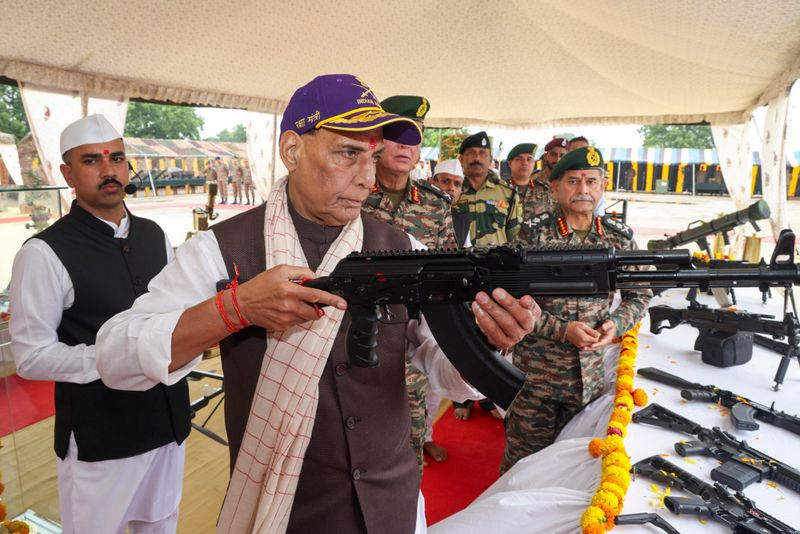
Defence Minister Rajnath Singh performs ‘shastra puja’ at the Bhuj military station in Gujarat. PTI

Our response will change history, geography: Rajnat

Defence Minister Rajnath Singh on Thursday warned Pakistan of a strong reply if it resorted to any “misadventure” in the disputed Sir Creek sector along the India-Pakistan border in Gujarat. The minister was addressing troops on Dasehra at the Bhuj military station in Gujarat.

Rajnath also performed the ceremonial ‘shastra puja’ (worship of weapons) at the military station. The air defence gun — L-70 — that did a commendable job during the recent Operation Sindoor with Pakistan was among the weapons at the ceremony.

On the issue of the Sir Creek sector, the minister said, “Pakistan’s recent expansion of military infrastructure in the sector reflects its ill intent.”

“Any misadventure by Pakistan in the Sir Creek sector will invite a decisive response… If Pakistan dares to act in the sector, the reply will be so strong that it will change both history and geography,” he said.

In 1965, the Army showed courage by reaching Lahore, and in 2025, Pakistan must remember that the road to Karachi also passes through the creek, the minister added.

India and Pakistan have an undemarcated boundary, with Sir Creek, a 96-km tidal estuary, dividing Gujarat and the Pakistani state of Sindh. Its demarcation will decide potential oil and gas reserves by defining the maritime boundaries and exclusive economic zones in the Arabian Sea.

Rajnath also virtually inaugurated the Tidal Independent Berthing Facility and the Joint Control Centre in the sector. The facilities will act as major enablers for integrated coastal operations while significantly enhancing joint operational capability, coastal security coordination and rapid response to any threats, the minister said.

On Operation Sindoor, Rajnath said it exposed Pakistan’s air defence system. Pakistan had tried to penetrate India’s defences from Leh to the Sir Creek sector, but the swift and effective counteraction by the Indian forces not only exposed the weaknesses of Pakistan’s air defence system but also sent out a clear message to the world that India could inflict heavy damage at a time, place and manner of its choosing, he said.

Operation Sindoor was aimed at countering terrorism, not provoking a wider conflict, he said while expressing satisfaction that all military objectives of Operation Sindoor were successfully achieved. Rajnath reaffirmed that India’s fight against terrorism would continue with full resolve.

On the ‘shastra puja’, the minister said it was not merely a ritual but a reflection of India’s civilisational philosophy, where weapons are regarded as instruments of dharma, not just tools of violence.


Israeli navy intercepts Gaza-bound aid flotilla, says Greta Thunberg, others safe

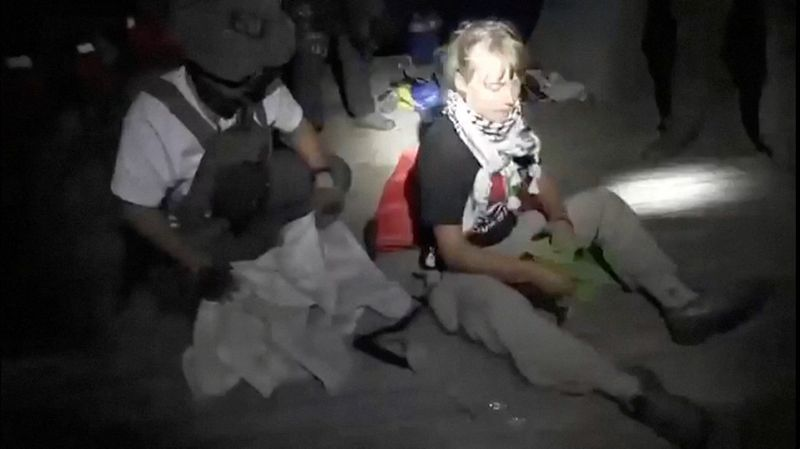
A screengrab from a video shows Swedish activist Greta Thunberg sitting next to a person wearing tactical gear, as vessels of the Global Sumud Flotilla are being intercepted by Israeli security forces, October 1, 2025. Israel Foreign Ministry/Handout via REUTERS

The Global Sumud Flotilla, comprising nearly 50 boats and 500 activists, was carrying a symbolic amount of humanitarian aid to Gaza

A screengrab from a video shows Swedish activist Greta Thunberg sitting next to a person wearing tactical gear, as vessels of the Global Sumud Flotilla are being intercepted by Israeli security forces, October 1, 2025. Israel Foreign Ministry/Handout via REUTERS

Activists on board a flotilla of vessels sailing towards Gaza said late on Wednesday that the Israeli navy had intercepted three of its boats as they approached the besieged Palestinian territory.

Israeli authorities said the activists on board, including Greta Thunberg, were safe and being transferred to Israel.

The Global Sumud Flotilla, comprising nearly 50 boats and 500 activists, was carrying a symbolic amount of humanitarian aid to Gaza. The Sirius, Alma and Adara boats were intercepted some 70 nautical miles (80 miles) from the coast of Gaza, according to organisers who shared live positions of the flotilla.

The group, which includes Nelson Mandela’s grandson, Mandla Mandela, former Barcelona Mayor Ada Colau and several European lawmakers, said it remained undeterred in its mission to break the Israeli blockade and bring aid to Palestinians.

Greg Stoker, an American veteran aboard the Ohwayla, one of the boats in the flotilla, said around a dozen naval vessels with their transponders off had approached it.

“They are currently hailing our vessels, telling us to turn off our engines and await further instructions or our boats will be seized and we will face the consequences,” he said in a shaky video posted on Instagram while wearing a red life jacket. Israeli authorities used water cannons against some of the boats, Stoker and other activists reported on social media.

The Israeli Foreign Ministry posted a video on X showing Thunberg sitting on a ship’s deck being handed a water bottle and raincoat. “Greta and her friends are safe and healthy,” it said.

Italy’s Foreign Minister Antonio Tajani said the Israeli operation was expected to take two to three hours. He told state TV Rai that the boats would be towed to Israel’s port of Ashdod and the activists would be deported in the coming days. He also said Israeli forces have been told “not to use violence”.

Turkiye’s Foreign Ministry condemned Israel’s interception of the boats denouncing it as an “act of terrorism” and severe breach of international law. In a statement, the ministry said it was taking initiatives to ensure the immediate release of Turkish citizens and other passengers detained by the Israeli forces.

The flotilla enters a ‘danger zone’

The vessels were sailing in international waters north of Egypt and had entered what activists and others called a “danger zone”. While still in international waters, it is an area where the Israeli navy has stopped other boats attempting to break its blockade in the past and which the flotilla has been warned not to cross.

After a tense encounter with two Israeli military vessels in the early hours of Wednesday, activists had resumed their journey and were broadcasting their voyage on livestreams from several of the boats. Some activists held up messages of solidarity with people in Gaza and chanted “Free Palestine!” on camera. Music could be heard playing in the background.

As night fell, they detected via radar several unidentified vessels approaching them and put their life vests on ahead of the Israeli military’s imminent arrival. Some activists were able to broadcast the moment Israeli forces approached them live from their smartphones before tossing their devices into the water.

The flotilla, which began its journey from the Spanish port of Barcelona a month ago, was to reach the shores of Gaza by Thursday morning, organisers had said earlier.

Activists had acknowledged that scenario was unlikely and were expecting Israeli authorities to try to stop them at any moment, as they have done in past attempts.

But this flotilla, with dozens of boats, was the largest attempt yet to break the Israeli maritime blockade of the Gaza strip that has been ongoing for 18 years.


HEADLINES : 02 oct 2025

HAPPY DUSHERA TO ALL VETERANS & ANNIVERSARIES OF MG GHANDHI ,LAL BHADUR SHASTRI

Punjab’s 1st Military Heritage site inaugurated at Asal Uttar

Vigilance sleuths catch DRDO official with bribe

Lt Gen Vats takes over as new DG NCC

Army revamps training policy for long-term continuity, adopts 4-year directive

BRO plans Rs 1,152 crore infrastructure push in Sikkim under ‘Project Swastik’

IAF procuring more radars that can detect stealth aircraft, fill in gaps left by traditional equipment

India for more explicit mandates for UN peacekeeping missions

Airbus, Tata announce helicopter unit in Karnataka

Days after violence, govt reaches out to Leh Apex Body for talks

Sonam Wangchuk’s wife seeks President Murmu’s intervention for his release


Israeli navy intercepts Gaza-bound aid flotilla, says Greta Thunberg, others safe


Punjab’s 1st Military Heritage site inaugurated at Asal Uttar

featured-img

New gallery opened at Memorial and Museum at Asal Uttar military heritage site on Tuesday.
Punjab’s 1st Military Heritage site inaugurated at Asal Uttar
article_Author
Neha Saini

Punjab Governor Gulab Chand Kataria and Lt Gen Manoj Kumar Katiyar, PVSM, UYSM, AVSM, GOC-in-C Western Command, on Tuesday dedicated the upgraded Asal Uttar War Memorial and Museum to the nation, marking it as Punjab’s first military heritage site.Located in the paddy fields of the Khemkaran sector, Asal Uttar village holds one of India’s most decisive wartime legacies. In September 1965, it became the battleground where Indian troops halted Pakistan’s armoured thrust into Punjab in a fierce three-day clash, turning the tide of war and earning the site its place in military history.The project, led by the Indian Army in collaboration with the Indian National Trust for Art and Cultural Heritage (INTACH), has been developed as part of the diamond jubilee commemoration of the 1965 war. Lt Gen Katiyar hailed the effort as a tribute to soldiers’ valour, while INTACH Punjab convenor Maj Gen Balwinder Singh (retd), VSM, described it as “a blueprint for how a community, a state, and a nation can preserve, interpret and learn from military history in situ.”

The initiative, led by the Army’s Golden Arrow Division and INTACH Punjab headed by Maj Gen Singh, coincides with the diamond jubilee of the 1965 war. The objective, he said, is to create a memorial, museum and curated experience anchored in the very terrain where history was made. “The Army brings custodianship of regimental memory and artefacts, while INTACH Punjab contributes conservation, curation and visitor-experience expertise. Together, we can balance authenticity with accessibility,” he noted.

Maj Gen Singh pointed out that Lt Gen Harbaksh Singh, then GOC-in-C Western Command, played a decisive role in defending India’s territorial integrity during the 1965 conflict. His strategic brilliance, he said, was instrumental in defeating Pakistan’s forces.

The Battle of Asal Uttar, fought between September 8 and 10, 1965, stands as a shining example of courage, tactical acumen and the indomitable spirit of the Indian armed forces. Indian troops halted the enemy advance and destroyed or captured 97 Patton tanks, earning the battlefield its enduring sobriquet—the “Graveyard of Pattons.” The wreckage scattered across the fields gave rise to “Patton Nagar,” an open-air display of captured and destroyed tanks near Bhikhiwind and Khemkaran. For decades, the rusting hulks served as reminders of how strategy, grit and good soldiering neutralised a perceived technological edge.

Among the celebrated episodes of the battle was the exceptional bravery of CQMH Abdul Hamid of 4 Grenadiers, whose actions earned him a legendary place in Indian military history. The memorial and museum also showcase other historic engagements. The Battle of Barki (1965) is commemorated for its outstanding acts of leadership and bravery. Lt Col Anant Singh, commanding officer of 4 Sikh, led from the front, inspiring his men to achieve what seemed almost impossible. Many were decorated for gallantry.

The Battle of Sehjra (1971) too finds a place of honour. Here, Brig M C S Menon, commander of 48 Infantry Brigade, tasked 1/5 GR (FF), 6 MAHAR and an armoured squadron to capture a heavily fortified Pakistan salient north of Ferozepur. After a fierce fight, Indian troops secured the Sehjra defences on December 6, 1971.

INTACH will also host annual homage at Abdul Hamid’s mausoleum, while encouraging coordination between the district administration, tourism bodies, local panchayats and veterans’ groups. “Exhibits should acknowledge that any battle has two sides. Naming Pakistani casualties and units—accurately and respectfully—transforms a victory narrative into a human narrative. It also elevates India’s moral confidence: we can celebrate valour without dehumanising an adversary,” said Dr Baljit Kaur, convener of INTACH Tarn Taran chapter.


Vigilance sleuths catch DRDO official with bribe

Accused was posted at Sector 29 office in Chandigarh

An official of the Defence Research and Development Organisation (DRDO) has allegedly been caught red-handed while accepting a bribe.

According to the police, Ashutosh Singh, branch manager of Shakti Enterprises, had lodged a complaint, alleging that Amit Solanki, Technical Officer at the DRDO, Sector 29, demanded Rs 2.3 lakh as bribe for clearing bills related to manpower supply.

Acting on the complaint, the Vigilance team laid a trap and apprehended the accused while receiving the bribe amount from the complainant.

A case under Sections 7 and 12 of the Prevention of Corruption Act, 1988, was registered at the Vigilance police station today. Searches were conducted at his residence, and further investigation in the case was underway, said the police.


Lt Gen Vats takes over as new DG NCC

He succeeds Lt Gen Gurbirpal Singh

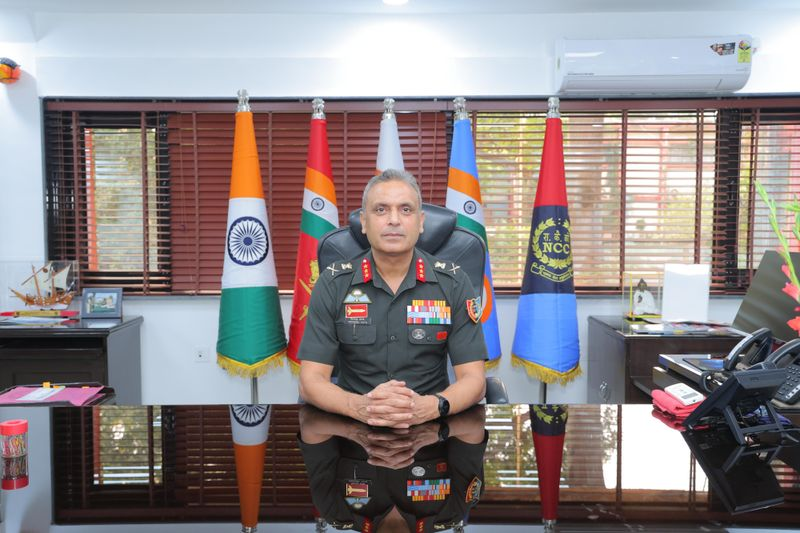
Lt Gen Virendra Vats on Wednesday assumed charge as the Director General of the National Cadet Corps (NCC).

He succeeds Lt Gen Gurbirpal Singh.

Lt Gen Vats takes over at a significant juncture when NCC, the world’s largest uniformed youth organisation, is expanding its cadet strength to 20 lakhs across 28 States and 8 Union Territories. With its motto of unity and discipline, NCC is evolving in step with Viksit Bharat@2047 (developed India by 2047).

Commissioned into the 19 battalion of the Kumaon Regiment of the Indian Army, Lt Gen Vats has carried out counter insurgency and counter terrorism operations.

He has held key appointments in Arunachal Pradesh, the Kashmir Valley, and Army Headquarters. He also commanded an Infantry Brigade under a United Nations mission in the Democratic Republic of Congo.

Prior to this appointment, he was the Commandant at the Defence Services Staff College, Wellington.


Army revamps training policy for long-term continuity, adopts 4-year directive

The first COAS Quadrennial Training Directive for 2025–29, prepared by Army Training Command, was issued earlier this year

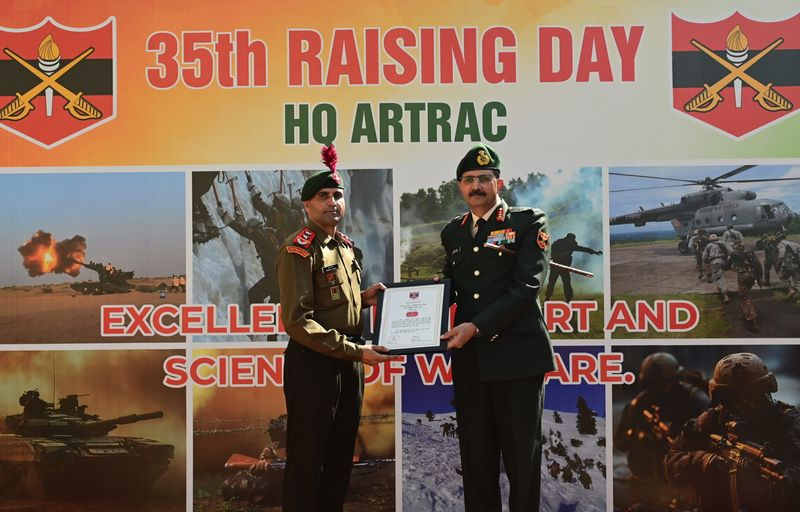
Lt Gen Devendra Sharma, General Officer Commanding-in-Chief, Army Training Command, felicitates a soldier during the Command’s 35th Raising Day. Photo: ARTRAC

In a major revamp of its training policy aimed at ensuring long-term continuity and coherence, the Army has extended the periodicity of the Chief of Army Staff’s (COAS) Training Directive from two years to four years.

The COAS Training Directive, which lays down the foundation of training in the Army, modalities and key result areas, will now be issued once every four years instead of biennially.

“The periodicity of the COAS Training Directive has been revised from biennial to quadrennial, ensuring longer-term coherence,” Lt Gen Devendra Sharma, General Officer Commanding-in-Chief, Army Training Command (ARTRAC) said at the Command’s 35th Raising Day in Shimla on Wednesday.

The first COAS Quadrennial Training Directive for 2025–29, prepared by ARTRAC, was issued earlier this year.

Army sources said that the earlier two-year period was considered very short for the implementation of guidelines and achieving tangible results. The increased time frame from the 2025-26 training year will provide adequate time to formations and units to implement the directives.

This would also provide a reasonable timeframe for structuring and validating the absorption of niche technologies, maintain correct operational focus by de-cluttering the training calendar and ensure continuity and coherence over a longer time horizon, sources added.

The ARTRAC chief said that the Command has also accelerated the rollout of drone training, aiming to prepare combatants in accordance with the Army’s vision of ‘Drones as Eagle on the Arm of every Soldier.’

He said that ARTRAC is on track to integrate 34 niche technologies into its curriculum by 2030, having provided advanced training to over 18,000 soldiers this year, with a plan for 12,000 more in the coming year.

In pursuit of greater technology absorption, ARTRAC has signed multiple Memorandums of Understanding with leading institutions, including Indian Institutes of Technology, to promote joint research and innovation.

Further, to refine the planning process, the concept of ‘Red Teaming’, which is a contrarian tool, has been institutionalised and the expertise gained over past one year is being shared with the other two sister Services, the Army Commander said.

Referred to as the Indian Army’s strategic think-tank’ for doctrine and training, ARTRAC was raised on October 1, 1991 at Mhow in Madhya Pradesh to meet the critical requirement of a centralised agency focused exclusively on all aspects of training and formulating concepts of modern warfare.

Since its move to Shimla in March 1993, this role has expanded significantly. ARTRAC now provides oversight in enabling the highest standards of institutionalised training across its 34 ‘Category-A’ training establishments spread all over the country.

Other important roles include provision of doctrinal support to the Army and bringing of adversarial perspective in operational planning.

ARTRAC also conducted the first ever tri-service seminar, Ran Samwaad – 2025, at the Army War College, Mhow in August, wherein participants from the three services deliberated upon next generation warfare and strategic construct in the Indian context.