












Sanjha Morcha

BRO plans Rs 1,152 crore infrastructure push in Sikkim under ‘Project Swastik’

The project has successfully overcome natural disasters such as Glacial Lake Outburst Floods, cloudbursts, and floods in Teesta River

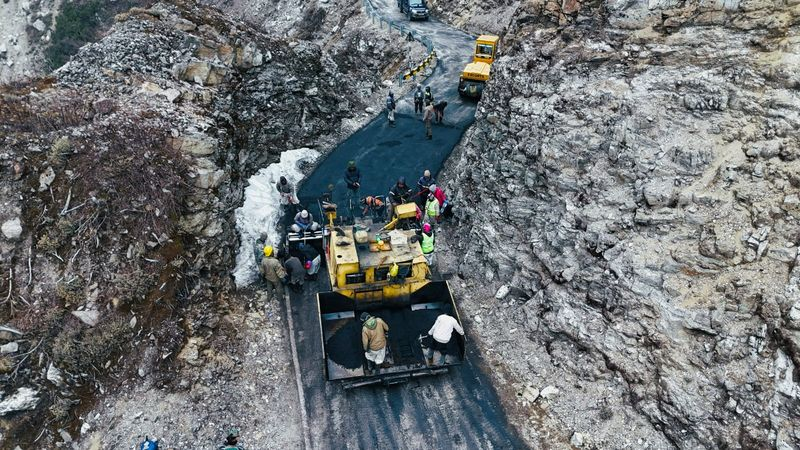
The Border Roads Organisation (BRO) has planned infrastructure projects worth Rs 1,152.66 crore in the north-eastern state of Sikkim, including the construction of the Western Sikkim Highway and National Highways 310A and 310AG.

These initiatives, undertaken by BRO’s Project Swastik, aim to enhance road connectivity, enable faster mobilisation of the Armed Forces, and incorporate advanced technologies such as geotextiles, slope stabilisation, avalanche mitigation, and eco-friendly construction methods to boost resilience and reduce maintenance costs.

Project Swastik, which commemorated it’s 65thRaising Day on Wednesday, has since its establishment in 1960, constructed and maintained over 1,412 km of roads and 80 major bridges, a defence spokesperson said.

In the last decade alone, the project completed more than 350 km of roads, 26 bridges and one tunnel ensuring year-round connectivity to remote valleys and forward areas while supporting the operational requirements of the Armed Forces. 

The project has also successfully overcome natural disasters such as Glacial Lake Outburst Floods (GLOFs), cloudbursts, and floods in the Teesta River.

As part of the celebrations, a wreath-laying ceremony was held at the Swastik Memorial, followed by a Sainik Sammelan, Barakhana, cultural programs and a Swastik Mela, fostering camaraderie among officers, personnel and their families. 

In line with its commitment to the welfare of its workforce, Project Swastik also launched new initiatives for Casual Paid Labourers (CPLs), including upgraded habitats, provision of protective gear, and health camps. 

IAF procuring more radars that can detect stealth aircraft, fill in gaps left by traditional equipment

VHF radars, according to experts, operate use longer wavelengths than traditional radars

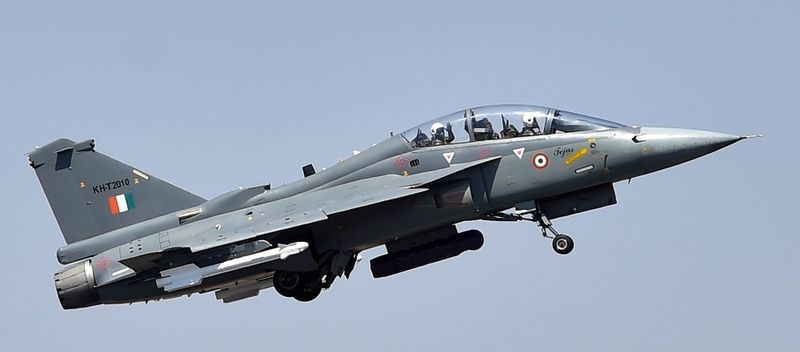
To beef up its capabilities to detect stealth aircraft and to fill in certain existing gaps in the air defence network, the Indian Air Force (IAF) has drawn up plans to procure additional very high frequency (VHF) radars to deployment in remote high altitude areas.

VHF radars, according to experts, operate use longer wavelengths than traditional radars. These wavelengths are able to penetrate the radar-absorbing coatings on stealth aircraft, then making them easier to detect. They can also pick up targets at longer ranges.

The IAF’s move to procure VHF radars assume significance in the light of China fielding fifth generation J-20 fighters that have stealth capabilities and reports of Pakistan also moving to acquire these aircraft. Also the emerging nature of warfare revolving around low observable platforms like drones and cruise missiles require enhanced, multi-pronged surveillance capability.

“At present there are several areas where due to terrain limitation, long range radar cannot be deployed. Additionally, existing radars has limited stealth detection capability” a request for information (RFI) floated by the Ministry of Defence last week states.

“Thus, VHF radar system is planned to be effectively used for air defence surveillance, especially near border areas and mountainous terrain to fill the radar gaps and to effectively detect stealth aircraft,” the RFI adds.

The IAF wants VHF radars that can be fully compatible with its Integrated Air Command and Control System (IACCS). This system, along with the Army’s Akashteer, had come into limelight during Operation Sindoor, the brief but intense military exchange majorly involving drones and missiles, during May this year.

The radars systems can be mounted on 6×6 high mobility vehicles capable of being fully functional at altitudes of up to 18,000 feet and in sub-zero, inclement weather conditions, along with having the required electronic counter measures.

While VHF radars, which operate in the frequency band of 30-200 megahertz, can detect stealth aircraft, experts however point out that these have some technical deficiencies like lower resolution and accuracy as compared to conventional radars which generally operate in the 1-28 gigahertz bandwidth.

VHF radars also have a larger antenna.

There have also been indigenous developments in his arena. The Defence Research and Development’s (DRDO) Electronics and Radar Development Establishment has developed a VHF Surveillance Radar, while a private Bengaluru-based firm has come up Surya VHF Radar. Both these radars have a claimed detection range of up to 500 km.

While DRDO’s system is undergoing operational trails, with the potential for further upgrades in its capability, some Surya radars were reportedly inducted into service earlier this year.


India for more explicit mandates for UN peacekeeping missions

Says countries contributing troops should have a say in framing rules

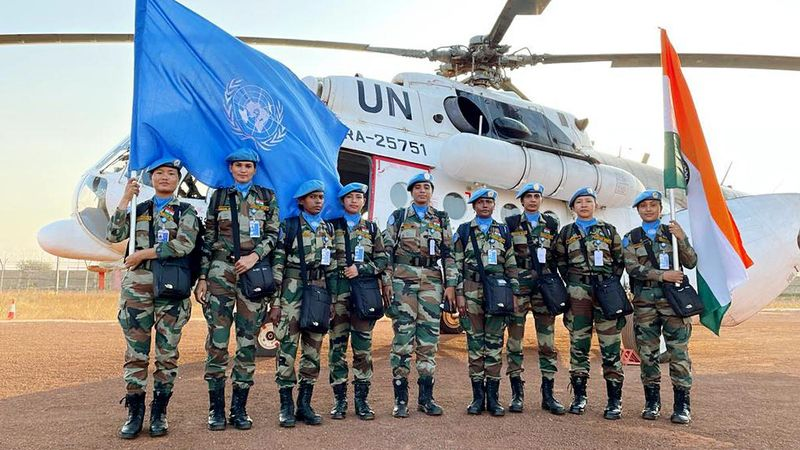
With the UN peacekeeping operations increasingly becoming complex, India has advocated on having ‘explicit’ operational mandate and sought a fair representation of countries making troop contributions in framing the mandate of each peacekeeping mission.India is one of the largest troop contributors to the multi-nation UN peacekeeping missions, said Deputy Chief of the Army Lt Gen Rakesh Kapoor as he announced a conclave of senior military leadership of over 30 nations that are key contributors to the UN peacekeeping operations. The three-day event (from October 14 to 16) would be hosted in New Delhi by the Indian Army.

Lt Gen Kapoor said the character of conflicts was changing, hence peace keeping by the UN-mandated forces was at an inflexion point. Traditional ceasefire monitoring missions have evolved into complex multi-dimensional missions driven by asymmetric threats, cyber risks and blurred non-state dynamics, he added.

“Accordingly, India on its part, has been a strong advocate of more explicit mandates, improved mission support, better force protection and fair representation of countries contributing troops in mandate formulation (of each peacekeeping mission),” stated Lt Gen Kapoor.

In the past 75 years, India has contributed over 2,90,000 peacekeepers across 50 missions. As many as 182 of those peacekeepers have laid down their lives.

The Indian Army would share its operational experience, innovations and best practices. India would also leverage its indigenous technology to make peacekeeping missions more resilient, cost-effective and future-ready.

Chiefs and representatives from nations across the world – including Algeria, Armenia, Bangladesh, Bhutan, Brazil, Burundi, Cambodia, Cote D’Ivoire, Ethiopia, Fiji, France, Ghana, Indonesia, Italy, Kazakhstan, Kenya, Kyrgyzstan, Madagascar, Malaysia, Mongolia, Morocco, Nepal, Nigeria, Sri Lanka, Tanzania, Uganda, Uruguay, Vietnam, Rwanda and Senegal – are expected to attend the conclave.