



Sanjha Morcha

Why social media needs to be regulated by Manish Tewari MP Anadpur Sahib & Lawyer

Manish Tewari

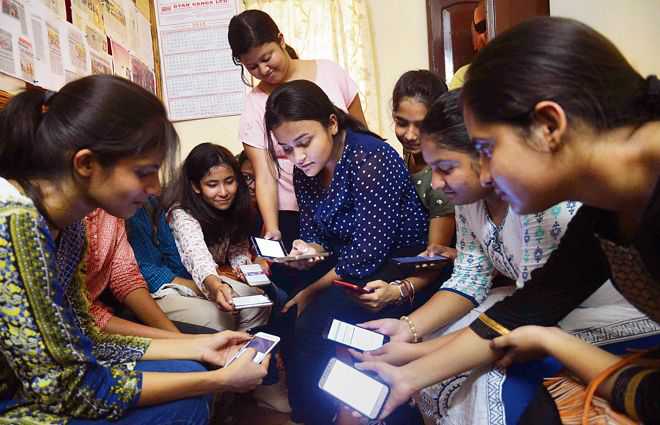
The big social media platforms are not only monopolies in themselves but also the equivalents of a public square, albeit a digital one. The big five of the virtual civilisation are now akin to public utilities and must be regulated as such. The argument, therefore, that they do not bear responsibility for content on their platforms is both dubious and disingenuous.
Why social media needs to be regulated

Manish Tewari
MP and lawyer

It has been almost a month since the results of the General Election 2019 were announced. The time has come to seriously evaluate the role played by social media in spreading disinformation and hate speech in the election season. To do so it is imperative to first understand the structure of the social media platforms and for that, it is necessary to go back to the invention of the telephone itself.

The telephone was invented by Alexander Graham Bell in 1875. Using tuned metal reeds, wire and magnets, he and his colleagues were able to harmonise a sending telephone with a receiver and reproduce sound. On March 10, 1876, Bell transmitted the first sentence, “Watson, come here, I want you”, through his contrivance. And, the communications revolution has not looked back since then.

The telephone essentially is a platform that people still use to communicate with each other. Every telephone user has a number that he or she uses — that number is supposed to be linked to an identity. If the telephone network is misused for the purposes of making crank, anonymous or abusive hatemongering calls, the same can be invariably tracked to the miscreants.

However, with the advent of calling cards that could be used from landline phones and later mobile telephony — the ubiquitous SIM cards — these networks are also abused. But the problem is not insurmountable.

Telephone companies do not take responsibility for content transmitted over their networks, claiming that they are primarily network providers and how the subscriber uses the system is not their responsibility. With various value-added services getting added to the original voice transmission capacity over the past three decades, this paradigm also requires a revisit. Telecom operators globally should be made vicariously liable in certain instances when their networks become catalysts of mass social and economic disruption.

Now fast-forward to the 1960s. The first practical model of the Internet came with the conception of ARPANET or the Advanced Research Projects Agency Network. Funded by the US Department of Defense, ARPANET utilised packet switching to allow multiple computers to interconnect over one specific network.

By the 1970s, scientists conceptualised the Transmission Control Protocol and Internet Protocol, or TCP/IP, a communications template that set benchmarks on how data could be conveyed between manifold networks. ARPANET embraced TCP/IP on January 1, 1983, and from thereon began the interlinking of networks that became the modern Internet.

The online world then took on a more discernible shape in 1990, when computer scientists developed the World Wide Web. While frequently confused with the Internet itself, the Web is essentially the most conjoint ways of accessing data online in the shape of websites and hyperlinks. It is the web that aided the propagation of the Internet among the masses. It functions as a critical tread in assembling the titanic trove of information that most of us now use on a daily basis.  The social media platforms like Facebook, WhatsApp, Twitter, Tik-Tok and a multitude of others are the flora and fauna of this World Wide Web.

These social media platforms allow people to register themselves for using their services bereft of any tangible verification. As a consequence a number of individuals, companies, political parties, intelligence structures, non-state actors, terrorist groups and even governments abuse this anonymity in order to spread disinformation, abuse hate and vitriol that has serious implications including and not limited to interference in the sovereign and even democratic functioning of states, causing conflagrations, cyber warfare and interdiction of critical infrastructure to name but a few of the nefarious uses of this framework in the ether. This does not include the vicious dark net that requires very specific browsers to access.

Human beings now live in two parallel civilisations concurrently — a physical and a virtual civilisation. Notwithstanding as to whether the content in question is positive or negative, social media platforms claim that they neither have control over it nor can they verify it. They take no responsibility for allowing dissemination of content, irrespective of its portentous repercussions.

Their rationale is that they are platforms and not content providers; therefore, they cannot and should not be expected to regulate content governed as they are there by the principles of free speech. They are also incorporated in jurisdictions that have strong freedom of expression laws that they hide behind to insulate themselves from lawsuits that could make them liable for what gets transmitted over their platforms.

However, the big social media platforms are not only monopolies in themselves but also the equivalents of a public square, albeit a digital one. The big five of the virtual civilisation are now akin to public utilities and must be regulated as such. The argument, therefore, that they do not bear responsibility for content on their platforms is both dubious and disingenuous.

Recently, Assistant Attorney-General Makan Delrahim of the US Department of Justice and its anti-trust chief in a speech in Israel even alluded to the historic anti-trust actions against Standard Oil, AT&T and Microsoft and stated that there is no need for new anti-trust laws. Those on the books suffice for the new digital arena also, thereby implying that there is a case to break up these humongous digital monopolies.

India has over 34 crore users who consume social media in over a dozen languages. Facebook is the preferred vehicle of this consumption. It has a serious disinformation problem, particularly during elections and in disturbed geographies. During the election season and in turbulent regions, posts with incendiary consequences are routinely shared, especially through the encrypted WhatsApp platform.

While social media platforms may remove certain pages and delete certain users in response to an outrage, it is at best selective and at worst glaringly deficient in dealing with hate speech as I experienced firsthand during the recent elections. Though social media platforms claim that they have editorial filters, at a practical level they are virtually redundant.

The effects of such content, circulated by social media in India, cannot be downplayed nor dismissed arbitrarily. In a society as disparate as ours, the cohesion we enjoy cannot be taken for granted in the face of unregulated technologies that people are not trained to use.

In the context of the human, political, economic and even existential threats that manifest, it is irresponsible for social media outfits to refrain from taking responsibility for their content, especially when their actions undermine the very principles they professes as sacrosanct. An appropriate legal architecture to counter the enormous socio-political problem with its attendant national security implications should be the single biggest national security priority for us as a country.
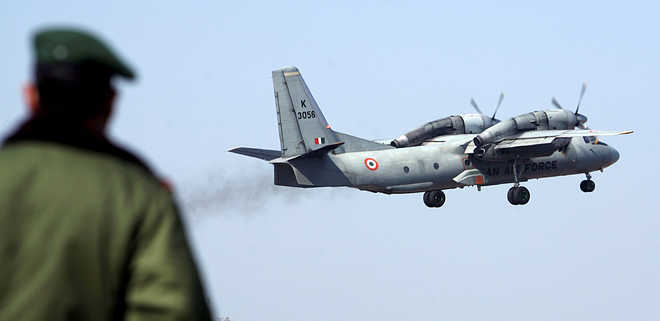
All 13 bodies of crashed AN-32 aircraft recovered from Arunachal Pradesh

All 13 bodies of crashed AN-32 aircraft recovered from Arunachal Pradesh

Tribune News Service
New Delhi, June 20

The Indian Air Force (IAF) has recovered the bodies of all 13 people who died in an AN-32 crash on June 3 near Mechuka in Arunachal Pradesh.

The recovery of bodies had been hampered over the past one week as bad weather prevented helicopter operations since June 14.

The bodies of the IAF men will now be transported to the places of their families for final rites.

The crash site at an altitude of 12,000 feet is surrounded by dense jungles and has no habitation for miles around it. Some portions of the terrain have never been visited by human beings.

While helicopters were unable to operate, the Air Force had opted for an unknown route through dense forests and sent a team of porters and hunters on foot on June 18.

A team of mountaineers comprising Air Force and Army personnel and locals is camping at the site. The team was heli-dropped in the inaccessible area on June 13 and was in touch with the IAF authorities through a satellite phone.

Operations to retrieve the bodies need the helicopter pilots to be able to see the steep mountain sides to safely hover close to the crash site and team of the ground then attaches a body bag to be winched up.

The wreckage of the AN-32 that went missing on June 3 was located by a Mi-17 helicopter on June 11. A team of mountaineers reached the site on June 13 and found the 13 IAF personnel dead.


Meet Lieutenant Colonel Anup Joseph Manjali …

Meet Lieutenant Colonel Anup Joseph Manjali …
He killed three terrorists in a personal encounter and earned Kirti chakra from the hon’ble President.
He must have held his head high when he eliminated those foreign enemies who posed threat to his motherland.
Being Righteous must have been ingrained in his soul. I guess regardless of being in uniform, he thought it is his duty to stand up for the “Rule of Law” of the Nation. When he was off the duty, he encountered some common Indian lads and lasses on their bikes who were moving on a footpath .
Poor soul, he did not know those youngsters owned the road and footpath (Baap ka Road) and like a true soldier, he did not allow them to pass by.

What followed was something we , as all citizens of this country, could hang our heads in shame!
Those brats jumped into an all out attack on the Soldier.

“Lieutenant Colonel Anup Joseph Manjali (36), a Kirti Chakra awardee, was allegedly assaulted by five youngsters in an incident of road rage in Malad (West) in the early hours of Sunday. He is being treated for a dislocated shoulder and injuries under his eye, and to the forehead and head….”
Looking at what Lt. Colonel had to say literally boiled my blood ,
“As I stood there, one of the guys came riding on the footpath with two women riding pillion, and demanded that I move out of his way. I stood my ground and he pushed me out of the way with his bike. One of the women got off the bike and started abusing and screaming at me. One of the men started hitting me with a helmet, and in seconds, two more bikes reached there and all of the guys started attacking me. I had raised neither my voice nor my hand at them.”
What makes me more angrier is that “…..Two women were also present and were later allowed to go.”
WHY?
BECAUSE THEY ARE WOMEN ?
If that wasn’t enough, the behaviour of the youngsters post incident and their parents was much more than outrageous….
Lt. Col. Manjali’s mother, who reached the scene as her son was being attacked, said,
“Even after the incident, the youngsters expressed no remorse. One of the women present at the scene boasted that she hailed from a top-notch legal family and was unconcerned about the case. At the police station, one of the parents of the two women even said she was aware of her daughter’s arrogance, as if it were a character trait of merit. ……”
An Army Officer, who terrorized alien threats , but only to lose to ‘the Domestic Enemies’ , and a couple of those were allowed to escape.
More than being angry, I guess I just pity ourselves …
The names of the accused are:
Sagar Vinay Singh (21), Shaun Merrian D’Souza (25) and Khizara Abbas Hasan Zaidi (21) were the three men.
The women haven’t been named.
The message needs to reach many to shame these youngsters. Army men cannot be touched. They are the true heroes of this country!

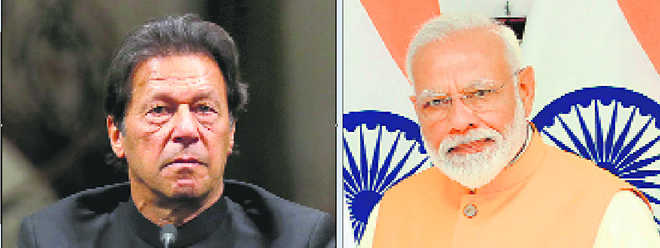
Imran Khan writes to Modi, offers talks to resolve disputes

Qureshi too approaches Jaishankar, says Pak wants peace in region

Imran Khan writes to Modi, offers talks to resolve disputes

ongratulating Modi on his second term as PM, Khan said Pakistan desires resolution of all problems, including the Kashmir issue.

Islamabad, June 7

Pakistan Prime Minister Imran Khan in a letter to his Indian counterpart Narendra Modi on Friday said Islamabad wants talks with New Delhi to resolve all differences, including on the Kashmir issue, according to a media report, a day after India said there would be no bilateral meeting between the two leaders on the sidelines of the SCO summit in Bishkek next week.

In a letter to Modi congratulating him on his second term as the PM, Khan said talks between the two nations were the only solution to help both countries’ people overcome poverty and that it was important to work together for regional development, the Geo TV reported. Khan said Pakistan desires the resolution of all problems, including that of the Kashmir issue, the report said.

Meanwhile, sources in New Delhi said the Pakistani PM has sent a letter to Modi, congratulating on his election victory, but did not clarify when the letter was received. 

This is the second time after Modi was re-elected to power that the Pakistani premier has expressed his desire to work together with India.  On May 26, Khan congratulated Modi on his electoral victory and expressed desire to work with him. Modi called for creating trust and an environment free of violence and terrorism for fostering peace in the region.

Earlier in the day, Pakistan Foreign Minister Shah Mehmood Qureshi also wrote to his new Indian counterpart S Jaishankar, saying that Islamabad wants talks with New Delhi on “all important matters” and remains committed to efforts for establishing peace in the region. — PTI

Jaishankar meets Bhutan’s top leaders

  • External Affairs Minister S Jaishankar on Friday met Bhutan’s top leadership, including PM Lotay Tshering, and discussed the bilateral ties with emphasis on development partnership and cooperation in the hydropower sector
  • On his first overseas trip after assuming charge, Jaishankar tweeted: “It was a pleasure to call on @PMBhutan Dr. Lotay Tshering. Conveyed PM @narendramodi’s greetings”


Vetting process for next Army Chief begins

2

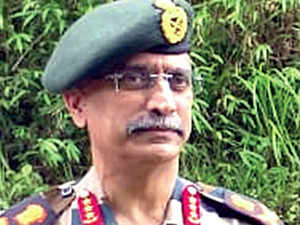
NEW DELHI: The vetting process for selection of the next Army Chief has begun, with a list of five top officers being considered for the post after the retirement of incumbent General Bipin Rawat at the end of the year.

The government faces a tough choice for what has now become a selection process where the old convention of seniority no longer applies. At the top of the list are the Northern and Eastern Army commanders — both of whom have rich operational and command experience and a good track record when it comes to anti-insurgency operations. Lt Gen Manoj Mukund Naravane, who is currently the Eastern army Commander, would be the seniormost officer of the Indian Army when General Rawat retires in December end. The Sikh Light Infantry officer has commanded a Rashtriya Rifles battalion in Kashmir, has served in the Assam Rifles and has been posted as the defence attache to Myanmar.
His posting as the head of the Army’s Training Command in December 2017 had raised eyebrows as it is considered a backwater that carries no operational experience. However, in September 2018, a game of musical chairs was played with the top brass of the Army that saw him shifted to the operationally sensitive Eastern Command that has delivered several Army Chiefs in the past. The Northern Army Commander Lt Gen Ranbir Singh, who became the face of the surgical strikes when he announced operations along Myanmar and in Pakistan Occupied Kashmir (PoK), also has an enviable career record. The government broke from tradition by choosing him as the Director General of Military Operations (DGMO) in 2016 despite him being approved to command a Corps level formation.
The officer, who belongs to the Dogra regiment, was a Major General in the military operations department when surgical strikes were planned in 2015 and had personally briefed the top leadership of the country on the planned operations as well as the post action report. While the selection process will look into the service record of both officers, there’s also speculation that the much delayed restructuring of the top military brass may also be in the offing in the coming months
Read more at:
//economictimes.indiatimes.com/articleshow/69951737.cms?from=mdr&utm_source=contentofinterest&utm_medium=text&utm_campaign=cppst


Capt hosts Sikh Regiment to mark his family’s 100-yr association with it

http://

Tribune News Service
Chandigarh, June 23

Celebrating his family’s bonds with the Sikh Regiment, Punjab Chief Minister Captain Amarinder Singh on Saturday evening hosted the regiment’s jawans, JCOs and officers to mark 100 years of the Patiala family’s association with the battalion and the Indian Army.

The evening included a cultural programme, which saw the Capt cheering on the jawans and even briefly joining them in a Bhangra performance. He visited the JCO’s Mess, and later joined the regiment officers and guests for dinner at the Officers mess.

The CM met with the families and children of the second battalion of the Sikh regiment (erstwhile 15 Ludhiana Sikhs).

Singh said that it was a matter of “pride and honour” for him and his family to have served the nation as a soldier of the Indian Army.

He said the Army had always been his “first love” and would always remain so.

The Indian Army continued to inspire him to do whatever he could to serve his people, in whichever way he could, Captain Amarinder added.

Capt had served in the 2nd battalion of the Sikh Regiment from 1963 to 1969. Though he left for a short period in between, to take over his family’s responsibilities, his love for the Army brought him back as the Indo-Pak war broke out in 1965.

Before him, his father, Lt. Gen Maharaja Yadvinder Singh served in the regiment in 1935 and was the Colonel of the 2/11 Royal Sikhs and the 2 Sikhs from 1938 to 1950 and 1950-1971 respectively.

Captain Amarinder’s grandfather, Maj Gen Maharaja Bhupinder Singh was the colonel of the 15th Ludhiana Sikhs from 1918-1922 and then of the 2/11 Royal Sikhs from 1922-1938.

On the occasion, the Chief Minster presented a silver memento —a replica of a Sikh regiment soldier in full battle attire, to the battalion —which will be displayed in the Officers Mess.

Capt. Amarinder Singh was accompanied by his family, including his brother, Malwinder Singh, his sisters and brothers-in-law, Heminder Kaur, her husband, K. Natwar Singh and Roopinder Kaur, her husband, Major KS Dhillon from the Armoured Corps. Captain Amarinder’s son, Raninder Singh, his daughter, Jai Inder Kaur, and his grandson, Nirvan Singh was also present.


Military personnel can no longer buy Fortuners, Safaris, 4-wheel drives from CSD canteens

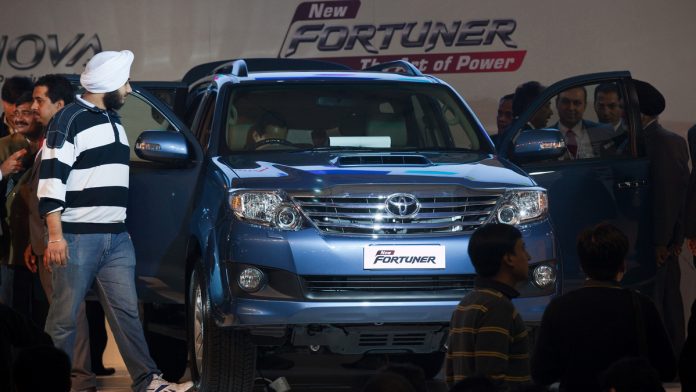
Toyota Fortuner

New Delhi: The Modi government has put a price ceiling on vehicles that can be bought from the Canteen Stores Department (CSD), taking away high-end and popular SUVs that personnel of the Indian Army, Navy and the Air Force bought from these canteens.

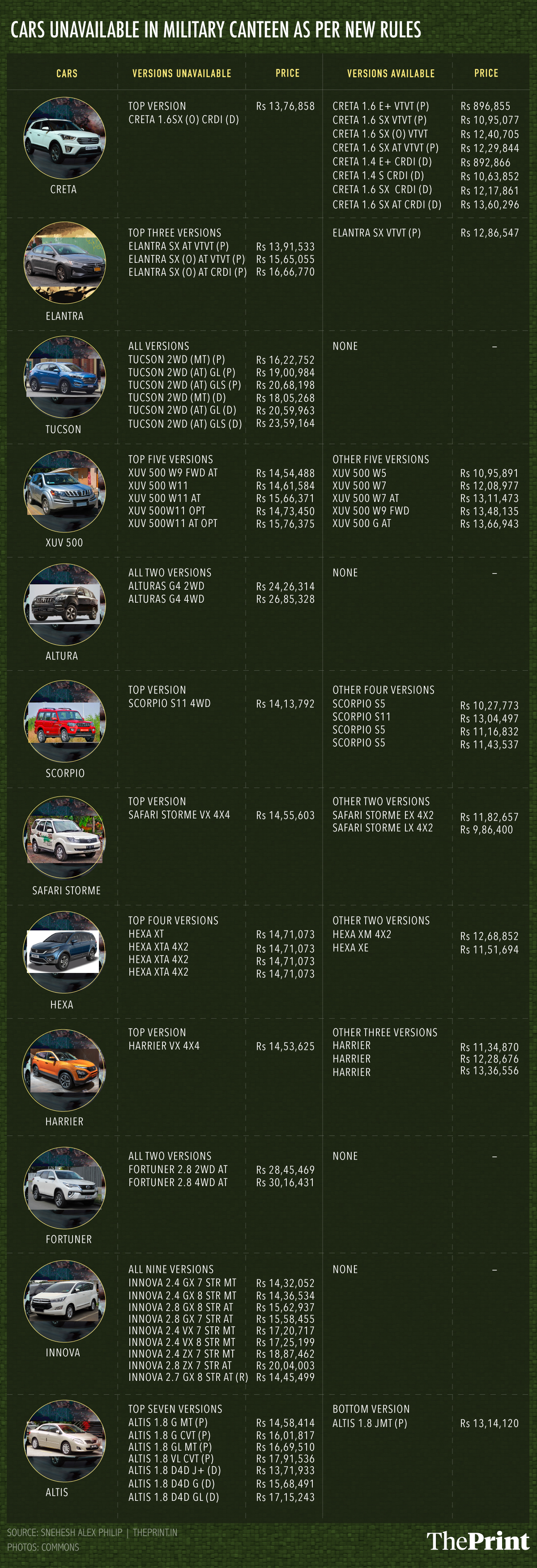
Gone is the Toyota Fortuner, the Ford Endeavour, the Jeep Compass and other four-wheel drives such as the Mahindra Scorpio and even the Tata Safari Storm. Only the base model of the Mahindra XUV 500 is now available in the military canteens.

The changes are part of new rules in place since 1 June.

Under these rules, high-end sedans such as the Skoda Octavia, Skoda Superb and seven of the eight models of Corolla Altis are also off the shelf.

All popular hatchbacks, however, are still available and so are the mid-range SUVs such as the Hyundai Creta and Ford Ecosport. Even here, military personnel will not be able to buy the top end model of the Creta.


Also read: Indian armed forces upset as Modi govt imposes curbs on car sales at military canteens


The new rules

A letter issued by the quartermaster general’s branch at the Army Headquarters on 24 May has stated that from 1 June, only vehicles with an engine capacity of up to 2,500 CC and costing up to Rs 12 lakh (excluding GST) will be available at the CSDs for armed forces personnel in the pay level of 10-18.

Graphic: Arindam Mukherjee | ThePrint

Those in the pay level of 3A to 9 can buy vehicles with a capacity of up to 1,400 CC that cost within Rs 5 lakh.

Before the new rules kicked in, there was no limit on the capacity or price of vehicles that could be bought through the CSDs.

The government has also clamped down on the frequency of purchase, reducing it to one vehicle in eight years from the earlier one in four years. As a result of the change, military personnel can buy one car during service and one after retirement but with the gap of eight years.

Military personnel along with civilians working in the defence establishment rely on the CSD canteens for the purchase of cars and other entities as apart from a Goods and Services Tax (GST) exemption, they get regular cash benefits.


Also read: There are 46 upgraded AN-32 aircraft, but none deployed in the Northeast


‘Loss to exchequer’

Official sources in the defence establishment say that Rs 17,000 crore is the annual sanctioned budget for the CSD. It is not part of the defence budget but is drawn from the miscellaneous head.

For products such as cars, the CSD negotiates a price with the dealers before the government steps in with a 50 per cent GST rebate on the reduced price. The 50 per cent rebate is viewed as a loss to the exchequer.

“More car sales in CSD means more loss to the exchequer,” an officer explained. “While there was a 17 per cent decrease in car sales in the country for the 2018-19 fiscal period, there was a 20 per cent increase in car sales through the CSD in the same period.”

He added that last year, car sales were over Rs 6,000 crore, or over one-third of the CSD budget, resulting in the budget itself being overshot. This, the officer said, resulted in a carryover liability of Rs 4,500 crore that is to be paid to car manufacturers.

“The popular belief is that the CSD customers’ money is paid to the car dealer or kept by the CSD but the amount is actually transferred within 48 hours to the Consolidated Fund of India,” the officer said. “Parliament’s approval is required to draw the money from the consolidated fund and this is allotted as part of the budget. The CSD then pitches in with the 50 per cent GST and makes the full payment to dealers after two years.”


CSD Car Quota :: Brig Indermhan writes to Chief

Dear Chief,
A lot has been written about the new policy on car sales through the CSD. The initial reaction to any such decision is of anger, helplessness and even abusive at times. But now that the dust has settled I wish to bring out the negatives of this decision.
1. There’s this very old saying of how you see a half glass of water. While some see it as half empty, some as half full. The govt is getting 50% GST on sales of cars. Where is the loss. Loss is when the govt doesn’t get anything. So the glass is half full.
2. On sales of cars costing Rs 12 Lakh, the govt gets Rs 108000 GST at 9%. On a car costing Rs 20 Lakh the govt will get Rs 180000 as GST at the same rate. This is simple economics. What is better?
3.  The govt policies on taxing  differentially based on length and engine capacity is something to be considered also. Cars under 4 metres length and upto 1300 CC are taxed lower so that majority buyers in this category are benefitted. Does the govt calculate the loss in tax revenue on this count? Why is it done? Answer. It is done to stimulate demand and have reduced emissions. Same with the tax on diesel vs petrol cars. In the developed world the price of petrol and diesel is nearly the same as also the prices of petrol and diesel variants of the same car. Why is the govt losing revenues in far greater proportion as a result of these policies.
4. The govt thinks  Increasing the periodicity at which cars can be purchased will reduce tax losses.  It is other way round.  Now you will get 9 % less tax for that many years as the increase in periodicity.
5. One of the best decisions taken by the govt nearly three decades back was to allow foreign car manufacturers to set up base in India.  Are  not the sights on our roads better than Ambassadors and Fiats of the bygone era. Newer cars mean less pollution, more revenue, better safety features and so on. From add on seat belts on Maruti 800 we have come a long way. And despite the opening up of the auto sector some of the renowned manufacturers have closed down.
6.  More sales mean more for everyone. More taxes to the govt. More profits to car manufacturers who after paying taxes on various manufacturing inputs will also pay more corporate tax on higher profits. Better business for the auto ancillary industry and replacement manufacturers like tyres, batteries and so on. More employment generation, a subject on which the govt is facing serious problrms. More factory hands,  more business for transporters of cars, more people in the sales showrooms, more business for insurance companies, more business for service and repair of cars, increased revenues to state govt on registration costs, increased used car business. The benefits are so many. These have been lost sight of against just one parameter  the govt gets 9 % GST in place of 18 %.
I am sure more such benefits will also be seen by the 40 lakh serving and retired military personnel.
The slowdown in auto industry is the worse in a decade. We have possibly added a fraction of a percentage more.
Every sector of the govt is in a slowdown mode. The budget less than a month away will address these issues. Like the lakhs of crores spent on stimulating the economy post the global crash of the world economies in 2008 by the Indian govt and across the globe, you can stimulate s small demand.
I hope this message reaches you somehow.
Regards,
Image result for Brig Indermohan
 Brig Inder Mohan Singh (Retd)

Auto Driver’s Son Pass Out From National Defence Academy

Sarthak Dhawan, the son of an autorickshaw driver from Kolhapur, stood fourth in the overall merit list (army cadets) at the 136th course at National Defence Academy. Sarthak, who also excelled in military training, will pass out from NDA on Thursday. “My son has made us proud today. It’s a dream come true for us,” an ecstatic Shashikant, Sarthak’s father, said. Shashikanth has been plying an autorickshaw in Kolhapur for the past three decades. He gives full credit to his son’s iron will, which did not let him falter even when his mother died in a tragic road accident four years ago. “It came as a big shock, but he did not shift his focus from studies and cracked the NDA entrance on his first attempt. Now, he is on his way to becoming an army officer,” Shashikant added.

On Wednesday morning at NDA’s Habibullah Hall, it was family reunion time for the Dhawan family, as joyful relatives gathered around Sarthak and posed for photographs.

Sarthak, a Romeo squadron cadet, studied at the St Xavier’s High School in Kolhapur and completed his HSC from the Services Preparatory School (SPS) in Aurangabad. He said it was his childhood dream to become an army officer. “So, I joined the Maharashtra Cadet Corps (MCC) in school and studied at the SPS to prepare for the NDA entrance exam,” Sarthak said.
He got emotional when he remembered his mother. “She would have loved to see me in this uniform,” Sarthak said. Sarthak will be commissioned as a lieutenant in the Indian Army once he completes a oneyear advanced military training course at the Indian Military Academy in Dehradun.