Sanjha Morcha

Two former Army Chiefs, 8 top officers indicted by MoD inquiry into Adarsh scam

adarsh_housing

Gen. N.C. Vij provided “protection umbrella”, Gen. Deepak Kapoor “ill advised” to take flat, govt should use Adarsh for military housing, probe report says.

MANU PUBBY

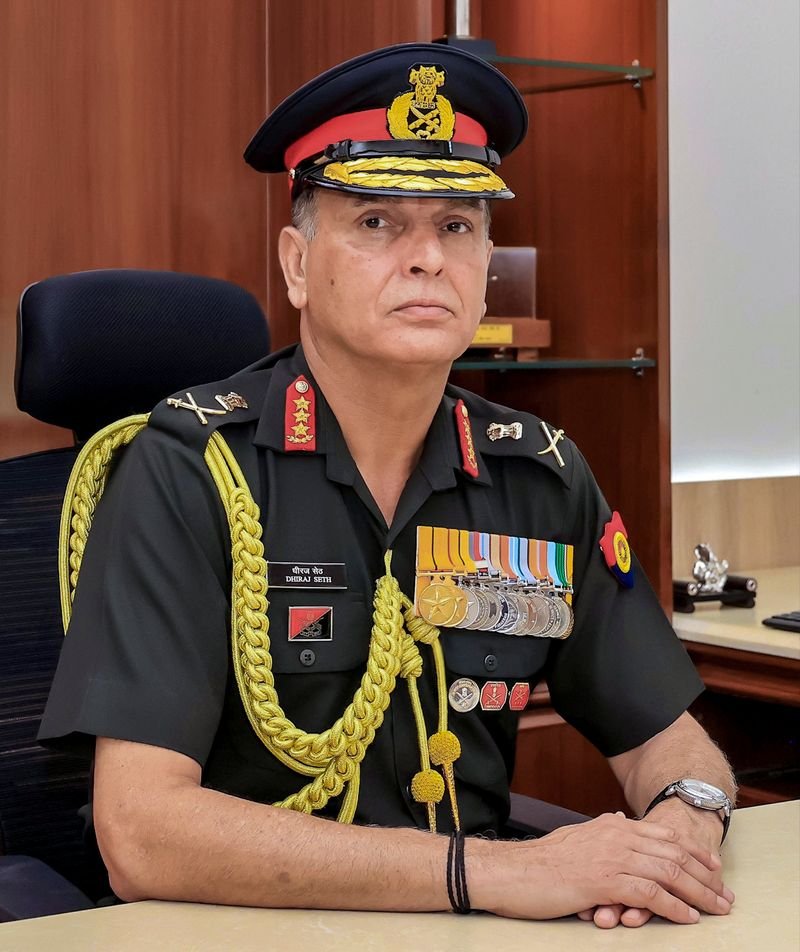
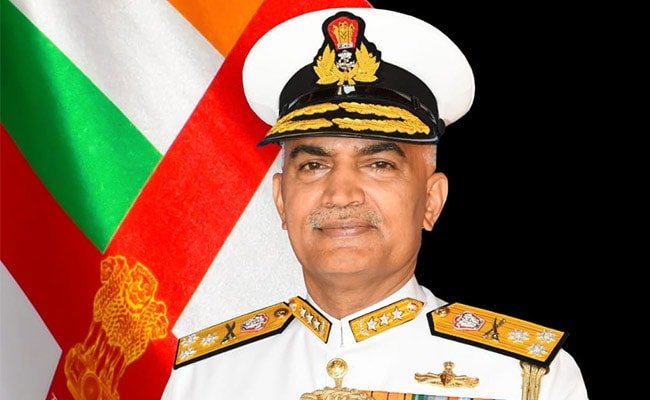
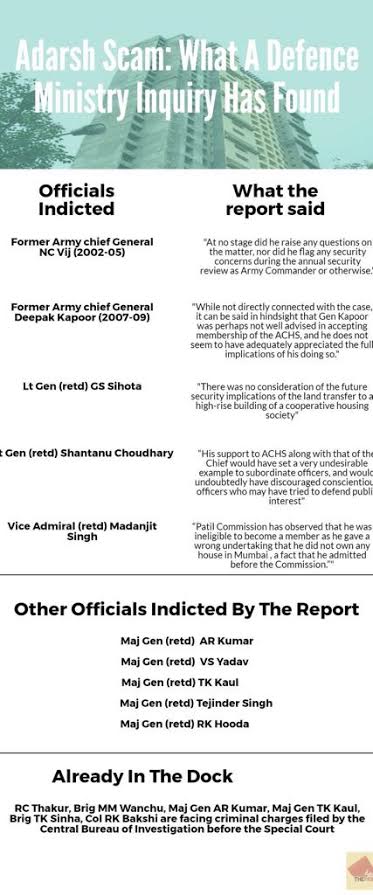
In a severe indictment, a defence ministry inquiry report has held 10 of the most senior officers of the military – including two Army Chiefs who were serving at that time – guilty for playing a central role in the Adarsh housing society scam, recommending that they be debarred from holding any government position or office for shaming the armed forces.

A strongly worded, detailed report by an inquiry committee set up by the defence ministry following an order from the Bombay High Court in April 2016, places a bulk of the blame on former Army Chief NC Vij, saying he “provided a protective umbrella to facilitate the alienation of the land”. Vij was also the Southern Army Commander in 2000-2001.

The inquiry – conducted by retired IAS officer Rajan Katoch and Lt. Gen. Ravi Thodge – also names former Army Chief Gen. Deepak Kapoor, saying that while he was “not directly connected with the case”, the officer was “not well advised” in becoming members of the society.

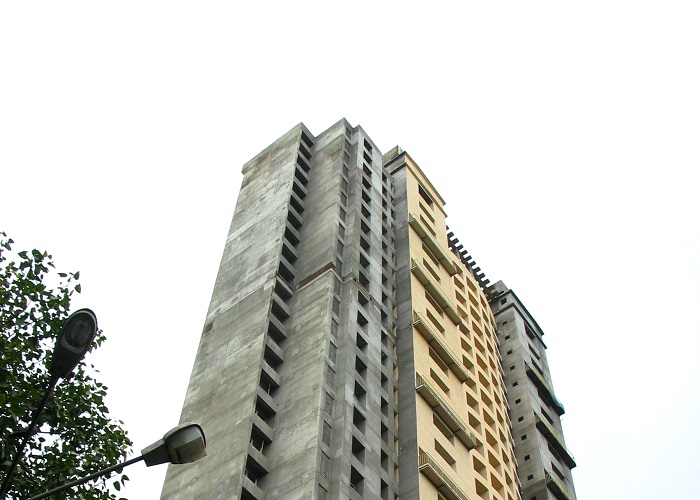
Eight other retired officers – including Lt. Gen. G.S. Sihota, Lt. Gen. Tejinder Singh and Maj. Gen. T.K. Kaul – have been severely indicted by the inquiry committee.  The inquiry has held them guilty for glossing over the potential threat to national security that the building posed, given that it overlooks the Colaba Military Station.

The report commends Brig. M.K.V. Panicker, then Bombay Sub-Area Commander and Saurav Ray, the Defence Estates Officer, Mumbai, as the only two within the system who constantly upheld that wrongdoing was on and registered their protest.

The committee has noted that while the officers can no longer be acted against under the Army Act that limits legal cases until three years of retirement, it has suggested that the government convey its displeasure to them for their “conduct and role in facilitating the wrongdoings”.

“Government can also consider in addition the option of taking action for debarring some or all of these officers from any future employment or contract with the Central Government or any of its bodies, or participating in any Committees,” the report says.

The recommendation of the committee for further action on the building itself is for the government to approach the Supreme Court for a takeover so that it can be utilised for housing for defence personnel.

Unusually strong words have been used to describe the impact of the officers “colluding” to create the Adarsh Society, saying that they have a greater role to play than the bureaucracy or political class.

“Attention in the Adarsh scam so far has centred on the wrongdoings and irregularities by the politicians and bureaucrats concerned with the approval process who exploited their position to become beneficiaries of ACHS, ostensibly promoted for the welfare of Kargil heroes and war widows. As we have found, perhaps as great a role was played by the military and Defence Estates Officers involved,” it says.

Calling out several discrepancies that took place, the 199 page report says that the officers indicted were “charged with the duty and responsibility to protect the interest of the services and defend national security”.

“In the identification of the subject land and facilitation of its allotment to the ACHS, there appears to have been definite collusion between senior military officers and Defence Estates Officers,” it says.

unnamed (4)


Chinese reminder of ‘history’ – a crude allusion to its defeat of India in 1962 war – is too clever by half by Lt Gen Bhopinder Singh (Retd)

Deploying theatrics, hyperbole and implied threats are part of standard Chinese diplomacy, reflecting an authoritarian state. For a structurally insecure regime maintaining national positions, aspirations and narratives requires consistency of pre-planned belligerence, manufactured fears and indoctrination to support the imagined state of affairs.

Facilitating this sovereign effort is the economic success of China that has fuelled dreams of the 21st century as the Chinese century. This also legitimises its questionable international relationships with countries with dubious track records like Pakistan or North Korea, in its quest to realise its widely believed ‘Chinese Dream’.

Therefore, checkmating potential competition from countries like India by blocking its entry into NSG or its rightful permanent seat in the UNSC, tactically supporting terrorists like Hafiz Saeed or even keeping the Sino-Indian border ‘active’, is part of a calibrated game-plan to keep India on its toes.

China regularly invokes its conveniently assumed and often manufactured ‘history’ to buttress its claims of sovereignty. Last year, the International Court of Justice in The Hague had adjudicated in favour of Philippines that China had “no historical rights”, as claimed by Beijing, via its creative interpretation of its ‘nine-dash line’ approach in the South China Sea arbitration case.

Similarly Vietnam has called the bluff on the disputed Paracel and Spratly Islands, which the Chinese readily trace back to its Ming dynasty (overlooking subsequent treaties). The latest stand-off involving the tri-junction of India-Bhutan-China at Doklam, is yet again conveniently cherry-picked from pages of history – citing the ostensible convention between China and Britain relating to Sikkim and Tibet (in 1890).

Amidst these ongoing disputes and expected differences of history, was a loaded statement that was too clever by half – the spokesperson of the Chinese People’s Liberation Army, Col Wu Qian, suggested, “Indian army could learn from historical lessons,” an unmistakable allusion to the 1962 China-India war. Such classic Chinese one-upmanship hides as much as it suggests: the reality of 2017 is that the nuclear power status of both countries brings its own strategic equanimity.

Unlike China or Pakistan, where armed forces command an extra-constitutional position, the defence forces in India are proudly apolitical and serve as the sword-arm of the nation, at the behest of the democratically elected dispensation of the day. Structurally, this often results in inadequate appreciation of the security imperatives, investments and strategic planning (as exemplified in the 1962 war). Yet this insulation from governance and mass politics (unlike China and Pakistan) has afforded unmatched professionalism, potency and efficacy to the Indian armed forces that have since repeatedly overcome the 1962 experience against multiple challenges, including those emanating from China.

Couched between the drive to Lahore in 1965 and the brilliant dismemberment of Pakistan in 1971, are the lesser known exploits of Nathu La and Cho La clashes with China in 1967. This limited ‘war’ resulted in an estimated 400 Chinese casualties as against around 70 for India – clearly the “historical lessons” of 1962 were not forgotten by the still numerically and materially inferior Indian defence forces in 1967, when they defeated Chinese forces. The exemplary military leadership of Lt General Sagat Singh, the steel and resolve of infantry battalions like 18 Rajput, 2 Grenadiers, 7/11 Gorkha, etc had indeed defied the conventional wisdom and rewritten history for posterity.

Like any other defence force, the PLA too has its own share of history that it needs to internalise and introspect on, from the disastrous performance in the Korean War (1950-53) that resulted in 4,00,000 confirmed fatalities and over 2,00,000 missing PLA soldiers, to the first, second and third ‘Taiwan Strait Crisis’, where the numerically overwhelming PLA’s efforts to “liberate” Taiwan came a cropper.

On the contrary, the Indian armed forces have routinely proved themselves in the multiple insurgencies, besides external involvements like Maldives, IPKF, etc besides delivering Kargil.

Perhaps unknown to the PLA spokesperson, the Indian armed forces don’t disown ‘history’, on the contrary they internalise celebrations and tribulations equally. Battles are studied rigorously and dispassionately, sand models and war games are not an exercise in hagiographic glory.

In that context the Indian army chief’s statement that India is fully ready for a two and a half front war is not idle sabre rattling, but a cold fact that needs to be appreciated without any expansionist import implied – because neither is it the grain of the institution to overstep, nor is it the history of India to disrespect its own or anyone else’s sovereignty.


The beginning of a new era for Punjab by Capt Amarinder Singh

The Punjab Chief Minister looks back at the first 100 days of his government. He maintains that there is a new vibrancy in the state’s jaded political, social and economic environment. He also wonders: “Have I measured up to the expectations of my people?”

The beginning of a new era for Punjab
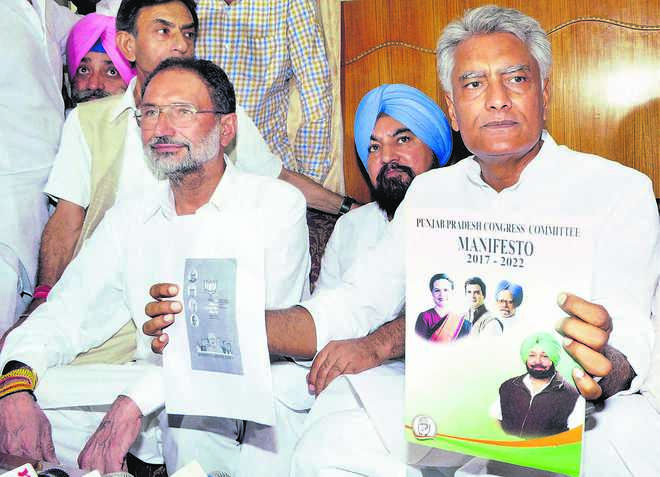
Report card: President of the Punjab Pradesh Congress Committee, Sunil Jakhar, (right) at a press conference in Patiala to mark the completion of the state govt’s 100 days. There should be no politics at the cost of growth. PTI

MEASURED against a 10-year legacy and counted against a five-year journey that has just started, 100 days really seem like a fragment in time. This minuscule of a period, however, becomes important when seen from the perspective of the relevance it has for the people of Punjab, who had been counting the days to when their lives would begin changing for the better.

After living for 10 years in the shadows of fear, economic gloom, regressive development, social destruction and more, when they ousted the Akali-BJP government in February this year, they did it with a lot of hope and a fair bit of optimism. Seen from their viewpoint, 100 days, thus, becomes a significant factor in assessing the success of my government.So have I measured up to the expectations of my people? Have I made a beginning in pulling them out of the misery in which they had been living, or more appropriately surviving, over the past one decade? Have I built on their optimism to make them feel more confident about their future, and the future of their children?It is on these yardsticks that I look back at the first 100 days of my government. And I can say, in all fairness, that we have succeeded in not only setting the agenda for the next four years and 265 days but have also, in fact, brought in a new vibrancy and dynamism in the state’s jaded political, social and economic environment. It is not my intention here to list out every single promise on which we have already delivered, and to showcase every single achievement we have secured in these 100 days. However, I would like to give some examples to endorse the intent with which we have begun, and with which we shall continue to make a difference, in small and big ways, to the lives of our people.I will begin by talking of drugs, the elimination of which was a major promise of the Congress in the run-up to the polls. Quite frankly, I do not understand by what benchmark something as broad as drugs elimination can be measured. Looking, however, from the viewpoint of the thousands of youth who were being lured into this menace by the easy availability of drugs, I can claim, with all honesty, that we have definitely broken the backbone of the drugs mafia. With illegal narcotics no longer within easy reach of the youngsters, and with the so-called big fish on the run since we took over the reins of the government, drugs is no longer the menace it was till about four months ago. As far as the farm loan waiver is concerned, is there any doubt still left in anyone’s mind about our intention to fulfill our promise on this count in entirety? Can anyone deny that the small and marginal farmers were the ones most acutely affected by the debt burden, and by waiving their loans up to Rs 2 lakh we have brought lakhs of them back from the brink of economic devastation? Taking over the loans of farmer suicide victims and hiking the compensation for their families is another important step we have taken to alleviate the woes of the farming community.From industrial revival (just look at the number of leading industrialists and countries wanting to invest in the state as a result of the positivity injected into the system, post- government change), to the destruction of mafias such as sand mining and transport, we have kick-started the process of positive change across the state’s fabric in just 100 days of taking over. Whether you look at the education system, police reforms or social empowerment, the number of initiatives already taken to transform the defunct systems and bring about impactful change underscore the sincerity of our intent to create a more enabling environment for the development of every section of Punjab’s populace.The list of the promises on which we have delivered in a mere 100-day period does not end here. The abolition of the halqa in-charge system, bringing down cases of sacrilege and creating an atmosphere of safety and security for one and all are some of the ways in which we have brought the people out of the abyss of fear that they were living in. Besides enhancing the social security pensions, we have broadened the ambit of the Atta-Dal Scheme to cover more deserving beneficiaries, and have also unleashed sweeping governance reforms to pave the way for the holistic development of Punjab and its people. These are, by any standard, no mean achievements, especially considering the severe financial debt burden my government had inherited. To those criticising and seeking to undermine our accomplishments, therefore, I can only say — stop playing politics at the cost of the state’s growth and development. Punjab deserves better, and I will make sure it gets all it deserves, and even more! The pace of reforms I have set in these 100 days is simply a precursor to the next four plus years that I still have in my hands to ensure that my people learn to smile again, and finally start living the lives they well and truly merit.


GUIDANCE FOR JOINING THE ARMED FORCES OF INDIA

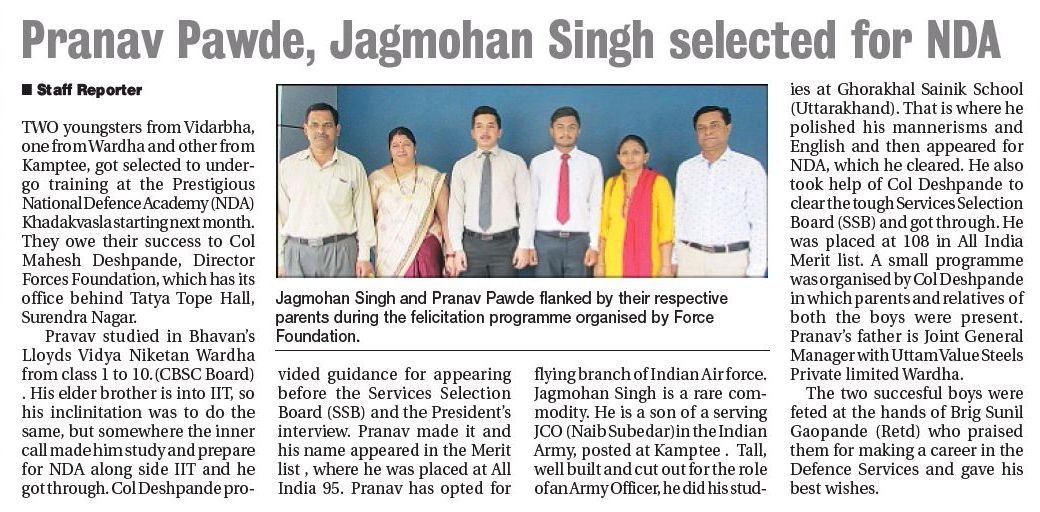
THE HITAVADA NAGPUR - 25 JUNE 2017 nda


Contributed by 

Respected Sir ,

The undersigned is an avid reader of ‘Sanjha Morcha’ and involved in providing guidance and motivation to the armed forces aspirants.

Relevant  publicity related matter is enclosed for necessary action , if found appropriate.

Thanks and regards  – Lt Col MP Deshpande (Retd)

mahesh deshpande <forcesfoundation@hotmail.com>

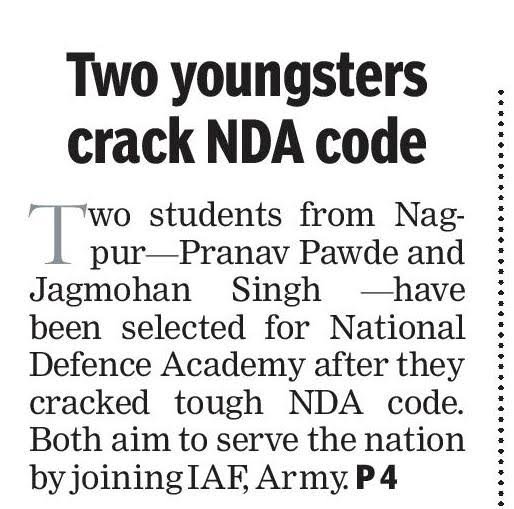
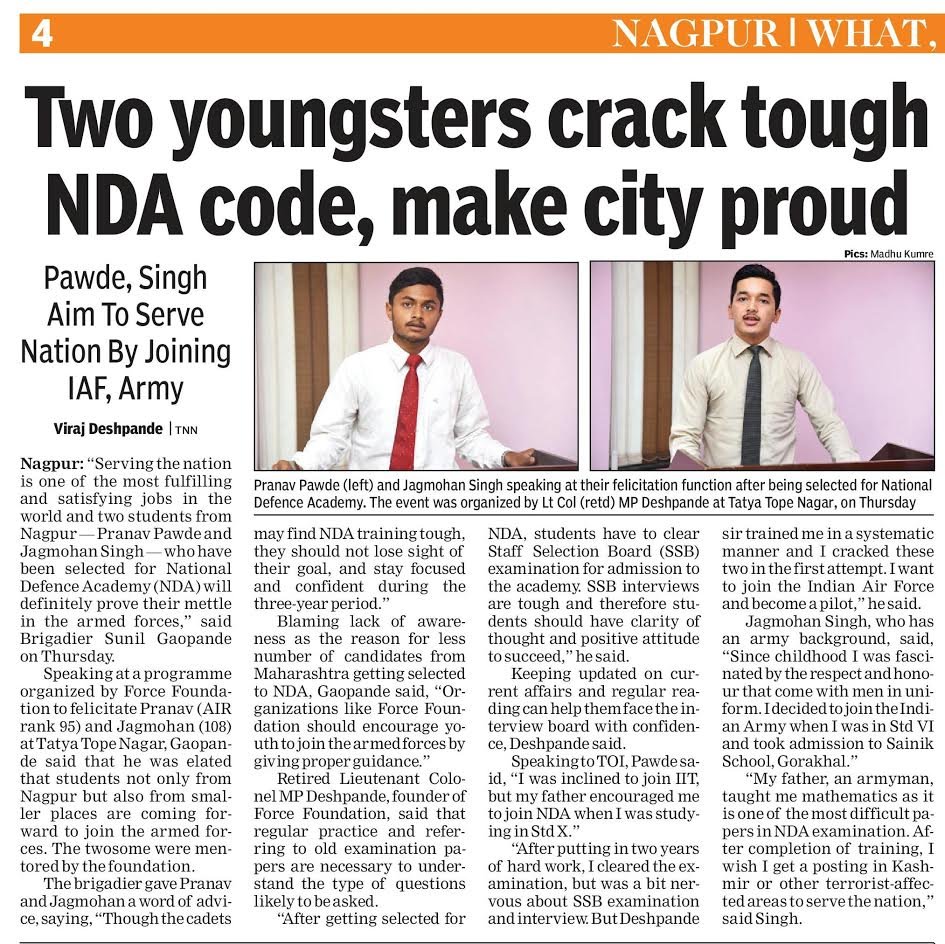
nda2


In big move, Narendra Modi government empowers Army, Navy, IAF, hands over financial power to boost security at installations

In a major move, the Narendra Modi government has delegated “substantial” financial powers to the Army, the Navy and the Indian Air Force to strengthen perimeter security at sensitive military installations across the country, the defence ministry said today.

Narendra Modi, Narendra Modi government, indian army,  Indian Air Force , Arun Jaitley, Dokalam , chinese army, Pathankot air base,  defence ministry

In a major move, the Narendra Modi government has delegated “substantial” financial powers to the Army, the Navy and the Indian Air Force to strengthen perimeter security at sensitive military installations across the country, the defence ministry said today. Defence Minister Arun Jaitley has fixed strict timelines to ensure that the works are undertaken on priority and in a time-bound manner to ensure full security at the critical defence assets, it said. The vice-chiefs of the three services have been empowered to place orders, procure equipment and carry out civil works without seeking approvals of the defence ministry.

“In an unprecedented move, the Ministry of Defence (MoD) has decided to delegate substantial financial powers to the Armed Forces for undertaking works for perimeter security of sensitive military installations,” the ministry said in a statement. Official sources said following the decision, each of the three vice chiefs will be able to spend at least Rs 800 crore annually in strengthening perimeter security at the sensitive bases. A total of 3,000 sensitive bases, including 600 highly sensitive installations of the Army, the Navy and the Air Force were identified by the forces months after the daring attack on Pathankot air base last year.

The decision came at a time when Indian army is locked in a face-off with the Chinese army at Dokalam and confronting rising incidents of cross border attacks in Jammu and Kashmir. The defence ministry said the move to give financial powers is aimed at expediting the decision-making process involved in the modernisation of the security apparatus of airbases and defence installations. “The financial delegation represents a significant jump in the powers currently exercised by the services,” the ministry said.

Also watch:

A security audit of defence bases was carried out on the recommendation of a committee headed by Lt Gen Philip Campose which was set up after the terror attack on the forward Pathankot air force base last year. The committee was asked to recommend measures to beef up security at the military bases. The armed forces had together sought Rs 2,000 crore to strengthen security infrastructure at all “highly sensitive, sensitive and moderately sensitive bases” during the current and next financial years. The sources said following the security audit, revised standard operating procedures (SOPs) were sent to the commands of all three services to revamp their security management, including putting in place a multi-tier security structure.

A parliamentary panel had in March come down hard on the defence ministry for failing to take any concrete measures to beef up security at frontline military bases, and said the scenario is as “vulnerable” as has been “exposed” during the Uri and Pathankot terror attacks. The Campose Committee had submitted its report to the defence ministry last May. The parliamentary panel had said security arrangements at military establishments were dynamic in nature and called for maintaining a robust and strong response mechanism to emerging threats.


Gen Rawat in J&K, tells troops to be on toes to counter enemy

JAMMU : Army chief General Bipin Rawat exhorted army personnel to remain prepared to counter the “nefarious” designs of the enemy, on Friday.

HT PHOTOArmy chief General Bipin Rawat is on a two­day visit to Jammu and Kashmir to review operational preparedness of the forces.

General Rawat arrived in Jammu on Friday for a two-day visit of forward posts along the Line of Control (Loc) where Indian and Pakistani troops have been engaged in skirmishes recently.

“The army chief landed at the technical airport around 10 am on Friday where he was received by Northern army commander Lt Gen Devraj Anbu, 16 Corps GOC Lt Gen AK Sharma and Tiger Division GOC Maj Gen SK Sharma,” army sources said.

Soon after, the top officers headed to forward areas in Nowshera, Bhimber Gali (BG) and Krishna Ghati (KG) sectors of Rajouri and Poonch districts in a helicopter.

“Army chief, General Bipin Rawat, accompanied by the Northern Army Commander Lt Gen D Anbu visited White Knight Corps on Friday to review the op preparedness and the prevailing security situation in the Corps Zone. He was briefed by Lt Gen A K Sharma, GOC, about the preparedness of White Knight Corps in dealing with the emerging and dynamically changing security situation and the measures taken to thwart any misadventure by inimical forces,” said an official statement by the army.

Genral Rawat also visited Rajouri wherein he was briefed on the operational readiness by the GOC Ace of Spades division. He was briefed on the actions being undertaken to ensure a robust counter infiltration grid, the statement further stated.

Since May 1 this year, both the countries have been trading heavy fire on the de-facto border leaving several soldiers and civilians dead on either side of the divide.

Nine soldiers were among 11 killed while 16 others injured in border skirmishes this month in Rajouri and Poonch districts, south of Pir Panjal range.

More than 4,000 villagers in Nowshera sector were shifted to five relief camps and over 110 livestock fell prey to shelling and firings by the Pakistani army along the Loc in Rajouri district where nearly 35 structures, including over two dozen houses, were damaged.


Doklam Impasse:China Mounts a Media War by LT GENERAL BHOPINDER SINGH

The officially patronised, owned and controlled Chinese Media has mounted a “Media War” on the Doklam impasse. This approach affords official deniability for the Chinese regime, whilst, simultaneously upping the ante in the build-up to the tensions. Towards the same, my article in today’s THE CITIZEN

The spark that lit the first embers of ‘Arab Spring’ for the Tunisian President Zine El Abidine Ben Ali, was majorly stoked by the emerging Media landscape. Independent ‘voice’ of the masses via the social media platforms, facilitated the space for civic engagement and connect, free from the clutches of the dictatorial and authoritarian diktats of the then ruling Arab regimes.

Cyber-activism was the death knell for regimes in Tunisia, Egypt, Libya to Syria, where the mass discontentment and consciousness found solace and expression against the ruling dispensations.

The totalitarian regime in Beijing kept a wary Hawkeye as the events unfolded on the fellow-totalitarian regimes in the Middle East and North Africa, drawing inferences and lessons, to nip in the bud, any loose talk of ‘Jasmine Revolution’ in China.

The ‘Arab Spring’ reinforced the criticality of controlling media amongst the Chinese leadership to selectively censor certain content, as indeed, to propound and aggressively posture the governmental point of view. The increasingly consumer-driven economy of China devised its own unique formula and contours of ‘opening-up’ that entailed the ostensible freedom of press and opinions, albeit, with blanket ban of content from Western sources or from platforms like Google, Facebook, YouTube, Twitter etc. that could prick the bubble of propagandist reality of the regime.

This affords a responsibility on the officially patronised media houses to globalise state propaganda and propound Chinese positions internationally. Complex ownership interlinkages have ensured that China now has the most sophisticated and restrictive media controls (The 2017 Freedom of Press Index notes a worsening trend as President Xi Jingping ensures strict adherence to ideological and national alignment of the media to the regime positions). So Media, along with the CPC (Communist Party of China) top-brass and PLA (People’s Liberation Army) fuels the essential totalitarian resilience to bolster its regime legitimacy in China.

The Global Times is the most famous Chinese media face internationally, that typifies the ultra-nationalistic jingoism and is credibly accused of maintaining the official CPC line – earning it the left-handed compliment as the ‘China’s Fox News’ ! The subtle nudge to the publication by the Chinese regime, allows the regime to maintain optics of official sobriety, while the publication adopts a more populist, belligerent and nationalistic line that is completely aligned to the regime positions on all contentious issues.

The spooking of India’s NSG bid was presented as, “India wants to be the first exception to join the NSG without signing the NPT. It is morally legitimate for China and other members to upset India’s proposal in defense of principles” and adds, “US backing adds the biggest impetus to India’s ambition. By cozying up to India, Washington’s India policy actually serves the purpose of containing China.

The US is not the whole world. Its endorsement does not mean India has won the backing of the world”. It incredulously contextualised Hafiz Saeed and Dalai Lama simultaneously when it stated, “New Delhi is dissatisfied with Beijing’s stance over its membership bid to the Nuclear Suppliers Group and its request to name Masood Azhar, head of Pakistani militant group, to a UN Security Council blacklist. Therefore, Delhi attempts to play the Tibet card against Beijing. In fact, China has never thought of making trouble for India, and is handling these issues in accordance with international practices and UN regulations”.

Therefore the latest round of spewing surrogate fire from the Dragon’s den, was expectedly carried out by Global Times, in particular. The recent Dokalam standoff has manifested in six thousand soldiers from the two nuclear-armed countries, staring down each other in an dangerous portent – ably aided by ‘cover-fire’ from Global Timesthat insists that India be taught a, “bitter lesson” and suggesting “New Delhi’s regional hegemony is swelling to a tipping point.

The country has to pay for its provocations”. The controlled Chinese media is effectively voicing the shriller and more war-trumpeting messages for both internal and external constituencies, to flank the diplomatically measured tones emanating from the governmental sources that lacks the populist bite. Specific counter-fire from India is retaliated via the Chinese media that states, “Indian Army Chief General Bipin Rawat previously said that India was ready for a two-and-a-half front war (Pakistan, China and against internal extremists), and China responded by suggesting India “not forget history lessons,” referring to the 1962 border conflict in which China won an overwhelming victory. India’s Defense Minister Arun Jaitley then remarked that India is not what it was in 1962, and China responded by saying neither was China”.

This unwarranted media tonality offers the invaluable option of official deniability, whilst, upping the ante in the lead-up to any issue. This has repeatedly occurred on Chinese twitch-spots like Hong Kong, Taiwan, Japan, South China Sea conflicts or sending messages to the West, and in particular to the US. Behind the curtains of an ostensibly independent brand identity, Global Times has the genealogical link to the stuffy and turgid mouthpiece of the Chinese Communist Party, People’s Daily – however, it has been ‘allowed’ and ‘encouraged’ to own a very bellicose voice, as compared to its parent body to do the Chinese state’s bidding in a more effective manner.

So, should the war-mongering editorials from China be taken seriously by India? Yes and No, Yes because beyond the bureaucratese, the real Chinese position, logics and rationales are subsumed in between the fiery editorial lines – and No, because the text seeks to posture a lot more than the real official intent. China has undeniable expansionist tendencies and it rarely shies away from playing realpolitik – from Hafiz Saeed, NSG, permanent UNSC seat to Doklam, it runs with the hare and hunts with the hound.

Henry Kissinger the cold-war warrior and long term China observer noted presciently on China, “The art of crisis management is to raise the stakes to where the adversary will not follow, but in a manner that avoids a tit for tat” – it is here that we need Bhutan to effectively call the Chinese bluff, and unambiguously puncture suggestions of an Indian vassal-state, as suggested in Chinese editorials, “India controls Bhutan’s defense and diplomacy, seriously violating Bhutan’s sovereignty and national interests”.

Like in the South China Seas, the restive South Asian neighbourhood needs to offer a consolidated position against the Chinese instincts and double-speak. While a military stand-down from Doklam is not at all an option for India, neither should an escalation to a warlike situation, be the only other option. Doklam has long-term strategic import for India and Bhutan, as indeed all other countries in the region.

(Lt. General Bhopinder Singh (Retired) is former Lt Governor of Andaman and Nicobar Islands & Puducherry)




Death is the only winner in LoC clashes

In the long run, clashes on the LoC serve no purpose. Pakistan should know that it cannot alter geography nor sustain militancy in the Valley for long. India must realise war-mongering does no good. Both the nations should seek to rediscover the usefulness of the 2003 ceasefire agreement for enduring peace.

Death is the only winner in LoC clashes
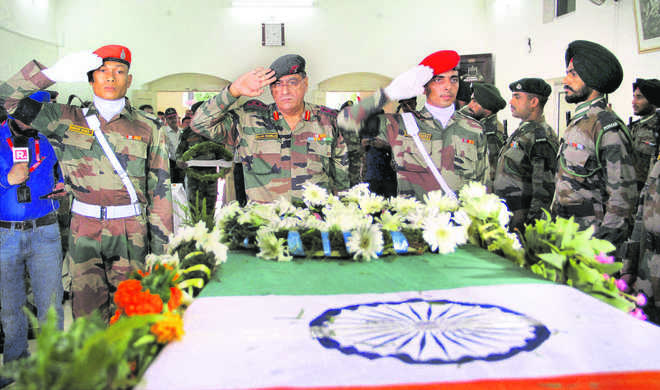
HUMAN COST: Army officers paying tribute to Naik Muddasar Ahmed (inset) in Jammu, who was killed in a ceasefire violation by Pakistani troops along the LoC in Rajouri sector of J&K. Escalation of tensions is a losing proposition for both the countries. PTI

Arun Joshi

THE escalating tension and killing exchange of fire at the Line of Control that divides Jammu and Kashmir between India and Pakistan is nothing but a lose-all proposition. No one gains from these clashes which have become a regular feature since 2008  — five years after the armies of India and  Pakistan were able to seal a historic ceasefire agreement on the borders. It was to cease hostile activities on the LoC that had resulted in action and loss of lives  until 2003. As the things stand today, soldiers and civilians from both sides have been killed. Hundreds of people have fled border villages as their homes and fields receive the raining mortar shells and gunfire. Schools have been shut. A tragedy of unknown proportions was averted on July 18 when the Army, police and civil administration evacuated more than 200 children from schools. They were trapped because of unrelenting shelling by Pakistani troops in Nowshera villages in the Rajouri district of Jammu and Kashmir. Nobody would have owned the tragedy that was, fortunately, averted by the administration’s timely action. India would have claimed that its villages were shelled by Pakistan and the latter would have made a counter-claim  that  it  was retaliating to  unprovoked fire from the Indian side. Both sides accuse each other of opening unprovoked fire and claim they only retaliate. If the two sides  are to be believed, neither side initiates gunfire. However, this is not a fact.Human tragedies on the two sides have become a recurrent feature.  The answer to the evolving critical situation is not what generals of the Pakistani army say that they “would teach  India a lesson  with  their retaliation”. The Pakistan army chief Qamar Javed Bajwa has spent most of his time in visiting the  LoC and urging  his troops there to  target Indian villages and posts in the garb of retaliation to the “unprovoked” firing by Indian troops. The Pakistan army has counted many instances when the shelling by the Indian Army  left their soldiers and civilians dead. The brunt of the shelling is felt the most by the border population. The rhetorical assertions of the Home Minister Rajnath Singh, when he said, “We will not count bullets at borders”, are not true. That strategy has not paid off. It  has only escalated tensions. India has to buy the ammunition, while ammunition is doled out to Pakistan by the United States.Looking at Pakistan army’s geo-political designs, the fact that is that it has a vested interest in  escalation of the tension at the LoC. There are multiple goals that it wants to achieve by this violent mindset. The escalating tensions on the LoC immediately bring international attention to the Kashmir issue. This is an old tool with Rawalpindi to bring pressure on India to resolve  the Kashmir issue. This is also used to sabotage the peace talks between Delhi and Islamabad and has been witnessed since the times of the Prime Minister Inder Kumar Gujral in the 1990s. Whenever a step is  taken for bilateral talks or  meeting of the Indian and Pakistani leaders on the sidelines of international summits, Pakistani guns boom on the LoC. Apart from that, Pakistan has an all-time interest in keeping the LoC volatile — for it pushes terrorists to the Indian side to replenish the militant cadre in Jammu and Kashmir. This  gives a psychological boost  to the existing cadre of militants since it delivers a message that Pakistan is backing them with men and war machines  in their fight against the Indian troops.  The  Indian Army has to prevent that and  act against the armed infiltrators who come through ravines, rivers, forests, and  mountainous passes. Intruders have both the traditional  and the new routes at their disposal. because of the tough terrain through which the LoC passes. The advantage of topography for the militants is a definite disadvantage for the Indian Army. Each and every inch of the 740-km LoC cannot be secured  even if all of the Indian Army is deployed along the dividing line.  Even the best of devices and technology cannot beat  inclement weather and the hostile terrain to gain an advantage over the intruders. Ultimately it is test of soldiers’ physical and  psychological  strength that helps them detect the intruders. Neutralising  highly motivated and trained terrorists is not an easy task. Pakistan has diverted most of them from its western borders with Afghanistan and hardened them  with arms training in the rugged mountains.  They wreak havoc on the LoC. Also, they get the benefit of  cover fire from  Pakistani troops.  This leaves the Indian Army with no option but to retaliate  with twin objectives of neutralising  intruding terrorists  and silencing the guns of Pakistani troops. The culture of flag meetings in defusing tensions has almost vanished. Now the Director General of Military Operations talk on the hotline and there are diametrically opposite versions circulated to media after that.  Indians claim that Pakistan army has been warned against the misadventure, while the Pakistanis say they have told India that enough is enough. The  best course is to pick up  pieces of the ceasefire agreement, which has been shred into pieces as of now, to rebuild peace. Such clashes serve no purpose. Pakistan should know that it cannot alter the geography nor can it  sustain militancy in the Valley for long. India should recall 2004  when the ceasefire was most effective  and the infiltration was reduced to a trickle. It doesn’t require knowledge of rocket science  to do so. It requires will to restore peace. A war-like situation serves no one’s interests.

ajoshi57@gmail.com


Moga jawan dies in Pak firing in J&K

THE SOLDIER WAS GRIEVOUSLY HURT AND LATER SUCCUMBED TO HIS INJURIES; WAS PLANNING TO COME HOME ON JULY 29

JAMMU/MOGA: A soldier was killed and another injured as Pakistan army pounded forward post along the line of control in Nowshera sector of Rajouri on Tuesday.

Defence spokesman Lt Col Manish Mehta said Pakistani troops started unprovoked firing on Indian posts around 1.45 pm hours. “The Indian side retaliated strongly. In the exchange of fire, sepoy Jaspreet Singh, 25, a resident of Moga in Punjab, was grievously injured and later succumbed to his injuries”, said the spokesperson.

A pall of gloom descended on Jaspreet’s native village Talwandi Mallian in Moga. “We received a call from a senior army officer who told us about Jaspreet’s death,” said the slain jawan’s younger brother Kuldeep Singh.

“He (Jaspreet) had recently completed three years in the Sikh Light Infantry regiment and was planning to come home on July 29,” he said.

“He told us that he will soon get a permanent posting in Jalandhar. We were so happy,” said Kuldeep. Jaspreet’s father Sarwan Singh, who is working as a mason, was in a deep shock.

Kuldeep said the body is expected to arrive in two to three days after which they will perform the last rites. Jaspreet had last visited his home in December last year for marriage of his elder sister.

SNIPER FIRE KILLS SOLDIER IN KUPWARA

A soldier died in a sniper fire from the Pakistani side on line of control in north Kashmir’s Kupwara district. Army officials said the ceasefire violation took place in Naugam sector.

Army spokesman Rajesh Kalia confirmed the death of a soldie


‘Dealing with counter-terror threats will make Indo-US ties stronger’

'Dealing with counter-terror threats will make Indo-US ties stronger'
US Congressman Tulsi Gabbard

New York, July 15

India’s partnership with the US will be strengthened further if the two countries deal with the “unconventional” counter-terrorism threats together, US Congressman Tulsi Gabbard has said.Gabbard, the first Hindu lawmaker in the US Congress said security and counter terrorism are critical areas of the US and India partnership.The number of military-to-military engagement and exercises between the two nations exceed any other partner in the region and is only continuing to grow.She was addressing the FICCI-IIFA Global Business Forum organised here yesterday in partnership with the Asia Society Policy Institute.”From the top all the way to the Pacific Commander, there is a recognition of the benefit to continuing to strengthen this partnership, continuing to engage in ways that haven’t been before to ensure that the two countries are stable and that we are dealing with this unconventional counter-terrorism threat together because if we do that together we are stronger,” she said at the forum with the theme of ‘India and the United States: Partners in Progress’.Indian Ambassador to the US Navtej Sarna said the need for the US and India to cooperate both bilaterally and in other global foras as well as in the UN is extremely important.Gabbard, co-chair of the Congressional Caucus on India and Indian-Americans, said there is still “quite a lot of excitement” in Washington and a feeling of momentum around the visit by Prime Minister Narendra Modi to the American capital for his first bilateral meeting with President Donald Trump.”Those of us on the US-India caucus feel it and believe it and those who have been working on the partnership over the years are saying over and over again this is the most exciting time in the friendship between our two countries” not only on the political front but also in areas of economic ties, technology, education, culture and arts.She noted that IIFA awards being organised in the city shows how much interest America as a whole has in films coming from India.”We at the US-India caucus are excited about the opportunities that exist that are mutually beneficial for both of us,” she added.Gabbard said there had been concerns over uncertainties and possible obstacles in the India-US relations under the Trump administration.”What we have seen come forward before, during and after Modi’s visit was that while heads of state can meet and have these important diplomatic talks and negotiations, the heart and backbone of the relationship exists not only at the government level but also in the private sector, businesses and research facilities that are not waiting for marching orders from anyone in government,” she said.Addressing the valedictory session, Sarna said it is important to underline that the support for the India-US engagement is clearly bipartisan and across the political spectrum.He termed the visit by Modi as “landmark”, saying the two leaders “hit it off” in terms of understanding, engaging each other and listening to each other concerns.        “There was convergence on strategic and defence issues, economic cooperation for the global good, cyber security and space,” he said.Gabbard added that the joint statement released at the end of the bilateral visit was “impressive and extensive” in covering the different sectors and areas, laying down the pathway forward for the two countries.She stressed that the US can also benefit and learn as India deals with different challenges and opportunities.Noting that India has a large worker base, she said job training is needed for that.”If we can look at some of the innovative ways of how some of the companies are providing that training we can use that in some of our communities where jobs have either been replaced by technology or whose industries have been shut down or shipped off to other countries,” she said.”As we are looking at new opportunities here whether it is in the middle part of the country or inner cities, we can see how countries like India are taking the best of technology and are able to empower people in their communities,” she said.Sarna added that he does not see contradiction in Modi’s focus on ‘Make in India’ and Trump’s call for ‘Make America Great Again.”Here are two countries that are wanting to grow and surely there must be a place in this world for the two countries to grow and help each other rather than at each other’s cost. The two countries are being positioned now as two engines of growth which are going to help each other grow,” he said, adding that there are tremendous opportunities in areas of energy and civil aviation where the two countries will need to depend on each other to grow and actually create employment opportunities in each other’s countries through this growth. —PTI