Sanjha Morcha

‘China not afraid of going to war with India’

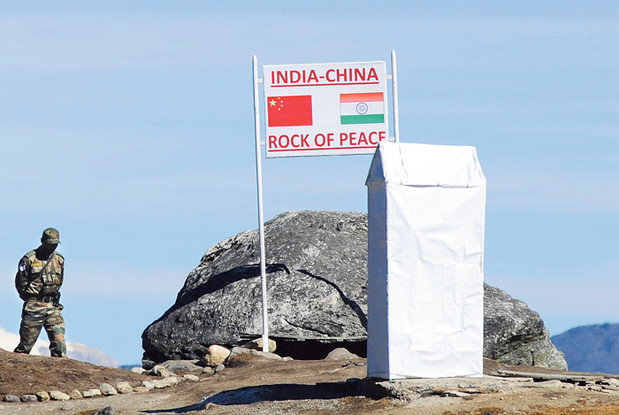
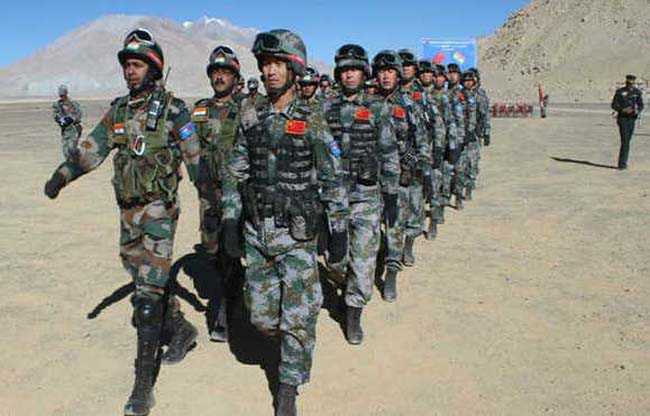
BEIJING : India should get ready for an “all-out confrontation” along the entire stretch of the disputed boundary with China, the country’s state media said on Tuesday, threatening to open up new fronts of conflict on the 3,488 km non-demarcated border between the two countries.

China isn’t afraid to go to “war” with India and will be ready for a long-term confrontation, the Global Times comment piece said. The threat of new geographical points of conflict being opened up along Line of Actual Control (LAC) comes as the People’s Liberation Army (PLA) recently carried out livefire drills in Tibet Autonomous Region (TAR) close to Arunachal Pradesh, that’s claimed by China.

The continuing hostile posturing by China’s state-controlled media is a crucial aspect of Beijing’s aggressive stand on the military impasse at Donglang. “China can take further countermeasures along the Line of Actual Control (LAC). If India stirs up conflicts in several spots, it must face the consequence of an all-out confrontation with China along the entire LAC,” the nationalistic tabloid, Global Times, said in a comment piece on Tuesday.

CHINA SLAMS PAK REPORT ON DEATH OF INDIAN TROOPS

BEIJING : China’s official media on Tuesday “denounced groundless” reports by a section of Pakistani news outlets claiming the death of 158 Indian soldiers in attacks by People’s Liberation Army (PLA) amid a military standoff along the Sikkim border.

According to Dunya News, a 24-hour Urdu language news service in Pakistan, Indian soldiers were killed, and several others injured, on Monday in a Chinese rocket attack across the border. India’s external affairs ministry on Monday denied the report, calling it “malicious propaganda”.

A day later, China’s official and mainstream media also denied the report.

“Chinese mainstream media outlets on Tuesday denounced Pakistani media’s “groundless” report, which claims that over 150 Indian soldiers were killed in Sikkim due to a Chinese rocket attack,” the People’s Daily online said.

“According to an investigative report released by the People’s Daily on Tuesday, the Chinese embassy in India had noticed the report and has denounced its authenticity. Some Pakistani media outlets claim that the fake news is based on unverified information from social media and the internet,” the PD article said.

The nationalistic tabloid Global Times also published a report on Tuesday, calling the Pakistani media report “groundless and fake”.


Conversion from leasehold to freehold in city likely soon in chandigarh

Union urban development ministry writes to home ministry to give UT go­ahead

The Union ministry of urban development (MoUD) has reportedly asked the ministry of home affairs (MHA) to direct the Chandigarh administration to allow conversion of properties from leasehold to freehold and fix the rates.

In January this year, the UT administration had decided to allow conversion of residential properties from leasehold to freehold. The rates were fixed — 7.5% to 20% of the collector rate — and sent to the MHA for approval.

Once the MHA gives it the go ahead, the decision will benefit 50,000 residential properties in the city.

Sources in the administration said as soon as they receive the directions, the rates for commercial and industrial properties will also be finalised. There are around 5,000 commercial and industrial properties on leasehold in the city.

PATIL IMPOSED BAN IN 2013

In2013,thethenUTadministrator ShivrajPatilhadimposedabanon the conversion of property, leaving the decision to the MHA.

Patil was of the view that allowing conversion will make the leaseholder an owner, which couldn’t be allowed at a price lower than the market price. He feared that it would lead to a scam, as otherwise properties were either auctioned or sold at market price. He wanted the decision to be taken at highest level.

RESIDENTS WELCOME MOVE

The city residents have been demanding the conversion for long. Sources said the urban development ministry has told the MHA that the conversion of leasehold to freehold was part of the government’s policy and Chandigarh residents shouldn’t be deprived of it.

Welcoming the development, Kamaljit Singh Panchhi, president of the Sector-17 traders’ association, said: “We have been fighting for it (conversion). As of now, we have to pay lease money at 2.5% of the amount at which the shop is auctioned every year. If the amount is ₹1 crore, we deposit ₹2.5 lakh. Then we also have to pay the Goods and Services Tax (GST) now. But we are still not the owners.”

“The conversion from leasehold to freehold will facilitate sale of properties,” says Sunil Kumar, Laghu Udyog Bharti vice-president and ex-chairman of the property consultants association.


Jawan dies at LoC; 3 JeM ultras shot Lance Naik killed in Pak army sniper fire in Rajouri; blow to Jaish in south Kashmir

Jawan dies at LoC; 3 JeM ultras shot
The body of martyr Mohd Naseer (inset) being taken to a Rajouri morgue on Saturday. PTI

Rajouri/Srinagar, July 15

A jawan was killed in sniper fire by Pakistani soldiers at a forward post along the Line of Control (LoC) in Tarkundi sector of Rajouri district, while the security forces gunned down three Jaish-e-Mohammad militants in a forest area of Tral in Pulwama district today.Around 1 pm, a Pakistan army sniper targeted Lance Naik Mohammed Naseer, who was manning 639 forward post at the LoC. Naseer died on his way to a nearby Army medical centre. The soldier was posted with 15 JAK LI and was a resident of Ajout village in Poonch district. He is survived by his wife, Wasim Akhter.(Follow The Tribune on Facebook; and Twitter @thetribunechd)“The brave soldier attained martyrdom when Pakistan army resorted to unprovoked firing on an Indian forward post around 1.30 pm. The nation will always remain indebted to him for the supreme sacrifice and devotion to duty,” said defence spokesperson Lt Col Manish Mehta. The unprovoked firing by the Pakistan army comes amid heavy losses suffered by it following strong retaliation by the Indian Army over the past few months.After the killing, the Indian Army opened heavy mortar shelling on Pakistan army’s forward posts opposite the Tarkundi sector around 3 pm. The exchange of fire lasted till 5.15 pm.Meanwhile, in Tral’s Wantnar Satoora forest, 60 km from Srinagar, a gunfight erupted during an anti-militancy operation around 5.30 am. “Militants fired from a cave hideout, triggering a gunfight. In the initial exchange of fire that began around 7.30 am, two militants were killed,” a police source said. The third militant entered the cave hideout. “He kept firing from inside and it took time to neutralise him,” a senior security official said.DGP Sheesh Paul Vaid said three militants were killed in the gunfight. “Of the three, two are locals and one is a foreigner,” a source said. Two of them have been identified as Pervaiz Ahmad Wani of Pahoo Pulwama and Mehraj-ud-Din. One of them had joined militancy last month.Sources said the killing of three JeM militants has dealt a blow to the outfit, which is trying to strengthen its base in south Kashmir. There were reports of clashes in the neighbouring areas during the anti-militancy operation. —  TNS


Faceoff may boomerang by Pravin Sawhney

The India-China standoff persists. If the PLA can win a war without losing soldiers, why will it fight a series of attrition battles in the Chumbi Valley funnel & become easy meat for the Indian Army? The role of the ‘62 India- China war & regional conflicts help to understand this faceoff.

WITH the India-China faceoff near Sikkim having entered the fourth week, it is time to put matters into perspective. Foremost of all, China does not want a war with India. We know this because the food and water supply line of over 150 Indian soldiers who have crossed into the disputed (between China and Bhutan) Doklam area to block Chinese road construction has not been severed. Why did China start the road construction? The Chinese local commander had informed his Indian counterpart on June 1 during a flag meeting that they would begin road construction in the Donglang area (Chinese name for Doklam). This was two weeks before they actually did it on June 16. I know this because a senior Chinese diplomat from the Chinese embassy in New Delhi told me this on condition of anonymity. Since road building in the Bhutanese claimed area was a politically sensitive issue, China expected India to reach out diplomatically; this did not happen. Instead, alarmed by this information, the field generals, GOC 33 Corps (responsible for Sikkim) and GOC 4 Corps (responsible for areas of Arunachal Pradesh adjoining Sikkim) and the Director General Military Operation under the overall guidance of the Army Chief, General Bipin Rawat, dusted the Army’s plan for this contingency. Consequently, on June 18, over 150 Indian soldiers entered the Doklam area, a few hundred were added to Indian positions on the passes in north and north-east Sikkim, especially Nathu la, Batang la, Doka la, and the higher shoulders of Jelep la (this pass is held by China) closer to the area under contestation, and about 3,000 troops stood in two circles of five km and 10 km behind inside Sikkim. The purpose was to ensure that China’s already offensive Border Management Posture (BMP) did not add more teeth. China’s good BMP is because of its excellent roads in the Chumbi Valley, especially from Shigate to Yatung. In Indian Army’s assessment, if China is allowed to build road further south across the Doklam area, its troops could do two things. One, through a limited quick offensive action involving two to three divisions (each with 12,000 troops), it could threaten Indian defences along north and north-east Sikkim, capture areas there to deny launch pads to the Indian Army, and its artillery guns would have the Indian Oil Refinery and Bangaigaon Refinery in Assam within its 30-km range. If this were to happen, it could be a nightmarish situation for the Indian Army. With strengths of 18 to 20 divisions (not difficult for them to muster fast), the PLA could sever the Siliguri corridor (width 180 km by 75 km with the neck of the corridor being a mere 20km) and capture important towns of Gangtok, Rhenok, Rangpo or Siliguri. The problem with this Army assessment is that it is at least 15 years old; this is on account of no military reforms, and no joint assessment between the Army and the Air Force. For example, when General Rawat was claiming capability to fight a two-front war (unrealistic and suicidal), the Air Force Chief, Air Chief Marshal BS Dhanoa was complaining about the lack of combat strength for such scenario.For all the big talk by generals, the Army, in high-altitude conditions (at 18,200 feet), can do nothing more than attacks and counter-attacks; fight series of attrition battles, whose sum-total will not add up much to decide the outcome of a modern war. The modern war outcome will be decided by the Air Force and offensive capabilities in five other domains, namely, cyber, space (China has anti-satellite capability to shoot down Indian satellites in the highest altitude geo-synchronous orbit), electromagnetic (the US is worried about Chinese capabilities to block radar frequencies), accurate ballistic and cruise missiles with conventional warheads, and armed unmanned aerial vehicles. When the PLA has humongous capabilities to win war without losing its soldiers, why will it get into a series of attrition battles in the Chumbi Valley funnel so as to become easy meat for the Indian Army?  So, what was the purpose of the PLA’s road construction? Analysts have given numerous reasons from China’s irritation with India from not joining the Belt and Road Initiative, to India’s close ties with the US, to India’s aggressive foreign policy under the Modi government and so on. Since China is politically, economically, technologically and militarily stronger than India, and does not consider India as its real rival, it is unlikely to start mischief on the Bhutanese claimed area for these reasons.  Moreover, the disputed border with India — where China has legal and military advantage — has not been listed as China’s core or major concern over which it could go to war. The real reason, perhaps, was India’s insensitivity towards Tibet which is China’s core concern. To recall, China has reacted sharply before and after the Dalai Lama’s extended visit to Arunachal Pradesh in April, which seemingly had the government’s blessing (The Union Minister of State for Home, Kiren Rijjiju accompanied His Holiness), with the state Chief Minister declaring that Arunachal Pradesh’s border was with Tibet, not China. The Chinese Foreign Ministry spokesman, Lu Kang had summed up China’s reaction by saying, “What India has done has violated the solemn commitment on Tibet-related issues.” Since India downplays the regular PLA border incursions (there have been 240 cases in 2017), China might have concluded doing one in Bhutan would spur India for serious talks; this did not happen. What is the way out of the impasse? China’s ambassador in New Delhi, Luo Zhaohui, has set his government’s terms: No compromise, and no talks without Indian withdrawal. When I asked the Chinese diplomat as to what was meant by no compromise, he responded by saying that the PLA road construction will not stop despite Indian withdrawal. He added, that China’s patience will not last “very long.”Given that China is comfortable conducting negotiations and hostility at the same time (they believe in psychological warfare), a good option for India would be to withdraw troops on the clear assurance that road construction will freeze for the duration of the talks. If China agrees to this, talks could be upgraded from the diplomatic to the political level to iron out issues. India should not underestimate the utility of political over-reach; President Xi Jinping and Vladimir Putin have already met three times this year. India should remember that given the existing disparities in overall national power between the two, a favourable Army balance on the ground will not translate into much. Neither will a prolonged faceoff help.Ripple effect of 1962 

  • The lessons learned by Pakistan after the India-China war were that: (a) disputes with China were to be avoided, (b) this state was a potential hedge/ ally against India and (c) that the Indian Army was not as strong as it had seemed during its capture of Goa.
  • The idea of the Indian Army being susceptible to strategic surprise played a significant role in the calculations that led to the 1965 war.

India-China impasse at Doklam

  • The problem with the Army’s  assessment on China is that it is at least 15 years old. This is on account of no military reforms, and no joint assessment between the Army and the Air Force.
  • The modern war outcome will be decided by the Air Force and offensive capabilities in five other domains — cyber, space, electromagnetic, accurate ballistic and cruise missiles with conventional warheads and armed unmanned aerial vehicles.


The writer is Editor, ‘Force’ newsmagazine.


Horticulture centre at Jind in memory of martyred Captain

Horticulture centre at Jind in memory of martyred Captain
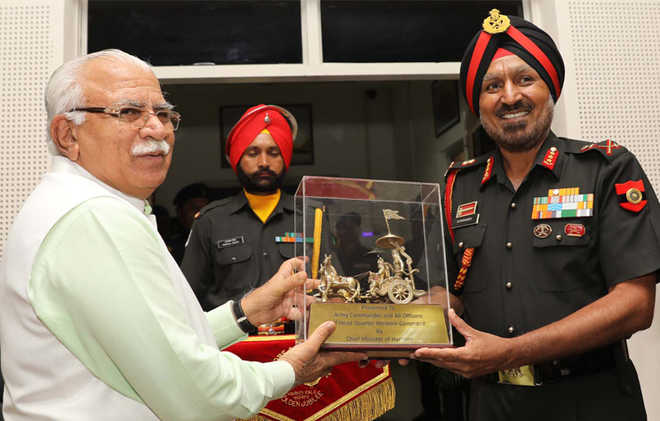
Chief Minister Manohar Lal Khattar presents a memento to Lt-Gen Surender Singh, GOC-in-C, Western Command, at Chandimandir in Panchkula on Friday. A Tribune Photo

Tribune News Service

Chandigarh, June 7

The Haryana government will set up a horticulture centre in Jind in memory of Capt. Pawan Kumar, a Shaurya Chakra recipient who had laid down his life while fighting terrorists in Jammu and Kashmir.Chief Minister Manohar Lal Khattar announced this at the annual Civil Military Liaison Conference at Chandimandir today. He said a new office of the Zila Sainik Board would also be set up in Charkhi Dadri district.Capt Pawan Kumar of 10 Para 22 was killed in Pampore in February, 2016. He belonged to Jind and his birthday falls on January 15, which also happens to be Army Day.Khattar said a Sainik and Ardh Sainik Welfare Department had been created with an independent administrative secretary for the welfare of serving soldiers, ex-servicemen and their dependents. He said all advertised government posts would be uploaded on the website of the Sainik and Ardh Sainik Welfare Department, to be launched shortly, so that ex-servicemen could take benefit of quota posts.The department had tied up with the Haryana Staff Selection Commission and the Haryana Public Service Commission for this purpose.Khattar listed several welfare measures initiated by the government for betterment of the service community.Lt-Gen Surinder Singh, GOC-in-C, Western Command, underscored the utility of the annual meeting to effectively coordinate joint efforts to resolve issues of mutual interest.


BRO for leasing copters to speed up roadworks

BRO for leasing copters to speed up roadworks

Vijay Mohan

Tribune News Service

Chandigarh, July 5

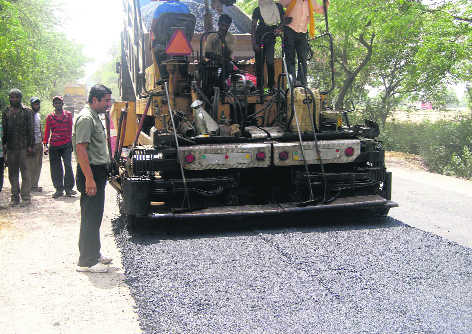
As construction of strategic roads in border regions continue to face heavy time and cost overruns, the Border Roads Organisation (BRO) has sought to lease private helicopters for airlifting heavy construction equipment to remote areas for speeding up the pace of work.Delay in developing critical border infrastructure has now come into focus in the light of the ongoing border standoff between Indian and Chinese forces at Doklam on the tri-junction of Sikkim, Bhutan and China.“We have projected a requirement of helicopters or sky cranes that can airlift dozers, excavators, vehicles, compressors and other machinery to helipads located at altitudes of up to 15,000 feet so that these can be inducted in areas that are not well connected by road,” sources said. They said about 410 tonnes of euipment is required to be airlifted, both in the northern as well as eastern sectors by December in terrain characterised by thick jungles and snowbound mountains. The Comptroller and Auditor-General as well as Parliament’s Standing Committee on Defence have repeatedly commented on the slow pace of road construction in border regions. The Army has also raised the issue with the Central Government as poor road network adversely affects troop movements.


Of 73 roads, just 21 ready

  • As per the Comptroller and Auditor-General, of 73 roads planned to be developed along the Indo-China border, only 21 are complete
  •  The deadline for construction of roads was 2012, which was revised to 2021. The project was launched in 2005
  •  Inadequate funding, red-tapism, labour issues and climatic conditions are among reasons cited for the delay


Move out of Doklam ‘with dignity or be kicked out’, Chinese media warns India

Move out of Doklam 'with dignity or be kicked out', Chinese media warns India
Photo for representational purpose only.

Beijing, July 5

The Chinese official media on Wednesday stepped up its attack on India with editorials asking Indian troops to move out of Dokalam area in Sikkim sector “with dignity or be kicked out” and describing the situation as “worryingly tense”.

While China’s nationalistic tabloid Global Times said India should be taught a “bitter lesson”, another official newspaper, China Daily, said India should look in the mirror.

The Global Times said in its editorial that India will suffer “greater losses” than in 1962 if it “incites” border clashes with China.

(Follow The Tribune on Facebook; and Twitter @thetribunechd)

As the standoff in the Dokalam area continued for the third week, it said India should be taught a “bitter lesson”.

It also claimed that the Chinese public was infuriated by India’s “provocation”.

“We believe the Chinese People’s Liberation Army (PLA) is powerful enough to expel Indian troops out of Chinese territory. The Indian military can choose to return to its territory with dignity, or be kicked out of the area by Chinese soldiers,” it said.

“We need to give diplomatic and military authorities full power to handle the issue. We call on Chinese society to maintain high-level unity on the issue. The more unified the Chinese people are, the more sufficient conditions the professionals will have to fight against India and safeguard our interests. This time, we must teach New Delhi a bitter lesson,” it said.

The editorial said it “firmly” believes that the face-off in what it calls the Donglang area will end with the Indian troops in “retreat”.

“If New Delhi believes that its military might can be used as leverage in the Donglang area (referred to as Dokalam or Dok La), and it is ready for a two-and-a-half front war, we have to tell India that the Chinese look down on their military power,” it said.

The paper was referring Indian Army Chief General Bipin Rawat saying that India ‘was ready for a two-and-a-half front war’.

“Jaitley (Defence Minister Arun Jaitley) is right that the India of 2017 is different from that of 1962 – India will suffer greater losses than in 1962 if it incites military conflicts,” it added.

Jaitley on June 30 said India of 2017 is different from what it was in 1962, hitting out at China for asking the Indian Army to learn from “historical lessons”.

According to the editorial in China Daily, India’s defeat in the 1962 war was perhaps too “humiliating” for some in the Indian military and that is why they are talking “belligerently” this time.

Since the standoff on June 6, when the PLA destroyed bunkers of the Indian Army, claiming the area belonged to China, Chinese media have carried several pieces warning India against escalating border tensions.

“India should look in the mirror. It was not able to refute the evidence of illegal border-trespassing and coerced its small neighbour Bhutan to shoulder the blame,” the China Daily said.

The Global Times also asserted that China attaches great importance to domestic stability and doesn’t want to be mired in a mess with India.

“But New Delhi would be too naive to think that Beijing would make concessions to its unruly demands,” it said.

“New Delhi’s real purpose is to turn the Donglang area of China into a disputed region and block China’s road construction there,” the editorial said.

“Cold war-obsessed India is suspicious” that China is building the road to cut off the Siliguri Corridor, an area held by Indians as strategically important for India to control its turbulent northeast area. India is taking the risk to betray the historical agreement and wants to force China to “swallow” the result, it said.

The China Daily added that India should respect border agreement and withdraw troops, linking India’s move to stop the Chinese military from building a strategic road in Dokalam  area in June 16 to its concern over China’s Belt and Road Initiative (BRI), which includes the US$ 50 billion China Pakistan Economic Corridor (CPEC).

“India may be trying to make a point. It is reportedly worried that the Chinese road construction may represent a significant change in the status quo with serious security implications for India, according to its foreign ministry.”

Such worries, the paper added, could have been allayed through dialogue and consultation using the mechanisms that are already in place and “which have long helped the two sides maintain peace and tranquillity in the region since their short border war in 1962”.

The editorial said the situation in Dokalam remains “worryingly tense, with a stand-off between soldiers of the two countries still ongoing”.

“That the situation has not flared out of control is thanks to the great restraint exercised by the Chinese troops.

But the tensions resulting from the intrusion will surely grow if there is not a total withdrawal of the Indian troops. “Unlike previous incidents that have occurred along other parts of the 3,500-kilometre border between China and India, the latest incident happened at a section that has long been demarcated by an 1890 historical convention and reaffirmed in documents exchanged between the successive Chinese and Indian governments since then.

Both dailies, however, referred to India’s concerns over the road in Dokalam close to the narrow chicken neck area in the tri-junction of India, China and Bhutan border as it could cut off a vital link with India’s north-eastern region.

China and India have been engaged in a standoff in the Dokalam area near the Bhutan trijunction since June 6 after a Chinese Army construction party came to build a road. —PTI



Cantt traders in dark over status of octroi abolition

Anirudh Gupta

Ferozepur, June 30

Uncertainty prevails among traders in two cantonments in the state — Ferozepur and Jalandhar — over abolition of octroi after the GST comes into force tomorrow. Octroi is still being levied in the two cantonments even as it was discontinued in others parts of the state more than 10 years ago. Neither the Cantonment Board officials nor local councillors have any idea about the status of octroi post GST.Nand Kishore, president, Beopar Mandal, said the government should immediately clear the air on the matter lest traders, which were already reeling under economic distress, would have to bear the brunt of double taxation.Sources said since the cantonments do not fall under the direct administrative control of the state government, residents here had to shell out more money in lieu of octroi. “We have been losing customers everyday as they preferred to buy commodities from the city where goods were cheaper as octroi was not levied there,” said Ashok Mahavar of Beopar Mandal.As per Section 66(2) of the Cantonments Act, 2006, cantonment boards are empowered to impose any tax, which is in force in any municipality in the state. As octroi was imposed in various municipalities, it was levied in cantonment here also. “However, the subsequent decision of the state to abolish it from municipal areas did not debar the Cantonment Board from levying it within its limits,” said an official.Earlier, the state government had asked Ferozepur and Jalandhar cantonments to stop levying octroi and had offered to compensate them under the Punjab Municipal Fund (Amendment) Act, 2008. “The proposal was forwarded to the MoD for amendment in the bylaws to enter into an agreement with the state government. However, a final decision was not taken,” said an official of the Cantonment Board, Ferozepur.


Armed forces fully equipped to deal with contingencies: Jaitley

Armed forces fully equipped to deal with contingencies: Jaitley
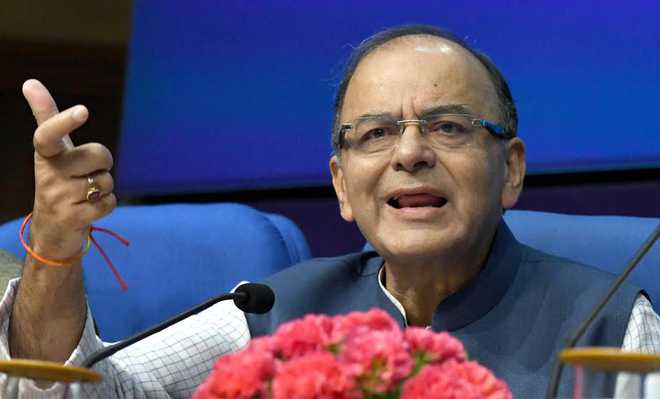
Arun Jaitley. File photo

New Delhi, July 28

The Indian armed forces are fully equipped to face any contingency, Defence Minister Arun Jaitley told the Lok Sabha on Friday amid the ongoing border standoff with China.Asserting that any shortage in terms of arms and ammunition would be expeditiously made up, the minister said the observations by the Comptroller and Auditor General (CAG) about ammunition supplies was for a particular period.Last week, the CAG had slammed the Ordnance Factory Board (OFB) for critical deficiency in availability of ammunition to the Army.“The armed forces are fully equipped to face any contingency” and any shortage of ammunition would be expeditiously made up, Jaitley said during Question Hour.The remarks come at a time when India and China have been locked in a standoff over the Doklam issue while there have also been rising terror incidents in Jammu and Kashmir.In a report, the apex auditor had also criticised the OFB for inadequate quality of ammunition supplied to the Army since March 2013.According to the report, despite serious concerns highlighted in a high-level report on ‘Ammunition management in Army’ in 2015, no significant improvement took place in the critical deficiency in availability of ammunition and quality of ammunition supplied by the OFB.Regarding CAG reports, Jaitley said that as per procedure, after tabling in Parliament, they go to the Public Accounts Committee (PAC) and if the latter makes some recommendations, then action would be taken.“If any action is to be taken, it will be taken,” Jaitley said in response to queries on whether any action would be taken against officials following observations in the CAG report.

(Follow The Tribune on Facebook; and Twitter @thetribunechd)

When a member wanted to know about the amount of ammunition required and other details, Jaitley said it is better in public interest not to make any such disclosure.Responding to queries, Minister of State for Defence Subhash Bhamre assured the House that no ordnance factory would be closed down and no one would be rendered unemployed.On strategic partnerships in the defence sector, Jaitley said it is intended to institutionalise a transparent, objective and functional mechanism to encourage broader participation of the private sector in the manufacture of defence platforms and equipment.Besides, the government has approved a proposal for manufacturing of ammunition for the Indian Army by the Indian industry, he said.In this regard, Jaitley said Request for Proposal (RFP) under open tender enquiry was issued in March.“Since the proposal is presently at RFP stage, grant of permission to any private company for manufacturing ammunition in parternship with foreign vendors/companies which have been blacklisted/banned for wrong doings/corrupt practices, does not arise,” the minister said.Jaitley said the Defence Procurement Procedure (DPP)/Defence Procurement Manual (DPM) contain provisions in standard clauses of contract for use of undue influence, including engagement of agents unauthorisedly by the seller.“DPP/DPM also provides for execution of a pre-contract integrity pact with the objective of ensuring that the procurement process is free from any wrongful business practice,” he added.The minister also said violation of the pact can result in calling off the negotiations, cancellation of contracts, encashment of bank guarantees and debarment from future procurement. PTI


Claim & honour go together BY Lt Gen RS Sujlana (retd)

Claim & honour go together

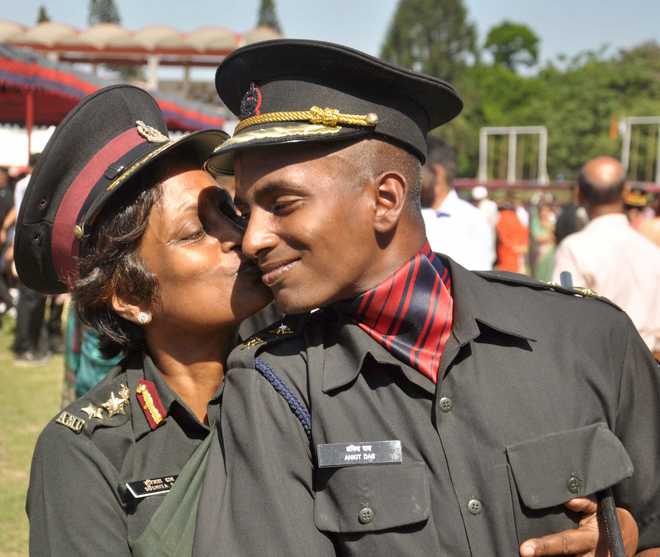
Lt Gen RS Sujlana (retd)ADHERING to the adage of ‘Tradition is not the worship of ashes but the preservation of fire’, an age-old policy termed ‘Parental Claim’ exists in the Indian Army. Under this, tradition is preserved and the fire remains kindled in generations that follow their forefathers to serve the nation in the Army. On commissioning, cadets from the Indian Military Academy can opt for the same regiment that his father served in. However, this option is restricted to only the fighting arms — Infantry, Mechanised Infantry, Armoured Corps and Artillery. The word appropriately used is ‘parental’ and not father, as an Army wife is equally wedded to the olive green and its ethos. A sudden flash enlivened this tradition, when at a gathering, a former Brigadier, a blue-blooded Rathore who goes by the initials of SMS (today’s technology has ensured daily usage), announced that their son was soon taking over the command of an artillery regiment, where he too had served. The joy and pride of the parents was visibly infectious. They were looking forward to be by their son’s side on the day he takes over command, to bless him and pip the Colonel’s rank on his broad shoulders! What emotions will flow that day is difficult to comprehend by anyone who has not been through a similar experience, but for me memories flooded back and took me back some 25 years.I was commanding 3 Sikh, the same battalion that my father had also commanded — both did so incidentally in J&K; he during the 1965 War and I fighting the same enemy, but in a sponsored form. Later, when I moved to a peace station, my father visited us for a few days and then came a day we both eagerly awaited. I was immersed in a file when the stick orderly (a soldier dressed in ceremonial standing duty at the CO’s door) smartly saluted and announced: ‘Saheb, wadde CO saheb aye ne’ (Sir, the elder CO has come). I sprung up from my chair just in time to simultaneously salute my father who stood at the door in his habitual smart posture in attention and was saluting me. ‘Son, I cannot express my feelings at this point, but how I wish your mother was alive to cherish this moment. But we both are here to bless you!’ Humbling, indeed, were the words of my father but also an incomparable honour. Even today, those moments and his words remain etched in my memory. My father’s heart was a cornucopia of pride and joy, but yes, we both missed the better half of the Parental Claim!