












HONOUR OF COMMANDING FIRST REPUBLIC DAY PARADE
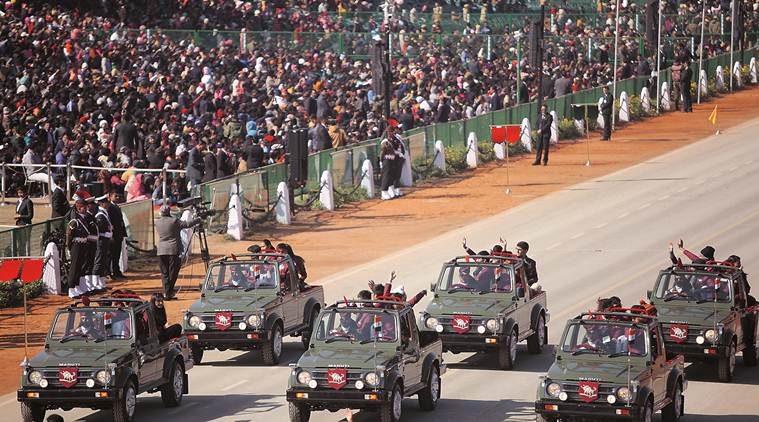
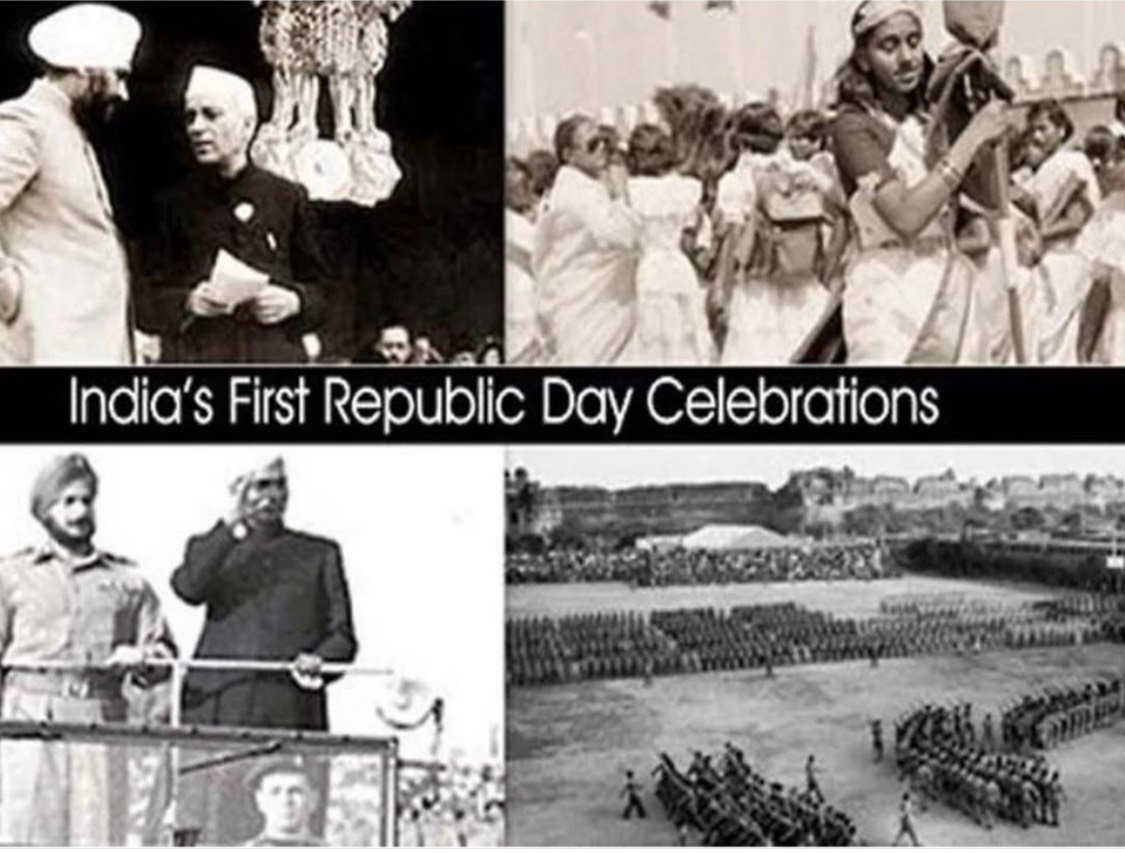
Having taken the salute from Col Joginder Singh Dhillon, Commandant, Bengal Engineer Group and Centre on 25 November 1949 at the Centre Parade Ground, Pandit Jawaharlal Nehru specifically asked for him to command the First Republic Day Parade to be held in Delhi.
The Parade was held on 26 January 1950 at the Irwin Stadium, Delhi, and was duly commanded by then Brig Dhillon. The Parade had contingents from Army, Navy, Air Force and the Police and it was one of the finest spectacles of the Independent India staged in Delhi during that period. Brig Dhillon later commanded two infantry brigades and also served as director of technical development and director of weapons and equipment at army headquarters before being promoted to Major General. As Major General, he was selected to attend a course at Imperial Defence College in the United Kingdom, and returned to a posting at the National Defence College and was later given command of a division in August 1960. JS Dhillon was Deputy Chief of General Staff at Army headquarters when he was promoted to GOC, XI corps in Punjab.
“The posting would be the culmination of everything that had gone into the making of this exceptional soldier. When on the morning of September 6, 1965, war with Pakistan broke out, with the XI Corps launching a massive retaliatory attack across the border in Punjab on several fronts at 4 am, the aim was to teach Pakistan a lesson for its unprovoked attack on India in the Chhamb sector a few days earlier“
Indeed a great general, we owe him so much..
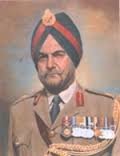
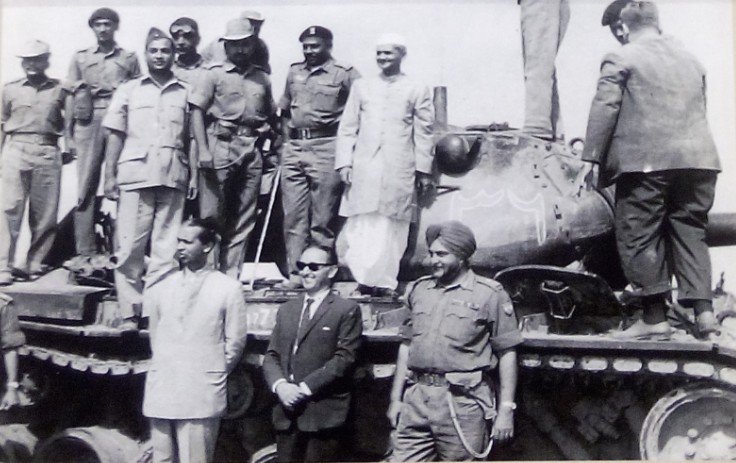
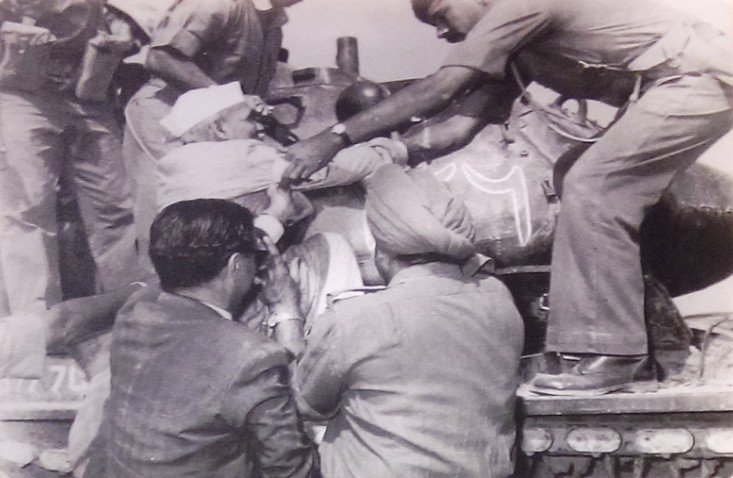
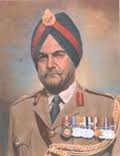
Lt Gen Joginder Singh Dhillon,
Padma Bhushan (1914-2003)
Last salute to the Lion of 1965
The death of Lieutenant General Joginder (Jogi) Singh Dhillon on 20
November 2003 at the age of 89 received no coverage in the Indian
papers, although it was his inspiring generalship that helped smash
the superior Pakistani armour, poised to head for the Beas bridge and then onto Delhi, in the opening days of the 1965 India-Pakistan war.
Such milestones seem of lesser consequence to our press than the
extensive coverage given to dubious public figures.What Jogi Dhillon brought to his command as lieutenant general
commanding XI Corps in the 1965 war, was a military service of many
firsts. He stood first in 1933 in the all India entrance examination
to the Indian Military Academy, then won both the coveted gold medal
and the Sword of Honour before joining the Bengal Sappers on February 1, 1936.
Graduating in 1939 with honours from Roorkee s Thomson Civil
Engineering College, he was soon sent overseas for the first four
years of World War II. He saw active service in Iraq, Iran and Burma and, after a stint in the Staff College, Quetta, was again sent to command a field company in Malaya (1945-46), then onto Sourabaya, where he commanded 2 Field Company, before returning home.
From 1946 to 1947 he was staff officer in the E-in-C s Office Army HQ,then went to Quetta as garrison engineer, before taking over as GSO1 in the E-in-C s Branch from October 1947 to February 1948 in the rank of lieutenant colonel.
At this critical juncture in the life of the Bengal Sappers, Jogi
Dhillon was handpicked to take charge of its regimental centre at
Roorkee. The centre’s crisis arose from the fact that since the Indian
Army’s Corps of Engineers had centres in Bangalore, Roorkee and
Kirkee, under the terms of Parition the centres in Bangalore and
Kirkee would remain in India, while the Roorkee centre’s assets would go to Pakistan.
So Bengal Sappers was one of the formations that bore the brunt of the division of the Indian Army. In the division on a two-third, one-third basis the majority assets in the Roorkee centre’s case went to Pakistan’s Engineers Centre at Sialkot, including plant and equipment, and even furniture, carpets, curtains, books, silver, crockery, cutlery and typewriters and one-third of the regimental fund.
In the two years after taking command in February 1948 of what was left of the centre, Dhillon turned the challenge of resurrecting it into a personal triumph that left everyone breathless. Combining
organisational skill with drive, determination and steel, he
rehabilitated the centre, streamlined its training and administration and integrated it into an efficient and war-worthy team.
A change of profound importance introduced at the centre which thenewly independent nation’s army as a whole eventually adopted was that whilst hitherto several messes for the other ranks had cooked food in each unit for a particular caste, Colonel Dhillon decisively ended this outdated practice. He decreed a single integrated mess would serve food to all men and not their caste.
Another thing, according to a retired Sappers officer, Colonel Chanan Singh Dhillon, the dynamic commandant did was demolish the wall that separated the centre’s gurudwara and Hindu temple and build a platform instead, so that gatherings of both denominations could jointly celebrate their special days.
When Prime Minister Jawaharlal Nehru visited the centre in 1949 he was so impressed by what he saw that he extended Jogi Dhillon the singular honour of selecting him to command India’s first Republic Day parade in 1950.
After command of the Bengal Sappers, Dhillon commanded two infantry brigades in succession before his appointment, in 1956, as director of technical development in Army HQ. He then served as director, weapons and equipment, before being promoted to major general in December 1957.
He was chief of staff, Western Command, at the time of his selection to attend a course at the Imperial Defence College in the United Kingdom, from where he returned to an appointment in the National Defence College, before assuming command of a division in August 1960.
His next job was as deputy chief of the general staff at Army HQ, then promotion to lieutenant general and posting as GOC, XI Corps in Punjab.
The posting would be the culmination of everything that had gone into the making of this exceptional soldier. When on the morning of September 6, 1965, war with Pakistan broke out, with the XI Corps launching a massive retaliatory attack across the border in Punjab on several fronts at 4 am, the aim was to teach Pakistan a lesson for its unprovoked attack on India in the Chhamb sector a few days earlier.
It is not possible to describe this 17-day war here but the decisive
tank battle of Assal Uttar, near Khem Karan, on September 10 does bear telling. Indian units hid their Sherman tanks 500 metres apart in a U-shaped formation in tall and unharvested sugarcane fields, and snared the enemy’s vastly superior Patton tanks into this ambush, annihilating them to the last tank and deciding the outcome of the war.
The destruction of Pakistan’s armoured pride and the casualties it
suffered, including an artillery brigadier and many other senior
officers killed or surrendered, destroyed the enemy’s morale. At Assal Uttar, 97 enemy tanks of which 72 were Pattons and 25 Chafees and Shermans were destroyed, damaged or captured intact, of which 28 Pattons were in perfect running condition.
Facing the very modern M-48 Pattons were India’s old and inferior
Centurions and Shermans outgunned, outdistanced and far fewer in number. And yet Indian losses at Khem Karan were only 32 tanks.
There are countless other such telling statistics but the fact that
stands out is when Pakistan’s chief of army general staff and air
chief met their president on September 19 and requested him to
negotiate a ceasefire with the Indians, Pakistan’s defeat was
acknowledged at the highest levels.
A few days after the cessation of hostilities, Frank Moraes (he was
then editor-in-chief of The Indian Express), spent a weekend in the
Lahore sector, calling first on Lt General Dhillon at his wartime
corps HQ at Raiyya, and then visiting some places that had already
become household words like the Ichhogil Canal, Dograi, Khem Karan.
Moraes described our visit in The Soldier’s Spirit in his paper of
November 1, 1965, and also his meeting with Jogi Dhillon: I was
fortunate to spend some time with Lt General J.S. Dhillon, the corps commander in this sector, and to note and understand how greatly the spirit of all, from jawans to divisional commanders, depends on the calibre of the corps commander. Jogi Dhillon is an enthusiastic, intelligent soldier with a physical vigour, drive and combativeness which enable him to be extraordinarily mobile over his wide command and an inspiring presence and example to his officers and men.
In recognition of his role in the 1965 war, the President of India
invested Dhillon with the Padma Bhushan in August 1966 and appointed him GOC-in-C Central Command, from where he retired on August 4, 1970.
When the army bade farewell to its distinguished comrade in Delhi on November 21, 2003, six generals acted as pallbearers and the COAS, General N.C. Vij, flew in for the funeral from Hyderabad. This reaffirmed that the Indian Army stands steadfast on some of its finest traditions.
On a more personal note, Jogi Dhillon was married for 62 years to
Minnie, who survives him, and to whom he was as devoted as she to him.He is also survived by his three daughters, Kiran, Komal and Kamal: an architect, airline executive and head of her own consultancy firm each as individualistic as their indomitable parents
MORE DETAILS OF THE BENGAL SAPPER LION
Lieutenant General Joginder Singh Dhillon (1914–2003) was the first post independence Sapper Army Commander (Central Army) and was a decorated and celebrated Indian and Sikh military war hero. Lt Gen Dhillon was the first Army Officer to be awarded the ‘Padma Bhushan’ on 24 November 1965, for his role in the 1965[1] Indo-Pak War, where he was the General Officer Commanding Corps (XI corps). The official citation given for the award was as follows:
“In this Sector, the enemy launched repeated counter-attacks and the conduct of day to day operations called for great tenacity, strong determination and robust mind. Lieutenant General Dhillon displayed all these qualities in abundance and the success achieved by his Corps was to a great extent due to the personality of the General officer.”
EARLY CAREER
He was commissioned into Bengal Engineer Group in 1936, after receiving the Sword of Honour and Gold Medal at the Indian Military Academy in 1935, and standing first in the all-India entrance examination to the Indian Military Academy in 1933. Graduating in 1939 with honours from Roorkee s Thomson Civil Engineering College (now IIT Roorkee), he was soon sent overseas for the first four years of World War II. He saw active service in Iraq, Iran and Burma and, after a stint in the Staff College, Quetta, was again sent to command a field company in Malaya (1945–46), then onto Sourabaya, where he commanded 2 Field Company, before returning home. From 1946 to 1947 he was staff officer in the E-in-C s Office Army HQ, then went to Quetta as garrison engineer, before taking over as GSO1 in the E-in-C s Branch from October 1947 to February 1948 in the rank of Lieutenant Colonel
RESURRECTION OF THE BENGAL SAPPERS
The Bengal Sappers was one of the formations that bore the brunt of the division of the Indian Army during partition. Since the Indian Army’s Corps of Engineers had centres in Bangalore, Roorkee and Kirkee, under the terms of Parition the centres in Bangalore and Kirkee would remain in India, while the Roorkee centre’s assets would go to Pakistan. In the division on a two-third, one-third basis the majority assets in the Roorkee centre’s case went to Pakistan’s Engineers Centre at Sialkot, including plant and equipment and more than half its personnel, and one-third of the regimental fund
The onus of resurrecting the Bengal Sappers fell to Colonel JS Dhillon, who was the first commandant of the Bengal Sappers after India’s independence. With minimal resources and limited personnel, Col Dhillon reorganized and rejuvenated the Bengal Sappers into the leading engineering group of the Army.
“In the two years after taking command in February 1948 of what was left of the centre, Dhillon turned the challenge of resurrecting it into a personal triumph that left everyone breathless. Combining organisational skill with drive, determination and steel, he rehabilitated the centre, streamlined its training and administration and integrated it into an efficient and war-worthy team“
“A change of profound importance introduced at the centre which the newly independent nation s army as a whole eventually adopted was that whilst hitherto several messes for the other ranks had cooked food in each unit for a particular caste, Colonel Dhillon decisively ended this outdated practice. He decreed a single integrated mess would serve food to all men and not their caste.“
When Prime Minister Jawarharlal Nehru visited the regimental center at Roorkee in 1949, he was so impressed by the Bengal Sappers that he specifically asked for Col JS Dhillon to command India’s first Republic Day parade
ROLE IN 2ND INDO-PAKISTAN WAR, 1965
Lt Gen J.S. Dhillon was the Commander of XI Corps which was responsible for the Punjab sector during the 1965 Indo-Pak War. He is credited in producing and conducting the battle plan that destroyed or captured over 100 superior Pakistani battle tanks, turning a potentially dangerous defeat into an amazing victory, as the Pakistani tanks were poised to head for the Beas Bridge and then on to Delhi.
“The decisive tank battle of Assal Uttar, near Khem Karan, on September 10 does bear telling. Indian units hid their Sherman tanks 500 metres apart in a U-shaped formation in tall and unharvested sugarcane fields, and snared the enemy s vastly superior Patton tanks into this ambush, annihilating them to the last tank and deciding the outcome of the war.
The destruction of Pakistan s armoured pride and the casualties it suffered, including an artillery brigadier and many other senior officers killed or surrendered, destroyed the enemy s morale. At Assal Uttar, 97 enemy tanks of which 72 were Pattons and 25 Chafees and Shermans were destroyed, damaged or captured intact, of which 28 Pattons were in perfect running condition.
Facing the very modern M-48 Pattons were India s old and inferior Centurions and Shermans outgunned, outdistanced and far fewer in number. And yet Indian losses at Khem Karan were only 32 tanks“
Frank Moraes, the editor in chief of the Indian Express, who spent time on the frontlines, wrote: “I was fortunate to spend some time with Lt General J.S. Dhillon, the corps commander in this sector, and to note and understand how greatly the spirit of all, from jawans to divisional commanders, depends on the calibre of the corps commander. Jogi Dhillon is an enthusiastic, intelligent soldier with a physical vigour, drive and combativeness which enable him to be extraordinarily mobile over his wide command and an inspiring presence and example to his officers and men.“
Lt. Gen Dhillon was awarded the Padma Bhushan for his role in the 1965 war and was promoted to Army Commander of the Central Command, from where he retired on August 4, 1970.
Lt Gen JS Dhillon’s counterpart Pakistani Generals who fought against him in the 1965 war, on hearing of his death in 2003, paid warm tribute to him as a great general and warrior.