










Sanjha Morcha

What’s New

Click the heading to open detailed news

Current Events :

web counter

Print Media Reproduced Defence Related News

Alcohol not sole factor, service conditions also responsible for death on duty: Armed Forces Tribunal

Ruling that brain haemorrhage suffered while on duty is attributable to military service, the Armed Forces Tribunal has held that the death of a soldier cannot be attributed solely to alcohol consumption but other factors like posting to high-altitude area must also be considered.

Granting special family pension to the widow of an airman, the Tribunal observed that the airman, Corporal Jaswindra Singh, had been sent on duty to a high-altitude area despite being ill.

His request for exemption to be sent to Kurseong on medical grounds was declined by the Air Force authorities. There he was admitted to hospital as his condition worsened and ultimately his died from intra-cranial haemorrhage.

Special-family pension was denied to his widow on grounds that the death was not attributable to military service. Her appeals before the pensionary authorities also did not yield any results. The Air Force also contended that he had been a regular alcohol consumer for the past six years.

“We make it clear that the death of the petitioner’s husband was not definitely due to regular alcohol for the last six years. There could be other factors like high altitude, the fact that he had travelled to Kurseong from Purnia, etc. This vital aspect of the matter has not been considered by the competent authority while negating the claim of the petitioner for grant of special family pension,” the Tribunal’s Bench of Justice Suresh Kumar Gupta and Maj Gen Sanjay Singh said.

“It is abundantly clear that the petitioner’s husband has passed away in performance of the bonafide official duty and as such the action of the respondents in declining the claim of the applicant for grant of special family pension is faulty,” the Bench ruled.

The Bench also observed that Kurseong is at a higher altitude than Purnia, where the airman was originally based, and that is why his medical condition worsened. “While Kurseong station does not come under the category of high altitude, that is 9,000 feet above sea level or more, it is certainly higher than Purnia and there would have logically been some efforts at making the tour,” the Bench said.
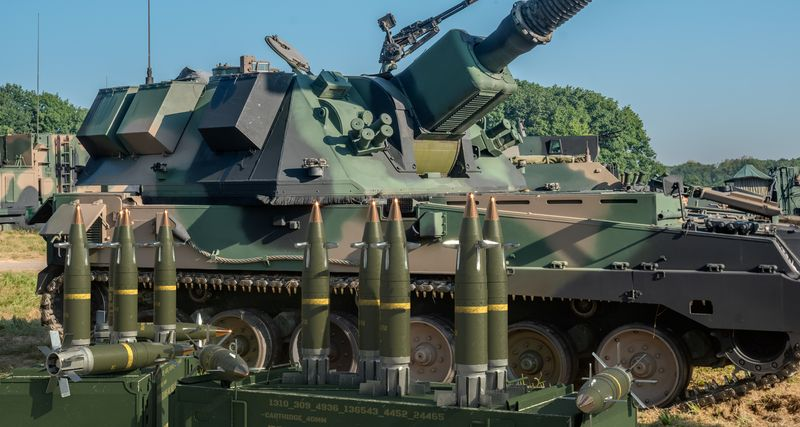
IIT Madras develops ramjet-assisted artillery shells, boosts gun range by 50 per cent

IIT Madras has achieved a breakthrough in defence technology by developing ramjet-assisted artillery shells that can extend the range of existing gun systems by nearly 50 per cent without compromising lethality. This innovation integrates a ramjet engine into standard 155 mm artillery ammunition, replacing the conventional base-bleed unit, and enables sustained propulsion after the shell exits the gun barrel.

The technology has shown substantial range improvements across multiple platforms, including Advanced Towed Artillery Gun System (ATAGS), extended range from 40 km to 70 km; Vajra K-9 gun, extended range from 36 km to 62 km; Dhanush artillery guns, extended range from 30 km to 55 km, said IIT Madras.

The project, launched in 2020 in collaboration with the Indian Army, has undergone extensive gun and field trials, successfully validating clean gun exit, stable flight, and reliable ramjet ignition. This innovation aligns with the Atmanirbhar Bharat initiative, demonstrating how upgrading existing systems can deliver cost-effective, survivable, and future-ready firepower for modern battlefields.

The project was led by Prof PA Ramakrishna of IIT Madras, along with Lt Gen P R Shankar (retd), Prof HSN Murthy, Prof G Rajesh, Prof M Ramakrishna, Prof Murugaiyan, Lt Gen Hari Mohan Iyer (retd), Prof Lazar C and Dr Yogesh Kumar Velari.


Army Chief warns Pak against sending drones across LoC

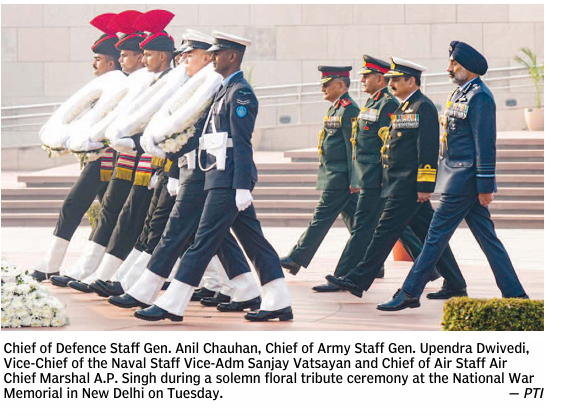
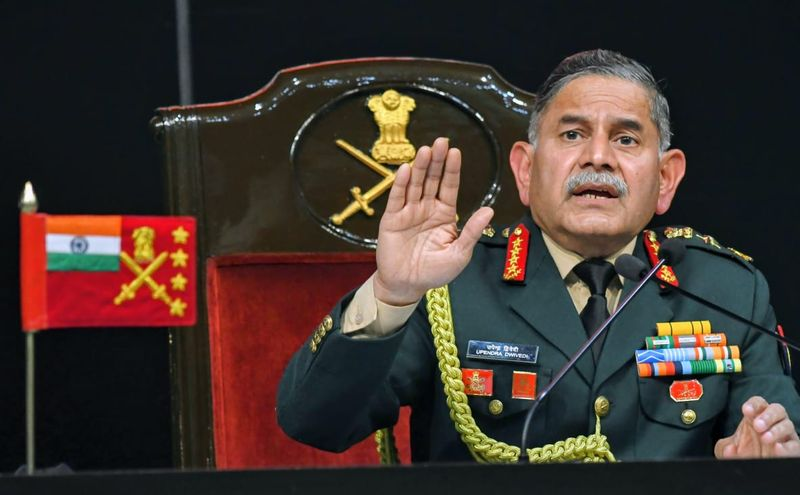
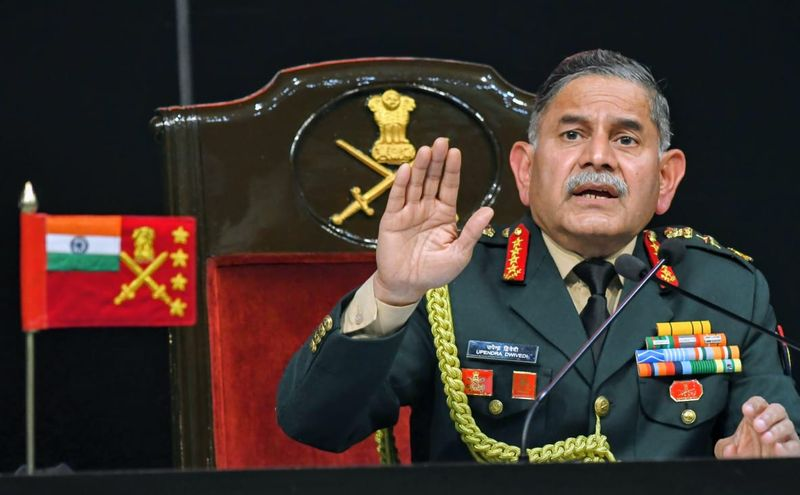
rmy Chief Gen Upendra Dwivedi on Tuesday warned Pakistan against sending drones across the Line of Control (LoC). He was addressing a press conference here ahead of Army Day (January 15).

He said the Directors General of Military Operations (DGMOs) of India and Pakistan spoke on Tuesday and the issue of sighting of drones emanating from Pakistan was taken up.

There were multiple drone sightings on Tuesday while five drone intrusions were reported on Sunday evening along the J&K border.

The Army Chief said these drones were most likely sent for reconnaissance purposes.

He said the situation along the disputed boundary with China “remains stable but needs constant vigil”.

He cited two “turning points” during Operation Sindoor which, he said, turned the tide in favour of India. He said India was looking at creating a dedicated missile and rocket force on the lines of China and Pakistan. He termed it a “strategic necessity” in the current security environment.

He said since Pakistan and China had already created specialised rocket forces, it was essential for India to have one.

He pointed to the successful tests of the indigenous Pinaka system, having a range of 120 km, and said additional contracts had been signed to extend its reach to 150 km in the near term. Over time, the Army was looking at ranges of 300 to 450 km, alongside existing systems such as Pralay and BrahMos, to build a credible and layered strike capability.

Responding to a question on Operation Sindoor, the Army Chief dismissed suggestions of military-level nuclear signalling during the conflict. He said nuclear issues did not feature in talks between the DGMOs and nuclear rhetoric originated from political voices or public discourse in Pakistan, not its armed forces. He said the scale of firing and manoeuvres during the 88-hour period (May 7-10 last year) showed that the Indian forces were fully mobilised and prepared to launch ground operations if Pakistan had escalated further.

General Dwivedi identified two turning points during Operation Sindoor, one of them being the 22-minute strike on terror targets on May 7 which “disrupted Pakistan’s decision-making”.

“The second turning point was certain directions given to the tri-services on the morning of May 10 on what to do if the war escalates. They had understood it, and hence, called up our DGMO,” he said.

Pakistan, he said, had used satellites and had complete information about “which Indian warship, which strike corps and which plane was where”. “When they connected these dots, they realised that the time had come to stop this war,” he said.

On the border issue with China, he said, the “situation at the northern front remains stable but needs constant vigil. Our deployment along the LAC remains balanced”.

In October 2024, India and China had agreed to a patrolling arrangement along Depsang in eastern Ladakh along the LAC, ending their military stand-off that started in April 2020.

Since then, the special representatives of India and China —National Security Adviser Ajit Doval and China’s Foreign Minister Wang Yi — have met twice and agreed to work out a solution of demarcating a boundary.

The Army Chief said Operation Sindoor was ongoing and any misadventure would be responded to.

He said the mandate for integration was happening. “We are progressing towards theatre commands”.


Situation along LAC stable but requires constant monitoring: Army Chief

Referring to the situation along the disputed boundary with China, Indian Army Chief General Upendra Dwivedi said on Tuesday that the situation remains “stable but needs constant monitoring.”

Speaking at the annual press conference ahead of Army Day on January 15, he added, “Situation at northern front remains stable but needs constant monitoring. Our deployment along the Line of Actual Control (LAC) remains balanced.”

In October 2024, India and China agreed to a patrolling arrangement along Depsang in Eastern Ladakh, ending the military standoff that began in April 2020. Since then, the Special Representatives of India and China — National Security Advisor Ajit Doval and China’s Foreign Minister Wang Yi — have met twice and agreed to work towards demarcating the boundary.

Meanwhile, the Army Chief said Operation Sindoor, launched in May last year to strike at terrorist camps in Pakistan, is ongoing and that “any misadventure would be responded to.”

Addressing nuclear rhetoric during skirmishes with Pakistan, he clarified, “There was no mention of nuclear during the talks the two DGMO’s had during that period.”

“The nuclear rhetoric was being pushed by the political class,” the Army Chief said, without naming the Pakistan leadership that had been brandishing the threat.

Referring to post-May 10 developments, when the cessation of hostilities was announced, General Dwivedi said some forward mobilisation was pulled back by the end of May, “but our eyes and ears are open.”

On the future of the Army, he said integration is underway and progress is being made towards theatre commands. “By 2026, we will have an Indian Army capable of striking deep,” he added, highlighting significant upgrades and restructuring of forces.

He also detailed new raisings, including Bhairav light commando battalions, Shaktibaan regiments, Divyaastra artillery batteries, and Ashni platoons.


Trump pauses military actionas he explores signals by Iran

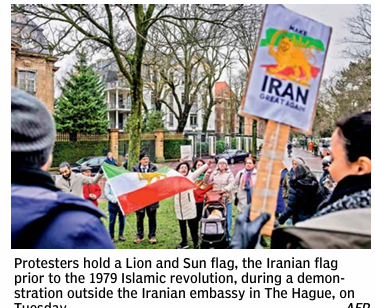
Washington, Dubai, Jan. 13: President Donald Trump has arrived at a delicate moment as he weighs whether to order a US military response against the Iranian govern ment as it continues a violent crackdown on protests and led to the arrests of thousands across the country. The death toll from nationwide protests in Iran spiked on Tuesday to at least 2,003 people killed, activists said, and Iranians made phone calls abroad for the first time in days after authorities severed communications during a crackdown. The number of dead, as reported by the US-based Human Rights Activists News Agency, dwarfs that in any other round of protest or unrest in Iran in decades and recalls the chaos surround ing the country’s 1979 Islamic Revolution. These demonstrations, which began little over two weeks ago in anger over Iran’s ailing economy, soon targeted the theocracy, par ticularly 86-year-old Supreme Leader Ayatollah Ali Khamenei. Images obtained on Tuesday by The Associated Press from demonstrations in Tehran show graffiti Protesters hold a Lion and Sun flag, the Iranian flag prior to the 1979 Islamic revolution, during a demon stration outside the Iranian embassy in The Hague, on Tuesday. and chants calling for Khamenei’s death — some thing that could carry a death sentence. Iran eased some restric tions on its people and, for the first time in days, allowed them to make phone calls abroad via their mobile phones on Tuesday. It did not ease restrictions on the internet or allow texting services to be restored. Although Iranians were able to call abroad, people outside the country could not call them, several peo ple in the capital told The Associated Press. The witnesses, who spoke on condition of anonymity for fear of reprisal, said SMS text messaging still was down and internet users inside Iran could not access anything abroad, although there were local connections to govern ment-approved websites. It was unclear if restric tions would ease further after authorities cut off all communications inside the country and to the outside world on Thursday. Trump has repeatedly threatened Tehran with military action.


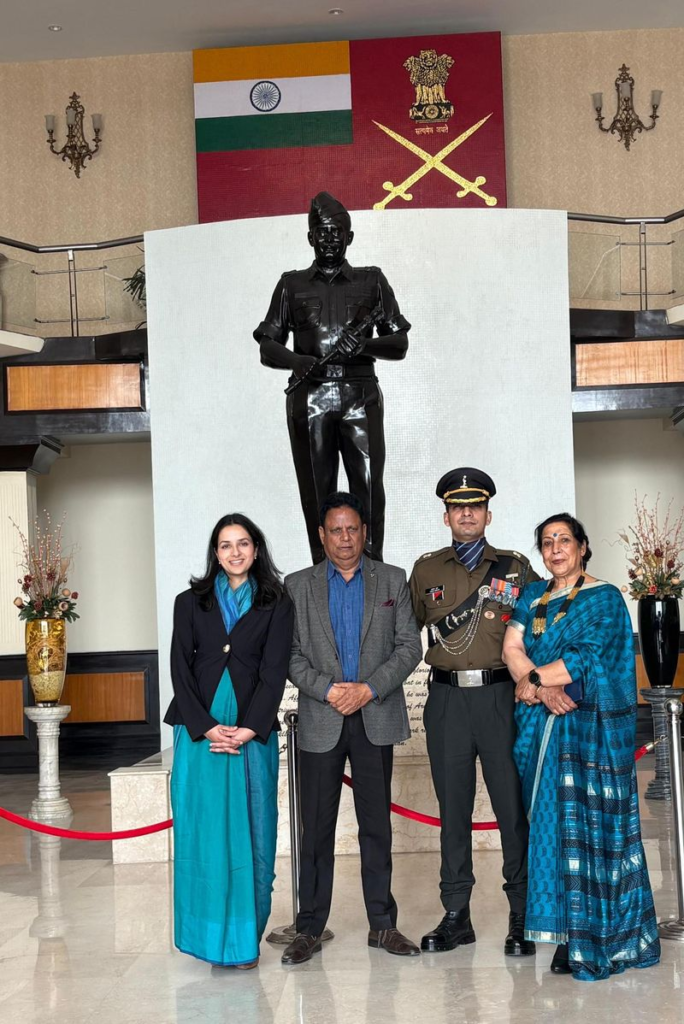
Major Aman Dhar awarded Sena Medal for bravery in J&K counter-terror operation

On November 9, 2024, during a counter-terrorist operation at Sopore in Baramulla district, Jammu and Kashmir, Major Aman Dhar, while leading a Quick Reaction Team, displayed exceptional courage, leadership and presence of mind. He, while acting on credible intelligence, swiftly closed in on the target area and established an effective cordon. During the encounter, a terrorist broke into a nearby house while firing heavily, endangering innocent civilians.

In an act of extreme bravery, Major Dhar rescued seven civilians, including four children, by evacuating them through the rear window of the house. Thereafter, he used a JCB machine to gain access to the terrorist’s hideout and engaged him in a fierce close-quarter battle. When the terrorist attempted to escape by hurling a grenade and firing indiscriminately, Major Dhar, with resolute courage and composure, neutralised him in close combat. For his indomitable courage, conspicuous gallantry and devotion to duty, he was awarded the “Sena Medal” (Gallantry), which was conferred on him by the President of India and presented to him by the General Officer Commanding-in-Chief (GOC-in-C), Western Command.

Major Dhar was commissioned in the Corps of Signals on June 9, 2018, and is a Technical Entry Scheme (TES) officer. He underwent four years of rigorous training at the Cadets Training Wing, Mhow. He is an alumnus of St Paul’s Senior Secondary School (ICSE wing), Palampur. He is the son of Anil Sharma and Manju Sharma.


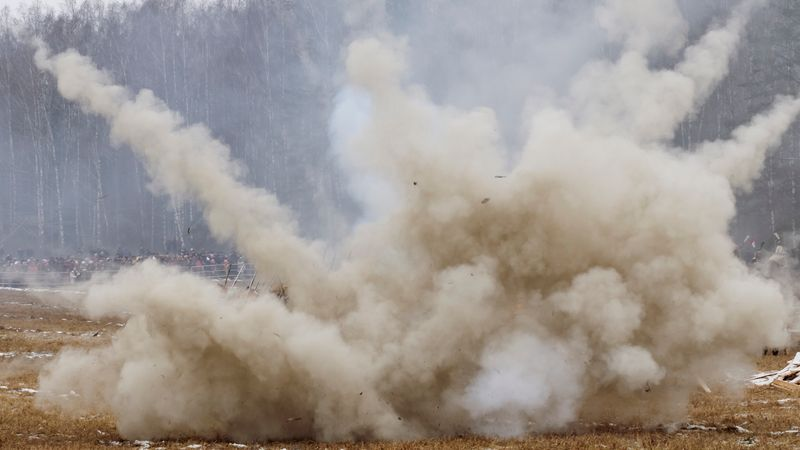
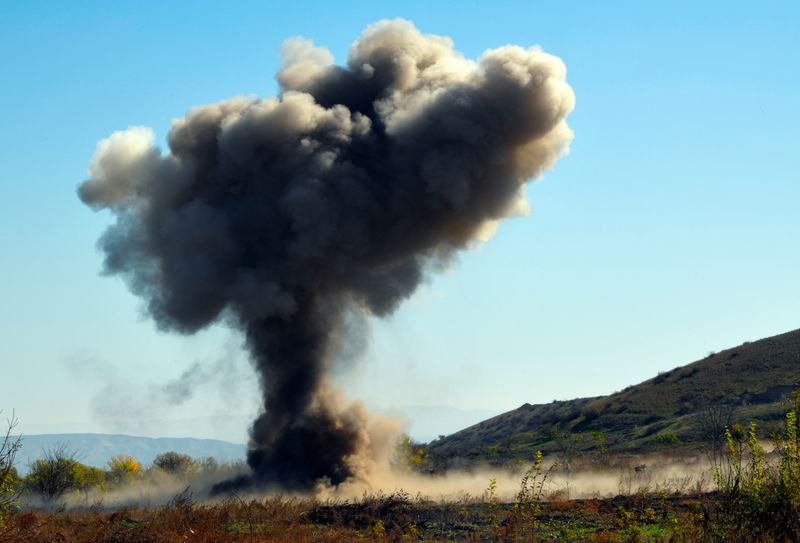
Four landmines, one mortar shell explode near LoC in J&K’s Poonch

Four landmines and a mortar shell exploded near the Line of Control (LoC) in Jammu and Kashmir’s Poonch district without causing any harm to human lives, officials said on Thursday.

The mortar shell buried underground went off when an earth-mover was digging the land at Sagra village in Mankote area on Thursday morning, the officials said. The driver of the excavator escaped unhurt in the explosion that rocked the area.

A police team was rushed to the scene following the explosion to probe the matter. The mortar shell apparently remained unexploded during cross-border shelling, the officials said.

In another incident, four landmines exploded in the Balakote area on Wednesday, they said.

The landmines were activated by a bomb disposal squad after they were found dislocated from the anti-infiltration obstacle system due to recent heavy rain, the officials said.


Fresh landmine blasts along LoC as forest fire rages for second day in JK’s Poonch

Nearly a dozen landmines exploded as a forest fire raged along the Line of Control (LoC) in Jammu and Kashmir’s Poonch district for the second day on Tuesday, officials said.

The fire broke out in the Basooni forward area of Balakote sector on Monday afternoon and spread to parts of the Mendhar sector on Tuesday.

The fire caused nearly a dozen landmines to explode, according to the officials.

The forward areas along the LoC are dotted with landmines as part of an anti-infiltration obstacle system to prevent terrorists from intruding into Indian territory from across the border.

Amid the threat of possible infiltration attempts, multi-tier security arrangements have been strengthened and patrolling intensified in the area, the officials said.