



Sanjha Morcha

What’s New

Click the heading to open detailed news

Current Events :

web counter

Print Media Reproduced Defence Related News

Pak against security role for India in Kabul

Pak against security role for India in Kabul

Islamabad, March 6

Foreign Minister Shah Mahmood Qureshi has said Pakistan does not want any security role for India in Afghanistan as he accused New Delhi of playing the role of a “spoiler” in the war-torn country, according to a media report.

After months of negotiations, the US and Taliban signed a landmark peace deal in Qatari capital Doha on Saturday, effectively drawing curtains on the United States’ 18-year war in Afghanistan since 2001.

Addressing the Senate on Wednesday, Qureshi said Pakistan neither desires “any security role of India in Afghanistan” nor wants presence of militant organisations — Al-Qaeda and the ISIS — in the landlocked country, The Nation reported.

The foreign minister told the Upper House that India had always played role of a spoiler, the report said. “There were spoilers in the past and they are even today, within and outside Afghanistan, who want to get their own objectives,” Qureshi said.

India has been a key stakeholder in Afghanistan as it had already spent around $2 billion in reconstruction of the war-ravaged country.

India has been maintaining that care should be taken to ensure that any peace process does not lead to any “ungoverned spaces” where terrorists can relocate.

Ahead of the peace deal, India conveyed to the US that pressure on Pakistan to crack down on terror networks operating from its soil must be kept up though Islamabad’s cooperation for peace in Afghanistan is crucial. Qureshi on Sunday also warned that “spoilers” could try to sabotage the peace process in Afghanistan. He also said Pakistan wanted to resolve all issues with Afghanistan bilaterally.

Reiterating that Pakistan was never part of the peace talks and their role “has always been and will always be” that of a facilitator, he said Pakistan cannot give guarantee or take responsibility to peace in Afghanistan. “This is a shared responsibility, and all (stakeholders) will have to play their role. There are many powers, interests (involved),” he said. — PTI


Maharaja Ranjit Singh named greatest world leader in BBC poll

Singh’s rise to power came after a period of economic and political uncertainty

Maharaja Ranjit Singh named greatest world leader in BBC poll

London, March 6

Maharaja Ranjit Singh, the 19th century ruler of the Sikh Empire in India, has beaten competition from around the world to be named the “Greatest Leader of All Time” in a poll conducted by ‘BBC World Histories Magazine’.

Over 5,000 readers voted in the poll. Polling more than 38 per cent of the vote, Singh was praised for creating a new tolerant empire.

In second place, with 25 per cent of the vote, is African Independence Fighter Amílcar Cabral, who united more than 1 million Guineans to free themselves from Portuguese occupation and in turn propelled many other colonised African countries to rise and fight for independence.


Also read:

The Glorious Reign of Maharaja Ranjit Singh

Sikh ruler’s 9-ft sculpture installed at Lahore Fort


Britain’s war-time Prime Minister Winston Churchill is at number three with 7 per cent of the vote for his quick decision and sharp political manoeuvring that kept Britain in the war.

Further down the list, American President Abraham Lincoln is at four and British monarch Elizabeth I is the highest ranked female leader at five.

The nominations were sought from global historians, including Matthew Lockwood, Rana Mitter, Margaret MacMillan and Gus Casely-Hayford, who selected their “Greatest Leader” – someone who exercised power and had a positive impact on humanity.

The resulting top 20 included some of the most celebrated leaders in history across the globe from the UK, the US, to Asia and Africa, including the likes of Mighal Emperor Akbar, French military leader Joan of Arc and Russian Empress Catherine the Great, with the list topped by Ranjit Singh.

“Though perhaps not as familiar as some of the other names on the list, Ranjit Singh’s overwhelming success in our poll suggests that the qualities of his leadership continue to inspire people around the world in the 21st century,” said Matt Elton, Editor of ‘BBC World History Magazine’ of leading historians.

“And, at a time of global political tensions, it’s telling that Singh’s rule is interpreted as representing ideals of tolerance, freedom and cooperation,” he said.

Described as the “Lion of Punjab”, Singh’s rise to power came after a period of economic and political uncertainty.

The magazine notes that by the early decades of the 19th century, he had modernised the Sikh Khalsa army, embraced western innovations without abandoning local forms and institutions, unified the fractious misls or states, stabilised the frontier with Afghanistan, and reached a mutually beneficial detente with the British East India Company.

“Singh, however, was more than a mere conqueror. While the Indian subcontinent was riven with imperial competition, religious strife and wars of conquest, Singh was, almost uniquely, a unifier – a force for stability, prosperity and tolerance,” it notes.


Also read: 

Black Prince’ rekindles debate on Duleep Singh’s last rites

UK town to be Amritsar’s twin city in memory of Maharaja Duleep Singh

How Duleep Singh ‘handed’ Kohinoor to the Queen

When Duleep Singh said ‘no’ to the Queen


Singh’s name was nominated by Lockwood, who is assistant professor of history at the University of Alabama, as a modernising and uniting force, whose reign “marked a golden age for Punjab and north-west India”.

“This golden age would not survive him. After his death in 1839, Ranjit Singh’s empire of toleration unravelled. The British invaded, the Sikh empire collapsed and instability returned to the region,” says Lockwood.

“Though certainly an imperialist, Ranjit Singh represented a different, more enlightened, more inclusive model of state-building, and a much-needed path towards unity and toleration. We could still benefit from his example,” he adds. — PTI


Soldier ‘ends life’ in jail, kin cry foul

Soldier ‘ends life’ in jail, kin cry foul

Our Correspondent

Abohar, March 2

Family members of an Army man who allegedly ended his life in a makeshift jail inside the military station here on Friday night today organised a silent protest outside the City-1 police station.

Ankit (25), who hailed from Bahavari village of Shamli district in Uttar Pradesh, had gone on annual leave but didn’t report back on duty after the prescribed period. As per the rules, he was on February 6 directed to spend 28 days as punishment in the makeshift jail. However, he reportedly committed suicide by hanging himself on Friday night.

Ankit’s father Rakesh other family members carried placards to demand justice. In a three-page memorandum given to the authorities concerned, the kin said they were on Saturday informed at 2 am that Ankit had committed suicide. As they reached Abohar, the authorities had reportedly got autopsy of the body conducted in their absence, and this was a violation of the law, they alleged.


Army Major booked on charge of thrashing wife Victim, also an officer, posted in Ambala Cantt

Army Major booked on charge of thrashing wife

Ambala, March 3

A woman Major of the Indian Army, currently posted in Ambala Cantonment, has accused her husband, also a Major, of thrashing her.

In her complaint to the police, the woman officer alleged that they had tied the knot in February 2015 and have a three-year-old daughter. There were some matrimonial issues between them for the past some time. On February 26, her husband asked her to accompany him as he was going to meet an advocate. Later, she came to know that her husband wanted to take divorce and asked her to sign the divorce papers, she alleged.

As she refused, they had an argument after they reached home and her husband allegedly thrashed her, she alleged, adding that due to repeated slaps on her face, blood started oozing out of her left ear.

She went to the Military Hospital for treatment where the doctor told her that her eardrum was damaged.

As per the complainant, she has raised the matter with a senior official of her unit too.

A case under Sections 323, 325 and 506 of the IPC has been registered at the Ambala Cantonment police station. The Ambala police have obtained the report from the Military Hospital which stated that as of today, the injury is grievous in nature. However, she needs regular follow-up as the severity of injury may change in due course of time.

Vijay Kumar, SHO, Ambala Cantonment police station, said, “A case has been registered on the complaint of the woman Major. We are in touch with the senior official of her unit. The matter is being investigated. Further action will be taken accordingly.” — TNS


No income tax for disabled soldiers: MoD

No income tax for disabled soldiers: MoD

New Delhi, March 3

The Ministry of Defence (MoD) has withdrawn a controversial order which withdrew income tax benefits to disabled soldiers. The Principal Controller Defence Accounts (PCDA) on Tuesday issued instructions which are based on the advice of the Secretary Defence (Finance). This asks that ‘no income tax be deducted’ till the case is decided by the Supreme Court.

The PCDA had issued instructions on February 20 citing a June 24, 2019, letter of the Central Board of Direct Taxes (CBDT) withdrawing income tax exemptions. Strangely, the PCDA issued a circular despite the fact that the Supreme Court had granted a stay on the matter, saying parties (MoD and respondents) shall maintain status quo. — TNS


Pulwama attack case breakthrough: NIA arrests father-daughter for facilitating terrorist involved

Pulwama attack case breakthrough: NIA arrests father-daughter for facilitating terrorist involved

Srinagar, March 3

The National Investigation Agency’s probe into last year’s Pulwama terror strike that killed 40 CRPF personnel, which had virtually reached a dead end, saw a major breakthrough on Tuesday after the agency arrested a man and his daughter who allegedly were witness to the conspiracy behind the audacious attack.

The NIA arrested Tariq Ahmed Shah and his daughter Insha Jan after investigation led to their house at Hakripora in Pulwama district of south Kashmir, where a video was filmed by Jaish-e-Mohammed terrorist Adil Ahmed Dar, who rammed an explosive-ridden car into the CRPF convoy. The video was released from Pakistan after the attack.

A truck driver by profession, Shah disclosed that his house was used by Dar, Mohd Umar Farooq, a Pakistani terrorist and IED-maker, Kamran, another Pakistani terrorist (both were later killed in encounters with security forces), Sameer Ahmed Dar, a Jaish terrorist from Pulwama, and Ismail, alias Ibrahim, alias Adnan, also a Pakistani terrorist.

Shah facilitated the terrorists by sheltering them at his house, where they planned the heinous attack on the CRPF convoy and also recorded a video of ‘Fidayeen’ (suicide bomber) Adil Ahmed Dar which was released by the Jaish-e-Mohammad soon after the Pulwama attack, an NIA spokesman said.

Insha Jan (23) also facilitated the terrorists, provided them food and other logistics during their stay at the house on more than 15 occasions, for two-four days each time, during 2018-2019, he said.

“Initial interrogation has revealed that Insha Jan was in constant touch with Mohd Umar Farooq, a Pakistani IED maker, and was in communication with him over telephone and other social media applications (till he was alive),” the spokesman said.

The arrest has brought new life into the case which had virtually reached a dead end, with five people, who were either conspirators or executers of the ghastly attack, being eliminated by the security forces in various encounters.

The case had thrown a unique challenge to the NIA, the anti-terror probe agency formed in the aftermath of the Mumbai terror strikes in 2008, as there was no solid information about the perpetrators or the mastermind behind the attack.

The first challenge was to establish the owner of the car used by the suicide attacker as there was nothing available from the vehicle which carried a cocktail of explosives like ammonium nitrate, nitro glycerine and RDX, the officials said.

But with the help of forensic methods and painstaking investigations, the serial number of the car that was blown into pieces was extracted and within no time, the ownership of the vehicle was established—from the first to the last owner.

After JeM spokesperson Mohd Hassan claimed in a video that his group was responsible for the attack, it was sent for forensic examination and the Internet Protocol address was traced to a computer-based in Pakistan. PTI


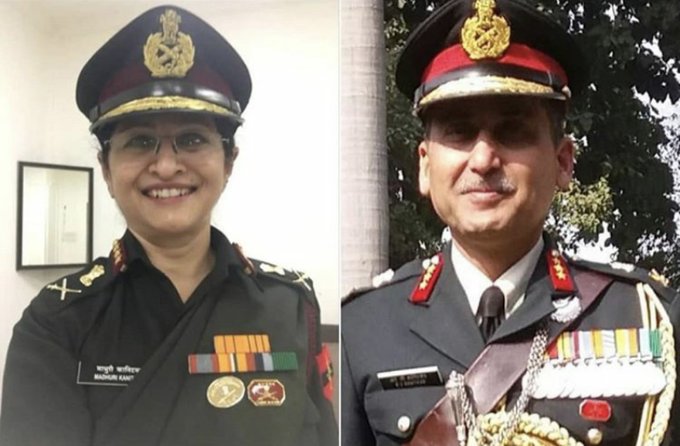
Madhuri Kanitkar becomes third woman to assume rank of lieutenant general

Madhuri Kanitkar becomes third woman to assume rank of lieutenant general

Tribune Web Desk
Chandigarh, March 3

Major General Madhuri Kanitkar became the third woman officer of the Indian Army to assume the coveted rank of lieutenant general, the second highest post in the force after she was promoted on Saturday.

She has reportedly served in the Army for 37 years. She was earlier the dean of Armed Forces Medical College Pune and has now been posted to Headquarters, Integrated Defence Staff under the Chief of Defence Staff (CDS) in Delhi.

ADG PI – INDIAN ARMY

@adgpi

Lt Gen Madhuri Kanitkar is the third woman officer of to assume the coveted rank of Lt Gen. Her is Lt Gen Rajeev Kanitkar (Retd). Couple is part of the Defence Fraternity.

View image on Twitter

Her husband is Lt Gen Rajeev Kanitkar (Retd). She and her husband will be the first couple in the armed forces to achieve the rank.

The first woman to hold the post of lieutenant general was Punita Arora, who was a surgeon vice-admiral and a former 3-star flag officer of the Indian Navy and the Indian Army.

Lieutenant General Padmavathy Bandopadhyay is the second woman to achieve this feat.


Balakot showed if one is skilful, escalation doesn’t always lead to war: Army chief

Balakot showed if one is skilful, escalation doesn’t always lead to war: Army chief

New Delhi, March 4

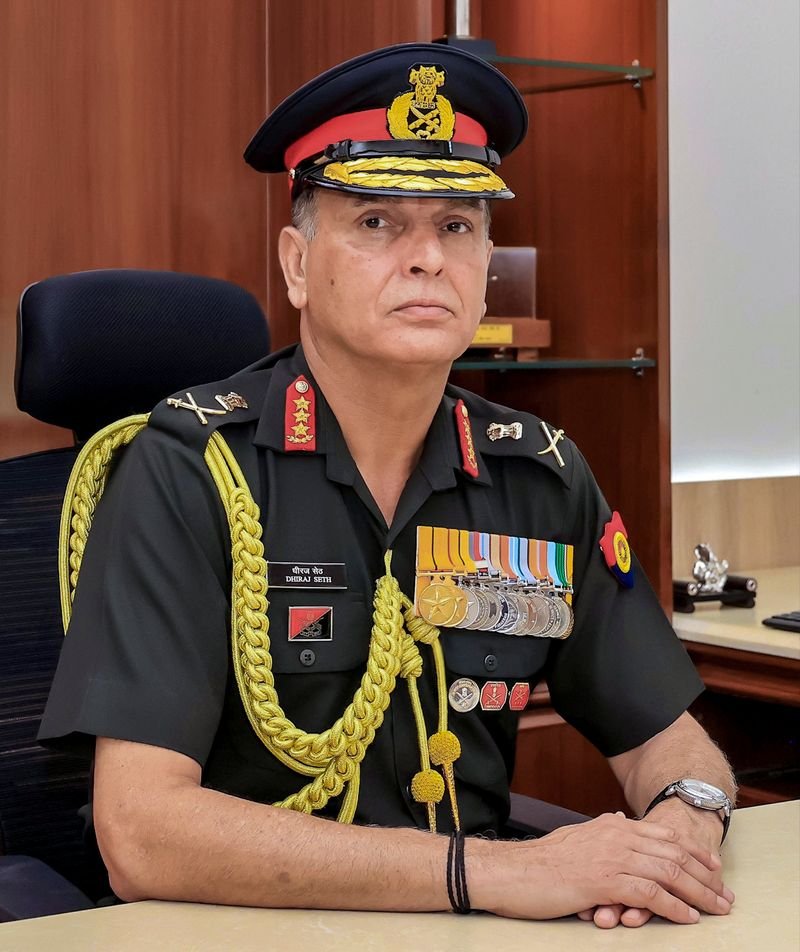
Army chief Gen MM Naravane on Wednesday said the Balakot strikes demonstrated that if one is skilful, escalation did not always lead to war.

Speaking at a seminar on land warfare, the General said the rise of non-state actors like terrorists demanded that victory in war is formulated in a nuanced manner.

Chinese dominance in South China Sea showed that small incremental steps achieved aim without firing a single shot, the Army chief said.

He said the ISIS is far more adept in using social media to devastating effect as compared to the 21st century armies of the US and the UK.

The General said warfare in ‘grey zone’ and its various nuances was receiving their considered attention.

Focusing on dynamic response, along the western and northern borders, is below the threshold of all-out war, the Army chief said. PTI


H Offshore patrol vessel ‘Varad’ commissioned


0A5853B3-4E65-46C8-94E3-D9A327F6D570

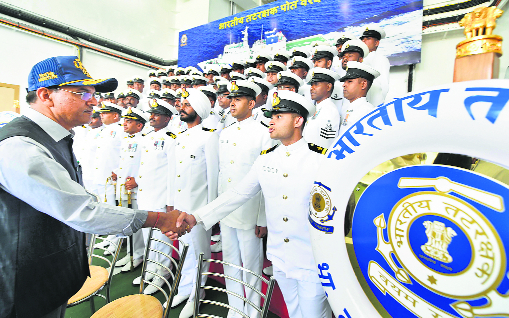
Enhancing Indian Coast Guard’s rescue and surveillance capabilities, its latest multi-mission offshore patrol vessel ‘Varad’, equipped with state-of-the-art navigation and communication equipment, was commissioned by Union Shipping Minister Mansukh Mandaviya here on Friday.

The 98-metre long craft, that can travel up to 10,000 km non-stop, is the fifth in the series of seven indigenously designed patrol vessels being built by the Larsen and Toubro Shipyard as part of the Centre’s Make in India programme.

The vessel, which can carry two engine light helicopters with night flying capabilities, also has four high-speed boats including two rigid hull inflatable boats for swift boarding operations, search and rescue, law enforcement and patrol, the Coast Guard said.

It was commissioned by Mandaviya in the presence of Coast Guard Director General K Natarajan, Chennai Port Trust Chairman P Raveendran and senior government officials at the Chennai Port.


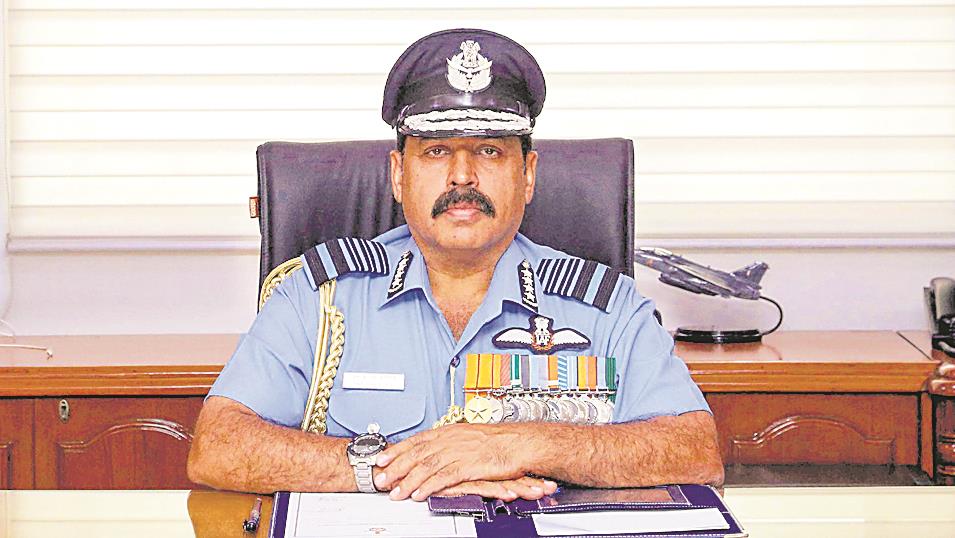
NATION Rafale alone not sufficient, says IAF Chief

B944FA46-F84A-49BA-86DE-5B27AF4A9897New Delhi, February 28

Indian Air Force Chief Air Chief Marshall RKS Bhadauria on Friday said the induction of 36 Rafale jets would not be sufficient to take care of the force’s requirements and the need of the hour was to focus on developing indigenous platforms. The IAF Chief was speaking at a seminar themed ‘Air power in no war no peace scenario,’ organised by the Centre for Air Power Studies.

Defence Minister Rajnath Singh and Chief of Defence Staff General Bipin Rawat also attended the seminar.

Stressing upon the importance of developing indigenous technology, Air Chief Marshal Bhaduria said, “The 36 Rafale jets will alone not provide us solution for the IAF’s need. We need to be able to use the indigenous Astra missile on the Su30s and across other fighter aircraft, like Mig-29, for better performance of air power.”

He said the Indian Air Force would be “very happy” if in the next air skirmish, weapons and missiles used by it are indigenously built. Rafale would need to be complimented with similar capabilities on other platforms, he said. — TNS