














Sanjha Morcha

What’s New

Click the heading to open detailed news

Current Events :

web counter

Print Media Reproduced Defence Related News

Set military reforms in motion Time to revisit the 2017 report recommending comprehensive changes

Set military reforms in motion

Unreal: Some requirements appear to be straight out of ‘Marvel comic books’.

Rahul Bedi

Senior journalist

To expedite military reforms, as suggested recently by Finance Minister Nirmala Sitharaman, in times of severe recession generated by Covid-19, the Ministry of Defence (MoD) could do well to dust off a three-year-old management and services expert committee report.

Submitted to the MoD in 2017, the 200-odd-page report had recommended the establishment of a semi-independent body to streamline and accelerate materiel procurements for India’s continually postponed military modernisation. Located away from New Delhi’s security zone, where access to officials is controlled, its overall control, however, would remain with the MoD.

The report had advocated the establishment of a Defence Capability Acquisition Authority (DCAA) to manage all aspects of defence equipment acquisitions for all three services. It envisaged the intended authority with around 900 members to work outside the MoD, which, for decades, has been plagued by time-consuming procurement procedures, internecine rivalries and corruption scandals.

Headed by Dr Pritam Singh, formerly of the IIM, Lucknow, the eight-member committee was instituted by the MoD in 2016, and included serving and retired two and three-star service officers, financial and technical experts. Over seven months, the committee interacted with materiel procurement officials from France, South Korea, the UK and the US as well as the Indian military, Integrated Defence Staff and the Indian Coast Guard. Specialists from local think tanks, industry associations and the state-run Defence Research and Development Organisation (DRDO), too, were consulted.

Thereafter, the committee suggested dividing the DCAA into seven ‘vertical’ units dealing with land, air, maritime, science and technology, industrial collaborations, and commercial and legal issues. It stressed the importance of integrated project management teams or assorted programmes with strict financial and completion deadlines to reduce dependency on imported materiel, and augment self-reliance.

In short, the authority would be an independent body manned by a cadre of technical and military professionals with domain knowledge, as well as accountability and flexibility to augment India’s military capabilities.

Most importantly, the DCAA would have overarching responsibility for all military procurements, including formulating qualitative requirements (QRs) for equipment, issuing requests for information (RfIs) and request for proposals (RfPs), overseeing trials, conducting price negotiations, and managing offset obligations. All such matters were presently handled or mishandled by a miasma of military and MoD departments, which either worked at cross-purposes, or not at all.

The prevailing procurement system directed by successive editions of the Defence Procurement Procedure (DPP) since 2002 is riddled with Byzantine processes, resulting in delays. The DPP-2020, for instance, that is to succeed DPP-2016, is under formulation. But the latter runs into over 700 pages, many of which in the draft version remain largely incomprehensible, bewilderingly interlacing civil and military bureaucratese.

The FM has stressed the formulation of ‘realistic’ general staff qualitative requirements (GSQRs) for desired equipment to fast-track procurements. It remains an open, but shameful secret that over the years, the services had impeded their modernisation by framing impracticable and poorly drafted GSQRs. In 2015, this had prompted then Defence Minister Manohar Parrikar to declare publicly that some of the military’s QRs appeared to be ‘out of Marvel comic books’ because the technologies and capabilities they specified were ‘absurd and unrealistic’.

The process of drawing up RfIs and RfPs is executed with limited knowledge and blinkered views, especially by the Army. Poorly conceived, formulated and drafted QRs create confusion and delays, resulting in the entire process either being aborted at an advanced stage or re-tendered, only to be terminated yet again.

In its report tabled in Parliament in 2012, the Defence Parliamentary Committee declared that 41 of the Army’s RfPs for diverse equipment had, in recent years, been withdrawn or terminated for varied reasons, included faulty GSQRs and stringent or overambitious GSQRs.

‘There are certain stages where exclusively the jurisdiction is with Service Headquarters’, the committee report declared, pinning responsibility on the Army. The MoD and attendant financial advisers, it stated, had no role whatsoever in framing weapon QRs, their responsibilities coming into play much later.

The report goes on to state that all Army GSQRs are formulated jointly by the Service Headquarters in consultation with the largely uniformed Directorate General Quality Assurance (DGQA), and, at times, with input from the DRDO. GSQRs are formulated in response to RfIs, ahead of issuing the RfP. All available literature on the proposed equipment is gathered and its multiple characteristics collated, with the aim of including as many features as possible to demonstrate the exhaustiveness of the task undertaken and the enthusiasm of the officer concerned.

As the draft travels up the chain of command, it gathers additional parameters, as each officer feels compelled to suggest supplementary accompaniments. Deletions are rarely effected and the final QR takes the shape of a well-compiled wish list of utopian dimensions, which in many instances, simply does not exist.

Space constraints do not countenance the long list of terminated tenders. In 2012, the then Army Chief Gen VK Singh had stated that military procurements were a ‘version of snakes and ladders, where there is no ladder, but only snakes’. He had further warned that if the snakes bite, the entire process comes back to zero.

Perhaps the current economic predicament can be an opportunity for ushering in realistic military reforms and foreclosing the possibility of notching a zero.


Court martial finds Colonel not guilty of molesting woman, GOC-in-C does not confirm verdict

As per Army Rules and Regulations, the findings of the court-martial are to be confirmed by the convening authority of the trial, which in this case, was the GOC-in-C Western Command, Lt Gen RP Singh.
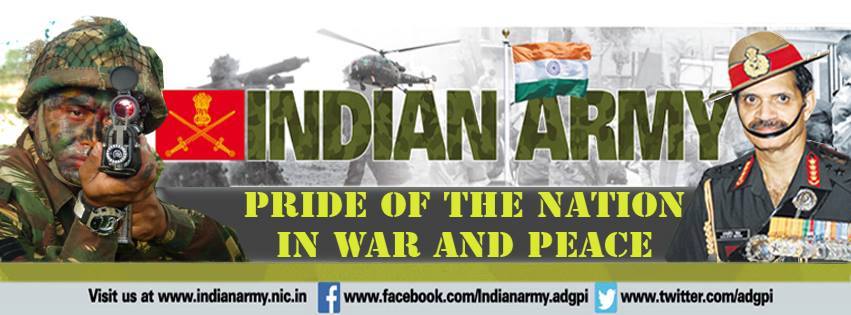
GOC-in-C Western Command, Meerut court-martial, Western Command Colonel court-martial, India news, Indian Express

With the GOC-in-C not confirming the verdict, the Army may now take administrative action against the Colonel, who retires next month.

A Colonel who has twice been found not guilty by a General Courts Martial (GCM) on the charges of outraging the modesty of a woman employee of the National Cadet Corps (NCC) now faces possible administrative action after the General Officer Commanding in Chief (GOC-in-C) of the Western Command did not confirm the verdict of the trial.

The court-martial in Meerut had found the Colonel not guilty of the charges levelled against him. However, the verdict was not accepted by the higher authorities and was sent back to the court for reconsideration. On the second instance too, the accused was found not guilty by the court-martial.

As per Army Rules and Regulations, the findings of the court-martial are to be confirmed by the convening authority of the trial, which in this case, was the GOC-in-C Western Command, Lt Gen RP Singh.

With the GOC-in-C not confirming the verdict, the Army may now take administrative action against the Colonel, who retires next month.

The case dates back to 2015 when a woman employee of NCC working in Delhi alleged that the Colonel held her hand when she was serving tea to him. He was tried under Section 69 of the Army Act read with Section 354 of the IPC. The officer had made counter-allegations in his defence saying that he had been made a scapegoat as the original target was a Colonel of the Judge Advocate General’s (JAG) branch who had been raising issues of impropriety in the Directorate General of NCC.

The officer had also levelled allegations in writing against a Brigadier of JAG branch stating that he had demanded Rs 5 Lakh bribe for getting him off the hook and on his refusal to pay the amount, had allegedly ensured that he faced court-martial.

Alleging that there was a tug-of-war between civilian officers of the NCC headquarters and Army officers, the Colonel had stated in his petition before Armed Forces Tribunal that one of the civilian officers, who was involved in the unsavoury turf battles and played a role in setting up the trap, has been made the head of the inquiry in his case. Misuse of government transport by the civilian officers, including the inquiry panel head, for commutation from residence to the office, and drawing privileges of a higher grade than what was authorised by her has also been alleged in the petition.

The Colonel had also levelled serious allegations in his petition about corrupt activities being covered up in Delhi’s NCC Headquarters on the behest of senior officers.

It is also learnt that the officer has now presented before the Western Command authorities that no reason has been provided to him of non-confirmation of the verdict. He has stated that the charge against him has tarnished his military character and reputation of his family permanently. He has asked for reasons to be provided to him for non-confirmation of the verdict so that he can challenge it in a court of law.


Defence production hit most: Rajnath

Defence production hit most: Rajnath

Tribune News Service

New Delhi, May 21

Defence Minister Rajnath Singh on Thursday said the manufacturing sector had been the worst-hit by the lockdown and the disruption in supply chains, and the defence sector was more aggravated than others as the only buyer of its products was the government.

Addressing a video conference on micro, small and medium enterprises (MSME) e-conclave, Singh said: “There are more than 8,000 MSMEs and partners of many organisations — ordnance factories, DPSUs and service organisations. They contribute more than 20 per cent of the total production of these organisations”.

The MoD, he said, had taken several steps for industries, especially MSMEs, such as extension of response dates of tenders and early clearance of pending payments. The definition of MSME has been revised for expansion. At the same time, there will be no distinction between manufacturing and services sector MSMEs.

In government contracts (procurements) of value Rs 200 crore or less, global tenders will not be allowed. This will help MSMEs to grow their business. In the event of being unable to participate in trade fairs due to Covid-19, e-market linkages will be ensured. The government and PSUs will also ensure the clearance of all outstanding payments in the next 45 days.


CDS Bipin Rawat to work on items for import ban, artillery guns could be included

FM Nirmala Sitharaman announced a slew of measures to boost ‘Make in India’ in defence sector, including raising the FDI limit in manufacturing to 74%

An M777 155mm lightweight field howitzer

An M777 155mm lightweight field howitzer | Gabriela Maj/Bloomberg
New Delhi: Chief of Defence Staff Gen. Bipin Rawat will soon initiate identification of weapons and platforms for an import ban as the Narendra Modi government Saturday announced a slew of measures to boost the ‘Make in India’ programme in the defence sector.

While raising the foreign direct investment (FDI) limit in defence manufacturing to 74 per cent from the current 49 per cent as part of the fourth tranche of the economic stimulus package, Finance Minister Nirmala Sitharaman said the government will notify a list of weapons and platforms for ban on import with year-wise timelines.

This is a first for the sector in India.

The FM also stressed that there would be indigenisation of imported spares and separate provisioning for domestic capital procurement.

The indigenisation of spare parts has been in the works for long. It was kickstarted by former defence minister Manohar Parrikar.

Calling these “structural reforms”, Sitharaman said these steps will reduce the huge defence import bill.

Last year, India ranked as the second biggest importer of defence equipment in the world. India was the top importer for over a decade but last year’s ranking did not take into account the slew of multi-billion-dollar deals — S-400 Triumf air defence system, lease of a nuclear submarine, manufacturing of frigates and AK 203 — signed between India and Russia in the last three years, deliveries of which are yet to start.

Sitharaman also said the Ordnance Factory Board (OFB) would be corporatised, but underlined that this was not privatisation. The OBF runs 41 factories across the country and its corporatisation has been under public discussion for some time.

The hike in FDI limit in defence manufacturing will come as a huge relief for foreign companies who have been consistently asking the Ministry of Defence (MoD) to give them the controlling stake in a joint venture.

The FM also announced a time-bound defence procurement process besides setting up of a Project Management Unit (PMU) to support contract management. She stressed setting up realistic demands for weapons and platforms that are intended to be purchased.

She also said the government has decided to overhaul trial and testing procedures.


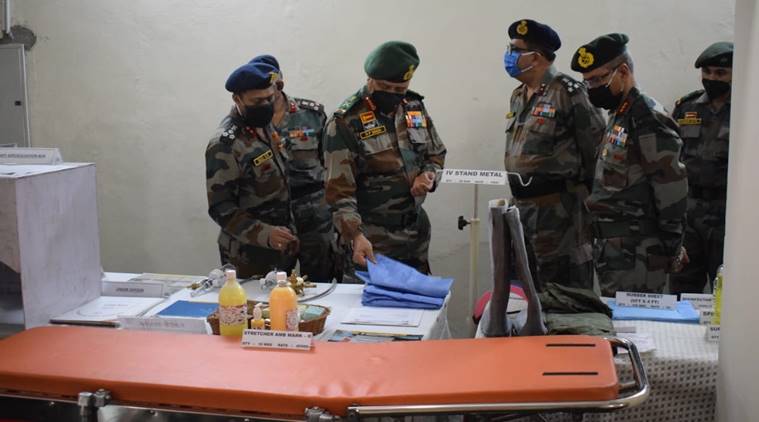
Army opens its Base Hospital for treating Delhi Police’s corona-infected personnel

The Army hospital was thrown open for the policemen after a request was made to the Army Headquarters by the Delhi Police.

COVID-19 Delhi, COVID-19 Delhi Outbreak, COVID-19 Delhi Lockdown, COVID-19 Delhi Cases, COVID-19 Delhi Deaths, COVID-19 Delhi Recovered, Army Base Hospital, Delhi Cantonment, Army Base Hospital Delhi Cantonment, Delhi Police, Army Base Hospital Delhi Police, Army Base Hospital Delhi Police COVID-19, Army Base Hospital Delhi COVID-19, Army Base Hospital COVID-19, GOC-in-C Western Command, Lt Gen RP Singh, Lt Gen VK Mishra, General Officer Commanding Delhi Area, Cariappa Parade Ground, Cariappa Parade Ground Quarantine Facility, Delhi News, Indian Express News

he Army’s Base Hospital in Delhi Cantonment has extended its medical facilities to Delhi Police after latter made a request for admitting Covid-19 positive cases in the force.

At present seven policemen are undergoing treatment at the Base Hospital. Senior Army officers informed The Indian Express that the Army hospital was thrown open for the policemen after a request was made to the Army Headquarters by the Delhi Police.

“There are adequate arrangements at the Base Hospital to combat Covid-19 and since Delhi Police asked for our help we have had no hesitation in taking in their personnel who have tested positive for coronavirus. Seven of them are currently under treatment”, said a senior Army officer.

On May 6, a Delhi Police constable died of coronavirus after he was allegedly turned away from two hospitals. There had been allegations that had he been given timely help, the constable, in his early 30s, would have survived.

It is learnt that following this incident the top brass of Delhi Police decided to enlist the help of the Army medical authorities in order to ensure that its personnel who are infected by the virus while discharging their duties are ensured best possible medical treatment.

The GOC-in-C Western Command, Lt Gen RP Singh, also visited the Base Hospital in Delhi earlier this week and took stock of the anti-Covid measures. He also inquired about the facilities, which are being provided to the police personnel and directed that all possible help must be provided to them.

The GOC-in-C also visited the Delhi Area headquarters and was briefed by Lt Gen VK Mishra, General Officer Commanding Delhi Area about the prevailing Covid-19 situation and assistance being provided to civil authorities including Delhi Police.

The Army Commander also visited the quarantine facilities set up by the Army at Cariappa Parade Ground in Delhi Cantonment.


Not bullets but explosives cause maximum injuries to Army personnel: Study

The study for the period 2014-19 has found that 80% of limb injuries were due to explosions caused by artillery shells and anti-personnel landmines.

An army armored vehicle at Pulwama district in south Kashmir on 18 February

Representative image of security personnel in Kashmir | ANI Photo
New Delhi: It is not bullets but explosives or fragmentation devices that contribute to the maximum number of injuries among soldiers involved in counter-insurgency operations, especially in Jammu and Kashmir, a study conducted by Army doctors has revealed.

Published in the latest issue of the Journal of Marine Medicine, the study on limb injuries shows that 80 per cent of such injuries, between 2014 and 2019, were due to explosions caused by artillery shells and anti-personnel landmines (APLM).

“From January 2014 to December 2019, we received 272 casualties, of which 166 (61.02 per cent) were with limb injuries”, said the study, Limb Injuries in Combat Trauma, compiled by Colonel Sanjay Maurya, Lt Colonel Vipin V. Nair, Colonel Onkar Singh and Lt Colonel S.K. Singh.

The analysis, however, is based only on 166 cases of injuries and not the fatal casualties. It is also from one tertiary care centre, which is likely to be the Command Hospital, Udhampur, in Jammu and Kashmir as the study has focussed on the western sector.

“Seventy-three (43.9 per cent) casualties had isolated upper limb injuries, 71 (42.77 per cent) had isolated lower limb injuries, and 22 (13.2 per cent) casualties had concomitant injuries,” the study said. “A total of 112 (67.4 per cent) injuries were caused by explosives or fragmentation devices, whereas 54 (32.5 per cent) were caused by bullets.”

It added that in most wars, fragmentation devices account for the majority of injuries. Fragmentation devices include IEDs, rocket-propelled grenades, mortar fire, APLM, and artillery shells.


Also read: CDS Bipin Rawat to work on items for import ban, artillery guns could be included


Artillery shells, landmines the worst offenders

The study also found that of the 112 injured, most had been hit by artillery shells or affected by landmines (APLMs).

“When we specified the explosive device, it was found that 80 per cent of these were caused by artillery shells and APLM,” the study said. “This high incidence is due to continuing hostilities across the Western border, where artillery shelling by the hostile nation is a constant feature.

“The movement of troops in the region of APLM during CI Ops also contributed to such high figures of landmine injuries. These findings can have implications for its administrative and logistic support for the military commanders,” the study added.

The study also underlined the importance of wearing body armour — bullet-proof jackets and helmets — which it said had improved the survivability of soldiers and the reason why 60 to 70 per cent of all injuries were recorded to hands and limbs.

The study itself is unique because it has for the first time evaluated limb injuries in a combat zone. It also demonstrates the grade of injuries, hospitalisation time, number of surgeries, and their correlation in the ongoing military operations by the Indian Armed Forces.

This study will be helpful for the Army commanders because it can form a basis of logistic and administrative support in providing quality combat trauma care and also focus on preventive aspects.


Gunfight between joint forces and militants rages in Srinagar city

Gunfight between joint forces and militants rages in Srinagar city

Tribune News Service

Srinagar, May 19

A gunfight has raged between joint forces and militants in old Srinagar city, police said.

The gunfight broke out in the wee hours when joint teams of police and CRPF launched a cordon and search operation in Kanemazar Nawakadal locality of downtown Srinagar after an input about militant presence.

“The operation was launched at around 2 am and the contact with militants was established immediately when the suspected area was being cordoned,” a police officer said. “The operation is underway.”

A policeman has been injured in the ongoing operation.

The authorities have suspended low speed mobile internet and the voice calling service of all operators except for BSNL has also been snapped in Srinagar district.


Online fraud: Retd Col loses Rs 50K

Online fraud: Retd Col loses Rs 50K

Panchkula: A retired Army officer (65) was reportedly duped of Rs50,000 after he received a fake call asking him to pay Rs1 to unlock his Paytm account. Col Nirmal Singh (retd), a resident of Sector 20, told the police that an amount of Rs50,000 was debited from his SBI account without prior authorisation from him. In his complaint, he said, “I received a call from an unknown number stating that my Paytm account had been blocked for verification of KYC. For unlocking, I was asked to pay Rs1 to my Paytm account from my bank account through a debit card. When I transferred Rs1, I realised that Rs49,990 had been debited from my account.” A case was registered under Section 420 of the IPC at the Sector 20 police station. TNS


HC upholds acquittal of Army man in rape case

HC upholds acquittal of Army man in rape case

Saurabh Malik

Tribune News Service

Chandigarh, May 21

The Punjab and Haryana High Court has upheld the acquittal of an Indian Army sepoy accused of raping the doctor wife of a lieutenant colonel. The prosecutrix had claimed that she was pregnant and had returned home from a visit to a hospital when the alleged incident occurred.

“Long silence regarding the alleged occurrence of prosecutrix and her husband, both of whom were well educated, creates doubt regarding the prosecution story,” the Bench of Justice Rajan Gupta and Justice Karamjit Singh observed.

The Bench also dismissed the prosecutrix’s application for grant of leave to appeal after terming it as “devoid of merit”. An FIR in the matter was registered for rape and criminal intimidation under Sections 376 and 506 of the IPC at Sujanpur police station in Pathankot against the sepoy. But Pathankot Additional Sessions Judge acquitted the accused after giving him the benefit of doubt in his judgment dated January 20, 2016.

In her complaint to the police lodged in February 2015, the prosecutrix had alleged that the incident had taken place in March 2014. She was pregnant and had gone to the hospital for medical check-up in her husband’s official vehicle driven by the accused. He followed her inside the house while carrying a bag of groceries before the incident occurred.

The Bench asserted the explanations put forth by the prosecution regarding delay in lodging the FIR did not appeal to the mind of the court.

The prosecutrix claimed she disclosed the alleged incident to her husband in January 2015. Even her husband stated the same. But the doctor treating her admitted that the husband of prosecutrix informed him about the incident in November 2014.

The Bench asserted it was not clear why the prosecutrix and her husband did not report the alleged incident dated March 4, 2014, to the police till February 2, 2015. The prosecutrix, while appearing in the witness box, admitted she kept accompanying the accused in the official vehicle to the hospital for her medical check-up during the next 15 days.


Manali-Leh highway reopens after 5 months Route is strategic for movement of armed forces

Manali-Leh highway reopens after 5 months

he Manali-Leh highway winds its way through the Rohtang Pass (13,050 feet), Baralacha Pass (16,020 feet), Lachlungla Pass (16,620 feet) and Tanglangla (17,480 feet). PTI file

Tribune News Service

Mandi, May 18

The Border Roads Organisation (BRO) opened Manali-Leh highway on Monday for vehicular movement. The BRO had started snow-clearance work on the strategically important road in February.

The road is used to supply essential material to the Army in the border areas of Ladakh, close to China border.

Despite acute shortage of labourers due to Covid-19 pandemic, the BRO, in comparison to the previous years, has cleared the road much earlier this year.

According to Deputy Commissioner, Lahaul Spiti, KK Saroch, a BRO team has moved ahead from the Baralacha Pass from Lahaul side and another team of the organisation is moving towards Lahaul Spiti from the Leh side to connect the Baralacha Pass for traffic movement.

Saroch though said, “The final confirmation of the restoration of road from the BRO is still awaited.”

Meanwhile, IANS quoted a BRO official as saying, “Traffic between Manali and Leh was resumed. This time it was reopened much earlier.”

The official said the snow was 30-35 feet high in some stretches close to the Baralacha Pass, posing a big challenge to those clearing the snow.

The work to repair the entire 475-km stretch, which links the Himachal Pradesh tourist city with Leh in Jammu and Kashmir, was completed.

The Manali-Leh highway winds its way through the Rohtang Pass (13,050 feet), Baralacha Pass (16,020 feet), Lachlungla Pass (16,620 feet) and Tanglangla (17,480 feet). – With inputs from IANS