



Sanjha Morcha

What’s New

Click the heading to open detailed news

Current Events :

web counter

Print Media Reproduced Defence Related News

44 per cent hike in budget for CAPF building projects, but outlay for modernisation plummets

A 44 per cent hike has been made in the allocations for building projects for the Central Armed Police Forces (CAPFs) and Central Police Organisations in the union budget for the 2026-27 fiscal that was presented on Sunday.

On the other hand, the budgetary provisions for the development and maintenance of border infrastructure have seen only a marginal hike of about three percent, whereas allocations for the modernisation of CAFPs have dipped sharply by over 40 percent.

The Finance Minister, Nirmala Sitharaman, has proposed Rs 5,393.37 crore for CAPF building projects in 2026-27 compared to the revised estimates of Rs 3684.23 crore for the 2025-26 fiscal. The actual expenditure for 2024-25 was Rs 2133.18 crore, according to data contained in the budget documents.

The building projects for the CAPFs, which include the National Security Guard, Assam Rifles, Border Security Force, Indo-Tibetan Border Police, Shashtra Seema Bal, Central reserve Police Force and the Central Industrial Security Force, focus on constructing office accommodation, residential units, barracks, hospitals and allied facilities for providing better service conditions and amenities to their personnel and families.

The Ministry of Home Affairs has granted the status of Public Works Organisation (PWO) to the engineering wings of the CAPFs so that they can undertake and expedite their own infrastructure construction requirements.

Earlier, they had to utilise the services of central and state Public Works Departments, which were already over-burdened with work and also led to procedural delays. Financial limits have been laid for construction projects and repair works that CAPFs can execute under delegated powers to be exercised by stipulated technical officers.

The construction requirements of the CAPFs are diverse and widespread, mostly in remote areas. These forces have a significant presence in high altitude and inhospitable terrain, where construction of infrastructure is difficult. As far as border infrastructure and management is concerned, the proposed allocation for 2026-27 is Rs 5576.51 crore.

This includes a capital outlay of Rs 5,266.51 crore and a revenue expenditure of Rs 310 crore for maintenance and border check posts. The total revised estimates in 2026-27 were Rs 5,472.31 crore, whereas the actual expenditure for 2024-25 was Rs 3,953.84 crore.

The allocation for modernisation for CAPFs under Plan-IV has dropped from the revised estimates of Rs 610.79 crore in 2025-26 to Rs 343.66 crore for 2025-26. The plan, when conceived, covered the period from February 2022 to March 2026 for upgrading their operational capabilities and making them more tech-savvy.

Budget red alert for the middle class

THE most interesting data points from the Union Budget 2026-27, hidden in plain sight, are the income tax (I-T) collection numbers. Last year, the government expected to collect about Rs 14.4 lakh crore in ‘taxes on income’. Some, including me, had argued back then that this was an overly optimistic projection, given that the Finance Minister had raised the I-T thresholds and the number of I-T payers would fall sharply because of that. The counterargument given by others was that India’s economy was on the verge of a revival, and that would lead to big salary hikes, and push more people across the income tax threshold.

As it turns out, we were right. The revised estimate for I-T collections for 2025-26 is now just Rs 13.1 lakh crore. That’s about 9 per cent less than what the Budget had estimated. More importantly, I-T collections grew by just 6.2 per cent in this fiscal year, compared to 2024-25. Compare that to the 18.2 per cent and 25.4 per cent growth seen in the previous two financial years. This is especially significant when we compare it to nominal GDP growth. In 2025-26, I-T collections underperformed nominal GDP by 1.8 percentage points. In 2024-25, I-T collections outperformed nominal GDP growth by 8.4 percentage points, and in 2023-24, the growth in I-T collections was a whopping 13.3 percentage points higher than nominal GDP growth.

You don’t need a clearer piece of evidence to show that India’s upper middle class is in deep trouble. Let me break this down a little more. I am going to assume that those with a pre-tax monthly income between Rs 1.5 lakh and Rs 3.5 lakh are ‘upper middle class’. The bulk of these people would be middle managers in the corporate sector, while some would be self-employed professionals. They account for roughly 9 per cent of those who file income tax returns and contribute about 35 per cent of the total I-T collections.

Above them come the affluent, the rich and the super rich. These include senior managers, especially those in the C-suite, top-level lawyers, doctors and other professionals, startup founders and big entrepreneurs. They make up just 1.5 per cent of those who file tax returns, but account for over 50 per cent of the income tax collected by the Centre.

Now, all jobs and recruitment surveys and reports tell us that 2025 has been a great year for top honchos in India Inc, and also for people running startups. This means they must have paid much higher income tax than they did last year. Despite this, if the total income tax collections have increased by just 6.2 per cent, it can only mean that the ‘upper middle class’ taxpayers have paid less tax than in 2024-25. This only adds to what we know anecdotally, that thousands of middle managers in India have lost their jobs, or taken pay cuts to survive.

That we are in the middle of a massive consumption downcycle is also evident from the sluggish growth in GST collections. One reason, of course, is that GST rates have been slashed sharply in the middle of 2025-26. But even if we take just the April-September period and compare it to the previous year, the growth in GST collections was less than 6 per cent. This again, is well below the average 8.8 per cent nominal GDP growth in the first two quarters of 2025-26. So, the tax data confirms what some of us have been saying — India’s upper middle class is not only earning less, it is also spending less than ever before.

On the other side, the same tax data proves that India’s corporate sector is doing extremely well. ‘Corporation tax’ collections beat the budgetary estimates — the government expected to collect Rs 10.8 lakh crore in 2025-26, but is likely to get Rs 11.1 lakh crore instead. That means corporate tax collections increased by 12.3 per cent compared to 2024-25, which is more than 1.5 times the growth in nominal GDP. In other words, corporates are getting a larger share of our national income, while the upper middle class is getting a smaller chunk.

Despite this, the government expects income tax payers to continue to contribute more to the exchequer than the corporate sector. Corporate taxes are projected to account for 28 per cent of the next financial year’s tax revenues, while income tax is estimated to be a little more than 33 per cent. This can only happen if there’s a massive revival in white-collar jobs and salaries in 2026-27. All evidence points to the contrary — AI is likely to cause even more middle manager layoffs this year than 2025.

In fact, if the government expects income tax revenues to rise, it should also expect a revival of middle-class consumption. If that were the case, GST collections should also rise, because the increased volumes would offset the reduction in GST rates. Yet, the budgetary estimate for the next financial year is that GST collections will actually fall by 3 per cent in 2026-27 compared to this fiscal. So, the government’s own indirect tax estimates seem to contradict its income tax projections.

The Budget happens to be a political document. Every incumbent government uses it as a fiscal tool to win elections. The Modi government is no different. Its expenditure is directed towards those who make up the electoral numbers and those who can finance electoral campaigns. Therefore, the poor are going to continue to get subsidised food, some amount of guaranteed work, and financial aid to build homes.

On the other side, India Inc will continue to get tax subsidies and lucrative infrastructure projects — including the new tax sops for building data centres. Government contracts will keep India’s corporate sector insulated from the decline in consumption demand that will be caused by a fall in upper-middle-class incomes.

Meanwhile, the middle class will stay locked up in gated housing complexes and WhatsApp groups. No wonder governments don’t take it seriously.


‘Hero of Manipay’, who dealt repeated blows to militants

During the first phase of the Indian Peace Keeping Force (IPKF) operations in Sri Lanka in October 1987, 5/1 GR was among the first Indian battalions to be launched into action. During one such operation, while confronting militants’ firing with automatic weapons from built-up areas, Subedar Bhagwan Singh Rana went way beyond the call of duty and earned Vir Chakra.

Remembering those historic days, Subedar Rana told The Tribune, “After remaining posted in NEFA, Bangaldesh and Poonch, the unit was ordered to move to Gwalior. The very next day we were airlifted to Sri Lanka and just on the arrival were welcomed by heavy gunshots from the LTTE militants.”

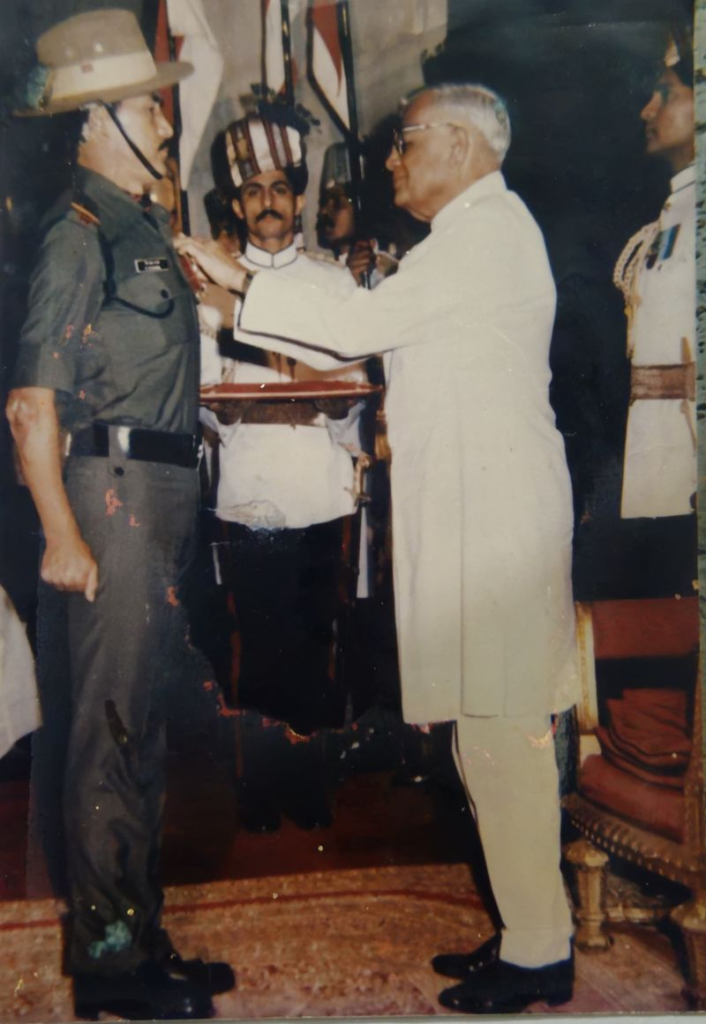
Subedar Bhagwan Singh Rana (right) receives Vir Chakra from R Venkataraman, the then President. file

The battle account on Rana’s bravery reads, “During the Peace Keeping Mission in Sri Lanka starting in the middle of October 1987, Subedar Bhagwan Singh Rana was doing the duties of Platoon Commander of ‘A’ Company of 5/1 GR. During all cordon and search operations, including some hand-to-hand fights, with Tamil guerrillas, he displayed exemplary courage and always led from the front. The JCO was seriously wounded on October 20, 1987 during action but refused to be evacuated. He again showed courage and qualities of good leadership on November 8 while leading the advance to Manipay ahead of his platoon to assault and neutralise the Tamil guerrillas firing positions time and again. Again, on November 9, 1987, while leading his platoon during a house-to-house search to flush out the militants, the operation was held up due to heavy and accurate fire from the houses in the neighbouring locality. At that critical moment, Subedar Rana, undeterred, rallied his forward section and on the cry “Jai Mahakali – Aayo Gorkhali”, led the Gorkha charge on the houses where from the fire was coming.”

“During the operation, Subedar Bhagwan Singh Rana displayed exemplary leadership and outstanding personal gallantry for which he was awarded the Vir Chakra,” the citation adds.

Subedar Bhagwan Singh Rana, son of Juthe Rana, a soldier himself, was born in 1947 at Totarani village, Dharamsala Cantt, in Kangra district. After getting elementary education at Government School Forsythganj, Rana was enrolled into the Gorkha Rifles on April 27, 1964. After recruit training, he joined the newly raised 5th Battalion of the 1st Gorkha Rifles, commonly referred to as 5/1 GR. Rana got married to Kamlesh Kumari in 1978. Now 78, Rana lives with his family at Dari near Dharamsala.

He rose to the rank of Subedar Major and retired from the active service with the rank of Honorary Captain after serving the Army as a decorated soldier for almost three decades.


IAF helicopter airlifts paralysed woman from Himachal’s Dhanderwari amid snowfall

The life-saving mission was completed amid low visibility, says IAF

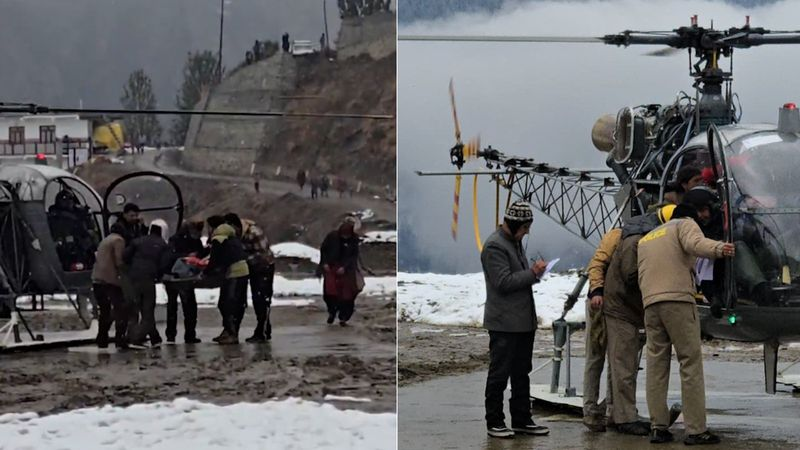
An Indian Air Force helicopter undertook an urgent medical evacuation of an 85-year-old woman suffering paralysis from a village in Himachal Pradesh located at a height of 9,000 feet after snowfall had blocked all roads.

The life-saving mission was completed amid snowfall and low visibility, the IAF said in a post on X, while adding that the woman is stable after receiving timely medical assistance.

A video was also shared by the IAF on X, which showed the woman being carried on a stretcher amid snowfall before being boarded onto the chopper.

“An IAF Cheetah helicopter undertook an urgent medical evacuation of an 85-year-old paralysed woman from Dhanderwari, Himachal Pradesh (9,000 ft Above Mean Sea Level) to Chandigarh. This was after snowfall blocked all roads,” the IAF said in a post on X Sunday evening.

Notably, Himachal Pradesh on Sunday witnessed light snow along with rain.

Shillaroo in Shimla district and Kothi in Kullu district witnessed 5 cm of snow, while Kufri received 4 cm of snow.

Similarly, the Gondhla village in Lahaul and Spiti witnessed 3 cm of snow, Khadrala in Shimla 2.5 cm, Sangla in Kinnaur 2.1 cm and Kalpa 0.8 cm.


All ESM are requested to note down the below points and keep with your pension documents

All ESM are requested to note down the below points and keep with your pension documents. We never think about our ultimate destinaion of the life. But it is the only truth that one day we have to leave this beautiful. Before the day come, we must educate our family members about the process to be followed after our last breath as, in civil, no one can help you in military matter. Reslting, your family may not get the entitled pension and other financial support as applicable to them.

These must be known to our family members.

STEPS TO BE TAKEN BY WIDOW AFTER DEATH OF HUSBAND (ESM).


Step-1: Collect Medical Certificate from Hospital/ Authorised Doctor, in which “Cause of Death” is clearly written.

Note: In case of Unnatural death (Suicide orAccident), then you have to collect copies of Medical Report, Postmortem Report, FIR, Police Investigation Report when possible.

Step-2: Decide place and date of funeral/cremation. Inform relatives.

Step-3: Inform nearest Army/Navy/Air Force Stations regarding Funeral. A contingent will be sent from military base to pay last respect and lay wreath on the dead body.

(a) Army: Call 1904 to get connect to nearest Army Stn.

(b) Navy: Call CRSO, INS Netaji (Kolkata) on 033-22314965. Or INS NETAJI EXO on 03322221400.

(c) Air Force: Call nearest AF Stn (AF Stn Barrackpore No 033-25933917).

Step-4: Complete funeral, collect Cremation Certificate and Apply for Death Certificate (DC) within 15 days of Death at the Registrar of Births & Deaths Office.

Step-5: Collect 10/15 copies of the Death Certificate.

Step-6: Intimate Death in SPARSH Website and upload DC.

Step-7: If widow’s name is written in the SPARSH PPO of ESM, then apply online in SPARSH Website to START Family Pension for the Widow.

Step-8: If Pension is NOT transferred to SPARSH, apply to Pension paying Bank to STOP Service Pension of deceased ESM. Submit Death Certificate.

Step-9: If Widow’s name is written in PPO, then it is called jointly Notified (JN-PPO) but NOT migrated to SPARSH, then apply to your Bank to START Family Pension (FP) of Widow. Submit copies of DC, PPO, Widow’s Adhaar Card, PAN Copy, 2XPassport Size Photos, Life Certificate and Bank Passbook.

Step-10: If widow starts getting FP, then submit FORM-A to bank to NOMINATE someone, who will withdraw balance amount from account after widow’s death.

Step-11: If Widow’s Name is NOT Jointly Notified (Name not mentioned in ESM’s PPO), then widow should visit ZSB to apply for Family Pension.

Step-12: Apply online for Widow’s ID Card and then submit Offline Application and all required documents in a folder at ZSB for Widow ID Card. Please Return ID Card of deceased ESM and Dependent I Card of Wife (if issued) to .

Step-13: If wife has already expired before, then submit the ESM’s ID Card with Death certificate.

Step-14: Apply for Widow I Card at ZSB, Widow will get ID Card if her name is in JN-PPO.

Step-15: Death Intimation required to be sent to Record Office through ZSB. AF Widow/NoK may send through AF Association also.

Step-16: Apply for Funeral Grant or Demise Grant or Garima Grant or ADLR (Assured Decent Last Rites)” to respective offices.

(a) Army ADLR Msg for Rs 17,000/- and Form – 06/02/2023.

(b) Navy ADLR Msg for Rs 20,000/- and Form – 08/02/2023.

(c) Air Force Garima Grant for Rs 15,000/- and From – 07/02/2023.

Step-17: Send Insurance Claim to AGI/ NGI/ AFGIS, (if applicable) through ZSB

(a) Army: Extended Army Group Insurance Claim from AGI – 05/12/2023.

(b) Navy :

(c) Air Force: Insurance Claim from AFGIS – 29/11/2023.

Step-18: Air Force widows to apply for Family Assistance Scheme (FAS) from IAFBA through ZSB. You will get ₹1500-2800/- pm for 8yrs or lump sum amount Rs 10,000/ or Rs 20,000/- one time for old retirees, depending upon, which scheme is eligible

Step-19: All Army, Naval and IAF Widows may apply for Children Education Grants from DIAV, INBA and IAFBA respectively, if applicable.

(a) Army:

(b) Navy:

(c) Air Force:

Step-20: Widows may apply for Children Education Grant / PMSS etc online at KSB website.

Step-21: Army Widows may apply for financial grants from Regimental Funds/Association etc. Widows from Artillery Corps will get ₹20,000/- from RAA (Regimental Artillery Associations). Apply to your Record Office through ZSB.

Step-22: STOP ECHS 64 KB Smart Card of deceased ESM. Block the ECHS Card online in ECHS website or Deposit to the affiliated ECHS Office of Army Stn HQ and take receipt. ECHS Cards for wife and other dependents will continue to be active.

Step-23: Apply for CSD (both Grocery and Liquor) Cards for Widow at nearest CSD Canteen Office. When cards are received, return both CSD Cards of ESM at CSD.

Step-24: Return ID Card, if issued by the Last Unit or Service HQ / Formation to the ESM at the Army Stn HQ

Step-25: Apply to Bank and Post Office to close all Single Accounts including all Fixed Deposits in the name of Deceased ESM and transfer amount into nominee’s A/c. All joint accounts should be converted into single accounts.

Step-26: Claim for other Insurance Amount from LIC / PM’s Insurance scheme /Others, if applicable.

Step-27: Intimate Assessment Officer of Income Tax Circle of ESM, about the death of ESM. Apply to IT department to surrender the PAN Number after four years.

Step-28: Visit Adhaar Card office or go to UIDAI website to Digitally Lock the Biometrics of deceased ESM Adhaar Number, to prevent misuse in future.

Step-29: Transfer all Equity shares / Mutual Funds / SIPs etc, in the name of ESM to the nominee’s name and close his DEMAT A/c, if any.

Step-30: Visit nearest Road Transport Office (RTO) to surrender Driving License of ESM, if valid and available. Also, apply to RTO to transfer ownership of two/four-wheeler vehicle on nominee’s name.

Step-31: Visit local Election Office and apply to cancel expired ESM’s name from Voter’s List by submitting Form No. 7 and Death Certificate.

Step-32: If there is any loan pending on ESM’s name, same should be liquidated and account closed.

Step-33: Transfer ownership of Gun / weapon after getting gun license by the nominee of anyone in the family. Deposit the gun in Police Stn custody till then.

Step-34: If there is any police case or court case pending against the deceased ESM, then submit Death Certificate to Police Stn / Court.

Step-35: Transfer ownership of properties in the name of nominees or in the name of Joint Holder. If property is not jointly held then, Legal Heir Certificate is to be produced for transfer of ownership of properties.

Step-36: Apply for transfer of Electric Meter of House/Flat, Property Tax papers, Society Office, Cable TV, Broad Band etc.

Step-37: If ESM had worked in another organization, after military Service, then contact that office for Family Pension, if applicable.

Step-38: Widow may apply for job in Army (Stn HQ) or to the second job office.

Step-39: Widow may apply for Dependent ID Cards at ZSB for her children if eligible.

Step-40: Claim insurance from Banks if there is FD linked insurance given by Bank.

ALL ESM ARE ADVISED TO PREPARE DETAILED WRITTEN STEP BY STEP CHECK LIST FOR HIS WIFE/NOK, TO FOLLOW AFTER HIS DEATH, SO THAT WIDOW DOES NOT FACE ANY PROBLEM AFTER DEMISE OF THE ESM.


China’s anti-corruption machine tightens its grip

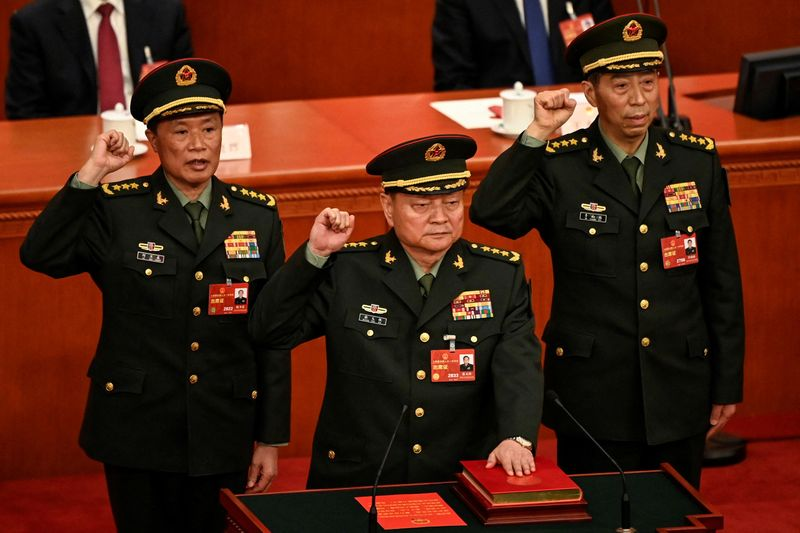
GEN Zhang Youxia, first-ranked Vice-Chairman of China’s Central Military Commission and its senior-most general, has been placed under investigation for “serious violations of discipline and law”, along with another member, Gen Liu Zhenli. This leaves the commission with just two members — its civilian Chairman Xi Jinping and the second-ranked Vice-Chairman, Gen Zhang Shengmin, who is also in charge of anti-corruption in the People’s Liberation Army (PLA). The senior Zhang was seen as a close family friend and ally of Xi and was retained in his position at the 20th Party Congress in 2022 despite having reached the retirement age. As speculation swirls about the reasons for his removal and about the implications for the PLA’s operational abilities, it is important to understand the evolving nature of Xi’s long-running anti-corruption campaign in order to make sense of the latest developments.

The Communist Party of China’s (CPC) anti-corruption watchdog, the Central Commission for Discipline Inspection (CCDI), held its fifth plenary meeting from January 12 to 14, 2026. The meeting was attended by the senior leadership of the CPC, including its military leadership, comprising both Gen Zhang Youxia and Gen Liu.

The main message from the meeting was that the anti-corruption campaign would be carried out even more intensely. Xi Jinping’s speech at the plenum conveyed the message through the new political slogan of “three mores”: to more resolutely and forcefully implement decisions of the central committee, to more scientifically and effectively cage power and to more firmly fight against corruption.

A decade-old campaign has evolved into a mechanism to tackle the persistent problems arising from the lack of political reforms of the CPC’s Leninist organisational structure and, thus, its scope and utility have grown beyond merely targeting Xi’s opponents.

Shifting forms

Few campaigns have persisted for so long in the CPC’s 100-plus years of existence. The anti-corruption campaign launched in 2012 was expected to gradually lose steam. Instead, it has been institutionalised with sufficient flexibility to tackle new, emergent forms of corruption and its persistence is reflected in consistently higher numbers of senior cadres and lower-level officials coming under the CCDI’s radar. The number of cases, in fact, rises in the run-up to the CPC’s Party Congress held every five years.

However, the campaign is no longer dominated by Xi Jinping’s efforts to consolidate and centralise power. It is evolving in its mechanisms and tactics to respond to the shifting forms and nature of corruption and becoming a part of the governance mechanism of the CPC. As a governance tool, anti-corruption campaigns help enforce the central leadership’s vision and key decisions, polish the CPC’s image among the population and the party leadership’s relationship with its members and cadre. With the next Party Congress due in late 2027, the next two years are likely to see an intensification of the campaign.

One, the selection of leadership at local levels (county-level upwards) will begin this year, starting the process for selecting the delegates to the Congress. This process, aimed at “promoting truly loyal, reliable, consistent, and responsible good cadres” is likely to be accompanied by an intense anti-corruption campaign, as was the case in the lead-up to the 19th Party Congress in 2017 and the 20th one in 2022.

Two, given the consistently high number of corruption cases, it is evident that corruption remains endemic to the CPC. At the same time, even as financial corruption and violations of the party’s regulations and conduct remain a focus, one of the major concerns is the implementation of central decisions at the local level.

As a vast and diverse country, the central leadership faces the problems of implementing its policies on the ground. As economic troubles persist and Xi approaches the end of his third term, the CCDI has expanded the scope of ‘corruption’ to encompass disobedience or failing to implement central policies. For a Leninist party such as the CPC, the disciplinary machinery is key, even for regular policy implementation and unifying the thinking across the hierarchy.

Three, while the CPC has innovated in terms of its tools and tactics, officials have been no less innovative in changing their methods and channels for corruption. While the “eight regulations” aimed at rooting out extravagance and correcting official conduct implemented since 2012 remain at the core of the campaign and these have been backed up by regulations targeting different avenues facilitating corrupt behaviour, newer forms of corruption keep emerging.

One such mechanism under increasing scrutiny is “family-style corruption” or, simply, using family members as cover to seek illicit gains — a form quite familiar in India. Difficult to detect, this form of corruption takes a heavy toll on the CPC’s image and functioning, especially at local levels.

Xi’s ‘continuous revolution’

Twelve years on and with thousands of cadres having fallen, the anti-corruption campaign has become Xi Jinping’s version of the Maoist idea of “continuous revolution”.

For Mao Zedong, the idea was to root out problems arising from what he perceived was the bureaucratisation of the CPC as a governing party. Xi, by contrast, sees bureaucratisation as a key remedy with anti-corruption as a tool to cure the problems arising out of the CPC’s Leninist top-down organisational structure. In its second decade, the campaign is thus aimed at curing organisational issues rather than simply targeting deviations by individual officials.

In the absence of political reforms, the objective of “putting power in the cage of rules” demands a continuously innovating anti-corruption campaign to handle ever-changing forms of corruption and innovation by cadres to evade the powerful CCDI. Xi’s own version of “continuous revolution” will continue even amidst rising economic troubles at home and external pressures.

Gen Zhang Youxia’s fall suggests that no sector of the party-state apparatus — whether civilian or military — and no official, however high or close to Xi, will be spared.


ITBP seeks 564 bolt-action sniper rifles for long-range strikes

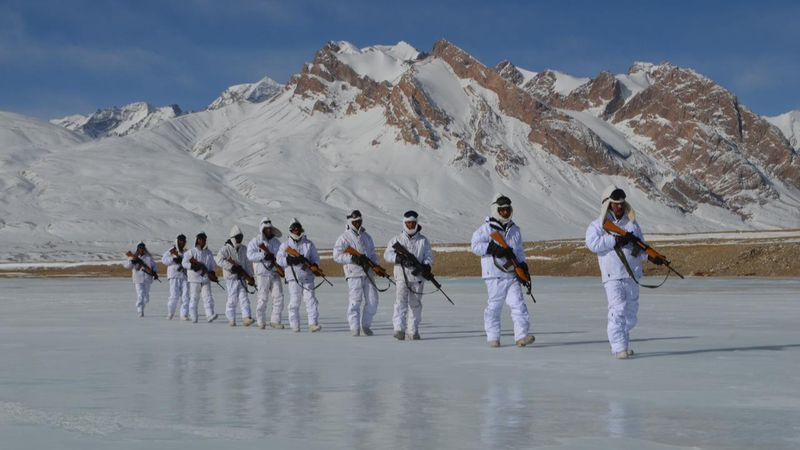
To enhance its operational capability and improve long-range engagement, the Indo-Tibetan Border Police Force (ITBP) has sought 564 new sniper rifles with greater firepower than its current inventory.

The border guarding force, mandated for the management of the Himalayan frontier with China, has projected a requirement of 564 bolt-action sniper rifles. These would be of 8.6 mm caliber with an effective range of over 1,200 meters.

At present, the ITBP primarily uses the legacy Austrian 7.62 mm Styer SSG – 69 for sniping that has been in service for decades. These have a range of about 800 meters.

Though the larger caliber weapon tends to be heavier and more expensive, it offers significantly greater range, kinetic energy, and wind resistance, according to defence experts.

A modern 8.6 mm sniper rifle, along with a telescope and accessories, costs between Rs 8 and 9 lakh apiece. The ITBP, according to sources, has estimated an expenditure of Rs 45-50 crore on the new sniper rifles, depending upon the model, final price negotiation, and other components of the deal, including ammunition, tools, spares, etc.

There are several models of the 8.6 mm or the equivalent .338-inch sniper rifles available in the international as well as domestic market, which can meet the ITBP’s requirements in terms of range and operational environment in high altitude, rugged terrain, and cold weather.

Besides, foreign vendors, two India-based private firms are also marketing 8.7 mm or .338-inch sniper rifles. These are the Saber.338 Lapua Magnum made in Bengaluru and the CSR 338 made in Hyderabad.

The 8.6 mm caliber is already in use with some forces in India, in addition to the traditional 7.62 mm. The Army has inducted the Finnish Sako TRG-42 and the Italian Beretta Scorpio TGT, while the National Security Guard uses the US Barrett Model 98B. Last year, the Central Reserve Police Force procured 200 indigenously manufactured .338-inch sniper rifles from a Hyderabad firm.

Snipers are considered to be force multipliers, and many armies attach a great deal of importance to the role of snipers in the field. They require a very high degree of training, enormous levels of patience, and ultra-fast reactions.

A single well-placed sniper can neutralise a high-value target or pin down a body of enemy troops for a considerable length of time. Much of a sniper’s work involves observation, surveillance, and intelligence gathering.


‘Battle of Pul Kanjri’ — an enduring tale of Sikh Regiment valour

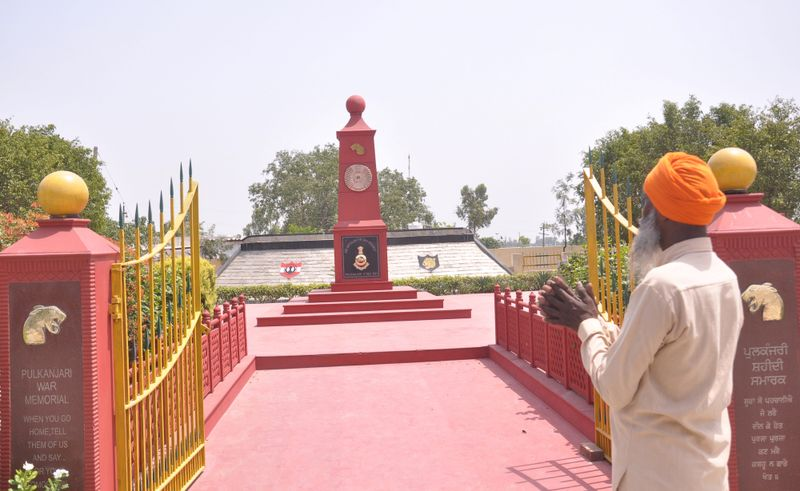
The border village of Pul Moran, popularly known as Pul Kanjri, is not only associated with its rich historical past, but also carries an important chapter from the 1971 Indo-Pak war. Just days after the village was occupied by the Pakistan army during the conflict, the Indian Army’s 2 Sikh Regiment carried out a courageous counter-offensive to recapture the village, a battle that has since become an enduring tale of bravery in the region.

In memory of the soldiers who laid down their lives during this operation, the Army constructed a memorial which continues to inspire future generations. Known as the Pul Kanjri War Memorial, the site honours the sacrifice of 10 soldiers of the 2 Sikh Regiment. Among them, one soldier was posthumously awarded the Maha Vir Chakra and another the Vir Chakra for exceptional gallantry.

Following the withdrawal of the Indian forces from the border post on December 4, 1971, the Pakistan Army took control of Pul Moran village. A few days later, Lt-Col SC Puri took the strategic decision to recapture the Pul Moran border outpost (BOP), which falls under the jurisdiction of Pucca Dhanoan. Under the leadership of Major NS Koak, a contingent of 40 soldiers from the 2 Sikh Regiment launched a fierce and determined assault. On December 17, the troops successfully regained control of the BOP after intense fighting.

According to the inscription on the memorial plaque, the engagement, recorded in military history as the ‘Battle of Pul Kanjri’, resulted in the martyrdom of one Junior Commissioned Officer and nine other ranks. The enemy launched a four-pronged attack, which was effectively repulsed by the Indian troops. The Pakistan army suffered heavy casualties, with one officer and 10 soldiers taken as prisoners of war. A large cache of arms and ammunition was also seized during the operation.

The martyrs honoured at the memorial include Lance Naik Shangara Singh of Chola Sahib village in Tarn Taran district, who was born on January 14, 1945, and was posthumously awarded the Maha Vir Chakra, and Naib Subedar Gian Singh of Punia village in Nawanshahr district, born on August 6, 1937, who got the Vir Chakra posthumously. Other martyrs include sepoy Gurcharan Singh of Siar village in Ludhiana (born December 16, 1952), Tarlok Singh of Bandala village in Amritsar (born November 11, 1951), Surjit Singh of Jhanda Lubana village in Gurdaspur (born November 17, 1950), Didar Singh of Sansowal Kalan village in Ludhiana (born November 30, 1940), and Lance Naik Gurdial Singh of Harchanpura village in Sangrur (born November 30, 1943). Two martyrs hailed from Ruriwala Sarhali village in Amritsa r— sepoy Jagtar Singh (born June 17, 1953) and Naik Sawaran Singh (born May 18, 1942).

Elderly residents of Pul Moran still recall the traumatic days of the war and the bravery of the soldiers who reclaimed the village from enemy control. Villagers recount that when the Pakistan army occupied the area, residents were forced to flee their homes to save their lives.

Lance Naik Shangara Singh remains a revered figure, particularly among the youth of his native village, for his extraordinary act of courage. He reportedly snatched a machine gun from a Pakistani gunner and used it against the enemy before being killed in retaliatory fire. His sacrifice earned him the nation’s second-highest gallantry award. Naib Subedar Gian Singh was also honoured posthumously with the Vir Chakra for his exceptional bravery.


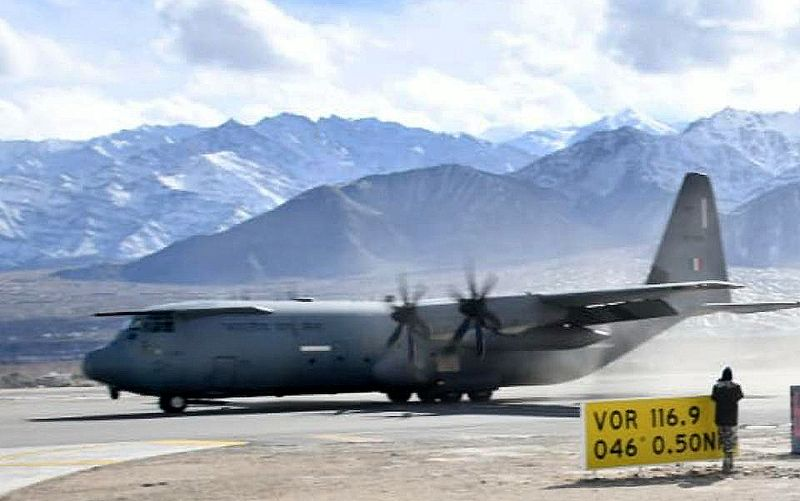
AF base at Leh gets additional civil aviation infrastructure

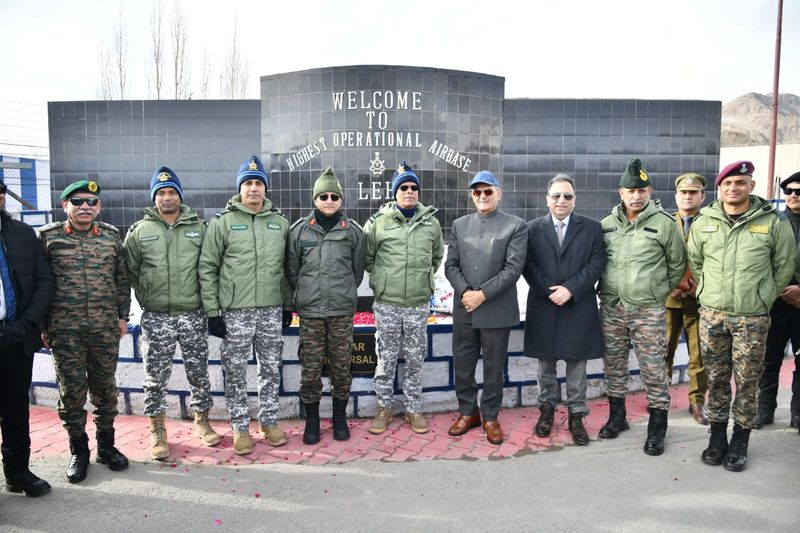
New civil aviation infrastructure has been inaugurated at Air Force Station Leh, allowing for smoother use of the base by civilian planes and passengers.

The Indian Air Force said on Thursday “upgraded infrastructure will enable smoother aircraft ground movement and facilitate quicker civil departures. These improvements will enhance passenger convenience, and reduce turnaround time”.

Ladakh is a major tourist attraction and Leh is the only base from where civil flights operate.

The project was inaugurated by Kavinder Gupta, Lieutenant Governor of The Union Territory of Ladakh in the presence of Air Marshal JS Mann, Senior Air Staff Officer, Western Air Command. Chief Secretary of Ladakh Ashish Kundra was also present at the event.

Improved air connectivity would provide a strong impetus to tourism in Leh, generating economic opportunities and supporting local livelihoods. At the same time, the enhanced facilities would ensure more reliable air services for residents and visitors alike, while also strengthening the region’s ability to respond swiftly to Humanitarian Assistance and Disaster Relief (HADR) requirements.

The inauguration marks a significant milestone in strengthening the Civil Aviation infrastructure in Ladakh and the spirit of close cooperation between the Civil Administration and all agencies involved in the region’s development. The infrastructure had been upgraded in record time despite extremely challenging high altitude terrain and adverse weather conditions, the IAF said.


Explainer: Leh airbase: From a dusty strip to a modern hub for IAF’s most advanced aircraft

Boosting operational capability in the northern sector, the Indian Air Force (IAF) has constructed a second runway at the strategic Leh airbase in Ladakh to cater to increasing military and civilian air traffic and ensure continuity of operations in case of hostilities along the border.

“From a dusty airstrip in the 1960s to a world-class airfield today, Military Engineering Service (MES) engineers have delivered excellence at Leh Air Force Station, constructing a runway in a record 21 months under extreme cold conditions in rugged high altitude,” the Indian Army has posted on X.

“This remarkable achievement enhances strategic readiness, supports regional development and exemplifies exceptional synergy between the MES, the Indian Air Force and the Union Territory of Ladakh,” the post added.

According to the Western Air Command, the upgraded facilities will enhance regional air connectivity, support tourism growth, and improve accessibility for local communities.

“Executed in coordination with multiple civil agencies, the development enables smoother aircraft ground movement, faster civil departures, and improved overall airfield efficiency,” the IAF said.

The new infrastructure will also facilitate timely Humanitarian Assistance and Disaster Relief (HADR) operations during emergencies and is expected to contribute to Ladakh’s socio-economic development by ensuring reliable, resilient air services in a geographically-demanding region, the IAF added.

Work on the new runway, also being termed as a parallel taxi track project, was approved in 2023 and completed at a cost of around Rs 452 crore. Many IAF bases have a parallel taxi track, a narrower strip that runs along the main runway to facilitate aircraft movement. These can also serve as an additional runway in times of need for IAF aircraft, though operations by civilian aircraft are not permitted.

The need for additional facilities

Military as well as civilian flights at Leh have increased significantly in recent years, but operations remain limited to morning hours due to rarefied air and climatic conditions, IAF officers said.

Earlier, civilian flights to Leh were few and military operations largely restricted to transport aircraft and helicopters. Now, with the prevailing situation along the Line of Actual Control (LAC), operations by fighter aircraft and attack helicopters have increased manifold. Different fighter aircraft, including the Rafale, MiG-29, Su-30 and Apache, from other bases regularly operate from Leh on a rotational basis.

With growing tourism and enhanced military posture, air traffic in and out of Leh is expected to increase further and the need for an additional runway was being felt for some time to ensure uninterrupted operations. From just one civilian flight to Leh in the 1980s, there are now up to 25 flights daily today.

In 2023, a stranded IAF C-17 blocked the runway for two days, suspending operations by fixed-wing aircraft. Such a situation could be disastrous during any volatile situation along the LAC with China as it would hold up combat as well as logistical missions.

The genesis of Leh airfield

Located at an altitude of 10,682 feet close to the Indus river, Leh airbase is strategically crucial for military operations, handling transport aircraft, helicopters and fighter jets.

The first aircraft landing in Leh occurred in May 1948, when Air Commodore Mehar Singh piloted a DC-3 Dakota aircraft onto what was then the world’s highest airstrip. Then serving with No. 12 Squadron, he flew over the the Zoji La and Fotu La passes without navigational aids, de-icing equipment, or cabin pressurisation, touching down successfully on a sandy strip.

Since then, the airfield has expanded and handles all types of IAF transport aircraft, including C-17 and IL-76 heavy-lift freighters. Many fighter squadrons and attack helicopter units regularly position detachments of combat aircraft at Leh for operational reasons.

Special heated hangars have also come to enable helicopter operations in extreme cold weather and hardened shelters, called blast pens, for housing fighter aircraft have been constructed.

Leh is among the four airfields in Ladakh that have paved runways, the other being Thoise, Kargil, and the recently constructed one at Nyoma. Advanced Landing Grounds (ALGs) at Fukche and Daulat Beg Oldie provide logistic support near the NAC. Nyoma, located about 40 km from the LAC at 13,700 feet, has been upgraded from an ALG to a full-fledged airbase, allowing greater operational flexibility.

The Leh airbase, primarily a military establishment owned and operated by the IAF, also has a civilian enclave attached to it. Known as the Kushok Bakula Rimpochee Airport, named after the 19th Kushok Bakula Rinpoche, a Buddhist monk, it handles civilian passengers and commercial flights.