The fresh Chinese construction activity is happening around Finger 4 in Pangong lake area. China also blocked the route of Indian patrol teams in the disputed region.
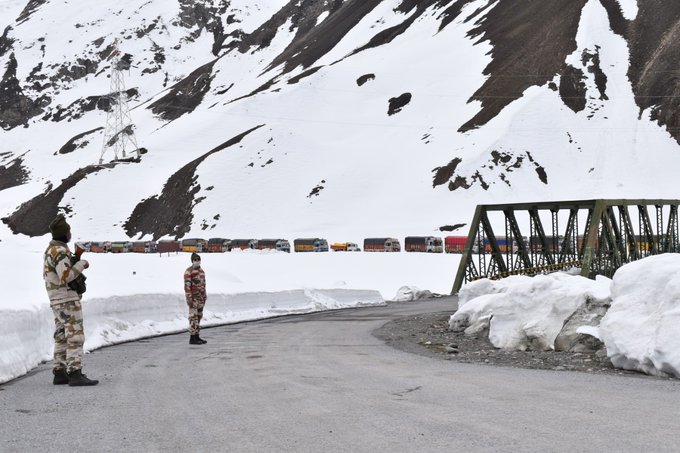
n army convoy moving towards the Zojilla pass, in Drass, Ladakh on 28 May 2020 (representational image) | ANI
New Delhi: Chinese soldiers are busy blacktopping a track in the disputed ‘finger’ area of Pangong lake in Ladakh after blocking the path of Indian patrols with a new bunker, two bulldozers and a moat-like construction.
Sources told ThePrint the fresh Chinese construction activity has been happening around Finger 4, a disputed territory. Blacktopping is the final stage of building a motorable road.
The 134 km of Pangong lake’s northern bank juts out like a palm, and the various protrusions are identified as “fingers” to demarcate territory. While India asserts that the LAC (Line of Actual Control) starts at Finger 8, China claims it starts at Finger 2, which India dominates.
In 1999, during the Kargil War when Indian forces were diverted, the Chinese had stepped in and built a track up to Finger 5, but this was not completely blacktopped.
Sources said the Chinese have dug up a moat-kind of structure and also blocked the route of Indian patrols with two bulldozers.
They said the Chinese are working at a fast pace blacktopping the route. This has always been the Chinese strategy and construction happens at super-fast speed, sources added.
Even though the area is disputed, Indian patrols used to move up to Finger 5, but if the Chinese don’t move, patrolling teams won’t be able to go much beyond Finger 3.
On Friday, Defence Minister Rajnath Singh told his US counterpart Dr Mark T. Esper that it would use “existing bilateral mechanism” to ease tensions with China along the LAC in Ladakh, after US President Donald Trump offered to play mediator for the two Asian giants.
India should’ve anticipated the Chinese appearance in Ladakh, even the timing of it, when the status of Jammu & Kashmir was changed.
Illustration: Soham Sen | ThePrint
Why, when the Chinese PLA comes bullying its way along the borders in Ladakh, am I invoking an outrageous American political satirist, P.J. O’Rourke?
Among his finest pieces is his ‘A Brief History of Man’. You can find it in his collection Republican Party Reptile. In less than a thousand brilliant words, it spans the entire human history. He takes all the great civilisations and reigns that rose and fell or survived in that sweep.
What’s relevant to us today is one short sentence in which he dismissed China: “Meanwhile, in China, there were the Chinese.”
You can interpret that any which way you wish. My guess is that he’s conveying that sense of resignation you find about the “inscrutable” Chinese. A familiar thought in the West.
But we don’t live in the West. We’ve lived next door to China for as long as first civilisations grew.
If we study our own post-Independence interactions with the Chinese, what is it that we might describe as inscrutable? Their military assault across two fronts in 1962 may have been a surprise to our leaders, but that is only because they were delusional.
Every Chinese action with respect to India since, from their ultimatum to India to “return their stolen yaks and sheep” in 1965 when the 22-day war with Pakistan raged, to their supposedly ‘surprise’ appearance along the Ladakh frontier this year, in fact, shows that the Chinese are far from inscrutable. They are predictable.
The push at Nathu La (Sikkim) in 1967 was probably to check out the resolve from India. Which they saw at its weakest — having fought two recent wars (1962 and 1965), famines, ship-to-mouth existence, political instability and a diminished Indira Gandhi. Remember, China had already joined the nuclear club in 1964.
The Indian response was a lesson they quickly learnt. A lot of detail on that short, sharp, local but historic engagement has recently been published in a full-length bookWatershed 1967: India’s Forgotten Victory over China by Probal Das Gupta, which I was honoured to write a blurb for. What did the Chinese do after that? They have kept the peace for 53 years.
Will you call that response evidence of Chinese inscrutability? They probed us, got a rude push-back, and decided to wait and stir the pot in different ways, at different times.
Over six decades, since about 1960, the Chinese have been able to dictate the evolution of their ties with India, with the pace and landmarks of their choosing. Whatever blunders we might fashionably blame Nehru for today, he ceased to matter in 1962. The Chinese retained what they really wanted in 1962. The truth is, they had it in their possession almost fully, barring small, tactically important slivers in Ladakh. They asserted their ownership and let their larger claim, Arunachal Pradesh, fully in Indian control, go militarily uncontested.
They never gave up claim on it. Their view rose and ebbed as power equations evolved, in the region and the world. They checked us out again in 1986-87 at Wangdung-Sumdorong Chu (Arunachal), when they saw Rajiv Gandhi take India’s defence budget to a never-before-or-after 4 per cent-plus of GDP, especially when the India-Pakistan situation was on the edge during Exercise Brasstacks.
Once again, the response (Gen. Sundarji’s Exercise Chequerboard) was firm and the Chinese backed off. Lesson again, the Chinese won’t open fire for the heck of it. Or when they are absolutely sure of an easy victory so they could be seen like ‘teaching an upstart a lesson’ as they did in 1962. Predictable.
So much else — Mao Zedong reportedly flashing that enigmatic Mona Lisa smile at young Brajesh Mishra, then heading the Indian embassy in Beijing as a mere Charge d’Affaires in 1970; an attack on Vietnam to the embarrassment of Atal Bihari Vajpayee visiting Beijing as the Janata Party’s foreign minister; a nuclear test when President Venkataraman was visiting China in 1992; sabre-rattling over Dalai Lama’s visits to Tawang — fits that pattern. Everything, from 1962 to Doklam fits a pattern: Deliver a message, add leverage, and return.
All the stand-offs after that, including recent ones such as Chumar, Depsang Plains and Doklam, have ended the same way. The message is, see, who’s the boss out here? In Chumar, it was to India as it was feting Xi Jinping. In Doklam, to Bhutan.
Whatever our pretence, we journalists are not experts at most things. Least of all on China. But journalists also have the privilege of learning from people who know better. We have learnt over the decades from our finest minds over two generations, from late Dr K. Subrahmanyam, the greatest strategic scholar of independent India, and General Krishnaswamy Sundarji to C. Raja Mohan now, and many others. But two conversations stand out in today’s context.
Dr Manmohan Singh, as prime minister, met a group of editors and gave us a masterful tutorial. He said China was coolly using Pakistan as an instrument to keep India perpetually off-balance. Our future, therefore, lay in breaking out of this ‘triangulation’.
His choice, obviously, was to reach out and seek peace with Pakistan. A much bigger and powerful China, he thought, would see less of an incentive for peace with India than Pakistan. In any case, for China, it is a low-cost strategy to keep India preoccupied with its client-state Pakistan.
That was his idea of breaking out of this triangulation. Today, that option is not so available, as hostility with Pakistan is central to the Modi-BJP politics. They’d rather make peace with China than Pakistan.
That is why the lavish welcomes and frequent meetings with the Chinese leaders. The objective, still, is escaping that triangle.
The second was Vajpayee explaining the Chinese negotiating style. “Dekhiye, aap aur hum baithe hain aur vaarta kar rahe hain (see, you and I are sitting and negotiating),” he said. Both of us want something. I will ask you, let go of a little, you will say no. I’d say OK, a little less then. You will again say no. But ultimately you will relent and let go of some. The Chinese would never do that.
Both these leaders underlined the same point, that the Chinese are consistent, and predictable. Which is why we should not be surprised by what they have unveiled across Ladakh. We should have anticipated it on 5 August last year when we made the big changes in Jammu & Kashmir.
We were not oblivious of the fact that there is indeed a third party in the territorial jumble there, and that is China. Home Minister Amit Shah left nothing to chance when he said in Parliament that “we will bring back Aksai Chin even at the cost of our lives”. Then, there were the new maps, objections to CPEC going through Indian territory, the weather reports. A broad territorial status quo had existed in Ladakh-Aksai Chin since 1962. India made its intention to change this status quo public.
Don’t ask me what is exactly happening on the ground in Ladakh. Are the Chinese on this side of the LAC or that? Because I don’t know. I can’t read satellite pictures. There is nothing like a LAC marked there, not even a distinct geographical watershed. All I can say is, I see no brigade-sized formations spread out there. How others read them depends on which side of the political divide they are on. At a time so polarised that even a 65-year-old, half-cent-per-pill drug like HCQ becomes politicised, you hardly expect much honesty being extended to satellite images of barren, naked mountains.
What I can say is, this should have been anticipated and gamed before the die was cast on 5 August 2019. This Chinese move, like all others in 60 years, was fully predictable. Even the timing. It was only a matter of the snows melting.
This article has been updated to accurately reflect that China attacked Vietnam when Vajpayee was visiting Beijing and conducted a nuclear test when President Venkataraman was in China in 1992. The error is regretted.
Once it was decided that Modi government would get a free pass on the question of a probable Chinese incursion, every Congress leader – from Nehru to Manmohan – was blamed for seceding territory.
he year 2020 is upending a political cliché – that the conservative Right is the best guarantor of national security. The ideologically awkward but artful dodging Indian conservatives are engaging in on the issue of India-China stand-offs in the Ladakh area shows they have allowed not only partisanship but also wooly-headedness to override any national security concerns.
In the parallel universe of Twitter, India’s Right-leaning handles gave up their long-held ideological convictions, and, in the last 72 hours, have also suspended their common sense. Once it was decided to give the Narendra Modi government a free pass on the question of a probable Chinese incursion across the Line of Actual Control (LAC), now every Congress leader – from Nehru to Manmohan Singh – would be blamed for seceding territory to China.
As reports emerged about China’s People’s Liberation Army (PLA) having allegedly parked its troopson Indian territory in Ladakh, many in the Indian Right chose to completely deny it.
And in a couple of days, as the Indian establishment began to signal that everything was not okay along the border some, such as Nitin Gokhale, cited an ambiguous statement by the spokesperson of China’s foreign affairs ministry to argue that now our northern neighbours were “de-escalating”.Others were confused by this stance:
Ananth Krishnan
✔@ananthkrishnan
Here’s a dumb question from me: If there’s no PLA on India’s side of the LAC, what exactly are we discussing with China through diplomatic and military channels?
Meanwhile, Indian defence officials were still warning against reading “too much” into the statements made by the Chinese foreign ministry.
If this wasn’t enough, soon began the game of satellite imagery. While gathering intelligence via open-source satellite images requires a whole set of skills, the Indian Right had managed to produce experts overnight.
Although there were some with the actual know-how to read satellite imagery, and said that it was possible that the Chinese had not crossed on to the Indian side. Moreover, there were other experts who pointed out the discrepancy between reports and the conclusions being drawn from satellite imagery.
But who cares about caveats and minor discrepancies? A large section of the conservatives chose to just jump on the bandwagon that no incursion had happened.
The issue here isn’t whether the Chinese have crossed on to the Indian side or not. The question is how do conservatives not go berserk at even the remotest mention of India losing its territory? The idea runs against every grain of national security-nuclear weapons loving conservatives.
Territorial integrity is sacred for every nationalist. After all, isn’t the love for territory that is supposed to drive our policies in Kashmir?
Since the reports of Chinese incursion started to pour in, scholars of security studies have hotly debated the possibility of India having undergone a “fait accompli”, a concept of territorial conquest developed by Georgia State University scholar Dan Altman. During a fait accompli, a country conducts territorial conquest by targeting a small territory of the adversary, which usually has a “low population” and the absence of a “defending military garrison”. The aim is to capture territory in a way that reduces the risk of war, according to Altman.
So, on the one hand, we had scholars debating the possible Indian response in case it had undergone a fait accompli and on the other hand, a large section of India’s Right-wing claiming that there is no way Chinese troops have pitched tents on India territory.
One would expect that people who adore the idea of destroying Pakistan would at least engage with such strategising regarding a probable Indian military response. For them, even the possibility of territorial loss is unacceptable. It is ironic that the same group that supports the government’s quest to take back Pakistan-occupied Kashmir, would stay silent during a possible territorial incursion by the other neighbour. Much like everything in foreign policy, the answer to how the Indian Right got here lies in domestic politics.
For the past few years, Indian Prime Minister Narendra Modi and his government have projected the idea of a self-sufficient or ‘atmanirbhar’ India, especially when it comes to national security. “India is strongest under the leadership of PM Modi,” said Home Minister Amit Shah in October 2019.
The overarching claim by the Modi-governmentis that not only can India manage its own security, but no other power would dare to harm us in a serious way. After the Pulwama and Uri attacks, Modi’s India did not turn to the United States but launched strikes as a deterrent.
The problem is the Right-wing’s Pakistan fixation. Several scholars who study Pakistan have pointed to how the country’s political and strategic elite spends a disproportionate amount of time talking about India. This has spoilt the Indian Right, made it lazy, and eroded its ability to analyse an adversary.
When US President Donald Trump proposed to mediate between India and China, a flurry of Right-leaning journalists such as Smita Prakash talked about how the “middle kingdom” being equated to India would not go down well with Beijing.
The obsession with Pakistan is such that news anchor Navika Kumar called PLA — the Pakistan Liberation Army.
The Indian conservatives have begun to see China exactly how they see Pakistan – a country obsessed only with India. And it couldn’t be any further from the truth. While India might matter for China, it’s hard to miss that Beijing is currently also embroiled in conflict with superpower US, in the South China Sea, and with its estranged cousins Taiwan and Hong Kong.
In foreign policymaking, a lot depends on how a country analyses its operational environment. Unfortunately for India, our conservatives – who are supposed to prioritise national security at all costs – are not only choosing to ignore the size and complexity of Chinese strategic thinking, but also deciding to ignore a possible territorial bite by them.
Views are personal.
Captain Amarinder Singh warns China against bid to intrude into Indian territory While we do not want war, we will not tolerate any bullying by Beijing, the CM said
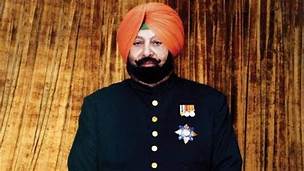
Punjab Chief Minister Capt Amarinder Singh on Saturday warned China against any attempt to intrude into Indian territory, saying India will not back off in the face of Beijing’s intimidation.
“While we do not want war, we will not tolerate any bullying by Beijing,” said the CM, warning the neighbouring country against taking India lightly. “This is not 1962,” he said, making it clear that if China did not stop indulging in intimidating behaviour, it would have to pay the price.
“The Indian Army is ready to give a befitting reply and China should not take any chances,” he warned, in response to a Kolkata resident’s question, during his live session on a social media platform. “We don’t want war with any nation and want the situation to improve, but if they keep behaving like this we won’t have any other option left,” he said, urging China to mend its ways and talk to India to resolve the issue. Amarinder said China cannot stop India from building any infrastructure on its side of the border.
General Rawat’s impromptu strategic guidance on the diminished role for the armed forces has factored the impact of the pandemic on public spending. India’s plans to fight a two-and-half front war will need to be re-evaluated and its self-assigned role as a net regional security provider will also need a fresh look.
Maj-Gen Ashok K Mehta (retd)
Military commentator
To be self-reliant, the government’s announcement on May 16 virtually banning defence imports — a boost for Make in India — and allowing 74 per cent FDI in JV through the automatic route, are near revolutionary steps, but requiring the defence procurement procedure (DPP) to be revised for the nth time. These radical policy changes will not be easy to implement and will undermine defence capabilities in the short and medium term.
Therefore, CDS General Bipin Rawat’s extraordinary statement earlier this month, charging the armed forces with “misrepresenting their operational requirements to indulge in large weapon import” was embarrassing for the armed fraternity, though pointedly in sync with the government which has been advocating Make in India, a grandiose project for indigenising weapons production that is bereft of any home-grown technology and adequate production base.
General Rawat said the armed forces should accept weapons from the domestic industry even if they meet just 70 per cent of the desired technology. The admission includes curtailing operational missions and objectives: “We are not expeditionary forces that have to deploy around the globe. We have to guard and fight only along our borders and, of course, dominate the Indian Ocean.” He added: “Covid-19 has affected everybody. We need to be realistic, start adjusting and have a major relook at our operational priorities and what we actually need.” This was a painful overview of the existing defence planning, weapon acquisition and their prioritisation procedures for which he too, as former Army Chief, is accountable.
It is understood that veterans and serving officers were perturbed with General Rawat’s accusation that the services have been exaggerating
military threats and that they should fight with weapons with less than the stipulated General Staff Qualitative Requirement.
General Rawat’s self-flagellation was also prompted by a defence
official disclosing that the defence budget was likely to be slashed between 20 and 40 per cent. As salaries and pensions cannot be cut, defence modernisation will take the hit. This will put a freeze on any new deals and even funds earmarked for paying instalments in the existing contracts could be deferred.
Stockholm International Peace Research Institute (SIPRI) could also be partly to blame for the ‘noise’ as it has been rating India for the last five years as the world’s second biggest arms importer after Saudi Arabia, accounting for 9.2 per cent of total global arms imports. Even so, India spends on an average on defence, just 1.6% of GDP, minus pensions and salaries, which is one of the lowest among the developing countries, given its two unsettled borders and attendant challenges.
What General Rawat said amounts to a critique of how the country arrives at its defence and security threats, challenges and opportunities. No overarching review coupling defence, diplomacy, technology and economics in the shape of a comprehensive strategic defence and security review has ever been carried out. Nor has any white paper been produced. The Defence Minister’s operational directive which is originally drafted by the tri-services gets updated and issued after every five to ten years.
The last time one was refined was during the late Defence Minister Manohar Parrikar’s term, but one is not sure whether he finally signed the directive.
The strategic sweep of each service of the armed forces is varied. For the Navy, it is from the east coast of Africa to the Malacca Straits. For the IAF, airspace over territorial India and the Indian Ocean region; and for the continental Army, it is land borders with China, Pakistan, Myanmar and Bangladesh, along with out-of-area contingency plans for the Maldives, Sri Lanka and Nepal. The Indian Army has a manpower ceiling of one million. For the Navy, the ceiling is 60,000 and a target of 200 warships by 2027. The IAF has sought 42 combat squadrons, a figure born in the 1960s, not revised since and never achieved.
General Rawat’s impromptu strategic guidance on the diminished role for the armed forces has factored the impact of the pandemic on public spending. India’s ambitious plans to fight a two-and-half front war will need to be re-evaluated and its self-assigned role as a net regional security provider will also need a re-examination. The Indian Navy’s proposed role in the Indo-Pacific and any militarisation of the Quad will need to be shelved, with focus on the domination of the Indian Ocean region.
Further, General Rawat’s remarks, budgetary cuts and import ban will disrupt the 15-year long term integrated perspective plan and require a drastic resetting. The ground reality is this — the LoC has hotted up and infiltration in Kashmir is on the rise. Insurgency will increase exponentially as passes open. Similarly, the LAC has been activated in Ladakh and Sikkim and tension is escalating. Sikkim has a settled border and China accepted it as part of India in 2005. Although the Army Chief, General MM Naravane, has downplayed the two face-offs and rejected any linkage between them, the armed forces must be prepared for a pincer movement by all-weather friends Pakistan and China as well as another Doklam.
Hard power is needed to assert national interest by use of force. Evidently, in view of General Rawat’s pronouncements and the government’s new defence acquisition policy, full spectrum of capabilities and defence modernisation will be constrained by affordability of programmes in a post-Covid normal.
Instead of considering and announcing piecemeal reforms, like extension of colour service for soldiers, national voluntary service, integrated battle groups and so on, an integrated defence and security review is urgently required on achieving specific joint and individual force capabilities — something that the Defence Planning Staff, of which I was a member, modestly attempted in the mid-80s.
General Rawat’s challenge in a post-pandemic environment is daunting, but as the first CDS, he enjoys confidence of the government and knows his stuff.
Indian constructions close to Aksai Chin began 12 yrs ago China’s aggressive objections meant to alter boundary line
India has been constructing strategically crucial roads and repairing the airstrips close to Aksai Chin since 2008 and the aggressive objection to these constructions now is to redefine the boundaries as per its own misplaced perceptions.
For easy access to troops
The construction of the roads cutting mountains and negotiating sand dunes was to enable the troops to have an easy access to the front lines. It was also to deny China to take advantage of Indian troops’ absence in the strategically important areas in Ladakh.
Two roads leading to Fukche and Daulat Beg Olde — the two airfields which were activated in April 2008, then after a gap of 41 years in the eastern and western parts of Ladakh.
The construction of the roads cutting the mountains and negotiating the sand dunes was to enable the troops to have an easy access to the front lines. It was also to deny China to take advantage of Indian troops’ absence in the strategically important areas in Ladakh.
“These are strategically important areas for the Indian Army for defence purposes,” sources in the Army told The Tribune.
“There can be no compromises on strategic assets,” the sources said.
The roads were being constructed from the eastern and western flanks of the Aksai Chin area.
India had lost Aksai Chin because of its almost negligible presence in the area. The presence is required to strengthen the Indian defences strategically and enhance the visibility there.
The roads are important for there cannot be an all-time dependence on air presence because of vagaries of weather. In 2008, AN-32 and medium-sized IL-76 aircraft had landed and later these were upgraded for landing of bigger planes as well.
An Indian Air Force (IAF) fixed-wing aircraft (AN-32) landed at Daulat Beg Oldie (DBO) in the Ladakh region close to the Chinese border on May 31, 2008, and Fukche was activated in October 2007.
The Advanced Landing Ground, where the aircraft landed at DBO, is located at the height of 16,200 feet (4,960) metres near the strategic Karakoram pass and close to the Line of Actual Control with China in the Aksai Chin area.
Daulat Beg Oldie is an important Army forward area post which links the ancient silk route to China. This base was built during the Indo-China conflict in 1962. Packet aircraft of the IAF operated from DBO between 1962 and 1965. In 1996, an earthquake caused some loosening of the surface soil making the base unfit for further fixed-wing aircraft operations. But since 2008, things started changing and that’s what has made China to go in for area denial strategy by its aggressive and weaponised strategy.
A core group meeting of top security officials in Kashmir on Saturday pointed out that Pakistan had intensified its efforts at increasing infiltration and ceasefire violations and there was also an effort to calibrate increase in terrorist actions in the hinterland.
The General Officer Commanding, Chinar Corps, Lt-Gen BS Raju, and Director-General of Police, Jammu & Kashmir, Dilbag Singh, co-chaired a meeting of the core group consisting of top officials of the civil administration, intelligence agencies and security forces in Srinagar.
The meeting was to review the security situation and ensure readiness to meet the anticipated security challenges, an Army statement said. “The core group focused on the need for high level of synergy amongst all agencies in addressing the security concerns of Kashmir. Intelligence inputs indicated that Pakistan had intensified its efforts at increasing infiltration and ceasefire violations across the Line of Control (LoC). There is also an effort to calibrate increase in terrorist actions in the hinterland. Pakistan and its proxies are also active on social media to launch disinformation campaign in J&K,” the statement said.
The group discussed plans to ensure a robust counter infiltration grid along the LoC, counter-terrorist grid in the hinterland and recent successes in anti-terror operations.
“The intelligence inputs indicate efforts by anti-nationals and Pakistan proxies to calibrate increase in violence in J&K,” the statement read. The group discussed the need for continued intelligence-based anti-terror operations with a humane touch.
“In order to address the complete eco-system of terror organisations in J&K, the anti-terror operations are being supported by efforts to identify and arrest over ground workers who sustain the terror organisations,” it added.
Mumbai Naval dockyard develops ultraviolet sanitisation bay for decontaminating tools
The Naval Dockyard at Mumbai has developed an ultraviolet (UV) sanitisation bay for decontaminating tools, clothes and other items as part of the war against Covid-19, according to a press release.
According to the statement, the UV sanitisation bay has been set up at the entry and exit points of the naval dockyard at Mumbai.
“The challenging task required ingenuity to convert a large common room into a UV bay by fabrication of aluminium sheets with electrical arrangements for UV lighting,” the statement said.
The sanitisation bay employs an ultraviolet light source for germicidal irradiation after research showed that such a system helps neutralize respiratory pathogens like SARS and influenza.
Apart from the naval dockyard at Mumbai, a similar facility has been set up at the naval station in Karanja.
An industrial oven which is also part of the set up here helps heat smaller sized items up to 60 degree celsius.
CRPF forms committee to plan better distancing in barracks, toilets used by jawans Almost all personnel living in the 31st battalion have recovered now; about 170 under treatment for COVID-19 in the CRPF now
The Central Reserve Police Force has constituted a committee of its senior officers to find better ways of ensuring social distancing in barracks and toilets used by jawans to check the spread of the COVID-19 pandemic in its camps, officials said on Saturday.
They said the recent spread of the infection to about 140 personnel living in the 31st battalion of the country’s largest paramilitary in Delhi’s Mayur Vihar and a few other such instances had led to the decision of finding innovative ways to combat the new challenge of keeping the force “combat-ready amid the enhanced level of physical distance between troops.”
Almost all personnel living in the 31st battalion have recovered now and as per the latest data, only about 170 personnel, out of over 400, are under treatment for COVID-19 in the CRPF.
Officials said the committee was headed by an Additional Director-General posted in the CRPF headquarters and all zonal commanders had been asked to send in their ideas and inputs on better management of barracks and common toilets space after talking to the actual users — jawans and junior-rank officials — and sanitary experts.
“The committee has been created on the directions of CRPF Director General A P Maheshwari and he has sought a time-bound report so that better ways can be found to ensure social distancing and personal hygiene in barracks and toilets used by jawans,” a senior officer said.
He said the committee would also find ways to better sanitise these two areas in the camp so that jawans, who have to live in shared spaces, do not contract COVID-19 infection.
These measures would go a long way in ensuring the overall health of our troops and their personal hygiene even when coronavirus goes away from our lives, another officer said.
The second officer said living, sleeping and performing daily ablutions in small and shared spaces was a concern in certain camps, including temporary ones, where there was no land space to expand.
“New locations where a battalion or company camp is made have better space when it comes to barracks and toilets for jawans and sub-officers. The coronavirus pandemic has magnified this issue and hence solutions are being looked into,” he said.
As part of measures to combat the disease, the CRPF has also decided that all those personnel who have an exposure to COVID-19 patients or surroundings, those who are joining back after leave or those who are returning to camp after lockdown will now be put in 17 days quarantine.
Officials said the measure had been declared by the CRPF chief in order to cut the coronavirus infection chain in the camps and units of the force where troops and their families ranging from a varied strength of 1,000 to 3,000 people reside.
When the issue of infection to so many troops living in the 31st battalion came to light it was found that the medical wing of the force had issued “dichotomous” order of quarantining a returning medical staff for five days rather than the stipulated 14-day time period and that possibly led to the spike in the number and the camp virtually becoming a hotspot, they said.
Officials suspect that as jawans lived in closed spaces like barracks, mess and toilets, the infection quickly spread from one person to the other in this camp and few others from where COVID-19 cases were reported. Hence, it had been directed by the DG that the quarantine period would now be 17 days in the CRPF, they said.
The 3.25-lakh-personnel-strong force, the mainstay for anti-Naxal operations and counter-terrorist combat in the Kashmir valley, had also ordered that officials above 50 years of age would not be deployed for “hotspot or active duty”, they said.
“Also, men and women troops suffering from medical conditions like hypertension, diabetes among others will not be sent to hard duties as the health ministry guidelines for COVID-19 state such people fall in the high-risk category when it comes to contracting coronavirus infection,” a senior official said.
The DG, during a recent address to troops, has also asked the personnel to increase intake of immunity-boosting food items, shun junk food, be stress-free and adopt a healthy and positive-thinking lifestyle.
He said it had been decided that the troops who could not join duty due to restrictions of travel during the nationwide lockdown would be “considered on duty” and their personal leaves would be intact. PTI
alks at military, diplomatic levels on to resolve standoff: Rajnath India and China are engaged in the standoff for over three weeks in eastern Ladakh
As Indian and Chinese troops remain engaged in a tense border standoff, Defence Minister Rajnath Singh on Saturday asserted that the government would not allow India’s pride to be hurt under any circumstances even as he said bilateral talks were on at military and diplomatic levels to resolve the row.
Singh also said he conveyed to US Defence Secretary Mark T Esper during a telephonic conversation on Friday that India and China had an existing mechanisms to resolve “problems” through talks at diplomatic and military levels.
In the midst of the flare-ups between Indian and Chinese armies, US President Donald Trump on Wednesday said he was “ready, willing and able to mediate” between the two countries. He reiterated the offer on Thursday as well.
The Ministry of External Affairs indirectly rejected the offer two days ago, but Singh became the first Central minister to speak on India’s position on the issue with clarity.
“I spoke to the US Defence Secretary yesterday. I told him that we have developed a mechanism already under which any problem between India and China are resolved through military and diplomatic dialogue,” said Singh.
He was replying to a question on whether India ruled out any third-party mediation in resolving the border row with China.
The Defence Minister said efforts were on to resolve the border row in eastern Ladakh.
“I want to assure the country that we will not allow India’s pride to be hurt under any circumstances. India has been following a clear policy of maintaining good relationship with neighbouring countries and it is not a new approach. We have been following it for long. At times, situation arises with China. It has happened before,” he said.
Singh noted that China had also said that it wanted to resolve the border issue through diplomatic dialogue.
“It has been India’s effort to ensure that the tension does not escalate. It should be resolved through talks at military and diplomatic levels. Negotiations are ongoing between the two countries at the military and diplomatic levels,” he said.
Troops of India and China were engaged in the standoff for over three weeks in Pangong Tso, Galwan Valley, Demchok and Daulat Beg Oldie in eastern Ladakh.
The trigger for the face-off was China’s stiff opposition to India laying a key road in the Finger area around the Pangong Tso Lake besides construction of another road connecting the Darbuk-Shayok-Daulat Beg Oldie road in Galwan Valley.
Military sources said China was also laying a road in the Finger area which was not acceptable to India.
The sources said military reinforcements, including troops, vehicles and artillery guns were sent to eastern Ladakh by the Indian Army to shore up its presence in the areas where Chinese soldiers were resorting to aggressive posturing.
The situation in eastern Ladakh deteriorated after around 250 Chinese and Indian soldiers were engaged in a violent face-off on the evening of May 5 which spilled over to the next day before the two sides agreed to “disengage”.
However, the standoff continued.
The incident in Pangong Tso was followed by a similar incident in north Sikkim on May 9.
The troops of India and China were engaged in a 73-day stand-off in Doklam tri-junction in 2017 which even triggered fears of a war between the two nuclear-armed neighbours.
The India-China border dispute covers the 3,488-km-long LAC. China claims Arunachal Pradesh as part of southern Tibet while India contests it.
Both sides have been asserting that pending the final resolution of the boundary issue, it is necessary to maintain peace and tranquillity in the border areas. PTI
State Stalwarts
DEFENCES FORCES RANKS
ARMY, NAVY, AIRFORCE RANKS
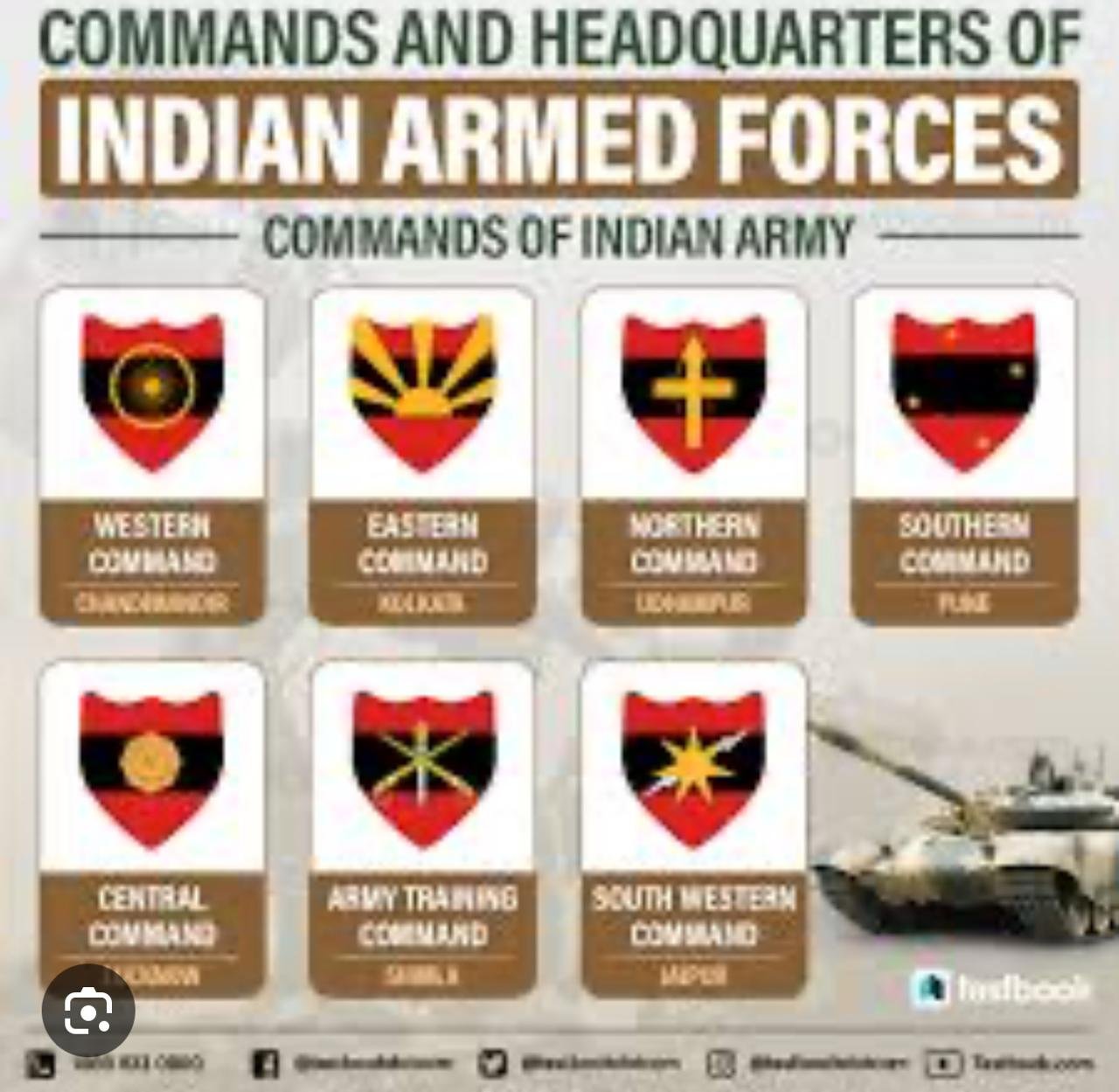
FORMATION SIGNS
FORMATION SIGNS
ALL HUMANS ARE ONE CREATED BY GOD
HINDUS,MUSLIMS,SIKHS.ISAI SAB HAI BHAI BHAI
CHIEF PATRON ALL INDIA SANJHA MORCHA
LT GEN JASBIR SINGH DHALIWAL, DOGRA
SENIOR PATRON ALL INDIA SANJHA MORCHA
MAJOR GEN HARVIJAY SINGH, SENA MEDAL ,corps of signals
.
.
PATRON ALL INDIA SANJHA MORCHA
MAJ GEN RAMINDER GORAYA , CORPS OF
sanjhamorcha303@gmail.com
PRESIDENT HARAYANA STATE CUM COORDINATOR ESM
BRIG DALJIT THUKRAL ,BENGAL SAPPERS
PRESIDENT TRICITY
COL B S BRAR (BHUPI BRAR)
PRESIDENT CHANDIGARH ZONE
COL SHANJIT SINGH BHULLAR
.
.
PRESIDENT PANCHKULA ZONE AND ZIRAKPUR
COL SWARAN SINGH
PRESIDENT SAS NAGAR (MOHALI)
COL BALBIR SINGH , ARTY
INDIAN DEFENCE FORCES
DEFENCE FORCES INTEGRATED LOGO
FORCES FLAGS
15 Th PRESIDENT OF INDIA SUPREME COMMANDER ARMED FORCES
Droupadi Murmu
DEFENCE MINISTER
Minister Rajnath Singh
CHIEF OF DEFENCE STAFF (2nd)
General Anil Chauhan PVSM UYSM AVSM SM VSM
INDIAN FORCES CHIEFS
CHIEF OF ARMY STAFF(29th)
General Upendra Dwivedi, PVSM, AVSM (30 Jun 2024 to Till Date)












 ‘s other Tweets