



Sanjha Morcha

What’s New

Click the heading to open detailed news

Current Events :

web counter

Print Media Reproduced Defence Related News

India’s Future War – How to Fight it & What to Expect? by by Lt Gen Harbhajan Singh (Retd)

China’s current military thinking and modernization has been greatly influenced by their study of 21st century wars including both the Iraq Wars and the one in Kosovo as also the conflict in Libya. Crucial role played by precision weapons and air power have been imbibed by PLA. In addition, the internet emerging as an all pervasive means of passing information is
a lucrative target for cyber-attack. Large scale cyber-attacks in Russo-Georgian War has not gone unnoticed by Chinese strategists. Accordingly, China has raised a number of cyber and
electronic warfare brigades/regiments. The Chinese way of fighting conventional war can be termed ‘e-Conventional Warfare’, similar to e-governance.

COVID‐19 & CHINA
International geopolitical situation is undergoing
a churning due to spread of COVID-19 from China.
China isundertremendouspressure fromtheWestern
and other nations for an international inquiry. It
certainly has a fall out on domestic politics of China.
There are likely to be strong antigovernment and anti
Xi Ping sentiments in China for the manner he has
handled the COVID-19 crises and his earlier decision
to become lifelong Head of State. The trade war
between USA and China has also adversely affected
Chineseeconomy.
Under such international pressure and domestic
dissent, it is natural forXi Jingping to somehow divert
the attention of his people, PLA and other nations
towards somenewcrises. Indiacanbeasofttarget, as it
is likely to take away good part of manufacturing
business from China. One can already see rather
serious clashes between PLA and Indian Army along
the LAC in Ladakh, Central and Eastern Sectors.
Indian Defence Forces have to be prepared to face any
escalation along the Indo-Tibetan Border, side by side
Pakistan also livening up theLine of Control (LOC) in

J&K and the IB. This may happen now or at a future
date.
China and Pakistan, not only have a strategic
convergence but a tie up as well, to keep India down.
China has become a great power economically and
militarily and the People’s Liberation Army’s (PLA)
military potential is at least twice, if not three times
that of India. The ratio worsens when military
potential of Pakistanis takencognizanceof.
PLA’s prime adversary being America, it is rapidly
modernizing and well on its way to implementing
latest technologies including space, cyber, electronic
warfare, information warfare, network centric
warfare. It is even incorporating latest inventions and
technologies like hypersonic weapons, artificial
intelligenceetc. IndianArmy, byand large is still inthe
process of discussing and just aboutintroducing a few
newtechnologies.
At this slow pace Indian Army is long way from
modernizing. It is not the fault of the Army entirely.
Our bureaucracy and politicians have to take major
blame. India cannot therefore match China militarily
and especially as far as any joint and coordinated

misadventurebyChinaand Pakistanisconcerned.
PLA’S WHITE PAPER 2019 – ITS MILITARY
THINKING, MODERNIZATION AND STRATEGY
FOR AN “INFORMATIONIZED WAR”
China’ s current military thinking and
modernization has been greatly influenced by their
study of 21st Century wars including both the Iraq
Wars and the one in Kosovo as also the conflict in
Libya. Crucial roleplayed byprecisionweaponsand air
power have been imbibed by PLA. In addition, the
internet emerging as anall pervasive means of passing
information in all facets of life and consequently
becoming a lucrative target for cyber-attack, is
another aspect thoroughly analyzed by the Chinese.
Large scale cyber-attacks in Russo-Georgian War and
their crippling effect has not gone unnoticed by
Chinese strategists. Accordingly, China has raised a
number of cyber and electronic warfare
brigades/regiments.
The Chinese way of fighting conventional war can

be termed ‘e-Conventional Warfare’, similar to e-
governance. The PLA has concluded that in order to

hastenthedefeatoftheenemy:
 Information warfare should be used in its strategic
and tactical domains as a prelude as also concurrently
with Kinetic operations. Informationized warfare
aims atinducing the collapse of the opponents resolve
and will tofight.
 Strategic domain includes, disinformation, molding
opinion in own favour i.e. perception management,
deception, attacking adversary’s critical civil and
military infrastructure and the very functioning of a
nation’s life.
 Tactical domain deals with disabling adversary’s
tactical command and control, communications
systems, ISR capabilities, weapons and their control
systems, by cyber, electronic warfare and kinetic
meansand safeguarding own.
China would not take any large scale military
action ina hurry. Itwill be averydeliberatedecision by
the top most leadership, which would vet the
operational plans. Adequate forces would be made
available to the overall commander to achieve
required superiority. China will mount a well thought
out information and diplomatic campaign aimed at
international opinion, Indian leadership, people and
military. Side by side it will make Pakistan carry out
similar actions and try and divert Indian attention
from the northern border. Conduct large scale
cyber/network warfare in the strategic domain, either
before or concurrently with shooting war, to weaken
ourresolvetostand uptoitsdemands.

PLA would resort to sustained air plus precision

kinetic weapons like missiles, rockets, artillery, anti-
radiationweaponsattacks inadditiontocyber-attacks

t o b l i n d I n d i a n A r m e d F o r c e s b y
degrading/destroying Intelligence, Surveillance and
Reconnaissance (ISR) systems, including satellites,
command and control infrastructure, so that the
commanders and staff are unable to make cohesive
operational picture.
Paralyze the command and control structure so
that the commanders and staff are unable to make
cohesive operational picture and plan and conduct
operations effectively. Command and Control
Structure implies headquarters, command posts,
commanders and staff, communication and
information networks, especially the nodes. This is a
significant change that has come aboutin the conduct
of 21st century wars. In the wars in the past, air attacks
were aimed more at adversary’s fighting troops,
weapons, transportation system and logistics
installations, rather than command and control
structure.
INDIA’S GRAND STRATEGY: DETERRANCE/
DISSUATION
India has todeter/dissuade China from embarking
on any military misadventure against our country.
India must try to dissuade China through diplomatic
and economic means. However, to deter China, India
does not have the required conventional military
power. While improving our conventional military
strength, India must therefore, look for other
innovativeoptions:
 Enhance & Exploit Offensive Cyber Capability:
There is considerable penetration of computers in
China’s civil and military domains. This makes it
vulnerable to cyber-attacks. India has not harnessed
and exploited its immensepotential incyberfield with
missionary zeal for cyber warfare which is a cost
effective option. Cyber should be given required
autonomy like the Indian Space Research
Organization (ISRO) has been and results are bound

to be there. Well thought out and massive cyber-
attacks can bring any nation to its knees by paralyzing

its functioning and has therefore the capability to act
asdeterrent.
 Use of Low Yield Nuclear Weapons: Regrettably,
there seems to be no role for nuclear weapons in the
Indian military strategy – the two are in separate
compartments. India’s nuclear doctrine has been
dominated by diplomats and even policemen and the
military has been kept out of the nuclear loop. Also it
has been Pakistan-centric. India being weaker

conventional military must use comprehensive and
synergized military power, incorporating assets in all
domains, including nuclear, tosafeguard its territorial
integrity. Use of small yield nuclear device, in own
territory in sparsely populated areas againstintruding
PLA Forces along the Indo-Tibet Border will certainly
actasdeterrent. Chinacannotafford to loseacoupleof
Regiments worth to a nuclear or any other mass
destruction weapon. India’s No First Use Nuclear
Doctrine needs to be tweaked accordingly. Chinese
academicians have already given hints of China
resorting to use of nuclear weapons in case in case
some red lines are crossed and socan India! In facttwo
key functionaries in the Indian cabinet have already
stated that all means will be considered for India’s
defence.
FIGHTING THE TACTICALBATTLE BYINDIA
Chinese are likely use the concept of land-air
warfare, with very close cooperation and coordination
betweentheirArmyand Air Force. PLAwill ensure 3 to
4:1 superiority in numbers at the places they are going
to launch their offensives. A deception plan in
operations and information warfare will be important
partoftheoverall strategy. Theattackplanwill include
use of overwhelming fire power (shock and awe) by
artillery, rockets, armed helicopters, air, including
UAVs. The attacks will be multidirectional and not
only restricted to the front line but in depth areas as
well. Outflanking moves, even through neutral
countries like Nepal and Bhutan and vertical
envelopment will form important part of the battle
plan.
The Vietnamese faced technologically superior
America and in fact defeated them! They also gave
bloody nose to PLA during the Sino-Vietnam war of
1979. We need to study these wars and draw

appropriate lessons. Low-cost and may not be so-
called modern options have to be explored by the

IndianArmy as far as battling PLAalong the Northern
Borders is concerned. Indian military, particularly the
Army has to do innovative thinking to minimize the
effect of great technological and numerical gap. We
should not become complacent by conducting
peacetime exercises without building in realistic
disruption and attrition expected in a war situation
and based on our response in border skirmishes like
theoneatDoklamin2017.
OTHER STEPS THE INDIAN ARMY AND AIR
FORCE CAN TAKE AGAINSTPLA
Be prepared for deep forays by the PLA using
outflanking moves and vertical envelopment, along

with multidirectional attacksonthe forward defenses.
Determination to stand fast and defend prepared
positions to the last man last round. No question of
any withdrawal. A weaker boxer closes with the
stronger one and does not give him room to flex his
arms. Take a cue from this for tactical battles. Indian
Army is good at defensive battles, as it has been
deployed on defensive tasks since Independence
(1947)! Exploitthisexperienceand capability.
However, we need to study the quantum of TNT
PLA can fire on Indian defenses and upgrade our
bunkers and defence works. Also dig tunnels to
withstand enemy shelling, rocket and air attacks. Be
mentally prepared to be surrounded and cut off. DO
NOT PANIC! Have enough stocks of ammunition,
food, water etc. in the defenses, including medical
facilities.
GUERRILLAWARFARE
IndianArmymustrealizethatwearedefending our
sacred land. We will be fighting in our own territory
and area where Indian Armed Forces have been
deployed for 60-70 years. We should know every inch
of the ground! This advantage is, however, frittered
away by frequent turnover of units. The fight against
PLA’s aggression has to become a people’s war.
Guerrilla warfare by local population equipped,
trained and led by Special Forces should become
importantpartof overall warfightagainstPLA.
The advantages of involvement of local citizens in
the fighting are obvious. Guerrilla warfare can also be
extended across in to Tibet to harass adversary’s lines
of communications, command and control
infrastructure and logistics installations. Close and
logistics support by the IAF will form important part
of guerrillawarfare.
USE OF LIGHT TANKS/INFANTRY COMBAT
VEHICLES
Use of light tanks/Infantry Combat Vehicles for
battles astride mountain roads needs serious
consideration. These were used in the Korean and
Vietnam Wars and by the Indian Army in Zojila in
1948.
HOW TO MEET THE CYBER AND ELECTRONIC
THREATS?
For countering the Cyber threat, various IT firms,
academia and government assets as also the
capabilities with the military need to be synergized
and utilized. In fact, every citizen has to be made
aware and follow national guidelines. Students in
collegesand evenschoolsneed tobeeducated.

Chinese electronic equipment which is likely to
have bugs inserted, must not be used for defence and
critical civil infrastructure. Have strict emission
policy, not only during war but in peace as well. The
adversaries are engaged in ELINT (Electronic
Intelligence) to map our radars, communication and
ISR systems during peace. Human discipline by users
and providers must for ensuring security of electronic
and computerbased systems. Veryessential todepend
more on fiber optics and even old underground and
field cables, ratherthanradio.
In exercises, get commanders and troops used to
break in communications for extended periods. Have
enough redundancy in communication networks by
having alternate to alternates. Ensure diversity while
planning networks of geographic, network
engineering and media for protection against enemy
electronic and cyber-attacks. Do not over consolidate
networks and rather have more networks instead; due
to looming cyber and electronic threat. Security and
safety of satellites against EW, cyber and kinetic
attacks cannot be over emphasized. ISRO has to be
goaded by the military to ensure this. Safety and
security of isolated communication detachments
cannotbeoveremphasized.
Use of terminology HQ be done away with in field
formations as it connotes peace time environment.
Introduce the concept of alternate command posts in
Field Formations, manned by Deputy Formation
Commanders. These should have required
communications infrastructure and staff to take over
the command and control immediately the
Primary/Main Command Postis rendered ineffective,
due to enemy cyber/EW/ physical action. Finally, the
Chinese Signals are still maintaining number of
pigeon units. Let us look at it and Flag Signaling also,

to be used in extreme cases. Non-electronic and non-
cyber systems may find a use and a Saragarhi may be

repeated along Indo-TibetBorder. Oneneverknows.
DEPLOYING LOCAL SOLDIERS IN HIGH
ALTITUDE AREAS
The advantages of local troops deployed in high
altitude operational areas are apparent i.e. hardly any
acclimatization needed, genetic ability to operate and
live at high altitudes, knowledge of local area and
language and ability to live off the land. About 1/3 of
fighting and supporting arms troops deployed along
theNorthernBordershould compriseof local soldiers.
This can be done by having Scouts or TA Units. Some
effort has been made in this direction by having
Ladakh and Himachal Scouts. This needs to be
extended to the whole Indo-Tibet Border and part of

BorderwithPakistaninLadakh.
CONTINUITY IN TENURES FOR GREATER
EFFICIENCY
 A good percentage of the Indian Army is constantly
on the move. Units moving from north to south, east
to west and vice versa. Units deployed in deserts are
straight moved to high mountains and other way
round. Units with armoured/mechanized formations
find themselves deployed along the LOC/LAC on
pickets.
 Fighting efficiency is certainly not a criteria used by
Staff Duties Directorate while preparing roster for
annual changeover of units!! There is a need for
stability and continuity in area deployed and
operational role. Otherwise up to 1/4 of troops
deployed in a war situation will be rather new and not
conversant with the area to have edge over the
invaders!!
 In 1962, units from plains were suddenly moved to
Arunachal to face the Chinese onslaught and they
became almost cannon fodder! Indian officer and
Jawan are very versatile but efficiency and fighting
potential of units can be improved significantly, if
greatercontinuity isprovided.
CYBER AND ELECTRONICTHREATTO THE IAF
Indian Army and Indian Air Force should realize
that their Intelligence Surveillance & Reconnaissance
(ISR) system as also C4I (command, control,
communication and computer and intelligence)
systems will be significantly degraded right at the
start, by PLA. IAF should assess electronic warfare
and cyber threat to its air operations control and
direction system, realistically. Also electronic and
cyber threat to its aircraft in the light of a Sukhoi
suddenly vanishing during a routine flight in
Arunachal, a few years back. Also, PLA has been
targeting flights by USAF over the China Sea for a
numberof yearsnow, including by laser!
SYNERGYBETWEEN THE ARMYAND AIR FORCE
The required synergy between Indian Army and
Air Force is woefully lacking, in spite of public
statements to the contrary by the top brass. The so
called TheaterCommandsarea long wayoff and inany
case IAF lacks required number of fighter aircraft to
apportion to various theaters. The dual threat from
Chinaand Pakistanwill dividetheairpowerfurther.
For decades, the top brass of the Army and Air
Force have failed to understand and appreciate the
capabilities, limitationsasalsoneedsof eachother. Air
Power has tremendous potential in land air warfare.

Its flexibility to switch from one area to another and
attack targets deep inside enemy territory, precision
attacks and resultant ‘shock and awe’ are, so vital in
moderncombat.
At the same time, the fighting for real estate that
the Army gets involved in, is crucial for the nation.
This needs to be understood and appreciated by the

topArmy and Air Force brass. Single pointoperational
authority is amusttooptimizeoperations by theArmy
and Air Force. Otherwise they will be fighting their
own wars, as in the past. Feasibility and desirability of
use of expensive aircraft for close air support of troops
engaged in battleson the land needs to be settled once
forall.

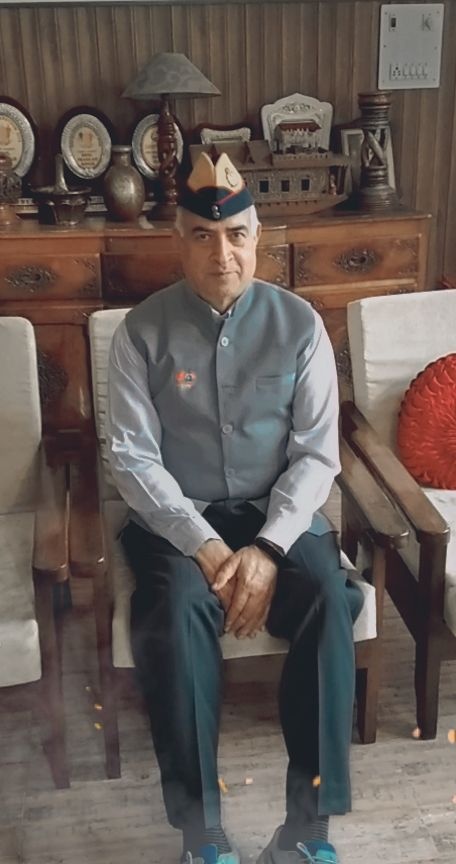
Veteran Lt Gen Harbhajan Singh, PVSM, is the former Signal Officer-in-Chief. He is a product of the first course of the Joint Services
Wing, the precursor to the Indian Military Academy (IMA), Dehra Dun and the NDA(National Defence Academy), Pune. He has held
operational appointments at brigade, corps, command and Army Headquarter during his long service.


India ‘working faster’ on bridge in Galwan Valley after China’s objections amid stand-off

There are no transgressions in Galwan Valley, say govt officials, but Finger area of Pangong Lake is a trouble spot and could take longer to resolve.

A road bridge built by India between Durbuk and Daulat Beg Oldi in eastern Ladakh (representational image) | Photo: ANI

A road bridge built by India between Durbuk and Daulat Beg Oldi in eastern Ladakh (representational image) | Photo: ANI
New Delhi: As the stand-off with China along the Line of Actual Control in eastern Ladakh continues, India is busy finishing the bridge over the Galwan ‘nallah’ that the Chinese had objected to, ThePrint has learnt.

Government sources said work on the concrete bridge, which is set to replace an existing wooden bridge, is going on, and India has made it clear to the Chinese that it will carry on with border infrastructure development.

The Print had earlier reported that China’s main concern in the Galwan Valley was this bridge.

“The work on the bridge, which is about 7 to 7.5 kilometres from the LAC, had started much earlier. However, around 10 May, the Chinese came to know of the construction and objected to it. However, the work on the bridge continues. The ongoing issues have only made us work faster on this bridge,” a senior official in the security and defence establishment said on the condition of anonymity.

The bridge is part of a network of feeder roads that India is building connecting the strategically important Shyok-Daulat Beg Oldi road, inaugurated by Defence Minister Rajnath Singh last year.

“The Chinese have no objection to the Shyok-DBO road, and that road is about 9-10 km from the LAC. The objection was to this bridge that we were constructing. We have made it clear that the construction is happening well within Indian territory and it will go on,” said the official.

Sources stressed that while there is troop build-up on both sides of the LAC, the focus is on resolving the issue through talks.


Also read: LAC standoff: India looks at ‘early resolution’, while China says agreement reached


China doubtful of India’s moves in Galwan Valley

Government sources said one of the reasons why China objected to the bridge could be that it is doubtful of India’s intent, after it bifurcated the state of Jammu and Kashmir into two union territories, one of which is Ladakh, and subsequently started raising its voice about Aksai Chin.

Sources said these suspicions were despite External Affairs Minister S. Jaishankar’s visit to Beijing last August to reassure China that India was not raising any additional territorial claim on contested areas in the region, as reported by Hindustan Times on 3 June.

China not only supported Pakistan on the Kashmir issue in last year’s closed-door informal session of the UN Security Council, but also raked up the status of Aksai Chin, as reported by The Economic Times: “Chinese Permanent Representative in the UN claimed that the government’s decision to abrogate Article 370 challenged China’s sovereign interests and violated bilateral agreements on maintaining peace and stability in the border area.”

Sources said China has been told that infrastructure development activities on their own sides are the sole domain of individual countries, and that India had never objected to Chinese construction activities on their side.

They added that China is uncomfortable with the infrastructure development, which started about two decades ago but has gathered steam in recent years.

“China feels that the tactical advantage it has at the LAC with regard to swift deployment and movement will be eroded,” a source said.

Also read: China’s military adventurism is meant to distract from origins of Covid: Tibetan President


The situation in Galwan

The government sources ruled out any presence of Chinese troops on the Indian side of the Galwan Valley. The LAC and the Chinese Claim Line are the same in this area.

“The Chinese at no place have crossed their claim line, which at places differs from our claim line. In Galwan, both claim lines are similar,” a source said.

The Indian and Chinese armies have been holding meetings at Patrol Point 14, at the mouth of the Galwan Valley. “This is the meeting point area in the Galwan for talks,” a source said, admitting that both sides have built up troops and equipment, after the first move by the Chinese. ThePrint was the first to report that Indian forces executed “mirror deployment” along the LAC.

Situation in Hot Spring area

Sources admitted that the Chinese have crossed the Indian claim line in the larger Hot Spring area by about 3 km, as reported by ThePrint.

The transgressions have taken place near Patrol Point 15 and Patrol Point 17, also known as the Gogra post.

A limited number of India and Chinese soldiers are facing off at these locations. However, they are backed by a larger number of troops and equipment behind them.

Small disengagement steps have been taken by both sides in Galwan and the Hot Spring area as part of confidence building measures, following the talks between 14 Corps Commander Lt Gen. Harinder Singh and his Chinese counterpart Saturday. However, this cannot be described as de-escalation.


Also read: PM Modi’s silence on LAC stand-off is benefiting China. India must change its script


Pangong Lake is the trouble spot

Government sources said talks on the Finger area of the Pangong Lake could take longer, as China has refused to budge from this area so far.

The Chinese have come down to ‘Finger 4’ of the northern bank of the lake to stop the Indian soldiers from patrolling until ‘Finger 8’, which is the Indian claim line.

Over the last few years, sources said that whenever Indians used to carry out their long range patrol from ‘Finger 2’, Chinese troops used to come down from their Srijap post and try and prevent Indians from moving beyond ‘Finger 5’.

However, just before the winter settled in last year, the Indians managed to reach ‘Finger 8’ by using an alternate track through the heights.

“This caught the Chinese by surprise and hence they have come down to ‘Finger 4’ (Chinese claim line) and also the heights there to prevent Indian patrols from going forward. The talks on this issue may take a little longer,” the government official cited at the beginning of this report said.

Movement of mechanised columns and artillery

Sources said while forward positioning of the People’s Liberation Army (PLA) is a concern, the movement of artillery and mechanised columns should not be seen as too alarming.

“Any kind of mobilisation will come with their own attachment and detachment. People who don’t understand this tend to be too alarmist,” the official quoted above said.

India too has deployed additional troop strength in Ladakh, including elements of artillery and other equipment.

“There are a number of support systems that are needed when you move a large number of soldiers. There would be vehicles to transport them, tents to make them stay and so on,” a source explained.

“Also, to stay that Chinese artillery guns have been deployed at LAC is being naïve, because these guns come with stand-off ranges. They can target Indian positions from well within their territory, just like Indians guns can do.”


Also read: India has a bigger worry than LAC. China now expanding military footprint in Indian Ocean


Military officers hold fifth round of India-China talks

NEW DELHI

Army delegations from India and China, led by major general-ranked officers, on Friday held discussions in eastern Ladakh again to resolve the standoff between border troops as defence minister Rajnath Singh met the military brass here and reviewed the situation along the disputed Line of Actual Control (LAC), two officers said on condition of anonymity.

This was the fifth meeting between the two major generals to break the stalemate that began with a violent confrontation between rival patrols near Pangong Tso on the night of May 5-6.

The two officers last met at Patrolling Point 14 near the Galwan area on Wednesday as part of continuing efforts to resolve the confrontation that eased slightly with limited disengagement of forces at some LAC hotspots earlier this week.

Friday’s meeting between major general Abhijit Bapat, commander of the Karu-based HQs 3 Infantry Division, and his Chinese counterpart went on for nearly five hours, said one of the officers cited above.

In Delhi, the defence minister was briefed on the ongoing border scrap and the status of the military-level dialogue to resolve it at a meeting with chief of defence staff General Bipin Rawat and the service chiefs, said the second officer cited above.

Earlier this week, the two sides began what Indian officials described as a “limited military disengagement” at three hotspots along the LAC – Galwan Valley, Patrolling Point 15 and Hot Springs.

The limited disengagement happened after a meeting between Lieutenant General Harinder Singh, commander of Leh-based 14 Corps, and Major General Liu Lin, commander of the People’s Liberation Army, in the South Xinjiang region last Saturday.

The focus is now on resolving the situation on the northern bank of Pangong Tso, which has been at the centre of the ongoing border scrap and where troops are still locked in a face-off.

Last month’s violent confrontations between Indian and Chinese soldiers in eastern Ladakh and north Sikkim triggered a military build-up on both sides of the LAC that stretched from Ladakh to Uttarakhand, Sikkim and Arunachal Pradesh, as reported by Hindustan Times on Friday.

The Chinese build-up began immediately after clashes between border troops in Ladakh and Sikkim on May 5-6 and May 9, and predated the June 6 meeting between Lieutenant General Singh and his Chinese counterpart at Moldo on the Chinese side of the LAC.

India and China are continuing diplomatic and military engagements for an “early resolution” of the stand-off between border troops, the external affairs ministry said on Thursday. More military talks are planned in the coming days to ease border tensions.


India, US in war of ideas with China: Ex-US diplomat in chat with Rahul Gandhi

Describing China as an “authoritarian country” without the “self-corrective part” of the national DNA seen in India and the US, former US diplomat Nicholas Burns said the leadership in Beijing is “fearful”.

Former US diplomat Nicholas Burns on Friday interacted with Congress leader Rahul Gandhi on Covid-19.

Former US diplomat Nicholas Burns on Friday interacted with Congress leader Rahul Gandhi on Covid-19.(Kalpak Pathak/ HT Photo)

Former top United States (US) diplomat Nicholas Burns on Friday dismissed suggestions China is winning the battle against the coronavirus, saying the country has a “fearful leadership” intent on preserving its power and incapable of accommodating the Chinese people’s desire for freedom. Democracies such as India and the US are waging a “battle of ideas with China” and should work together to “make it observe the rule of law”, he said during a video conversation with former Congress president Rahul Gandhi.

The conversation was part of a series between Gandhi and global and Indian thought leaders to discuss the Covid-19 crisis and its consequences. As under secretary of state for political affairs during 2005-08 and the state department’s third-ranking official, Burns led negotiations on the India-US civil nuclear agreement. His remarks come in the backdrop of a weeks-long border stand-off between India and China and intensified rivalry between the US and China.

Responding to Gandhi’s question on why there has been almost no global cooperation on the Covid-19 crisis, Burns said: “It is a terrible disappointment to me. I’m sure it is to you…this crisis was made for the G20. It was made for Prime Minister Modi and President Xi Jinping and Donald Trump to be working together, all of our countries, for the common global good.”

This hadn’t happened, he said, “because Donald Trump doesn’t really believe in international cooperation. He’s a unilateralist…And Xi Jinping chose to compete with Trump.” He added that the US and China were at the “heart of the problem” and hoped they will better work together more effectively in any future crisis.

Burns said: “I think a lot of people right now are saying…China’s winning the battle of the Coronavirus, that it’s gaining hearts and minds. I actually don’t see that.“

He added that China certainly had “extraordinary power”, which was ”probably not equal to the US militarily, economically, politically yet”. “But it’s gaining, no question about it. What China lacks is the sophistication and openness of a democratic country like India or the US.”

Describing China as an “authoritarian country” without the “self-corrective part” of the national DNA seen in India and the US, Burns said the leadership in Beijing is “fearful”. He added, “Fearful men trying to preserve their own power, increasing the grip that they have on their own citizens. Look at what’s happening in Xinjiang…and in Hong Kong.”

He said he worried that the “Chinese system is not going to be flexible enough to accommodate the desires of the Chinese people for human freedom and liberty”.

The governments of India and the US should together promote democracy, freedom and rule of law around the world, said Burns, who served in the US government for 27 years. “I think it is a powerful idea that Indians and Americans can bring together to the rest of the world. Again…we are not looking for a conflict with China, but we are waging, in a way, a battle of ideas with China,” he said.

Gandhi said the partnership between India and the US worked because both were tolerant nations but that DNA of tolerance has now disappeared. He also said the India-US relationship used to be a partnership but now seems to have become “very transactional and episodic”.

“I think why our partnership works is because we are tolerant systems. You mentioned that you are an immigrant nation. We are a very tolerant nation. Our DNA is supposed to be tolerant. We are supposed to accept new ideas,” the Congress leader said while responding to Burns, who insisted India and the US share many traits.

“We are supposed to be open but the surprising thing is…that open DNA is sort of disappearing…I say this with sadness that I don’t see that level of tolerance that I used to see. I don’t see it in the Us and I don’t see it in India,” Gandhi said.

The discussion also focused on the Black Lives Matter protests in the US triggered by the death of George Floyd, which Burns described as “horrible”. He added, “And millions of Americans are protesting for our rights the way you have in India. And India and the US share many traits as we both have liberated ourselves from the British in different [eras]….The US is in a deep political and existential crisis that has gripped us all.”

Gandhi criticised divisions in both countries, saying they weaken nations. “When you divide African Americans, Mexicans and other people in the US, so you divide Hindus and Muslims and Sikhs in India, you’re weakening the structure of the country. But then the same people who weaken the structure of the country say they are the nationalists,” he said.

Burns described Indian Americans as the “secret weapon” in the bilateral relationship and said the two sides should keep their doors open to each other and lower restrictions on the movement of people. Barriers should be kept low for schemes such as the H-1B visa programme as India can supply the engineers needed by the US, he said.


Chinese diplomat tweets a twist to Ladakh standoff, sees link to Article 370

“India’s actions of unilaterally changing the status quo of Kashmir and continuing to exacerbate regional tensions have posed a challenge to the sovereignty of China and Pakistan and made the India-Pakistan relations and China-India relations more complex,” Wang tweeted.

REPRESENTATIVE IMAGE: A Chinese official adjusts a Chinese flag before the start of a meeting between Foreign Minister Wang Yi and Indian Foreign Minister Sushma Swaraj in New Delhi, India, December 21, 2018. REUTERS/Adnan Abidi/FILE PHOTO

REPRESENTATIVE IMAGE: A Chinese official adjusts a Chinese flag before the start of a meeting between Foreign Minister Wang Yi and Indian Foreign Minister Sushma Swaraj in New Delhi, India, December 21, 2018. REUTERS/Adnan Abidi/FILE PHOTO(REUTERS)

The spokesman of the Chinese embassy in Pakistan created a flutter in diplomatic circles by appearing to suggest the standoff between Indian and Chinese border troops was linked to New Delhi’s decision to scrap Jammu and Kashmir’s special status last year.

Wang Xianfeng, whose Twitter bio describes him as press officer at the Chinese mission in Islamabad, included in his tweet a link to an article by a scholar from an influential think tank affiliated with China’s ministry of state security or main intelligence agency, which also suggested a connection between the border tensions and the change in Kashmir’s status.

“India’s actions of unilaterally changing the status quo of Kashmir and continuing to exacerbate regional tensions have posed a challenge to the sovereignty of China and Pakistan and made the India-Pakistan relations and China-India relations more complex,” Wang tweeted.

People familiar with developments said Wang is responsible for liaising with the Pakistani media. Though the tweet could represent his personal opinion, this is the first time a Chinese official has sought to link the border standoff with the change in Kashmir’s status, including the creation of the union territory of Ladakh, which particularly angered China.

India and China are currently engaged through diplomatic and military channels for an “early resolution” of the border standoff after what Indian officials have described as a “limited military disengagement” along the Line of Actual Control (LAC) in Ladakh, the focus of the tensions.

When India scrapped Jammu and Kashmir’s special status on August 5 last year, the Chinese foreign ministry had issued two statements criticising the development, including one that focused on the splitting of the state into union territories.

This statement, while urging India to be “cautious” on the border issue and to avoid “actions that further complicate the border issue”, said: “China has always opposed India’s inclusion of Chinese territory in India’s administrative jurisdiction in the western part of the Sino-Indian border.” This was a reference to the area in Ladakh that New Delhi claims but is controlled by Beijing.wang’s tweet linked to the article by scholar Wang Shida of the China Institutes of Contemporary International Relations, which began by saying India had since last August “taken constant actions to unilaterally change the status quo of Kashmir and continued to exacerbate regional tensions”.

The article, titled “India blinded by ‘double confidence’”, said India’s move to change the status quo in Kashmir “constitutes a serious threat to regional peace” and “posed a challenge to the sovereignty of Pakistan and China”.

“On the Chinese side, India ‘opened up new territory on the map’, incorporated part of the areas under the local jurisdiction of Xinjiang and Tibet into its Ladakh union territory, and placed Pakistani-administered Kashmir within its so-called union territories of Jammu and Kashmir,” the article said.

“This forced China into the Kashmir dispute, stimulated China and Pakistan to take counter-actions on the Kashmir issue, and dramatically increased the difficulty in resolving the border issue between China and India,” it added.

The article noted that China’s foreign minister Wang Yi had conveyed his country’s position on these issues to external affairs minister S Jaishankar when he visited Beijing last year – that “India’s moves challenged China’s sovereign rights and interests and violated the agreement on maintaining peace and tranquillity in the border areas between the two countries”.

At the time, Jaishankar had informed the Chinese side that India’s action was a purely internal matter with no consequences for the country’s external boundaries.

Amitabh Mathur, a former special secretary in the Research and Analysis Wing (RAW), questioned the timing of the Chinese official’s tweet and said it underscored the complex issues involved in the ongoing standoff.

“It seems as if the Chinese are leaning on us and the situation isn’t as simple as some are making it out to be. It’s also strange that such a tweet emanated from a Chinese official in Islamabad. There is a Pakistani connection to it and it’s almost as if the Chinese are trying to reassure the Pakistanis,” he said.


DRDO develops ‘GermiKlean’ to sanitise uniforms of security forces

DRDO designed and developed a dry heat treatment chamber named “GermiKlean”. This chamber is designed to sanitise 25 pairs of uniforms within 15 minutes.

DRDO designed and developed a dry heat treatment chamber named “GermiKlean”. This chamber is designed to sanitise 25 pairs of uniforms within 15 minutes. (ANI)

Defence Research and Development Organisation (DRDO) has developed a sanitizing chamber named ‘GermiKlean’ to sanitise uniforms of security forces.

The sanitizing chamber has been set up at Parliament Street Police Station.

DRDO’s move came after Delhi Police gave their requirement for sanitizing their uniforms, canes, cane shields, helmets, etc.

“We can keep our uniforms and other items to be sanitised inside the chamber and it has proved to be really beneficial for us. I am really thankful to DRDO for taking this initiative on our request. DRDO has also designed a sanitisation tunnel for us and they have also designed a mat for us for foot sanitization,” said Eish Singhal, DCP, Parliament Street Police Station.

DRDO designed and developed a dry heat treatment chamber named “GermiKlean”. This chamber is designed to sanitise 25 pairs of uniforms within 15 minutes, said DRDO officials.


Let’s enable students to make the right choices by Maj Gen Ravi N Tikku (Retd)

Let’s enable students to make the right choices

Maj Gen Ravi N Tikku (Retd)

Be yourself, love yourself;
And lift yourself — by yourself.

— Mantra for Young India

Are we challenging our children with the fundamental questions on how they should live their lives and make the right choices? Correct choice is the key to positive outcomes. Our life is defined by the choices we make. We are all unique individuals with different characteristics, attitudes and beliefs, but it is not the unique package that determines the enjoyment and effectiveness of our life, but how we choose to use it. For instance, we do not become good by trying to be good. We have to find the goodness that is already within us and permit that goodness to emerge and permeate our thoughts, words and deeds.

The Latin root derivative of the word ‘education’ is educere, meaning to draw out from within. We all need a spotter in our lives to spot our innate tendencies and latent talents. Once spotted, like saplings, the child’s growth needs to be supported, watered, fertilised and even de-weeded.

Our education and upbringing do not teach you what you really are; these teach you what you want! And ‘wants’ translates into endless desires and mindless actions of road rage, radicalisation of youth, environmental degradation, even suicides. Why this destructive behaviour of continually making poor life choices that reflect an absence of self-regulation, ethics and a sense of social responsibility? Because the bondaged mind has been programmed to do so. Lack of adequate discerning ability between right and wrong during early childhood makes you inadvertently absorb negative life experiences that form your belief system and paradigms of recurrent negative behaviour.

Life is an eternal fight between the Good and Evil, and it is in the nature of man to always land up at the crossroads. In our hand lies the power to choose.

Awareness is the indispensable key that unlocks your true potential and helps you to discover who you really are. It gives a new perspective outside the constant I, Me and Mine syndrome of the ego. Once there, there is an opportunity for real change. You then develop a holistic approach to learning, one that seeks to open the mind, nurture the spirit and awaken the heart. An open mind embraces the new and the unfamiliar, unleashes your creative potential and aligns the head that reasons and the heart that feels. There is harmony between what you think, what you say and what you do. You evolve and develop an outlook, a new nazariya, of viewing the world inside out. There is balance and harmony in your behaviour and relationships at work, at home and at play. In this awareness of who you really are, you also see the sameness in what the others are. This expands your horizon and a symphonic life follows that urges oneness of humanity, transcending man-created hurdles of religious, racial, cultural, geographical and ideological differences.

Every being is a bundle of energy and vibrations, and so is the universe. You make the right choice, your thoughts and beliefs can work wonders, even miracles, provided you master the art of thinking — how to think and how not to think. People improve their standard of living, but not their standard of thinking. We exercise selectivity and choice in all our transactions, be it grocery items, clothes, cuisine, seeing films or visiting restaurants. Why not do the same with our thoughts? Let us begin the day by greeting the sunrise with awe and a sense of wonder. The sun presents a breathtaking spectacle and does its productive duty towards the creation religiously. The flowers, plants and trees eagerly wait to receive the sun’s rays to bloom in their glory and splendour, and spread fragrance, joy and cheer to all the bystanders. Such sensory delights rejuvenate the mind, the spirit and your creativity.

When you are close to yourself, you are in meditation. You feel the environment and you enjoy your company. You begin to love yourself and live consciously, and life changes magically for the better.

Students are not vessels to be filled, but lamps to be lit. The purpose of education is to actualise the already existing potential in every child. The author is looking at the greater vision of what the end product, a youth stepping into young adulthood, may look like — a balanced person who abides by harmony. This necessitates working on him during childhood and adolescence with a method. Education from playschool to college must be viewed as a whole in keeping with the stated vision and progressively imparted in an organised manner.

The first seven years of a child at playschool and primary level becomes a fertile period to expose the child’s inborn spirituality to nature, earthy activities and the glory of creation. The child’s natural curiosity absorbs the interdependence between people, plants, animals and the earth. They imbibe values of oneness, love, empathy, care and compassion. This helps in building a child’s relationship to a higher purpose, whether that is nature, God, universe or even a tree. The base thus created facilitates a holistic approach to learning and prepares the student to recognise the connectedness of mind, body and spirit in all activities at the adolescent stage with ease. Every child has the urge ‘to be recognised’. This urge upgrades to high ‘self-esteem’ in a youth with aforementioned schooling, because he now learns to be the true expression of who he really is. As you sow in the subconscious mind, so shall you reap in your body and environment, and make the right choices.


Pakistan’s PTV News fires 2 journalists for showing Kashmir as part of India

Senate Chairman Sadiq Sanjrani referred the issue to the Standing Committee on Information and Broadcasting to take action

Pakistan's PTV News fires 2 journalists for showing Kashmir as part of India

Islamabad, June 12

Pakistan’s state-run PTV News has fired two journalists for airing an “incorrect map” of the country in which Kashmir was shown as a part of India.

The incident, which occurred on June 6, was raised in Parliament on June 8 after which Senate Chairman Sadiq Sanjrani referred the issue to the Standing Committee on Information and Broadcasting to take action.

The Pakistan Television (PTV) management on June 7 said on social media that it was probing the issue and actions would be taken against those responsible for the blunder.

The hammer fell on June 10 after it sacked two employees.

“Taking strict action on the recommendations of the inquiry committee designated to probe the airing of an incorrect image of a map of Pakistan on June 6 on PTV News, the PTV management has terminated two officials found responsible for the professional oversight,” it tweeted.

It has not identified the employees who have been sacked but said that it has zero tolerance for negligence.

Earlier, Minister for Science and Technology Fawad Chaudhry and Minister for Human Rights Shireen Mazari also demanded action.

Pakistan, in its official map, shows Kashmir as its part.

India maintains that Pakistan occupied Kashmir (PoK) and Aksai Chin are part of India’s Jammu and Kashmir and that Kashmir Valley is an integral part of the country. PTI


2 militants killed in gunfight in J-K’s Kulgam A cordon and search operation was launched following the militants’ presence

2 militants killed in gunfight in J-K’s Kulgam

Tribune News Service

Srinagar, June 13

Two militants were killed in a gunfight in south Kashmir’s Kulgam district on Saturday morning, police said.

The gunfight erupted at Nipora village during a cordon and search operation which was launched by the joint teams of police, Army and CRPF following an input about the militants’ presence.

“As the area was being cordoned off, the hiding militants opened fire triggering a gunfight. Two militants were killed in the operation,” a police officer said, adding that searches in the area were under way.

In the past six days this is the fourth encounter in south Kashmir. Fourteen militants including two top commanders were killed in the earlier three gunfights.


Ex-serviceman held for ‘killing’ son in Sonepat village

Ex-serviceman held for ‘killing’ son in Sonepat village

Panipat, June 11

An ex-serviceman allegedly murdered his 25-year-old son in Jahri village of Sonepat district last night by hitting him with a sharp-edged weapon. The ex-serviceman reportedly chopped of his son’s hand and hit him on the neck and head.

The police registered a case and arrested the accused. The police produced him in court, which remanded him in one-day police custody. The body was handed over to the family after postmortem examination.

The deceased was identified as Rahul of Jahri village. In her statement, Kamlesh said there was a dispute over property between her son Rahul and husband Rampat.

She said they had an argument over property, following which Rampat brought a sharp-edged weapon and hit Rahul, who died on the spot. — TNS