


















Sanjha Morcha

What’s New

Click the heading to open detailed news

Current Events :

web counter

Print Media Reproduced Defence Related News

Haryana second, Punjab fourth in number of cadets passing out from IMA

Haryana second, Punjab fourth in number of cadets passing out from IMA

For representation only. File photo

Vijay Mohan
Tribune News Service
June 12

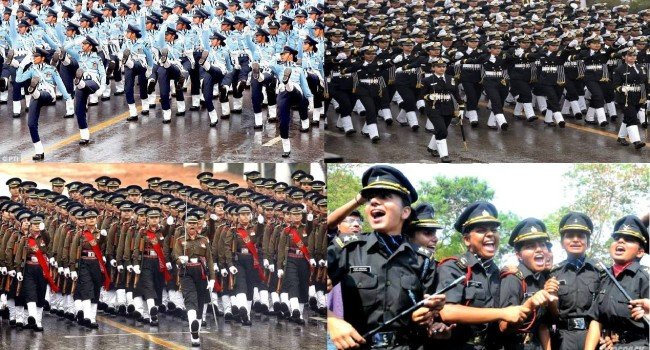
Haryana is second in the number of cadets from the Spring Term-2020 passing out from the Indian Military Academy (IMA), Dehradun, on June 13, while Punjab is fourth among all states in the country.Out of the total of 333 Indian cadets getting commissioned as officers, 39 are from Haryana and 25 from Punjab.

With 66 cadets, Uttar Pradesh tops the list. The third slot is shared by Uttarakhand and Bihar with 31 cadets each. The cadets belong to the 146th Regular Course and 129th Technical Graduates Course.


In addition, there are 90 cadets from nine friendly foreign countries who also form part of these courses.

This year, the passing out parade, one of the most cherished moments in an officer’s career, is being held without parents, siblings and friends of the cadets because of the restrictions imposed due to the COVID-19 pandemic. The parade and piping ceremony, instead, is being telecast live.

In an another departure from convention due to the prevailing circumstances, the cadets  will not get leave to go home after completion of their training, but will proceed directly to join at their respective place of first posting in the Army. This leave period was generally 2 – 3 weeks.


First Sikh woman to graduate from US Military Academy at West Point

First Sikh woman to graduate from US Military Academy at West Point

Second Lt. Anmol Narang, is a second-generation immigrant born and raised in Roswell, Georgia.

Rosewell (US), June 13

The United States Military Academy at West Point will make history Saturday when it graduates the first Sikh woman to successfully complete the path to a four-year degree.Second Lt. Anmol Narang, is a second-generation immigrant born and raised in Roswell, Georgia. She did a year of undergraduate study at the Georgia Institute of Technology before transferring to West Point, where she will graduate Saturday with a degree in nuclear engineering.

She hopes to pursue a career in air defense systems.

“I am excited and honored to be fulfilling my dream of graduating from West Point,” Narang said in a news release from the Sikh Coalition, a nonprofit based in New York that works to protect the constitutional right to practice faith without fear.

“The confidence and support of my community back home in Georgia has been deeply meaningful to me, and I am humbled that in reaching this goal, I am showing other Sikh Americans that any career path is possible for anyone willing to rise to the challenge.”

Narang will complete her Basic Officer Leadership Course at Fort Sill in Lawton, Oklahoma, officials said. Following that, she will then head to her first post in Okinawa, Japan, in January.

Congress passed a law in 1987 that prohibited Sikhs and other religious communities from maintaining their articles of faith while in the military. A Sikh’s visible articles of faith, including turbans and unshorn facial hair, were banned.

Narang required no accommodation for her articles of faith, but the coalition said “her exemplary service to date underscores how diversity and pluralism remain core strengths of the U.S. military and the country as a whole.”

US Army Capt Simratpal Singh, a family friend, said he is proud of Narang who is “breaking a barrier for any Sikh American who wishes to serve.”

“The broader acceptance of Sikh service members among all of the service branches, as well as in top tier leadership spaces like West Point, will continue to benefit not just the rights of religious minority individuals, but the strength and diversity of the US military,” he said. AP


Military brass briefs Rajnath on LAC logjam China’s deployment of jets, bombers, artillery guns, tanks taken up

Military brass briefs Rajnath on LAC logjam

Defence Minister Rajnath Singh was briefed about the situation by Chief of Defence Staff Gen Bipin Rawat and the service chiefs in a review meeting, the third in 10 days, to take stock of the border standoff with China. Photo for representation only.

Ajay Banerjee

Tribune News Service

New Delhi, June 12

What Delhi wants

  • Restoration of status quo ante as in April along the Line of Actual Control
  • PLA must demolish all structures it has built in disputed areas along the LAC
  • The stress is at the area called ‘Finger 4’, which is north of Pangong Tso

Defence Minister Rajnath Singh today conducted a review meeting, the third in 10 days, to take stock of the border standoff with China and its overall military deployment in areas along the undemarcated 3,488-km-long Line of Actual Control.

The minister was briefed about the situation by Chief of Defence Staff Gen Bipin Rawat and the service chiefs. The meeting has happened as China has been amassing troops despite the diplomatic dialogue between the two sides for an “early resolution” of the dispute. The Ladakh issue and the movement of fighter jets, bombers, artillery guns and tanks by China was also taken up. Both the countries have had a heavy build-up of troops, much bigger than the one during the 1962 war, on either side of the border in recent past.

In Ladakh, Maj Gen Abhijit Bapat, General Officer Commanding (GoC) of the Army’s 3 Division, met his Chinese counterpart today. This was the fifth meeting in two weeks, the aim being to defuse tension on ground. India and China have a common meeting point at the LAC, including the one at Chushul-Moldo in Ladakh.

Meetings are also being conducted at the brigade commander and battalion commander level at ground zero in Galwan valley, Gogra Hot Springs and north bank of Pangong Tso, a 135-km glacial melt lake. “The meetings are progressing as per the outcome of the June 6 dialogue,” sources in Delhi said.

On June 6, the commander of the Leh-based 14 Corps, Lt Gen Harinder Singh, conducted a seven-hour marathon meeting with his Chinese counterpart, South Xinjiang military commander Maj Gen Lin Liu. India had pressed for restoration of status quo ante as in April and also cited how China was in violation of all agreements, protocols and laid-down drills relating to maintaining peace and tranquillity along the LAC and for conduct of soldiers.


Don’t make soldiers unhappy during war: SC on non-payment of salaries to doctors

Don’t make soldiers unhappy during war: SC on non-payment of salaries to doctors

The Bench said courts should not be involved in issues like non-payment of salary to health workers and government should sort it out. Tribune file photo

Tribune News Service

New Delhi, June 12

Taking serious note of non-payment of salaries and lack of proper accommodation for doctors and medical workers amid COVID-19 pandemic, the Supreme Court on Friday asked the Centre to address their concerns at the earliest.

“In a war, you do not make soldiers unhappy. Travel an extra mile and channel some extra money to address their grievances. The country cannot afford to have dissatisfied soldiers in this war against Corona,” a Bench headed by Justice Ashok Bhushan told Solicitor General Tushar Mehta, who represented the Centre.

While hearing a petition by Doctor Arushi Jain, the Bench said courts should not be involved in issues like non-payment of salary to health workers and government should sort it out.

Jain alleged that frontline healthcare workers were not being paid salaries or their salaries had been reduced or delayed. She also questioned the Centre’s new SOP making their 14-day quarantine non-mandatory.

“We saw report that doctors went on strike. In Delhi, some doctors have not been paid for past three months. These are concerns that should have been taken care off. It should not require court intervention,” the Bench said, adding, the government needed to do more to address their concerns.

The Bench posted the matter for hearing next week after Mehta said if better suggestions came, they could be accommodated and the issues could be sorted out.

The top court had earlier said doctors and medical staff were the “first line of defence of the country” in the battle against COVID19 and directed the Centre to ensure appropriate PPEs were made available to them.

The Centre had told the court that a “large number” of make-shift hospitals will have to be built in the near future to accommodate the constant rise in the number of newly infected people.


Rajnath Singh reviews India-China border situation with CDS Bipin Rawat, Service Chiefs Gen Rawat briefs Rajnath about troop deployments at stand-off sites in eastern Ladakh

Rajnath Singh reviews India-China border situation with CDS Bipin Rawat, Service Chiefs

Defence Minister Rajnath Singh during a programme at South Western Command in Jaipur on January 14, 2020. PTI file

New Delhi, June 12

Defence Minister Rajnath Singh on Friday reviewed India’s overall military preparedness in eastern Ladakh and several other areas along the Line of Actual Control in Sikkim, Uttarakhand and Arunachal Pradesh, even as Chinese and Indian armies held another round of Major General-level talks on the current border standoff, official sources said.

The Defence Minister was given a detailed account on the overall situation in eastern Ladakh by Army Chief Gen MM Naravane at a high-level meeting, which was also attended by Chief of Defence Staff Gen Bipin Rawat, Navy Chief Admiral Karambir Singh and Air Chief Marshal RKS Bhadauria, they said.

The Indian and Chinese armies are locked in an over five-week standoff in Pangong Tso, Galwan Valley, Demchok and Daulat Beg Oldie. The two sides have deployed additional troops along the LAC in North Sikkim, Himachal Pradesh, Uttarakhand and Arunachal Pradesh following the standoff.

It is understood that Singh told the top military brass to continue to deal with the situation in eastern Ladakh and other areas with “firmness”.

“The defence minister carried out a comprehensive review of the situation in eastern Ladakh,” said a senior official on condition of anonymity.

Military sources said the two armies held another round of Major General-level talks on Friday to find a way out to defuse tension in eastern Ladakh.

India on Thursday said it is maintaining military and diplomatic engagements with China to peacefully resolve the row at the “earliest”.

In their first serious efforts to end the row, Lt General Harinder Singh, the general officer commanding of Leh-based 14 Corps, and Commander of the Tibet Military District Maj Gen Liu Lin held a nearly seven-hour meeting on June 6.

In the next one week, the field commanders of the two sides are slated to hold a series of meetings to discuss specific measures to defuse the tension.

On Wednesday, the two sides held Major General-level talks in a positive atmosphere with an aim to end the bitter tussle.

In the over four-and-half-hour dialogue, the Indian delegation pressed for total restoration of status quo ante and immediate withdrawal of thousands of Chinese troops from the areas which India considers on its side of the LAC, the sources said.

In Friday’s meeting too, India reiterated its demand, they added.

After the standoff began in early last month, Indian military leadership decided that Indian troops will adopt a firm approach in dealing with the aggressive posturing by the Chinese troops in all disputed areas of Pangong Tso, Galwan Valley, Demchok and Daulat Beg Oldie.

The Chinese Army has been gradually ramping up its strategic reserves in its rear bases near the the Line of Actual Control (LAC) by rushing in artillery guns, infantry combat vehicles and heavy military equipment, the sources said.

The trigger for the face-off was China’s stiff opposition to India laying a key road in the Finger area around the Pangong Tso Lake besides construction of another road connecting the Darbuk-Shayok-Daulat Beg Oldie road in Galwan Valley.

The road in the Finger area in Pangong Tso is considered crucial for India to carry out patrol. India has already decided not to stall any border infrastructure projects in eastern Ladakh in view of Chinese protests.

The situation in the area deteriorated after around 250 Chinese and Indian soldiers were engaged in a violent face-off on May 5 and 6. The incident in Pangong Tso was followed by a similar incident in north Sikkim on May 9.

The India-China border dispute covers the 3,488-km LAC. China claims Arunachal Pradesh as part of southern Tibet, while India contests it.

Both sides have been asserting that pending the final resolution of the boundary issue, it is necessary to maintain peace and tranquillity in the border areas. PTI


Military brass briefs Rajnath on LAC logjam China’s deployment of jets, bombers, artillery guns, tanks taken up

Military brass briefs Rajnath on LAC logjam

Defence Minister Rajnath Singh was briefed about the situation by Chief of Defence Staff Gen Bipin Rawat and the service chiefs in a review meeting, the third in 10 days, to take stock of the border standoff with China. Photo for representation only.

Ajay Banerjee

Tribune News Service

New Delhi, June 12

What Delhi wants

  • Restoration of status quo ante as in April along the Line of Actual Control
  • PLA must demolish all structures it has built in disputed areas along the LAC
  • The stress is at the area called ‘Finger 4’, which is north of Pangong Tso

Defence Minister Rajnath Singh today conducted a review meeting, the third in 10 days, to take stock of the border standoff with China and its overall military deployment in areas along the undemarcated 3,488-km-long Line of Actual Control.

The minister was briefed about the situation by Chief of Defence Staff Gen Bipin Rawat and the service chiefs. The meeting has happened as China has been amassing troops despite the diplomatic dialogue between the two sides for an “early resolution” of the dispute. The Ladakh issue and the movement of fighter jets, bombers, artillery guns and tanks by China was also taken up. Both the countries have had a heavy build-up of troops, much bigger than the one during the 1962 war, on either side of the border in recent past.

In Ladakh, Maj Gen Abhijit Bapat, General Officer Commanding (GoC) of the Army’s 3 Division, met his Chinese counterpart today. This was the fifth meeting in two weeks, the aim being to defuse tension on ground. India and China have a common meeting point at the LAC, including the one at Chushul-Moldo in Ladakh.

Meetings are also being conducted at the brigade commander and battalion commander level at ground zero in Galwan valley, Gogra Hot Springs and north bank of Pangong Tso, a 135-km glacial melt lake. “The meetings are progressing as per the outcome of the June 6 dialogue,” sources in Delhi said.

On June 6, the commander of the Leh-based 14 Corps, Lt Gen Harinder Singh, conducted a seven-hour marathon meeting with his Chinese counterpart, South Xinjiang military commander Maj Gen Lin Liu. India had pressed for restoration of status quo ante as in April and also cited how China was in violation of all agreements, protocols and laid-down drills relating to maintaining peace and tranquillity along the LAC and for conduct of soldiers.


India, China working on ‘early resolution’ of stand-off, says MEA

External affairs ministry spokesperson Anurag Srivastava said both sides continue to be in touch through diplomatic and military channels to work for an “early resolution” of the border standoff with the guidance from the top leadership of India and China.

The banks of the Pangong Lake, near the India-China border in Ladakh. Officials say the standoff began in early May when large contingents of Chinese soldiers entered Ladakh.

The banks of the Pangong Lake, near the India-China border in Ladakh. Officials say the standoff began in early May when large contingents of Chinese soldiers entered Ladakh.(AP File Photo )

India and China are continuing diplomatic and military engagements for an “early resolution” of the stand-off between border troops, the external affairs ministry said on Thursday as people familiar with developments confirmed the build-up of Chinese forces extended to Sikkim and Arunachal Pradesh.

Earlier this week, the two sides began what Indian officials described as a “limited military disengagement” at three hotspots along the contested Line of Actual Control (LAC) – Galwan Valley, Patrolling Point 15 and Hot Springs – in eastern Ladakh, which has been the focus of the tensions.

However, last month’s violent confrontations between Indian and Chinese soldiers in eastern Ladakh and north Sikkim triggered a military build-up on both sides of the LAC that stretched from Ladakh to Uttarakhand, Sikkim and Arunachal Pradesh, two senior officers said on condition of anonymity on Thursday.

Asked about the stand-off at a weekly news briefing, external affairs ministry spokesperson Anurag Srivastava said both sides continue to be in touch through diplomatic and military channels to work for an “early resolution” of the matter in line with the guidance from the top leadership of India and China.

“As you are aware, a meeting was held by the corps commanders of India and China on June 6 in Chushul-Moldo region. This meeting was in continuation of diplomatic and military engagements which both sides have maintained to address the situation in areas along the India-China border,” Srivastava said, referring to the meeting between Lt Gen Harinder Singh, commander of Leh-based 14 Corps, and Maj Gen Liu Lin, commander of the People’s Liberation Army in South Xinjiang region.

The two sides had “agreed that an early resolution of the situation would be in keeping with the guidance of the leaders”, he said.

Srivastava added, “The two sides are, therefore, maintaining their military and diplomatic engagements to peacefully resolve the situation at the earliest as also to ensure peace and tranquillity in the border areas. This is essential for the further development of India-China bilateral relations.”

He didn’t go into the details of further engagements through diplomatic and military channels and whether the two sides had discussed issues such as the reduction of troops and the Chinese side pulling back from the Indian side of the LAC.

One of the two senior officers cited above said the Chinese build-up began immediately after clashes between border troops in Ladakh and Sikkim on May 5-6 and May 9, and predated the June 6 meeting between Lt Gen Singh and his Chinese counterpart Maj Gen Liu at Moldo on the Chinese side of the LAC.

“We have noticed a Chinese military build-up across the length of the border, from the northern to the eastern sector. This is in their so-called ‘depth areas’ or pockets within the Chinese side of the LAC,” he said.

Indian forces matched China’s military moves by sending reinforcements to forward areas, said the second officer cited above.

Former Northern Army commander, Lt Gen (retired) BS Jaswal, said: “This season is usually utilised by them for military exercises. China may have also kept forces in reserve to cater for any conflict contingency due to their early aggressive posturing in Ladakh and Sikkim. It’s also for keeping troops acclimatised.”

Jaswal said India would have deployed enough solders in forward areas to repel any offensive design by China, which would also encounter “terrain friction” (terrain difficulties) in case of any adventurism.

While the specifics of the Chinese build-up in other sectors remain unclear, their deployment in “depth areas” across the LAC in Ladakh includes more than 8,000 troops, tanks, artillery guns, fighter bombers, rocket forces and air defence radars.

In the latest military contact between the two sides, army delegations held talks in eastern Ladakh on Wednesday to ease tensions along the LAC.


In India’s China policy, a mix of three approaches | Opinion

Countries are relying on internal strength, engagement with Beijing and external balancing. Prioritise wisely

The period between the global financial crisis of 2008 and the Chumar stand-off during Xi Jinping’s India visit in 2014 witnessed the most sustained engagement in recent years

The period between the global financial crisis of 2008 and the Chumar stand-off during Xi Jinping’s India visit in 2014 witnessed the most sustained engagement in recent years(AP)

Many countries are reconsidering their relationship with China — the United States (US) and the European Union, Australia and Canada, Indonesia and Japan, Brazil and Russia. Their policies have generally involved a combination of three approaches, often pursued simultaneously. The first is internal balancing, strengthening themselves and developing capabilities in response to China’s growing power. The second is engagement, working with China to reach understandings, although this requires some give and take by both sides. The third is external balancing, cooperating with others to gain more leverage and security vis-à-vis Beijing. Every country’s debate about its China policy has essentially involved how much emphasis it can and should place on each approach.

India’s scepticism about China runs farther and deeper than many others, dating back to the late 1950s and especially the 1962 war. Despite a return to full diplomatic ties in the late 1970s, normalisation began with Rajiv Gandhi’s 1988 visit to China and the agreements of 1993. Commercial normalisation was only evident after about 2003. But the scepticism never truly disappeared.

The India-China relationship can be considered to have four main components. The boundary dispute and bilateral security competition is one. But regional security competition in India’s neighbourhood was always a second factor. The Belt and Road Initiative (BRI) today leverages China’s resources, but there were antecedents; Nepal settling its border with China in the 1960s, China’s sharing of nuclear technology with Pakistan in the 1970s, Bangladesh importing Chinese military hardware in the 1980s, and Chinese backing for the military junta in Myanmar in the 1990s.

Two other elements were previously considered dampeners of India-China competition. Economic relations grew after 2003 but Indian enthusiasm waned as Chinese market access proved limited and the trade deficit widened. The fourth aspect was global governance cooperation. While China and India found common cause at BRICS, the Asian Infrastructure Investment Bank (AIIB), and the Shanghai Cooperation Organisation, Beijing’s emphasis on international coalition-building was eventually surpassed by its own superpower ambitions.

India consequently began balancing even as it normalised ties with Beijing. China was a major driver of the India-US civil nuclear agreement, which enabled defence and technological relationships with the US and its allies (including Europe, Japan, and Australia). China’s overt opposition to India’s waiver at the Nuclear Suppliers Group in 2008 indicated its unease with that development. What approaches did India subsequently adopt?

First, efforts at internal balancing required a robust Indian economy, appropriate budgetary allocations for national security, and political will to deploy these tools. However, the Indian economy did not perform as dynamically as many had hoped after 2011. Nonetheless, India activated once-dormant airfields, raised army mountain divisions, reallocated air force assets eastwards, and began to improve border infrastructure.

Other tools came into play. Indian aid and concessional loans to the neighbours (especially Bangladesh, Sri Lanka, Nepal, and the Maldives) increased and naval deployments in the Indian and western Pacific Oceans picked up by late 2017, although capital budgetary allocations did not keep pace. India’s willingness to intervene to support Bhutan against Chinese road-building in Doklam was an important statement of intent. While these developments have been positive, it is debatable whether they have been sufficient given the widening resource gap with China.

India also attempted engagement with Beijing. The period between the global financial crisis of 2008 and the Chumar stand-off during Xi Jinping’s India visit in 2014 witnessed the most sustained engagement in recent years. This was motivated by several factors — an accelerated global economic rebalance, US attempts at engaging China under Barack Obama, and political dynamics within India. While this period also witnessed a hardening of India’s military position on the border, efforts at external balancing slowed down.

The latest period of engagement, which began in 2017, revealed that neither China nor India were able or willing to make major compromises. India continued to reject both the BRI and the Regional Comprehensive Economic Partnership (RCEP). The boundary question remained unanswered. Even on economic relations, China made only minor concessions on agricultural and pharmaceutical imports. Even in the absence of real changes, the rhetoric of engagement made sense in the aftermath of the Doklam crisis only because it bought both countries time.

Finally, external balancing involved a series of arrangements with partners that shared India’s concerns about China, with the intention of improving interoperability, facilitating intelligence and assessments, and boosting each other’s economic and defence capabilities. In the past few years, India has made progress in facilitating logistics support, increasing maritime awareness, upgrading military exercises, and regularising strategic dialogues with the US, Japan, Australia, Russia, France, South Korea, Southeast Asia, and others. This month’s India-Australia “virtual summit” is but the latest step in a larger progression.

India is not alone in having a domestic debate about managing China’s rise. A combination of approaches will remain in the policy mix of every country. But if one believes that India’s internal balancing has been inadequate and engagement requires some genuine compromises by Beijing, New Delhi must logically accelerate its efforts at external balancing to deal with a more powerful China.

Dhruva Jaishankar is director of the US Initiative at the Observer Research Foundation
The views expressed are personal

Frontier as horizon of influence for China

Frontier as horizon of influence for China

India remains volatile despite the ‘improved’ India-China bilateral, owing to the ‘convergence’ of cash, commerce and communication. Underneath grows the simmering border, a sample of which we see today in Ladakh, the border where India, Xizang (Tibet) and Xinjiang meet.

Abhijit Bhattacharyya

Commentator and Author

A porous border and recurring foreign invasions have always haunted every ruling class of Indian history, barring rare exceptions like that of Maharaja Ranjit Singh (1799-1839) during whose life and times, neither the British dared cross the Sutlej from the south, nor Ahmad Shah Abdali’s descendants or the disparate Afghan sirdars tried to go after the capital of the Lion of Lahore and beyond to Ladakh.

Thus, from Alexander in 326 BC to the Chinese Communist Party in 2020 AD, the Indian territory — like Aksai Chin axis of Ladakh— continues to be a foreigner’s target. Let’s, therefore, accept our perennial failure to protect ourselves and try resolve the present Chinese incursion with resolute focus, at a time of health and economic issues confronting the world and India.

It all started in October 1947 in Kashmir. It’s been a recurring trend ever since. Sixty years ago, when the Lutyens’landscape, unlike today, was the relaxed capital of Nehru’s India who had his own unchallenged, inimitable style and indelible stamp on the domestic and diplomatic arenas. The Indian PM’s imprint was in the world arena. The Army and the remnant of British-recruited administrators too felt his magic wand. Nehru ‘couldn’t go wrong’ was the inference, if not the perception.

But, this was too good to last as an unexpected, military disaster caused by Mao-led Chinese invasion of October-November 1962 led to an irreversible fall for the political patriarch, permanently shattering India’s hallucination of the Himalayas. The high northern borders of India-Tibet, overshadowed by the remote Communist Party of China from Beijing, were not the same again.

It’s still not the same again, because the Himalayas are now causing more harm than creating harmony. The hills keep India on the tenterhooks — simmering, boiling, heating — an unpredictable frontier, as the border remains unresolved, and there simply isn’t anything to show that it will ever change any time soon. Today’s India-China border is a General’s nightmare, constituting the reality of Napoleon and Hitler’s war on two fronts. But, it’s also the CPC’s delight, being insoluble, irresolvable, irreversible. It’s an issue — ‘divergence’ extraordinary — which can always be a readymade ‘cause of action’, especially for the Beijing CPC.

In a way, China destroyed in the 1960s, the Indian PM and political stability. Today, China threatens the present dispensation, too, as India has never been the same again. It remains volatile upfront despite the so-called ‘improved’ India-China bilateral, owing to the ‘convergence’ of cash, commerce, communication. Underneath goes and grows the simmering, burning, boiling border, a sample we all are seeing today in Ladakh, the border where India, Xizang (Tibet) and Xinjiang meet and overlap.

It’s the legacy of imperialism, says the Beijing CPC. That’s it. No resolve to settle. Instead, the futile meetings and statements, for public consumption. Underneath, it’s shifting stands, changing dates and fabricated maps, contradictory and confusing communication. An exasperated PM Nehru asked: “How far back are we to go,” for border demarcation? No answer. Instead, a volley of vituperative semantics by the Communist state-controlled print media: “Nehru is the running dog of US imperialism.”

Below the changing posture stood the then as now, stand. “China won’t give up an inch of territory,” thundered the state-controlled print media on June 6, the day a senior three-star Indian and a junior two-star China’s General met, trying to make sense, through dialogue. “Restore April 2020 status along the LAC,” said India, publicly conceding that the border status quo had been violated by a unilateral aggression of the CPC Army. India’s border, even if perceived, has shrunk as China expands with its muscles flexed.

This, despite an avowed understanding and summits between the Indian and Chinese leaders, wherein both claimed that ‘difference’ shouldn’t turn into ‘dispute’, lest China loses its humongous one-way annual cash profit of more than $50 billion bilateral trade.

Surprisingly, a chunk of the Indian traders is ignorant of the loss to the exchequer and the resultant damage being inflicted to industry owing to factory closure and unemployment multiplication. The lure for profit through cheap import and healthy domestic sale through hiked prices is irresistible. Hence, the desperation of the hinterland actors — who have never seen the border — to avoid business loss, even if there’s border loss. This is an irony.

Thus, whereas the Chinese read the Indian psyche well, it isn’t vice versa. China shares a border with 14 countries, India with seven. Strangely, China has major border disputes only in the Himalayas — with India, Nepal, Bhutan — and minor issues with North Korea (Paektu and Jiandao) and Russia. India, on the other hand, has issues with Pakistan and China, and now suddenly with Nepal, notwithstanding that Delhi-Kathmandu is an open border and that more than one crore Nepalis are in India.

Coming back to Ladakh, where does one go now? Is resolution possible? Not in long but short term. Because, the Chinese view reigns supreme. Territory is non-negotiable with Delhi’s democracy. Why give up when ‘we hold the upper hand, through commerce, trade, industry and banking?’ Just look at India’s history of border management. Indians need to recall causes leading to the US-China trade-technology dispute. China doesn’t believe in mutually accepted law. US discovered it rather late.

Recall the 1914 Simla Convention wherein the British, Chinese and the Tibetans signed the McMahon Line. China signed and then repudiated. Thus, the future does look difficult because to the Chinese, frontiers constitute political-cum-ideological, rather than legitimate matter. Frontier is a horizon of influence and cannot be legally stable and permanent. Not with India in the Himalayas, at least!