









































1.THE BARE FOOT SEWA BEFORE SELF ::
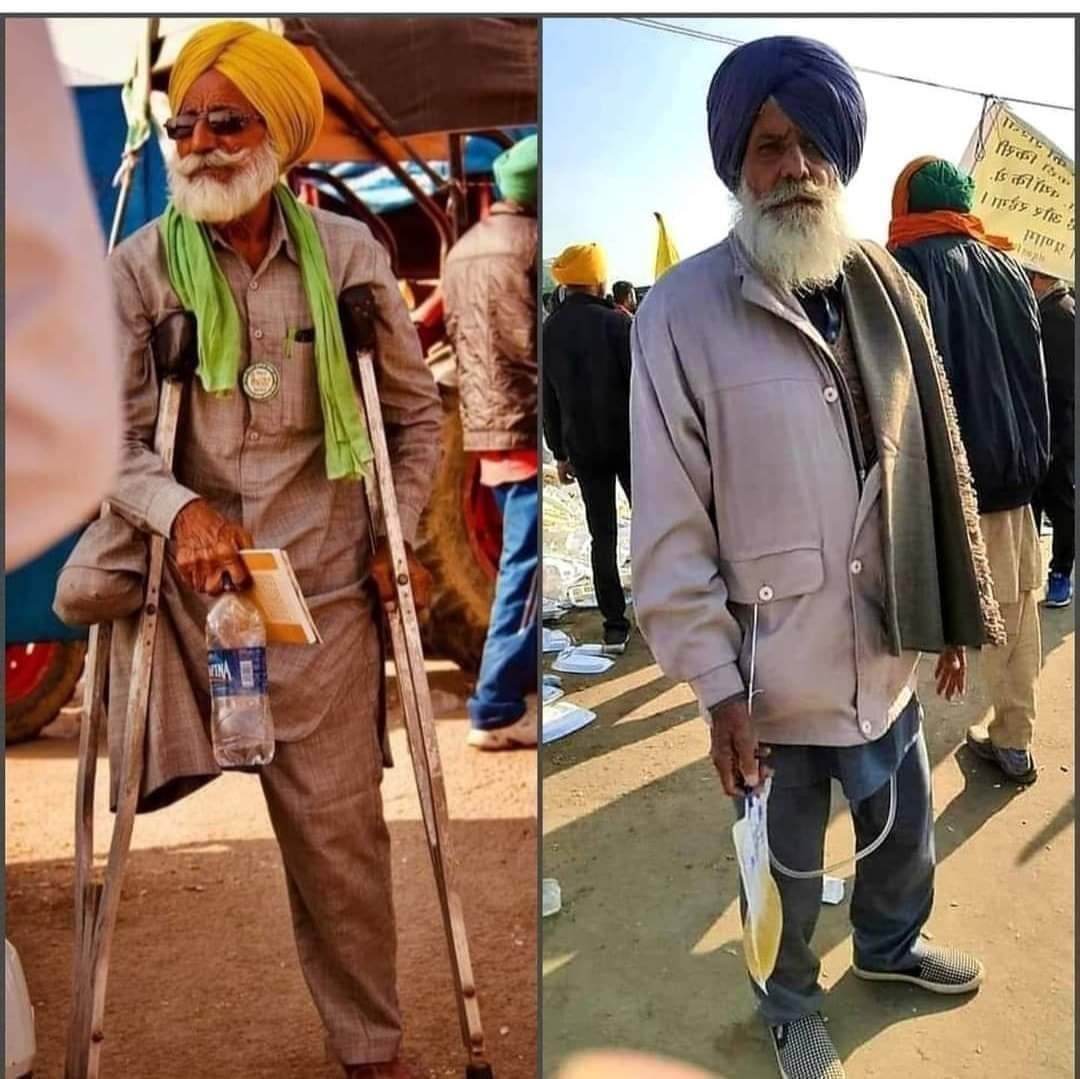
2.PITIABLE STATE : OUT IN OPEN INSTEAD MEDICAL CARE

3.THE SPIRIT OF INSPIRATION FOR FARMERS :


Current Events :















1.THE BARE FOOT SEWA BEFORE SELF ::
2.PITIABLE STATE : OUT IN OPEN INSTEAD MEDICAL CARE
3.THE SPIRIT OF INSPIRATION FOR FARMERS :

The year 2021 will be a significant one for the Army as it will witness major changes at the top with five of its commanders superannuating over the next 10 months.
Ajay Banerjee
Tribune News Service
New Delhi, January 1
The year 2021 will be a significant one for the Army as it will witness major changes at the top with five of its commanders superannuating over the next 10 months.
In all, there are eight Army Commander-level posts, including the two held by the Vice Chief and the Shimla-based training command.
The first superannuation is slated for January 31 when the Vice Chief of the Army Staff, Lt Gen SK Saini, retires. The Central Army Commander, Lt Gen IS Ghuman, and South Western Army Commander Lt Gen AS Kler will retire the same day on March 31. Eastern Army Commander Lt Gen AS Chauhan superannuates on May 31 while the last retirement will be of Western Army Commander Lt Gen RP Singh on October 31.
Several senior officers are in the race for these posts and one of those promoted could even be the next Army Chief when incumbent Gen MM Naravane’s tenure ends in April 2022. Holding the position of a Commander is one of the requisites to become the Army Chief. While the Army Chief retires at 62, a Lt General-rank Army Commander superannuates two years early.
Besides merit, the qualifying criteria for promotion as Army Commander is having a minimum 18 months of residual service. If the government goes by the seniority principle, the new Army Commanders could be a mix of Infantry and Armoured Corps officers.
A poster put up on the guide map near the Sector 66/67 traffic lights in Mohali announces a reward of $ 1 million for killing Captain Amarinder Singh

Punjab Chief Minister Captain Amarinder Singh. File Photo
Mohali, January 1
Mohali Police have registered a case against an unidentified person who has announced a reward of $ 1 million for killing Punjab Chief Minister Captain Amarinder Singh by putting up a printed poster on the guide map near the Sector 66/67 traffic lights.
On the poster, it was written that a reward of $ 1 million would be given to the person who kills the Chief Minister.
According to the sources, a case has been registered against the unknown person under Sections 504, 506, 120 B, 34 of the IPC and 3, 4 and 5 of the Punjab Protection of Defacement of Property Ordinance Act at the Phase 11 police station.
A senior police officer said the investigation was on after registering an FIR and the accused would be nabbed soon. CCTV footage from around the area is being scanned.
An email address ibrahim@hotmail.com has been found on the poster and the cyber team is on it, said the officer.

Indo-Tibetan Border Police Director General (DG) SS Deswal – File photo
Tribune News Service
New Delhi, January 1
The Indo-Tibetan Border Police (ITBP) today said the force’s Director General (DG) SS Deswal has been touring the frontier areas along the LAC in Uttarakhand as part of a move to review security preparedness and boost morale of the troops deployed there.
Officials said the DG visited the Mana post located at a height of 11,000 feet and the ITBP base at Joshimath in the border district of Chamoli as part of a four-day tour that began on Tuesday.
Addressing his men at “sainik sammelans (meeting with troops)” held at Mana and Joshimath, Deswal said the nation was “grateful” to them for their “commitment and dedication towards duty and safeguarding the borders” in the tough climatic conditions of the Himalayan region.
“The DG stressed on the need to focus on health and urged all personnel to make fitness their top priority. He also told jawans to ensure that they undertake 2-3 hours of exercise daily for leading a healthy life in the tough mountainous terrain,” the spokesperson of the force quoted him as saying.
Amarinder Singh comes across as weak and indecisive as he hedges on tackling farmers vandalising Jio towers. The agitation could also end up helping revive AAP months ahead of Punjab polls.
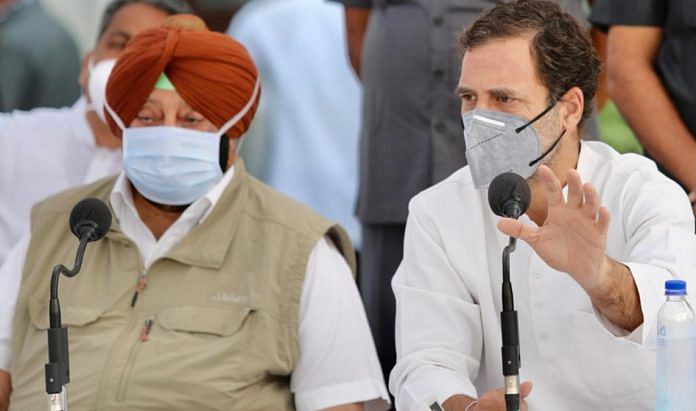
New Delhi: Capt. Amarinder Singh, the Chief Minister of Punjab, always had an aura around him — of a firm and decisive politician with an uncluttered mind who could hold his own even against the Congress high command.
This image has taken a hit as he stands as a helpless spectator while Reliance Jio towers are vandalised in Punjab by farmers protesting against the Centre’s new farm laws. The CM, who had taken out a tractor rally in support of farmers, finds no takers for his appeal to not indulge in vandalism. The state police haven’t registered any FIR so far, with Amarinder still weighing the pros and cons of acting against farmers.
Congress functionaries closely associated with him tell ThePrint that Amarinder is “extremely concerned” about the possibility of the farmers’ agitation getting out of hand but remains clueless about his own plan of action. This display of weakness and indecisiveness is quite uncharacteristic of the scion of the erstwhile royal family of Patiala, who has had an outstanding track record in public life.
In his assessment, say Amarinder’s associates, the agitation that was expected to hurt his political adversaries may end up damaging the reputation of his government and also his political prospects, with the assembly election barely 13 months away.
The Shiromani Akali Dal (SAD) might have lost much ground for being a part of the Central government that brought these farm laws, but it’s the prospect of the Aam Admi Party’s (AAP) revival that is haunting Congressmen in Punjab.
ThePrint reached Amarinder Singh’s office via telephone, but there was no response until the time of publishing this report.
Also read: Why discuss polish over China-Pak threat, House panel a joke, says Amarinder on Rahul walkout
The AAP’s influence in the state was on the wane but Congress leaders believe that Arvind Kejriwal’s party has been able to make “considerable gains” through its pro-active support of the farmers’ agitation. On 27 December, Kejriwal also went to Singhu border to extend support to them.
“The attacks on Jio towers and targeting of corporate houses may scare away many investors from Punjab. All that Captain has done as chief minister in the past four years will be forgotten if there is a serious law and order situation in the election year,” a Congress MP told ThePrint.
Amarinder, say Congress sources, would like the farmers to end their agitation, given that the Narendra Modi government is ready to guarantee continuation of minimum support price (MSP) and make amendments in the laws to address other concerns of the farmers.
It’s clear that the Centre will not repeal the laws and farmers have nothing more to gain from stridency, but “leaders like Joginder Ugrahan have a different agenda”, say Congressmen.
The chief minister seems to be caught between the proverbial devil and the deep sea. With former-and-would-be Congress president Rahul Gandhi strongly backing the farmers’ agitation, Amarinder can’t openly differ with or disapprove their course of action or act against vandals. But, it would be politically suicidal to be seen as a weak CM who stands as a mute spectator to a worsening law and order situation and also lets the AAP regain its lost ground.
There are also apprehensions among Congressmen that if the farmers’ agitation, largely led by Sikhs, continues and turns ugly at some stage, it may lead to the resurfacing of identity politics in Punjab, a scary prospect that the CM can’t ignore.
Also read: How faction-ridden AAP in Punjab is looking to turn farmers’ agitation into an advantage
A once-decisive Amarinder Singh
There was a time when Singh was decisive. In 1984, he had quit the Congress over Operation Blue Star and joined the Akali Dal. He returned to the party 14 years later.
Ahead of the 2017 assembly election, when Rahul Gandhi was seeking to undermine Amarinder and was toying with the idea of projecting a different leader as the CM face, the Capt. put his foot down and forced the Congress high command to back off. Rahul Gandhi’s lieutenants in Punjab have been targeting him, of late, but he has just ignored them.
A story that one often hears in Congress circles is when a party leader once suggested to Amarinder that he should start calling Rahul Gandhi “Rahul ji”. The CM laughed it off, saying he was Rajiv Gandhi’s classmate in Doon School and so Rahul should call him ‘uncle’. It may be an apocryphal story but it shows how Congressmen regard Amarinder for holding his own.
At 78, Capt. Amarinder Singh seems to be losing his mojo as he falters in dealing with the farmers’ agitation. He seems inclined to comply with Rahul Gandhi’s wishes and look away when vandals threaten to throw Punjab into turmoil, again.
Amid this looming political crisis, Amarinder also has to deal with Central agencies such as the Enforcement Directorate, which has summoned his son, Raninder, in a FEMA violation case.
As the adage goes, when the going gets tough, the tough get going. But the moot question is whether Capt. Amarinder Singh is still the tough politician that he was once.
Also read: BJP’s Harinder Khalsa who quit party over farm laws is ex-IFS officer, had stints in AAP, SAD
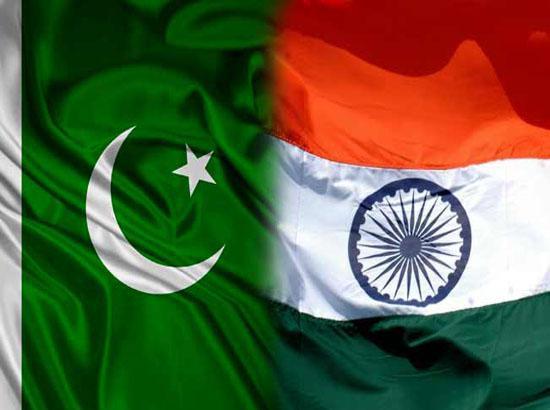
New Delhi, January 2, 2020 : India and Pakistan on Friday exchanged through diplomatic channels simultaneously at New Delhi and Islamabad, the lists of civilian prisoners and fishermen in their custody.
India handed over lists of 263 Pakistan civilian prisoners and 77 fishermen in India’s custody to Pakistan. Similarly, Pakistan has shared lists of 49 civilian prisoners and 270 fishermen in its custody, who are Indians or believed-to-be Indians. This is in keeping with the provisions of the 2008 Agreement under which such lists are exchanged every year on January 1 and July 1.
A Ministry of External Affairs release said the Government has called for early release and repatriation of civilian prisoners, missing Indian defence personnel and fishermen, along with their boats, from Pakistan’s custody.
In this context, Pakistan was asked to expedite the release and repatriation of three Indian civilian prisoners and 185 Indian fishermen to India whose nationality has been confirmed and conveyed to Pakistan.
“In addition, Pakistan has been asked to provide immediate consular access to Indian fishermen and 22 civilian prisoners who are in Pakistan’s custody and are believed to be Indian,” the release said.
The government also requested Pakistan to expedite the grant of visas to the members of the medical experts’ team and facilitate their visit to Pakistan to assess the mental condition of believed-to-be Indian prisoners of unsound mind, lodged in different jails of Pakistan. It was also proposed to organise an early visit of the Joint Judicial Committee to Pakistan.
The release said India remains committed to addressing, on priority, all humanitarian matters, including those pertaining to prisoners and fishermen in each other’s country.
“In this context, India has also urged Pakistan to expedite necessary action at its end to confirm the nationality status of 80 Pakistan prisoners, including fishermen, whose repatriation is pending for want of nationality confirmation by Pakistan,” the release said.
In view of the COVID-19 pandemic, Pakistan has been requested to ensure the safety, security and welfare of all Indian and believed-to-be Indian civil prisoners and fishermen, it added (ANI)

ndia’s Victory: The military planned, executed and won the 1971 war and when Dhaka fell, neither Indira nor Manekshaw flew in for a photo-op.

Fifty years is almost a lifetime, and the right time-span to look back at an event, particularly if the golden jubilee is that of a spectacular, unparalleled modern military victory. A poor nation of hungry millions, standing up to a warring sibling founded, armed and funded by a former Empire and a modern superpower, and yet achieving a stupendous victory against all odds is a chapter of history that we need to read many times over. With a Parsi Chief of Army Staff, Sikh and Jewish generals, a Muslim Assistant Chief of Air Staff and a predominantly Hindu force, the 1971 victory was that of a professional army completely oblivious to identity politics and its sinister sectarian manipulations. Every arm of the fledgling Indian state, be it spymaster RN Kao’s boys or BSF men and officers under KF Rustomji, worked like cogs in a big wheel which relentlessly rolled on, crushing the enemy’s genocidal, communal army, tearing Pakistan into two, redrawing the blood-soaked colonial map left behind by the retreating Empire, and rewriting the sad story of sub-continental fratricide.
Can we repeat the 1971 victory now? How many among the heroes of 1971 would have even chosen to remain in present day India? For instance, Royal Air Force’s ace pilot Idris Hasan Latif had rejected Jinnah’s Pakistan to choose Gandhi’s India, but would he do it all over again in an atmosphere filled with the fear of the unknown National Register for Citizens? What about Sam Manekshaw, JFR Jacob and Rustomji? Would they have preferred a more cosmopolitan London or New York or Melbourne to a strife-torn Indian city where youngsters remain anxious about their identity and farmers fight for their survival? These are important questions that we should ask as we start celebrating 2021, which will, hopefully, also be the Year of the Vaccine.
Another great lesson of the 1971 war was that it was fought after a general election and not before or for an election. Indira Gandhi won the Lok Sabha elections conclusively in March 1971, winning 352 seats out of the 518 that went to polls, and initially wanted the attack in April, but was turned down by the army — an instance of a no-nonsense military leadership and a listening political headship. The military planned, executed and won the war and when Dhaka fell in December, neither Indira nor Manekshaw flew in for a photo-op. It was left to the deserving Eastern Command chief to do the needful. Thus a new nation was born, which in its fiftieth year of founding stands tall and firm.
But India faced its biggest setback as a nation and a democracy thereafter. The very same leader who let the military and the bureaucracy do their job and refused to make political capital out of the moment of military triumph soon metamorphosed into a dictator, imprisoning Opposition leaders, imposing censorship, letting her son rule by proxy and postponing elections. So, is Indira’s makeover the real lesson of the 1971 victory — the emergence of a strong leader of a weak country? As a leader who changed the international map, creating a nation, and annexing new territory (Sikkim), Indira remains nonpareil in our annals; but she also took the nation into dictatorship and made us aware how fragile our democratic institutions are.
India craves for strong leaders — election after election. From Indira to LK Advani to Narendra Modi, we have had politicians trying to plug into this current of national yearning; some have succeeded and many failed. Yet, we refuse to acknowledge this sentiment, which often is mistaken for rightwing nationalism. A strong leader is the people’s cure for weak institutions of the functioning Indian chaos. The stronger the messaging about the messiah, the more receptive are voters for deliverance. Whether the promise is of politically-neutral development heralding prosperity through jobs and greater income, or the slogan is of a tougher national security state taking on enemies real or imaginary, voters seek out strong leaders who are seemingly in control. Of course, strong leaders have been defeated in the past when they lost the credibility of their messaging and the best example is the personal defeats of Indira and Sanjay along with that of their party in 1977. Yet, the chaotic Janata experiment only ended in the people turning to their tried and tested strong leader.
In September, it will be 75 years since the first interim government headed by Nehru took over the reins of governance to give ourselves the rule of law; yet India believes in the myth of the rule of the leader. This belief, though it is almost akin to the worshipful wait for the next avatar, cannot be dismissed as a pre-modern society’s superstitious angst. Had it been so, Indira would not have been voted out of power. The desire for the strong leader is a legitimate need for order — the quest for a super-arching authority to put the brute queue-jumpers in place, to create a more just society for the meek. This wish probably stems from deep insecurity over our inability to manage our own resources in small groups. The feudal hierarchy of the villages could not be solely blamed for this failure, for it is replicated in big cities that do not necessarily care for caste or communal pecking orders.
Indira succeeded in 1971 because she inherited a system that was still largely new in terms of its organisational integrity and idealistic in its intent. It was just 23 years after the Mahatma’s assassination and there was plenty of idealism in the air. But the present day strong leaders need to analyse whether they can repeat that feat while presiding over a people anxious about discord and dissension from within.

Farmers raise slogans against the Centre over the agri laws on the Delhi border on Friday. PTI
Tribune News Service
Chandigarh, January 1
Taking a serious note of attempts by some protesters to forcibly enter homes of political leaders and workers in support of the farmers’ agitation, Chief Minister Capt Amarinder Singh today said such actions went against the spirit of ‘Punjabiyat’ and could not be condoned.
‘Hopeful of early resolution of stir’
Chief Minister Capt Amarinder Singh greeted people on the New Year, and expressed hope of an early resolution of the peaceful farmers’ agitation. The CM stressed the importance of industry and communication for state’s progress and employment generation for children
Strongly condemning such behaviour, the Chief Minister appealed to the protesters not to cause any harassment or inconvenience to families of political functionaries of any party by resorting to these kind of acts. Invasion of privacy of people would bring a bad name to the peaceful agitation of the farmers and defeat its very objective, he warned, exhorting protesters not to take the law into their hands in their fight for farmers’ rights.
After months of showing exemplary restraint, and not indulging in any violence or lawlessness in Punjab, as well as at the borders of the National Capital, some protesters were losing restraint despite being categorically asked by their leaders to keep the protests peaceful, said Capt Amarinder. He urged the protesters to exercise restraint and express their solidarity with the farmers in the same spirit of self-discipline as had been demonstrated so far by farmer organisations and lakhs of their supporters.
The Chief Minister warned that such attempts at forcible entry into the houses of any political functionaries, or picketing of their homes, had the dangerous potential of vitiating the atmosphere of peace and destroy the harmony amongst people of diverse castes, religions, communities, etc, which was contrarian to the Punjabi spirit of harmony and unity. “Politics has its own place, but we must keep the spirit of Punjabiyat alive,” he said.

Kolkata, January 1
Defence PSU GRSE has delivered to the Indian Navy the last of the eight landing craft utility (LCU) ships manufactured by it, providing a major boost to the country’s defence preparedness, a top company official said.
The amphibious ships, to be based in the strategic location of Andaman and Nicobar Islands — which is close to various routes leading to the South China Sea — “are specifically designed to undertake landing operations in most difficult beaching areas”, GRSE chairman and managing director Rear Admiral (retd) V K Saxena said.
Despite challenges owing to the COVID-19 pandemic and subsequent lockdown, the Kolkata-based Garden Reach Shipbuilders and Engineers (GRSE) has successfully delivered the last of eight LCUs manufactured for the Indian Navy, he said.
The LCU ships, equipped with state-of-the-art technology, were developed in-house with 90 per cent of its parts indigenously manufactured.
“These ships are very unique in their design and class in the world. A very specific kind of requirement was given by the Indian Navy — the speed of 15 knots, a displacement of 900- odd tonnes and a low draught for beaching in the shallowest of waters,” Saxena told PTI.
Apart from troops, each ship can accommodate main battle tanks, personnel carriers and other Army vehicles, which can be launched on the beaches, he said on Thursday.
The ships are designed to accommodate 216 personnel and have two indigenous CRN 91 guns to provide artillery fire support during landing operations, he added. PTI

Photo for representational purpose only. iStock
Tribune News Service
Chandigarh, January 1
The Army’s Western Command ushered in the new decade with the operationalisation of its official social media accounts on Twitter, Facebook and Instagram accounts on Friday.
The official accounts of the Western Command can be accessed at @westerncomd_IA, Western Command and @westerncomd_indianarmy,respectively.
Lieutenant General RP Singh, General Officer Commanding-in-Chief Western Command, posted the inaugural tweets and messages on all three platforms.
While acknowledging the strength of social media, which has maximum reach especially amongst youth, he emphasised the need to use these platforms to keep the veterans and civilian population abreast on matters concerning national security and the contribution of the Western Command in the nation building.






























