



Sanjha Morcha

What’s New

Click the heading to open detailed news

Current Events :

web counter

Print Media Reproduced Defence Related News

Kargil veteran speaks about his book on war experience ‘Focus of the book is on identifying the mistakes committed during the conflict’

Kargil veteran speaks about his book on war experience

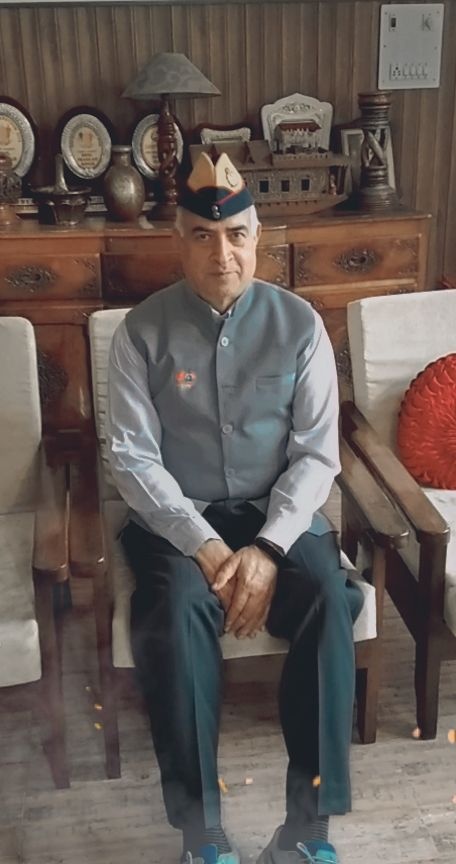
Image only for representational purposes. File photo.

Tribune News Service
Chandigarh, December 18

The stories of the men who have fought wars must be recorded for posterity so that the new generation of officers learn from their experiences, do not repeat the mistakes and write history with more blood, said Kargil war veteran Brig US Bawa (retd) on Friday.

Stating this while speaking about his recently published book, ‘Mashkoh – Kargil As I Saw It’, Brig Bawa (retd) said that the focus of the book is on identifying the mistakes committed during the conflict.

“Each and every citizen should know about how the war was fought and the sacrifices made by the soldiers,” he said.

“Generally battalion histories are relegated to the museums and archives, but everyone should know about it. The book also details the problems faced by soldiers and their families after the war,” he added.

Brig Bawa had commanded 17 Jat during the Kargil conflict. He was decorated with the Vir Chakra for gallantry. His unit had been tasked to capture Pimple Complex, part of Point 4875 in Mashkoh Valley adjoining Dras.

On why he chose to write the book, he said, “There is a very eventful point in everyone’s life and in my life, it was the Kargil war. Though it gave me and by uint a lot of awards and fame, it also made me sad on losing my men.”

The book tells the stories of bravery, humour, emotions, tragic losses and hard-won victories in extremely challenging high-altitude terrain of the Kargil sector along the Line of Control in northern Jammu and Kashmir, he said.

Maj Gen Amarjit Singh (retd) said that very few books on military operations have been written by men who have fought a battle and faced bullets.

Brig Bawa said the book is based on first hand, experience, emotions and ground incidents.


Watch: Military Literature Festival 2020 inaugural session Speakers: Punjab Governor VP Badnore, J&K ex-Governor NN Vohra, Western Command GOC-in-C Lt Gen RP Singh

http://

Tribune News Service

Chandigarh, December 18

The fourth edition of Military Literature Festival (MLF) began with Defence Minister Rajnath Singh delivering the inaugural address virtually today. Other prominent speakers during the inaugural address included Governor of Punjab VP Singh Badnore, former Governor of Jammu and Kashmir NN Vohra, and Western Command General Officer Commanding-in-Chief Lt Gen RP Singh.

http://

Allow access to war histories and records, says former J&K Governor Vohra

Tribune News Service

New Delhi, Dec 18

Former Governor of Jammu and Kashmir NN Vohra on Friday made a strong pitch to make public the histories of war fought by the Indian armed forces, saying reading these would help the younger generation of soldiers.

Vohra, a former Punjab cadre IAS officer who was Defence Secretary (March 1990 to April 1993) of the country, was speaking at the inaugural session of the fourth Military Literature Festival. The annual event was conducted virtually from Chandigarh this year.

Vohra said we had unfortunately not allowed access to documents, and had been secretive and confidential. He gave the example of his three-year tenure as Defence Secretary, saying, “We finalised the military histories of wars in 1948, 1962, and 1971; when we tried to get them published, there was enormous opposition and could not be published.”

Experience of war and combat if not recorded well in time, and was not made available to cadets in military academies, or in institutes such as the National Defence College, the younger generation would not be able to learn from it.

Former J&K Governor NN Vohra

The nation, he said, had been guilty of not allowing certain reports such as the one by Henderson Brookes on the 1962 India-China war to be made available. These could at least be used for military for learning. He suggested that after 30 years a document could be made available in an archival repository and scholars be allowed to go and examine those with prior permission. This could be done in case putting the document in public domain was not okay.

Vohra went on to commend the plethora of writings in newspapers and journals, saying it showed commendable insight of officers of the services. There was an intertwining in matters civil and military; it would lead towards national strength and strong foundations.

Defence Minister Rajnath Singh, who was also present at the virtual session, commended the forces for the 1971 war victory, saying we were celebrating the golden jubilee of the victory.

He lavished praise on the experience of the veterans, asking young people to learn from retired soldiers, instead of playing ‘war linked’ games on mobiles. The veterans were like living institutions.

(Also read: Salute to reservoir of military might)

He asked the organisers to devote the next year’s theme to cyber war and tackling misinformation campaigns. The enemy, he said, could reach our people through mobile phones.

The Governor of Punjab and Administrator of Chandigarh, VP Singh Badnore, said the festival was unique in its fabric. Chandigarh, he said, was the most appropriate venue to conduct the festival.

http://


Can’t rule out probability of Ladakh skirmish, but China faces logistical issues — Dhanoa

former IAF chief Air Chief Marshal B.S. Dhanoa

Former IAF chief Air Chief Marshal B.S. Dhanoa | ANI

New Delhi: Noting that the probability of a conflict between India and China can never be ruled out, former IAF chief Air Chief Marshal (ACM) B.S. Dhanoa Friday said that while on paper the Chinese Air Force has huge capability, a lot of natural and logistics factors are flying against it.

Chairing a session of the Military Literature Festival, which is being held online this year due to the Covid pandemic, he argued the Indian Air Force can actually provide a credible punitive action in the Himalayas as against the People’s Liberation Army’s Air Force (PLAAF).

Speaking about the ongoing stand-off in Ladakh, Dhanoa said, “Probability of India-China skirmish can never be ruled out.”

He added that the Chinese believe in the old Soviet era doctrine of their main offensive being missile and rocket-based.

Dhanoa further said that today’s China is not the same China that fought in Korea. “Taking large casualties is something that a developed China with one-child policy cannot take,” he explained.

About the PLAAF, the former IAF chief said, “On paper, the PLAAF has a huge capability and is supported by a much larger economy funding a defence budget, which is almost three times ours. This is a public defence budget in which a lot many things are hidden.”

He noted that the PLAAF has 1,500 fighters, of which 800 are fourth generation.

Dhanoa further said China has also deployed a limited number of fifth generation fighters — J-20 and J-31 — and has also completed the induction of 24 Su-35 that it procured from Russia and the S-400 air defence system.

Also read: China wanted ‘no escalation’ on hotline call in the day, tried to capture territory at night


‘Effect of terrain has to be taken into consideration’

Talking about the PLAAF strength, Dhanoa said China has strategic bombers and has also deployed advanced AWACS (Airborne Warning And Control System), besides having a large fleet of UAVs, including stealth UAV.

He added that the Chinese have rocket forces deployed, which have the ability to target all military installations opposite them and also in the hinterland.

“It has developed Electronic Warfare to counter the US. So it has more than a match for our technology. But the bottom line is how credible are these technologies when we look beyond the Himalayas into Tibet,” Dhanoa said.

He questioned how much of this force can be brought against India given the state of infrastructure in Tibet and Xinjiang.

“Effect of terrain has to be taken into consideration. It has an impact on aircraft operations due to altitude and extreme cold. It has an effect on targeting and weapons ballistic, specially because their adversary, which is us, is likely to be dispersed. It has got serious issues on radar’s line of sight resulting in very poor trans-frontier visibility,” Dhanoa added.

He said all of these result in very low reaction time and by the time the IAF fighters cross the Himalayas, the Chinese will have less time to react.


Also read: India in Ladakh is breaking ‘China is invincible’ myth. Pentagon needs to catch up


Border tensions a challenge to defence resources, but govt will ensure success, Rajnath says

Defence Minister Rajnath Singh speaks at the DRDO Awards Ceremony, in New Delhi on 18 December 2020 | ANI

efence Minister Rajnath Singh speaks at the DRDO Awards Ceremony, in New Delhi | ANI

New Delhi: Amid the stand-off with China in Eastern Ladakh and tension along the Line of Control, the government will make sure that the challenge to resources does not affect operational capability, but efficient utilisation of available budget is important, said Defence Minister Rajnath Singh Friday.

His remarks came at a time when the forces have been feeling the pinch of a constrained defence budget with many big-ticket modernisation processes slowing down due to lack of funds.

Addressing an event organised by the Defence and Research Development Organisation (DRDO), the minister said a realistic assessment of challenges should be done.

“Realistic assessment is important in itself and only then can we do what is necessary to meet them,” he said.

Talking about the security situation, he said the situation on both western (Pakistan) and northern (China) borders has posed a challenge to the country’s resources.

“I can assure on behalf of our government that lack of resources will never come in the way of our success at the border. The prime minister has said that, and I can say it with confidence,” Singh.

“But we will have to keep in mind the adverse effect of Covid on the country’s economy. What I am trying to say is we have to efficiently utilise the budget that is there. I feel we need to focus on this as well and I am sure the scientists are aware of how something can be utilised to the maximum extent possible.”

Sources in the defence and security establishment point out that the cash crunch is a real worry and many modernisation plans have slowed down due to budgetary constraints.

They added that the ongoing stand-off with China, which is in its eighth month and has seen a deployment of nearly 50,000 troops and equipment, has also put pressure on the Army’s budget.

To beat this, the Modi government has removed expenditure curbs on defence spending in the third quarter of the financial year to ensure procurement goes ahead without a requirement of the finance ministry’s nod.

 “While there will be many reasons why certain projects have slowed down, the underlying problem is the budget,” a source in the know said.

Also read: IAF, Navy delaying procurement due to funds crunch. And lesser said the better about Army


Budget constraints were already an issue

The increase in India’s defence budget this fiscal by a mere 1.82 per cent to Rs 3.37 lakh crore, excluding expenditure on pension, has not been enough for a military that has been forced to cut back on its procurement and modernisation plans due to lack of funds.

The Navy was forced to recalibrate its plans due to a depleting budget, which it repeatedly stressed was too little to cater to its future acquisitions and inadequate to meet its committed liabilities.

Some big-ticket projects have already been pending for a very long time, even before the coronavirus pandemic struck. Among them are the order for new fighter planes, besides one Tejas Mk 1A, additional nuclear and conventional submarines for the Navy and helicopters and tanks for the Army.

Earlier this month, Navy Chief Admiral Karambir Singh said the force approached the finance ministry with some funding models, especially for shipyards, similar to the Indian Railway Finance Corporation (IRFC) model.


Also read: Navy trying to get ‘maximum bang for the buck’ — Admiral Karambir Singh rues fund crunch


Chinese overseas projects fraught with danger, warns former ambassador

Chinese overseas projects fraught with danger, warns former ambassador

Tribune News Service
Chandigarh, December 18

China has embarked on a major outreach programme with other countries for economic gains but has failed to maintain its own domestic markets and is now going through an economic downturn, a former India diplomat said.

Gurjit Singh, a former Indian ambassador to Germany, Indonesia and Ethiopia, said at the Military Literature Festival here on Friday that China’s economic engagement with other countries is fraught with danger.

“China is building connectivity in different regions across the world, including Europe, Africa and Central Asia through construction of overseas railway lines and ports,” he said, speaking at a session called ‘Strategic Shift in the Pivot of Geography’.

“It was procuring raw material from several countries but has now stopped doing so, thereby giving severe economic shocks to the affected countries.”

Gurjit Singh also said that the real danger that is that the ongoing Chinese projects in other countries were not economic projects but strategic projects that did not abide by timelines and hence play the great game very effectively.

Lt Gen PM Bali, former Chief of Staff, Western Command, said the last three decades have seen the strategic rise of China, which has stared shifting the geographical pivot in terms with the world’s economy.

He said that as feared by international experts China has set on its conquest of other countries through its Belt and Road Initiative (BRI) to gain control of the host country’s economy. The countries agreeing to BRI claim to have long term capital gains, especially in maritime projects, but the same need to be seen, he said.

Elaborating on China’s growing relations with Russia, Central Asia, Eastern Europe and Africa, Brig Praveen Badrinath, Chief Engineer of a Corps, said China was playing out a well synchronised game in pursuit of its interests. He said that through the BRI corridors, smaller countries are falling prey to China road projects. He argued that pattern of events over last few decades indicates China was slowly but surely moving towards debt trapping nations.

Moderating the session, Maj Gen AP Singh, General Officer commanding of a Division in the northern sector gave out the historical perspective of the ‘great game’ played out in the eastern hemisphere and China’s growing influence and prominence.


India well positioned to play vital role in Indian Ocean Region: Army Vice Chief

India well positioned to play vital role in Indian Ocean Region: Army Vice Chief

For representation only. PTI file photo

New Delhi, December 18

India’s dominant position at the geographical centre of the Indian Ocean as well as its robust economy and global standing as an upholder of law and democratic values placed it in a firm position to play a vital role in the quest for peace and stability in the region, Vice Chief of Army Staff Lt Gen SK Saini said on Friday.

In his address at the Centre for Joint Warfare Studies (CENJOWS), a military think-tank, he said India believes that adherence to rule of law, transparency, and respect for all nations and peaceful resolution of disputes are non-negotiable aspects to harness the vast potential of Indian Ocean.

His comments came amid growing global concerns over China’s increasing military muscle-flexing in the Indian Ocean, a region that is critical for India’s strategic interests.

The Vice Chief of Army staff cautioned that the increasing interest of “extra regional forces” and the existing challenges of piracy, human trafficking, ad illegal fishing have all made the Indian Ocean Region (IOR) volatile and a potential “global battlefield”.

India has significantly expanded its deployment of warships and submarines in the Indian Ocean Region in the last few months following its border standoff with China in eastern Ladakh, ostensibly to send across a message to Beijing.

Lt Gen Saini identified preserving and facilitating the freedom of navigation in the Indian Ocean Region (IOR) as among key challenges, adding inadequate arrangements for equitable and peaceful harnessing of natural resources were also important aspect of the overall scenario.

“These concerns have been further accentuated by unilateral actions by some of the nations which have not only questioned the rights of the IOR nations to utilise their exclusive economic zones but have also challenged their sovereignty over some of the strategically located Islands itself,” he said.

The Vice Chief of Army Staff said such actions to change the “well-established equilibrium” has resulted in “immense turbulence and an intense superpower rivalry” in the region.

“India’s dominant position at the geographical centre of the IOR, a robust economy and a global standing as an upholder of law and democratic values, places it well to play a vital role in the quest for peace and stability in the region,” he said.

Lt Gen Saini said India has been increasingly engaging with all nations of the IOR and its outreach towards the East through the doctrine of SAGAR or ‘Security and Growth for All’ has been a pillar of its overarching foreign policy.

“India recognises and believes that to harness the vast potential of the Indian Ocean for economic development, adherence to rule of law, transparency, and respect for all nations and peaceful resolution of disputes will be inviolate and non-negotiable aspects,” he said.

“It would be appropriate to say that our role as a net security provider in the region is now a strategic obligation and no longer a matter of choice. India, therefore, needs to formulate a well defined IOR strategy and follow a robust capability development road map to live up to its potential in this region,” he said.

Lt Gen Saini said the unfolding diplomacy in the IOR is a clear indicator that the world powers want to forge partnerships with India to ensure peace and development in the region.

The Vice Chief of Army Staff reiterated that the geographical factors coupled with the slow and steady shift of power from the West to the East, have resulted in the IOR becoming a hub of global geopolitical rivalry.

The discussion was organised to get the defence forces, Indian industry, entrepreneurs and other stakeholders into a common platform in order to understand the complexities of changing dynamics in the Indian Ocean Region and to evolve coherent policies to address the future challenges. — PTI


Military Literature Festival: Moving troops ahead in some sectors can fully neutralise China’s advantage

Military Literature Festival: Moving troops ahead in some sectors can fully neutralise China’s advantage

For representation only. File photo

Vijay Mohan
Tribune News Service
Chandigarh, December 18

Stating that India’s pre-emptive moves in the Kailash Range in Ladakh has partially neutralised Chinese advantage in that sector, Lt Gen HS Panag, former GOC-in-C, Northern and Central Commands, stressed that India must not make any compromises because even a stalemate in this situation would be a defeat for China.

Speaking at a session on Sabre Rattling in Ladakh during the Military Literature Festival here on Friday, he said that though the overall advantage still lies with China so far, it India can advance troops in some areas like the Indus valley sector and southern sector, the Chinese advantage can be neutralised fully.

By carrying out multiple intrusions across the Line of Actual Control in eastern Ladakh, China has so far been able to sully India’s military and international reputation, prevented development of border infrastructure and secured key areas that enable it to seize large tracts of territory he said.

China’s aims, Lt Gen Panag said, were to re-assert its hegemony over India by undermining its status as a rising power, both laterally as well as internationally as well as to undermine the stong leadership of prime minister Modi who is seen by China as an alternate world leader to Xi Jingpin.

China also wanted to ensure that the status on the borders remains on its own terms with no development of infrastructure that can be a threat to it. Neutralising any threat to Aksai Chin and permannently securing areas up to its 1959 claim lines were other immediate objectives of Chinese mobilisation, he added.

China had occupied all territory it required by 1962 and it does not require any more land as far as its strategic interests are concerned. It is using such incidents merely as a tool to assert its hegemony over India and embarrass it. Stating that China wants India to be a junior cooperative partner on the world stage and not a competitor, he said that the moment China perceives India’s assertiveness, it will react through border skirmishes.

India’s growing relations with the US, Japan, Vietnman, influence in the Indo-Pacific region, aggressive posturing in Dokalam, development of border infrastructure in eastern Ladakh changing the status of Jammu and Kashmir and the Home Minister’s subsequent statement that Aksai Chin and Gilgit-Baltistan areas would be regained, were other triggers for the current stand-off, he said.

Lt Gen Raj Shukla, GOC-in-C, Army Training Command, said that tactically our response sto the Chinese have been fairly good, but we need to synergise them in the larger strategic framework. Stating that we need to brace up and act against the strategic squeeze from the LAC to the Indian Ocean Region, he added that a systematic and successful deterrence to China is very much possible. He said that a lot of work is being done in the arena of military education and the syllabus of all institutions right from the National Defence Academy to the National Defence College is being revamped. He also stressed upon making out response mechanism stronger and bolder.

Former GOC-in-C, Northern Command, Lt Gen DS Hooda said that it was clear from the level of preparedness that this incident was different from earlier incursions and the level of violence seen was unprecedented. “We were also taken by surprise as to why the PLA was doing it at this time when the entire world was affected by the Covid pandemic and neither ws there any breakdown in Sino-Indian ties or any large trigger,” he said.



MILITARY LITERATURE FESTIVAL 2020 Civil war could break out in Afghanistan as it is being handed over back to Pakistan: Christine Fair

Civil war could break out in Afghanistan as it is being handed over back to Pakistan: Christine Fair

Dr C Christine Fair. A screen grab from video

Tribune News Service
Chandigarh, December 18

Political and military affairs expert Dr C Christine Fair and former ambassador KC Singh discussed looming situation in Afghanistan after the US troops would move out and its repercussions in the session on ‘The Taliban are coming calling: Deep states in Pakistan and India and Role of Media’ during Military Literature Festival 2020 here on Friday..

Dr Fair said after US troops move out of Afghanistan, the real issue would be of air power.

“Afghanistan would need air support. Having said this, the troop withdrawal would happen. The problem is we (the USA) are handing over Afghanistan to Pakistan,” added Fair, while pointing out flawed US policy for the last 20 years in the region where no serious effort was made to curtail Pakistan has been made.

She also pointed out the issue of funding for Afghanistan. Singh said that once the USSR broke down and couldn’t fund Afghanistan, the government fell down.

“India could play a role here. Earlier, India and Iran had supported the Northern Alliance. Emirates and Saudis are upset with Pakistan. The US has to work with Iran but elections are coming up there. These fractures are working in favour of the Taliban,” he said, while highlighting that the Chinese presence in Ladakh would close some options for India.

Dr Fair said that a civil war could break out in Afghanistan.

“America is delegitimising democracy in Afghanistan. They want a puppet democracy. They are pushing Ghani (Ashraf Ghani) to give up the election. The Taliban is getting what they want. Pakistan is playing clever. They think that delegitimising democracy would create chaos in Afghanistan. Pakistan is maestro of chaos.”

On the role of media, Dr Fair said over the years the traditional media lost a lot of money.

“In the USA, the watchdog media shifted to access journalism. Access is money in India,” she said. Singh pointed out that newspapers run by trusts in India still have credibility.

Dr Fair said a lot of terrorist groups have presence over social media like facebook and Twitter including Taliban through proxies.

On deep state, Dr Fair said that Pakistan did have a deep state but in India military leadership has little say.

But Singh pointed out that Indian intelligence agencies were being used for political ends by the people in power.

“In case of the RAW, the oversight is missing. The ED and CBI are being used to go after people which the government doesn’t like,” he said.


India, China resume talks after 2 months Beijing calls it in-depth exchange of views; Army commanders’ meet soon

India, China resume talks after 2 months

India and China held 20th meeting of the Working Mechanism for Consultation & Coordination on India-China Border Affairs (WMCC) through video-conferencing on Friday after a gap of over two months.

Tribune News Service

New Delhi, December 18

India and China held 20th meeting of the Working Mechanism for Consultation & Coordination on India-China Border Affairs (WMCC) through video-conferencing on Friday after a gap of over two months.

Both sides decided to continue to work towards ensuring complete disengagement at all friction points along the LAC at the earliest.

Ministry of External Affairs

Towards peace

The two sides agreed to maintain close consultations at diplomatic and military levels and work towards ensuring complete disengagement along the LAC.

They also agreed to hold the ninth round of senior Army commanders’ meeting at an early date so that both sides can work towards early and complete disengagement of troops in accordance with the existing bilateral agreements and fully restore peace, said the Ministry of External Affairs (MEA).

The Chinese read-out said the two sides had “candid and in-depth exchange of views” and agreed on the need to focus on the disengagement of frontline troops and take “concrete measures to deal with the issues on ground” to further de-escalate the border situation. The Chinese side also welcomed the prospects of an early meeting of senior commanders to deal with the outstanding issues.

In an indication of the stalemate that had crept in over resolving the Ladakh standoff, there was no meeting of the WMCC all through October and November, although two rounds of commanders’ meetings were held on October 12 and November 6.