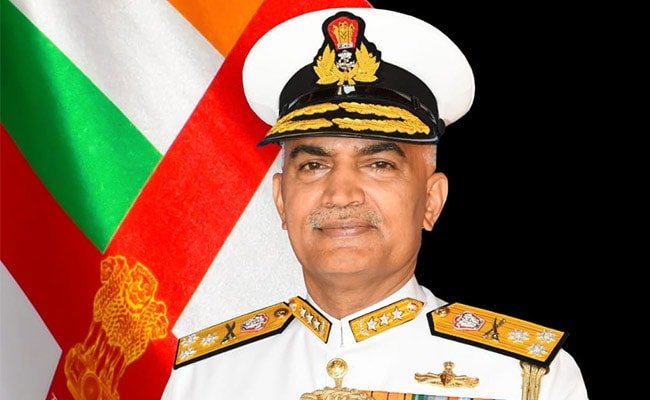
Lt Gen Ram Chander Tiwari, UYSM, AVSM, SM GOC-in-C Eastern Command & Col of the Kumaon & Naga Regts and Kumaon Scouts
GOC-in-C SW Command
LT GEN AMARDEEP SINGH BHINDER, AVSM, VSM,
GOC-in-C Southern Command
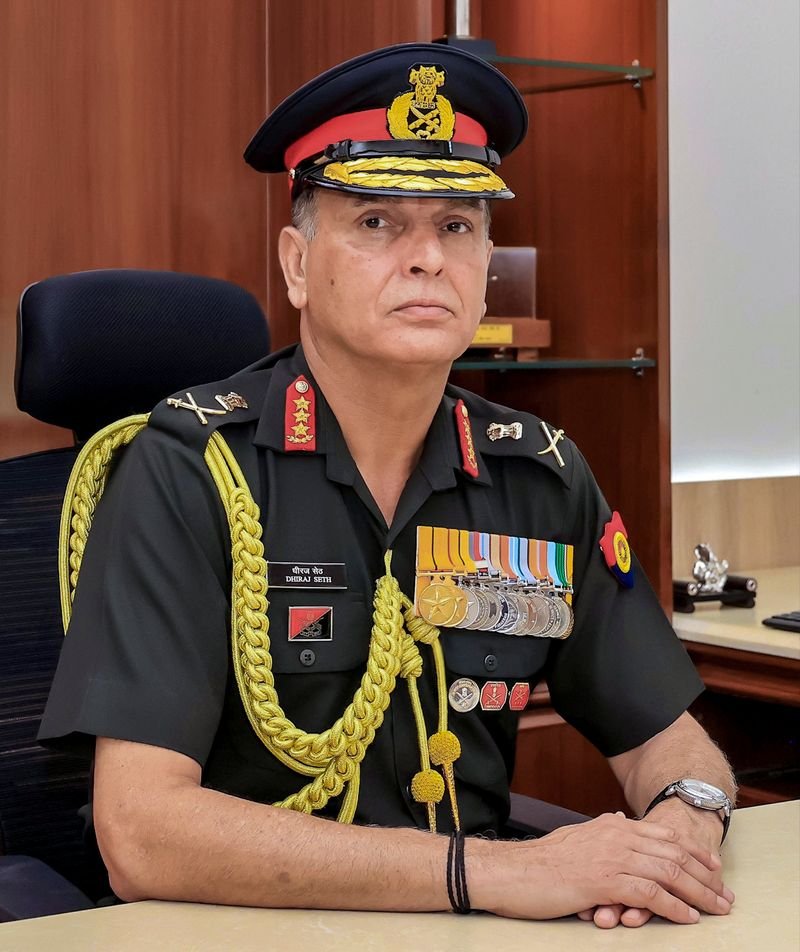
Lt Gen Ajai Kumar Singh, AVSM, YSM, SM, VSM
Print Media Reproduced Defence Related News
Pakistan: KPK government to restore 19th century Sikh gurdwara Sikh gurdwara in Mansehra district was built during the reign of Sikh ruler Hari Singh Nalwa
The provincial government in Pakistan’s Khyber Pakhtunkhwa has taken custody of a 19 century gurdwara built during the reign of Sikh ruler Hari Singh Nalwa, to renovate and open it for devotees.
Presently, the Sikh gurdwara in Mansehra district is closed and acts as a makeshift library, officials said.
The provincial Auqaf and Religious Affairs Department has recommended the local government to take up the restoration proposal with the Evacuee Property Trust Board (EPTB) in Lahore.
The EPTB is a statutory board that manages religious properties and shrines of Hindus and Sikhs who had migrated to India following the partition.
Hari Singh Nalwa (1791–1837) was the commander of the Sikh Empire. He is remembered for the battles in Kasur, Sialkot, Attock, Multan, Kashmir, Peshawar and Jamrud. Over 56 buildings, including forts, towers, gurdwaras and tanks, are said to be built under his direct supervision. PTI
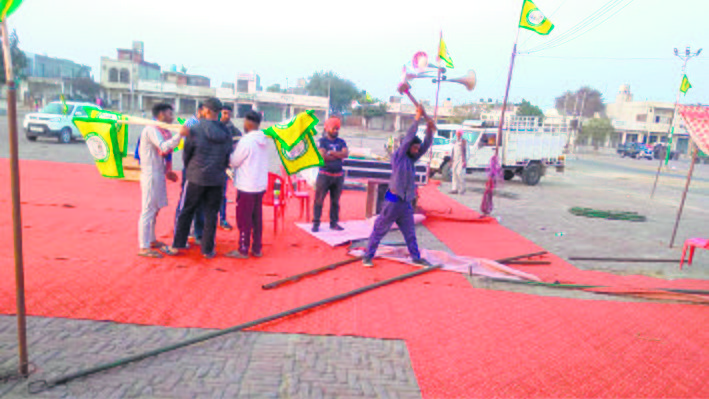
All set for mega rally against farm laws in Barnala today
Rally preparations under way at Barnala. Tribune photo
Vishav Bharti
Tribune News Service
Chandigarh, February 20
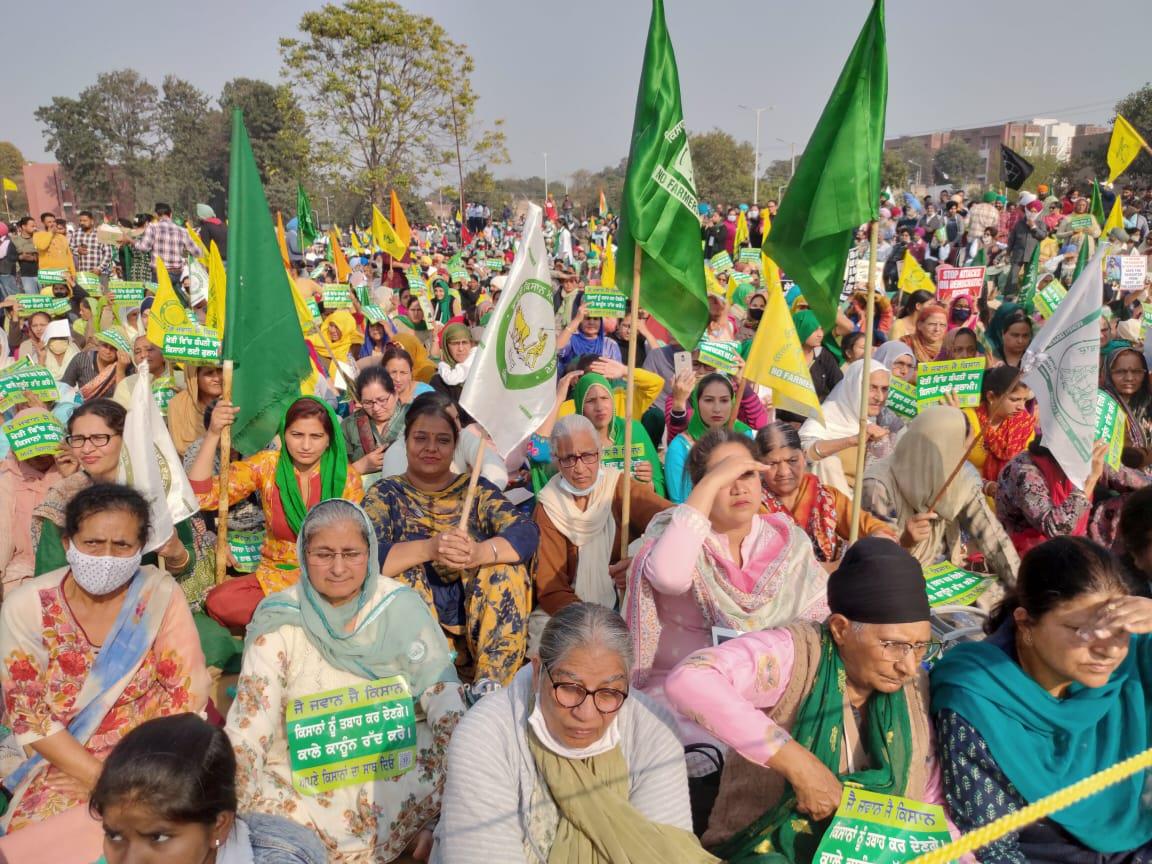
Barnala gears up to witness one of the biggest protest rallies ever organised by any farmer union in Punjab.
The rally against three farm laws is being organised by the BKU (Ugrahan) and the Punjab Khet Mazdoor Union tomorrow. The organisations claim it is to be attended by over two lakh people at Barnala’s grain market. “One person needs at least four square feet, so we have laid mats on nine lakh square feet,” says Sukhdev Singh Kokri, general secretary of the union.
Cops on toes
The police are on their toes to make arrangements for smooth traffic movement
Police officials from outside the district have also been called
The traffic is to be managed by six SPs, 12 DSPs and 300 constables
Cops have prepared a special map for traffic diversions
Apart from that four acres near the dais have been reserved for tea langar preparation. “Instead of serving at one place, we will try to serve tea among the people sitting in the venue,” said Kokri.
He said it was not possible to make arrangements for food, so they have asked people to bring their food along. “Some villages may arrange langar as well,” he said.
There will be around 1,000 volunteers who will help for the success of the rally. The organisations are expecting 6,000 vehicles, which will ferry people to the venue.The district administration is concerned about the traffic management. The union has deputed around 300 volunteers for the smooth movement of vehicles and parking. Apart from that, 400 have been deputed for the security of the stage and serving water and tea to people attending the ‘maha rally’.
The Barnala police are on their toes to make arrangements for the smooth movement of traffic. Police officials from outside districts have also been called. The traffic is to be managed by six SPs and 12 DSPs and 300 constables. The police have prepared a special map for traffic diversions.
Senior vice-president of the union Jhanda Singh Jaithuke said the rally was to be attended by people from 1,600 Malwa villages. “We are expecting 70,000 people from Sangrur district alone and around 50,000 from Barnala. There will be a huge participation of women,” he said.
All India Kisan Sabha to hold mahapanchyats in Rajasthan next week All India Kisan Sabha national vice president and former MLA Amra Ram will also address mahapanchayats
A large number of farmers from Rajasthan are also participating in protest against the agricultural laws of the Centre and are holding a sit-in protest on the Shahjahanpur border near Alwar. — PTI
Jaipur, February 20
The All India Kisan Sabha will hold several kisan mahapanchayats in Rajasthan next week under the leadership of farmer leaders, including Rakesh Tikait.
The kisan mahapanchayats will be held in the state from February 22 to 26 and the first one will take place in Nohar in Hanumangarh district on February 22, the Kisan Sabha spokesperson said.
Meetings will be held at Sardarshahar (Churu) and Sikar on February 23, Mehendipur Balaji (Dausa) on February 25 and Padampur Mandi (Ganganagar) and Ghadsana Mandi (Ganganagar) on February 26, according to the spokesperson.
Rakesh Tikait, the national spokesperson of the Bharatiya Kisan Union, will also address these mahapanchayats.
“You must also join to support the farmers’ movement and listen to the leaders of the United Front,” the spokesperson said.
All India Kisan Sabha national vice president and former MLA Amra Ram will also address mahapanchayats.
A large number of farmers from Rajasthan are also participating in protest against the agricultural laws of the Centre and are holding a sit-in protest on the Shahjahanpur border near Alwar. — PTI
Delhi Police release photos of 20 more people in connection with R-Day violence at Red Fort Cops say scanning videos and releasing pictures of people from them
View of damage at Red Fort in New Delhi. Tribune file photo
New Delhi, February 20
The Delhi Police on Saturday released the photographs of 20 people who were allegedly involved in the violence that broke out at the Red Fort on Republic Day during the farmers’ tractor parade, officials said.
Police said they are scanning the videos and releasing the pictures of people from them.
“We have released the pictures and the process of identification (of the people) has been started,” a senior police officer said.
Earlier, police had released 200 photographs of people in connection with the Red Fort violence.
Thousands of protesters had clashed with the police during the tractor parade called by farmer unions on January 26 to highlight their demand for repeal of the Centre’s three farm laws.
Many of the protesters, driving tractors, reached the Red Fort and entered the monument. Some of them even hoisted religious flags on its domes and the flagstaff at the ramparts.
The farmers have been protesting since late November at Delhi’s borders with Haryana and Uttar Pradesh, demanding a rollback of the Centre’s three new agri laws. PTI
Implementation of farm laws will increase food prices: Chaduni
Chaduni said if the new farm laws were implemented, farmers will no longer remain owners of their land
Protesters at the kisan mahapanchayat held in Chandigarh. Tribune photo
Chandigarh, February 20
Haryana BKU chief Gurnam Singh Chaduni on Saturday said food prices will increase like that of fuel if the Centre’s farm laws are implemented in the country.
Describing the farmers’ agitation against the Centre’s laws as a “dharma yudh”, the Haryana Bharatiya Kisan Union chief exhorted all sections of society to be part of the movement.
Chaduni was among several farmer leaders who addressed the first “kisan mahapanchayat” held here. The event was organised by the Naujwan Kisan Ekta.
“We call it (agitation) ‘dharma yudh’. If agri-business laws are implemented, then the country’s foodgrain will go into the godowns of a few people. Then the food prices will go up the way petrol prices are rising now,” said Chaduni, seeking to assert the “adverse” impact of the legislations.
“So, this is not a fight of farmers’ alone and we appeal to all sections of society that they should join this agitation. It is a movement to save the country. It is a ‘dharma yudh’,” said Chaduni.
Chaduni said if the new farm laws were implemented, farmers will no longer remain owners of their land. The next thing which will be seen is companies doing farming on huge chunk of land, he stated.
“If that happens, how will 65 per cent population which is dependent on agriculture survive? So, the question is of our survival, our future. If we lose this battle, then no one can save us from economic slavery,” he asserted.
He accused the Centre of doling out financial relief to corporates and claimed the government could not spare money for relief to farmers in the shape of debt waiver.
The Bharatiya Kisan Union leader said the question is not just of farmers but these three laws will impact cross section of people.
Chaduni asked people not to vote for those who do not stand by farmers today. He asked farmers to stay at the protest sites near the Delhi borders for some days on rotational basis.
Addressing the gathering, Bharti Kisan Union (Ekta Ugrahan) president Joginder Singh Ugrahan slammed the BJP-led Centre for bringing the three “black” laws which are “against” the interest of farmers.
He alleged that these farm laws will “benefit” the corporate sector.
He asked the government to repeal the laws rather than sticking to its stand of putting these on hold for some period.
Farmers from Punjab and Haryana have been camping at the Delhi borders since late November, demanding the repeal of the farm laws and a legal guarantee on the minimum support price for crops. — PTI
Uttarakhand glacier tragedy: 3 more bodies recovered from hydel project site, toll rises to 65
The 13.2 MW Rishiganga hydel project was totally demolished in the avalanche while the Tapovan-Vishnugad hydropower project suffered extensive damage
DG ITBP SS Deswal along with senior officials, reviews rescue and restoration work at Tapovan and Raini area. PTI
Gopeshwar (Uttarakhand), February 20
Three more bodies were recovered from the NTPC’s flood-ravaged Tapovan-Vishnugad hydel project site on Saturday taking the toll in the February 7 glacial disaster in Uttarakhand to 65, officials said.
The bodies were recovered from the desilting tank near the Tapovan project barrage on Saturday, NDRF Commandant P K Tiwari told PTI.
Search operation at the project site has been underway on a war footing for more than 13 days since it bore the brunt of an avalanche triggered by a glacial burst over Rishiganga river in Chamoli district.
The 13.2 MW Rishiganga hydel project was totally demolished in the avalanche while the Tapovan-Vishnugad hydropower project suffered extensive damage.
With the recovery of three more bodies, the toll in the tragedy has gone up to 65 while 139 people are still missing.
Meanwhile, Chamoli District Magistrate Swati S Bhadauria on Saturday asked the NTPC to press into service additional equipment and divert the course of Dhauliganga river to the other side so that its water does not flow through the barrage into Tapovan tunnel hampering sludge clearing efforts.
River water flowing into the tunnel from the barrage has been a major headache for rescuers at the tunnel making the muck clearing operations even more challenging, Bhadauria said.
Deploying additional equipment at the tunnel and diverting the course of the river will speed up the debris removal exercise which has been underway for more than 13 days, the DM said.
She said rescue operations at the main project site in Raini have been completed.
The DM added that the debris on the upper side of Rishiganga is now being scoured for any bodies that could be trapped, if any. — PTI
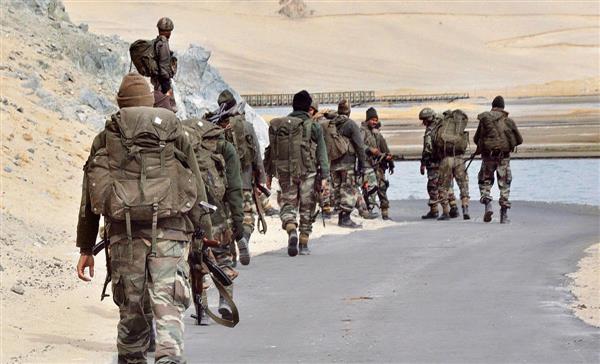
It has taken China eight long months to admit that four of its soldiers were killed in the Galwan valley clash in eastern Ladakh. Shortly after the barbaric hand-to-hand combat in June 2020, India had reported 20 fatalities, including a commanding officer. China’s prolonged, tactical silence triggered varying estimates of its own death toll: 45 according to Russia’s official news agency TASS, and 35 as per an American intelligence report. That China’s admission comes amid the disengagement in Pangong Tso is no coincidence. On February 10, Beijing had shown unusual alacrity in announcing to the world that mutual troop withdrawal had begun and the nine-month-long border standoff was as good as over. New Delhi had chosen to respond a day later, with Defence Minister Rajnath Singh confirming in Parliament that the pullback had commenced but hastening to add that India had not ceded any territory.
The Chinese army’s claim that it lost only four soldiers may or may not be the whole truth, but the official acknowledgement suggests an inclination — again, unusual for the Dragon — to partly lift the veil of secrecy. So, is this a confidence-building measure aimed at mending ties with India? Considering China’s military and economic expansionism, it could well be a ploy to counter criticism from the international community. The growing clout of the Quad coalition, comprising India, the US, Japan and Australia, is certainly not music to China’s ears. Thursday’s teleconference among the foreign ministers of the member nations was held barely a month after the Biden administration took charge. Quad’s commitment to ‘uphold a rules-based international order underpinned by respect for territorial integrity and sovereignty’ is intended to make China see reason.
Even as the disengagement is reported to have been completed in Pangong Tso area, the 10th round of the Corps Commander-level talks is scheduled to be held today to take forward the pullback process in other areas of eastern Ladakh. India needs to keep asserting itself at the diplomatic and military levels to sustain the gains and be ready for any eventuality in case China’s climbdown proves to be deceptive.
Army to raise 3 new battalions with 3,000 troops, under Sikh, Kumaon, J&K regiments
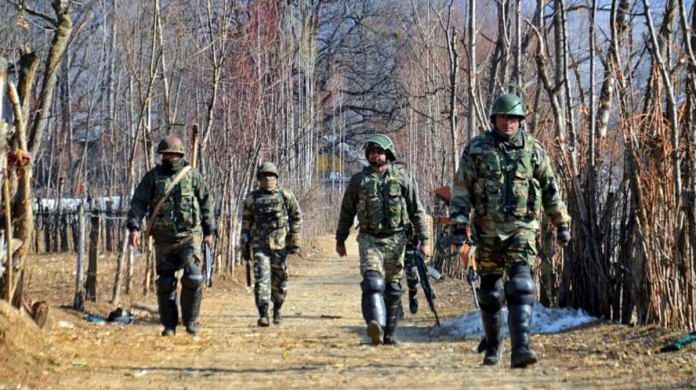
ew Delhi: The Indian Army will be raising three additional battalions — with a total of about 3,000 troops — to add to its manpower as part of its larger reorganisation plan and options to raise more are open, ThePrint has learnt.
Defence sources told ThePrint the sanction for the move was accorded around 2013, when the raising of the 17 mountain corps was granted. However, the final nod to raise the battalions was received a few weeks ago, they added.
The 17 corps was supposed to have two divisions instead of the regular three, but only the 59 Division now based in Panagarh, West Bengal, was raised, while the other was shelved due to financial constraints.
The additional three battalions will be raised as part of the Sikh, Kumaon, and Jammu and Kashmir Rifles regiments.
The Army told ThePrint the move is part of an ongoing reorganisation plan and not a fallout of the India-China face-off in Ladakh.
“It is not possible to raise all the battalions in one go, so it is phased out,” a senior Army officer told ThePrint.
The decision comes amid a protracted standoff with China at the Line of Actual Control in eastern Ladakh and the subsequent disengagement of the troops, which is currently underway.
India’s defence establishment had time and again said a collusive threat of a two-front conflict with China and Pakistan cannot be ruled out in the future.
“While the disengagement is under way at eastern Ladakh, India will be reviewing the border management posture and there might be a necessity to keep additional troops available in case of any contingency in the region,” a source said.
While the raising of the three battalions are to be done now, sources said options are open for more raisings in future depending on operational requirements.
Currently, there are over 400 infantry battalions in the Army.While there have been talks of the Army working on reducing overall manpower as part of a restructuring, the ultimate aim is to enhance the tooth to tail ratio, and provisioning fighting arms with additional manpower is one of the ways, Army officers explained.
A second defence source said there would also be a requirement of additional troops in the reorganised strike corps.
ThePrint was the first to report that the Army is looking to keep two strike corps for the mountains facing China and repurposing the Mathura-based 1 corps.
Senior officers said there is always a requirement of additional infantry — both to hold ground and to carry out offensive actions, especially in the mountains.
The second source explained that the increase in battalions will also cater to better management of the peace and field profile of the soldiers.
Due to the Ladakh standoff, a large number of units, which had moved to their peace locations after field positions, had to be deployed in Ladakh immediately, leaving them with little time in peace locations.
It takes approximately six months to raise a battalion, for which the manpower is contributed by other battalions of the regiment along with new recruits.
Once raised, the battalion moves for a peace station profile where they can train, before moving to field areas for their operational deployment.
‘Rebalancing of formations in the western sectors’
Experts said the need to raise new battalions could have stemmed from the requirement of additional commitments in eastern Ladakh in future.
“In future, there could be a requirement of additional battalions permanently stationed in the area,” Lt. Gen. Rakesh Sharma (retired), former 14 corps commander and adjutant general in the Army, who had handled manpower closely, told ThePrint.
“The decision could have also been taken in view of the rebalancing of formations in the western sectors and the strike corps, specially the 17 strike corps, which was partially raised with one division,” he said.
“However, it is also essential to direct the rebalancing methodology to combating new domains of warfare, such as cyber and space,” he added.
How financial powers to command heads will help Army, Navy, IAF So far, vice-chiefs of Army, Navy, and deputy chief of air staff were the competent financial authority for capital procurements of up to Rs 300 crore.
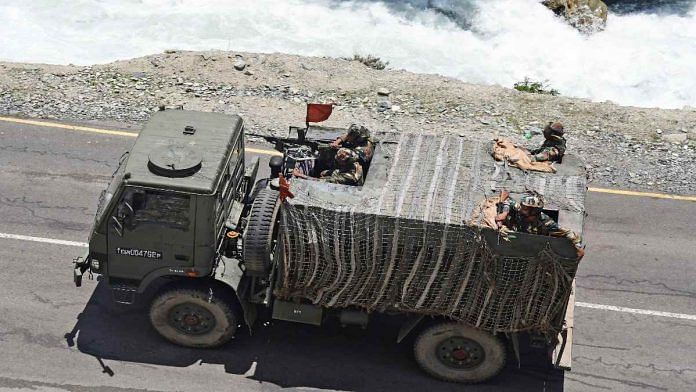
An Indian Army truck on a Kashmir highway leading to Ladakh | Representational image | ANI
New Delhi: The Union Cabinet Wednesday approved further delegation of financial powers under capital procurement that empowers command heads of the Army, the Air Force and the Navy to make expenses to the tune of Rs 100 crore at their own discretion.
Speaking to ThePrint, a senior defence official said this move — which comes in the wake of emerging security challenges — marks the first time financial powers have been devolved below the vice-chief level for capital procurement of specified items.
“This delegation of powers within service headquarters and up to command level for items of capital nature such as overhauls, refits, upgrades etc., will enhance the utility of existing assets and will facilitate faster processing and implementation of projects for modernisation of the armed forces to meet the security challenges of the nation,” the Union Ministry of Defence said in a statement.
According to the government statement, under the Other Capital Procurement Procedure (OCPP) of the Defence Acquisition Procedure-2020, the Deputy Chief of Army Staff (CD&S)/Master General Sustenance (MGS), Chief of Material (COM), Air Officer Maintenance (AOM), Deputy Chief Integrated Defence Staff (DCIDS), and Additional Director General Indian Coast Guard (ADG ICG) can take decisions on procurements and repairs of up to Rs 200 crore.
The limit is Rs 100 crore for the General Officer Commanding-in-Chief (GOC-in-C), Flag Officer Commanding-in-Chief (FOC-in-C), Air Officer Commanding-in-Chief (AOC-in-C) at Services Command, and Regional Commanders of the Indian Coast Guard (ICG).
So far, vice-chiefs of the Army, the Navy, and the Deputy Chief of Air Staff were the competent financial authority for capital procurements of up to Rs 300 crore. The new set-up is a sub-delegation of this, not an enhancement.
This is different from the emergency financial powers granted to the services for urgent necessities relating to military preparedness to meet eventualities such as war or war-like situation, or natural calamities.
Last year, amid the India-China face-off, the government gave emergency powers to the armed forces to procure weapons systems of up to Rs 300 crore on an urgent basis. The services were granted similar powers after the Balakot airstrikes in February 2019.
The essence of delegating these powers is to expedite the procurement/repair of equipment/items/material/stores, and provisioning of various services, during times of urgent requirement.
Officers of the three services say the latest decision will facilitate the ease of doing business by aiding faster capital procurement at a time when India is working on modernising its armed forces.
A senior Army officer said the delegation of financial powers will speed up the procurement process primarily because the chain for processing of approvals will shorten.
“Secondly, procurement at command level is a better option to purchase theatre specific equipment, while central procurement is more appropriate for common equipment,” the officer added.
The officer said smaller-sized contracts will prove more viable for smaller vendors who may not have the capacity to handle large contracts at the services level, and will boost Atmanirbhar Bharat, the Modi government’s campaign to boost domestic manufacturing.
A senior Navy officer said that while the quantum of funds available had gone up over the years, the power of spending had not.
“The enhanced financial powers will enable senior officers of the services to take fewer sanctions to buy a higher quantity,” the officer added.
Citing the Navy Chief of Material (COM) as an example, the officer said, “The COM is a principal staff officer for procurement of spares and logistics of the Navy. By enhancing his powers, he will not need to go back to his higher authorities for financial clearances for cases which now lie within his own financial powers.”
“This will save voluminous paperwork and thus delays,” the officer added.
An IAF officer said timely procurement has a strategic impact on operational effectiveness since “modern aerial warfare is driven by technology and any delay can have a cascading effect on the potency of the force”.
“The decision is in the right direction and will cut down time from initial proposal to final procurement,” the officer added.
More financial powers
The Cabinet decision also enables the Chief of Integrated Defence Staff to the Chairman Chiefs of Staff Committee, Vice-Chief of Army Staff, Vice-Chief of Naval Staff, Deputy Chief of Air Staff, and the Director General of Coast Guard to sanction government support of up to Rs 50 crore for prototype development — a move that could be seen as a bid to boost India’s self-reliance in defence.
According to the defence ministry statement, financial powers have also been enhanced for other competent authorities under ‘Make-I’ in line with the government’s vision of Atmanirbhar Bharat and Make in India for a robust defence industrial ecosystem.
Projects under the Defence Procurement Procedure’s Make-I category involve government funding of 90 per cent, released in a phased manner and based on the progress of a scheme, under terms agreed between the defence ministry and the vendor.