Sanjha Morcha

What’s New

Click the heading to open detailed news

Current Events :

web counter

Print Media Reproduced Defence Related News

Rajnath launches portal for online sale of certain items through CSD canteens he armed forces personnel and the ex-servicemen use the CSD canteens

Rajnath launches portal for online sale of certain items through CSD canteens

Defence Minister Rajnath Singh. — File Photo

New Delhi, January 8

Defence Minister Rajnath Singh launched a portal on Friday for the online sale of expensive items, including washing machines, microwave ovens, refrigerators, air-conditioners, television sets and laptops, through the CSD canteens.

“The portal will enable about 45 Lakh CSD (Canteen Stores Department) beneficiaries to purchase AFD-I items from the comfort of their home,” Singh wrote on Twitter.

The AFD-1 category has expensive items such as the aforementioned ones as well as air purifiers, dishwashers, home theatres, mobile phones etc. The armed forces personnel and the ex-servicemen use the CSD canteen


Army plans disciplinary action against soldier at farmers’ protest, troops being sensitised

Representatives of the protesting farmers at Vigyan Bhawan on 3 December, ahead of their talks with the government | Suraj Singh Bisht | ThePrint

Representatives of the protesting farmer unions at Vigyan Bhawan on 3 December, ahead of their talks with the government | Suraj Singh Bisht | ThePrint

New Delhi: The Indian Army will initiate disciplinary proceedings against a serving soldier who had participated in a farmers’ protest in Bathinda last month, a development which has led to local commanders sensitising the troops on the dos and don’ts.

The Army is also in the process of identifying another soldier who had posted a video on social media in support of the farm protests.

 Sources in the defence and security establishment said soldiers are already aware of what they should and should not do. However, the local commanders are sensitising their men, they added.

The sources also said that in the case of the protests at Bhatinda, the soldier, who carried a placard in support of the farmers while wearing uniform and face shield, was identified after a probe was initiated when his pictures came out on social media.

Section 21 in The Army Act

The act by the soldier, who was on leave at that time, was in violation of the Army Act, 1950, which lays down clear rules against participation in protests, the sources added.

 Section 21 in The Army Act, 1950 forbids a soldier from being a member of, or to be associated in any way with, any trade union or labour union, or any class of trade or labour unions or any society, institution or association, or any class of societies, institutions or associations

It also forbids soldiers from attending or addressing any meeting or to taking part in any demonstration organised by any body of persons for any political or other purposes.

Sources said that discipline is a big priority in the armed forces. “It was the farmers protest today, tomorrow, it might be something else. The armed forces are the last bastion for the nation and hence discipline is very important,” a source said.

Also read: Controversial Punjab DIG resigns in support of farmer ‘brothers’


Army’s captain of desert warfare specialised unit feared drowned: Police

As a part of the exercise, some jawans had jumped into the lake from a helicopter to hone their skills in saving a drowning person

Army’s captain of desert warfare specialised unit feared drowned: Police

Photo for representation.

Jodhpur, January 7

A captain of Army’s 10 Para (Special Forces) was feared drowned in a lake here on Thursday during a training exercise to rescue people trapped in water bodies, said police.

Captain Ankit Gupta of 10 Para (SF), the Army’s specialised unit for desert warfare, jumped into the Kalyana lake from a helicopter as part of the training exercise, but could not come up with other trainees, Rajiv Gandhi Nagar police station’s SHO Jai Kishan Soni said.

The SHO said the Para 10 (SF) had been conducting the training exercise at the Kalyana Lake on outskirts of Jodhpur on Thursday afternoon.

As the captain did not show up after jumping into the lake, a rescue operation involving policemen, SDRF personnel and divers was launched promptly but his body could not be located till late in the evening, said the SHO.

As a part of the exercise, some jawans had jumped into the lake from a helicopter to hone their skills in saving a drowning person. They were supposed to hold the drowning person and rescue him safely back to the helicopter, he said.

The para 10 SF personnel initially tried to locate Capt Gupta on their own, but when they failed to do it, they informed their seniors, who rushed to the lake and a search operation involving experts was launched, said the SHO.

On getting the information, the police also rushed to the spot and roped in SDRF, the civil defence team and some private divers to search the drowned officer.

According to some sources, Captain Gupta had come out and had been holding the hands of the rescuers during exercise but slipped and fell back into the water. — PTI


Dassault Aviation eyes Made-in-India Rafale, looks to raise investment in country

Rafale jet at the induction ceremony in Ambala. | Photo: Praveen Jain/ThePrint

A Rafale jet at the induction ceremony in Ambala. | Photo: Praveen Jain/ThePrint

New Delhi: Looking to increase its investment in India, French defence giant Dassault Aviation is game for manufacturing Rafale fighter jets in the country, and will make a fresh pitch for it to the Narendra Modi government, ThePrint has learnt.

French sources in the know of developments said Diplomatic Advisor to the French President, Emmanuel Bonne, who is on a visit to India, will make a pitch of the French government’s offer to make the Rafale fighters in India — if the numbers in play are closer to 100.

If a smaller number comes to pass, the French maker would not manufacture the Rafale in India as a whole but would increase the procurement of parts from the country, sources said.

The offer comes at a time when India is in the middle of induction of the 36 fighter jets ordered in 2016 by the Modi government. While these 36 jets were procured under the emergency clause, the Indian Air Force (IAF) is working on a tender for 114 new fighters.

However, there is speculation in Indian power corridors that it is easier for the country to buy another 36 Rafale fighters, along with indigenous Tejas Mk-2, than to opt for a fresh procurement process.

Top government sources told ThePrint that any call on additional Rafale fighter jets would be taken only after the delivery of the first 36 are complete. However, they noted that the Rafales are expensive.

In October 2020, IAF chief Air Chief Marshal R.K.S. Bhadauria had for the first time officially indicated that the decision to buy two more squadrons of Rafale fighter jets is under consideration.

ThePrint reached Dassault Aviation via email for a comment but there was no response till the time of publishing this report.

Also read: Army plans to keep 2 strike corps for mountains facing China amid Ladakh crisis


Made in India Rafale

Speaking to ThePrint, a source said, “The French government has already told the Indian government that Rafale can be made in India if there are higher numbers. This will also be raised during the strategic level talks and interactions between the two sides at various levels.”

 In 2017, France had written to the Modi government to opt for Make in India route for the Rafale jets.

Sources said Dassault Aviation is working on setting up a third hangar at the Nagpur facility, a joint venture with Anil Ambani’s Reliance Defence.

 “The idea is to have five hangars in total. Dassault Aviation already manufacturers and procures engine doors and the canopy from India. The idea is to scale it up with time,” a source said.

On 11 June 2019, ThePrint reported that Dassault Aviation is likely to start manufacturing parts of Rafale fighter jets at its India facility even though it was not part of the original plans.

The Nagpur facility of Dassault Reliance Aerospace Ltd (DRAL) started making cockpits for the French manufacturer’s Falcon business jets, besides other parts. The idea is to eventually build the Falcon 2000 entirely in India.

Higher order needed

Dassault Aviation would need a higher order of around 100 aircraft to start a Rafale production facility in India, said the sources. The chief executive of the French firm had said the same during the Aero India show in 2019.

“If that is done, Dassault Aviation will have two production lines, one in France and the other in India. The Indian plant will also produce Rafale for other countries,” a source said, pointing out that the fighter is in fray for orders from Greece, Malaysia, Indonesia and Switzerland.

Asked if there is a possibility for Make in India if the French get additional orders for lesser numbers, the sources said it would not be possible but the French firm will increase sourcing of parts from India.


Also read: Upgraded Israeli drones, Airbus aircraft, Tejas — deals on defence ministry agenda for 2021


Braving snow, Army men carry pregnant woman to hospital in Kupwara district

Braving snow, Army men carry pregnant woman to hospital in Kupwara district

Army men help the woman and her family cross a snow-covered stretch on way to a Kupwara hospital. Tribune photo

New Delhi, January 7

The Army troops waded through knee-deep snow in Kupwara district to carry a pregnant woman to a hospital. The woman and her infant boy are doing fine.

It had been snowing for nearly 24 hours, when at 11:30 pm on January 5, the Army’s company-level operating base at Karalpura, Kupwara, received a distress call from Manzoor Ahmed Sheikh, a resident of Pharkian village in the same district. The Army unit is under the Hajipir Brigade. Sheikh informed that his wife Shabnam Begum was undergoing labour pain and needed to be evacuated to a hospital immediately.

However, due to the heavy snowfall and inclement weather neither the community health service vehicle nor any civil transport was available and would be possible only after the snow was cleared from the road. Keeping in mind the advanced stage of pregnancy and the plight of the family, the Army troops at Karalpura along with battlefield nursing assistant and medical needs, reached the spot. The Army men escorted the woman and the family for about 2 km in knee-deep snow to reach the road head, from where she was taken to Karalpura hospital. On reaching the hospital, the woman was immediately attended to by the medical staff. The coordination was carried out beforehand by the Army with the civil administration.The father of the infant came to the Army base to distribute sweets to all troops. — TNS


Army plans to keep 2 strike corps for mountains facing China amid Ladakh crisis

I Corps, deployed on western border with Pakistan, is being realigned to focus on northern theatre, while 17 Corps will focus on eastern theatre.

Representational image of an army convoy moving towards Ladakh | File photo: ANI

Representational image of an army convoy moving towards Ladakh | File photo: ANI

New Delhi: Amid the continuing stalemate with China in eastern Ladakh, and with the proposal for Integrated Battle Groups (IBGs) yet to come into effect, the Army is looking to keep two strike corps for the mountains facing China as part of a larger restructuring plan, ThePrint has learnt.

Defence sources said two existing strike corps — I Corps and 17 Corps — will be slightly restructured to focus on the northern and eastern theatres respectively, to tackle any threat from China. The restructuring is likely to be implemented by this month.

ThePrint reached the Army for an official comment via email, but it said details and implications of force structures cannot be shared.


Also read: Ladakh’s ‘Fire & Fury’ corps gets new commander in Lt Gen PGK Menon amid China tensions


Current structure and realignment

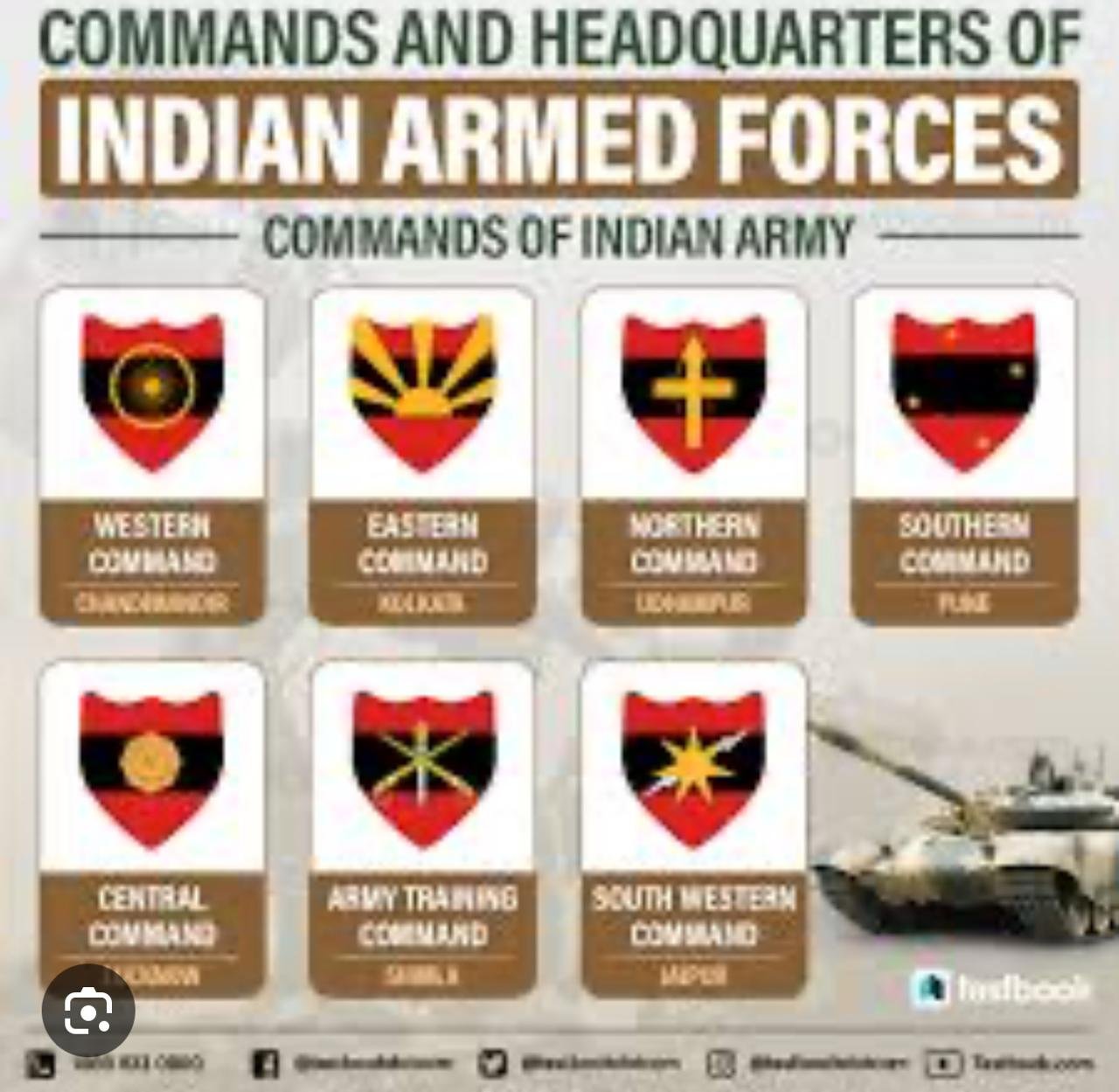
The Army currently has four strike corps — the Mathura-based I Corps, the Ambala-based II corps, the Bhopal-based 21 Corps and the partially-raised 17 Corps. The primary role of a strike corps is offensive trans-border action against an adversary.

A defence source said the I Corps, which was earlier responsible only for the western theatre bordering Pakistan, is now being realigned to also look at the northern theatre.

 “Similarly, the Panagarh-based 17 Corps, which is the only existing mountain strike corps, will keep its focus only the eastern theatre,” the source said.

The eastern sector broadly covers Sikkim and Northeastern states’ borders with China. The northern sector broadly covers areas of Ladakh and J&K, while the central sector covers the areas south of eastern Ladakh and the borders that Himachal Pradesh and Uttarakhand share with China.

 Currently, the I, II and 21 Corps focus on the western border facing Pakistan, while only the 17 Corps focuses on China. The 17 Corps, sanctioned in 2013, was supposed to have two divisions instead of the regular three, but only the 59 Division now based in Panagarh was raised — the other was among the raisings shelved due to financial constraints. Earlier this year, some elements of the 17 Corps had also been deployed in eastern Ladakh.

The sources said the plan is to get the I Corps to also focus on the northern theatre with two infantry divisions. An armoured division, earlier part of the corps, is likely to be employed as an Army headquarters reserve focusing on the western theatre.

 The 17 Corps, meanwhile, will be given an additional division from an existing corps to enhance its capability and focus on the eastern theatre. This will not be a fresh raising, and it is not clear where this division will be based.

The 17 Corps debuted last year in a massive exercise called ‘HimVijay’, which also saw the IBGs concept in action. ThePrint had earlier reported that there are also plans for the 17 Corps to get its own artillery brigade.

Last year, Army chief General M.M. Naravane had said it is expecting a green light from the Union government to set up the first of the IBGs — self-contained, agile, brigade-sized fighting units — at 9 Corps, which is deployed at the western border with Pakistan. However, the plans got delayed due to the Covid-19 pandemic.

A division for central sector too

Sources said the Army is also planning to realign a division from an existing corps to focus exclusively on the central sector with China. This division is likely to be under the central command and will focus on the central theatre, thereby strengthening the offensive options in case of any protracted conflict with China.

“The western theatre is being reorganised in such a way that two strike corps continue to focus on that front with adequate support from the existing holding corps (those deployed for defensive options) to retain the offensive options against Pakistan,” a second defence source said.

The M777 Ultra Lightweight Howitzers — meant for mountainous terrains — will be handed over to the artillery regiments allotted to these formations facing China.

Asked about the need for the restructuring, the source quoted above said the decision is especially critical given that the stalemate with China continues in eastern Ladakh, and talks have been unable to break the impasse.

“After the restructuring comes into place, troops will train according to the new operational tasks and be prepared for contingencies in the mountains in any sector,” the source said.


Also read: China miscalculated India resolve, needs exit strategy now, says former Ladakh corps commander


Punjab student travels from US to stand with farmers ‘I wouldn’t have been able to have my life in US without the farmers’

Punjab student travels from US to stand with farmers

Farmers participate in a tractor rally to protest against the newly passed farm bills at Singhu border near New Delhi on January 7, 2021. Reuters

New Delhi, January 7

Had it not been for the farmers’ protest against the new agri laws that began over a month ago, 22-year-old Navpal Singh would have never planned a trip home at this time from Texas in the US, where he is a student.

“This protest forced me to come here,” said the mechanical engineering student whose father and grandfather are farmers.

“The last time I had come home was less than a year ago…in March, so I had no plans whatsoever to visit again, but the way this protest has taken over this country and also the world, I couldn’t stay away,” he said.

Thousands of farmers, mostly from Punjab and Haryana, have been protesting at multiple Delhi borders against the new agri laws.

Singh arrived in India on Monday and has been travelling between Singhu and his ancestral village in Punjab’s Jalandhar every day since.

Even though he is not a farmer himself, Singh felt the need to be part of the protest because of his farming roots that have provided for his education.

“People might think I have no direct connection with farming…that I am studying in the US, I will also work and get married there, but my father and grandfather are farmers.

“I wouldn’t have been able to have my life in the US without the farmers. And now it is my responsibility to come forward and stand with them in their fight for their rights,” he said. Several rounds of talks with the government have failed to break the deadlock with the government pushing the new legislations as important reforms in the agricultural sector.

The next round of talks is scheduled on Friday.

The farmers on the other hand have maintained that they want the three laws to be repealed. They have also threatened to enter Delhi on January 26 if their demands are not met.

About the stalemate between the government and the farmers, Singh said it was the former’s way of “breaking their spirit”.

“By scheduling talks after talks, the government is trying to simply drag the protest as long as it can, and hoping that it would eventually break our spirits, but they are mistaken.

“A movement like this does not happen every now and then. Today’s rally alone has shown our strength and numbers,” said Singh, who will return to Texas on January 18.

Enacted in September, the three farm laws have been projected by the Centre as major reforms in the agriculture sector that will remove the middlemen and allow farmers to sell their produce anywhere in the country.

However, the protesting farmers have expressed apprehension that the new laws would pave the way for eliminating the safety cushion of the MSP and do away with the “mandi” (wholesale market) system, leaving them at the mercy of big corporates. PTI