Sanjha Morcha

What’s New

Click the heading to open detailed news

Current Events :

web counter

Print Media Reproduced Defence Related News

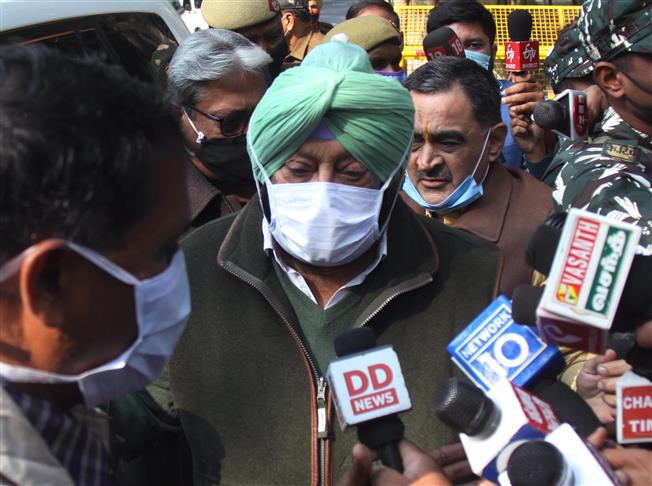
What do you know of the grace of the national flag, Amarinder asks BJP’s Chugh Calls Tarun Chugh’s remarks on his army background ‘reprehensible’

What do you know of the grace of the national flag, Amarinder asks BJP’s Chugh

Amarinder Singh. Tribune file photo

Chandigarh, January 30

Punjab Chief Minister Amarinder Singh called Bharatiya Janata Party (BJP) leader Tarun Chugh’s remarks on his Army background “reprehensible”.

“What does the BJP or its leadership know of Army honour or the grace of the national flag, in which the bodies of our Punjabi brothers come wrapped from the borders every second day,” a press release quoted him as saying.

“We in Punjab know the pain of seeing the bodies of our sons and brothers, wrapped in the national flag, come home every second day,” he said, adding that the BJP clearly has no empathy or sensitivity towards the soldiers losing their lives to protect India’s honour and integrity.

Neither Chugh nor his party could relate to the anguish of those very soldiers on seeing their farmer fathers and brothers being beaten up and tear-gassed while fighting for their rights, said the Chief Minister.

The Chief Minister slammed Chugh for deliberately spreading lies on an issue relating to the honour of Indian soldiers fighting for the safety and security of the nation at the borders. Lambasting the BJP national general secretary over his remarks on the ‘Republic Day grace’, he said the BJP, which had systematically ripped the Constitutional fabric apart over the past 6 years and most notably over the draconian Farm Laws, had lost all moral and ethical right to talk of the honour of the R-day.

“What was wrong in my statement that ‘maligning the farmers’ (for the Red Fort violence) could cause the morale of the armed forces, 20 per centof which is from Punjab, to go down? How does that amount to insulting the Republic Day grace and my own Army background?” asked an angry Amarinder, hitting out at Chugh for misleading the people with baseless allegations.

“What happened to the grace of the R-day when the central government, which the BJP leads, trampled over the federal and Constitutional rights of the states to unilaterally bring in the Farm Ordinances without consulting anyone? Where is the grace in letting the poor farmers, who are feeding you along with the billion plus people of India every day, shiver out in the cold on the roads, with many of them dying out there?”


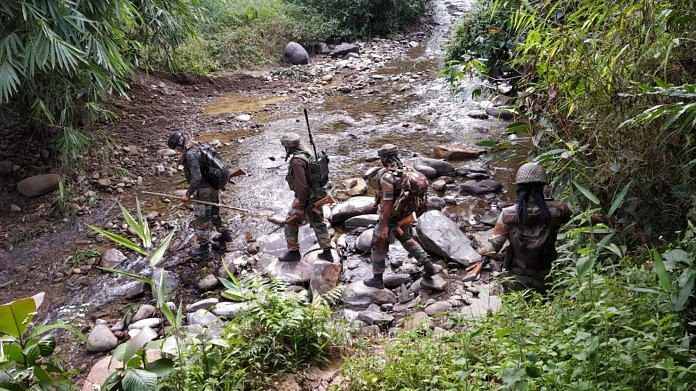
Indian Army acquires 14 acres of land in Arunachal Pradesh’s West Siang district The Army has two of its corps looking after Arunachal Pradesh — the Dimapur based 3 Corps and Tezpur based 4 Corps.

Indian Army personnel during an operation in Arunachal Pradesh | Representational image | ANI File Photo

Indian Army personnel during an operation in Arunachal Pradesh | Representational image | ANI File Photo

New Delhi: As part of its continuing efforts to further strengthen its presence along the borders, the Indian Army has acquired around 14 acres of land in the West Siang district of Arunachal Pradesh, sources said.

The Army would be using the land to construct buildings for its units deployed there, near the Line of Actual Control (LAC) with China. “Such land acquisitions are routine in nature and are done as and when required by the units on the ground,” the sources said.
The Army has two of its corps looking after Arunachal Pradesh including the Dimapur-based 3 Corps and Tezpur-based 4 Corps.

Both the donations have deployed themselves in the forward locations at the moment in view of the ongoing boundary dispute between them in Eastern Ladakh and other areas.
In the conflict, the Indian armed forces have deployed their forward formations in a high meet mode even during the harshest winters.

The two sides are in a conflict situation since April-May last year. India has reacted strongly to Chinese attempts to unilaterally change the status quo unilaterally.


Also read: India’s defence needs money. If Budget can’t provide it, we need to change how we fight


MUSINGS & MALEDICTIONS Reality becomes mirror to fiction

Reality becomes  mirror to fiction

Representational image

Keki Daruwalla

If reality is so harsh and crude, is it worth looking at? Let us leave the fatigued farmers on the Delhi borders, the government which did not spend a day before rushing the Bills, now stonewalling, a dozen meetings and riots with Deep Sidhu and Co. Leave the Nishan Sahib at Red Fort. We are into fiction. Story telling, painting deer or a jackal on a rock wall in a cave are the oldest examples of the creative urge in human beings; not forgetting poetry of course, and drums and dance from Africa. All cultures evolved their stories, legends — evil was always vanquished, whether it was Grendel or Ravana or Kans. In India, religion and faith got woven inextricably with stories. You sat around with children and grownups, and stories evolved, right triumphed over wrong. From epics, often a collective effort of a generation, we moved to novels. The gods came down from the sky and joined us.

Utopia too was fiction in a way, so was dystopia. Can fiction be a reflection of reality that can depress or excite at will? More important is the question if reality itself is a mirror of fiction. There are numerous cases where the mind envisaged something and it came to pass. What I am trying to get at is that much of fiction is so depressing that reality seems to follow where fiction has led before.

For two months last year, I read about 30 or more novels — was a member of a jury and so had to. The dismal caught my attention, but we need to start with the celebratory. Dionysius must take the chair. Though there were just two notable volumes of short stories, one by Aruni Kashyap, who teaches creative writing at Georgia, USA, and one by Kalpish Ratna, Mumbai surgeons Kalpana Swaminathan and Ishrat Syed who write jointly under one name. In their book ‘Synapse’, Kalpish Ratna rightly make fun of Vedic science and Brahminical eugenics and tackle ghostly seductresses. If I may venture to say, even flesh and blood seductresses are hard to tackle!

The finest novel I read in 2020 was ‘Kintsugi’ by Anukrti Upadhyay, who has post-graduate degrees in management and literature, works with a wildlife trust and writes in Hindi and English. Anukrti divides her time between Singapore and Mumbai, and has worked in Hong Kong. She knows her beat well. Her research in jewellery-making in Jaipur is flawless and her narrative is seamless. She gives a feminist angle by showing women can also be good sunars. Kintsugi is the Japanese art of repairing broken pottery with gold dust, and here it is used as a metaphor for patching up lives. The narrative starts with jewellery-making. A work of fiction is known by the strength of the narrative, and the depth the writer brings to it. Hers is the story of a girl Leela, daughter of a dead goldsmith, and the Japanese Haruko who comes to Jaipur to learn the sunar’s craft, not just designing, and runs into a bull and gets a broken leg. The section on Japan is flawless, even though it ends with a lesbian suicide. The rest of the novel is sunny. It gladdened my heart to read it.

But we need to move towards the depressing if not dystopian. Is that a reflection of an age? Are writers disenchanted with what is happening around us in India? Or is it the norm the world over? Dystopia has almost become a fashion. The narrative would go along perfectly till it nears the end. A woman goes to her ancestral house in Assam where her mother had been badly treated, since she had married outside the community. Then, unaccountably, the novelist dispenses with her in a flood, and she drowns. What is more noteworthy, as in the novel ‘A Burning’ by Master of Fine Arts student Megha Majumdar, the villain triumphs in the end. We have a right-wing madam who becomes Chief Minister and raises a PT Sir, physical trainer at the college, to a party boss. An innocent woman is hanged because the PT Sir does not pass on her mercy petition. Right-wing goons attack a Muslim house, kill the family, loot gold bangles, then open the ice box. There are chickens in it, no beef! That’s the modern version of epiphany. The MFA student-novelist has made a political point, but the plot creaks, whines, squeals like a bad machine badly in need of lubrication.

What about blurbs? Amitav Ghosh writes, “The best debut novel I have come across in a long time.” The publishers, Penguin Hamish Hamilton, say, “Taut, symphonic, propulsive and riveting right from the outset, ‘A Burning’ has the force of an epic.” Cyrus Mistry in his novel ‘The Prospect of Miracles’ puts his characters in Kerala. The protagonist marries a pastor, who is a debauch. In the end, she goes off her rocker, the insanity triggered off by the pastor’s widow meeting the gardener Yesu Das. The name Yesu acts as a trigger for setting off hallucinated meetings with Jesus and angel Gabriel. In ‘The Cliffhangers’ by Sabin Iqbal, a right-winger, Balannan, gets into a clinch with a foreigner and rapes her. When he confesses, the Inspector files the case as ‘inconclusive’. Charging him would invite mayhem.

Is our fiction a mirror to our reality? Do both act as depressants?


BJP’s Army barb reprehensible: CM

BJP’s Army barb reprehensible: CM

Punjab CM Capt Amarinder Singh. Tribune file

Chandigarh, January 30

CM Capt Amarinder Singh today hit out at BJP national general secretary Tarun Chugh over his “Army background” remark and called it reprehensible.

“What does the BJP know of Army honour or the grace of the national flag, in which the bodies of our Punjabi brothers come wrapped from the borders every second day?” he said.

Chugh had claimed the CM was insulting his Army background and the grace of Republic Day by supporting farmers over the Red Fort incident. “We in Punjab know the pain of seeing bodies of our sons and brothers, wrapped in the national flag, come home every second day,” he said, adding the BJP had no empathy towards soldiers losing their lives to protect India’s integrity.

What does it know of Tricolour grace?

What does the BJP know of Army honour or the grace of the national flag, in which the bodies of our Punjabi brothers come wrapped from the borders every second day? —Capt Amarinder Singh, CM

Neither Chugh nor his party could relate to the anguish of those soldiers on seeing their farmer-fathers and brothers being beaten up and teargassed while fighting for their rights, said the CM, while accusing Chugh of spreading lies. He said the BJP, which had ripped the constitutional fabric apart over the past six years had lost all moral and ethical right to talk of the honour of the R-Day. — TNS


Family worried as no info on youth held for Singhu violence

Family worried as no info on youth held for Singhu violence

Ranjeet Singh

Aparna Banerji

Tribune News Service

Jalandhar, January 30

“Mere putt nu ghar bhej den, meri ehi hath jor ke benti hai,” Sarabjit Kaur weeps uncontrollably as she remembers the last glimpses she caught of her 22-year-old son.

With his mother eager to hold an akhand path at the village gurdwara, Ranjit Singh had asked her to wait until he returned from the Singhu morcha. However, the images on the social media of police assault on the 22-year-old left the family in shock.

Ranjit is among the youths accused of attacking the police during the Singhu border violence. His family vehemently denies the charge. “He is a very good natured boy. He can’t beat anyone. I just request the government to send my son back,” says Sarabjit Kaur.

Cops not responding

Ranjit didn’t beat up anyone. We called the police last night but no one responded. Today some youths went to the local police station but they said he would be produced in court. We haven’t seen him yet. —Jasbir Singh Piddi, KMSC vice-president

Hailing from Kajampur village in Nawanshahr, Ranjit’s video grabs of being beaten with lathis and picked up — seemingly unconscious — went viral on internet. Ranjit’s family still hasn’t heard from the Delhi police. Since yesterday, frantic calls have been made to the police and some members of the Kisan Mazdoor Sangharsh Committee, who also checked with the local police – but there is no information about Ranjit’s whereabouts.

Satnam Singh, a resident of Jalwaha village in Nawanshahr and neighbour of Ranjit’s family, says, “Hooligans have beaten up Ranjit because he stood in the way of the ladies’ tents they were going to uproot. These people weren’t locals. He is a very religious, Amritdhari Gursikh who does path twice a day in the local gurdwara. False charges have been slapped on him for no fault of his. He wielded his sword which is part of his Gursikh attire but he did not injure or attack anyone.”

Jasbir Singh Piddi, vice-president, Kisan Mazdoor Sangharsh Committee, said: “Ranjit didn’t beat up anyone. We called police last night but no one picked. Today some youths went to the local police station but they said he would be produced in court. We haven’t seen him yet.”


Farmers returning to Singhu, Ghazipur borders in droves 50 tractor-trailers leave for Singhu

Farmers returning to Singhu, Ghazipur borders in droves

Farmers from Lohian, Shahkot and Nakodar blocks leave for the Singhu border. Photo: Malkiat Singh

Tribune News Service

Jalandhar, January 30

Scores of farmers from Punjab are heading back to the Ghazipur and Singhu borders after having returned home from the tractor parade.

Amarjot Singh, youth wing president (Jalandhar), BKU (Rajewal), and Kulwinder Singh Machiana, its general secretary, were at Singhu a few days ago. After holding meetings with farmers here and dispelling rumours, they plan to go back soon. A ‘jatha’ of youths from Thatha Purana village in Sultanpur Lodhi headed out to Singhu amid reports of a police build-up at Ghazipur.

“Youths from Sarhali, Jandiala, Nakodar and other blocks are preparing to return to protest sites. Some have already started going back, others will go in a couple of days. The attempt to evict BKU leader Rakesh Tikait forcibly has angered farmers,” said Amarjot.

Machiana, who was holding the stage of the Sanyukt Kisan Morcha a few days ago, said, “Some of us have been deputed to dispel fake news about the agitation. Any attempt to disrupt our honest stir will fail. We are going village to village to speak to farmers about the real situation and will head back to Delhi borders on February 1. All those who came back will return.”

From Thatta Purana in Sultanpur Lodhi, an 11-member jatha headed to Singhu on Thursday. Surinderjit Singh, a village resident, said, “In view of the rumours being spread about the tractor parade, it is important we head back to Singhu.”

Dr Baljit Singh, national president of the Jai Jawan Jai Kisan Party floated by farmers youths, said, “Over 15 to 20 trailers left for Delhi borders from Patiala a few days ago. Everyone is keen to return to the protest site. There is anger among people for the way farmers have been blamed for the Red Fort incident. Everyone wants to head back and lend support to the movement.”

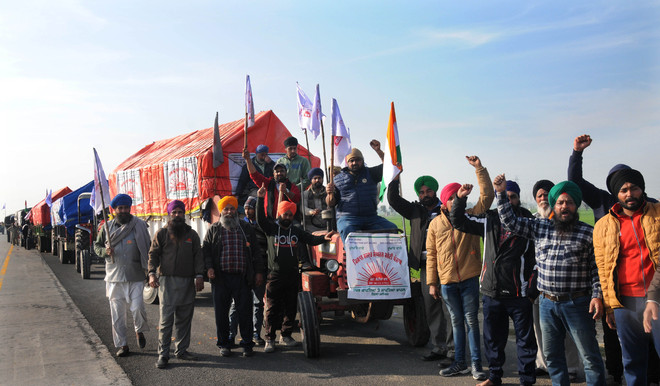
At least 50 tractor-trailers of the Kisan Mazdoor Sangharsh Committee left for Singhu today.

“After we saw at Singhu last night, many of us couldn’t sleep. Leaders called us to come soon as they need people there. We are going to strengthen the movement,” say villagers.

Ex-servicemen on faST in Gidderbaha

Muktsar: Former servicemen on Saturday observed a hunger strike in Gidderbaha in protest against the police action on farmers in Delhi. Kirpal Singh, president, ex-servicemen cell, Gidderbaha unit, said, “We have observed a hunger strike today against the lathicharge on farmers in Delhi.” Meanwhile, some advocates also lent support.


BJP and RSS behind stone-pelting on farmers at Singhu: Rajewal Alleges that the government is continually trying to provoke them to resort to violence

http://

Vishav Bharti
Tribune News Service
Chandigarh, January 30

Farmer leader Balbir Singh Rajewal on Saturday said the BJP and RSS were behind Friday’s stone-pelting incident on farmers at Singhu border.

He alleged that the government is continually trying to provoke them to resort to violence.

Addressing a press conference at the Kisan Bhawan here, Rajewal appealed to farmers, who are now heading to Delhi, to keep the struggle peaceful.

He said they had recovered from the unfortunate incident of January 26.


Also read: Bajwa, Deepender welcomed on Tikait’s protest site stage; call for resolution of stalemate
‘Mahapanchayat’ at Baghpat: How BJP leadership miscalculation strengthened farmers’ agitation, Jat bonding in UP, Haryana
BKU digs its heels in at Ghazipur border, more supporters pouring in
Protesting farmers begin one-day hunger strike
If protesting farmers are abused, it will make movement stronger: British MP Dhesi
Anna Hazare calls off his proposed fast

“We are not going for war. Only peace can assure our victory,” he said.

Rajewal said all the cases registered against farmer leaders or any other cases registered during farmers agitation would be discussed during negotiations with the government.

“We have been holding a peaceful agitation at Delhi’s borders since January 26. Today also the agitation is peaceful,” Rajewal, the president of the Bharatiya Kisan Union (Rajewal), told reporters.

“People in large numbers from Punjab, Haryana, Uttar Pradesh, Rajasthan and Uttarakhand are reaching the protest sites,” Rajewal said.

“Possibly by February 2, there will again be a record gathering of people at the protest sites,” he said, adding that the agitation would remain peaceful.

Rajewal also condemned the Haryana government for suspending internet services.

The Haryana government on Friday decided to suspend mobile internet services in 14 more districts in the state until Saturday 5 pm “to prevent any disturbance of peace and public order”. Earlier it had suspended the services in three districts.

Rajewal accused the Centre of instilling a sense of fear among people by showing pictures of the “unfortunate incidents”, apparently referring to the January 26 violence in the national capital during a tractor parade by farmers.

 “The government is trying to mislead people through false propaganda in order to defame the ongoing agitation,” he alleged.

Rajewal appealed to those joining the agitation at Delhi’s borders to keep the protest peaceful.

 He asked them not to get provoked, which could affect the peaceful agitation.

“It is our responsibility to keep the agitation peaceful,” he stressed.

 Rajewal accused the government of trying to trigger violence by provoking the farmers at the protest sites. “But we are alert. We will not indulge in any kind of violence,” he said.

The farmer leader appealed to the Centre to shun its “stubborn attitude” and withdraw the three farm laws.

 On the next meeting between the protesting farmers and representatives of the government, he said “when they call us, we will certainly go”.

To a question on joining the investigation following notices issued by the Delhi Police to farmer leaders in connection with the Republic Day violence, Rajewal said, “They issued the notices to us on January 27 but an FIR in connection with the matter was lodged on January 26. Since they have already taken action, what reply are they seeking?”

 Asked again, he said, “We will send them a reply.” The Delhi Police has issued the notices to around 20 farmer leaders, including Rajewal, over the violence during the farmers’ tractor parade, asking why legal action should not be taken against them. — with PTI

The glorious side of tractor marches

The glorious side of tractor marches

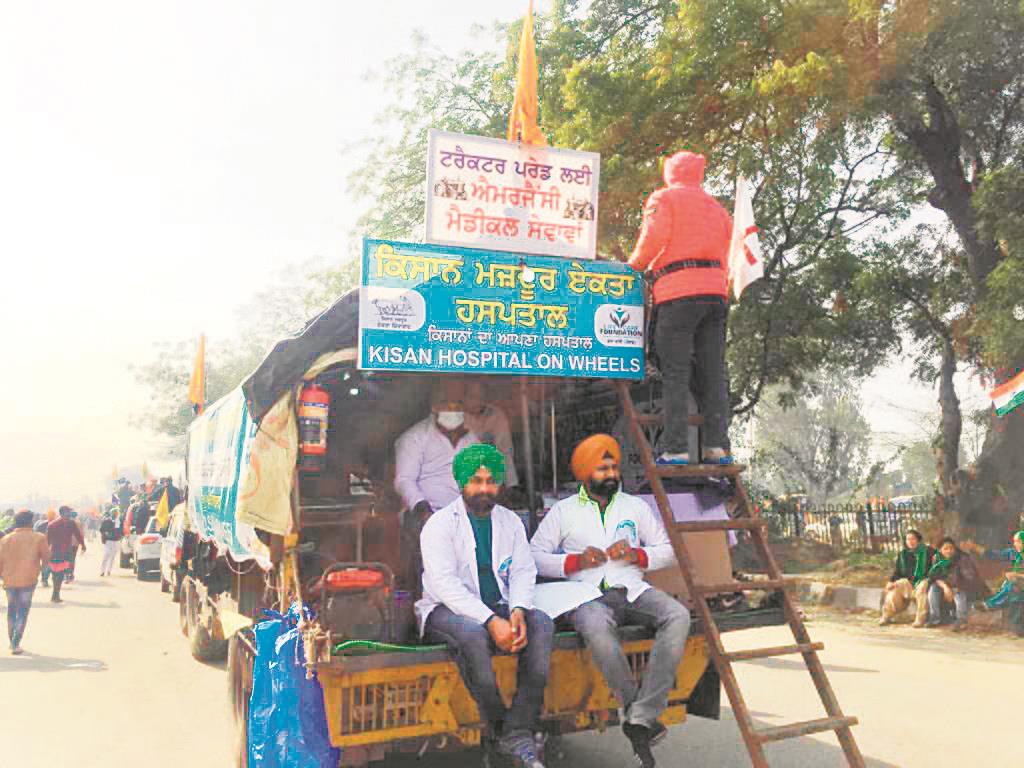
We care for you: A special tractor-trailer carrying medical equipment for protesting farmers during the parade.

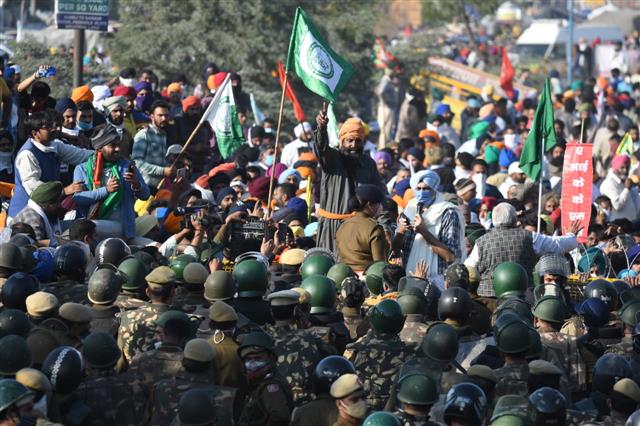
Even as videos showcasing violence and news of breaking of barricades began doing the rounds early on the morning of Republic Day, but for scores of participants and onlookers of the glorious tractor marches at the Singhu, Kundali and Tikri borders things remained peaceful as crowds viewed thousands of tractors march out on the customary parade which had been planned for Republic Day.

Miss us? A trolley bearing the photos of Shaheed Udham Singh (left), Ashfaqullah Khan (middle) and Chandrashekhar Azad can be seen during the march at the Singhu border.

At least 40,000 to 50,000 tractors paraded across the pre-set path at the Singhu alone. People climbed atop bridges, trucks, tractors, trolleys and trees to take in some of the action. The day witnessed thousands of tractors taking part in the march sheeted in Tri-colours in what has to be the biggest-ever show of farm diversity in the country’s history. It wasn’t until they came into an internet zone that they realised something had gone amiss in Delhi even as tractors marched peacefully in front of their eyes at Singhu and Tikri.

Elderly men recalled protests during the British era saying they had never seen anything like this before in their lifetime. Women congregated by the roads cheering on the moving cavalcades. Meanwhile, huge clumps of police and paramilitary forces lined the borders to hold the march.

Top of the world: A tableau rolls in at Kundli with the Shaheed Bhagat Singh’s cut-out towering above the gathering.

Many considered the parade a wedding between Delhi and Punjab, of Indian national pride and tribute to freedom struggle martyrs, which were the reigning themes of decked up tractors. Elderly men dressed as grooms (with sehras tied on their heads as well as tractors), Bhagat Singh, Rajguru, Sukhdev and Udham Singh’s photos enveloped the vehicles. Some even spent lakhs on tractors and were rueful of the fact that their hard work never made it to TV due to the pictures of violence ruling the discourse for the day.

— Aparna Banerji


BJP has ‘torn to shreds’ dignity of democracy: Priyanka on FIR against Tharoor, journalists Trend of threatening public representatives, journalists dangerous, she says

BJP has ‘torn to shreds’ dignity of democracy: Priyanka on FIR against Tharoor, journalists

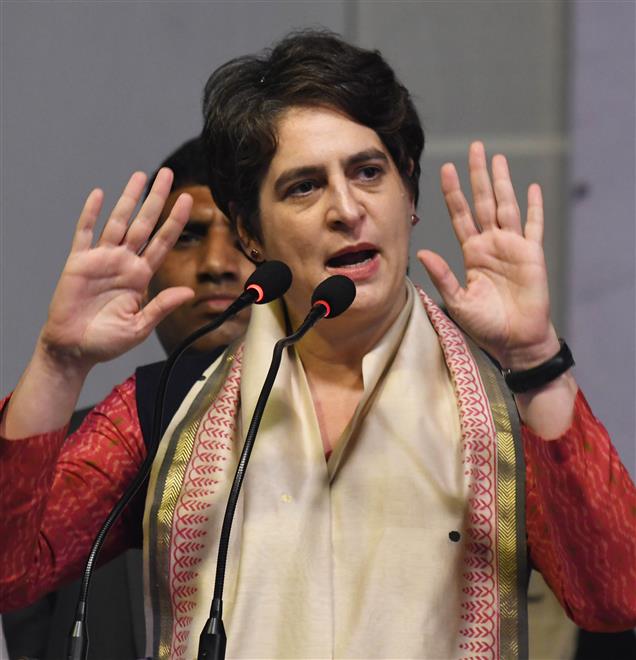
Priyanka Gandhi Vadra, PTI photo

New Delhi, January 30

Congress leader Priyanka Gandhi Vadra on Saturday hit out at the BJP over FIRs filed against Congress MP Shashi Tharoor and six journalists, alleging that the ruling party has “torn to shreds” the “dignity of democracy” by this action.

The Congress general secretary said the trend of the BJP government threatening public representatives and journalists by filing FIRs is “very dangerous”.

“Respecting democracy is not the government’s prerogative but it is its responsibility. The atmosphere of fear is like poison for democracy,” Priyanka Gandhi said in a tweet in Hindi.

“The BJP government has torn to shreds the dignity of democracy by FIRs against senior journalists and public representatives,” she said.

Congress MP Shashi Tharoor and six journalists have been booked by the Noida Police for sedition, among other charges, over the violence during the farmers’ tractor rally in Delhi, officials said on Thursday.

The journalists named in the FIR are Mrinal Pande, Rajdeep Sardesai, Vinod Jose, Zafar Agha, Paresh Nath and Anant Nath. An unidentified person has also been named in the FIR.

Madhya Pradesh police have also filed a First Information Report (FIR) against Tharoor and the six journalists over their ‘misleading’ tweets on the violence during the farmers’ tractor rally in Delhi.


Rakesh Tikait is the cynosure of many eyes – not just farmers As Ghazipur becomes the centre of the farmer protest, this police constable-turned-farmer-leader becomes a key driver

Rakesh Tikait is the cynosure of many eyes – not just farmers

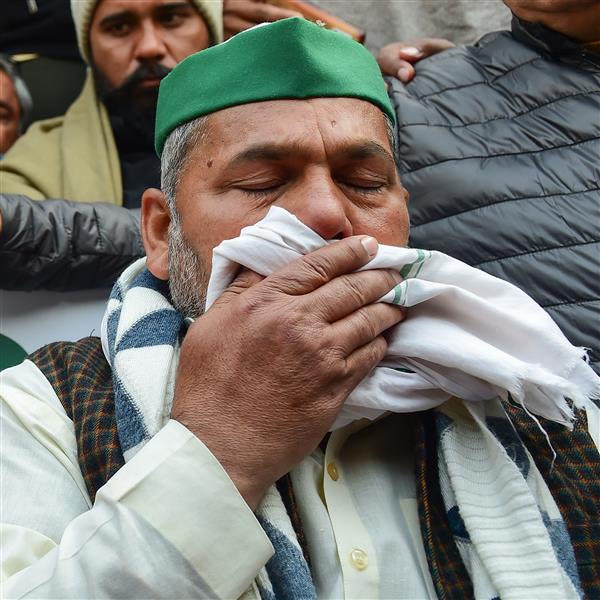
Bharatiya Kisan Union (BKU) spokesperson Rakesh Tikait at Ghazipur border during the ongoing farmers agitation against Centres farm reform laws in New Delhi on Friday. PTI photo

New Delhi, January 30

His tears exercised an emotive pull even he may not have envisaged, helping turn the tide for a movement that seemed to have lost both sheen and momentum after the violence on Republic Day. It was but a moment in time and Rakesh Tikait was the man in it.

He was once a Delhi Police constable, tried his hand at electoral politics and been a farmer leader for years. But Bharatiya Kisan Union (BKU) leader Tikait has broken out of the confines of western Uttar Pradesh to find a space in the national spotlight as arguably the most powerful farm leader of the day.

The two-month farmer movement against the Centre’s three farm laws was till now dominated by protesters from the fields of Punjab and Haryana who set up camp at the Singhu and Tikri border points into the city. Now, the focus has shifted to Ghazipur on the Delhi-Uttar Pradesh border where farmers are gathering in thousands to boost the fight that seemed to have been weakening only two days ago.

A day after the Republic Day violence in Delhi, when a section of farmers taking part in the tractor parade broke through barriers, clashed with police and stormed the Red Fort for a few hours, the farmer game it seemed to be over. Morale plummeted and many farmers returned home.

On Wednesday night, the atmosphere was tense at Ghazipur. The Ghaziabad administration issued an “ultimatum” to the protesters occupying a stretch of the Delhi-Meerut expressway to vacate as the January 26 clashes painted a not-so-peaceful picture of the peasant community.

And then came the Tikait moment. As security presence at the site escalated and fears grew that the protesters would be forcibly evicted, an emotional Tikait broke down while talking to reporters.

“The protest won’t be called off. Farmers are being met with injustice,” he said and even threatened to end his life for the cause.

The 51-year-old’s BKU leader’s call for continuing the protest against the government struck a deep emotional chord. Videos of his emotional outburst were circulated across multiple platforms.

It led to his brother Naresh Tikait calling a ‘mahapanchayat’ at their home town in Muzaffarnagar on Friday where tens of thousands of farmers gathered to back the movement.

The crowd at Ghazipur border that had reduced to 500 on Thursday night grew manifold over the next 12 hours, running into well over 5,000 in next 24 hours. The farmer movement was not just revived but further energised.

Tikait, who has been part of a delegation talking with the Centre over the ongoing protest, is also one of the accused in the January 26 violence in Delhi that saw one farmer dying when his tractor overturned and hundreds of people, including police personnel, being injured.

He has denied the allegations of conspiracy and demanded a judicial probe into the violence, blaming infiltrators in the tractors’ parade of the unrest.  To be named as an accused by the Delhi Police is perhaps strange for Tikait, who served as a head constable in the force but quit in 1992-93 when he had to deal with a farmers’ agitation led by his father, the legendary Mahendra Singh Tikait.

Born on June 4, 1969, in Sisauli village of Muzaffarnagar district in western Uttar Pradesh, Rakesh Tikait joined BKU after quitting the Delhi Police and gained prominence as a farm leader after the death of his father to cancer in May 2011.

Mahendra Tikait, who was hailed as “messiah” of farmers, had inherited the ‘Chaudhary’ title of the regional Baliyan khap (a social and administrative system in parts of north India) at the age of eight from his father. Going by the tradition of the khap, the title passed on to his elder son and Rakesh Tikait’s elder brother Naresh.

But Rakesh Tikait, a BA graduate from the Meerut University, was designated national spokesperson of the BKU. He has two younger brothers—Surendra, who works as a manager in a sugar mill, and Narendra, engaged in agriculture.

 The father of three—two daughters and a son—has been at loggerheads with various governments on a range of farmers’ issues, including loan waivers, minimum support price (MSP), power tariff and land acquisition in states such as UP, Haryana Rajasthan, Madhya Pradesh.

He also tried his hand at elections but lost both times.

 In 2007, he contested the UP Assembly polls from Khatauli constituency in Muzaffarnagar as an independent candidate. In 2014, he fought the Lok Sabha election from Amroha district on a Rashtriya Lok Dal (RLD) ticket.

It’s an affluent family.

Ahead of the 2014 polls, Tikait had declared assets worth Rs 4.25 crore, including Rs 10 lakh cash, and liabilities of Rs 10.95 lakh with land worth over Rs 3 crore forming the biggest chunk of his assets.

 He also declared three criminal cases against him in the election affidavit. These cases were lodged in Meerut and Muzaffarnagar in Uttar Pradesh, and Anuppur in Madhya Pradesh.

The vocal farmer leader had to spend nights behind the bars for defying public servant’s orders during several of the protests that he has led in the past decade.

Having dug in his heels along with his supporters at the Ghazipur border amid a deadlock with the Centre over the new farm laws, Tikait on Saturday was once again teary-eyed.

But this time overwhelmed by emotion as villagers, including children, reached the protest site carrying water, homemade food and buttermilk, after he announced he would drink water only when farmers will bring it since the local administration had barred water tankers at the protest site.

 Rakesh Tikait is now the cynosure of many eyes—and it’s not just farmers. — PTI