



Sanjha Morcha

What’s New

Click the heading to open detailed news

Current Events :

web counter

Print Media Reproduced Defence Related News

Neutrality of CAPFs should not be compromised

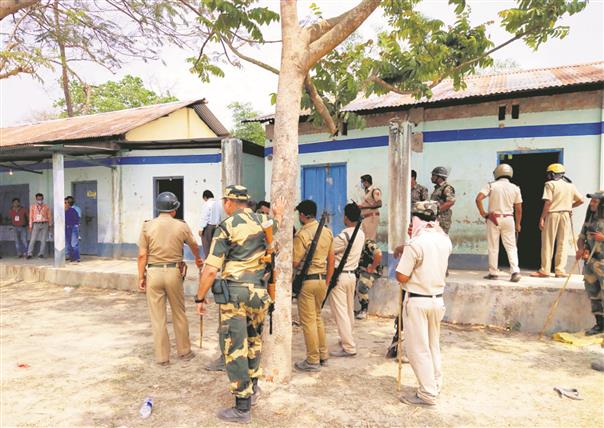
All personnel of the CAPFs are considered to be on deputation to the Election Commission of India (ECI) when they are engaged in the smooth conduct of elections. ECI officials brief all commanders of the CAPFs about the way they are to conduct the polls and the rules that need to be strictly adhered to. These commanders then brief all their personnel and depute them to various polling booths.
Neutrality of CAPFs should not be compromised

Duty-Bound: The CAPFs must not be dragged into political controversies. PTI
MP Nathanael

Former IG, CRPF

THE death of four young men at a polling booth in Sitalkuchi area of Cooch Behar during the fourth phase of polling in West Bengal on April 10 has led to allegations that the Central Industrial Security Force (CISF) personnel were responsible for the incident. Chief Minister Mamata Banerjee has accused Union Home Minister Amit Shah of using the Central Armed Police Forces (CAPFs) that comprise the Central Reserve Police Force (CRPF), Border Security Force (BSF), Sashastra Seema Bal (SSB), Indo-Tibetan Border Police (ITBP) and the CISF to intimidate the voters to vote for the candidates of a particular party.

Quite a few versions are floating around about the firing incident at Sitalkuchi, one of which is that a 14-year-old boy who had accompanied his mother to the polling booth, fainted outside while his mother was inside the booth. When other women around him were trying to revive him, some CISF personnel went to them and offered to take him to the hospital which later led to a fracas between them. According to another version, word had gone around that the boy was assaulted by the CISF men which irked the villagers and they tried to attack the CISF personnel. In the melee, some villagers attempted to snatch the weapons of the CISF personnel who had to open fire in ‘self-defence’.

During basic training, it is hammered into every paramilitary trainee’s brain that his service weapon has to be guarded at all times because it will protect his life as long as he is in possession of it. Hence, any attempt to snatch the weapon will be fully resisted and drive the person to retaliate by firing — not just to safeguard the weapon in his possession, but also to disperse the unruly mob that could have endangered his life and that of his colleagues.

Having served in the CRPF for nearly four decades and having been involved in the conduct of elections all over the country several times, this writer never once came across any such instance where the CAPF personnel intimidated or asked any voter to vote for any particular party. The neutrality of the CAPF was never questioned. On the other hand, almost all political parties demanded the deployment of CAPFs, more particularly the CRPF, which has earned the reputation of being fair and impartial in the conduct of elections in every corner of the country.

The very composition of the sections, platoons, companies and battalions is such that every section would normally have personnel from different states and religions and thereby every battalion is a mini-India in itself with no political affiliations. Such a mix of personnel would by itself hinder any person from showing any bias or leaning towards any political party.

All personnel of the CAPFs are considered to be on deputation to the Election Commission of India (ECI) when they are engaged in the smooth conduct of the elections. Prior to polling, senior officials of the ECI brief all commanders of the CAPFs about the way they are to perform their job and the rules that need to be strictly adhered to, though a majority of them are well conversant with the way the polling booths are to be secured. These commanders then brief all their personnel and depute them to various booths.

While the elections are on, the battalion and company commanders move in the area of deployment of their men to ensure that the elections are conducted smoothly and to sort out any problems that may crop up.

The heavy dependence of the ECI on the CAPF can be gauged from the fact that a senior CRPF official is designated as the senior coordinator for elections in all states with a control room in New Delhi. Not just the movement of CAPFs from different corners of the country to the states where elections are to be held are coordinated, even the deployment is coordinated with the nodal officers designated in every state.

In recent years, allegations have been levelled against individuals from the CAPFs of playing a partisan role and intimidating voters, but these are exceptions. Exemplary punitive action is called for against such elements who attempt to thwart the democratic process of holding free and fair elections and dent the image of the CAPFs.

The nature of duties related to elections are too arduous and hectic and call for utmost perseverance and dedication of a high order. Moving from place to place for weeks after weeks to conduct elections saps one’s energy. It speaks volumes of their grit and determination that they remain composed and go about their duties faithfully, shouldering the onerous responsibility of guarding the vital element of our democracy — the elections.

Between 2013 and 2017, 13 CRPF personnel lost their lives while on election-related duties. They trudge miles after miles to reach the remotest villages in far off places so that no eligible voter is deprived of his right to exercise his franchise. In states affected by Left wing extremism or insurgency and terrorism, they ensure safe conduct of polling at grave risk to their lives.

The Central Armed Police Forces have so far been apolitical and their neutrality is their asset, on which they pride themselves. Let us not pull them into the vortex of politics, lest our democratic values get compromised.


Military upgrade must factor in fiscal reality

Other than creating a non-lapsable Defence Modernisation Fund financed largely by monetising some 31,550 acres of military land, including 20,000 acres on which Military Farms, founded in 1887, were located and another 8,000 acres occupied by abandoned airstrips and sundry camping grounds, and reducing service salaries and pensions, the MoD is also trying to source military equipment locally. But in its misdirected zeal, the MoD fails to realise that such inchoate initiatives are either unviable

Military upgrade must factor in fiscal reality

Task cut out: Under General Rawat as the CDS, efforts are afoot to modernise the defence forces. PTI

Amit Cowshish and Rahul Bedi

Ex-Financial Adviser, acquisition, MoD | Senior Journalist

Influenced by India’s vocal strategic community, obsessed largely with abstract notions regarding modernisation of the country’s military, successive governments have impetuously taken steps to usher in half-baked ‘reforms’ to these ends, with little effort to assess either their efficacy or implementability.

Many such putative reforms have gained currency in recent months, following the appointment of the Chief of Defence Staff (CDS) General Bipin Rawat in December 2019, primarily to effect military modernisation by readying the services to fight the 21st century techno-wars and to economise defence expenditure. The ongoing armed standoff with China in eastern Ladakh, since May 2020, has only exacerbated the government’s and General Rawat’s formidable security challenge as India’s military scrambles to counter the daunting threat posed by Beijing.https://758184e00450905e262f9e55a3a3c7dd.safeframe.googlesyndication.com/safeframe/1-0-38/html/container.html

Other than creating a non-lapsable Defence Modernisation Fund (DMF) financed largely by monetising some 31,550 acres of military land, including 20,000 acres on which Military Farms, founded in 1887, were located and another 8,000 acres occupied by abandoned airstrips and sundry camping grounds, and reducing service salaries and pensions, the Ministry of Defence (MoD) is also focusing on Aatmanirbharta or self-reliance by sourcing military equipment locally. But in its misdirected zeal, the MoD fails to realise that such inchoate initiatives, though cursorily appealing in an optics-driven environment, are either unviable, or worse, hugely expensive, or both in the medium term once implemented.

Initially proposed 17 years ago by the then Finance Minister Jaswant Singh whilst presenting the interim budget for 2014-15, the DMF proposition has recently been resurrected as a magical ‘silver bullet’ to dissemble innumerable flaws and complexities in the MoD’s hidebound procurement procedures. This is despite repeated warnings by senior federal officials that transferring funds to, and defraying moneys from the DMF too would necessitate parliamentary approval, analogous to the regular budgetary exercise, apart from exacerbating the burgeoning fiscal deficit.

Simply stated, the projected DMF is in no manner comparable to a current account to ‘park’ surplus funds for the services to tap into whenever required. The DMF’s proposed quantum, however, is unknown, but according to the 15th Finance Commission’s estimates, it could be around Rs 1,88,000 crore for the five-year period from 2021 to 2026. If so, it would make it an average of Rs 37,600 crore per annum for all three services, a paltry amount by any standards, considering the gargantuan amounts needed for military modernisation.


There is yet another related complication; if the DMF funds remain unutilised for three years — a distinct possibility, given the MoD’s extended acquisition processes — all unspent resources will revert to the Consolidated Fund of India. Hence, it may be far easier to append such a meagre sum to the regular budgetary allocation, instead of routing it through the DMF.

Furthermore, monetising defence land cannot be a lasting solution to bankroll the DMF, as the family silver can only be sold once. Thereafter, the DMF will need to be financed via taxation or borrowing, or both, suppressing allocation to other crucial sectors of the economy, thereby running the entire scheme aground if the government fails in augmenting future revenue collections.

And, though General Rawat has also proposed numerous ideas to contain salaries and pensions — equalling 54 per cent of the overall defence budget in the current fiscal — like limited colour service, extension of retirement age and graded pensionary benefits, serving and retired military personnel have summarily resisted all such ‘demoralising’ schemes. This influential lobby has outright condemned them as impractical and unworkable, seriously threatening to nobble General Rawat’s recommendations.

Indigenously sourcing defence materiel, though a laudable objective, too needs to be rooted in fiscal reality as it cannot, under any condition, immediately deliver financial dividends and effect savings. The Aatmanirbharta mantra is simply another refrain many in the government swear by without adequate data to support their belief that it will imminently usher in financial frugality.

If anything, indigenous production of military equipment desperately needed by India’s military like helicopters, submarines, combat aircraft, tanks, and even small arms, amongst others, is in the initial years, invariably more expensive than importing it till domestic manufacturing accomplishes amortisation. Domestically, this latter goal is wobbly as India’s military is the sole customer for this kit and the export of major platforms and systems, vaunted as yet another ‘silver bullet’ remains, for now a mirage.

One simple illustration concerns the long-pending proposal by the Ordnance Factory Board (OFB) to domestically licence-build 6,50,000 Russian Kalashnikov Ak-203 assault rifles. The OFB has reportedly costed each Ak-203 rifle initially at around Rs 86,000, amortised over time to average around Rs 80,000 per unit. Embarrassingly, the recent import of 1,44,800 assault rifles from the US-based Sig Sauer to meet the Army’s urgent operational needs was considerably cheaper. Each Sig Sauer SIG 716 rifle was priced at $990 (around Rs 74,000) — Rs 12,000 and Rs 6,000 cheaper than an Ak-203 rifle’s initial and amortised cost, respectively, projected by the OFB.

There are numerous other such instances. In July 2006, for example, the Comptroller and Auditor General (CAG) had castigated Hindustan Aeronautics Limited for licence-building Russian Sukhoi Su-30MKI multi-role fighters for almost twice the amount it would have cost to import them directly.

The CAG revealed that the total cost of locally building 140 Su-30 MKI projected by the MoD in 2002 was $4.91 billion, but it nearly doubled to $8.71 billion soon thereafter. And though there is irrefutable logic in augmenting domestic defence production, it needs selective implementation as it defies logic for the Indian defence industry to reinvent the wheel.

In conclusion, the MoD’s bandolier of silver bullets to expedite military modernisation and augment operational capacity needs serious and practical re-evaluation backed by objective statistical analysis. To reword Chinese strategist Sun Tzu’s counsel, tactics without strategy is merely the noise before chaos.


US pullout and the road ahead for Afghanistan

The Biden-Blinken plan envisages a transitional power-sharing government to replace the present one with a 21-member commission (10 from Taliban) to draft a new Constitution.The Doha process is to be revamped with Ankara hosting the conversations.A regional conference of stakeholders—on the lines of the Bonn conference in 2001 which the Taliban did not attend—is to be held with the US, Russia, China, Pakistan, Iran and India, along with the Taliban and other Afghan groups for a unified approach.

US pullout and the road ahead for Afghanistan

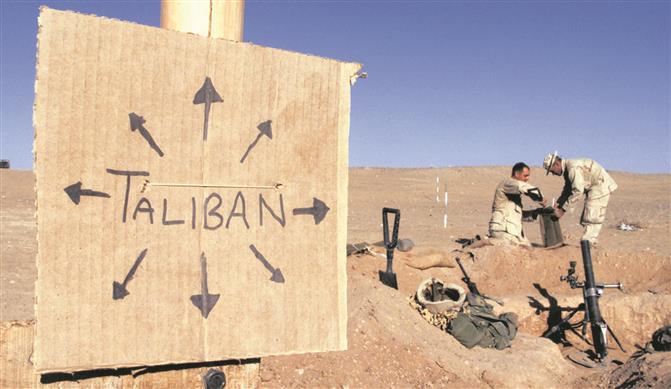
WAR-WEARY: The Taliban are being co-opted to bring stability in Afghanistan. Reuters

Maj Gen Ashok K Mehta (retd)

Military Commentator

A decade ago, doomsday scenarios were being painted over how American withdrawal from Afghanistan would lead to surplus Taliban being diverted to Kashmir and creating havoc. The pullout is happening from May 1, to be completed by September 11. At the Raisina Dialogue (April 16, 2021, New Delhi), Afghanistan’s National Security Adviser Hamdullah Mohib described the US withdrawal as a great opportunity for Afghans to take hold of their destiny. He said: “We don’t need US troops but we need US support,” presumably moral, material and financial. He emphasised that 90 per cent of all operations are being conducted independently by the Afghan National Security Forces (ANSF). The level of US support for the ANSF will be worked out by the Afghan and US transition teams.

Mohib added that the “Taliban narrative of victory: ‘we have won the war. Americans have lost. We are ready for peace. We are ready for Jihad’, smacks of arrogance. They have destroyed $900 million worth of infrastructure in Afghanistan.” He said he had spoken to his counterpart Ajit Doval that morning to discuss the new Biden-Blinken peace plan which is surrounded by uncertainty.

Mohib confirmed there was friction among the Taliban groups: Mullah Baradar who is leading the talks; Mullah Haibutallah Akhundzada, supremo of Taliban; Mullah Yaqub, son of Mullah Omar, the founder leader; Haqqani network and a group in Helmand but does not subscribe to the Quetta Shura. In the same session, Foreign Minister S Jaishankar declined to indicate whether India would engage the Taliban but stressed it supported the peace process which must be Afghan-owned, Afghan-led and Afghan-controlled. He mentioned that real peace in Afghanistan is about ‘double peace’ — peace within and peace in Afghanistan’s neighbourhood. India’s bona fides are well established with development projects in each of 34 provinces in Afghanistan, he added. Jaishankar was in Dushanbe recently for the 15th Heart of Asia conference of 15 countries that assist Afghanistan’s development plan.

At Raisina, CDS General Bipin Rawat, when asked about the impact of the vacuum caused due to de-induction of foreign troops, said it would create problems if vacant spaces were occupied by ‘disrupters’, referring to terrorist groups, including the Taliban entities outside the peace process. At Raisina 2018, it was General Rawat who had said India should engage the Taliban resulting in government clarification that General Rawat had spoken ‘in his personal capacity’. When India will formally recognise and confer with Taliban has become a minor mystery.

Designed to jump-start the Trump moribund peace process, the BB (Biden-Blinken) abridged peace plan appears to have removed conditions of February 29, 2020, US-Taliban agreement on counter-terrorism guarantees by the Taliban, talks with Kabul and a cease-fire. The withdrawal will be without any framework political agreement and no intra-Afghan talks till foreign troops have vacated the soil of the Islamic Emirate.

The BB plan envisages a transitional power-sharing government to replace the present one with a 21-member commission (10 from Taliban) to draft a new Constitution followed by a 90-day agreement on Significant Reduction in Violence. The Doha process is to be revamped between April 24 and May 4 with Ankara hosting the conversations. President Ashraf Ghani has indicated he will divulge his counter-proposal for early presidential elections at Ankara, provided Mullah Haibatullah or Mullah Yaqoob attend. A regional conference of stakeholders — on the lines of the Bonn conference in 2001 which the Taliban did not attend — is to be held with the US, Russia, China, Pakistan, Iran and India, along with the Taliban and other Afghan groups towards evolving a unified approach. The UN Secretary-General has appointed Jean Arnault as his personal envoy and Sherpa for this conference. Reasonable confusion prevails among the interlocutors with overlapping peace plans and Ghani’s own ideas on political transition.

Foreign Minister Hanif Atmar, on a visit to Delhi on March 30, said that at Ankara, the Afghan government will discuss three issues with the Taliban: a permanent and comprehensive cease-fire (as opposed to 90-day reduction in violence); a political settlement including elections; and regional and international guarantees of peace. This is Kabul’s agenda, not necessarily in sync with the Taliban’s. Atmar virtually rejected the BB plan for interim government saying it was against the Afghan Constitution which is what is sought to be re-drafted. Atmar has canvassed for a bigger role for India in the peace process adding that Afghanistan does not wish to become a safe haven for international terrorists. Jaishankar informed Raisina 2021 that according to a UN report, there were some 8,000 foreign fighters in Afghanistan. In a cheeky comment, China said it will hold the US accountable for legitimate concerns of regional countries to prevent terrorists from taking advantage of withdrawal of foreign forces.

The Ghani government’s acceptance of withdrawal of foreign troops by September 11 is not condition-based but accompanied by certain US assurances of combat support for ANSF. Besides the 2,500 US troops left in Kabul, another 1,000 boots are on the ground belonging to the Special Forces and Ranger units which are not on inventory. The Bilateral Security Agreement (BSA) US-Afghanistan 2015 is meant to be in force till the end of 2024 and beyond. The BSA refers to the retention of US bases in Bagram, Jalalabad and Kandahar and is governed by a Status of Forces Agreement. It is inconceivable that the Americans will vacate strategic outposts such as these that lean on Russia and China. Silence shrouds the BSA!

Last week, US Secretary of State Antony Blinken paid a surprise visit to Kabul following one by Defence Secretary Lloyd Austin. He spoke to Pakistan’s Army Chief General Bajwa who assured him of cooperation in the withdrawal process. He noted that the threat of terrorism has gone away from Afghanistan. The 132-day reprieve sought by the Biden administration will come at a cost. The Taliban has threatened consequences for overstaying the May 1 deadline. As many as 7,000 Taliban prisoners are still held by Kabul. These are in addition to the exchange of 5,000 hardcore Talibs released for 1,000 ANSF. Meanwhile, while no US soldier has been killed in combat last year, the monthly attrition rate for ANSF and civilians is a staggering 800 and 280.One has to see whether a permanent ceasefire or a 90-day reduction in violence is successfully achieved or neither; and if Ghani’s proposal for a mid-term presidential election is acceptable to the Taliban when the Americans have offered to catapult them to an interim provisional government. All eyes are on Ankara.


Revoke ‘protesters to pay’ Act: Farmers

Revoke ‘protesters to pay’ Act: Farmers

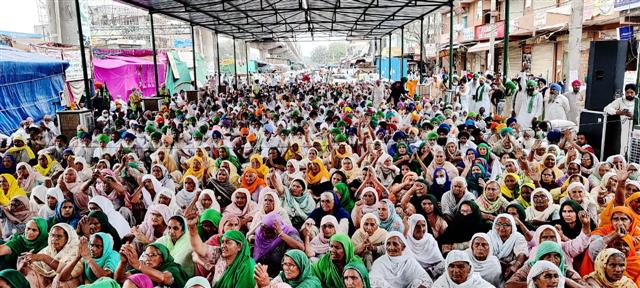
Farmers stage dharna outside the DC office in Rohtak on Tuesday.

Tribune News Service
Rohtak, April 20

Farmers under the banner of the All-India Kisan Sabha (AIKS) and other farm organisations on Tuesday staged a dharna outside the DC office against the recently passed Bill for recovering damages to public and private properties from protesters.

They also submitted a memorandum to the district authorities demanding the repeal of the Bill. Women too decried the law by describing it as draconian and a weapon for framing peaceful protesters.

Mahapanchayat amid Covid surge

Hisar: Farmers organised a mahapanchayat at the Khatkar toll plaza in Jind district, mobilising people to join protest sites at the Delhi borders. They were not wearing masks and not maintaining social distancing. The mahapanchayat demanded withdrawal of the three farm laws, compensation to farmers who lost their crop due to fire recently and withdrawal of the “protesters to pay” Act. TNS

Addressing the protesters, AIKS vice-president Inderjit Singh recalled the British raj times when punitive measures used to be taken to contain the freedom struggle. “The BJP was following authoritarianism with an intention to devastate those who would try to raise the voice against the regime. The act for recovering damages to public and private properties from protesters has been enacted for the same purpose,” he alleged.

Inderjit said the protest was organised at every district headquarter following the call given by the Samyukt Kisan Morcha to mount pressure on the authorities to scrap the contentious law and withdraw police cases against farmers.

A similar protest was also organised in Jhajjar city.


BJP leader quits party over farm protest

BJP leader quits party over farm protest

extreme left: Pawan Beniwal

Tribune News Service
Hisar, April 20

BJP leader Pawan Beniwal, who contested two Assembly elections on the party ticket from the Ellanabad Assembly segment in Sirsa district, quit the BJP after meeting the protesting farmers at a dharna site in Sirsa district today.

Beniwal, who contested againsy INLD leader Abhay Chautala in 2014 and 2019, said he was feeling “suffocated” in the BJP for the past some months as the ruling party was not taking any interest in the development of the segment. Besides, his pleas with the party leadership to find an amicable resolution to the farmers’ issue too fell on deaf ears. “I find it difficult to stay in the party which is not ready to listen to the voice of the large number of farmers who are on agitational path in a democratic way for the last many months.”

Beniwal had left the INLD to join the BJP in 2014 when the party fielded him against Abhay Chautala.

Meanwhile, at a Congress event in Gurugram today, former minister Attar Singh Saini from the Hansi segment, former MLA Balwan Singh Daulatpuria from Fatehabad joined the Congress in the presence of the state Congress in charge Vivek Bansal and state Congress president Kumari Selja.

Surender Nehra, son of former minister Jagdish Nehra from Sirsa district, and a leader Bir Singh who had contested the Assembly poll from Rania on the BSP ticket too joined the Congress at the function.


After harvesting, Punjab farmers start returning to Tikri border

After harvesting, Punjab farmers start returning to Tikri border

Farmers at a protest in Tikri on Tuesday against the central farm laws. Photo: Sumit Tharan

Ravinder Saini

Tribune News Service

Jhajjar, April 20

A day after the Samyukt Kisan Morcha announced ‘Phir Delhi Chalo’ campaign to bolster numbers at the protest sites, farmers and labourers from Punjab have started returning to Tikri to join the agitation against the central farm laws.

The protesters put up an impressive show of strength in Tikri today to mark the birth anniversary of farmer leader Dhanna Bhagat. The crowds had been steadily thinning at the protest sites in Tikri, Singhu and Ghaziabad over the past few weeks.

While the SKM, a joint forum of farm unions, said the farmers had returned home temporarily for wheat harvesting, some alleged the protesters were unhappy with the top union leadership for campaigning in poll-bound states at the cost of the farm stir.

“Around 3,000 farmers from Punjab have returned to Tikri after completing their rabi harvest. Many more are likely to reach here in the coming days,” claimed Purushottam Singh Gill, a BKU (Lakhowal) leader. He said the count of local farmers too was growing.

Pargat Singh, a BKU (Rajewal) leader, said farmers and labourers were arriving by trains, buses and in their personal vehicles as tractors were still required for agricultural tasks. “The numbers will keep rising now as farmers will be free for over a month after selling their produce,” he claimed.

The SKM has appealed to the migrants returning to their native places not to panic and join their protest. “We will make all arrangements for food and shelter. They must join the common struggle against the Centre,” said SKM leader Darshan Pal.


Western Command to assist state governments in combating COVID-19

The Army will keep on standby fully equipped medical teams and if the need arises, open its medical facilities to treat civilian patients

Western Command to assist state governments in combating COVID-19

Photo for representation.

Vijay Mohan
Tribune News Service

Chandigarh, April 19

With the country witnessing a surge in cases of COVID-19 infections, Headquarters Western Command will render all possible assistance to state governments within its area of responsibility in their efforts to combat the pandemic.

This includes assistance in providing medical care to civilians, maintenance of law and order, setting up of quarantine facilities, distribution of essential items as and when called upon to do so.  

According to sources, senior officers at Command Headquarters had discussions with civil authorities in Punjab, Haryana, Himachal Pradesh, Chandigarh, Delhi and Jammu, today evening on modalities for providing the Army’s assistance.

The Army will keep on standby fully equipped medical teams and if the need arises, open its medical facilities to treat civilian patients.

It will also assist the local authorities in providing medical aid, ferrying essential items in remote or far-flung areas and evacuating persons requiring immediate medical attention.

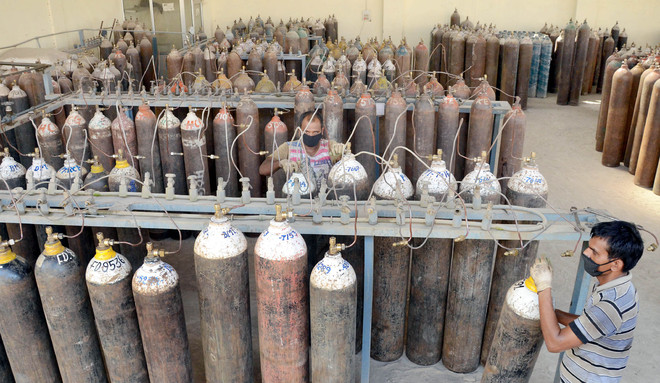
The Army is also providing its railway rolling stock to the Indian Railways for transport of oxygen tankers and oxygen cylinders to various parts of the country in wake of the spike in demand of medical oxygen.

The Railways is running special trains for the purpose.

Earlier, during the lockdown last year, the Army had operated several quarantine camps to house travellers and other suspected cases of COVID-19 during their stipulated period of isolation, besides providing medical teams, equipment and medicines to the civil administration in various parts of the country.

To combat the pandemic, the Army also issued fresh instructions this week, which included reducing office attendance to 50 per cent, conducting meetings through video conferencing and staggering office timings.

Only emergency medical treatment would be permitted in military hospitals and all training activities would be conducted while adhering to COVID-19 protocols.

The armed forces too have not been immune to the pandemic and according to official figures, about 40,000 personnel in all three services were infected with the virus. Strict adherence to COVID-19 protocols and precautionary measures as well as a vigorous vaccination drive is being undertaken by the forces.


Rajnath asks armed forces to extend help to civil administrations as Covid cases increase

ingh has conveyed to Gen MM Naravane that the Army units in various states can get in touch with state administrations to understand their requirement

Rajnath asks armed forces to extend help to civil administrations as Covid cases increase

New Delhi, April 20

As India reels under a massive spike in coronavirus cases, Defence Minister Rajnath Singh has asked the Army to extend assistance to state administrations to deal with the pandemic, including by offering help in creation of additional capacities to treat Covid patients.

Sources in the security establishment said following Singh’s communication to Army Chief Gen MM Naravane, it was decided that the Army would consider offering treatment to civilians in its medical facilities, wherever possible, besides extending other assistance to civil administrations.

Singh has conveyed to Gen MM Naravane that the Army units in various states can get in touch with state administrations to understand their requirement like creation of additional capacities to deal with increasing volume of patients.

Subsequently, it was decided that the senior-most Army officer in a state would get in touch with the chief minister to understand the requirement and take forward the process, including offering to treat civilians wherever possible, they said.

Sources said the defence minister had been in touch with the top brass of his ministry and the three forces on how the civilian administration across the country could be assisted in battling the coronavirus situation.

Sources said it was also communicated to the leadership of the Indian Air Force and the Navy to gear up their preparedness in dealing with the situation.

Separately, Defence Secretary Ajay Kumar reviewed the possible areas where the armed forces can extend assistance to the civilian authorities.

Following his review, the Defence Ministry instructed 67 hospitals run by Cantonment Boards across the country to ensure medical services to cantonment residents as well as those from outside.

The Defence Research and Development Organisation (DRDO) has already been told to extend all possible assistance it can extend to civil administrations across the country.

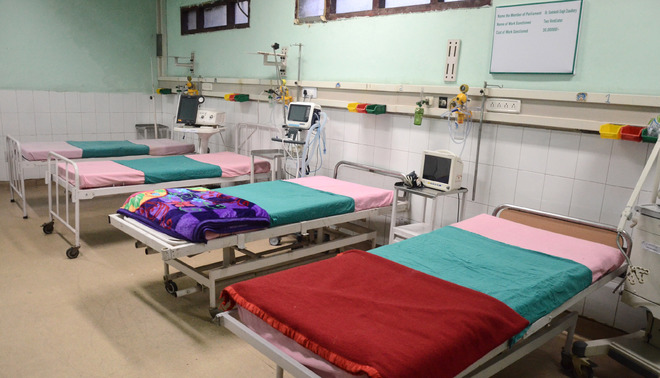
The DRDO has already reopened a medical facility near the Delhi airport for treatment of Covid patients. The facility has been made operational with 250 beds and their number is being increased to 1,000.

The premier organisation is coming up with a similar facility in Lucknow.

India has witnessed a massive spike in coronavirus infections as the country recorded over two lakh cases daily in the last five days.

In view of the rapid surge in infections, India is facing an acute shortage of hospital beds, oxygen, essential drugs. PTI


All defence PSUs told to produce oxygen

All defence PSUs told to produce oxygen

Tribune News Service

New Delhi, April 20

All companies and factories under the Ministry of Defence (MoD) have been told to immediately buy oxygen producing machines and provide extra beds to civil administration and state governments to combat the Covid crisis.

The decision was announced following an emergency virtual meeting chaired by Defence Minister Rajnath Singh on Tuesday.

There are nine public sector undertakings (PSUs) under the MoD. Also, the Ordnance Factory Board has 41 factories while the Defence Research and Development Organisation has multiple units and labs working on dual use technology — military and civil.

The Defence Minister asked the armed forces to be in close contact with state governments and use emergency powers to procure goods needed to fulfil critical medical requirements.

Tejas technology for private industry

  • MoD has offered to the private industry a technology developed for oxygen generation onboard Tejas jet
  • 1,000 litres of oxygen can be generated per hour; can cater to hospital needs
  • A DRDO tech for maintaining blood oxygen level in troops at extreme high altitudes will be used for Covid patients

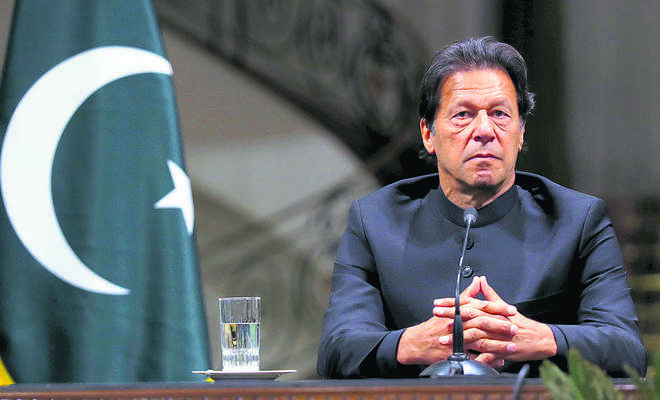
Pakistan PM Imran Khan wishes Manmohan Singh speedy recovery from Covid

Pakistan PM Imran Khan wishes Manmohan Singh speedy recovery from Covid

Pakistan PM Imran Khan.

Islamabad, April 21

Pakistan Prime Minister Imran Khan on Tuesday wished a speedy recovery to former Indian prime minister Manmohan Singh who tested positive for COVID-19 and was admitted to All India Institute of Medical Sciences (AIIMS).

Singh, 88, was admitted to the AIIMS trauma centre in Delhi, which is a dedicated COVID facility, with a mild fever on Monday.

“Wishing ex Indian PM Manmohan Singh a speedy recovery from Covid 19,” Khan, who recently recovered from COVID-19, said in a tweet.

Singh had taken two doses of the COVID-19 vaccine on March 4 and April 3.

Khan’s message comes amid some signs of easing of tensions in bilateral ties. In February, the militaries of the two countries announced a ceasefire agreement.

The bilateral relations deteriorated after India announced withdrawing special powers of Jammu and Kashmir and bifurcation of the state into two union territories in August 2019.

The move angered Pakistan, which downgraded diplomatic ties with India and expelled the Indian High Commissioner in Islamabad. Pakistan also snapped all air and land links with India and suspended trade and railway services. PTI