Trial court had ordered Major General and Defence Estate Officer be sent to civil prison for two months for their wilful disobedience and violation of the decree
ribune News Service
New Delhi, March 18
The Supreme Court on Thursday stayed Telangana court’s order to send a Major General of Indian Army and Defence Estate Officer to two-month civil prison in connection with execution proceedings in a land dispute.
“We stay the entire order passed in execution proceedings,” said a Bench headed by Chief Justice of India SA Bobde after Solicitor General Tushar Mehta submitted that urgent invention was needed in view of the fact that the Telangana High Court had refused to stay the order.
The Central government had moved a court in Telangana claiming ownership of land alleged to have been encroached by one Veera Raghav Reddy.
The Centre contended that the land in question was under military occupation and was used for parade and as a training ground. It alleged that Reddy upon encroached 9-acre land.
However, Reddy had claimed that his family had been in continuous, open and adverse possession for over 160 years and the rights alleged to have been acquired by the other party had become completely extinguished by the lapse of time.
A civil court in Secunderabad had dismissed the suit. While an appeal was pending before the Telangana High Court, the defendant sold more than 5 acres of disputed land.
The trial court decreed a counter petition in favour of the legal heirs of the original defendant and restrained the Central government from interfering with the peaceful possession of the land by the heirs of original defendant.
In execution proceedings, the trial court ordered the Major General of Indian Army and Defence Estate Officer be sent to civil prison for two months for their wilful disobedience and violation of the decree.
The Centre moved the top court as the High Court refused to stay the order.
Will ban import of soldiers’ clothing if India can manufacture them, says CDS Rawat
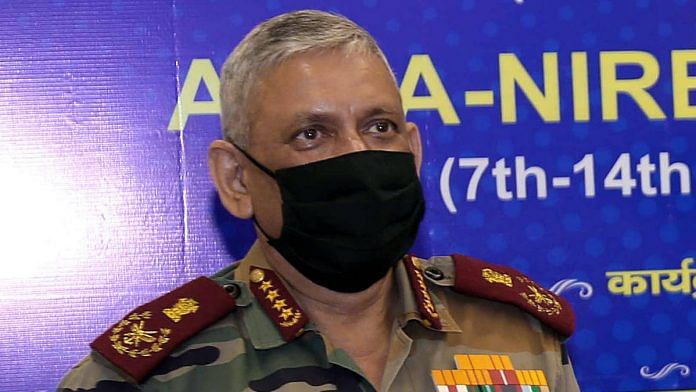
Chief of Defence Staff General Bipin Rawat | File photo: ANIText Size: A- A+
New Delhi: The armed forces will completely ban the import of clothing, required to sustain its soldiers at extreme temperatures across the country, if the Indian textile industry is able to innovate and manufacture them, said Chief of Defence Staff (CDS) General Bipin Rawat on Wednesday.
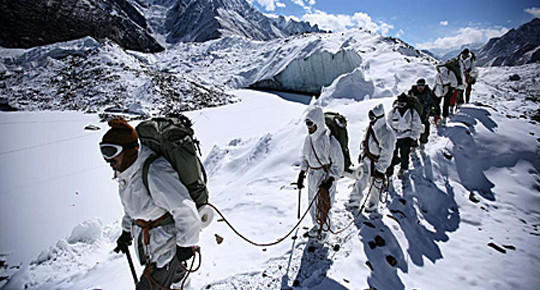
“We are looking at the kind of clothing that can sustain our soldiers in the kind of extreme cold climate (near northern borders of Ladakh) and in the hot, dry and humid climate in the deserts and the north-eastern regions where we have the jungle and semi-mountainous terrain,” he said in his speech at an event organised by industry body FICCI.
As of now, a large amount of clothing for the armed forces is being imported but in the past one or two years, there has been a lot of innovation by the Indian industry as far as high altitude clothing is concerned, he said.
“We have now started placing orders for such clothing. And if we find that this thing can take off and support us, we will not hesitate in putting the entire clothing or the entire ‘techno clothing’ that we are using in the armed forces on the positive indigenisation list, which we were earlier calling the negative list for imports,” Rawat said.
“This means we will completely ban the import of these items and make sure that the defence services have to depend only on the Indian industry as part of our Atmanirbhar Bharat support that we wish to give to the industry,” he added.https://imasdk.googleapis.com/js/core/bridge3.447.1_en.html#goog_1128851600
Techno clothing is special clothing that is developed by incorporating new technology to make it usable in special circumstances and places such as extremely cold areas, biomedical equipment, aircraft, etc.
The government in August last year announced a ‘negative list for imports’ that restricted purchase of 101 defence items such as light combat helicopters, transport aircraft, conventional submarines and cruise missiles from foreign entities.
Rawat said, “As far as defence services are concerned, we have a huge stake in techno textiles. We are large users of textiles that use technology and we will continue to use them in the years ahead.”
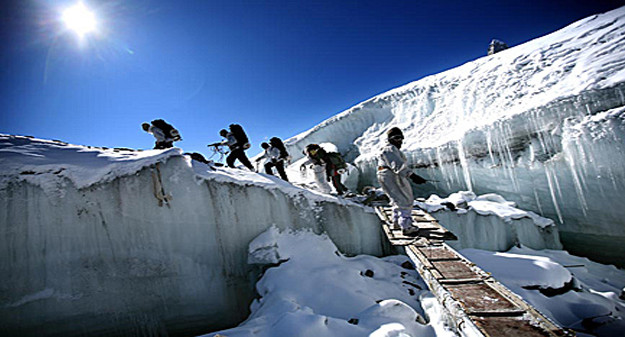
Today, soldiers are serving in altitudes at the northern borders where the temperature falls to as low as minus 50 degree celsius in the winters, he said.
“We have our jawans operating in the deserts where the temperature rises to as high as 58 degree celsius in the summers. I’m not saying the same textile should suffice and meet both the parameters,” he added.
Shamrock Bhangra, a folk dancing group, were caught doing Bhangra in front of Castletown House in County Kildare, Ireland.
RTE News, in a Twitter post, shared the video featuring the folk dance group. So far, the video has been shared over six lakh times.
The choreographers—Gurpreet Singh, Charnjit Singh and Kanwar Singh—performed the socially-distanced routine by an Irish band and the UK-based The Dhol Foundation—a Bhangra musical group—on St Patrick’s Day, according to RTE News
In traditional outfits, the folk group danced their hearts out.
The video has gone viral on all social media platforms.
“This is absolutely brilliant. A great way of embracing the Irish culture with a new spin,” a user said. Another comment reads, “This makes me so happy! I need to see a Bhangra dancer every day!”, another wrote: “Love this Punjabi Irish jig!”
The economic argument in support of market reforms, claiming that farm incomes go up when the number of farmers recedes, has turned out to be untrue. America has lost more than 5 million farms in less than 100 years, and Australia 25 per cent of its farms between 1980 and 2002. The speed at which farmers across the globe have got out of agriculture hasn’t increased farm incomes, but has only worsened the agrarian crisis.
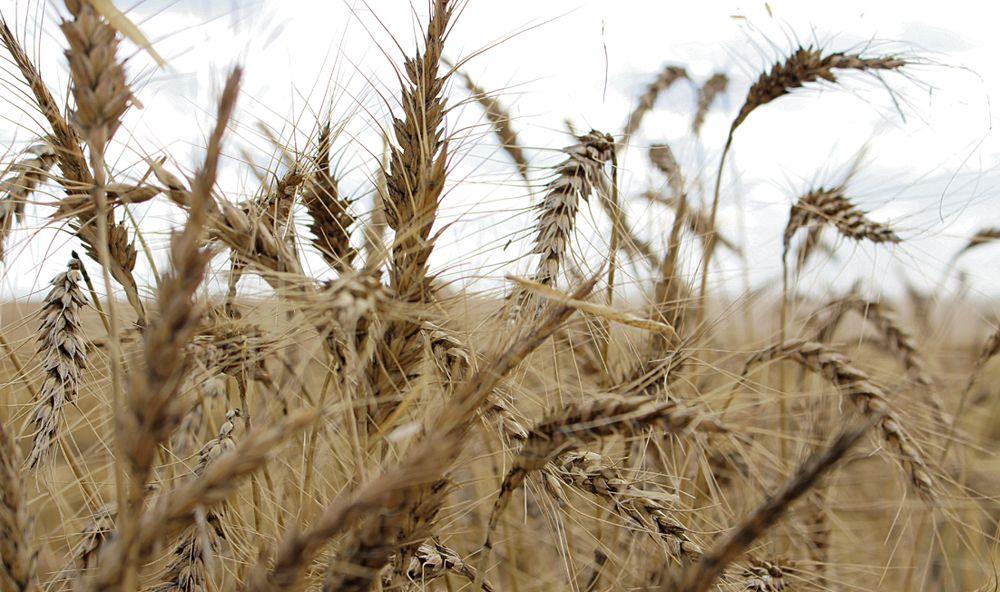
Grain of truth: Globally declining wheat prices have been pushing small farmers out of farming. Reuters
Devinder Sharma
Food & Agriculture Specialist
It’s difficult to imagine. At a time when free markets are generally believed to provide farmers with a higher price, thereby enhancing farm incomes, the farm gate price for wheat in Canada happens to be much lower in 2017 than what it was 150 years back in 1867. This is not only true for Canada. Even in the US, as per media reports, farmers say the price they receive for wheat is much lower than what was prevalent at the time the four-year American Civil War ended in 1865.
So what happened to markets? After all, wheat is a staple food and its demand, considering the population boom the world has witnessed in the past 150 years, has grown exponentially over the centuries. According to the UN Food and Agricultural Organisation (FAO), wheat production forecast is pegged at 780 million tonnes in 2020-21, an increase of 7.5 million tonnes this year. Given the food insecurity the world is faced with, FAO considers the cereal production estimates (including that for wheat) to be positive.
Now, before you wonder how this could be possible, given the fact that economic curriculum in colleges and universities teaches us that markets provide the rightful price, take a look at an analysis by the US National Farmer Unions (NFU) which explains how the continuously declining peanut prices since 1965 had pushed three out of four peanut farmers out of business in America, and that too, at a time when peanut consumption was on the rise. Defying the supply demand logic, the peanut prices slumped from $1 per pound in 1965 to less than $0.25 per pound in 2020, a drop of more than 75 per cent. And if you are still thinking it probably happened because of surplus production, a Washington Post report tells us how just three companies, controlling the entire peanut market, had actually fixed the purchase price. After a lawsuit filed by 12,000 peanut growers, these companies finally agreed to pay $103 million in compensation for deliberately keeping the prices low.
Peanut is no exception. This kind of match-fixing has been going on for decades. Whether in America, Europe or India, what the farmers need to understand is that the match is already fixed. It is not without any reason that market prices, when adjusted for inflation, have remained frozen or have been on a decline over the years.
Coming back to the issue of wheat prices, a Canadian author and critic, Darrin Qualman, has in an insightful series of blog posts, explained how the prices have been on a steep decline since 1867. Adjusted for inflation, the price of wheat per bushel (27 kg) was close to $30 in 1867. Like on a ski slope, the average price had continuously been on the downward slide ever since. With global emphasis shifting to agricultural exports in the mid-1980s, the prices began to slump further. In 2017, the wheat price collapsed to a little over $5 per bushel. The price a Canadian wheat farmer sold his wheat for in 2017 was less by $25 per bushel than what his great-grandfather sold it for
150 years back.
No wonder, while small farmers abandoned agriculture in large numbers, the average size of a Canadian farm has grown to 3,000 acres with the big farms several times larger. While the number of farmers declined drastically, the economic argument in support of market reforms claiming that farm incomes go up when the number of farmers recedes too has turned out to be untrue. America has lost more than 5 million farms in less than 100 years, and Australia has lost 25 per cent of its farms between 1980 and 2002. Economists will say this is a healthy development, and will make farming profitable. But surprisingly, the speed at which farmers across the globe have got out of agriculture hasn’t increased farm incomes, but on the contrary, it has only worsened the agrarian crisis.
This is the same flawed argument that Niti Aayog too is promoting, saying that farm incomes will double when the number of people on the farm comes down. If this be true, I don’t understand why in Canada, for instance, the farm debt should be exceeding $102 billion, more than double than what it was in 2000. In the US, where hardly 1.5 per cent of the population remains in agriculture, farm debt has multiplied to a staggering $425 billion in 2020. In France, with only 7 per cent workforce employed in agriculture, more than 44 per cent farmers carry a debt burden of 400,000 euros and 25 per cent farmers earn less than 350 euros per month, below the poverty line.
While farmers have been denied the rightful price, the consumer prices have been on the rise. In another blog post, Qualman explains that while the price of a bushel of wheat in Canada and US has remained static since 1975, the retail price of 60 loaves of bread produced from each bushel in the US had increased by $50 on an average, from $25 in 1975 to a little over $75 in 2015. The same holds true for other food products as well. How can efficiency be only measured in terms of reducing farm gate prices whereas the food processing and retail giants continue to increase prices, walking away with a larger share of the end consumer price? If the markets were efficient, why the food processing and retail giants continue to thrive in inefficiency?
There is nothing sacrosanct about markets. To believe that markets provide farmers with a higher price is an outdated economic thinking (and education). Markets have historically failed to prop up farm incomes anywhere in the world, a fact that economists failed to acknowledge. Demanding no trading to be allowed below the MSP, protesting farmers are actually seeking a historic
correction in economic policy and thinking. This holds the future for a reverberating agriculture, and a new economic design that provides for Sabka Saath, Sabka Vikas.
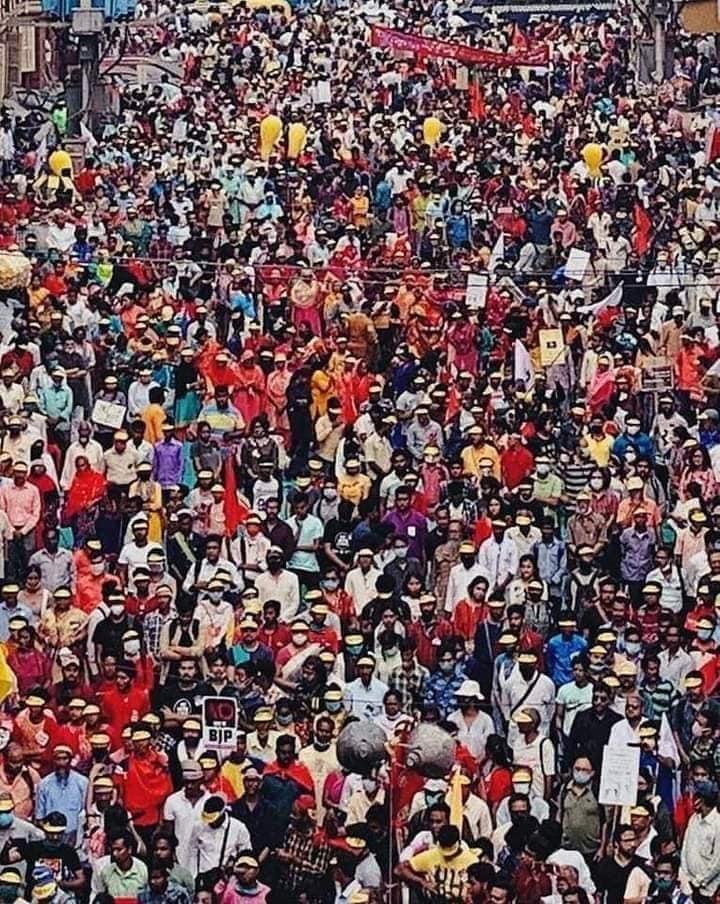
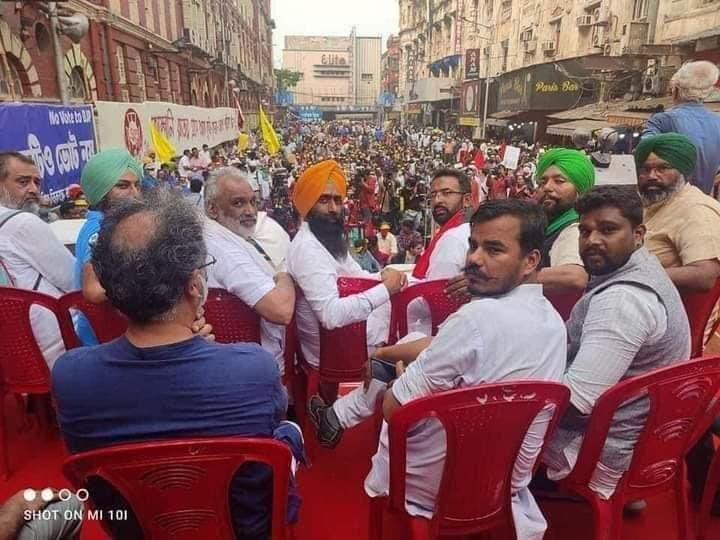
A women farmers’ panchayat was organised at Kandela village in Jind district today against the three agriculture laws. They said that there was need to recognise women as farmers, as they are equal partners in agriculture with their men.
Muktsar farmer dies at Tikri
Jhajjar: One more Punjab farmer, identified as Bhagan Singh (65) of Muktsar district, reportedly died of cardiac arrest at the Tikri border on Thursday. Bhagan had been actively participating in the ongoing protests, said a farmer. TNS
Santosh Dahiya, a woman khap leader, said that they had adopted a resolution demanding the withdrawal of the three agriculture laws and removal of the GST on essential farm implements. “There is 12 per cent GST on farm implements and 5 per cent tax on fertilisers, which entail extra financial burden on farmers,” she said. The farmers were neck deep in debt due to accumulated losses over the years.
Santosh said that women had been equally participating in the farmers’ agitation from the beginning. “Now, we have consolidated our strength. We will not go back until the government takes back the three laws,” she said.
Sudesh Goyat, a farmer leader, said that they wated to organise a women panchayat on their own and were happy to hold it today.
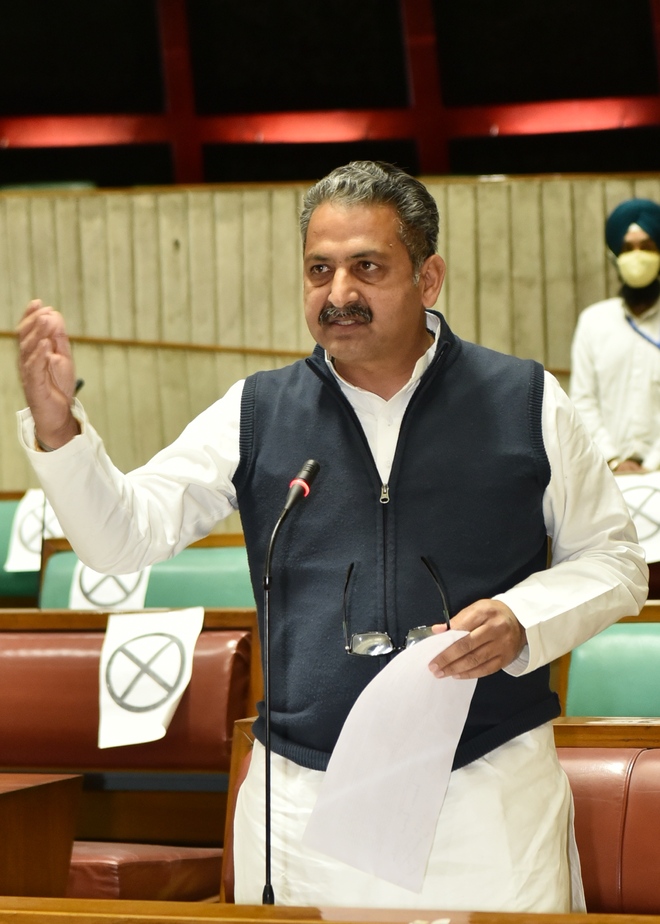
To pacify the protesting farmers demanding higher compensation for their lands for two national highways Delhi-Amritsar-Katra and Jalandhar-Ajmer, the state government has tweaked the rules. This was stated by PWD and Education Minister Vijay Inder Singla here today.
Singla, who was here to list achievements of his government in the last four years, said the government had increased the multiplier factor for land acquisition following which there would be substantial increase in the compensation to farmers.
The NHAI would acquire land in 12 districts for the two projects. Farmers had refused to give their lands for the projects, citing lower compensation. He said in Punjab, the collector rates were lesser as compared to the market rate on demand of people so that they had to spend less on stamp duty at the time of the purchase of land. This was the reason for lesser compensation. Now, the compensation would be near double. — TNS
Rahul Gandhi attacks government for not paying tributes to farmers who died during protest
Attacking the government for not paying tributes to farmers who died during their protest, Congress leader Rahul Gandhi on Thursday said his two-minute silence in the memory of the 300 men who sacrificed their lives is not acceptable to the BJP.
He used the hashtag ‘300DeathsAtProtest’ to highlight that 300 farmers have so far lost their lives in the farmers’ agitation.
“My 2 minute silence for the farmers who died during the agitation is not acceptable to the BJP. I will pay my tributes to the sacrifices of my farmers and labourers again and again. I am not afraid of those who fear my silence,” Gandhi said in a tweet in Hindi.
In another tweet, he again attacked the government over job losses and cited a report claiming that a large number of EPF accounts were shut during the pandemic. He said that this was another achievement of the BJP government’s “eradicate employment campaign”.
“You lost your job and had to close down your EPF account. Another achievement of the Central Government’s ‘eradicate employment campaign’,” he said in a tweet in Hindi.
The unnamed news report claimed that a large number of people lost their jobs during the coronavirus pandemic and 71 lakh EPF accounts were closed in nine months.
Gandhi has been attacking the government over the handling of the farmers’ agitation and the pandemic, claiming many people lost their jobs during the lockdown. — PTI
Talking ‘unofficially’ to both sides for early solution: Governor Malik on govt-farmers stalemate
The protest is also going on in several parts of the country on the issue
Meghalaya Governor Satya Pal Malik. — File Photo
New Delhi, March 18
Meghalaya Governor Satya Pal Malik has said he was talking “unofficially” to the agitating farmers and the government to press for an early solution to the stalemate over the contentious agri laws, adding there was a growing understanding within the two sides that a resolution needs to be found at the earliest.
Malik, who hails from Baghpat in western Uttar Pradesh, asserted the issue of farmers needs to be resolved soon else it will damage the BJP in Western Uttar Pradesh, Haryana and Rajasthan.
He also expressed regret that “no one has uttered even a single word” at the death of agitating farmers during the over 100-day protest by them.
Referring to the deadlock persisting between the protesting farmers and the government despite several rounds of talk Malik said no one is being unreasonable in the government and only those who want to damage the party are opposing an early solution.
“I am of the opinion that there should be a solution to the problem at the earliest, and I am hopeful now of an early solution because there seems to be not much distance between the viewpoints of the two sides
“I am talking unofficially to both the sides pressing for an early solution. There is a growing understanding within the farmer community that a solution needs to be found at the earliest as well as the government,” Malik told NDTV.
Hundreds of farmers have been camping at Ghazipur, Singhu and Tikri on Delhi borders since November with a demand the Centre repeal the three contentious farm laws and make a new one that would ensure a legal guarantee on the MSP.
The protest is also going on in several parts of the country on the issue. The government, however, has held that the laws were pro-farmer.
“No one is unreasonable in the government—neither the Prime Minister (Narendra Modi) nor other people. Only those people will oppose an early solution to the problem, who want to damage the party. I am hopeful of an early solution to this, as otherwise, the issue will damage the party in Western UP, Haryana and Rajasthan,” he added.
“I have been asked by the media why I am talking about the issues despite being on a Constitutional post, and I explained that even if a dog is killed, there are condolence messages pouring in from everywhere and here 250 farmers are dead the border, no one has uttered even a single word,” he added.
“By not talking about it, we have left the entire turf for opponents who are talking and taking political mileage from it,” he said.