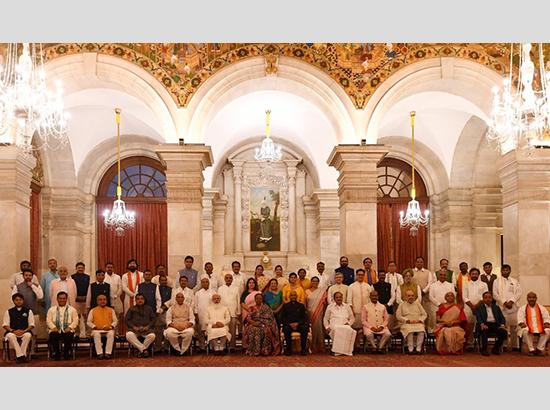
New Delhi , July 07, 2021: The President of India, as advised by the Prime Minister, has directed the allocation of portfolios among the following members of the Council of Ministers :
The list is as under:
Shri Narendra Modi
Prime Minister and also in-charge of:Ministry of Personnel, Public Grievances and Pensions;Department of Atomic Energy;Department of Space;All important policy issues; andAll other portfolios not allocated to any Minister
CABINET MINISTERS
1.
Shri Raj Nath Singh
Minister of Defence
2.
Shri Amit Shah
Minister of Home Affairs; andMinister of Cooperation
3.
Shri Nitin Jairam Gadkari
Minister of Road Transport and Highways
4.
Smt. Nirmala Sitharaman
Minister of Finance; andMinister of Corporate Affairs
5.
Shri Narendra Singh Tomar
Minister of Agriculture and Farmers Welfare
6.
Dr. Subrahmanyam Jaishankar
Minister of External Affairs
7.
Shri Arjun Munda
Minister of Tribal Affairs
8.
Smt. Smriti Zubin Irani
Minister of Women and Child Development
9.
Shri Piyush Goyal
Minister of Commerce and Industry;Minister of Consumer Affairs, Food and Public Distribution; andMinister of Textiles
10.
Shri Dharmendra Pradhan
Minister of Education; andMinister of Skill Development and Entrepreneurship
11.
Shri Pralhad Joshi
Minister of
Parliamentary Affairs;Minister of Coal; andMinister of Mines
12.
Shri Narayan Tatu Rane
Minister of Micro, Small and Medium Enterprises
13.
Shri Sarbananda Sonowal
Minister of Ports, Shipping and Waterways; andMinister of AYUSH
14.
Shri Mukhtar Abbas Naqvi
Minister of Minority Affairs
15.
Dr. Virendra Kumar
Minister of Social Justice and Empowerment
16.
Shri Giriraj Singh
Minister of Rural Development; andMinister of Panchayati Raj
17.
Shri Jyotiraditya M. Scindia
Minister of Civil Aviation
18.
Shri Ramchandra Prasad Singh
Minister of Steel
19.
Shri Ashwini Vaishnaw
Minister of Railways;Minister of Communications; andMinister of Electronics and Information Technology
20.
Shri Pashu Pati Kumar Paras
Minister of Food Processing Industries
21.
Shri Gajendra Singh Shekhawat
Minister of Jal Shakti
22.
Shri Kiren Rijiju
Minister of Law and Justice
23.
Shri Raj Kumar Singh
Minister of Power; andMinister of New and Renewable Energy
24.
Shri Hardeep Singh Puri
Minister of Petroleum and Natural Gas; andMinister of Housing and Urban Affairs
25.
Shri Mansukh Mandaviya
Minister of Health and Family Welfare; andMinister of Chemicals and Fertilizers
26.
Shri Bhupender Yadav
Minister of Environment, Forest and Climate Change; andMinister of Labour and Employment
27.
Dr. Mahendra Nath Pandey
Minister of Heavy Industries
28.
Shri Parshottam Rupala
Minister of Fisheries, Animal Husbandry and Dairying
29.
Shri G. Kishan Reddy
Minister of Culture;Minister of Tourism; andMinister of Development of North Eastern Region
30.
Shri Anurag Singh Thakur
Minister of Information and Broadcasting; andMinister of Youth Affairs and Sports
MINISTERS OF STATE (INDEPENDENT CHARGE)
1.
Rao Inderjit Singh
Minister of State (Independent Charge) of the Ministry of Statistics and Programme Implementation;Minister of State (Independent Charge) of the Ministry of Planning; andMinister of State in the Ministry of Corporate Affairs
2.
Dr. Jitendra Singh
Minister of State (Independent Charge) of the Ministry of Science and Technology;Minister of State (Independent Charge) of the Ministry of Earth Sciences;Minister of State in the Prime Minister’s Office;Minister of State in the Ministry of Personnel, Public Grievances and Pensions;Minister of State in the Department of Atomic Energy; andMinister of State in the Department of Space
MINISTERS OF STATE
1.
Shri Shripad Yesso Naik
Minister of State in the Ministry of Ports, Shipping and Waterways; andMinister of State in the Ministry of Tourism
2.
Shri Faggansingh Kulaste
Minister of State in the Ministry of Steel; andMinister of State in the Ministry of Rural Development
3.
Shri Prahalad Singh Patel
Minister of State in the Ministry of Jal Shakti; andMinister of State in the Ministry of Food Processing Industries
4.
Shri Ashwini Kumar Choubey
Minister of State in the Ministry of Consumer Affairs, Food and Public Distribution; andMinister of State in the Ministry of Environment, Forest and Climate Change
5.
Shri Arjun Ram Meghwal
Minister of State in the Ministry of Parliamentary Affairs; andMinister of State in the Ministry of Culture
6.
General (Retd.) V. K. Singh
Minister of State in the Ministry of Road Transport and Highways; andMinister of State in the Ministry of Civil Aviation
7.
Shri Krishan Pal
Minister of State in the Ministry of Power; andMinister of State in the Ministry of Heavy Industries
8.
Shri Danve Raosaheb Dadarao
Minister of State in the Ministry of Railways;Minister of State in the Ministry of Coal; andMinister of State in the Ministry of Mines
9.
Shri Ramdas Athawale
Minister of State in the Ministry of Social Justice and Empowerment
10.
Sadhvi Niranjan Jyoti
Minister of State in the Ministry of Consumer Affairs, Food and Public Distribution; andMinister of State in the Ministry of Rural Development
11.
Dr. Sanjeev Kumar Balyan
Minister of State in the Ministry of Fisheries, Animal Husbandry and Dairying
12.
Shri Nityanand Rai
Minister of State in the Ministry of Home Affairs
13.
Shri Pankaj Chaowdhary
Minister of State in the Ministry of Finance
14.
Smt. Anupriya Singh Patel
Minister of State in the Ministry of Commerce and Industry
15.
Prof. S. P. Singh Baghel
Minister of State in the Ministry of Law and Justice
16.
Shri Rajeev Chandrasekhar
Minister of State in the Ministry of Skill Development and Entrepreneurship; andMinister of State in the Ministry of Electronics and Information Technology
17.
Sushri Shobha Karandlaje
Minister of State in the Ministry of Agriculture and Farmers Welfare
18.
Shri Bhanu Pratap Singh Verma
Minister of State in the Ministry of Micro, Small and Medium Enterprises
19.
Smt. Darshana Vikram Jardosh
Minister of State in the Ministry of Textiles; andMinister of State in the Ministry of Railways
20.
Shri V. Muraleedharan
Minister of State in the Ministry of External Affairs; andMinister of State in the Ministry of Parliamentary Affairs
21.
Smt. Meenakashi Lekhi
Minister of State in the Ministry of External Affairs; andMinister of State in the Ministry of Culture
22.
Shri Som Parkash
Minister of State in the Ministry of Commerce and Industry
23.
Smt. Renuka Singh Saruta
Minister of State in the Ministry of Tribal Affairs
24.
Shri Rameswar Teli
Minister of State in the Ministry of Petroleum and Natural Gas; andMinister of State in the Ministry of Labour and Employment
25.
Shri Kailash Choudhary
Minister of State in the Ministry of Agriculture and Farmers Welfare
26.
Smt. Annpurna Devi
Minister of State in the Ministry of Education
27.
Shri A. Narayanaswamy
Minister of State in the Ministry of Social Justice and Empowerment
28.
Shri Kaushal Kishore
Minister of State in the Ministry of Housing and Urban Affairs
29.
Shri Ajay Bhatt
Minister of State in the Ministry of Defence; andMinister of State in the Ministry of Tourism
30.
Shri B. L. Verma
Minister of State in the Ministry of Development of North Eastern Region; andMinister of State in the Ministry of Cooperation
31.
Shri Ajay Kumar
Minister of State in the Ministry of Home Affairs
32.
Shri Devusinh Chauhan
Minister of State in the Ministry of Communications
33.
Shri Bhagwanth Khuba
Minister of State in the Ministry of New and Renewable Energy; andMinister of State in the Ministry of Chemicals and Fertilizers
34.
Shri Kapil Moreshwar Patil
Minister of State in the Ministry of Panchayati Raj
35.
Sushri Pratima Bhoumik
Minister of State in the Ministry of Social Justice and Empowerment
36.
Dr. Subhas Sarkar
Minister of State in the Ministry of Education
37.
Dr. Bhagwat Kishanrao Karad
Minister of State in the Ministry of Finance
38.
Dr. Rajkumar Ranjan Singh
Minister of State in the Ministry of External Affairs; andMinister of State in the Ministry of Education
39.
Dr. Bharati Pravin Pawar
Minister of State in the Ministry of Health and Family Welfare
40.
Shri Bishweswar Tudu
Minister of State in the Ministry of Tribal Affairs; andMinister of State in the Ministry of Jal Shakti
41.
Shri Shantanu Thakur
Minister of State in the Ministry of Ports, Shipping and Waterways
42.
Dr. Munjapara Mahendrabhai
Minister of State in the Ministry of Women and Child Development; andMinister of State in the Ministry of AYUSH
43.
Shri John Barla
Minister of State in the Ministry of Minority Affairs
44.
Dr. L. Murugan
Minister of State in the Ministry of Fisheries, Animal Husbandry and Dairying; andMinister of State in the Ministry of Information and Broadcasting
45.
Shri Nisith Pramanik
Minister of State in the Ministry of Home Affairs; andMinister of State in the Ministry of Youth Affairs and Sports
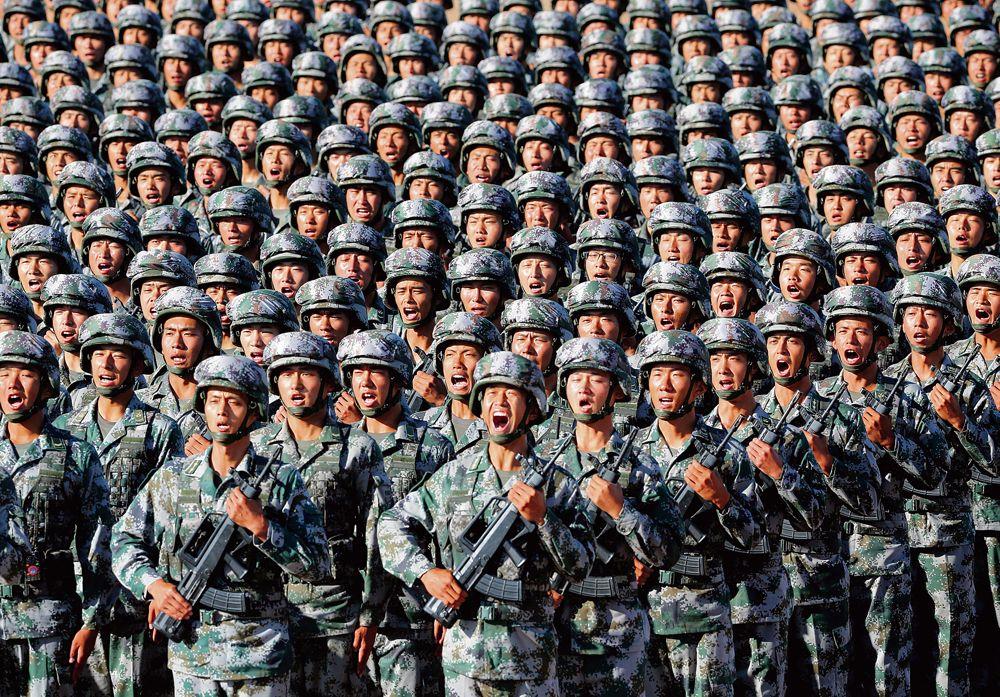
The People’s Liberation Army (PLA) of China was initially organised according to military regions that fluctuated from 13 to seven to five. In 2014, the military regions were reduced to five and a need was felt to have joint command with ground, naval, air and the Second Artillery Corps forces. This was planned to change their concept from primarily ground-oriented defence to a coordinated move of all services and enhance air and naval capabilities into the East China Sea.
Policy shift: Will structural changes in the armed forces bring about better output against an adversary like China? Reuters
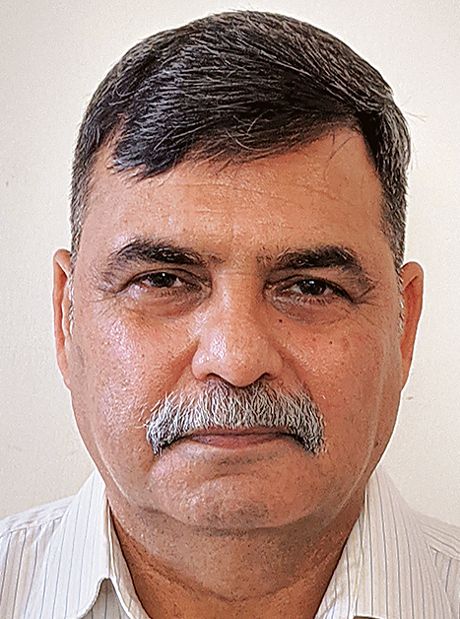
Air Vice Marshal Anil Golani (retd)
Additional Director General, Centre for Air Power Studies
While democracies are considered to be the most evolved means of governance, nations not only take pride in their evolution as mature and evolved democracies, but also exhort others to follow suit. What ensues, however, is changing public perceptions based on a popular mandate which might sway the course of nations to paths unknown and may not deliver the promised results. Something similar seems to be underway in the national military discourse on the formation of integrated theatre commands. The examples being quoted to buttress the logic emanate from the integrated theatre commands of the US and China. A brief exposure to the structure and organisation in these countries is essential before we make an attempt to replicate them, if at all, in the Indian context.
The first country in the world to contemplate the creation of theatre/functional commands was the US. This was done through the Unified Command Plan (UCP) which is a strategic document that establishes the missions, responsibilities and geographical areas for the commanders of the combatant commands. The UCP is a classified executive branch document prepared by the Chairman of the Joint Chiefs of Staff and is reviewed every two years. The recommendations are made directly to the President through the Defence Secretary on any necessary changes. The country presently has seven geographical and four functional commands. Functional combatant commands operate across geographic boundaries and provide unique capabilities while the geographic combatant commands operate in clearly delineated areas of responsibility having a regional military focus. Each of these has the requisite force levels and an integral command, control, communications, computers, intelligence, surveillance and reconnaissance (C4ISR) network. Geographical commands are under a single commander and can seek assistance from a functional command when required.
The People’s Liberation Army (PLA) of China was initially organised according to military regions that fluctuated from 13 to seven to five. In 2014, the military regions were reduced to five and a need was felt to have joint command with ground, naval, air and the Second Artillery Corps forces. This was planned to change their concept from primarily ground-oriented defence to a coordinated move of all services and enhance air and naval capabilities into the East China Sea. In February 2016, the military regions were changed to replicate the US model by creating five geographical peace-time commands, the major difference being that they are all within mainland China, having divided the country into five regions or theatres. The reason for China adopting this policy was to develop an integrated joint operations capability, promoting joint training between services which hitherto was found wanting prior to the restructuring. The Western Theatre Command of China encompasses a geographical area larger than the landmass of India.
The US has been a superpower ever since the world wars. Having fought against the Nazi forces and its requirements of maintaining the balance of power during the Cold War era, the need to have a global military presence was inescapable. Technologically advanced with an annual defence budget of $778 billion in 2020, the country remains the undisputed global power. With a change in administration this year, the commitment of Joe Biden towards NATO and other global challenges has only increased. The country will continue to receive bipartisan support for its military spending and defence budget in the coming years.
China aspires to challenge the hegemony of the US and it views its military modernisation as a necessity to achieve the same. With the Chinese Communist Party having supreme control and authority to not only spend money, but also bring about reforms and structural changes in the military dispensation without any opposition, its path to becoming a superpower only becomes easier. The forces that China can bring to bear on India, only through its Western Theatre Command, pose a credible military challenge.
India is probably the only nation in the world which faces two hostile nuclear powers with whom boundary issues remain unresolved even after more than seven decades of its independence. We are the world’s largest democracy with 18 per cent of the world’s population and just four per cent of the world’s GDP. The growing demands of a developing nation make competing demands of ‘guns’ and ‘butter’ difficult to fulfill. India’s defence budget has not crossed 2.5 per cent of its GDP in the last decade. Increased spending on defence, with the after-effects of the Covid pandemic, is a remote possibility. While we as a nation are unable to commit to increased spending on defence because of our developmental and economic imperatives to alleviate poverty, we cannot afford to be lulled into thinking that ‘doing something’ will alleviate our security concerns. Moreover, we as a nation, governed by political imperatives, would find it difficult to expect the kind of commitment that the CPC accords to military spending. Neither can we expect the kind of budgetary support that the US gives to its military modernisation. “If it ain’t broke, don’t fix it,” a famous proverb says it all when we talk of reorganisation of theatre commands in the Indian context.
Every country expects its armed forces to protect its citizens and the nation from external aggression and to assist in humanitarian assistance and disaster relief (HADR) apart from being called upon to help in nation- building through military diplomacy and other means. Structural changes, unfortunately, do not lead to changes in mindset and means of waging war. In order to ensure that the proposed changes bring about reform and ensure optimisation of resources, it is necessary to have both a worm’s and a bird’s eye-view. A bird’s eye-view is required to look at the strategic level to where we would like to see ourselves as a nation 15-20 years from now and what resources/alliances that we need to commit to, to ensure it. A worm’s eye-view will tell us what is required to achieve synergy. Joint planning is the elephant in the room as far as military operations are concerned. To achieve optimisation of results, joint planning and training is the sine qua non. When we talk of national threats, we need a ‘whole of government’ approach and it is not very different from the military. There is no denying the fact that the armed forces have to fight together, and for that to happen, the first step is planning together.
Given the available resources and organisational structures, with respect to the threats that we face, it is unlikely that one theatre commander would be able to effectively deal with the same. There is no gainsaying the fact that in any operation, speed is of essence and air assets would be critical to achieving the same. Do we have the luxury of spreading our meagre resources thin into various theatre commands? Have we planned together to achieve this? Have we done enough war-gaming to see how this would pan out in case of a crisis? Let us not fall prey to being seen to be doing something in trying to fix something that doesn’t need fixing, while leaving things that need fixing. History would not judge us kindly in the future if we make haste to take decisions without thinking them through logically.
Design & materials of Jammu drone attack IEDs ‘point to Pakistan Ordnance factories’
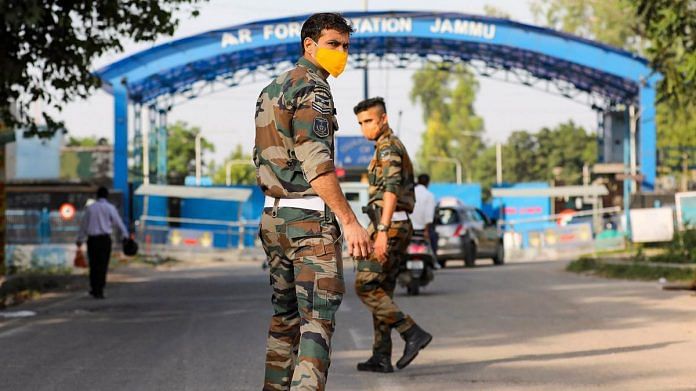
Security personnel at the Jammu Air Force Station after two low-intensity explosions were reported in the early hours of 27 June | PTI Photo
Text Size: A- A+
New Delhi: The Improvised Explosive Devices (IEDs) used in the 27 June drone attack on the Air Force Station in Jammu are likely to have had their origins in ordnance factories of the Pakistan military, ThePrint has learnt.
Sources in the defence and security establishment said the preliminary report on the IEDs indicated they were not crude, as earlier believed. Certain design elements — their shape, and the fact that they had a pressure fuse — pointed to military expertise, they added.
According to the sources, the preliminary report confirmed that RDX was used, and that both IEDs were packed with about 1.5-2 kg of explosives.
A final report from the Central Forensic Science Laboratory (CFSL) is awaited, which will confirm if only RDX or a mixture of explosives was used, they said.
The drone attack last month was the first instance of a terror strike carried out through unmanned aerial vehicles (UAVs). The exact number of drones involved has yet to be determined, and investigators have still not been able to pinpoint where they came from.
However, a source said the initiation of the blast was a “pressure fuse, which is generally military ordnance and not a normal IED”.
A pressure fuse refers to one that gets activated on impact.
The IEDs used in the Jammu attack were not the simple make-at-home kind, sources said.
The design and materials used in the IEDs — such as RDX, initiation mechanism, internal serration in the metal container — were aimed at generating a large number of fragments on explosion to act as shrapnel, sources said.
The IEDs, a second source noted, were “fabricated” in a steel container.
“The specific shape of the two IEDs, as per their operational requirement, indicates the IEDs to be ordnance-factory-level work,” the source added.
This, the sources said, was an indication that at least the elements of the IEDs — if not the devices in entirety — had their origins in one of the ordnance factories of the Pakistani military.
“It was a sophisticated IED which shows high knowledge and expertise,” a third source said.
The Air Traffic Control is believed to have been the target of the 27 June drone attack. Since two IEDs were dropped at different places, it is also suspected that the ATC along with the helicopter hangar could have been the target.
Pakistan President Arif Alvi Monday conferred the Nishan-e-Imtiaz, a military medal, on the Turkish commander Gen Umit Dundar, a move seen as further deepening of ties.
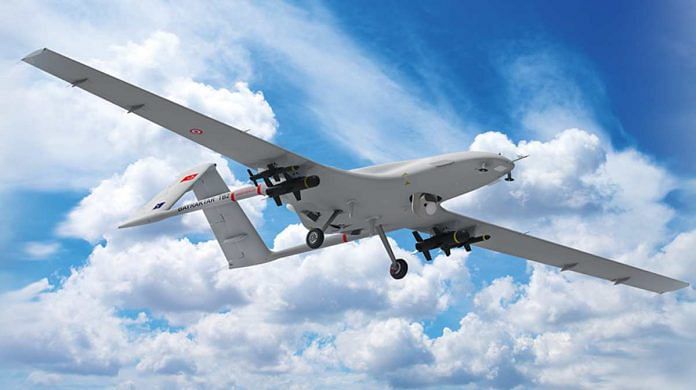
Turkish-made Bayraktar drone used by Azerbaijan | Source: ww.ssb.gov.tr
Text Size: A- A+
New Delhi: Pakistan is seeking armed drones from Turkey and is looking to deepen the already strong bilateral cooperation, especially in the defence arena, even as both countries align on key issues including Kashmir and Afghanistan.
The growing ties, along with a possible axis with China, are beginning to cause concern among security experts in Delhi.
Sources in the Indian defence and security establishment said possible procurement of armed drones, especially the Bayraktar TB-2 that helped Azerbaijan defeat Armenia last year, joint defence projects, collaboration in Afghanistan and greater Turkish investments in Pakistan are some of the issues that are under discussion between the two countries.
In what is being seen by Indian agencies as the latest attempt to cement the relationship, Pakistan President Arif Alvi Monday conferred the Nishan-e-Imtiaz or Order of Excellence — a military award — on the Commander of the Turkish Land Forces, Gen Umit Dundar, who is on a visit to the country.
In April this year, the Turkish Armed Forces had awarded Gen Nadeem Raza, Pakistan’s Chairman of Joint Chiefs of Staff Committee, the Legion of Merit for his services in promoting defence relations between the two countries.
In Pakistan, Gen Dundar also held a meeting with Pakistan Army Chief, Gen Qamar Javed Bajwa. Following the meeting, the Inter-Services Public Relations (ISPR) of the Pakistani military issued a statement saying “matters of mutual and professional interest with special emphasis on defence and security collaboration between the two brotherly countries were discussed”.
The visit by the Turkish officer is part of a series of exchanges between top military officers and defence officials of both countries.
“Pakistan’s relationship with Saudi Arabia and UAE has seen a dip. Turkey is trying to project itself in the Middle East as the counterbalance to these two countries and hence Pakistan growing closer to it is part of a larger game that is being played,” a defence source told ThePrint.
The source added that Turkey has focused on indigenous defence industry and has an edge in drone technology and in designing and manufacturing naval ships.
“Pakistan, through China, has the technology for missiles, both conventional and nuclear besides fighter aircraft, something which Turkey seeks,” the source said.
The source further said both sides have on numerous occasions discussed the possibility of armed drones “something which Ankara is not fully comfortable in selling to Islamabad”.
It all, however, depends on what Pakistan has to offer in return to Turkey and that is what matters, a second source said.
A third source in the defence and security establishment said that the current focus of both countries is on Afghanistan. “Turkey is looking at expanding wherever it can. Afghanistan is an area where it looks to have some sort of influence and say,” the source said. “Militarily and politically, Pakistan and Turkey have grown closer.”
The source said that Turkey will be taking over the security of the Kabul Airport with the pullout of foreign forces. “The Taliban has said that Turkey will be treated as a NATO member and not as a fellow Muslim country,” he added. “As a result, Turkey needs Pakistan, especially as it is going to take over the security of the airport to begin with.”
Indian security experts told ThePrint that the growing ties are a matter of concern.
Air Marshal Anil Chopra (retd), Director General of the Centre for Air Power Studies (CAPS), said Turkish President Recep Tayyip Erdogan has spoken openly against India removing Article 370 in Kashmir.
“Pakistan and Turkey enjoy close cultural, historical and military relations,” he said. “Turkey supports Pakistan’s membership of the Nuclear Suppliers Group. Pakistani and Turkish Armed Forces also hold many joint military exercises.”
He further pointed out that Turkey is backing the trilateral process between Pakistan, China and Afghanistan over a peace deal in Kabul following the withdrawal of US troops from the region.
“Turkey has been backing the trilateral process. With the US exit from Afghanistan, China is seeking Pakistan support to get into the region,” the retired air marshal said. “There is a triangle that is forming between Turkey, Pakistan and China. None of these countries are really friends with India and hence anything about this axis should concern India. Any coming together of the three is detrimental to India.”
His concerns were shared by the Army’s former Director General of Artillery, Lt Gen P.R. Shankar (retd), who said there is no doubt that growing Pakistan-Turkey relations is a matter of concern but added that Turkey is bound by its NATO membership.
He told ThePrint that Turkey has managed to get its hands on a fair amount of technology, thanks to its NATO membership. “And NATO membership is exactly what will prevent Turkey from running amok,” he added. “Turkey gains a lot from its NATO membership than anything else. So it will be very careful about what it does with Pakistan.”
The officer also said western countries will not allow Turkey, China and Pakistan to come together as one block. He added that Pakistan seeking armed drones from Turkey while it can get the technology from China indicates that Islamabad is trying to spread its search.
While Armenia only fought with tanks, artillery and air defence systems, Azerbaijan relied heavily on drones, especially the Bayraktar TB-2, and loitering munitions.
The skirmishes have had huge implications for modern warfare, underlining the importance that drones are likely to play in the future.
Turkey has so far sold its Bayraktar TB-2s to Poland, Ukraine and Qatar besides Azerbaijan. It is also in talks with Albania for the sale of these drones.
Air Marshal Anil Chopra (retd) told ThePrint that Ankara’s Bayraktar TB-2 has been combat tested not just in Azerbaijan but also in Turkey’s conflict with the Kurds and in Libya and Syria.
He added that while Turkey’s removal from the F-35 programme, because of its S 400 purchase from Russia, has been a setback for the country’s aircraft industry, it still holds some pedigree in this sector.
According to him, Turkey’s aviation experience includes the licensed production of F-16 Fighting Falcon jets, CASA CN-235 light transport aircraft, apart from helicopters and a variety of UAVs.
Chopra said that while Pakistan eyes the drone, Turkey needs fighter aircraft systems and missile technology from Islamabad that is basically of Chinese origin.
Turkey though isn’t the only country that Pakistan is looking to for armed drones.
Over the past few years, there have been multiple media reports about Pakistan getting armed drones from China. In 2018, the Pakistan Air Force’s Sherdils Aerobatic Team had, on its official Facebook account, said that the Pakistan Aeronautical Complex at Kamra and the Aviation Industry Corporation of China’s Chengdu Aircraft Industrial (Group) Company will jointly manufacture 48 Wing Loong II drones.
Military ties between Pakistan and Turkey
While Islamabad is yet to land the Turkish drones, it does share a fruitful military partnership with Ankara.
Pakistan has relied on Turkey for the upgrade of its three Agosta 90B diesel-electric attack submarines and for designing and constructing new Corvettes and oil tankers.
Pakistan had earlier this year also granted another extension to a helicopter deal that it signed with Turkey in July 2018.
The deal, valued at $1.5 billion, is for 30 T-129 Atak helicopters. The delivery has been stuck due to the US’s refusal to issue export licenses for engines and other parts made by American firms.
Participants of Republic Day Camp in New Delhi after being felicitated by the UT Administration in Chandigarh on Wednesday. Tribune Photo: Manoj Mahajan
Tribune News Service
Chandigarh, July 7
Six cadets from the Chandigarh NCC Group, who had attended the Republic Day Camp in New Delhi, were today felicitated by the UT Administration and given cash awards of Rs21,000 each along with an appreciation certificate.
Out of the six cadets, two had also attended the Prime Minister’s Rally and another three were part of the cultural programme contingent. All cadets were from different educational institutes in the city.
Sortie over Kargil top to pay homage to Capt Vikram Batra
Northern Army Commander Lt Gen YK Joshi on Wednesday took a sortie in a Sukhoi 30MKI fighter jet over the Batra Top in Kargil to pay homage to martyr Captain Vikram Batra, who was killed in action on July 7, 1999.
‘Pt 4875’, also known as Batra Top, is a 16,000 feet high Himalayan massif along the Line of Control (LoC) with Pakistan. It is now named after Capt Batra, a Paramvir Chakra (PVC) awardee. He had led the charge of his troops of the 13th Battalion of the ‘JAKRIF’ Regiment of the Army to capture the peak and evict the Pakistan soldiers from the mountain.
Lt Gen Joshi, then a Lt Colonel, was commanding the Battalion and was awarded a Vir Chakra. — TNS
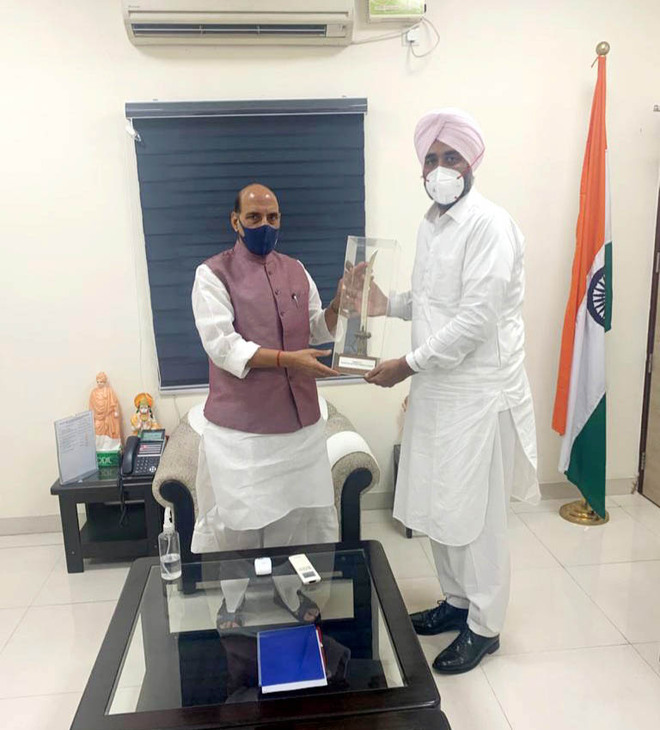
Manpreet meets Rajnath, seeks two Sainik Schools for Punjab
FM Manpreet Badal with Union Defence Minister Rajnath Singh in New Delhi on Wednesday.
Tribune News Service
Finance Minister Manpreet Singh Badal today met Union Defence Minister Rajnath Singh in New Delhi and urged him to approve two Sainik Schools for Punjab. He also sought an NOC from the Defence Ministry for establishing a bus terminus at Bathinda.
‘Provide NOC for bus terminus’
The Finance Minister requested the Defence Ministry to approve the proposal for a modern bus station and terminus for Bathinda city. Since the proposed location is adjacent to the Bathinda military cantonment, it requires a no objection certificate (NOC) from the ministry. Manpreet said all military norms had been adhered to. “The required papers for the NOC have been submitted to the Defence Headquarters, and an early approval will help expedite the project,” he said.
Manpreet said Punjab was the most decorated Indian state in terms of military honours and gallantry awards. However, it has only one Sainik School in Kapurthala. The state is now seeking two more Sainik Schools — one in Gurdaspur and the other in Bathinda. He said other states like Haryana, Bihar, and Maharashtra had two Sainik Schools each.
The Union Defence Minister assured him of due and adequate action, stating he appreciated the role played by Sikhs and Punjabis in national security.
Manpreet also presented a letter by Chief Minister Capt Amarinder Singh to the Union Defence Minister, stating the state government had allocated 40 acres of land at Dalla Gorian in Gurdaspur for a Sainik School. “However, Punjab must have another Sainik School in Bathinda. This way, all three regions of the state will have one school each,” said the state minister.
The Finance Minister also invited the Defence Minister to visit the Punjab War Heroes Memorial and Museum at Amritsar, which the Punjab Government has established at a cost of Rs 144 crore.
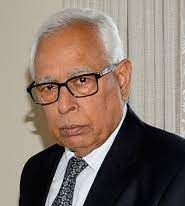
Former Jammu & Kashmir Governor NN Vohra on Wednesday said the Galwan incident in June last year had shown that India must remain prepared as the Chinese meant business.
A bloody clash had ensued between the armies of India and China at Galwan along the Line of Actual Control in eastern Ladakh.
Several important steps have been taken in the past few years in terms of military preparedness, but the country needs a publicly known national security policy. —NN Vohra, former J&K Governor
Referring to the growing threat from China, Vohra said if nothing else, the neighbouring nation would attempt to keep “nibbling away, making India spend more on defence and keeping pressure on its economy and political system”.
The former J&K Governor, who remained the Defence Secretary from March 21, 1990, to April 6, 1993, was speaking at the launch of a book, “The Concept of Active Defence in China’s Military Strategy”, authored by Dr Amrita Jash, research fellow at the Centre for Land Warfare Studies (CLAWS), a think tank.
The book examines China’s national and core interests and the aspects of its implementation to assess China’s strategic intentions and the implications of its military capabilities.
Vohra said several important steps had been taken in the past few years in terms of military preparedness, but suggested that the country needed a publicly known national security policy. “From the policy will emerge a national security strategy, which will pave way for a military doctrine and it will lead to connectivity and integration of our three forces,” he said.
China, he said, had quietly built its economy and military strength. He said the Chinese were highly methodical and had spent 30 to 40 years building up a strong economy.
On ongoing debate on integrated theatre commands, the former J&K Governor said, “There is a long way to go.”
What are military theatre commands and why does India want to switch to them
A proposal is being discussed to have 5 unified or theatre commands that will help in better planning & military response, and aim to have unified approach to fighting any future war.
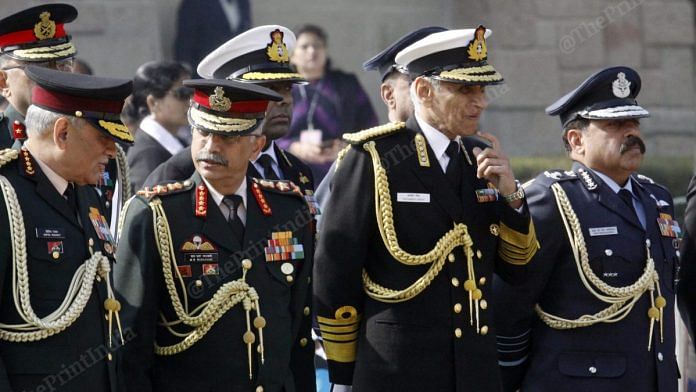
From left to right: Chief of Defence Staff Bipin Rawat, Army chief Manoj Mukund Naravane, Navy chief Karambir Singh and Air Marshal RKS Bhadauria | Photo: Praveen Jain | ThePrint
New Delhi: India is in the process of carrying out the biggest military reforms it has ever seen — theaterisation.
The plan is to have five unified or theatre commands, which will help in better planning and military response, and aim to have a unified approach to fighting any future war.
However, the process, which is being led by Chief of Defence Staff Gen Bipin Rawat, has expectantly not been a smooth one — as military theorist and historian, Sir B.H. Liddell Hart, famously said: “The only thing harder than getting a new idea into the military mind is to get the old one out.”
Internal differences over the structure and scope of the theatre command came out in public last week with Gen Rawat terming the Indian Air Force as a “supporting arm” like the Artillery and the Engineers and the Air Chief Air Chief Marshal R.K.S. Bhadauria pointing out that there is much more to air power.
While the creation of theatre or unified commands was the decision of the government, CDS was mandated to bring it to fruition.
With various questions relating to structure, command and finer aspects remaining unanswered, a committee has now been set up on the orders of Defence Minister Rajnath Singh so all issues are completely thrashed out.
Here is everything you want to know about theaterisation and what India hopes to achieve from it.
The dictionary meaning of a theatre of war is “the entire land, sea and air areas that is or may become involved directly in war operations”.
The word ‘theatre warfare’ became more prominent during World War II with the battles being fought across continents.
During World War 1 too, battles were fought across the world, but the major ones took place in what was then known as the European theatre.
In World War II, new theatres emerged with multiple fronts — Nordic Front, Western Front and Eastern Front. There was also the Pacific-Asian Theater, Africa and Middle East Theater.
These theatres referred to the geographical grounds of the battle and all deployments — army, navy and air force — happened accordingly in a unified manner.
Depending on what kind of operations was being undertaken, officers from specific services took over the command even though it was largely led by the Army.
As of now, almost all major countries like China, Russia, the US, the UK and France work on a theatre command concept. However, most of this theatre is based on its global outlook and part of their expeditionary character.
China is the latest entrant to a theatre concept and comes at a time when it has ambitions to play a larger role in the world.
India currently has 19 military commands with 17 of them service-oriented. While both the Army and the Air Force have seven commands each, the Navy has three.
India also has a Tri-Service Command — Andaman and Nicobar Command — besides the Strategic Forces Command (SFC), which looks after the country’s nuclear stockpile.
The aim is to bring all the 17 individual commands into four or five unified or theatre commands. It might also have two more functional commands for training and logistics.
The rationale being this will help in better planning and military response and also bring down cost.
While the cost may go up in the immediate future since all theatres would have to be armed with sufficient systems, it will prove to be cost-effective in the long term as all acquisition will be a unified one.
The classic example for the perils of not having a unified approach to acquisition is the procurement of the Apache attack helicopters from the US. While the Indian Air Force got 22 Apaches, the Army has also placed orders for six of these choppers. The end result — loss of at least Rs 2,500 crore and haphazard operational planning.
The other aim is to have a unified approach to fighting the future wars. Sources said China’s theaterisation move has had an effect too.
“One thing that we can say about China is the uniformity in response, be it in the East or the Ladakh in the north. This is so because China’s Western Theater Command looks after the entire borders with India unlike us where we have multiple Commands and structures to respond with different officers at the helm,” the senior officer told ThePrint.
The need for a unified approach to war fighting was brought out in the deliberations after the 1999 Kargil battle.
The Kargil Review Committee and the then Group of Ministers besides the Naresh Chandra Committee had called for structural changes in higher defence management.
It was the Shekatkar committee, headed by Lt Gen. (retd) D.B. Shekatkar, which had recommended the creation of the post of CDS and theatre commands.
Until this committee, every other panel had only spoken about the need for unified planning.
While the Army and the Navy are on board on the issue of theatersisation, the IAF while supporting the move says there can’t be multiple theatres. They argue that a single theatre is what is needed.
According to the current proposal that was discussed during last month’s meeting, there will be five theatres — Northern Land Theatre (Jammu and Kashmir, Ladakh and Central sector) Western Land Theatre (Pakistan centric), Eastern Land Theatre, Maritime Theatre Command, and Air Defence Command.
However, Gen Rawat Friday said the Northern Command will not see any change and will remain in its present form for the time being since it is operationally sensitive as it has China and Pakistan besides internal security to look after.
The first two that would be rolled out are Maritime Theatre Command (MTC) and Air Defence Command (ADC).
As reported earlier, the MTC will see a merger of the eastern and western naval commands, besides getting elements from the Army and the Air Force.
The MTC will be headed by a three-star Naval officer and will also have one two-star officer from the IAF and a three-star officer from the Army.
Similarly, the ADC will be headed by a three-star IAF officer, along with a three-star Army officer and a two-star Naval officer.
The other theatres planned will be headed by three-star Army officers with elements from the IAF and the Navy.
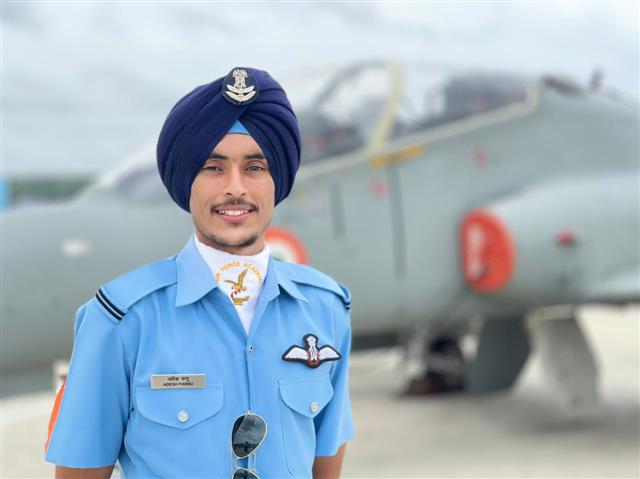
Giving wings to his dreams: Adesh Parkash Singh Pannu of Tarn Taran got his primary education from a pvt school at his village
Adesh Parkash Singh Pannu
Gurbaxpuri
Tarn Taran, July 5
Son of a marginal farmer from Chaudhariwala village (Naushehra Pannuan) in Tarn Taran district has been commissioned as a Flying Officer in the Indian Air Force.
Adesh Parkash Singh Pannu is a student of NDA preparatory academy Nishan-e-Sikhi, Khadoor Sahib, Tarn Taran. He belongs to a marginal farming family. His father Amarbeer Singh Pannu serves in the SGPC and mother is a government schoolteacher. He got his primary education from a private school in the village. The proud father said: “My son is quite mature and had the zeal to serve the nation at a very young age. I have been proud of him and will always be.”
Colonel Kulbir Singh Puri, a retired group officer of the academy, said Adesh, apart from clearing his Class XII, was trained at Nishan-e-Sikhi Institute of Science and Training (NDA preparatory wing).
The 19-year-old boy was commissioned as a Flying Officer in the Indian Air Force during the combined graduation parade held at the Air Force Academy, Dundigal, on June 19.
Adesh cleared the NDA exam in March 2017 for the Air Force and joined the National Defence Academy, Khadakwasla, Pune, in May 2017 as course batch 138. The passing-out parade was held on May 30, 2020, after the completion of the three-year training.
He joined the Indian Air Force Academy, Dundigal, Hyderabad, Telangana, in June 2020, for further training, where he was commissioned as a Flying Officer. Nishan-e-Sikhi, Khadoor Sahib is being run under International Environmentalist Baba Sewa Singh, head of the Kar Sewa sect.
UPSC guidance at Nishan-e-Sikhi soon
Nishan-e-Sikhi, under the chairmanship of International Environmentalist Baba Sewa Singh, head of Kar Sewa sect, Khadoor Sahib, is going to start a preparatory centre for the civil services at Khadoor Sahib village with an aim to prepare students for the UPSC-related examinations.
Avtar Singh Bajwa, secretary of the institute, said the sect has been working in the field of education since 1970 with several educational institutions. Admissions to the course is going on and final date for the registration is July 11. Nishan-e-Sikhi also runs an NDA wing, from where 19 students were selected in the armed forces as officers. With the new initiative, the civil services aspirants will get the much-needed study material at their doorstep.
State Stalwarts
DEFENCE MINISTER
Minister Rajnath Singh
ALL HUMANS ARE ONE CREATED BY GOD
HINDUS,MUSLIMS,SIKHS.ISAI SAB HAI BHAI BHAI
CHIEF PATRON ALL INDIA SANJHA MORCHA
LT GEN JASBIR SINGH DHALIWAL, DOGRA
SENIOR PATRON ALL INDIA SANJHA MORCHA
MAJOR GEN HARVIJAY SINGH, SENA MEDAL ,corps of signals
.
.
PATRON ALL INDIA SANJHA MORCHA
MAJ GEN RAMINDER GURAYA ,MADRAS REGIMENT
sanjhamorcha303@gmail.com
PRESIDENT SOUTH ALL INDIA SANJHA MORCHA
COL SS RAJAN BOMBAY SAPPERS,
PRESIDENT UTTARAKHAND ALL INDIA SANJHA MORCHA
COL B M THAPA ,BENGAL SAPPERSS
PRESIDENT HARAYANA STATE CUM COORDINATOR ESM
BRIG DALJIT THUKRAL ,BENGAL SAPPERS
PRESIDENT TRICITY
COL B S BRAR (BHUPI BRAR)
PRESIDENT CHANDIGARH ZONE
COL SHANJIT SINGH BHULLAR
.
.
PRESIDENT PANCHKULA ZONE AND ZIRAKPUR
COL SWARAN SINGH
INDIAN DEFENCE FORCES
DEFENCE FORCES INTEGRATED LOGO
INDIAN AIR FORCE
Air Officer C-in-C WESTERN AIR COMMAND
AIR MSHL S PRABHAKARAN AVSM VM
AOC-IN-C, EASTERN AIR COMMAND
Air Marshal Inderpal Singh Walia
AOC-in-C SOUTH WESTERN AIR COMMAND
Air Marshal Vikram Singh
AOC-IN-C, SOUTHERN AIR COMMAND
Air Marshal J.Chalapati
AOC-IN-C TRAINING COMMAND
AIR MARSHAL SK GHOTIA VSM
AOC-IN-C MAINTENANCE COMMAND
Air Marshal Jagdish Chandra
Flag Officer Commanding in Chief, Western Naval Command
ice Admiral R Hari Kumar, PVSM, AVSM, VSM
Flag Officer Commanding in Chief, Eastern Naval Command
Vice Admiral Sanjay Bhalla, AVSM, NM
Flag Officer Commanding in Chief, Southern Naval Command