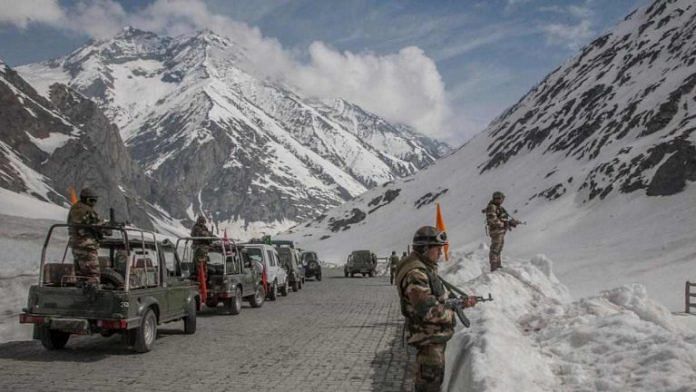
Situation on the Line of Actual Control (LAC) in Ladakh and relative calm at the Line of Control (LOC)in Jammu and Kashmir will figure prominently during the three-day Army Commanders’ conference starting here on June 16. Incidentally, the conference will take place a year after 20 Indian army personnel including the commanding officer on June 15 were killed in a bloody brawl with the Chinese soldiers in the Galwan valley in eastern Ladakh. More than 40 Chinese soldiers were also killed but Beijing is yet to officially confirm number of casualties. Moreover, the conclave comes at a time when the Chinese are conducting their air force exercise comprising fighter jets on their side of the LAC in Eastern Ladakh. Recently, they also conducted large scale army drills in the Tibetan plateau there. The aerial and ground exercises took place more than 100 km away from the LAC, sources said here. However, given the continuing stand-off at some friction points for the last one year, India is not taking any chances and keeping a watchful eye on the Chinese activities. More than one lakh troops from both the sides are deployed on the LAC for the last one year since the face-offs began in early May. Eleven rounds of talks between the Corps Commanders of both the sides have taken place so far to defuse tension. The Army commanders will review their operational preparedness during the conference to deal with any challenge from China, sources said here on Friday. The top brass will also review the situation on the LOC after India and Pakistan agreed to ceasefire on February 25 this year. No bullet has been fired since then besides nil infiltration bids by terrorists from across the LOC.
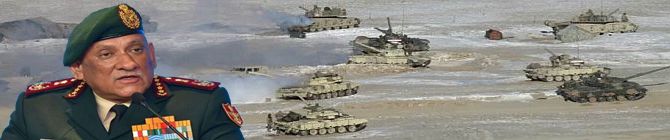
INDIA WANTS STATUS QUO ANTE IN LADAKH, REVERT TO APRIL 2020 SITUATION, SAYS CDS GENERAL BIPIN RAWAT
India wants to achieve status quo ante along the border with China in Ladakh and revert to the situation on the border as of April 2020, the nation’s Chief of Defence Staff General Bipin Rawat told WION in an exclusive interview. “Yes, we wish to achieve status quo ante,” General Rawat said while speaking to WION’s Executive Editor Palki Sharma. “Our bottom line is that we want to revert to the April 2020 situation.” “This is what has been communicated to the Chinese. So the ultimate aim is to ensure that we reverse to status quo ante.” If that happens, he said, “there will be some kind of belief in each other, satisfaction that it’s not likely to lead to further escalation.” Noting that reversing the status quo will be a gradual process, General Rawat said, “I’m quite sure both sides are looking to return to status quo ante. Let’s hope for the best because efforts are being made at all levels, be it political, diplomatic or at the military front.” He said the lower commanders of both sides are “constantly in contact to make sure that the situation does not turn ugly”. The border tensions in eastern Ladakh intensified last June, leading to the deaths of twenty Indian soldiers and four Chinese troops in Galwan Valley. Talks to restore the status quo prior to the standoff have been slow with twelve rounds of military dialogue being held on disengagement. There have been reports of military replenishments and buildup on the Chinese side. Asked about reports that the Chinese military conducted exercises near eastern Ladakh, India’s CDS described the exercises as a “regular feature” on both sides. “All armies, during peace time, carry out training activities and conduct of exercises is one such event,” CDS General Rawat said. “Whenever you have new troops coming to the area, you normally familiarise them to their operational tasks. And the best way is to conduct exercises. This is what the Chinese are doing, and what we have been doing,” he pointed out. “In our case, we frequent our borders more often, whereas on the Chinese side, they have a large conscript army. So it takes time for them to get acclimatised, get familiar with the terrain and kind of operations they’re expected to carry out in such high mountain areas,” General Rawat informed. “We keep a close watch on them. And we are monitoring the situation very carefully. But exercises are a very regular feature and I think it should not be a cause for concern,” General Rawat said. “But at the same time, we should not lower our guard. We have to continue to monitor the activities of the Chinese and make sure they do not come to the areas which have been vacated earlier,” he added.
India calls for complete disengagement at remaining friction points of eastern Ladakh
Both India and China have agreed on the need to resolve the outstanding issues in an expeditious manner to ensure full restoration of peace and tranquillity in border areas, said MEA.
New Delhi: India on Thursday once again called for completion of the disengagement process at the remaining friction points in eastern Ladakh to pave the way for both the Indian and Chinese troops to consider de-escalation and ensure full restoration of peace and tranquillity in border areas.
At a media briefing, External Affairs Ministry spokesperson Arindam Bagchi, referring to the last rounds of military and diplomatic talks, said both sides agreed on the need to resolve the outstanding issues in an expeditious manner in accordance with the existing agreements and protocols.
“We have repeatedly stressed that completion of disengagement in other areas would pave the way for the two sides to consider de-escalation of forces and ensure full restoration of peace and tranquillity and enable progress in bilateral relations,” he said.
Bagchi was replying to a question on the status of the talks between the two sides on the border standoff.
“During these meetings, both sides agreed on the need to resolve the outstanding issues in an expeditious manner in accordance with the existing agreements and protocols,” Bagchi said.
India and China are locked in a military standoff at multiple friction points in eastern Ladakh since early May last year.
However, the two sides completed the withdrawal of troops and weapons from the North and South banks of Pangong lake in February following a series of military and diplomatic talks. The two sides are now engaged in talks to extend the disengagement process to the remaining friction points.
There was no visible forward movement in disengagement of troops at the remaining friction points as the Chinese side did not show flexibility in their approach towards this end at the 11th round of military talks.
Last month, Army Chief Gen MM Naravane said there can be no de-escalation without complete disengagement at all friction points in eastern Ladakh and that the Indian Army is prepared for all contingencies in the region.
Gen Naravane also said that India is dealing with China in a “firm” and “non-escalatory” manner to ensure the sanctity of its claims in eastern Ladakh, and that it was even open to initiating confidence-building measures. India has been insisting on complete disengagement at the remaining friction points to de-escalate the situation in eastern Ladakh. –PTI
Red alert: Security forces have to stop violence, not resolve issues in Maoist-hit areas. PTI
BL Vohra
Former DGP, Tripura
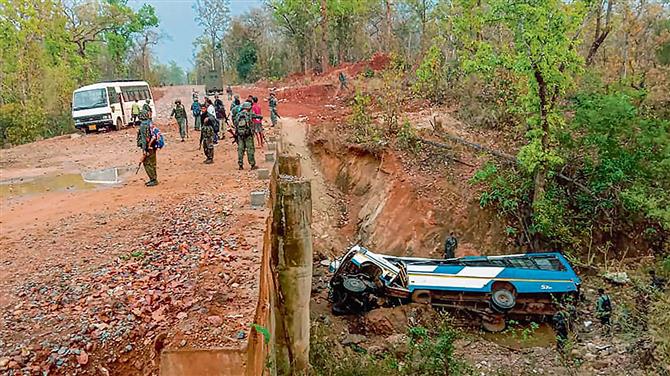
AN important news item this week about the proposed meeting of a tribal delegation with the CM and Governor of Chhattisgarh to lodge a protest against the establishment of a security camp near Silger in the state went almost unnoticed at the national level. Basically, the tribals have been put up as a front by the Maoists because they have been rattled by this new security camp; three of them were killed in firing from the camp when they attacked it on May 17. They don’t want such camps around to check their activities in the interior areas dominated by them.
The Maoists don’t believe in Indian democracy and their aim is to overthrow the Indian State by violent means. They have been trying to achieve this for decades after the CPI decided to join electoral politics in 1951. Starting with Naxalbari in 1967, there have been many groups, by splits and mergers, depending on their success or failure in different states, finally forming the CPI (Maoist) in 2004 by the merger of PWG (People’s War Group) and MCCI (Maoist Communist Centre of India); and it has been a force to reckon with since then. At one time, they had a Red Corridor from Pashupatinath to Tirupati, covering many states. With setbacks over the years, they are most active today in Bastar (Chhattisgarh) and Gadchiroli (Maharashtra), along with some activities in Bihar, Jharkhand, Madhya Pradesh, Odisha, Telangana and Andhra Pradesh. Their effective presence has come down from over 100 districts to about one-third now with depleted strength. So, some success has been achieved by the State, but no final victory so far.
Their basic area of operation has been the tribal belts of these states having dense forests and difficult terrain. They exploit the tribals living there by brainwashing them about the social and economic injustice meted out to them, lack of development, displacement from their land for government projects etc. Some of these grievances are genuine as the State has not been able to address these properly. The Maoists also don’t allow development to take place either as they will lose their base. Taking advantage of inter-state boundaries and moving swiftly to the adjoining state by crossing over when they are under pressure in one state has been their operational strength along with guerrilla warfare. For funding, they depend on extortion and aid. They are also helped by urban Naxals and many sympathisers inside and outside the country. The poor tribals are caught in the crossfire of the Maoists and the security forces.
The Indian State has not been able to tackle this challenge fully for decades in spite of years of planning, schemes, funds and deployment of forces. The progress is rather slow. Even now, the Maoists are able to kill a large number of security persons at regular intervals and take away their weapons and communication equipment. Definitely a relook at the strategy is needed. A four-point strategy is suggested for consideration.
The first is the requirement of a strong political will on a long-term basis. This was helpful in controlling situations in Punjab, Tripura and Andhra Pradesh. But the advantage there was that state-specific issues were at stake and here it is an inter-state problem. Unfortunately, the will has been missing due to the very nature of our federal structure and rule of different political parties at the Centre and the states over the decades, each having its own political agenda even in relation to this problem including some having sympathy for them, others at times favouring talks which of course have been offered but could not take place because the Maoists don’t want to shun violence and weapons during the talks. So, it is very important that on the issue of controlling Maoist violence, there should be unanimity among the political parties. The Centre should take the lead in this regard.
Secondly, the state police forces must lead the operations as only locals can tackle such a problem and the present dual system of paramilitary forces working alongside cannot work effectively. The state police should be bolstered by increasing its strength and providing full support to police stations. To increase its strength immediately, all the battalions of paramilitary forces working there should be sent on deputation/absorption to the affected states. An example is the BSF which was raised in 1965 after the war with Pakistan by merging state armed police battalions of border states, pending its recruitment to raise the force further. Out of battalions, a few should be earmarked as ‘peace battalions’ by the states for providing security to the development projects in the areas. Further, the Army’s help should be taken in training these battalions in counter-insurgency operations. And psychological operations using social media as a big component must be an integral part of these operations. For inter-state coordination, the Centre should station a commander/coordinator in the region. All the state governments in the country should help in dealing legally with urban Naxals who support violence.
Thirdly, the basic issues of socio-economic rights, livelihood of the tribals and development projects in these areas should be speeded up. The job of the security forces is only to contain violence and not resolve issues.
Fourthly, this battle must be fought on the ideological front. Communism has a big appeal for the poor tribals, especially when it matches with the ground reality of there being haves and have-nots. There are many organisations in the country that can contribute in this regard.
With all these steps, besides the good work being done, there can be hope of tackling early this internal security challenge which may otherwise linger on for decades.
Terror attack on joint team of CRPF, police in J-K’s Sopore; 2 cops among 4 dead
Three others, including a policeman, injured in the attack; police blame LeT
Srinagar, June 12
Two policemen and as many civilians were killed and at least three others injured on Saturday when militants opened fire targeting security forces in Sopore town of Baramulla district of Jammu and Kashmir—an attack that police later blamed on the Lashkar-e-Toiba.
Militants fired upon a joint party of the Central Reserve Police Force (CRPF) and police near Main Chowk Sopore in north Kashmir district around noon, they said.
The officials said in the firing, two police personnel whom Jammu and Kashmir’s Director General of Police Dilbag Singh later identified as constables Waseem and Showkat, and two civilians were killed.
Seven others—four policemen and two civilians—were injured in the attack, Dilbag Singh said on the sidelines of a wreath-laying ceremony for the two slain police constables. He said it was a Sopore police station team on Covid-19 duty that came under attack.
Even as they mounted a retaliation, four police personnel and three civilians were injured, the DGP said.
Constables Waseem and Showkat succumbed to injuries later, while Sub-Inspector Mukesh Kumar and SPO Danish are undergoing treatment, and their condition is stated to be stable, he said.
Two of the three civilians injured in the attack died too, the police chief said.
He said initial indicators have led to the identification of the outfit, and a follow-up on that is on.
“The forces have launched an operation in the area, and we are hopeful that we will soon bring to justice the perpetrators of the crime… As per our information, LeT is involved in it, and we have almost identified the militants in the attack, but we will not share their details yet,” the DGP said.
He said police and other security force personnel work in dangerous circumstances and sometimes such attacks take place.
“Unfortunately, our responsibilities are such that we have to work in danger and sometimes, such incidents take place. But, our endeavour is to bring to justice all those involved in such attacks,” the police chief said.
Asked if militancy has increased in recent days, Singh said police and other forces have good control over all areas of the Valley.
“If you see in relative terms, then the militancy is not increasing, but decreasing. The police and other forces have good control over all areas, and operations are also being carried out.”
“However, due to Covid-19, there has been a decline in anti-militancy operations, but the forces have maintained the pressure and we are launching operations so as to strengthen peace and development,” Singh added.
Meanwhile, National Conference leader Omar Abdullah condemned the militant attack on security forces in Sopore town.
“Terrible news coming in from Sopore. Such attacks must be condemned without reservation. Prayers for the injured & condolences to the families of the deceased,” Abdullah said in a tweet.
National Cadet Corps as elective subject to benefit 4.9 lakh students in Punjab, Himachal, Chandigarh colleges
Most universities in the region have already expressed their willingness to implement the UGC guidelines
Vijay Mohan Tribune News Service Chandigarh, June 11
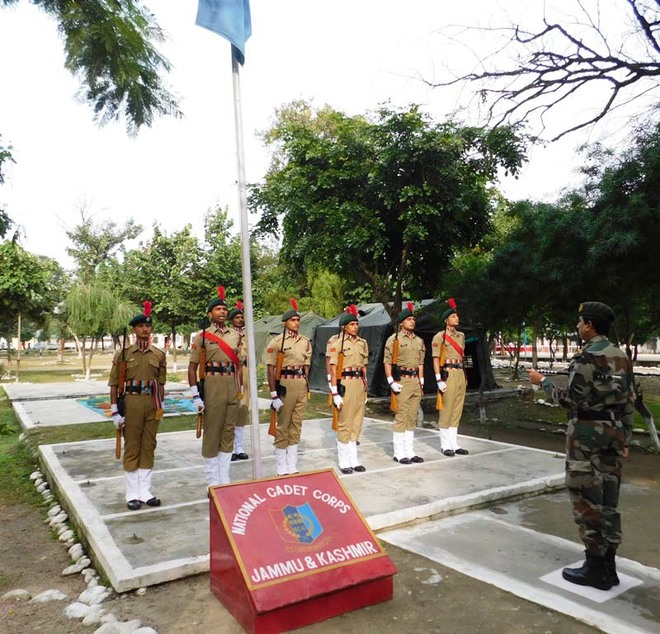
Following the University Grants Commission (UGC) allowing students to take up National Cadet Corps (NCC) as an elective subject in colleges, the regional NCC Directorate has started the process for implementing the new policy from the forthcoming academic session.
The introduction of the subject is expected to benefit nearly 4.9 lakh students in 483 institutions located in Punjab, Haryana, Himachal Pradesh and Chandigarh, including those from border areas, where additional cadet strength has been authorised as part of the overall Border Areas Expansion Plan.
“The underlying idea behind the move is to motivate students of educational institutions to join NCC and instil in them discipline, camaraderie and patriotism,” Major General JS Sandhu, Additional Director-General, Punjab, Haryana Himachal Pradesh and Chandigarh NCC Directorate said here on Friday.
Guidelines issued by UGC to Vice-Chancellors of all universities in April 2021 state that NCC is to be considered a General Elective Credit Course (GECC) in response to the proposal that had been mooted by the Directorate General NCC.
The syllabus for NCC ‘B’ and ‘C’ certificates is designed as per the Choice Based Credit System (CBCS) of the National Education Policy – 2020, which grants 24 credit points covering six semesters.
The move agrees with this policy where students can select their choice of subjects, rather than being confined to only those being offered by the institutions.
Core teams have been created by the directorate with a dedicated officer at Chandigarh to ensure that the policy is implemented within a realistic time frame.
Most universities in the region have already expressed their willingness to implement the UGC guidelines.
Advanced Light Helicopters Mk-III inducted into Indian Coast Guard
Hindustan Aeronautics manufactured copters are equipped with state-of-the-art equipment
tate-of-the-art Advanced Light Helicopters Mk-III indigenously designed and manufactured by Hindustan Aeronautics Limited inducted into Indian Coast Guard. PTI
Bengaluru, June 12
State-run aerospace behemoth Hindustan Aeronautics Ltd (HAL) on Saturday said three Advanced Light Helicopters ALH Mk-III, manufactured by it, were inducted into the stables of the Indian Coast Guard.
These helicopters, which are part of ALH Mk-III programme, will be positioned in Bhubaneswar, Porbandar, Chennai and Kochi and will be part of different Coast Guard Aviation Squadrons, HAL said in a release.
It said the induction took place in the presence of Defence Secretary Dr Ajay Kumar, in a virtual program that was held simultaneously at the Indian Coast Guard Headquarters in Delhi and at Helicopter MRO Division of HAL in Bengaluru.
The Director General, Indian Coast Guard, K Natarajan and R Madhavan, CMD, HAL, were present on the occasion.
Ajay Kumar said the sophisticated helicopters being handed over today will be a game changer for the operational capability of ICG in the times to come.
“The state-of-the-art Helicopters with advanced sensors will enable ICG to take up challenging tasks.
This is for the first time Performance Based Logistics is being introduced in the Indian aviation sector, which is a modern management practice and will increase operational and maintenance efficiency,” he said.
HAL said these helicopters are equipped with state-of-the-art equipment like Surveillance Radar, Electro Optic Pod, Medical Intensive Care Unit, High Intensity Search Light, SAR Homer, Loud Hailer, Machine Gun and can perform other key roles.
The Helicopter MRO Division is the nodal agency for execution of PBL contract, along with Engine Division and other Sister Divisions of HAL, it said.
Madhavan said with this contract, HAL is embarking on a new journey of Performance Based Logistics (PBL), which will assure desired levels of availability of ALH Mk-III fleet of ICG for six and half years, a unique feature of this contract and a first of its kind in HAL.
Noting that HAL has been the most trusted partner in the growth of the ICG aviation fleet, delivering multi-role and highly capable platforms, Natarajan said the induction of ALH Mk-III in challenging times bears a testament to the resilience of HAL and ICG.https://db91594db8450d3789004390e7292736.safeframe.googlesyndication.com/safeframe/1-0-38/html/container.html
“These helicopters will usher a paradigm shift in the capability in ship borne operations and enhance coastal surveillance.
Indian Coast Guard is also the first service to have a Performance Based Logistics management system introduced in aviation to ensure Helicopter Availability at four bases,” he added.
According to HAL,the PBL will provide a one stop solution for maintenance of complete helicopter, engine and components which encompasses Helicopter/Engine Servicing Task, Rotable Repair Task (RRT) and Repair and Maintenance Spares Order (RMSO).
As part of PBL, Helicopter MRO Division of HAL will be extending the support from four bases—Bhubaneswar, Porbandar, Chennai and Kochi.
All necessary infrastructure and repair facilities are set up at Bhubaneswar and Porbandar, dedicated LRU/ Rotable floats are stocked and on-site support team has been identified towards ensuring the availability of helicopters, while Chennai and Kochi are in the final stages, HAL said.
In addition, HAL Aviation Maintenance Software (HAMS), a web-based online platform has been developed and deployed by Helicopter MRO Division for real time monitoring and operational visibility of the fleet through a dedicated leased line network, it added. PTI