Sanjha Morcha

What’s New

Click the heading to open detailed news

Current Events :

web counter

Print Media Reproduced Defence Related News

PAINFUL PLEA BY VETERAN TO GOC-IN-C,WC- DONATES Rs 5000/- FOR UPKEEP OF Covid Pandemic Hospitals :

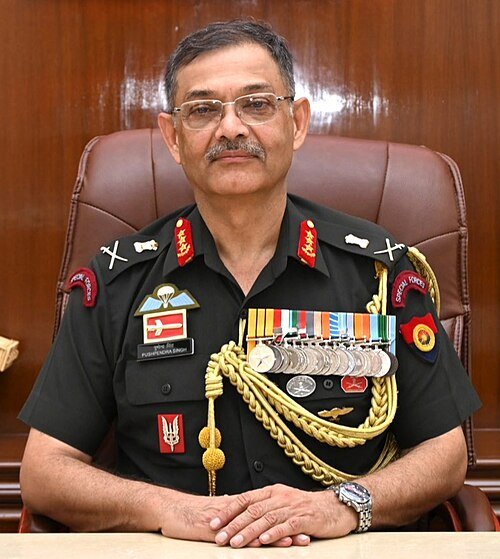
Lt. Gen. R.P.Singh.
GOC-in-C Western Command Chandimandir

Subject:Hard Times are yet to come. SOLDIERS including their AMC FRATERNITY has to remain BATTLE WORTHY ALWAYS and EVERYTIME.

Dear General,

1. I take the liberty to thank your URO TEAM headed by Col. Amit Agarwal of Command Hospital for conducting  successful operation on me on 03rd June 2021.

2. I do hope ECHS will reimburse the Medical expenses incurred on me by Command Hospital Chandimandir. However, I do make a effort to reimburse a token sum of these Medical expenses incurred on my Operation less after surgery care which was largely done by me.For this; I enclose a Cheque of Rs. Five Thousand only in favour of GOC-in-C which can be utilsed to replace worn out mattresses from Officer’s ward or buy cutlery and glasses for Officer ward where one could find Singapore Air Line Fork and spoons/ forks of numerous varieties which are never found in Officers Mess.

3. That I wish I could donate atleast one wheel chair to Command Hospital as I saw a  wornout chair being offered to a Officer Patient on discharge.My meager military penson prevents me from donating Wheel Chair so as to make two ends to meet honourably. My brother Veteran Officers should come out for suçh nobel ventures. The Government will always keep Armed Forces without sufficeint funds but will not shy away from using limited resources of Armed Forces be it of even Medical at the costs of Soldiers.

4. That I am aware that for setting up Covid Pandemic Hospitals the meagre manpower resources of Army Hospitals have been over taxed by civilian Centre/State governments and trained  Doctors and  nursing staff is deployed in these Covid Hospitals. But with ever increasing Black Fungus disease and likely THIRD WAVE of Covid Pandemic; the Army Medical resources will continue to be in use by civilians  for long time due to ever ailing civil health structure where Union of India in last 72 years has pumped in Millions-Billions of rupees of tax payers mlney which has gone down the drain in pockets of ruling elite and their henchmen. The Center/State Governments may not reimburse such Army Hospital expenditure and if they do paper reimbursement then it will never reach the end expense making Army Hospitals/ Formations who will also rely on their alloted Army budget in order to shape up teeming millions who suffered the Pandemic largely due to could not care attitude of ruling Governments who still take it as a Law and Order problem and not Medical problem and still sleeping to shore up health infrastructure and does not allot  atleast 6.8% GDP budget to health infrastructure of India where there are some primary health Centers/ sub centers in a thatched huts and some with no DOCTOR and some in next to cattlesheds.Even as late as 2020-21, defecting medical equipment like Oxygen Concentrators etc were purçhased by Government machinary for civil Hospitals and one Government sold off Vaccine at a profit to private hospitals only to cancel its order after hue and cry but did not punush the Health authorities who made this profit making venture that too during ongoing Pandemics.  Their corrupt show  goes on from 1947 to 2021, i.e. YEH KHABHI BHI NAHI SUDERENGE. Anyway coming back to Army systems.

Battle wòrthy of Army Hospitals, dedicated Health care staff and even educate Soldiers to take care of themselves if need be after surgery etc:

5. These Pandemics and during war in take of casualties will be very high. The Health care needs to sustain itself and stand tall in those trying times.Mere entering into Healthcare system does not make one FLORENCE NIGHTINGALE, but there has to be humanity and dedicated commitment from core of heart to take care of patients. A person who can not sustain 8 hourly duty will  put health care of a patient Soldier to gravest risks and efforts of Army  Doctors conducting succesful surgeries will go in vain which will also directly adversely affect the Armed Forces of India who will require their Soldiers made quickly medically fit to rejoin battlefields at the  earliest.Thus all Soldiers should be trained for after surgery self care so that if need arises then they can recover where Nursing system crashes momentarily.
6.  There is no denying the fact that Doctors and Nurses play very vital part in managing the  crises of Patients, of Pandemic and especially of battle casualties during War/battles. Doctors after surgery leave it to nursing staff to provide dedicated health care so that  their Patients recover quickly.
7. The nursing staff are often primary care giver in hospitals. The patient interacts with them especially after surgery during road to recovery.
8. There is a need always of quality health care service to Soldiers and Veterans. Especially during Wars/ battles and Pandemics there is requirement of health care of patients round the clock. Nurses should be well acquainted with ailments specific care. Even the worsening of life style diseases has caught up the Armed Forces where there are increase of ailments like diabetes, high blood pressure and heart ailments. The increase in cardiovascular diseases is frightening.  Proper healthcare by nursing professionals will speed up recovery and reduce load on Doctors and Units will have their Soldiers back. The deep fatigue and anguish especially during war or ongoing Pandemic will need stronger “wìll power” for nursing staff to take care of critical cases, neuro care, operation theater nursing and constant updating of education, among others. The mere fact that Pandemic has put civil health care system on  ventilator and exposed its deplorable conditions, has forced  Army Medical Corps to step in aid of civil, thereby, increasing the burden on already over stretched Army Medical system.

9. FLORENCE NIGHTINGALE SET VERY HIGH STANDARDS OF NURSING WITH THE RESULTS MANY WOUNDED SOLDIERS QUICKLY RECOVERED AND JOINED THEIR COMRADES IN BATTLEFIELDS. Some private Hospitals pay very low wages to Nursing staff. But yet Nurses are prompt and meticulous in answering each and every call of patient, ensuring timely change of drip bottles or timely change/emptying of Urine satchel, providing medical papers, medicine and discharge slips etc on the bedside of the patient and take discharged patient on Wheel chair till exit gate of hospital ensuring patient boards vehicle. Unfortunately all this is found lackig in Command Hospital for best known reasons to their nursing staff. That is why I advocate teaching Soldiers for self care ( if need be) after surgery.

10. It was. very unfortunate that needle fixed for insertion of drip and injections prior to OT was leaking and only patients going to nursing COUNTER and explaining to the nurse then its location was changed. Patient had to ask time and again to change the enpty bottle of drip. He had to pick up empty drip bottle and its pipe in one hand and urine satchel and its pipe in other hand and then go to nursing counter to get the needle of drip system removed from nurse to stop blood flowing from viens of patient to drip pipe. Ultimately he requested the Doctor to put him on drip system for the night only if he can ensure timely replenishment so Doctor stopped the drip and patient that night used oral hydration (drank six bottles of water ) to flush out blood from his urine bladder on which surgery was performed. The person for changing/emptying urine satchel was usually missing even at night and nurse said that he attends seven wards and will only come when he can and you can tell this to Commandsnt also. There was dust on center table of recreation room. Wheel chair given to one discharged Officer patient had torn back and his relative was left to take him from the ward of his own. For medical papers, discharge slip and medicine slips patient is made to shuttle around on two counters of Nursing staff and ward master and discharge is not on displayed time by 1400 hrs. This is inspite of very highly paid nursing staff whuch is well trained by Army at Government expenses, whereas, private hospitals lowely paid nursing staff provide proper and maticulous health care after surgery as brought put above. The Army needs to do quick thinking on this aspect as during war when influx of casualitues will be very high then Soldier Patients will require meticulous and dedicated nursing staff to make these patients battle worthy quickly to rejoin their duties in battlefields at the earliest. Also I am sending cheque of token sum of payment of SURGERY only and not of healthcare after surgery which needs lot of improvement, otherwise we will be doing dis-service to the principles of FLOWRENCE NIGHTINGGALE. Please ensure ECHS reimburses all medical expenditure incurred on me by Command Hospital Chandimandir of which Urologist carried out timely and good surgery on me for which I shall remain ever indebted to Army.

            CONCLUSION

10. That I once again thank Col Amit Agarwal HOD of URO TEAM for prompt and successful surgery on me.
11. Please accept my cheque of Rs. Five Thousand only as discussed above and utilise it for purchase of Mattresses/cutlery/ glasses for Officer’s Ward of Command Hospital Chandimandir.
12. Prepare both Hospitals especially their nursing system to be battle worthy always and everytime on the basic principles of FLOWERANCE NIGHTINGÀLE.
13. Educate Soldiers on self health care after surgery if need be; as and when situation arises due to increase in patients or if someone finds chink in Nursing system then after Surgery healthcare do not suffer.
14. I would request fellow Veterans Officers to donate medical equipment to Army Hospitals or pool in to do so.
15. This is plain speaking by a Soldier so that system improves itself to finest quality and its not a complaint. I have been raisng issues for betterment and upliftment of Able/disabled serving/retired Soldiers, and families, Widows and war Widows at National level since 1994 with lot of success and all at my costs. Please do acknowledge and confirm receipt and action taken telephonically and via revert Email and  by post.
Jai Hind!
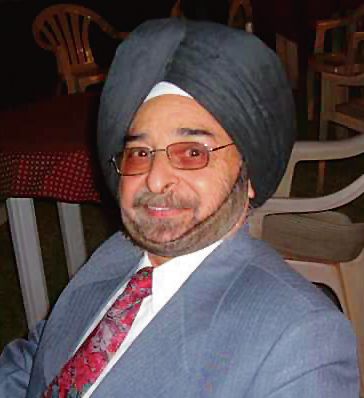
(Major Onkar Singh IC-33468N aged 69 years)

Copy to All concerned for widest publicity amongst Veteran Officers to generously  come forwad to augment resources of Army Hospitals as Defence Ministry has not been doing yhis gor ages and leaves noopportunity to use the services of even AMC as bekng done on mass scale for ongoing Pandemic Covid 19 of which third wave may follow soon.
I am sending cheque of Rs. Five Thousand only by post.

Copy also to:
All three Chiefs through their Welfare Directorates of respective HQ
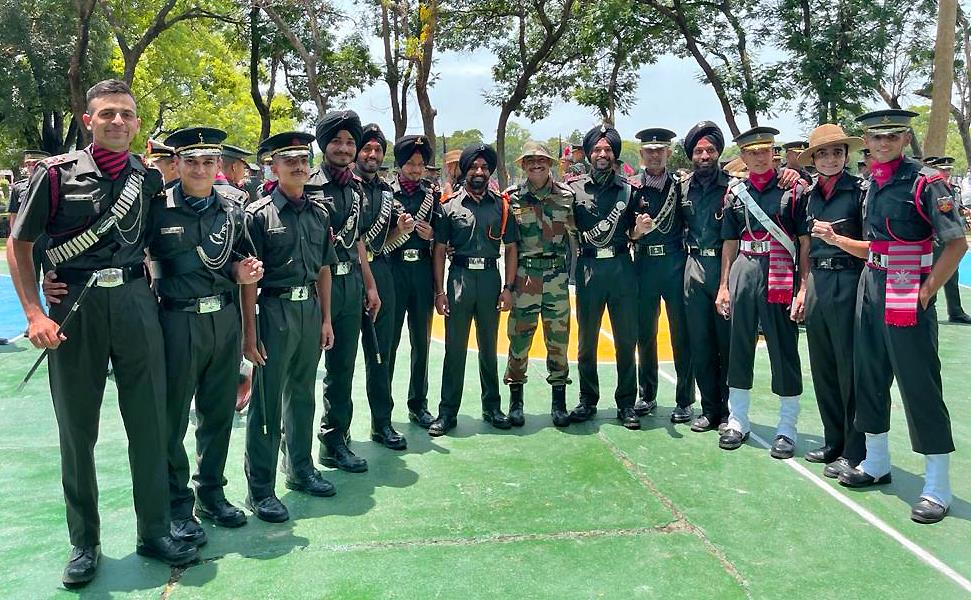

12 alumni of Mohali institute commissioned as Lieutenants from IMA

Among alumni Lt Loveneet Singh awarded the bronze medal for standing third in the order of merit

12 alumni of Mohali institute commissioned as Lieutenants from IMA

Alumni of the Maharaja Ranjit Singh Armed Forces Preparatory Institute, Mohali, after their passing out parade at the Indian Military Academy, Dehradun on Saturday.

Tribune News Service

Chandigarh, June 12

As many as 12 alumni of the Maharaja Ranjit Singh Armed Forces Preparatory Institute (AFPI), Mohali, were commissioned as Lieutenants from the Indian Military Academy (IMA), Dehradun, on Saturday.

These cadets had joined the institute in 2015 as part of the Fifth AFPI Course for two years. They were selected to join the National Defence Academy, Kharakvasla, in 2017 as part of the 138th NDA Course and on completion of three years of training, proceeded to the IMA for the final year of pre-commission training.

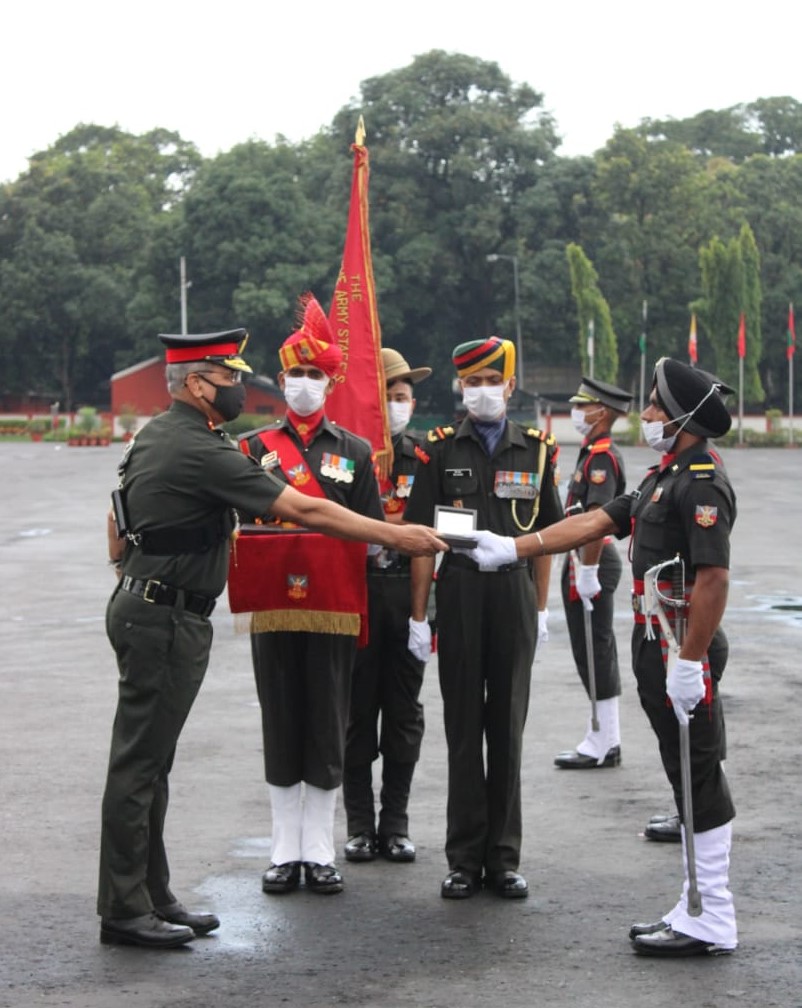
The passing out parade at IMA today for the Spring Term – 2021, which comprised the 148th Regular Course and 131st Technical Graduate Course, was reviewed by the General Officer Commanding-in-Chief, Western Command, Lt Gen RP Singh. Among the alumni was Lt Loveneet Singh, who was awarded the bronze medal for standing third in the order of merit.

Maj Gen BS Grewal (retd), Director, AFPI, said so far 162 cadets from the first eight courses at AFPI have joined NDA or other service academies and of these 83 have already been commissioned in the Armed Forces. This includes 68 in the Army, eight in the Navy and seven in the Air Force. Two more cadets are expected to join the Air Force on June 19.

He added that from this year AFPI has commenced the long-awaited Cadet Training Wing programme, which envisages reaching out to selected schools in Punjab for training and motivating their students for joining the armed forces. Over 100 students studying in classes 11 and 12 have already enrolled in this venture which is expected to substantially increase the number of young men joining the armed forces.

Currently, three courses are undergoing training at AFPI. The Ninth Course of 39 cadets has completed its two years of training recently. Selected cadets of this course will be joining the NDA shortly. The Tenth Course of 50 cadets is now studying in Class 12 and will be appearing for the NDA entrance exam in September this year, while the Eleventh Course of 42 cadets commenced training last month.

Since March last year, all training at AFPI has been in the online mode because of the Covid-19 pandemic. This severe restriction notwithstanding, the Institute has been able to send as many 28 cadets to service academies from January 2020 to May 2021.

AFPI alumni have distinguished themselves by winning various awards and medals during training in academies and have also been decorated for gallantry in various operations, including the recent stand-off with China in the Galwan Valley.


Newly commissioned Lieutenant from Punjab stands third in order of merit at Indian Military Academy

Sword of Honour was bagged by Battalion Under Officer Mukesh Kumar from Rajasthan

Newly commissioned Lieutenant from Punjab stands third in order of merit at Indian Military Academy

Lt Loveneet Singh being presented the medal after standing third in order of merit at the Indian Military Academy in Dehradun on Saturday. Photo credit: IMA

Vijay Mohan

Tribune News Service

Chandigarh, June 12

A newly commissioned officer from Punjab has stood third in the order of merit of the Spring Term – 2021 that passed out from the Indian Military Academy (IMA), Dehradun, on Saturday.

Lt Loveneet Singh, who belongs to Moga and is the son of an agriculturalist, has been commissioned into the Sikh Light Infantry. He did his matriculation from Punjab Public School, Nabha, and then joined the Maharaja Ranjit Singh Armed Forces Preparatory Institute (AFPI), Mohali, from where he had proceeded to the National Defence Academy, Kharakvasla. At IMA, he held the appointment of Academy Cadet Adjutant.

The Army today commissioned 341 officers as Lieutenants during the passing out parade of the 148 Regular Course and 131 Technical Graduate Course. Another 84 foreign cadets also passed out of the Academy today, who will be joining the armed forces of their respective countries.

Amongst the highest contributing states, Uttar Pradesh topped the tally with 66 officers followed by Haryana with 38. Uttarakhand had 37 officers while Punjab had 32.  There was no representation from eight states, while some had just a single officer.

The coveted Sword of Honour for being adjudged as the overall best cadet of the term was bagged by Battalion Under Officer Mukesh Kumar from Rajasthan, who also received the silver medal for standing second in the order of merit. The gold medal for standing first went to Academy Under Officer Deepak Singh from Uttarakhand.

The silver medal for standing first in the Technical Graduate Course was presented to Junior Under Officer Daksh Kumar Pant, while the silver medal for standing first among foreign cadets went to Junior Under Officer Kinley Norbu from Bhutan. The Chief of Army Staff’s Banner was awarded to Dograi Company for standing overall first amongst all 16 companies in the IMA.

Exhorting the newly commissioned officers to dedicate themselves to the service of the nation, General Officer Commanding-in-Chief, Western Command, Lt Gen RP Singh, who was the parade’s reviewing officer, said that the external and internal challenges that our nation faces from adversarial forces are only set to increase as we rise to take our destined place in the new global order

“These are extremely challenging times while the world battles with the Covid pandemic and witnesses a host of varied conflicts across the world. You are stepping into an era typified by disruptive technologies, blurring definition of threats, expanding domains of conflict and an interplay of multi-polar complexities,” he said. “As warrior leaders of the future, your awareness, proficiency and leadership has to remain extremely dynamic and evolve constantly,” he added.

Congratulating the new officers, Lt Gen Singh said that as they step into the folds of the Army, every bit of what they have imbibed at IMA shall be put to test and everyone has complete confidence that they shall come out with flying colours. Stressing that the Chetwode Motto which accords priority to the nation and the men they command must always remain at the core of their conduct, he said that character, selflessness, empathy, risk taking and firm resolve must guide them as young leaders.https://e4dfc94c399f4a95190fdb98329b7b5c.safeframe.googlesyndication.com/safeframe/1-0-38/html/container.html

The ‘Pipping Ceremony’ that is pinning the badges of rank on the epaulettes, which is traditionally done by the parents of cadets, was done by instructors and staff of the IMA because of restrictions imposed due to Covid-19 protocols. Parents and family members of the passing out cadets could not attend the event.

Among the Indian pass-outs, 315 were from the regular course and 26 from the technical course. The infantry, being the army’s largest arm, got the lion’s share with 125 officers followed by the Artillery with 56 and Engineers with 29.

In addition, there were 84 officers from nine friendly foreign countries. These included 43 were from Afghanistan, 18 from Bhutan and 13 from Tajikistan. Mauritius and Vietnam had sent four and two cadets, respectively, while Maldives, Kyrgyzstan, Tonga and Srilanka had sent one each.


Army buys 17 boats to move troops faster at Pangong Tso amid India-China stalemate at LAC

The 35-foot-long boats currently are not fitted with any weapons, but can be equipped with light weapons according to any future requirement.

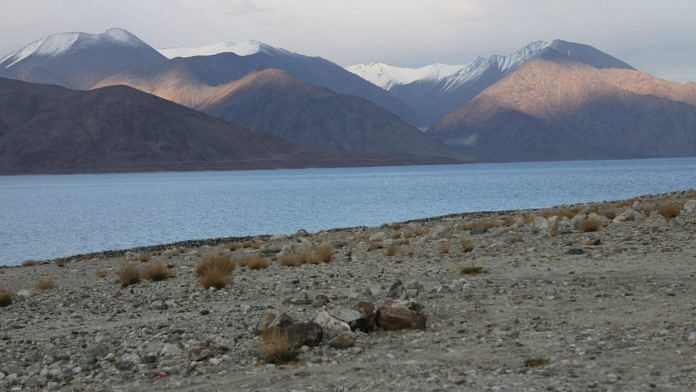
Representational image taken from the southern bank of Pangong Tso, looking across to the 'fingers' on the northern bank | Photo: Visharad Saxena | By special arrangement
China has so far wanted to discuss Pangong Tso (pictured) but not other areas like Depsang Plains where its troops are in a stand-off with India | Photo: Visharad Saxena | By special arrangement

Text Size: A- A+

New Delhi: The Indian Army has bought 17 flat bottomed boats, the majority of them to be deployed at the Pangong Tso in eastern Ladakh for rapid deployment of troops in case of contingencies, ThePrint has learnt.

The development comes following the months-long standoff with China at the Line of Actual Control (LAC) last year.

While both India and China disengaged from the contentious Pangong Tso area in March this year — after multiple rounds of talks at the military and diplomatic level between the two countries — there has been no further breakthrough, with China refusing to pull back its troops from Hot Springs and Gogra Post.

According to top defence sources, the boats will be procured from Goa-based Aquarius Shipyard Pvt Ltd, the shipyard that built the sailing vessel Thuriya on which Indian Navy’s Commander Abhilash Tomy embarked on the prestigious Golden Globe race from France in 2018.

Similar boats are already in service with the Indian Navy, the sources added.

The delivery of the first few boats has already begun and is set to be completed by September. A majority of them will be inducted in eastern Ladakh for now. The rest could be deployed at other locations, as and when required.

The boats, measuring 35 feet in length, will have the capacity to carry about 20-22 people, including crew. They can move at a speed of 20 knots, which is approximately 37 kmph. A source told ThePrint that while the boats have not been fitted with any weapons at present, they could be equipped with light weapons when needed in the future.

“Made of fibreglass, they would ferry troops across the lake, cutting short earlier time lost while navigating the hilly tracks around the lake,” the source added.


Also read: How India stood its ground and forced China to end Pangong Tso aggression


Ladakh impetus

With the ongoing stalemate at the LAC, the Army is building on its capabilities and infrastructure in the region.

In January, the Army had finalised the procurement of 12 high-performance patrol boats to enhance its surveillance of the Pangong Tso Lake and other large water bodies in eastern Ladakh.https://cddecab253f824e42a78892ad4cdcc3b.safeframe.googlesyndication.com/safeframe/1-0-38/html/container.html

The contract for these 12 patrol boats was inked with Goa Shipyard Ltd, a state-run public sector undertaking, with deliveries set to begin by May this year.

A defence officer explained to ThePrint that the fast patrol boats are required to dominate the lake and reach any enemy boats at the earliest.

“Troop-carrying-boats would be used to move troops and equipment and deploy them on the lake bank in a faster time frame, either to reinforce existing troops there or for fresh deployments,” the officer said.

This is an advantage since traversing along the roads and tracks on the periphery of the lake takes much more time due to terrain friction, the officer said.

With no further disengagement at eastern Ladakh in the last few months, both countries have maintained a high density of troops in the region.

India has kept a heavy troop deployment in the region for any eventuality and reorganised its formations along the LAC for long-term deployment, keeping in view the threat perceptions from the Chinese troops.

(Edited by Manasa Mohan)


Also read: Why the serene Pangong lake lies at the heart of India-China border dispute in Ladakh


Under new policy, India could declassify military operations within 25 years unlike earlier

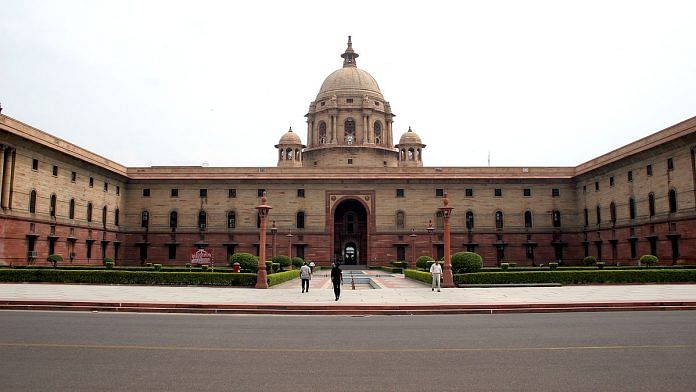
The Ministry of Defence at South Block in New Delhi | Commons

New Delhi: India could declassify certain aspects of past military operations and wars, sooner than the earlier 25-year cut-off period, under a new policy formulated by the defence ministry Saturday.

Defence Minister Rajnath Singh has approved the policy on archiving, declassification and compilation or publication of war or operations histories by the Ministry of Defence.

According to ministry sources, there was no proper policy on this earlier and it is part of having war histories written with a clear-cut policy on declassification of military records. This was recommended by the Kargil Review Committee, set up in 1999 and headed by K. Subrahmanyam, and the N.N. Vohra Committee report, to analyse lessons learnt and prevent future mistakes.

While the new policy is for internal purposes, defence ministry sources noted that certain aspects of past operations and wars could be made public sooner, if needed.

The History Division, under the defence ministry, will be responsible for coordinating with various departments while compiling, seeking approval and publishing the war or operations histories.

The new policy mandates the constitution of a committee headed by joint secretary of the defence ministry and comprising representatives of all the Services, external affairs ministry, home ministry and other organisations and prominent military historians (if required).


Also read: Army buys 17 boats to move troops faster at Pangong Tso amid India-China stalemate at LAC


New policy fixes timelines

The policy sets clear timelines with regard to compilation and publication of war or operations histories.

According to the timeline, the above-mentioned committee should be formed within two years of completing the war or operation. Thereafter, collection of records and compilation should be completed in three years and disseminated to all concerned.

Under the new policy, each organisation under the defence ministry — Army, Air Force, Navy, Integrated Defence Staff, Assam Rifles and Indian Coast Guard — will transfer records, including war diaries, letters of proceedings and operational record books among others, to the History Division for proper upkeep, archiving and writing histories.

However, the responsibility for declassification of records rests with the respective organisations as specified in the Public Record Act 1993 and Public Record Rules 1997.

According to the policy, records should ordinarily be declassified in 25 years, the defence ministry noted in a statement. Records older than 25 years should be appraised by archival experts and transferred to the National Archives of India once the war or operations histories have been compiled.

“Timely publication of war histories would give people an accurate account of the events, provide authentic material for academic research and counter the unfounded rumours,” the defence ministry said.

Sources noted that the decision on the 25-year cut-off period will be taken on a case-to-case basis, under the new policy.

“The policy is for internal use so that everyone is aware of the history and operational aspects. In case a need arises, certain aspects of the operations can be declassified or released without compromising any operational details. This would be a decision taken by the committee,” a ministry source explained.

Another source in the defence establishment said that the new policy and the timelines mentioned will bring about a change in the workings of the History Division and will streamline a lot of issues.

“Right now there is no fixed policy. This policy would streamline a lot of issues. Certain aspects of the operations can be declassified earlier than before which will help the public to understand issues better,” the source told ThePrint.


Also read: National Defence Academy to add 2 squadrons to address officers’ shortage in Army, Navy & IAF


‘Shows intent to be transparent’

Lt Gen. Vinod Bhatia (Retd), former director general of military operations, welcomed the new policy and noted that it will bring in a proper structure.

According to Bhatia, the policy is good and shows a willingness to be transparent. However, he added, certain operations will remain classified for years to come.

“Not all aspects of the operations can be declassified. Come September, many would ask for the declassification of the 2016 surgical operations. However, certain operational details cannot come out because the armed forces may have to do the same ops all over again,” he told ThePrint.

Bhatia further noted that the structured declassification process will ensure that the enemy is not able to make use of the information to understand the strategy deployed.

At present, all records are with the History Division and the public can access non-redacted portions through proper permissions.


Also read: New marching tunes, no more pre-1947 battle honours — armed forces set to get more ‘Indian’


All-too-known face among Pak PoWs

Recalling the surreal encounter at Kolkata two months after the 1971 war

All-too-known face among Pak PoWs

Representational photo

Wg Cdr JS Bhalla (Retd)

The war had ended two months back but fear was writ large on many faces because it was known that the Pakistanis had mined the approach to Chittagong harbour. The vessel arrived at Chittagong safely and with the help of the local pilot, they went up to Karnaphuli river, which was strewn with the remnants of bombarded and sunk merchant ships — a testament to the brave actions of the Indian Air Force and pilots of INS Vikrant.

In the evening, Sodhi went out for a meal and saw the local population raising slogans of “Indian-Bangla Bhai Bhai”.

No rickshaw-wallah or restaurant owner accepted any money from him. It was the valour displayed by the Indian armed forces that generated respect in the hearts of the local population, he thought.

The following day, 1,500 PoWs, escorted by the Army, were brought to the ship. Officers up to the rank of Major were assigned the space meant for lady passengers in the ship. The senior officers were kept in the ship hospital, which could accommodate about 10 of them. The PoWs cooked their own meals in the galley while senior officers were brought to the officers’ mess and were served the same food as the ship officers.

When the ship berthed at Kolkata’s King George dock, an Army Colonel took charge and went through the list of the PoWs. He wanted to meet the senior-most officer, who was of the rank of Commodore. Sodhi was detailed to bring the Commodore from the ship hospital.

When the Colonel saw the Commodore, both of them saluted and addressed each other as “Sir”. They shook hands with moist eyes but neither could utter a word; their body language indicated that they knew each other.

Later it was revealed that before Independence, the Colonel was a cadet in the same training institute where the Commodore was an instructor. At the time of Partition, the two had gone on separate paths but MV Andaman had brought them face to face once again, though this time their loyalties, like the circumstances, were all too different.


Rajnath approves policy on archiving, declassification of war histories

According to new policy, records should ordinarily be declassified in 25 years

Rajnath approves policy on archiving, declassification of war histories

Defence Minister Rajnath Singh. TRibune file

New Delhi, June 12

Defence Minister Rajnath Singh on Saturday approved the policy on archiving, declassification and compilation of histories of wars and operations by the Ministry of Defence (MoD).

“Timely publication of war histories would give people accurate account of the events, provide authentic material for academic research and counter the unfounded rumours,” the MoD’s statement noted.

According to the policy, each organisation under the MoD such as tri-services, Integrated Defence Staff, Assam Rifles and Indian Coast Guard, will transfer the records, including war diaries, letters of proceedings and operational record books, to the History Division of MoD for proper upkeep, archival and writing of histories.

“The responsibility for declassification of records rests with the respective organisations as specified in the Public Record Act 1993 and the Public Record Rules 1997,” the MoD’s statement noted.

According to the policy, records should ordinarily be declassified in 25 years.

“Records older than 25 years should be appraised by archival experts and transferred to the National Archives of India once the war/operations histories have been compiled,” it stated.

The History Division will be responsible for coordination with various departments while compiling, seeking approval and publishing of histories of wars and operations, it mentioned.

“The policy mandates constitution of a committee headed by Joint Secretary, MoD and comprising of representatives of the tri-services, MEA (Ministry of External Affairs), MHA (Ministry of Home Affairs) and other organisations and prominent military historians (if required), for compilation of war and operations histories,” it noted.

The policy also set clear timelines with regard to compilation and publication of histories of wars and operations, it mentioned.

“The above-mentioned committee should be formed within two years of completion of war/operations. Thereafter, collection of records and compilation should be completed in three years and disseminated to all concerned,” it stated.

The requirement of having war histories written with clear cut policy on declassification of war records was recommended by the Kargil Review Committee headed by K Subrahmanyam as well as N N Vohra Committee in order to analyse lessons learnt and prevent future mistakes.

“Post-Kargil War in 1999, GoM (Group of Ministers) recommendations on national security also mentioned the desirability of authoritative war history,” the statement mentioned. PTI


Samyukta Kisan Morcha forms panel for complaint redressal of women protesters

Step taken in the backdrop of alleged sexual assault of a woman activist

Samyukta Kisan Morcha forms panel for complaint redressal of women protesters

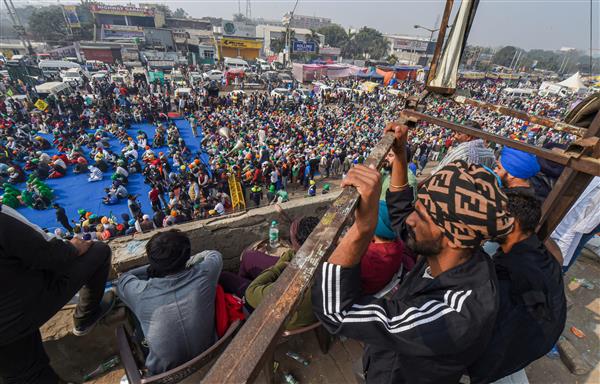
Farmers at a protest site on Delhi border. PTI file

New Delhi, June 12

Samyukta Kisan Morcha, an umbrella body of over 40 farmer unions, on Saturday formed committees to address complaints and issues raised by women farmers at the protest sites in the backdrop of alleged sexual assault of a woman activist.

The committees formed at all the protest sites on Delhi borders will “look into redressal of any complaints,” the farmers’ body said in a statement.

The announcement was first made in May to form “Mahila Suraksha Samiti”, days after the alleged sexual assault of a woman activist at Tikri border protest site, who later died due to Covid-19 at a private hospital in Haryana.

“Committees have been formed at all protest sites to look into redressal of any related complaints and to prevent any occurrence of harassment or any other violation… 9818119954 is the phone number where related issues can be raised,” SKM said in the statement.

It added that SKM “respects the rights of women protesters, wants their safety protected in all ways, and welcomes their active participation in the current movement”.

Protesting farmer unions will be organising dharnas at governor houses across the country on June 26 to mark the completion of seven months of their agitation against the three new central agri-marketing laws.

“Save Agriculture, Save Democracy” will be the main message of the day, and sit-ins will be organised at Raj Bhavans in all states and memoranda will be submitted. Detailed action plan for Mission UP and Uttarakhand will also be taken up soon within SKM,” it said.

Thousands of farmers, mainly from Punjab, Haryana and western Uttar Pradesh, have been camping at Delhi’s borders for more than six months now in protest against the three laws that they say will leave them at the mercy of big corporates and end the MSP regime.

The government has said all these concerns are baseless and that the new laws are pro-farmer.

The Supreme Court has put on hold the implementation of the laws till further orders and set up a committee to examine the issues. PTI


Central Vista: Petitioners move SC against Delhi HC order refusing to halt work

High Court had on May 31 imposed a fine of Rs 1 lakh on petitioners for wasting its time by filing a ‘motivated’ petition

Central Vista: Petitioners move SC against Delhi HC order refusing to halt work

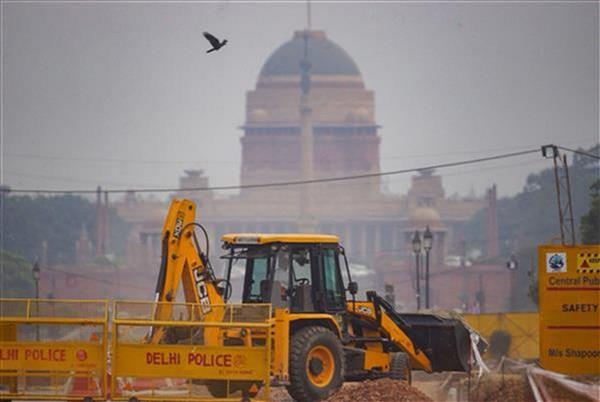
Construction work underway as part of the Central Vista Redevelopment Project, at Rajpath in New Delhi. PTI file

Tribune News Service

New Delhi, June 12

Terming the Rs 1 lakh cost imposed by the Delhi High Court as “exorbitant”, petitioners Anya Malhotra and Sohail Hashmi have moved the Supreme Court challenging the lower court’s decision refusing to halt construction work on the Central Vista project in the national capital.

“The impugned judgment, especially the imposition of exorbitant costs, has a chilling effect on public spirited individuals raising genuine issues of public health and on the right of citizens to question the actions of the government and to hold it to account, which it is submitted is the bedrock of democracy,” they submitted.

Describing the Central Vista project as “vital and essential”, a Bench headed by Delhi High Court Chief Justice DN Patel had on May 31 imposed a fine of Rs 1 lakh on the petitioners for wasting its time by filing a “motivated” petition.

The legality of the project had already been upheld by the Supreme Court and the Delhi Disaster Management Authority also allowed the work to continue, the high court had said, adding the workers were already present at the site and, therefore, “we see no reason to stop the work”.

The petitioners said they were aggrieved by the “unsubstantiated” findings and adverse observations, particularly the comment that their petition was motivated, ill-intended and lacked bona fides.

Earlier, advocate Pradeep Kumar Yadav—who was not a party to the case — had moved the Supreme Court challenging the high court’s order, terming it a “matter of serious public health concern”. Yadav contended that the high court was not justified in holding the Central Vista redevelopment project as an “essential activity”.

The Central Vista redevelopment plan – which aims to free up 75 acre land in the heart of the capital – involves demolition of around 10 buildings, including Shastri Bhawan, Udyog Bhawan, Krishi Bhawan, Vigyan Bhawan, Vice-President’s House and Lok Nayak Bhawan.

Announced in September last year, it envisages a new triangular Parliament building, with seating capacity for more than 1,200 MPs, expected to be constructed by August, 2022 when the country will be celebrating its 75th Independence Day. The common Central Secretariat is likely to be built by 2024.

Refusing to set aside the clearances given to the Central Vista Redevelopment Project, the Supreme Court on January 5 said it can’t venture into policy matters and areas reserved for the Executive without any legal basis.


Navy to join in Meghalaya mine rescue efforts; 5 trapped for 13 days

Rat-hole mine in East Jaintia Hills district, was flooded after a dynamite explosion on May 30

Navy to join in Meghalaya mine rescue efforts; 5 trapped for 13 days

Search and rescue operations underway at the coal mine where five miners are trapped in East Jaintia Hills of Meghalaya. PTI file

Shillong, June 12

The Indian Navy, which was able to pull out three bodies from a flooded mine in Meghalaya using a sophisticated machine in 2019, will be joining operations to rescue five miners trapped for 13 days in another such illegal coal mine in the state, an official said on Saturday.

The water level in the mine at Umpleng in East Jaintia Hills district, which was decreasing for the past few days due to dewatering exercise, has gone up again to 37.5 metre following rain affecting rescue operation.

Around 60 personnel of the National Disaster Response Force (NDRF) and various state agencies are waiting for the water level to come down to about 10 meters in the 152 metre deep pit, as that is the maximum level in which they can work.

“A team of rescuers from the Indian Navy are on their way to (district headquarters) Khliehriat to assist us,” East Jaintia Hills Deputy Commissioner E Kharmalki told PTI.

A magistrate posted at the site said that the Navy team has divers and is equipped with machines.

However, it is not immediately known whether the Navy divers will bring the remotely operated vehicle (ROV), with the help of which they had managed to locate three bodies weeks after the shaft of another mine at Lumthari in the same district was filled with water from a river on December 13, 2018.

The unmanned ROV had been sent down the flooded rat- hole coal mine to determine visibility inside it.

At least five people have been identified by the district administration – four from Assam and one from Tripura – who got stuck somewhere inside the rat-hole mine after it was flooded following a dynamite explosion on May 30.

The rat-hole mine at Umpleng, about 20 km from Khliehriat, the headquarters of East Jaintia Hills district, was flooded after a dynamite explosion on May 30.

Hazardous rat-hole coal mining is not permitted in Meghalaya after the National Green Tribunal (NGT) banned it in 2014.

A deep vertical shaft is dug till coal seams are found in the rat-hole mining. Once the seams are found, coal is taken out through small holes along the horizontal line of the coal seams.

Six co-workers of the trapped miners escaped the tragedy as they were outside the mine at the time of the incident and they have been escorted to their homes in Assam.

The police have arrested the owner of the coal mine, Shining Langstang, and charged him with violation of the NGT order banning unscientific mining and transportation of coal.

The ‘Sordar’ (mine manager) is on the run and a lookout notice has been issued since he was the one who brought migrant workers from Assam and Tripura to work in the illegal mine, a senior police officer said.

Based on the account of the survivors, an FIR was registered. PTI